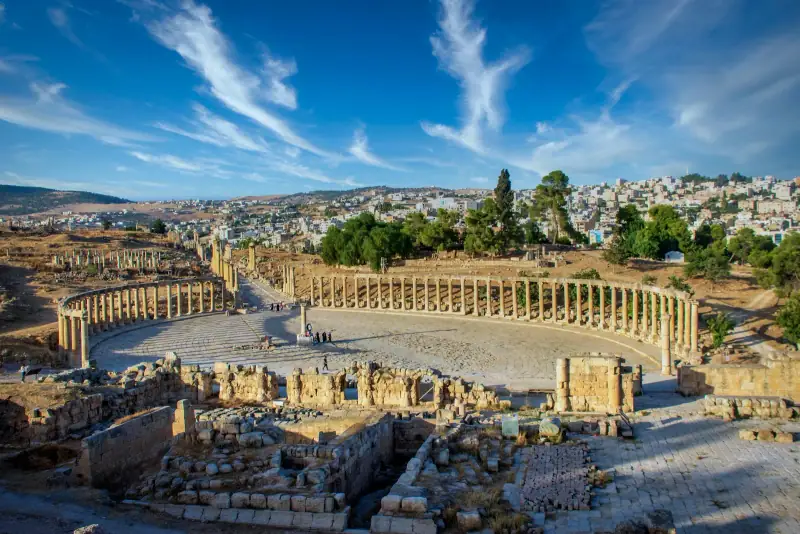
What to see
Complete guide to visiting Egypt: regions, must-sees, budget and tips
We may earn a commission when you book through links on this page, at no extra cost to you. We don't visit or try the places we cover: we summarize published sources. How we work
In short
- The classic first trip runs Cairo, Luxor, Aswan, optionally extended with a Red Sea beach stay at Hurghada or Marsa Alam.
- The best period runs from mid-October to the end of March; Upper Egypt often exceeds 40 °C (104 °F) from June to September.
- Budget excluding the international flight, per person per week: about €250-400 (~$290-465) budget, €700-1,100 (~$810-1,275) mid-range, over €1,800 (~$2,090) high-end.
- Ten days cover Cairo and the pyramids, Luxor, a Nile cruise and Aswan; with one week, focus on Cairo and Luxor.
Few countries concentrate so much history in such a readable territory. In Egypt, the vast majority of people live along one river, the Nile, and almost all the great ancient sites line its banks: the Giza pyramids, the temples of Karnak, the Valley of the Kings, Philae, Abu Simbel. Add a Red Sea famous for its reefs, spectacular deserts and intense urban life in Cairo, and you understand why visiting Egypt remains a dream for many travelers.
This complete guide is the site’s pillar article. It presents the country, its main regions and cities, the must-sees, the best time to go, how to get there and around, where to sleep, the budget and the good habits to adopt. At each step, links send you to our detailed guides so you can prepare your trip in depth. The prices and durations given are orders of magnitude: check them before you book.
Egypt at a glance
Egypt is a vast country, but most of the tourist travel takes place in a narrow band: the Nile valley and delta in the north, Upper Egypt in the south, and the Red Sea coast in the east. The rest of the territory is desert, with a few oases and the Sinai peninsula.
One puzzling point for first-time visitors: Upper Egypt lies in the south, because the Nile flows from south to north. Lower Egypt is therefore the delta, in the north, around Alexandria and the Mediterranean. This naming logic, inherited from the river’s elevation, often confuses people when they first read a map.
Here are the reference points to keep in mind before planning:
- Language: Arabic is the official language. English is commonly spoken in tourism.
- Currency: the Egyptian pound. Euros and dollars are accepted in some hotels, but paying in pounds remains simpler for small expenses.
- Climate: desert, with very little rain. Heat dictates the choice of season.
- Religion and customs: the country is mostly Muslim, and modest clothing is appreciated, especially in mosques and villages.
For a first trip, the classic scheme remains the most efficient: Cairo, Luxor, Aswan, possibly completed with a beach extension.
Cairo and Giza: the gateway to the country
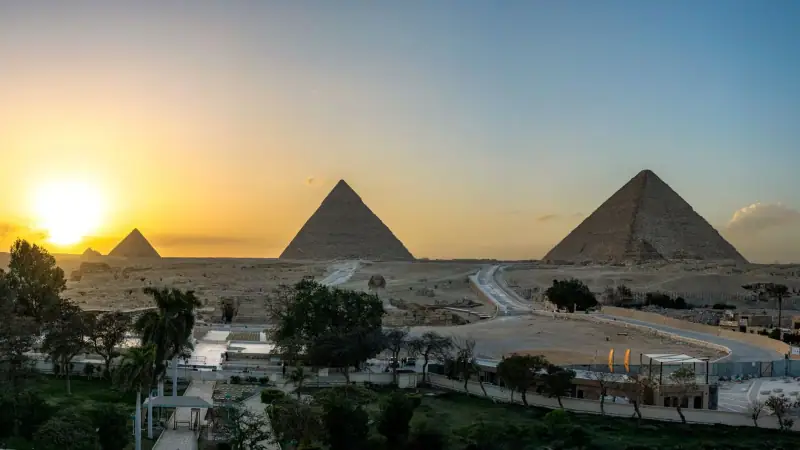
Most travelers arrive through Cairo, one of the largest urban areas in Africa. The city is noisy, dense, chaotic, and yet fascinating: in a few hours you go from a medieval district to modern boulevards, with the Nile as a backdrop.
Cairo comes in several moods:
- Giza and its plateau, to the west, where the pyramids and the Sphinx stand. It is the most emblematic site in the country, presented in detail in our guide to visiting the Giza pyramids and the Sphinx.
- Islamic Cairo, in the heart of the old town, with its mosques, the Citadel and the great Khan el-Khalili bazaar, described in our article on Islamic Cairo.
- Downtown and Zamalek island, more modern, with museums, cafés and many places to eat and drink.
- Old Cairo, the Coptic district with ancient churches and calmer lanes.
As for museums, the Grand Egyptian Museum, near the Giza plateau, officially opened in late 2025 and complements the downtown museum. Visiting conditions and tickets change: check official information before planning your day.
How long to spend? Two to three days are a minimum for the pyramids, Islamic Cairo and a museum. Travelers in a hurry can cut to two days, but the city deserves better, especially since traffic slows getting around.
To choose where to put your suitcases, our guide on where to stay in Cairo compares the neighborhoods: Giza for pyramid views, Zamalek for quiet, downtown for proximity to the museums.
Find a hotel in Cairo or Giza
Compare hotels by dates, budget and the neighborhood that suits you.
Luxor: the largest open-air museum
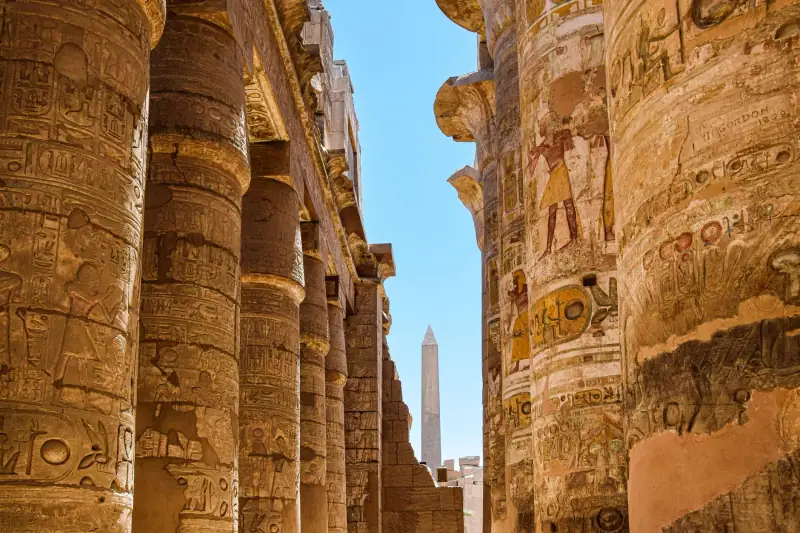
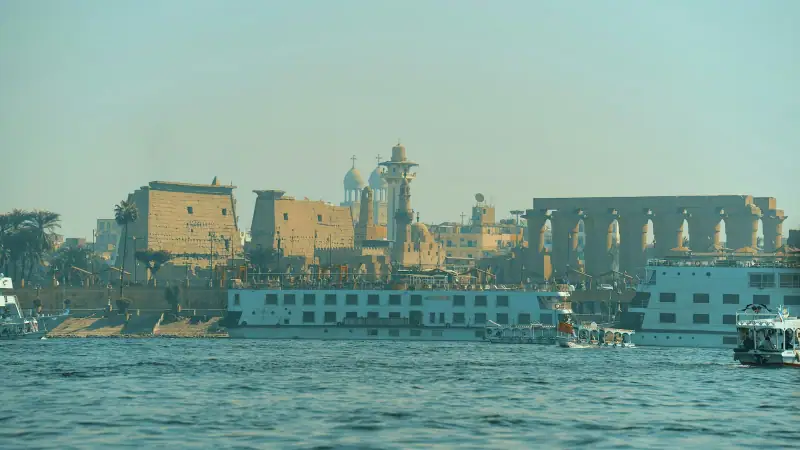
About 650 km (404 mi) south of Cairo, Luxor stands on the site of ancient Thebes, capital of Egypt in the New Kingdom. The city is split in two by the Nile, and this division structures the visit:
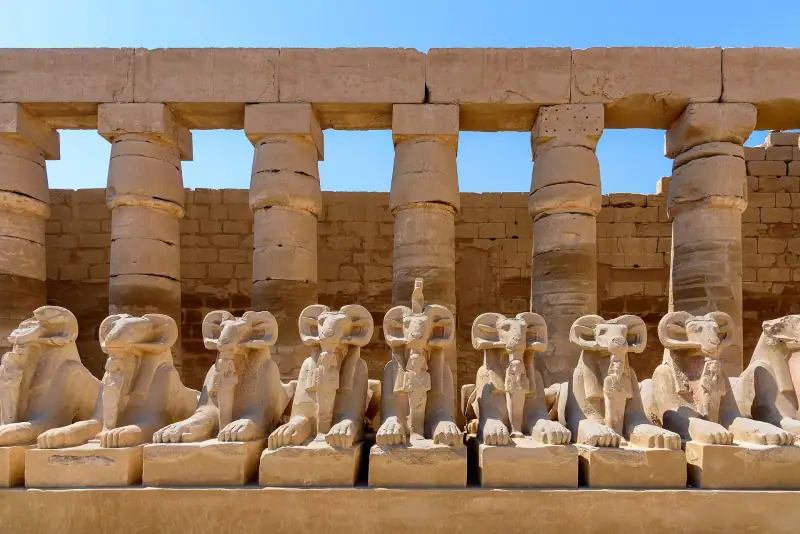
- The east bank, that of the living in ancient tradition, has Luxor Temple and the immense Karnak complex, with its famous hypostyle hall of colossal columns.
- The west bank, that of the dead, brings together the Valley of the Kings, funerary temples such as Hatshepsut’s, the Colossi of Memnon and many tombs.
Allow at least two full days to see the essentials without rushing, one for each bank. Visits are best made early in the morning, especially in the hot season. Our guide to visiting Luxor, Karnak and the Valley of the Kings details how to organize the two days, the tickets and which tombs to prioritize.
Luxor is also a starting or ending point for the Nile cruise, which makes it a logical stop on any Upper Egypt circuit.
Nile cruise: from Edfu to Kom Ombo
About 200 km (124 mi) separate Luxor and Aswan. You can link them by car or train in a few hours, but the cruise turns this trip into a journey of its own. Boats stop at the great Ptolemaic temples of the valley: Edfu, dedicated to Horus and remarkably preserved, and Kom Ombo, on the riverbank, dedicated to two deities. The stops are complemented by a lock at Esna and rides on feluccas, those traditional sailboats so typical of the Nile.
The length varies: from three to seven nights depending on the direction of travel and the program. Boats come in very different categories, from simple comfort to great luxury. Our article on the Nile cruise from Luxor to Aswan helps you compare options, choose the length and avoid the classic pitfalls.
Nile cruises and excursions
Compare cruises, guided visits and felucca rides, with traveler reviews.
Aswan and Nubia: Philae and Abu Simbel
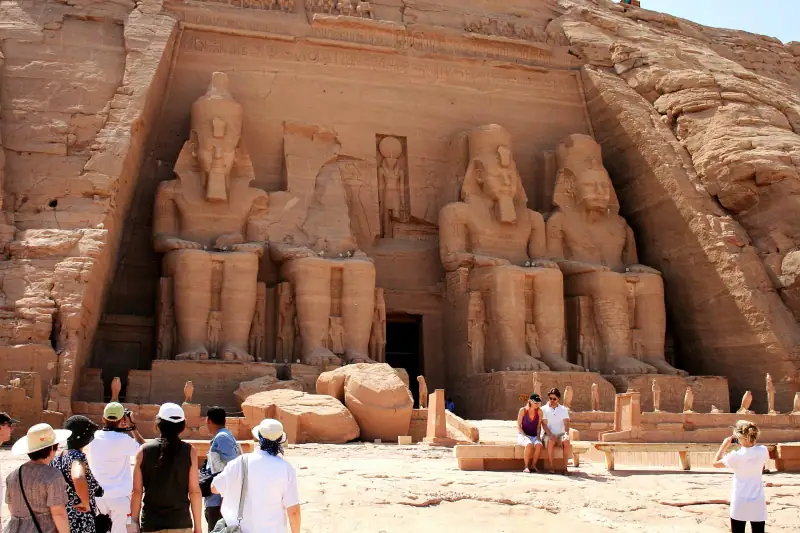
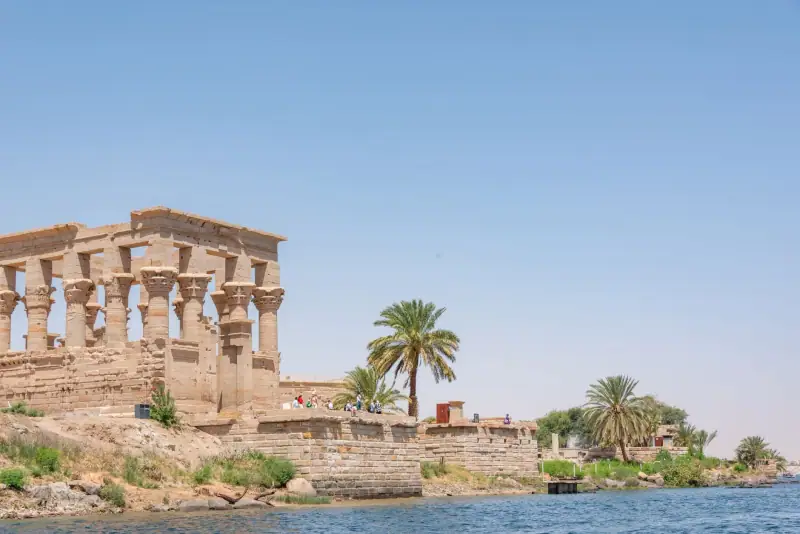
Aswan is the most pleasant city of the trip for those who like calm. Set on a wide, luminous Nile dotted with islands and rocks, it offers a slower pace than Luxor or Cairo. You find the Temple of Philae, set on an island and moved stone by stone to escape rising waters after the High Dam was built, as well as Elephantine Island, colorful Nubian villages and a lively market.
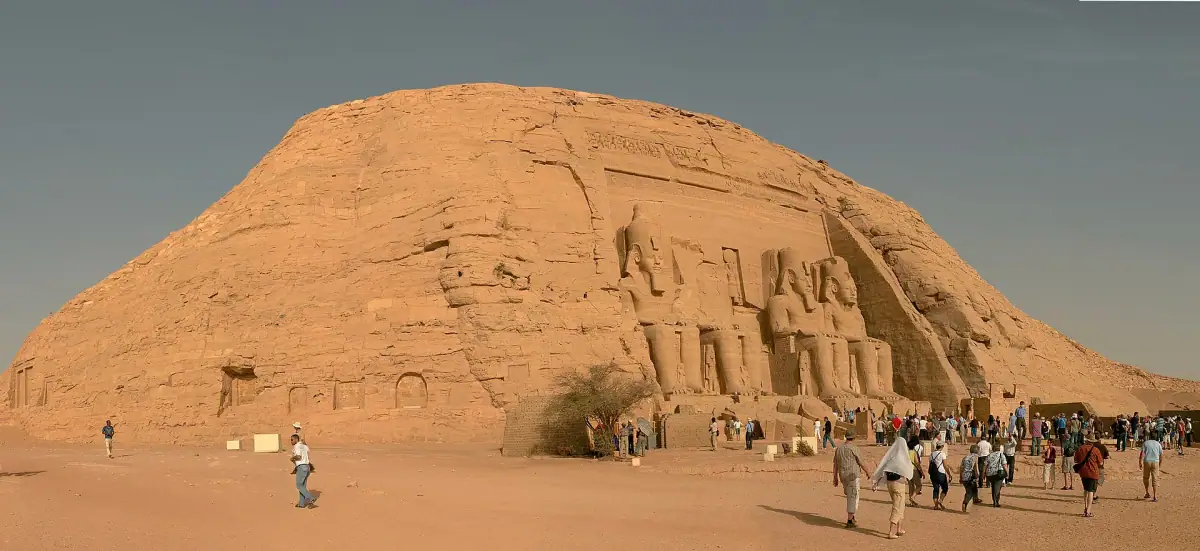
Farther south, near the Sudanese border, Abu Simbel has two temples cut into the cliff by Ramses II. They too were moved in the 20th century in a famous international operation. Excursions leave from Aswan, generally very early in the morning, and the visit is made in the day. Since transport arrangements (convoy, road) may change, ask your hotel or your organizer.
To organize this stage, see our guide to visiting Aswan, Philae and Abu Simbel, which also explains how to enjoy a felucca ride and the Nubian villages.
Red Sea: Hurghada and Marsa Alam
After the temples, many travelers continue with a few days of rest on the Red Sea. The Egyptian coast there is known for its coral reefs, warm waters and often excellent visibility.
Two resorts dominate:
- Hurghada, a large seaside resort with many hotels, restaurants and dive centers. It is the liveliest option, with the widest choice of accommodation and boat excursions.
- Marsa Alam, farther south, calmer and more nature-oriented, with reefs said to be well preserved and the chance to see turtles or dugongs depending on the sites.
The Red Sea suits families as well as experienced divers. Beginners can try an introductory dive or snorkeling, while certified divers head for wreck or drop-off sites. Our article on diving and snorkeling in the Red Sea, Hurghada or Marsa Alam compares the two resorts to help you choose.
You can reach the coast from Luxor by road in a few hours, or fly there directly. In both cases, allow for the tiredness of the transfer before planning activities on the first day.
Alexandria, Sinai and the oases: going further
Once the great classics are seen, Egypt holds other sides for a second trip or a longer stay.
Alexandria, on the Mediterranean, was one of the great cities of Antiquity, founded by Alexander the Great. It keeps Greco-Roman remains and the atmosphere of a cosmopolitan port, with its corniche swept by the sea breeze. The climate there is milder than in the south, which makes it a pleasant stop in summer. You reach it from Cairo by train or car in about two to three hours, depending on traffic.
Sinai draws visitors for Mount Sinai, whose night climb for sunrise is a classic of pilgrims and hikers. Since access conditions and security on the peninsula vary by area, always check official recommendations before planning this region.
In the Western Desert, the Siwa oasis and the White Desert offer lunar landscapes of limestone rock sculpted by the wind, spectacular starry nights and total change of scene. These destinations need more logistics and are generally visited with a guide or an experienced local agency.
The must-sees
If you have to make choices, these are the experiences that draw consensus:
- The Giza pyramids and the Sphinx: the reference site, to visit early in the morning to avoid the heat and the crowd.
- The Grand Egyptian Museum and the downtown Cairo museum: to understand the civilizations you will then discover in the field.
- Islamic Cairo and Khan el-Khalili: mosques, citadel, bazaar lanes.
- Karnak and Luxor Temple: the hypostyle hall, and the temple lit up in the evening.
- The Valley of the Kings: decorated tombs among the finest of Antiquity.
- A Nile cruise or, failing that, a felucca ride at sunset.
- Philae and Abu Simbel: two temples saved from the waters, symbols of world heritage preservation.
- A day of snorkeling in the Red Sea: to change pace after the temples.
These stops follow on naturally in the itinerary we detail day by day in our article Egypt 10-day itinerary, designed not to waste time on transport.
When to visit Egypt
Climate is the element that most shapes the comfort of the trip. In broad terms, the best period runs from mid-October to the end of March: days are mild or warm, nights cool, and sites can be visited without excessive heat. November and February-March often offer the best balance between weather, prices and crowds. Late December concentrates the highest rates.
From June to September, Upper Egypt frequently exceeds 40 °C (104 °F) in the daytime: visits must then be made at opening time, with an afternoon break. This is when the Red Sea, Alexandria or a Cairo stop limited to the first hours of the day become more interesting.
Do not forget Ramadan, whose dates shift every year: the country does not close, but the rhythm changes, some restaurants are closed during the day and evenings are livelier. Our article on when to visit Egypt details the weather region by region, the crowds and the choice of season according to your type of trip.
How to get to Egypt
By air
Most travelers arrive by air. Cairo is the main international gateway. Flights, often charter or seasonal, also serve Hurghada, Marsa Alam and sometimes Luxor directly, which lets you start a stay on the Red Sea or in Upper Egypt without going through the capital.
To compare, try several dates: prices change a lot between high and low season. Scheduled airlines, low-cost carriers and combined stay offers coexist, and the best option depends on your calendar. If you have the choice, book ahead for school holidays.
Compare flights to Egypt
Try several dates and arrival airports (Cairo, Hurghada, Luxor) to find the best fare.
Entry requirements
Entry rules depend on your passport. Check the official travel advice of your government before you book: travel.state.gov (US), GOV.UK (UK), travel.gc.ca (Canada), Smartraveller (Australia) (checked November 2026). Our article on entry requirements for Egypt gathers information checked against official sources.
How to get around Egypt
Distances are large and the choice of transport shapes how smoothly the trip runs. Here are the common options.
Domestic flights link Cairo to Luxor, Aswan, Hurghada and Marsa Alam, in about one hour to an hour and a half depending on the destination. This is the most efficient choice if your time is limited, notably to avoid a long night on the train.
The train is an economical solution, with a main line following the Nile valley. Overnight sleeper trains are appreciated by some travelers, but the trips are long, on the order of ten hours between Cairo and Luxor. For a more comfortable experience, favor the upper classes and check current schedules.
The Nile cruise is both a means of transport and an experience: it links Luxor to Aswan with temple visits along the way.
Cars with drivers are common for transfers and day excursions, for example between Luxor and Edfu or to Abu Simbel. They bring flexibility, especially for a group or a family.
Car rental is possible, but driving in Egypt is demanding, notably in Cairo. It is better suited to sparsely populated areas, such as the Red Sea coast, provided you are comfortable with intense local driving.
In town, the Cairo metro is very cheap, and taxis and ride-hailing apps offer a practical, inexpensive solution. Always agree on the price in advance if the meter is not used.
Where to stay in Egypt
Accommodation is wide-ranging and suits every budget. It varies strongly by region.
- In Cairo, the choice of neighborhood matters more than the choice of hotel. Giza offers pyramid views, Zamalek quiet, downtown proximity to the museums. Everything is detailed in our guide on where to stay in Cairo.
- In Luxor and Aswan, you find hotels of all categories, from small guesthouses to riverside properties. Choosing a room on the river side often adds a lot of charm to the stay.
- On a cruise, the boat acts as the hotel: cabins and meals are included depending on the package.
- On the Red Sea, all-inclusive resorts dominate in Hurghada, with smaller properties more oriented to diving and nature in Marsa Alam.
- In the desert and oases, accommodation is simpler, sometimes camps or local houses.
For prices, always compare several dates and read recent reviews. In high season, good addresses fill up fast, especially around Christmas and New Year.
What budget to plan for Egypt
Egypt remains an affordable destination. Excluding the international flight, the orders of magnitude are as follows, for a week and per person:
- Budget travel: about €250-400 (~$290-465), with hostels or small hotels, local transport and simple meals.
- Mid-range comfort: about €700-1,100 (~$810-1,275), with 3 and 4-star hotels, a few domestic flights or a driver, and guided visits.
- High-end: over €1,800 (~$2,090), with 5-star hotels, a higher-category cruise or a private guide.
These figures vary with the season, the number of paid entries (the major sites have specific prices for foreigners) and your spending habits. Also plan for tips (baksheesh), very common in tourist services, and some cash in Egyptian pounds for small expenses. Our Egypt budget article breaks down each item for three traveler profiles.
Eating in Egypt
Egyptian cuisine is generous, simple and very affordable. The national dish, koshari, mixes rice, pasta, lentils, chickpeas and a spiced tomato sauce. Among the classics are also ful (stewed fava beans) and the local falafel, called ta’amiya, made with fava beans, as well as the flatbread aish baladi, grills, mezze and desserts such as om Ali.
Street food is an excellent way to taste local cuisine at a low price, as long as you choose busy stalls and trust the turnover of customers. In tourist areas, riverside restaurants on the Nile offer more classic menus.
Our guide to 15 Egyptian dishes to try helps you recognize the specialties and order with confidence. To go further, a cooking class or a food tour with a local guide is a nice way to discover these flavors.
Food tours and cooking classes in Cairo
Guided tastings and workshops to discover koshari, ful and local cuisine with a resident.
Health, safety and respecting customs
A few habits simplify the stay and avoid unpleasant surprises.
- Water and hygiene: drink bottled water with a sealed cap, avoid ice cubes in small establishments and wash your hands often.
- Sun: hat, sunglasses, sunscreen and a water bottle are essential, including in winter at sites without shade.
- Vaccines and insurance: ask your doctor or a travel clinic, and see the official travel health pages (CDC in the US, TravelHealthPro in the UK). Take out travel insurance covering care and repatriation.
- Dress: favor clothes covering shoulders and knees, for your comfort and out of respect for local customs.
- Approaches: vendors and touts are common at tourist sites. A polite, firm “no, thank you”, without stopping, is generally enough. Negotiate prices before accepting a service, a camel ride or a taxi.
- Photography: ask permission before photographing people, and check the rules of the sites, some charging a camera fee.
- Safety: check your government’s official travel advice before you leave and during your stay, as it varies by region (travel.state.gov (US), GOV.UK (UK), travel.gc.ca (Canada), Smartraveller (Australia)).
With a little preparation, these points do not spoil the experience at all: they are simply part of the trip.
How to organize your trip: tour, independent or cruise?
There are three main ways to visit Egypt, which can be combined.
The organized tour takes care of transport, accommodation, guides and visits. It suits those who want to travel without stress, especially for a first stay or for Upper Egypt, where distances are long. It needs little preparation, but leaves less freedom.
Independent travel means booking flights, hotels and excursions yourself. It offers more flexibility and often lets you cut the budget. It takes more preparation time and some ease with the local rhythm, notably for negotiating and finding your way.
Mixed travel is often the best compromise: you book your flights and hotels yourself, then rely on guided visits or day excursions for the major sites, where a guide adds real value.
Whatever you choose, a licensed guide or an accompanying Egyptologist changes the visit at Karnak, in the Valley of the Kings or at Giza: the hieroglyphs, the carved scenes and the history of the places then take on their full meaning.
Sample itineraries by length
To move from wish to plan, here are a few starting frameworks.
- One week: Cairo (3 nights), then a flight to Luxor (3 nights) with the east and west banks, and back. An intense but realistic pace to see the essentials.
- Ten days: Cairo, Luxor, a Nile cruise and Aswan with Philae and Abu Simbel. This is the most classic option, detailed in our Egypt 10-day itinerary.
- Two weeks: the ten-day itinerary, extended with a few beach days on the Red Sea, with snorkeling or diving, or with an extension to Alexandria.
- Beach stay with an excursion: a week in Hurghada or Marsa Alam, with a two-day excursion to Luxor or Cairo so as not to miss the temples.
In all cases, avoid multiplying moves: in Egypt, each stage takes transport time, and it is better to see fewer places more calmly.
All our guides to prepare your trip
To go further, here are all the articles of the site, sorted by theme:
Discover the sites
- Visiting the Giza pyramids and the Sphinx
- Visiting Islamic Cairo: Khan el-Khalili, mosques and the Citadel
- Visiting Luxor: Karnak, the Valley of the Kings and temples
- Visiting Aswan: Philae, Abu Simbel, felucca and Nubia
Organize your trip
- Egypt 10-day itinerary
- When to visit Egypt
- Egypt budget: how much does a trip cost
- Entry requirements for Egypt: passport, visa, vaccines
- Where to stay in Cairo
Activities and food
- Nile cruise from Luxor to Aswan
- Diving and snorkeling in the Red Sea
- Egyptian cuisine: 15 dishes to try
FAQ: your questions about traveling to Egypt
Short answers to the most frequent questions are in the FAQ section at the bottom of the page. If you are still hesitating, remember this advice: choose a mild season, focus on a limited number of stops, book cruises and hotels ahead in high season, and keep a little margin in your budget for the unexpected.
Our advice for a successful first trip to Egypt
Egypt rewards travelers who prepare. The country is dense, hot and demanding, but of rare richness: you walk on three thousand years of history and meet people whose hospitality often leaves a deeper mark than the monuments themselves.
For a first stay, our recommendation is simple: go between November and March, stay within the Cairo, Luxor, Aswan scheme, add a Nile cruise if the budget allows, and keep the Red Sea as a relaxing stage. Plan a flexible pace, early starts for the sites and long breaks at the hottest hour. With these basics, you will approach the trip calmly, and each guide on the site will help you refine the stage that interests you.
Frequently asked questions
How long do you need to visit Egypt?
Ten days let you see the essentials: Cairo and the pyramids, Luxor, a Nile cruise and Aswan. With one week, focus on Cairo and Luxor. To add the Red Sea or Alexandria, allow two weeks.
What is the best time to visit Egypt?
From mid-October to the end of March, with a good compromise in November and in February-March. Upper Egypt gets very hot from June to September, while the Red Sea can be visited year-round.
Do you need a visa to go to Egypt?
Entry rules depend on your passport. Check the official travel advice of your government before you book: travel.state.gov (US), GOV.UK (UK), travel.gc.ca (Canada), Smartraveller (Australia) (checked November 2026).
Is Egypt a safe destination for tourists?
The main tourist areas welcome millions of visitors every year, but the situation can change and some regions (notably border areas) are subject to travel warnings. Check your government's official travel advice before you book, and again before you leave.
How do you get around between Cairo, Luxor and Aswan?
The plane is fastest between Cairo and Luxor or Aswan. The overnight sleeper train is an economical alternative, and the Nile cruise links Luxor to Aswan over several days with temple visits included.
What budget should you plan for a trip to Egypt?
Excluding the international flight, allow about €250-400 (~$290-465) per person per week for budget travel, €700-1,100 (~$810-1,275) mid-range and over €1,800 (~$2,090) high-end. These are orders of magnitude that depend on the season and the visits chosen.
Can you combine culture and beach in Egypt?
Yes, it is very common: many travelers do a Cairo, Luxor, Aswan circuit followed by a few days of relaxation in Hurghada or Marsa Alam on the Red Sea, with snorkeling or diving.
More Egypt guides
Keep reading
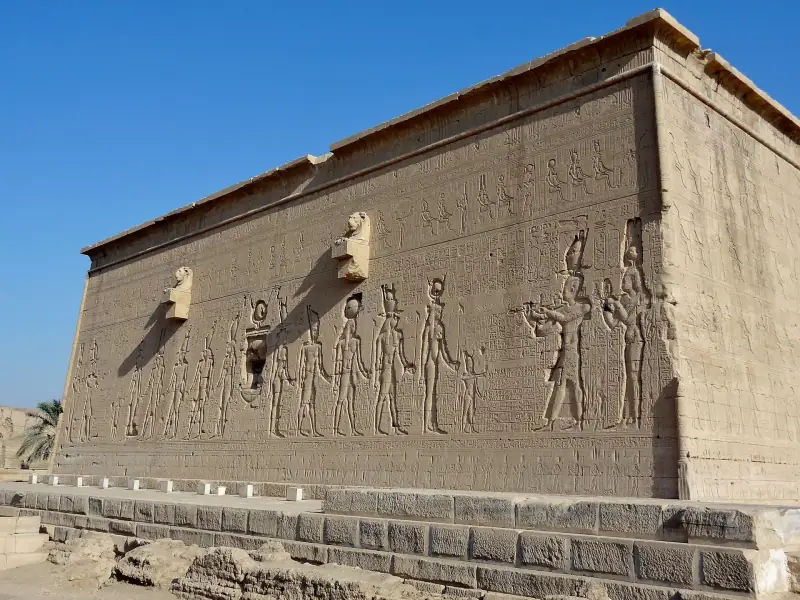
Dendera from Luxor: is the Temple of Hathor worth the detour?
Dendera Temple from Luxor: distance, how to get there, hours, official prices, visit length and what you see (astronomical ceiling, roof, crypts).
Visiting Luxor: Karnak, the Valley of the Kings and the temples of ancient Thebes
What to see in Luxor? Karnak, Luxor Temple, the Valley of the Kings, Hatshepsut: organizing the two banks, visit length and practical tips.
Visiting Aswan: Philae Temple, Abu Simbel, felucca rides and Nubia
What to see in Aswan? Philae Temple, Abu Simbel, a felucca around Elephantine, a Nubian village and the High Dam: visit planning, durations and tips.
Ready-made
Egypt itineraries
4 days
3 days
3 days in Cairo: a day-by-day itinerary from the pyramids to Islamic Cairo
What to do in 3 days in Cairo? Giza pyramids, museums, Coptic and Islamic Cairo, Saqqara: a realistic day-by-day itinerary with practical tips.
7 days
Egypt 7-day itinerary: Cairo, Luxor and Aswan in one week
CairoLuxorAswan