What to see
Visiting Islamic Cairo: Khan el-Khalili, mosques and the Citadel
We may earn a commission when you book through links on this page, at no extra cost to you. We don't visit or try the places we cover: we summarize published sources. How we work
In short
- Islamic Cairo has been a UNESCO World Heritage site since 1979; one full day covers Al-Muizz Street, Khan el-Khalili and a few mosques.
- Add the Citadel and Ibn Tulun Mosque as a second half day; take a taxi or ride-hailing between the north and south sectors.
- Cover shoulders and knees for mosques, and take off your shoes at the entrance.
- Bargain with a smile in the bazaar, compare two or three stalls, and beware of improvised guides.
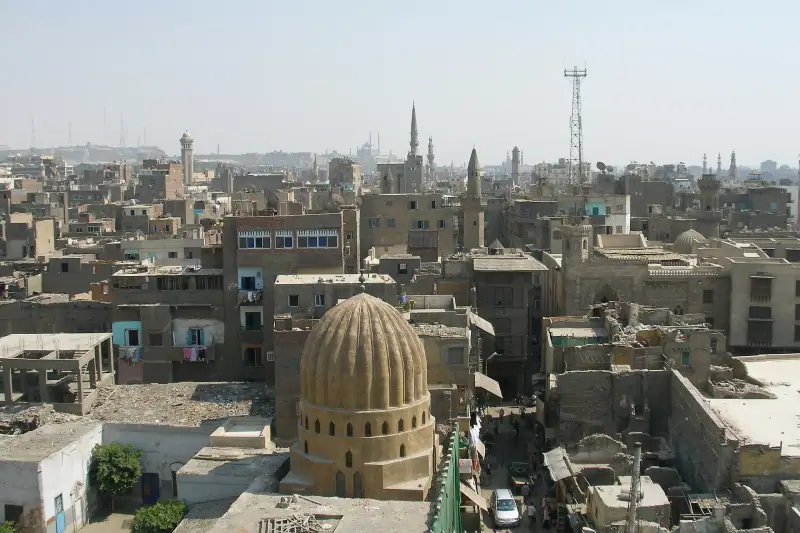
When people talk about Cairo, they first think of the pyramids. Yet the historic heart of the city offers a completely different experience: a maze of lanes, minarets, fortified gates and markets where you move to the rhythm of the calls to prayer and the smell of spices. Islamic Cairo has been a UNESCO World Heritage site since 1979 and holds one of the largest concentrations of medieval monuments in the Muslim world.
This guide helps you organize a day on foot in the district: the order of visits, the monuments worth seeing, what to wear and a few habits for enjoying the bazaar without stress. We have deliberately avoided naming specific shops or restaurants, whose reputation changes quickly: rely on recent reviews.
Understanding Islamic Cairo before you go
The district is not a single monument but several centuries of history layered on top of each other. Cairo was founded in the 10th century by the Fatimid dynasty, then expanded by the Ayyubids and above all by the Mamluk sultans, who left most of the great mosques and madrasas visited today.
To get your bearings, remember three poles:
- The Khan el-Khalili and Al-Azhar sector, in the north, with the bazaar, Al-Azhar Mosque and Al-Hussein Mosque;
- Al-Muizz Street, the historic pedestrian axis lined with Fatimid and Mamluk monuments, linking the old city gates;
- The Citadel sector, in the south, with the Sultan Hassan mosque-madrasa and Ibn Tulun Mosque nearby.
If you are staying in the capital, our guide on choosing where to stay in Cairo details the advantages of lodging in the old town or in neighboring districts.
Khan el-Khalili: Cairo’s great bazaar
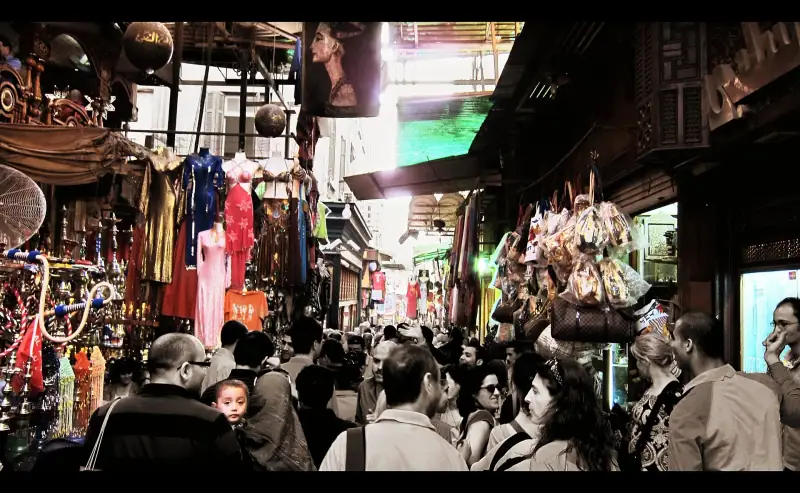
The Khan el-Khalili souk dates back to the Mamluk era, in the 14th century, and remains one of the most famous markets in the Middle East. You come across shops of openwork metal lanterns, papyrus, spices, jewelry, fabrics, hookahs and souvenirs of all kinds. Beyond the most touristy part, the neighboring lanes hold artisans’ workshops and shops aimed at residents.
A few tips for visiting:
- Come in late morning or late afternoon: the bazaar comes alive and the heat becomes more bearable.
- Bargain with a smile. Prices are generally not displayed; compare two or three stalls before buying.
- Beware of improvised guides who offer to “show you a place”: they often lead you to a partner shop.
- Keep your belongings close, as in any busy place.
The historic cafés lining the bazaar are a good chance to sit down, drink a mint tea or a Turkish coffee and watch life in the district. To extend the experience to the plate, see our article on Egyptian cuisine and dishes to try.
Guided tour of Islamic Cairo
With an Egyptologist or historian guide, decode the history of the mosques, gates and lanes, and avoid getting lost in the bazaar maze.
Al-Muizz Street: an open-air museum
Al-Muizz Street is the historic axis of Fatimid Cairo. Today largely pedestrian, it stretches from around Bab al-Futuh gate in the north to Bab Zuweila gate in the south. Along this route, stone facades, minarets, public fountains and monumental portals follow one another a few steps apart.
It is the most pleasant walk in the district, especially at the end of the day, when the golden light brings out the carved decoration and the monuments are lit. Take the time to enter the mosques, madrasas and old residences open to the public: some let you climb a minaret or a terrace for a panorama over the city rooftops.
The old fortified gates of the city, including Bab al-Futuh, Bab al-Nasr and Bab Zuweila, date from the Fatimid era. They recall that medieval Cairo was a city protected by a wall, of which these portals are the most spectacular remains.
The great mosques: Al-Azhar, Al-Hussein and Ibn Tulun
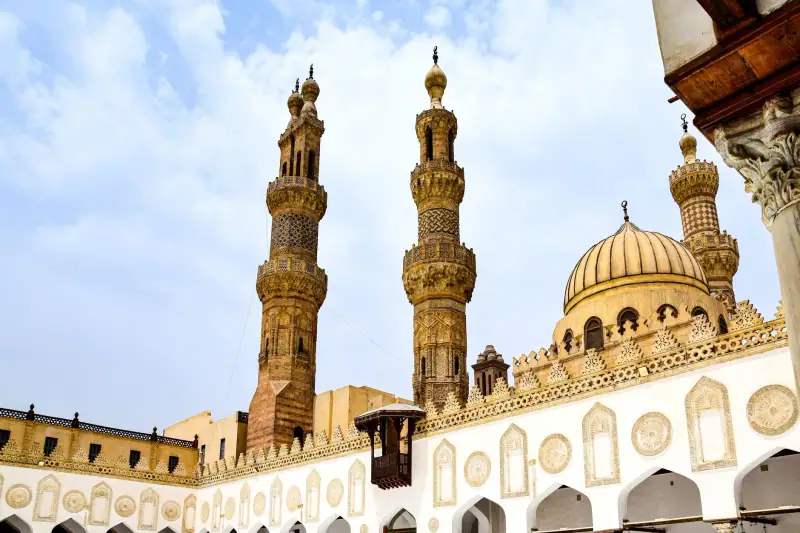
The district has so many mosques that you have to pick a few. Here are the most emblematic:
- Al-Azhar Mosque, founded in the late 10th century, is tied to one of the oldest teaching institutions still active. Its courtyard and minarets illustrate the layering of eras, from Fatimid architecture to Mamluk and Ottoman additions.
- Al-Hussein Mosque, at the edge of the bazaar, is a heavily visited place of devotion. At times, access to the inside may be limited for non-Muslims: ask at the entrance.
- Ibn Tulun Mosque, from the 9th century, is famous for its vast square courtyard and its minaret with a spiral ramp. It is one of the oldest and largest mosques in the city, and one of the most photogenic.
- The Sultan Hassan mosque-madrasa, from the 14th century, impresses with its monumental proportions and high vaults, facing the Citadel.
Hotels near Islamic Cairo
Staying close to the historic district avoids long car rides: compare accommodation downtown and in Islamic Cairo.
Saladin’s Citadel and the Mohamed Ali Mosque
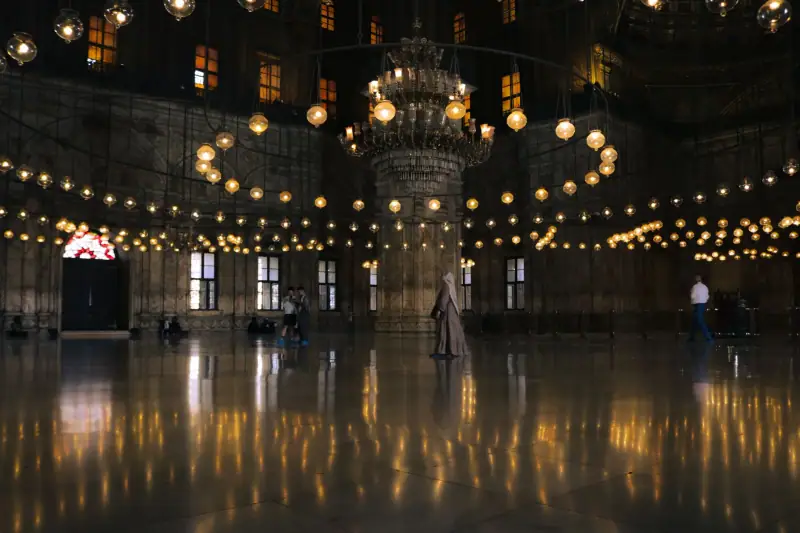
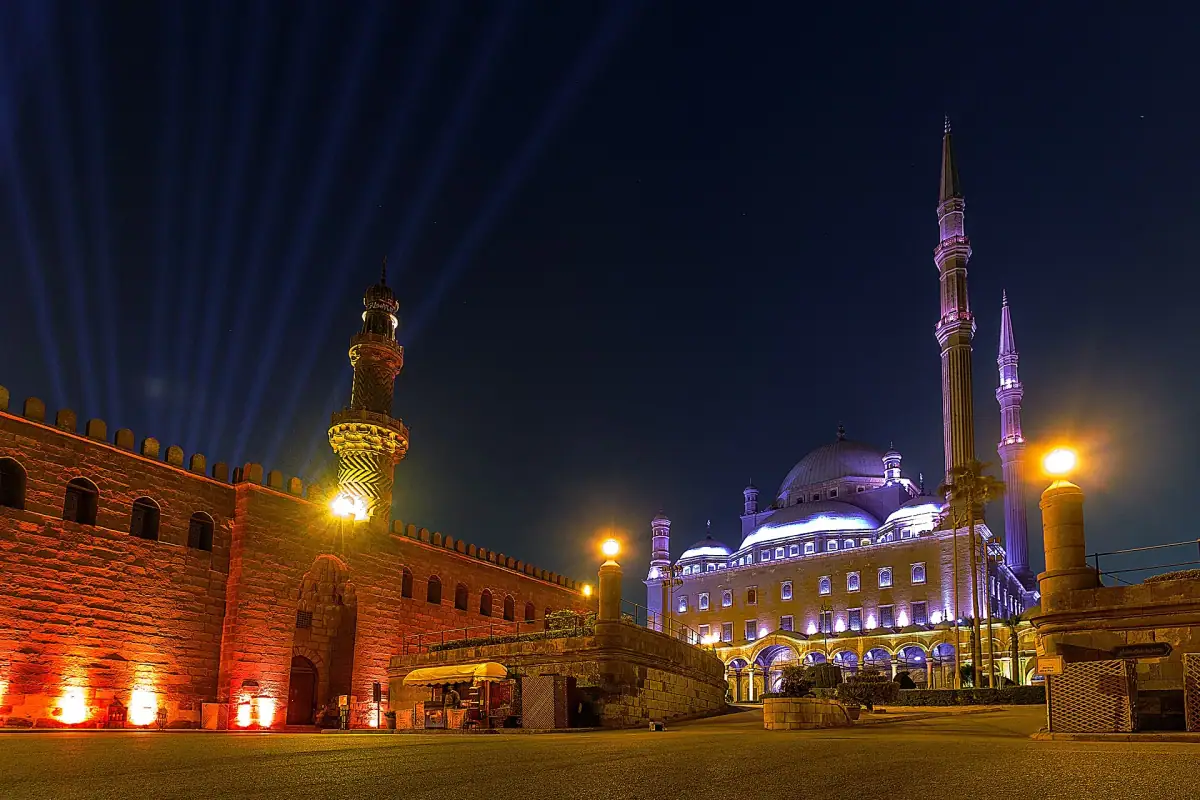
Perched on a promontory overlooking the city, the Citadel was founded in the 12th century by Saladin and served as the seat of power for several centuries. It houses several mosques and museums. The most visible is the Mohamed Ali Mosque, built in the 19th century in a style inspired by the great mosques of Istanbul, with its domes and two slender minarets that dominate Cairo’s skyline.
The terrace offers one of the best viewpoints over the city: in clear weather, you can make out the silhouettes of the pyramids in the distance. Allow about two hours for the visit, avoiding the middle of the day in summer, as the site is very exposed to the sun. To discover the pyramids themselves, see our guide to the Giza pyramids and the Sphinx.
Organizing your day in Islamic Cairo
Here is a logical sequence that limits taxi trips:
- Morning: the Citadel, then the Sultan Hassan mosque-madrasa and Ibn Tulun Mosque, located in the same southern sector.
- Lunch: a break in a traditional restaurant, moving by taxi or ride-hailing to the north of the district.
- Afternoon: Al-Azhar Mosque, Khan el-Khalili and a tea in a bazaar café.
- End of day: a walk along Al-Muizz Street, toward Bab Zuweila or Bab al-Futuh, in the evening light.
This day is dense: if you travel with children or in great heat, split it into two half days. You can also combine it with a stop at the downtown museum or the Grand Egyptian Museum, to plan on another day.
Tours and excursions in Cairo
Walking tours, Citadel visits or combos with the pyramids: compare the activities offered in Cairo.
Practical tips for a good visit
Dress code. To enter mosques, cover shoulders and knees. Women may need a light scarf, and everyone takes off their shoes at the entrance. A small bag to store your shoes is useful.
Prayer times. Mosques may restrict access to visitors during prayers, particularly on Friday at midday. Check conditions locally and build flexibility into your schedule.
Season. The cooler months, from autumn to spring, are the most pleasant for walking. Our article on the best time to visit Egypt helps you choose your dates.
Photos. In places of worship and around residents, always ask permission before photographing. Some monuments apply specific fees for cameras or drones, or ban them: ask at the entrance.
Safety and comfort. Bring water, a hat, sunscreen and small change for tips. Preferably use ride-hailing apps or taxis whose fare is agreed in advance. Before you leave, check the official travel advice of your government: travel.state.gov (US), GOV.UK (UK), travel.gc.ca (Canada), Smartraveller (Australia) (checked November 2026).
Frequently asked questions
How long do you need to visit Islamic Cairo?
A full day lets you cover Al-Muizz Street, Khan el-Khalili and a few mosques. If you add the Citadel and Ibn Tulun Mosque, allow a second half day.
How should you dress to visit Cairo's mosques?
Shoulders and knees must be covered, for men and women alike, and women bring a light scarf for the hair if needed. You take off your shoes at the entrance: shoes that are easy to remove are handy.
Can you bargain at Khan el-Khalili?
Yes, bargaining is part of custom in the bazaar shops, where prices are generally not displayed. Compare several stalls, stay smiling and do not hesitate to walk away if the price does not suit you.
Can you visit Islamic Cairo on foot?
The center of the district is very walkable, notably along Al-Muizz Street. To reach the Citadel or Ibn Tulun Mosque, a taxi or ride-hailing is more comfortable.
What is the best time to visit Islamic Cairo?
From autumn to spring, temperatures are more bearable for walking in the lanes. Whatever the season, leave early in the morning or at the end of the day to avoid the hottest hours.
More Egypt guides
Keep reading
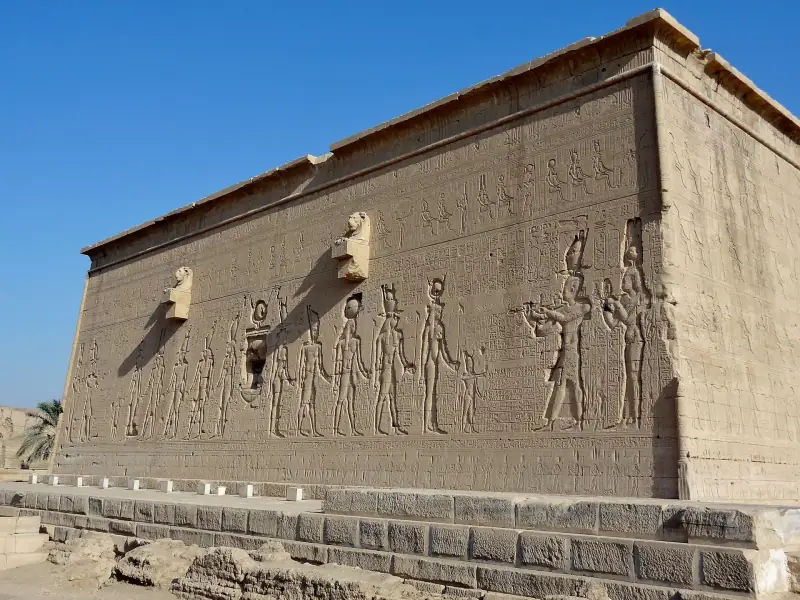
Dendera from Luxor: is the Temple of Hathor worth the detour?
Dendera Temple from Luxor: distance, how to get there, hours, official prices, visit length and what you see (astronomical ceiling, roof, crypts).
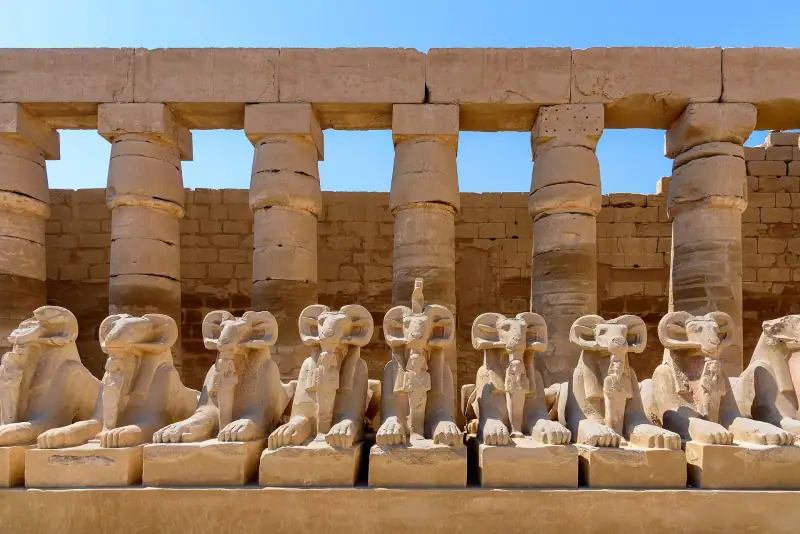
Visiting Luxor: Karnak, the Valley of the Kings and the temples of ancient Thebes
What to see in Luxor? Karnak, Luxor Temple, the Valley of the Kings, Hatshepsut: organizing the two banks, visit length and practical tips.
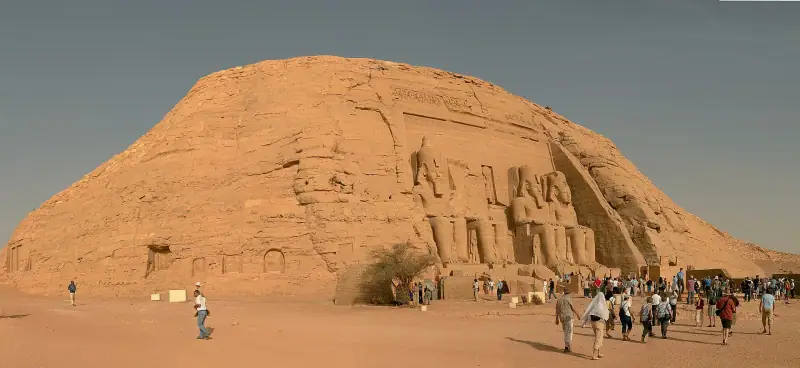
Complete guide to visiting Egypt: regions, must-sees, budget and tips
Visiting Egypt: regions, cities, must-see sites, best time, transport, accommodation and budget. The pillar guide to prepare your trip.
Ready-made
Egypt itineraries
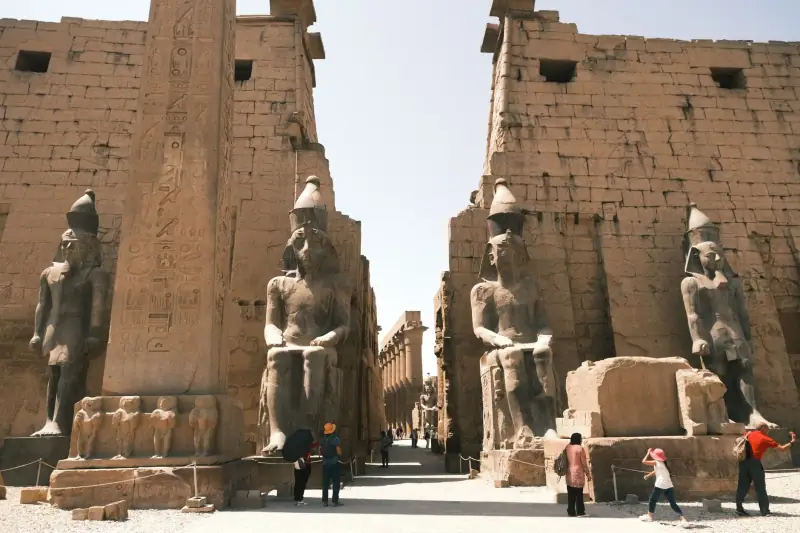
4 days
3 days
3 days in Cairo: a day-by-day itinerary from the pyramids to Islamic Cairo
What to do in 3 days in Cairo? Giza pyramids, museums, Coptic and Islamic Cairo, Saqqara: a realistic day-by-day itinerary with practical tips.
7 days
Egypt 7-day itinerary: Cairo, Luxor and Aswan in one week
CairoLuxorAswan