Where to stay
Where to Stay in Bergerac: Neighborhoods and Lodging Types to Choose From
We may earn a commission when you book through links on this page, at no extra cost to you. We don't visit or try the places we cover: we summarize published sources. How we work
In short
- For a first stay, the old town around the Pélissière and Myrpe squares is the most pleasant: half-timbered lanes, terraces, restaurants and quays on foot.
- Near the station is a good, often cheaper option if you arrive by train; the left bank is calmer with easier parking.
- With a car, sleeping in the Monbazillac, Pécharmant or Saussignac vineyards puts you among the vines a few minutes from town; a designated driver is needed.
- Bergerac is about 75 km (47 mi) from Sarlat: split a longer stay between Bergerac and Sarlat to limit driving.
Bergerac is often seen as a mere stop on the road to Sarlat, yet it has what it takes for an excellent stay: an old half-timbered town center, quays along the Dordogne, museums, a well-known market and one of the most renowned vineyards of the southwest a few minutes away. It is also a practical base, with a train station, shops and a varied range of lodging, often more affordable than in Sarlat. What remains is choosing where to drop your bags: in the lanes of the old center, by the river, near the station, on the left bank or right in the middle of the vines.
This guide deliberately recommends no particular establishment: prices, closures and reviews change fast. It gives you the criteria to choose the right neighborhood and the right type of lodging, then sends you to comparison sites to check availability for your dates. To plan your days there, our guide to visiting Bergerac covers the monuments, museums and market.
Understanding Bergerac’s geography before booking
Bergerac grew up beside the Dordogne, where the river served as a trade axis. For centuries, gabarres, the flat-bottomed boats, loaded the Périgord’s wines and goods there for Bordeaux. This river role explains the shape of the town: a dense old center on the right bank, a port and quays below, and, across the bridge, more residential left-bank neighborhoods.
The town is medium-sized and can be walked. But the mood varies from one sector to another. The old town concentrates the activity, terraces and most visitors, the quays offer calmer walks, the area around the station is functional, and the surrounding wine country changes pace completely. Your choice depends on three criteria: how you travel, the length of your stay and the mood you want.
Bergerac is the capital of the Purple Périgord, named for the color of the vines in fall. It lies about 75 km (47 mi) from Sarlat, about fifty kilometers (31 mi) from Périgueux and about 90 km (56 mi) from Bordeaux: a crossroads position between the Périgord and the Bordeaux region. Our 4-day itinerary through the Green, White and Purple Périgord shows how to fit it into a circuit.
Old Bergerac: sleeping in the heart of the half-timbered lanes
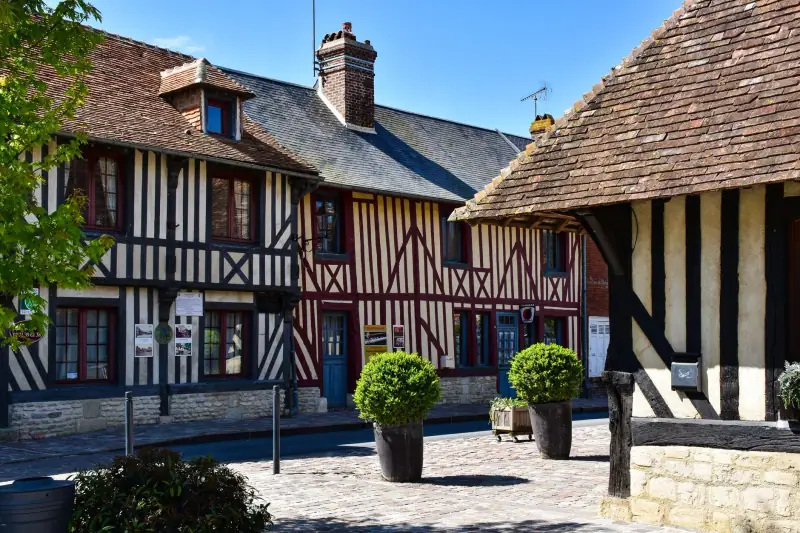
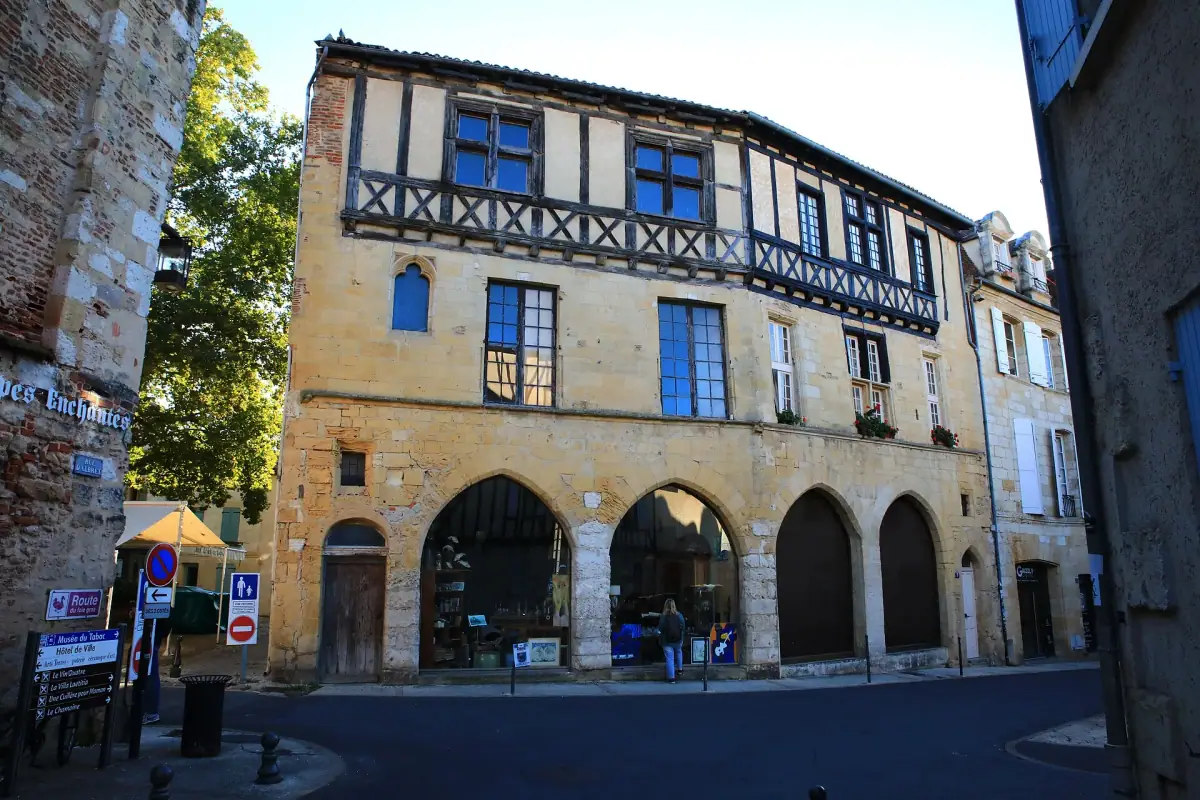
This is the most immersive choice, and the one to consider for a first stay. The old town is organized around the Place Pélissière, where the statue of Cyrano stands, and the Place de la Myrpe. You find often-pedestrian lanes lined with half-timbered houses, terraces, local-product shops, wine cellars and most of the restaurants. Sleeping here means stepping out of your room straight into an old setting, enjoying the neighborhood early in the morning when light skims the facades, and finding it quiet again in the evening.
Strengths:
- Everything is done on foot: museums, churches, market, restaurants and quays.
- A nice atmosphere in the evening, notably in season, when terraces come alive.
- Old buildings converted into hotels or B&Bs, often full of character.
- Immediate proximity to food shops and the market, to put together your meals with Périgord products. Our guide to Périgord food specialties will help you choose.
Limits:
- The old heart is largely pedestrian: many lodgings have no private parking. Always ask for the host’s recommended solution (nearby public car park, authorized access to drop bags).
- Lanes are narrow and sometimes cobbled: wheeled suitcases and reduced mobility are a poor fit.
- Possible noise on some summer evenings, depending on the room’s exposure, notably around lively squares.
- Generally higher rates than on the outskirts, especially on fine-weather weekends.
Who it suits: Couples, short-stay travelers, architecture and food fans, and everyone arriving by train or wanting to leave the car in a car park.
Hotels and lodging in Bergerac
Compare hotels, B&Bs and apartments of the old center and neighboring neighborhoods, with availability for your dates.
The quays and the port: sleeping beside the Dordogne
Go down toward the river and the mood changes. The port area recalls the major role the Dordogne played in the town’s economy: warehouses, developed quays, a walk along the water and a museum devoted to river trade. Sleeping nearby means a soothing setting for a morning walk or a drink at sunset, while staying a few minutes’ walk from the old town.
Strengths:
- A calm and pleasant setting, with developed banks for walking and jogging.
- An intermediate position between the lively center and the river.
- Practical apartments for stays of a few nights.
Limits:
- Some rooms face busy roads: check the exposure.
- The best-located addresses have prices close to those of the center.
- Fewer restaurants in the immediate vicinity than on the squares of the old town.
Who it suits: Walkers, travelers who like water, stays of a few days at a quiet pace. To enjoy the river differently, our guide to canoeing down the Dordogne will help you pick a route.
The station area: practical and more affordable
If you arrive by train, the area around the station is an obvious option. The sector is more functional than picturesque, but it has clear advantages: mid-sized hotels, often gentler rates, easier parking and a very short trip between platform and room. The old town is reached on foot in a few minutes, which remains very reasonable.
Strengths:
- Ideal for arriving late or leaving early, for example for a train to Bordeaux.
- More parking choice for travelers by car.
- Often better value than in the very center.
Limits:
- Little architectural charm: you sleep in an ordinary city neighborhood.
- A calmer mood in the evening, even empty.
Who it suits: Travelers without a car, one-night stops, tighter budgets and those who put practicality first.
The left bank: calm and simpler parking
Across the Dordogne, left-bank neighborhoods are more residential. The old town is reached on foot by crossing the bridge, a walk of a few minutes. You find hotels, B&Bs and apartments, with parking generally easier than in the old center and views of the town and river from some addresses.
Strengths:
- A calmer environment, away from the center’s terraces.
- Simpler parking for those traveling by car.
- Pleasant views of old Bergerac from the opposite bank.
Limits:
- Fewer restaurants and shops in the immediate vicinity.
- A smaller supply of charming lodging.
- You must cross the bridge on foot after dinner.
Who it suits: Travelers by car who want to sleep in calm while keeping the center within walking distance.
Which type of lodging to choose in Bergerac?
The town and its surroundings offer a full palette. Here are the main types, with what to check before booking.
The hotel: for simplicity and flexibility
A hotel suits short stays and travelers who want classic service: reception, breakfast, daily cleaning. In Bergerac you find both establishments with character set in old buildings of the center and functional hotels near the station or on the outskirts.
Check: whether there is parking (and its possible cost), an elevator in old buildings, air conditioning if you come in midsummer, and reception hours if you arrive late.
The B&B: for charm and local advice
It is one of the Périgord’s great strengths. B&Bs are often set in stone houses, townhouses or former farms. The host knows the terrain: markets, producers, wine estates, good tables. Their advice is often worth more than any guidebook.
Good to know:
- Breakfast is generally included and often homemade.
- Capacity is limited: book early for weekends and summer.
- Agree on arrival time with the host, especially if you come by train.
- Some places close in winter.
The apartment and furnished rental: for freedom
For two to three nights or more, an apartment in the center or near the quays offers a kitchen and more space. You can bring back market products and cook for yourself, a real pleasure in such a food-loving region.
Check: how you arrive (key handover, key box), cleaning fees, whether linens are provided and whether parking is possible.
The cottage: for longer family stays
If you stay a week or travel with family or friends, a cottage in the countryside near Bergerac is often cheaper and more comfortable: garden, sometimes a pool, several bedrooms. You do need a car, since these lodgings are rarely served by public transport.
Check: the changeover day (often Saturday in summer), the actual distance to Bergerac and the condition of the access road.
The campsite: a Dordogne tradition
The Dordogne is camping country par excellence. Around Bergerac, you find simple family sites, campsites with a pool and equipped accommodations (mobile homes, cabins, equipped tents), sometimes beside the river. For families and tight budgets, it is often the cheapest option.
Good to know: the best-located pitches go early in July-August. Book several months ahead if you go in this period. This type of stay generally assumes a car.
Cottages, houses and rentals in the Dordogne
For a stay with family or friends, compare holiday houses and apartments around Bergerac and in the rest of the Périgord.
Sleeping in the vineyards: Monbazillac, Pécharmant and around
If you have a car, this is probably the most characteristic option in Bergerac. A few kilometers from town, the hills of Monbazillac, Pécharmant or Saussignac host B&Bs, cottages and lodgings set on wine estates or nearby. You sleep facing the vines, have breakfast in a garden and visit Bergerac by the day.
Strengths:
- Calm and hillside landscapes, especially beautiful in fall when the vines turn red.
- Direct contact with winegrowers, often ready to offer tastings and advice.
- Often gentle rates and lodgings with a garden or pool.
Limits:
- A car is essential, including for dinner.
- Watch out for drinking and driving: choose a sober driver or an organized visit.
- Fewer services nearby (shops, restaurants) than in town.
To understand the appellations before choosing your hillside, read our guide to Bergerac, Monbazillac and Pécharmant wines. A stop at the Château de Monbazillac, which overlooks the vines a few kilometers south of town, rounds out the stay well.
Tastings and visits around Bergerac
Wine tasting, estate visit or excursion in the Périgord: compare the activities available for your dates, without taking the wheel.
Bergerac, Sarlat or Périgueux: which base to choose?
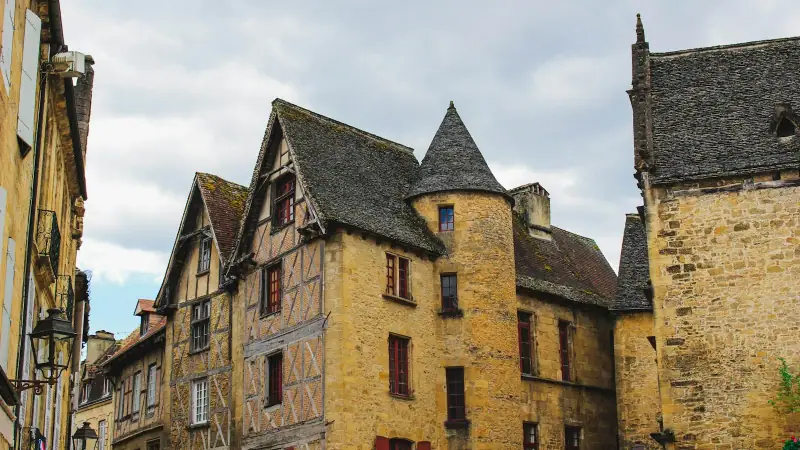
This is the question many travelers ask when preparing a stay in the Dordogne. The three towns do not have the same role.
Bergerac is ideal if your trip mixes vineyards, river and the small roads of the Purple Périgord, or if you want a lively town with a station and shops, less touristy than Sarlat. It is also well placed if you combine the Dordogne and the Bordeaux region.
Sarlat suits better if your trip revolves around the Black Périgord: Dordogne valley, châteaux, Vézère Valley, Lascaux. It concentrates visitors and lodging supply, with the prices and crowds that go with it. Our guide to sleeping in Sarlat-la-Canéda covers this choice.
Périgueux is the right option for the White Périgord and the Green Périgord, notably Brantôme. Our article on sleeping in Périgueux helps you compare.
The deciding criterion is daily driving time. From Bergerac, Sarlat is about 75 km (47 mi) away, a little over an hour by road: a round trip in a day is possible, but you will spend time at the wheel if you multiply trips in the Vézère Valley. One solution is to split the stay: two or three nights in Bergerac and the vineyards, then two or three in Sarlat or the Dordogne valley. You limit driving and discover two very different moods. To get around, see our guide to renting a car in the Dordogne.
When to book and when to go
The calendar affects prices, availability and mood.
- July-August: high season. The town is lively, terraces full and the best addresses fill several weeks ahead. Think about air conditioning in a heat wave, rare in old buildings.
- April to June and September-October: an excellent period. Temperatures are mild, crowds more moderate and choice wider. Fall is ideal for the vineyards, with the harvest and the colors of the vines. Our article on when to go to the Dordogne covers each season.
- November to March: the town is calmer, days short and some seasonal businesses close. It is an interesting period for food, provided you check openings.
For long weekends, long weekends around public holidays and school-holiday periods, plan further ahead. Favor a free-cancellation rate if your program is not entirely fixed.
Tips for choosing well
- Decide how you will get around first. Without a car, stay in old Bergerac or near the station. With a car, the vineyards become accessible.
- Check parking. It is the criterion most often neglected in the old center. Contact the lodging if the information is unclear.
- Look at the room’s exposure. A room on a courtyard or a high floor is quieter than one on a lively square.
- Read recent reviews. Focus on those of the last months and on comments mentioning noise, bedding and welcome.
- Check accessibility. Narrow stairs, cobbled lanes and no elevator are common in old buildings.
- Compare the total price. Tourist tax, cleaning fees, breakfast and parking: not everything is always in the displayed price.
- Time your lodging to the market. Saturday morning is the biggest event: sleeping in town makes it easier to arrive before the crowd.
What budget to plan
Rates vary a lot with the season, lodging type and neighborhood. In general:
- Camping remains the cheapest solution, especially for families.
- Hotels near the station and on the outskirts sit in a middle range, often more accessible than central Sarlat.
- B&Bs and boutique hotels of the old town are pricier, with large gaps depending on address and season.
- Cottages and apartments become advantageous once there are several of you or you stay several nights.
No precise prices are given here, since they fluctuate from year to year and week to week. Use comparison sites with your exact dates to get reliable rates, and always compare several options before booking. For an overall view of the cost of a stay, see our Dordogne budget guide.
In short
- For a first visit and a short stay: old Bergerac, within walking distance of everything.
- To arrive by train or limit the budget: the area around the station.
- For walks along the water: the quays and the port.
- For calm and easy parking: the left bank.
- For wine lovers, families and long stays: a B&B, cottage or campsite in the vineyards, with a car.
Whatever your choice, book early if you go in summer or at harvest time, check the parking question and stay a little flexible: Bergerac is discovered at a quiet pace, and the best lodging is the one that lets you enjoy it without rushing.
Frequently asked questions
What is the best neighborhood to stay in Bergerac?
For a first stay, the old Bergerac, around the Pélissière and Myrpe squares, is the most pleasant: half-timbered lanes, terraces, restaurants and quays are all walkable. If you arrive by train or want a gentler rate, the area around the station, a short walk from the center, is a good alternative.
Do you need a car to stay in Bergerac?
Not to visit the town: the center is compact and pedestrian. However, to reach the Monbazillac or Pécharmant wine estates, the surrounding villages and the Dordogne valley, a car is by far the most flexible solution, as public transport serves the countryside poorly.
Is Bergerac a good base for visiting the Dordogne?
Yes if your stay revolves around the vineyards, the Purple Périgord and the river, or if you want a town with a station and shops. To focus on Sarlat, the Vézère Valley and Lascaux, a base in the Black Périgord clearly limits driving: Sarlat is about 75 km (47 mi) away.
Where should you stay in Bergerac to visit the vineyards?
A B&B, cottage or estate lodging in the hills of Monbazillac, Pécharmant or Saussignac lets you sleep among the vines a few minutes from town. A car is essential, and the driver must stay sober: plan a reasonable tasting or an organized excursion.
Do you need to book far ahead in Bergerac?
In summer, during school-holiday periods, long weekends and grape-harvest periods, it is better to book several weeks ahead, especially for charming B&Bs. Out of season, availability is generally better. Favor a flexible-cancellation rate if your dates are not final.
How do you get to Bergerac without a car?
Bergerac has a train station, on a regional line linked notably to Bordeaux and Sarlat, and a regional airport near the town. Timetables and connections change by season: check the carriers' official sites before booking.
How many nights should you plan in Bergerac?
One to two nights are enough for the town itself: old town, museums, quays and market. Allow three nights or more if you want to add the wine estates, the Château de Monbazillac and a few trips in the Purple Périgord.
More Dordogne guides
Keep reading
Where to Stay in Domme: Neighborhoods and Lodging Types to Choose From
Where to stay in Domme? Bastide center, viewpoint surroundings, hamlets and valley: neighborhoods, hotels, B&Bs, cottages and campsites to choose well.
Where to Stay in Brantôme: Neighborhoods and Lodging Types to Choose From
Where to stay in Brantôme? Island center, abbey surroundings, Dronne banks or Green Périgord countryside: neighborhoods, hotels, B&Bs, cottages, campsites.

Rouffignac Cave: Train Visit, Prices, Booking and Opening Dates
Rouffignac Cave: prices, hours, booking (5 weeks ahead), length of the electric train ride and closure until March 28, 2027. Tips for families.
Ready-made
Dordogne itineraries
7 days
One Week in the Dordogne: A Day-by-Day Itinerary
Sarlat-la-CanédaBrantômeBergerac
5 days
Dordogne in 5 Days with Kids: Stops, Kilometers and a Realistic Pace
Dordogne in 5 days with kids: an itinerary from Sarlat with distances, drive times, breaks and suitable activities, without overloaded days.
Can be adapted in the planner
3 days
3-Day Dordogne Itinerary: Sarlat, the Vézère and Châteaux
What to do in 3 days in the Dordogne? A day-by-day itinerary around Sarlat: Lascaux, the Vézère Valley, châteaux, villages and practical tips.
Can be adapted in the planner