Things to do
Brazil with Kids: Trip Ideas and Activities for Families

We may earn a commission when you book through links on this page, at no extra cost to you. We don't visit or try the places we cover: we summarize published sources. How we work
In short
- Travel less: two or three bases cover a family trip well. Classic formulas are Rio, Paraty and Foz do Iguaçu; a calm beach stay on Florianópolis island; or sun and water in the Northeast.
- Kid favorites include the Sugarloaf cable car, AquaRio, the Parque das Aves at Iguaçu, boat trips in Paraty, natural pools in Pernambuco and Alagoas, and Beach Park near Fortaleza.
- Protect children from sun and mosquitoes, pick sheltered beaches, respect the flags and never take your eyes off children in the water.
- Brazilian school holidays (January and July) fill beaches and sites: book early; heat and humidity in December and January can be tiring for the youngest.
Brazil is not the first destination that comes to mind for a vacation with kids. The trip is long, the country is immense and its safety reputation is a concern. Yet, well prepared, a family stay there is entirely feasible, and children find plenty to marvel at: birds that let you come close, golden-sand beaches, giant slides, clear rivers and capybaras lounging by the water.
This guide does not try to cover everything. It offers trip ideas sorted by type of wish, activities that appeal to children of different ages, and the precautions that really matter: sun, mosquitoes, beaches, getting around. For Iguaçu Falls, only the Brazilian side is covered.
Choosing your stay well: few stops, short trips
The first rule of a family trip to Brazil fits in one sentence: travel less. Distances are considerable, and a day of transport weighs more on children than on adults. It is better to limit yourself to two or three bases and radiate out from them.
Here are three formulas that work well:
- The classic trio: Rio de Janeiro, Paraty and Foz do Iguaçu. Trips are reasonable, activities varied, and each stop offers something very different. It is the plan suggested in the two-week itinerary for travelers with children.
- The calm beach formula: a relaxed stay on Florianópolis island, in the South, with a rental or hotel near a sheltered beach, possibly complemented by an excursion inland.
- The sun and water formula: the Northeast, around Fortaleza or Porto de Galinhas, for families whose main plan is swimming, with a water park as backup on days of fickle weather.
Think about the calendar too. Brazilian school holidays, especially in January and July, fill beaches and natural sites: prices rise and lines lengthen. The guide when to go to Brazil details the climate by region. Keep in mind that humid heat in December and January can be trying for the youngest, and that more temperate periods often suit outdoor visits better.
Rio de Janeiro with kids: beaches, cable car and aquarium
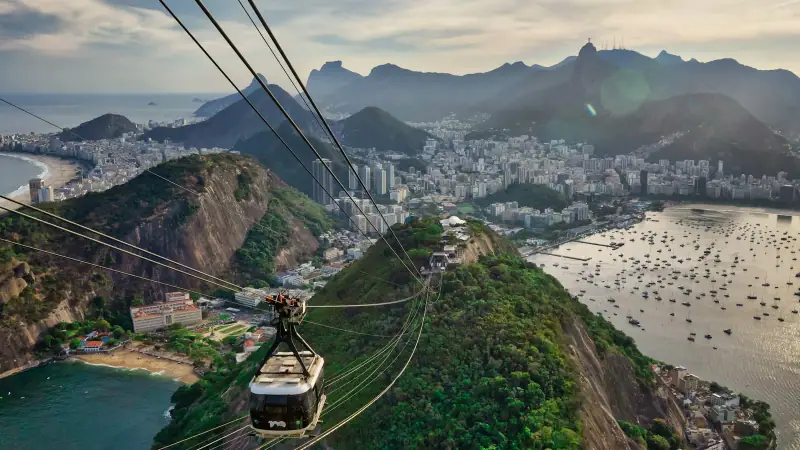
Rio is often the gateway of the trip, and the city lends itself well to a family visit if you choose your activities. The article what to do in Rio de Janeiro details the big classics; here are those that speak to children.
Sugarloaf by cable car. The cabin ride up to the rock that dominates the bay is an adventure in itself for a child, with open views of the city and the ocean. Go preferably early in the morning or late in the afternoon, when the heat is lower and the light is lovely.
Christ the Redeemer by the little train. The cog-train ride through the Tijuca forest is more fun than the road, and a discount exists for children aged 7 to 11 according to information collected in 2026. Practical details, ways up and booking tips are in the article on Christ the Redeemer.
AquaRio. Located in the Gamboa neighborhood, in the port area, it is presented by its official site as the largest marine aquarium in South America, with about 10,000 animals of around 350 species. It is a very good option on rainy or very hot days, as the visit is indoors. Hours and fees change: check the official site before coming.
Museu do Amanhã. This science museum is on Praça Mauá, in the center. It offers an interactive approach to the planet’s future challenges, which can appeal to older children and teenagers. Fees and opening days change: check before going.
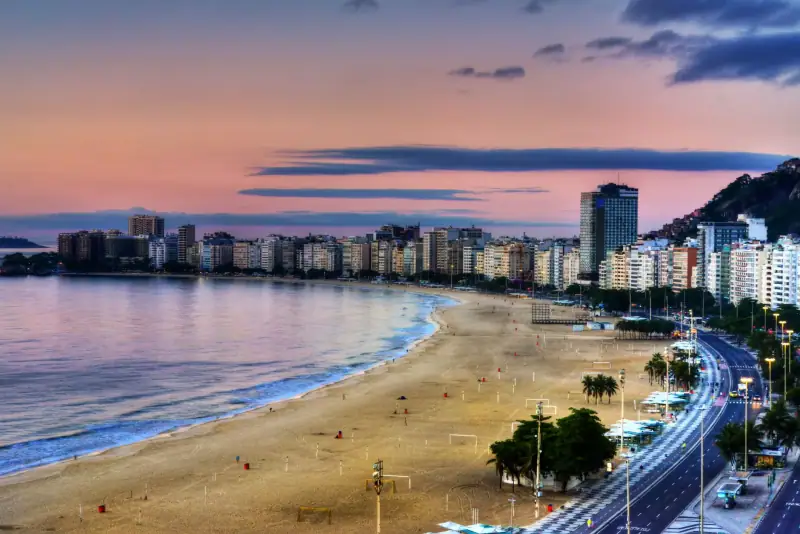
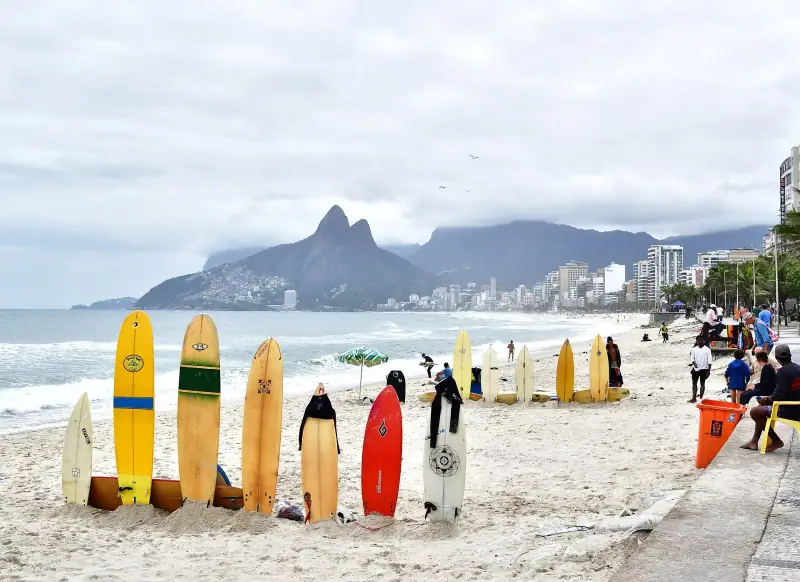
Beaches. Copacabana and Ipanema are spectacular, but the sea there is often rough. With young children, stay near the lifeguard posts, respect the flags and avoid swimming when waves are strong. To choose the neighborhood to sleep in, including from a safety angle, see the guide where to stay in Rio de Janeiro.
Paraty and the Costa Verde: boats, swimming and cobbled streets
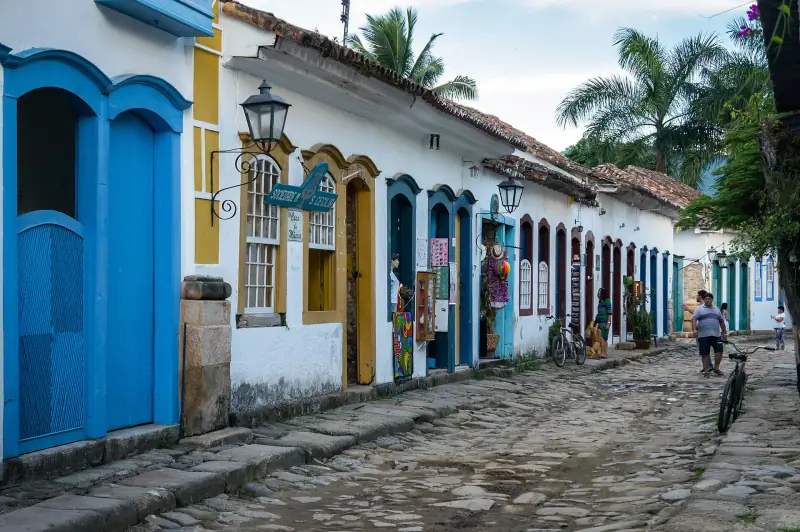
A few hours’ drive from Rio, Paraty charms families with its quiet atmosphere. The cobbled historic center is a pleasure to walk, and traffic is limited. But the main attraction for children is boat rides in the bay, with swimming stops on beaches and islets reachable by sea.
To go further, the guide Paraty and Ilha Grande presents the possible excursions. Boat trips are generally booked ahead in high season. Always check that there are life jackets of the right size for children before boarding, and do not hesitate to choose another operator if the equipment seems insufficient.
For sleeping, the historic center has the advantage of proximity, but some rooms are noisy on weekends. The article where to stay in Paraty compares the areas.
Family-friendly lodging in Florianópolis
Compare apartments, residences and hotels near the island's calm beaches, with rooms for three or four people.
Foz do Iguaçu: the falls, the birds and the dam
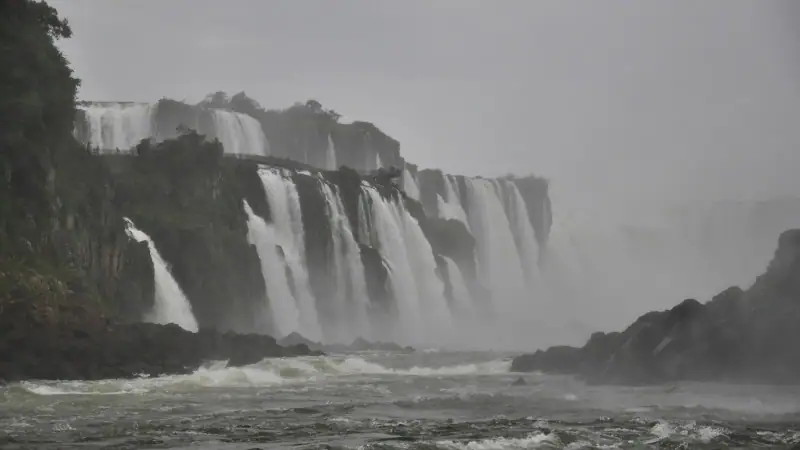
The Brazilian side of Iguaçu Falls is one of the easiest stops of a family trip. The trail along the falls is built and fenced, about 1.2 km (0.75 mi) long, and it is not a hike in the strict sense: children who walk well cover it without difficulty, and buses inside the park, included in the ticket, serve several stops. Strollers are not always practical in every section: a baby carrier is often more comfortable.
The high point is the walkway that extends facing the Devil’s Throat: spray soaks visitors, which children love. Bring a light windbreaker and protect phones. The detailed guide, Iguaçu Falls, Brazilian side, explains how the visit is organized. Coatis prowl around visitors: keep food out of their reach and explain to children that feeding them is forbidden.
The Parque das Aves. About 300 meters (about 1,000 ft) from the entrance of the national park, this conservation center is presented by its official site as a place devoted to preserving Atlantic forest birds. In several walk-through aviaries, you walk among toucans, macaws and scarlet ibises. It is often the children’s favorite moment, and a visit of one to two hours is enough.
The boat ride. Outings of the Macuco Safari type approach the foot of the falls. Age and height conditions are set by the operators: ask before booking.
Itaipu Dam. For children curious about engineering, a visit to the dam, one of the largest in the world, can complete the day. Options change: ask there.
Family excursions at Foz do Iguaçu
Falls, Parque das Aves, boat ride: compare tickets and guided visits, and check the age conditions of each activity.
Florianópolis: the island of beaches for families
In the South, Florianópolis island gathers dozens of beaches with very different moods. For families, it is mainly those in the north of the island, such as Jurerê and Canasvieiras, that are sought: the water is calmer, services (restaurants, shops, umbrella rentals) are close. Conversely, the open-sea beaches, such as Joaquina or Mole, are prized by surfers and poorly suited to young children.
Beyond swimming, the island offers calm activities: walks in villages of Azorean heritage such as Santo Antônio de Lisboa or Ribeirão da Ilha, boat rides, dunes to explore as a family. The guide visiting Florianópolis details all this, and the article where to stay in Florianópolis compares the areas by type of stay. Outside Brazilian school holidays, the South offers good value.
For theme-park fans, Beto Carrero World, in Penha, on the coast of Santa Catarina state, is generally presented as the largest theme park in Latin America. Opened in 1991, it mixes rides, shows and a zoo. It is at a distance that requires a day trip from the island: check the travel time from your starting point and access conditions on the park’s official site before committing.
Finally, the Serra Gaúcha, with Gramado and Canela, is cited among the easiest destinations for families: see the guide to southern Brazil.
The Northeast as a family: beach, water park and natural pools
In the Northeast, families come first for the warm sea. Several ideas are worth remembering.
Beach Park, near Fortaleza. About twenty kilometers (12 mi) from the center, on Porto das Dunas beach, this water park is one of the largest in Latin America. It brings together slides, pools and attractions for all ages. It is an excellent solution on very hot days. The article visiting Fortaleza explains how to organize the day.
Natural pools. Around Porto de Galinhas, in Pernambuco, and at Maragogi, in Alagoas, reef banks form natural pools at low tide, explored by boat. The water is calm and children can watch the fish with a mask and snorkel. Times depend on tides: ask the operator. The guide to Northeast Brazil presents these stops.
The Lençóis Maranhenses. The dunes and lagoons can fascinate older children, but access needs 4x4 trips and long days. Keep this stop for children who handle transfers well. See the article on the Lençóis Maranhenses.
Pantanal and Bonito: nature at a child’s height
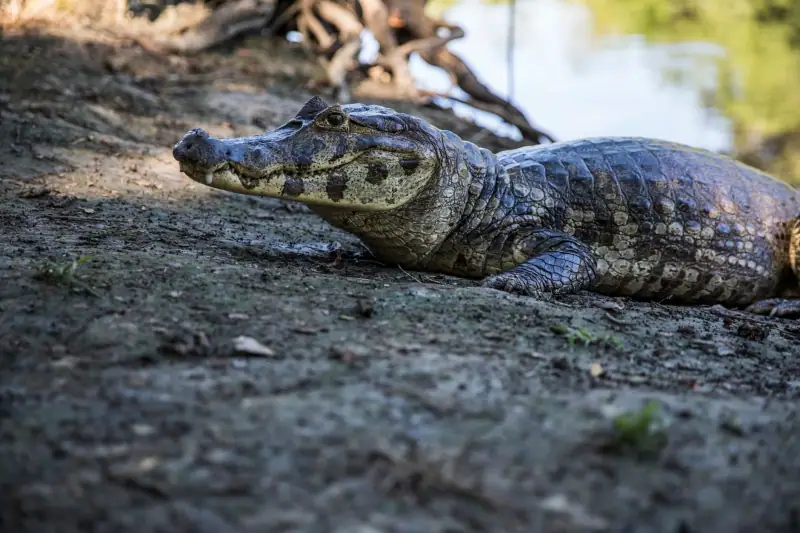
For families who like nature, the Pantanal is one of the best places in South America to watch animals with little effort: capybaras, caimans, colorful birds. Capybaras live in family groups near the water and let you approach, but it is better to keep your distance.
A common-sense rule applies: do not promise your children they will see a jaguar. Wildlife watching remains a matter of luck and patience, and it is the pleasure of discovery, more than certainty, that should be highlighted. The guide to the Pantanal and Bonito details the possible bases.
In Bonito, the water is clear and swimming is at the heart of the experience: people come as a family as well as a couple. River floats, such as the one on the Rio Sucuri, are often presented as accessible to all ages, but age conditions are set by each operator. Some longer outings tire the youngest: ask for the duration and minimum age before booking. The trip from Campo Grande takes several hours by road, which argues for a stop of two to three days.
The Amazon with kids: think it over
The Amazon is a striking memory for children, but it demands preparation. Heat, humidity, mosquitoes and boat trips weigh more with toddlers. If you insist, favor children old enough to understand safety instructions, lodging close to Manaus and an operator that explicitly accepts children. The articles visiting Manaus and the Amazon beyond Manaus present the possibilities. Talk to your doctor or a travel clinic beforehand, and see the CDC (US) or TravelHealthPro (UK) pages.
Protecting children from sun and mosquitoes
In the tropics, the sun is strong all year. Apply a high-SPF sunscreen, reapply every two hours and after each swim, have children wear a hat and a UV-protective shirt and limit exposure during the hottest midday hours.
Mosquitoes are numerous near water and forest, especially in the hot season. Have children wear long, light-colored clothing at the end of the day, use a mosquito net if the lodging is not protected, and check the product label of any repellent for age limits. For infants and young children, ask your doctor or a travel clinic, and see the official travel health pages (CDC in the US, TravelHealthPro in the UK). The article essential accessories for Brazil completes this list.
Safety, getting around and pace with kids
Safety deserves particular attention, but it should not spoil the trip. The usual advice is even more valid as a family: do not show phones, jewelry or cameras, favor official taxis or ride-hailing apps rather than hailing a random vehicle, avoid walking in the evening in little-frequented neighborhoods, leave passports in the lodging safe while keeping copies, and stay together in very busy places. Choosing lodging in a neighborhood reputed safe and practical reduces risky trips: the “where to stay” guides detail the neighborhoods to favor city by city.
Check your government’s travel advice for Brazil before leaving, as it is regularly updated (travel.state.gov in the US, GOV.UK in the UK, travel.gc.ca in Canada, Smartraveller in Australia).
Pace. Plan one main activity a day, a break in the middle of the day during the hot hours, and flexible time slots. A child tired by jet lag will not want to string visits together. In the first days, do not load the program.
Meals. Brazilian food is generally easy for children: rice, beans, grilled meat, fish, fresh fruit and juices. The guide to Brazilian food presents the dishes to try. Drink bottled water and wash your hands before meals.
Transport. Domestic flights save days of road. For car trips, check the state of the roads and avoid driving at night. Child car-seat rules vary: find out about local provisions and the equipment supplied by the rental company before booking.
Internet. A reliable connection helps with navigation and ordering a ride. The article SIM card and eSIM in Brazil compares solutions. Check your carrier’s international plan, or use a travel eSIM. Saily offers plans in more than 150 countries: check the offer for Brazil.
Entry requirements and budget for families
Entry rules depend on each traveler’s passport, children included. If a child travels with one parent or with a third party, rules can vary: the article on entry requirements for Brazil takes stock, but also check the official travel advice of your government (see the links above) (checked November 2026). On health, several weeks before departure, ask your doctor or a travel clinic.
On budget, flights weigh heavily with several tickets: travel outside school holidays if you can, and compare lodging with a kitchen or breakfast included to save on meals. The budget for a stay in Brazil gives figures. Travel insurance with medical assistance and repatriation is strongly advised.
Bottom line
Brazil can be visited very well with children if you accept doing less to enjoy more. For a first stay, the usual pick is the Rio, Paraty and Foz do Iguaçu trio, or a relaxed stay in Florianópolis. Think about sun protection, mosquitoes and short trips, and keep free time slots: it is often the simple moments, a swim in calm water, a toucan a few meters away, that stay with children.
Sources
Frequently asked questions
Is Brazil a good destination with children?
Yes, provided you choose your stops well. Brazilians are very welcoming to families and activities are plentiful: calm-water beaches, bird parks, an aquarium, water parks, clear rivers. The main challenge is the length of the flight and of domestic trips, which argues for a tight trip of two or three stops.
From what age can you go to Brazil as a family?
There is no fixed age. For infants and very young children, heat and mosquito-borne illness mean you should ask your doctor or a travel clinic several weeks before departure, and see the official travel health pages (CDC in the US, TravelHealthPro in the UK). Many families wait until the child is a few years old to enjoy the activities fully.
Which region should you choose for a first family stay?
The Rio, Paraty and Foz do Iguaçu trio is one of the simplest, with short trips and varied activities. Florianópolis island, in the South, suits a quiet stay centered on beaches very well. The Northeast, around Fortaleza or Porto de Galinhas, suits families who mainly want beach and a water park.
Do children need a passport and special papers?
Entry rules depend on each traveler's passport, children included. If a child travels with one parent or with a third party, rules depend on the family situation: check the official travel advice of your government before you book (travel.state.gov in the US, GOV.UK in the UK, travel.gc.ca in Canada, Smartraveller in Australia) (checked November 2026).
What precautions should you take for children in Brazil?
Protect them from the sun (high-protection sunscreen, hat, covering clothing, shade in the hot hours) and from mosquitoes (repellent suited to the age, long clothing in the evening). For health questions, vaccines and infants, ask your doctor or a travel clinic, and see the CDC (US) or TravelHealthPro (UK).
Can you swim anywhere with young children?
No. Some beaches have strong waves and currents, notably surf beaches. Choose sheltered beaches, respect the flags and lifeguards' instructions, and never take your eyes off your children in the water.
More Brazil guides
Keep reading

Christ the Redeemer: Book Ahead or on the Spot? Train, Van and Prices
Christ the Redeemer in Rio: should you book your ticket ahead? Train, official vans, indicative prices, time slots and the effect of works until 2027.
Budget for a Trip to Brazil: Real Costs and Three Costed Profiles
How much does a trip to Brazil cost? Lodging, transport, meals, activities: prices by item, three daily budgets and tips to spend less.

What to See in the Brazilian Amazon: Beyond Manaus, Anavilhanas, Alter do Chão and Belém
What to see in the Amazon region: Anavilhanas archipelago, Tapajós beaches at Alter do Chão, Belém's Ver-o-Peso market, Parintins. Tips, health and safety.
Ready-made
Brazil itineraries
15 days
2-Week Brazil Itinerary: Rio, Paraty, Iguaçu and Salvador
Rio de JaneiroParatyFoz do IguaçuSalvador de Bahia