Itineraries
2-Week Brazil Itinerary: Rio, Paraty, Iguaçu and Salvador

We may earn a commission when you book through links on this page, at no extra cost to you. We don't visit or try the places we cover: we summarize published sources. How we work
Day by day
- Day 1Rio: easy first day, Ipanema or Copacabana beach
- Day 2Christ the Redeemer and Sugarloaf in Urca
- Day 3Rio historic center and Santa Teresa
- Day 4Beach or Tijuca National Park
- Days 5-6Paraty historic center and boat trip to nearby islands
- Days 7-9Fly to Foz do Iguaçu; Iguaçu Falls, Brazilian side
- Days 10-15Salvador: Pelourinho, Lacerda Elevator, beaches, Bahian food
Where to sleep
- Rio de Janeiro4 nights
- Paraty2 nights
- Foz do Iguaçu2 nights
- Salvador de Bahia5 nights
In short
- Fifteen days link four contrasting stops: Rio (4 nights), Paraty (2), Foz do Iguaçu (2) and Salvador de Bahia (5), with three domestic flights.
- Domestic flights are the only practical way to link Rio, Iguaçu and Salvador; the main airlines are LATAM, Gol and Azul. Book early and check baggage conditions.
- Plan no more than one change of stop every two or three days: each transfer eats half a day.
- With 10 days keep Rio, Paraty and Foz do Iguaçu; with 3 weeks add the Bahia coast or the Amazon.
Brazil is almost as vast as Europe, and that is the first difficulty when planning a first trip: trying to see everything in two weeks leads straight to exhaustion. The itinerary proposed here instead chooses four contrasting, complementary stops: the metropolis of Rio de Janeiro, the colonial coast of Paraty, Iguaçu Falls on the Brazilian side and Salvador de Bahia, cradle of Afro-Brazilian culture. It fits in fifteen days, with three domestic flights and little time lost in transport.
Overview of the 15-day itinerary
Here is the suggested split, to adapt to your pace:
- Days 1 to 4: Rio de Janeiro (4 nights), for the big classics and the beaches.
- Days 5 and 6: Paraty (2 nights), a small colonial town on the Costa Verde, reachable by road from Rio.
- Days 7 to 9: Foz do Iguaçu (2 nights), for the falls on the Brazilian side.
- Days 10 to 15: Salvador de Bahia (5 nights), for culture, history and a little relaxation on the coast.
The principle is simple: start with the big city to absorb jet lag, move through nature, then finish with a slower destination. Domestic flights should be booked as early as possible, because prices vary a lot with the season. To choose dates, the guide on the best time to go to Brazil details the climates of each region.
A tip on method: do not plan more than one change of stop every two or three days. Each transfer, even a short one, eats half a day between the hotel, the airport and waiting.
Days 1 to 4: Rio de Janeiro

Rio is the natural gateway to this trip. The city mixes urban beaches, forested hills and sharply contrasting neighborhoods. Four days let you see the essentials without rushing.
First day: getting your bearings. After the long-haul flight, do not schedule anything heavy. A walk in the early afternoon on Ipanema or Copacabana beach and dinner in the neighborhood are enough. To choose your base, read the comparison where to stay in Rio de Janeiro.
Second day: the big symbols. Christ the Redeemer at the top of Corcovado is the best-known visit; Sugarloaf, in the Urca neighborhood, offers a superb view over the bay, especially at the end of the day. Both visits are best done early in the morning or late in the afternoon, when the light is nicer and crowds a little smaller. The practical detail is in the article what to do in Rio de Janeiro.
Third day: historic center and Santa Teresa. Rio’s center and the Santa Teresa neighborhood are visited by day, with some vigilance. Avoid strolling there in the evening without knowing the area and go back by ride-hailing app.
Fourth day: beach and nature. Devote the day to the beach or to Tijuca National Park, depending on the weather.
Hotels in Rio de Janeiro
Compare accommodation in Copacabana, Ipanema or Botafogo according to your budget and travel dates.
Days 5 and 6: Paraty and the Costa Verde

South of Rio, the Costa Verde alternates beaches, islands and Atlantic forest hills. Paraty is the jewel: a listed colonial historic center with streets paved in large pebbles, where car traffic is very limited. The trip from Rio generally takes between four and five hours by road, by bus or car, depending on traffic.
What to do there? Strolling the historic center is the basic activity, to be complemented by a boat trip to discover the islands and beaches nearby. Excursions are offered by many local operators, and rates vary with the season: compare before booking.
Two nights are enough to enjoy the town without spreading yourself thin. For the return, it is simpler to head back to Rio or São Paulo by road before taking the plane to Foz do Iguaçu: allow half a day for the transfer and do not book a flight too early the next morning.
Renting a car is possible but not essential on this stretch: the bus works well between the big cities, and driving in Rio itself is discouraged for travelers not used to it.
Days 7 to 9: Foz do Iguaçu, the falls on the Brazilian side

From Rio or São Paulo, a domestic flight reaches Foz do Iguaçu, in Paraná state, on the border with Argentina and Paraguay. The flight from Rio takes about two hours.
Iguaçu Falls are a UNESCO World Heritage site and rank among the most spectacular on the planet. The Brazilian side offers a panoramic overview, with a walkway that extends to the foot of the Devil’s Throat. Allow half a day to a day for the visit. The guide details all this in the article on Iguaçu Falls, Brazilian side.
The Argentine side, more immersive with its many trails, is not covered here. If you visit it, check the border-crossing requirements before leaving with your agency or your government’s travel advice, because rules can change.
Two nights there are enough: a full day for the falls, and half a day of margin for possible extra visits or the next day’s flight.
Iguaçu Falls tours
Compare excursions with transfer and entry tickets for the falls from Foz do Iguaçu.
Days 10 to 15: Salvador de Bahia
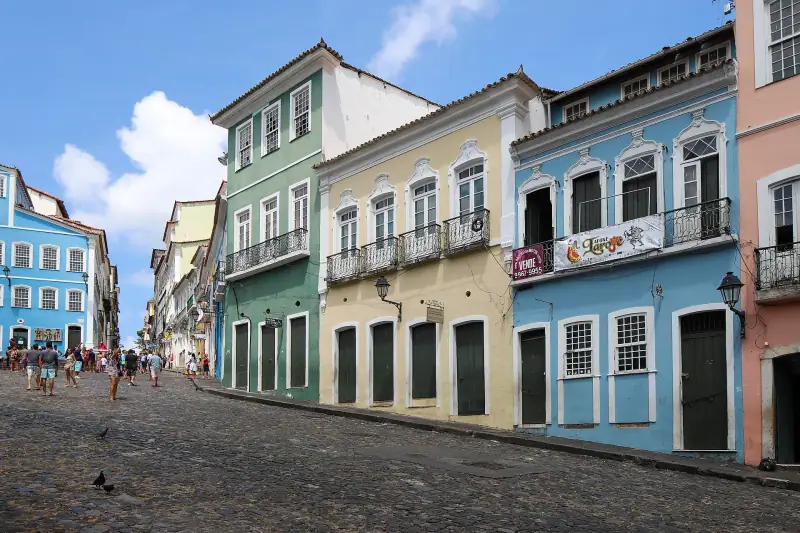
Salvador, in the Northeast, offers a completely different face of Brazil. The country’s first capital in colonial times, the city is the heart of Afro-Brazilian culture: music, capoeira, food, religious festivals. Its historic center, the Pelourinho, is a UNESCO site. The flight from Foz do Iguaçu generally includes a stopover, for example in São Paulo; so plan a day for the transfer.
Pelourinho and the upper town. The historic center concentrates Baroque churches, colorful houses and cobbled lanes. Visit it by day and follow busy streets: safety is better ensured in the supervised tourist zones, but stay attentive to your belongings.
The lower town and the Lacerda Elevator. This public elevator links the upper town to the lower town and serves as a practical access, with a fine view of All Saints Bay.
The beaches. Salvador has many urban beaches and, farther north, quieter beaches along the coast. For excursions outside the city, ask your host about transport options.
Bahian food. Moqueca, acarajé and other specialties based on dendê (palm oil) and coconut milk make Salvador a delicious stop. The article on Brazilian food helps you spot the dishes to try.
Keep the last days for a pause: a return to the center with no program, a beach, a musical evening. For your flight home, check the connections in São Paulo or Rio.
Hotels in Salvador de Bahia
Compare accommodation in the historic center and by the sea for the last days of the trip.
Domestic flights and transport: what to know
Brazilian distances are considerable: the bus suits trips of a few hours (Rio – Paraty), but not linking Rio to Foz do Iguaçu or Salvador. For these routes, flying is the only practical option. The main domestic airlines are LATAM, Gol and Azul.
A few practical tips:
- Book early, especially for Brazilian school holiday periods, New Year and Carnival.
- Check baggage: conditions vary by fare and airline, and a checked bag may be charged separately.
- Allow a margin for connections: a delay on a domestic flight can jeopardize the next connection.
- In cities, favor ride-hailing apps and official taxis rather than walking at night.
For car rental, it is best to limit it to the Rio – Paraty stretch if you are comfortable with local driving; otherwise, public transport and organized transfers are more than enough.
Budget, safety and entry requirements
The budget depends mostly on three items: flights (long-haul and domestic), lodging and excursions. Prices vary a lot with the season and the exchange rate, which is why no precise amounts are fixed here: ask for quotes and compare several sources before booking.
Safety. Brazil calls for caution, particularly in big cities. Apply the following recommendations:
- check your government’s travel advice for Brazil before leaving (travel.state.gov in the US, GOV.UK in the UK, travel.gc.ca in Canada, Smartraveller in Australia);
- avoid showing your phone, jewelry or camera in the street;
- take only the money and papers you need, and leave the rest in the hotel safe;
- ask your host about neighborhoods and streets to avoid, notably in the evening;
- do not venture into favelas without the accompaniment of a recognized local guide.
Entry requirements and health. Entry rules depend on your passport. Check the official travel advice of your government before you book (see the links above) (checked November 2026). For health, ask your doctor or a travel clinic, and see the official travel health pages (CDC in the US, TravelHealthPro in the UK). The guide visa, health and safety in Brazil details the points to verify. Check this information with official sources before leaving, as it can change.
Insurance. Travel insurance covering medical costs, repatriation and theft is strongly advised.
Possible variations of the itinerary
If you have less time (10 days). Keep Rio (4 nights), Paraty (2 nights) and Foz do Iguaçu (2 nights), then fly home from Rio or São Paulo. You lose Salvador, but gain a calmer pace.
If you have more time (3 weeks). Add a few days on the Bahia coast after Salvador, or a stop in the Amazon, which however requires an extra flight and specific preparation, notably health-related.
If you travel with children. Keep a slow pace: Rio, Paraty and Foz do Iguaçu form a trio well suited to it, with short trips and varied activities.
Bottom line
This fifteen-day itinerary is a good compromise between big sights, nature and culture. It avoids the “see everything” trap by limiting stops to four, and it leaves real rest stretches. Book your domestic flights early, stay vigilant in cities, and leave yourself a margin: that is the key to enjoying Brazil without stress.
Activities and tours in Brazil
Discover the guided tours and excursions offered at the main stops of your trip.
Frequently asked questions
How many days do you need for a first trip to Brazil?
Two weeks is a reasonable minimum to combine three or four stops: the country is immense and trips are mostly made by plane. Under ten days, it is better to concentrate on a single region, for example Rio and its coast.
Do you need to fly to get around Brazil?
To link Rio, Foz do Iguaçu and Salvador, yes: distances are very large and buses would take several days. Airlines such as LATAM, Gol and Azul run domestic links; compare fares and baggage conditions before booking.
Can you see Iguaçu Falls in one day?
The Brazilian side can be visited in half a day to a day. If you also want to see the Argentine side, plan an extra day; it is not covered in this article.
What is the best time for this itinerary?
Since Brazil covers several climates, there is no period that is perfect everywhere. See the guide on the best time to go to Brazil to adapt the dates to your stops, and avoid scheduling the trip around Carnival without booking very early.
Is this itinerary safe?
Brazil's tourist cities call for vigilance, particularly against pickpocketing and snatch thefts. Follow your government's travel advice for Brazil, stay in busy areas and favor ride-hailing apps at night.
More Brazil guides
Keep reading

Budget for a Trip to Brazil: Real Costs and Three Costed Profiles
How much does a trip to Brazil cost? Lodging, transport, meals, activities: prices by item, three daily budgets and tips to spend less.

What to See in the Brazilian Amazon: Beyond Manaus, Anavilhanas, Alter do Chão and Belém
What to see in the Amazon region: Anavilhanas archipelago, Tapajós beaches at Alter do Chão, Belém's Ver-o-Peso market, Parintins. Tips, health and safety.

What to See in Northeast Brazil: Beaches, Dunes and Colonial Towns
What to see in Brazil's Northeast: Recife, Olinda, Porto de Galinhas, Jericoacoara, Lençóis Maranhenses, Fernando de Noronha. Tips, seasons and safety.