Where to stay
Where to Stay in Paraty: Neighborhoods and Types of Lodging
We may earn a commission when you book through links on this page, at no extra cost to you. We don't visit or try the places we cover: we summarize published sources. How we work
In short
- The historic center is the simplest choice for a first stay: everything is on foot, from restaurants to the port where boats leave; Pontal, across the river, is a quieter compromise.
- Trindade, about 25 to 30 km (16 to 19 mi) south, and countryside pousadas suit those with a car who want nature and seclusion.
- In the highest tides, seawater can flood some low streets of the center: do not leave luggage on the floor of a ground-floor room.
- Two nights cover the center and a boat trip; three or four add beaches and a cachaça distillery. Book ahead for weekends, holidays and New Year.
Paraty can be visited in a few hours, but it is better savored by sleeping there. In the evening, once the day groups have left, the pebble-paved lanes, white facades and harbor boats regain a calm that explains the town’s UNESCO World Heritage listing. Choosing lodging there is, however, less obvious than it seems: the colonial center, Pontal beach, the coves farther south, the village of Trindade or an isolated pousada in the forest offer very different stays. This guide compares the areas, the types of lodging and the precautions to take before booking.
How to choose where to stay in Paraty
Paraty is a small town, with about 43,000 inhabitants for the whole municipality, and its historic center is compact. That changes the usual logic: you do not choose a “neighborhood” as in a metropolis, but a distance. Distance to the pedestrian center, first, where restaurants, galleries, shops and the port where boat trips leave are concentrated. Distance to the beach, next, because the ones in the center are modest and the most beautiful lie farther out. Distance to the road, finally, because beyond a few kilometers a car or taxi becomes almost obligatory.
Four questions help decide:
- What pace do you want? A two-night cultural getaway suits the historic center; a relaxing stay of several days suits a beach or the countryside better.
- How do you get around? Without a car, stay in the center or in Pontal. With a car, the whole coast opens up.
- When are you leaving? The climate is hot and humid, with more rain in the southern summer. The guide when to go to Brazil gives the detail; in the rainy season, staying near the center avoids depending on the road.
- What comfort do you look for? Colonial houses have charm but also steep stairs, thick walls that keep humidity and sometimes rooms without a view.
Paraty is reached from Rio de Janeiro, about 260 km (162 mi) by road, generally four to five hours by bus depending on traffic. If you link the two towns, also read the guide where to stay in Rio de Janeiro.
The historic center: sleeping in the colonial town
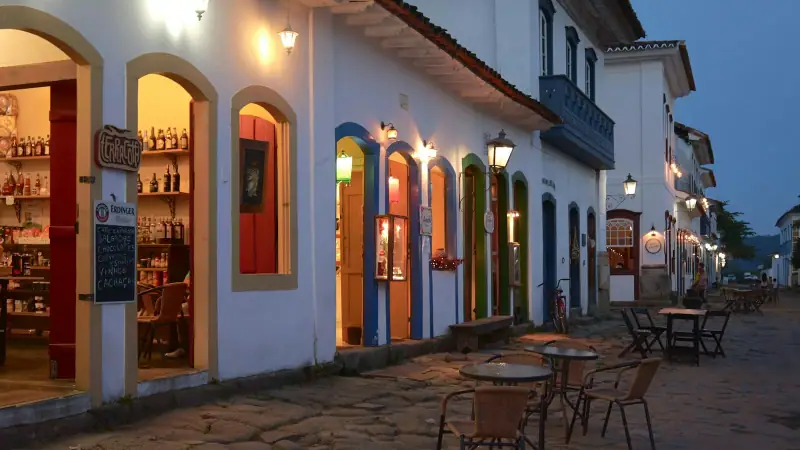
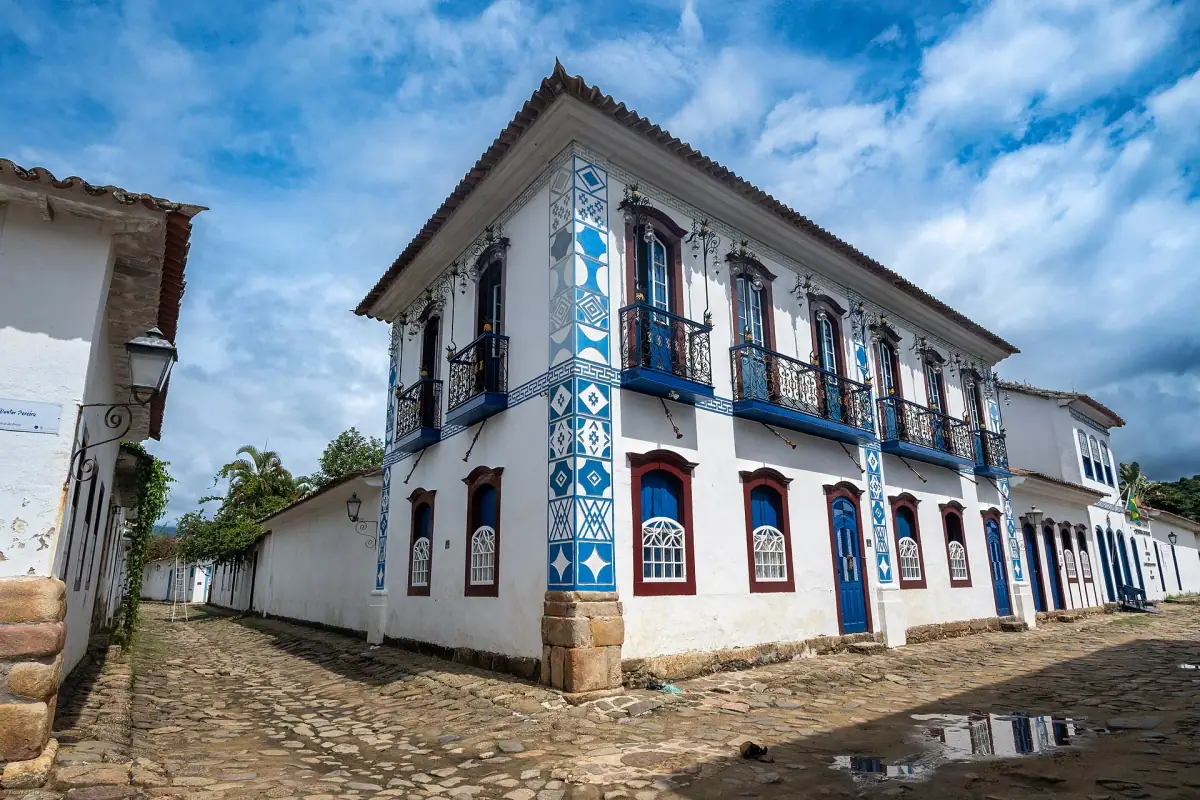
Sleeping in the historic center means choosing atmosphere. The pousadas there occupy old mansions with flowered patios, high ceilings and colored doors. You step out of your room straight into the pedestrian streets, reach the port in a few minutes on foot and enjoy the town early in the morning, before the day visitors arrive.
The advantages are clear: no need for a car, a wide choice of restaurants nearby, the possibility of walking back after dinner while staying on lively streets, and boat trips reachable without a transfer. It is the area to favor for a short stay or a first trip to Brazil.
The limits are just as concrete:
- Noise. Musical evenings in bars and restaurants can run late, and the cobbles echo with passing carts and wheeled suitcases. Ask for a room facing a patio or at the back.
- Cobblestones. They are uneven and slippery in the rain. Carrying a big suitcase to the door is tiring, and a stroller passes poorly.
- Tides. At the highest tides, seawater can flood the low streets of the center. It is a phenomenon known to residents, not serious, but it justifies not putting your luggage on the floor and asking your host whether a big tide is forecast.
- Prices. The center is the most sought-after area: it is generally more expensive than the outskirts, especially in high season.
- The beach. There is no real beach in the center. To swim, you have to take a boat or go to a neighboring beach.
Choose an address on a busy street rather than at the end of a deserted alley, and check recent reviews on the welcome, air conditioning and condition of the rooms, which vary a lot from one old house to another.
Hotels and pousadas in Paraty
Compare the colonial houses of the historic center and lodgings nearby for your dates, with recent traveler reviews.
Pontal: the beach steps from the center
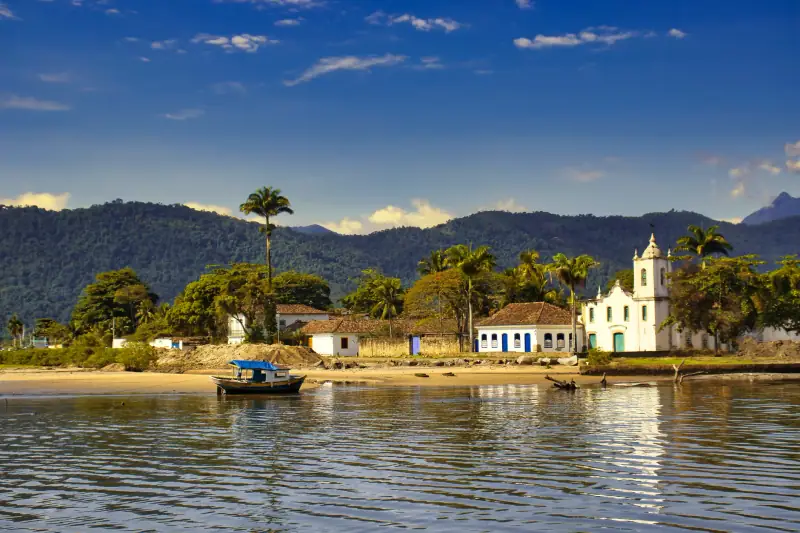
Pontal is the area bordering the historic center on the other side of the river. It is more residential, airier and clearly calmer. There you find small pousadas, small hotels and a few apartments, often with a garden or pool, within a reasonable walk of the old town.
It is the best compromise for those who want to keep the center on foot without suffering its noise. Pontal beach is modest: it faces a shallow bay and its main interest is proximity, not swimming quality. For real beach days, you take a boat or go to a cove farther away.
Rooms there are often bigger, more modern and cheaper than in a colonial house, with the parking that goes with it. The downside is a less picturesque area, with fewer restaurants in the immediate vicinity: in the evening, you go back to the center for dinner. As everywhere, stay careful when walking back late through poorly lit streets, and use a taxi if the trip looks isolated.
Jabaquara and the beaches south of town
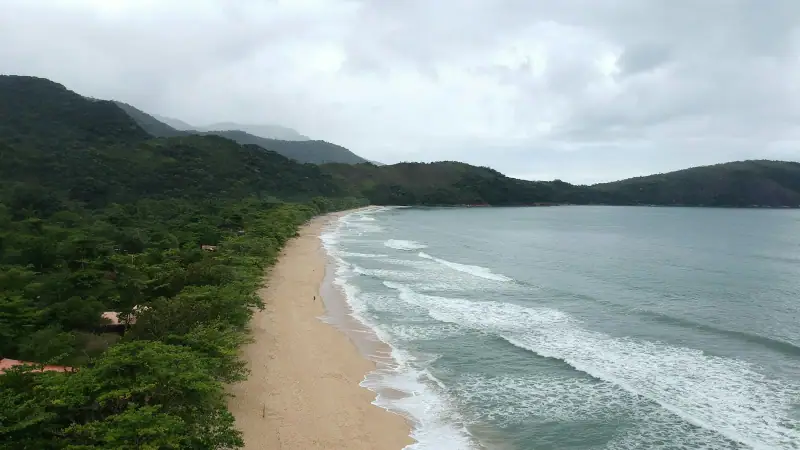
Farther south, behind a hill that separates it from the center, Jabaquara beach attracts travelers who want the sea more than the lanes. Local blogs describe it as prettier and calmer than the one in the center, with kiosks on the beach. The trade-off is distance: expect a long walk to the center, which many prefer to replace with a taxi or car.
This area suits relaxing stays of four nights or more: beach in the morning, visit to the center in the afternoon or evening. It is less practical for a short stop, because taxi round trips quickly weigh on the budget. Lodgings there take the form of pousadas and small complexes with a pool.
When booking, check the condition of the access road, evening lighting and how you will get back after dinner in town. A reliable host can always point you to a trustworthy taxi company.
Boat trips and tours in Paraty
Bay cruises, swimming stops and guided visits of the town: compare the offers bookable online.
Trindade: the secluded beach village
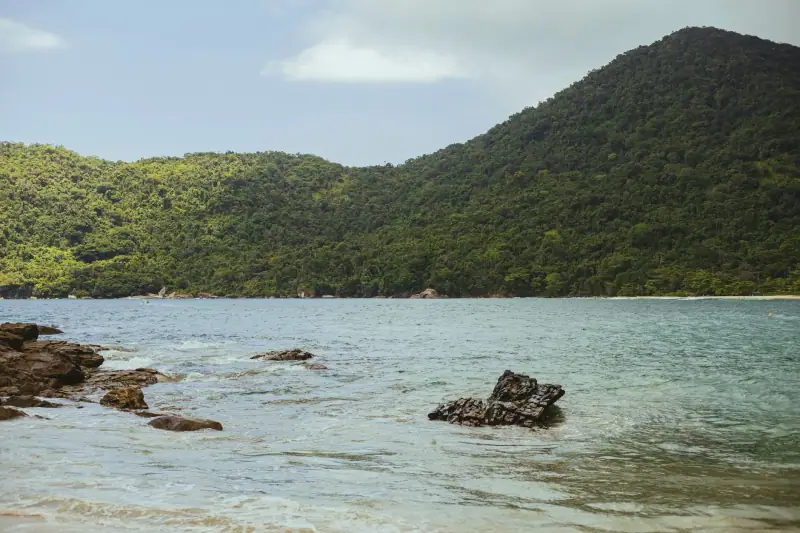
Trindade is a coastal village about twenty kilometers (12 mi) south of Paraty, more precisely about 25 to 30 km (16 to 19 mi) from the center according to local sources, around forty minutes by car. It is linked to Paraty by the coastal road and suits a different traveler: one who prefers a beach at the foot of the forest to a town.
The atmosphere is relaxed, sometimes very rustic: simple pousadas, small houses to rent, a few restaurants, beaches lined with Atlantic forest and natural pools. You get around on foot, and travelers often stay several days without moving. It is an excellent choice for unplugging, much less for a cultural stay.
Points of attention:
- Without a car, it is complicated. Links to the center are limited and night trips are discouraged. Plan an organized transfer or a taxi for the evening return.
- Isolation. Services are reduced: few ATMs, restaurants often closed in low season, uneven mobile coverage. Withdraw cash before coming and download your maps. The guide SIM card and eSIM in Brazil details connection options.
- Weather. In the rainy season, the road can be trying and the sea less welcoming.
Trindade suits a couple or young travelers who love nature, less those who want to dine in town every evening.
Countryside pousadas and houses in the forest
Around Paraty, the countryside hosts more isolated lodgings: charming pousadas in the Atlantic forest, converted fazendas, guesthouses near streams, sometimes near cachaça distilleries. The region is known for this sugarcane spirit, and some distilleries can be visited, generally with a tasting. Ask directly there about visiting days and conditions, which vary.
These places offer absolute calm, a pool, generous breakfast and a natural setting. They assume a vehicle, a margin on schedules and the serenity of not being in town. When booking, check the type of access (paved road or track), the real distance to the center and whether a transfer service exists, and favor places rated well for safety and welcome.
If you plan to rent a vehicle to explore the coast, compare rental companies before you book.
Rent a car for the Costa Verde
Compare rental companies to reach Trindade, the beaches and countryside pousadas in complete freedom.
Which type of lodging to choose in Paraty
Pousadas. The most common formula: a small guesthouse or charming hotel, often with breakfast, a patio or a pool. They make up most of the offer in the center and Pontal. Quality ranges from simple and friendly to very refined; read recent reviews.
Hotels. Rarer in the center, they are more present on the outskirts and along the beaches, with more services (restaurant, pool, parking).
Hostels. A few places offer dorms and private rooms at reduced prices in or near the center. They suit solo travelers, who easily meet others to share a boat or an excursion.
Apartments and houses. Useful for families or stays of several days: equipped kitchen, more space, sometimes a garden. Check access, parking and key-handover conditions.
Campgrounds. There are campgrounds, notably toward the beaches, for self-reliant travelers. Find out about site security and the weather.
Budget. Prices vary strongly with the season, proximity to the center and the standard. They rise clearly on weekends, at New Year and during local festivals. To build your overall budget, see the budget for a trip to Brazil and compare up-to-date offers rather than relying on a fixed rate.
Safety: good practices for sleeping in Paraty
The historic center is pedestrian and very busy, and travelers often describe it as more peaceful than Brazil’s big cities. That does not remove the need for caution. Government travel advice for Brazil insists on vigilance against theft and muggings, including in tourist destinations (travel.state.gov in the US, GOV.UK in the UK, travel.gc.ca in Canada, Smartraveller in Australia). A few simple habits:
- leave no object visible in a car and favor a supervised car park;
- avoid deserted or poorly lit streets at night, and go back by taxi if the trip is isolated;
- keep your passport, money and valuable devices at the lodging when you go out on a boat or to the beach;
- ask your host which areas to avoid and which taxi company to call;
- check that the door and windows of your room close properly, especially in an old house or an isolated pousada.
Details of general precautions are in the guide visa, health and safety in Brazil. Travel insurance with medical assistance and repatriation is strongly advised, especially if you plan sea outings and hikes.
How many nights, and how to organize your stay
Two nights: the minimum for the historic center, an evening stroll and a boat trip. Sleep in the center or in Pontal.
Three to four nights: add a beach day, a distillery visit and some rest. Mixing two types of lodging is possible: two nights in the center, two nights in Jabaquara or Trindade.
Five nights and more: combine Paraty with Ilha Grande, reachable only by boat, for two more nights. To organize this route and decide what to see there, read the article Paraty and Ilha Grande: what to see on the Costa Verde. The two-week itinerary in Brazil also shows how to place Paraty between Rio and Iguaçu Falls.
One last tip: keep a margin on departure day. Buses and transfers to Rio or São Paulo depend on traffic, which can be dense on weekends and public holidays; do not schedule an international flight too tightly the same day.
Check your carrier’s international plan or use a travel eSIM. Saily offers plans in more than 150 countries; check the offer for Brazil.
Stay connected in Brazil
An eSIM saves you from hunting for a SIM card on arrival. Saily offers plans in more than 150 countries: check the offer for Brazil.
Bottom line: which lodging for which traveler?
- First stay, two or three nights: the historic center, for atmosphere and practicality.
- Couple looking for calm, without a car: Pontal, for comfort and proximity to the center.
- Beach and relaxation: Jabaquara if you want the sea without going too far, Trindade if you like seclusion.
- Self-reliant travelers with a car: a countryside pousada, for nature and the pool.
- Small budget: a hostel or a simple room on the outskirts, booking early outside high season.
Whatever you choose, book early for weekends and holidays, check recent reviews, and keep in mind that Paraty is above all a town where you walk, take your time and rarely leave without wanting to come back.
Frequently asked questions
What is the best place to stay in Paraty for a first visit?
The historic center is the simplest choice for a first stay: everything is on foot, from restaurants to the port where boats leave. If you want the beach and accept being a little farther away, Pontal, just across the river, is a good compromise.
Do you need a car to stay in Paraty?
Not if you stay in the historic center or nearby: the center is pedestrian and boat trips leave from the port. A car becomes useful, even necessary, to sleep in Trindade or in countryside pousadas, farther from shops.
How many nights should you plan in Paraty?
Two nights are enough for the historic center and a boat trip. Three or four nights let you add beaches, a cachaça distillery and some rest. If you continue to Ilha Grande, add nights on the island.
Are the streets of Paraty's center flooded?
Yes, at the highest tides, seawater can flood some low streets of the historic center. The phenomenon is known and does not last, but do not leave luggage on the floor of a ground-floor lodging and ask your host whether a big tide is forecast.
Is Paraty safe to stay in?
The pedestrian center is often described as calmer than the country's big cities, but vigilance remains in order: nothing visible in a car, no walks in deserted or poorly lit streets at night, valuables at the lodging. Check your government's travel advice before leaving.
When should you book lodging in Paraty?
Book well ahead for weekends, Brazilian holidays, New Year and the town's big festivals, because the historic center's capacity is limited. Outside these periods, a few weeks ahead is generally enough.
Are Paraty's pousadas suitable for families?
Many pousadas offer family or connecting rooms, and some have a pool or garden. When booking, check access over cobbled streets (hard with a stroller) and the presence of steps, common in colonial houses.
More Brazil guides
Keep reading
Where to Stay in Fortaleza: Neighborhoods and Types of Lodging
Where to stay in Fortaleza? Meireles, Praia de Iracema, Mucuripe, Praia do Futuro, Aldeota: pros, limits, safety and lodging types to choose well.
Where to Stay in Recife: Neighborhoods and Types of Lodging
Where to stay in Recife? Boa Viagem, Pina, Recife Antigo, Olinda: pros, limits, safety and shark risk to choose your neighborhood and lodging.
Where to Stay in Florianópolis: Neighborhoods and Types of Lodging
Where to stay in Florianópolis? Center, Lagoa da Conceição, north, Campeche, south of the island: moods, pros, limits, lodging types and safety tips.
Ready-made
Brazil itineraries

15 days
2-Week Brazil Itinerary: Rio, Paraty, Iguaçu and Salvador
Rio de JaneiroParatyFoz do IguaçuSalvador de Bahia