Plan your trip
Budget for a Trip to Brazil: Real Costs and Three Costed Profiles
We may earn a commission when you book through links on this page, at no extra cost to you. We don't visit or try the places we cover: we summarize published sources. How we work
In short
- Comparison sites give a median of about €50 (about $58) per person per day, excluding the international flight: about €49 ($57) by bus, about €79 ($92) with domestic flights, over €90 ($105) with a rental car.
- Three profiles per person per day, flight excluded: backpacker €40 to €60 ($46 to $70), comfort €90 to €140 ($105 to $165), high-end €200 and up (about $230).
- A set lunch (prato feito) averaged R$31.90 nationally in June 2026; a Rio to Salvador round trip by plane averages about €100 (about $115).
- Biggest savings: travel off-peak, buy domestic flights two to three months ahead, eat at por-quilo restaurants at lunch and pick paid sights carefully.
Brazil has a reputation as an affordable destination, and it is partly deserved: a lunch costs a few euros, the city bus less than one. But the country is immense, domestic flights quickly weigh on the budget and tourist excursions are priced close to Europe. This guide details real costs item by item, offers three costed budget profiles and ends with the tips that actually lower the bill.
A note on method: prices in reais (R$) come from recent readings (2026) and were converted with a rate of about R$5.9 per €1, the rate seen in mid-September 2026. Euro amounts are rounded. The profile budgets are estimates built from these readings: they give an order of magnitude, not a guaranteed price.
The overall budget: benchmarks to know
Budget comparison sites give a median daily budget of about €50 (about $58) per person, excluding international transport, visa and souvenirs. This figure hides large gaps depending on how you get around: about €49 ($57) a day for those who travel by bus, around €79 ($92) for those who use domestic flights, and more than €90 ($105) with a rental car.
The international flight depends on where you fly from and is not included in these figures; fares are higher during the year-end holidays and Carnival.
So keep three orders of magnitude in mind: the flight, day-to-day lodging and food, then internal travel, which is the most variable item depending on your itinerary. To choose the best moment and avoid high season, see the guide when to go to Brazil.
Lodging: from hostel to boutique hotel
This is the first spending item on the ground, and the one where you have the most room to maneuver.
Hostels. In Rio de Janeiro, a dorm bed generally costs between $15 and $25 a night in season, with lower rates in the shoulder season (April, November). In less touristy cities of the country, the average is lower still. A private room in a hostel costs more, but remains an interesting option for two people.
Mid-range hotels and pousadas. For two people, estimates for a two-week trip suggest a range of €44 to €80 (about $51 to $93) a night for a decent room. Pousadas, small guesthouses that are very common, often offer good value and a generous breakfast included.
Price peaks. Rates vary enormously over the year: in Rio, a hostel night for two can go from about €23 to more than €200 (about $27 to $230) depending on the period, proof of the effect of Carnival and the year-end holidays. Booking early for these dates is essential.
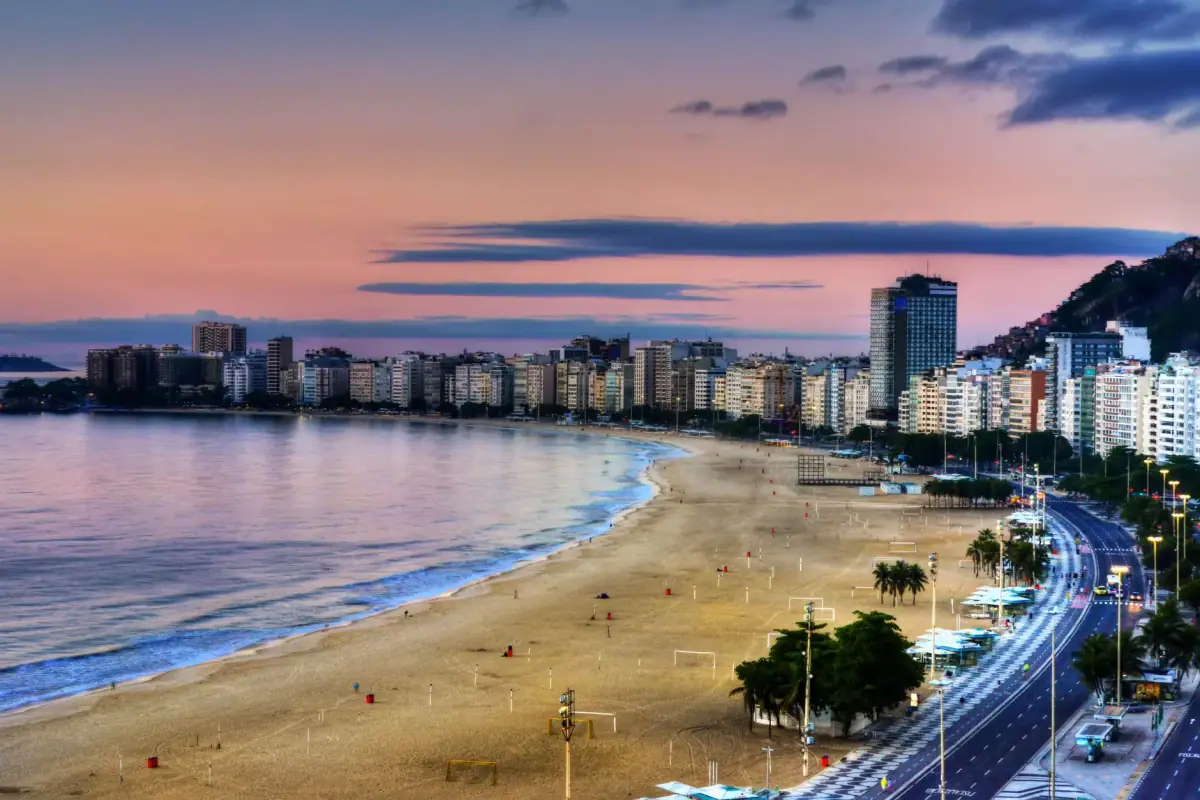
The choice of neighborhood counts as much as the category: in Rio, sleeping in Copacabana, Ipanema or Santa Teresa does not cost the same or offer the same comfort. The guide where to stay in Rio de Janeiro compares neighborhoods by budget and safety.
Compare accommodation in Rio de Janeiro
Hostels, pousadas and hotels: filter by price and neighborhood to find the best rate for your dates.
Transport: the most variable item
Brazil is a country-continent. Rio and Salvador are separated by about two hours of flying, and bus journeys are counted in tens of hours. Your itinerary therefore determines your budget far more than your spending habits.
City transport. It is very affordable. The bus fare in Rio rose to R$5 (about €0.85 / $1) on January 4, 2026, and the metro ticket stands at R$7.90 (about €1.35 / $1.55), with an increase to R$8.20 approved but not applied. Ride-hailing trips (Uber or equivalent) vary with distance: rides recorded in 2026 range from about R$30 to nearly R$150, or €5 to €25 (about $6 to $29). Ride-hailing remains the recommended option in the evening for safety reasons, and it is much cheaper than a taxi hailed in the street.
Domestic flights. For a Rio to Salvador trip, the average price of a round trip seen on a comparison site is about €100 (about $115), with minimum fares around €43 (about $50) in the off-season. The main airlines are Gol, Azul and LATAM. Booking advice converges: buying several weeks ahead (about two to three months) clearly lowers the price. Watch out for checked baggage, often charged extra on the lowest fares.
Long-distance buses. Cheaper than flying over medium distances, they are comfortable on the main lines (reclining seats, air conditioning, sometimes “leito”, a near-bed). On very long distances, the money saved is paid for in time: a night or more on the bus. Check prices directly with bus companies or at bus-station counters, because they fluctuate.
Rental car. It nearly doubles the median daily budget (more than €90 / $105 a day, all inclusive). It only makes sense on certain stretches, such as the Costa Verde between Rio and Paraty, or for poorly served regions.
To build an itinerary balanced between planes, buses and time on site, see the two-week itinerary Rio, Paraty, Iguaçu and Salvador.
Meals: eating well for little money
Food is, with city transport, what makes Brazil easy on the wallet.
The “prato feito” (PF). This is the full dish of the day, with rice, beans, meat or fish and a side. In June 2026, its national average price was R$31.90 (about €5.40 / $6), with regional gaps: about R$30 in the Northeast, R$32 in the Southeast and nearly R$35 in the South and Center-West. In tourist areas, expect to pay more.
Por-quilo restaurants. You build your plate at a buffet and it is weighed. In São Paulo, the average price recorded in February 2026 was about R$87 per kilo (nearly €15 / $17). A reasonable plate often weighs under 500 g (1.1 lb), which puts it at about €7 (about $8) in that city, a bit less in cheaper cities. It is an excellent formula for lunch.
Breakfast and street food. Many hotels and pousadas include a generous breakfast, which lightens the day. For the rest, street stands, bakeries (“padarias”) and fresh fruit juices let you eat cheaply.
Dinner at a restaurant. In tourist restaurants in Rio or Salvador, a dinner with a drink quickly exceeds €20 to €30 (about $23 to $35) per person. Overall estimates give €20 to €30 (about $23 to $35) a day for food for a traveler who alternates formulas.
To know what to order, from moquecas to feijoadas via açaí, read the guide to Brazilian food and its specialties.
Activities and entry fees: where spending concentrates
Brazil offers plenty of free pleasures: beaches, seaside walks, strolls through historic neighborhoods, street rodas de samba. But the big tourist sights are paid, and their prices climb fast.
- Christ the Redeemer (Rio). Depending on the option chosen, between about R$139 (entry ticket with the train, roughly €24 / $28) and R$220 and more (combined ticket with transfers, more than €35 / $40).
- Sugarloaf (Rio). Cable-car tickets offered online start at about R$190 (a little over €30 / $35).
- Excursions and guided tours. The average budget cited by comparison sites is €8 to €13 (about $9 to $15) a day over a stay, but it assumes limiting paid outings. A stay linking Iguaçu, the Amazon and a boat trip on the Costa Verde will far exceed this estimate.
Prices change with the season, the option (skip-the-line, guide, transfer) and the reseller: always compare the official price and those of platforms before buying.
Activities and guided tours in Rio de Janeiro
Christ the Redeemer, Sugarloaf, supervised favela visits: compare the options and book ahead.
Three costed budget profiles
The three profiles below are estimates per person per day, excluding the international flight, built from the prices recorded above. For a couple, lodging is shared, which lowers the cost per person a little.
Profile 1: thrifty backpacker, about €40 to €60 a day (about $46 to $70)
- Lodging: dorm or simple pousada room, about €15 to €25 ($17 to $29).
- Meals: breakfast included, prato feito or por-quilo restaurant at lunch, street food in the evening, about €12 to €18 ($14 to $21).
- Transport: city bus and metro, night buses for long distances, about €5 to €10 ($6 to $12).
- Activities: beaches, walks, one or two paid entries a week, about €5 to €10 ($6 to $12).
This profile matches the €50-a-day median of comparison sites. Over 15 days, expect about €600 to €900 (about $695 to $1,045) on the ground.
Profile 2: comfort traveler, about €90 to €140 a day (about $105 to $165)
- Lodging: mid-range pousada or hotel, about €35 to €55 ($41 to $64) per person in a double room.
- Meals: restaurant every evening, a few caipirinhas, about €25 to €40 ($29 to $46).
- Transport: frequent ride-hailing, one or two domestic flights over the stay, about €20 to €35 ($23 to $41).
- Activities: regular guided excursions, about €15 to €25 ($17 to $29).
This matches travelers who use planes for long distances, around €79 a day in the readings, to which you add the comfort of restaurants and excursions. Over 15 days, expect €1,350 to €2,100 (about $1,565 to $2,435) on the ground.
Profile 3: high-end stay, €200 a day and up (about $230)
- Lodging: 4- or 5-star seafront hotel, lodge in the Amazon or the Pantanal, from €100 to €150 (about $115 to $175) per person and much more in all-inclusive lodges.
- Meals: fine dining and good tables, about €50 to €70 ($58 to $81).
- Transport: frequent domestic flights, private driver or car, about €30 to €50 ($35 to $58).
- Activities: private excursions, scenic flights, guided lodges, from €30 to €50 ($35 to $58).
This profile is highly variable: a night in an isolated lodge can by itself exceed the daily budget of a comfort traveler. Over 15 days, expect at least €3,000 (about $3,480) on the ground.
Tips to spend less
- Travel outside the peaks. Prices in Rio vary from one to five times depending on the period. Avoid Christmas, New Year and Carnival, or book them very far ahead.
- Buy domestic flights early. Book two to three months ahead, compare Gol, Azul and LATAM, and check the baggage cost.
- Eat por-quilo or prato feito at lunch, then keep dinner lighter. It is the best saving of the trip.
- Favor pousadas with breakfast, which saves a meal.
- Use city transport and ride-hailing apps, rather than street taxis.
- Choose paid sights with care. One or two big classics per city are enough: beaches, historic centers and nature parks offer the rest for free.
- Avoid needless currency costs. Compare your card’s fees, withdraw cash from bank ATMs and pay in reais rather than letting the merchant convert.
- Cover yourself against an unexpected expense. Care in private clinics can be expensive, and travel insurance quickly pays for itself. Also read the advice on visa, health and safety in Brazil.
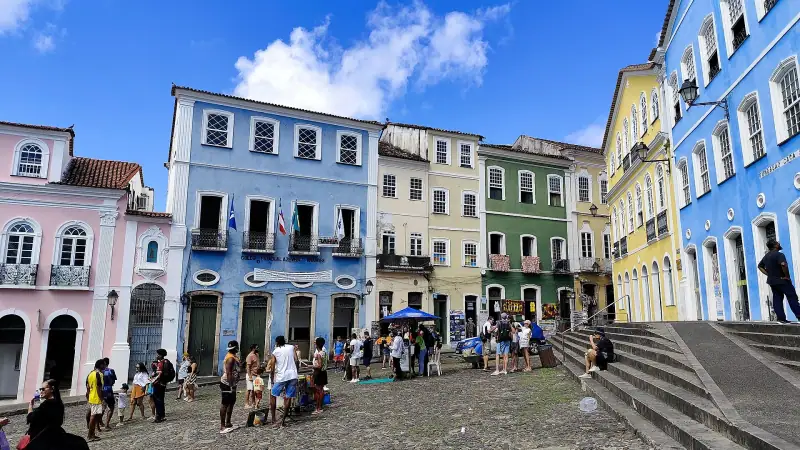
Guided tours in Salvador de Bahia
A walking tour of the historic center or a local tasting: compare prices and reviews before booking.
Money on the ground: cash, card and exchange
Bank cards are widely accepted in cities, but keep a little cash for beaches, markets and small shops. Tell your bank about your trip, compare foreign payment and withdrawal fees and, if possible, carry a second backup card stored separately.
The exchange rate moves: it was about R$5.9 per €1 in mid-September 2026, but forecasts show possible variations of several percent over the year. A weaker real works in favor of visitors paying with foreign currency, but do not count on it to build your budget: keep a margin of 10 to 15%.
Whatever the profile, also plan for side costs: insurance, any vaccines, an eSIM or local SIM card, tips (often already included as a 10% service charge on the bill, see the guide to tipping in restaurants in Brazil) and souvenirs.
Budget checklist before you go
- Set the budget profile and the 10 to 15% safety margin.
- Watch flight prices and book domestic flights ahead.
- Book lodging for high-season dates.
- Compare official prices and platform prices for big sights.
- Take out insurance and check bank fees abroad.
With simple organization, Brazil remains one of the big long-haul destinations where you can travel well without spending a fortune. The real lever is the number of kilometers you cover: choose two or three regions rather than ten, and your budget and your time will thank you.
Sources
- AGETRANSP (Rio de Janeiro state transport regulator): prices checked November 2026
Frequently asked questions
What daily budget should you plan for Brazil?
Reference sites give a median budget of about €50 (about $58) per day per person, excluding the international flight. In practice, expect €40 to €60 ($46 to $70) as a backpacker, €90 to €140 ($105 to $165) for a comfortable trip and €200 (about $230) or more for a high-end stay. These ranges are estimates: they vary strongly by region and season.
Is Brazil more expensive than Europe?
For simple meals, city transport and basic lodging, it is generally cheaper. On the other hand, tourist excursions, last-minute domestic flights and hotels in high season in Rio or on the coast can approach European prices.
Should you pay in cash or by card in Brazil?
Bank cards are widely accepted in cities. Keep a little cash in reais for beaches, markets and small shops. Check with your bank about foreign payment and withdrawal fees.
How can you reduce the cost of a trip to Brazil?
Travel outside high season, eat at por-quilo restaurants or "prato feito" lunches, use public transport and ride-hailing apps rather than taxis, book domestic flights ahead and limit paid sights in favor of free beaches, parks and walks.
What is the exchange rate between the euro and the real?
In mid-September 2026, one euro was worth about 5.9 reais. The rate fluctuates: check it just before departure with your bank app or a currency converter, including the rate for your own currency.
More Brazil guides
Keep reading
When to Go to Brazil: Climate, Seasons and Best Time by Region
When to go to Brazil? Climate in Rio, Bahia, the Amazon, the Pantanal, the Northeast and the South: dry and rainy seasons, Carnival, year-end holidays.

What to See in the Brazilian Amazon: Beyond Manaus, Anavilhanas, Alter do Chão and Belém
What to see in the Amazon region: Anavilhanas archipelago, Tapajós beaches at Alter do Chão, Belém's Ver-o-Peso market, Parintins. Tips, health and safety.

What to See in Northeast Brazil: Beaches, Dunes and Colonial Towns
What to see in Brazil's Northeast: Recife, Olinda, Porto de Galinhas, Jericoacoara, Lençóis Maranhenses, Fernando de Noronha. Tips, seasons and safety.
Ready-made
Brazil itineraries
15 days
2-Week Brazil Itinerary: Rio, Paraty, Iguaçu and Salvador
Rio de JaneiroParatyFoz do IguaçuSalvador de Bahia