What to see
What to See in Northeast Brazil: Beaches, Dunes and Colonial Towns
We may earn a commission when you book through links on this page, at no extra cost to you. We don't visit or try the places we cover: we summarize published sources. How we work
In short
- The Northeast has about 3,000 km (1,860 mi) of coastline across nine states. For a first trip, choose two or three stops over ten to fifteen days.
- On the north coast (Ceará, Maranhão) the driest period runs roughly July to December; the Lençóis Maranhenses lagoons are usually fullest from July to September.
- Street crime is present in Recife, Fortaleza and Salvador: use ride-hailing apps or taxis at night and leave valuables at the hotel.
- Fernando de Noronha is a protected archipelago with a preservation fee and prices well above the mainland: check access conditions before booking.
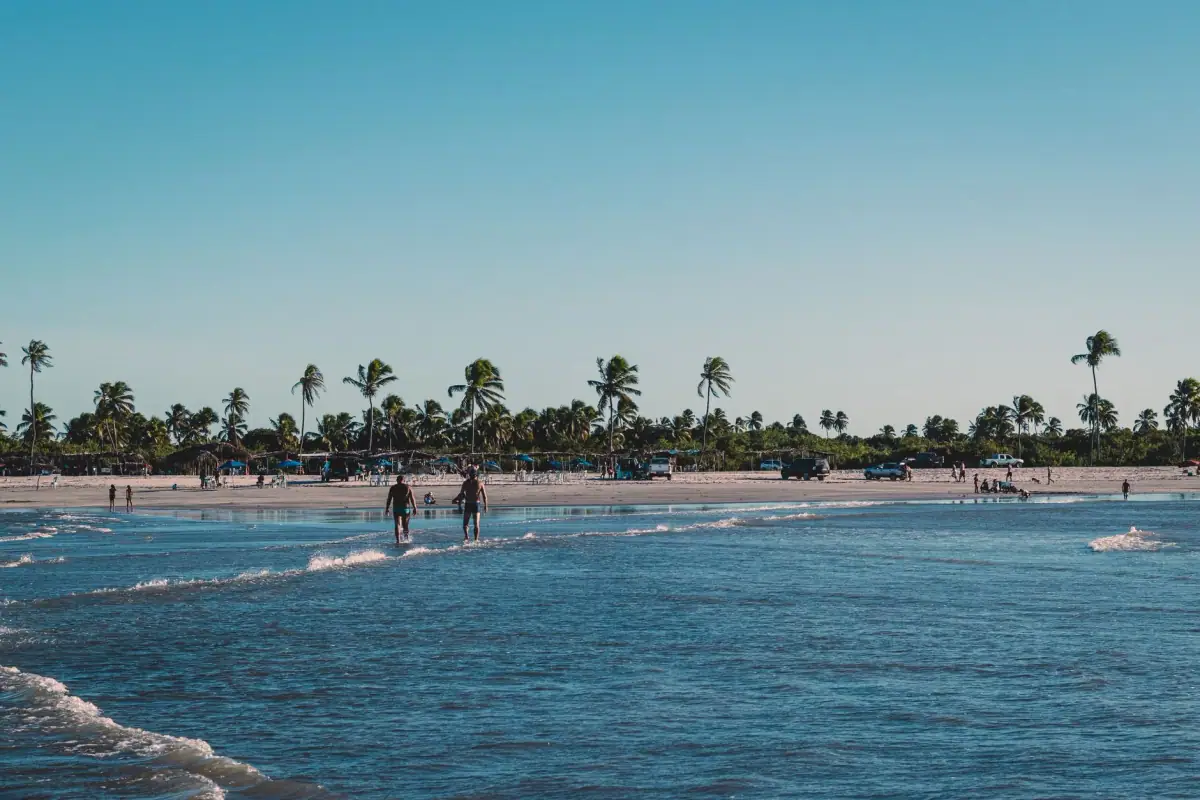
The Northeast is Brazil’s great seaside region: about three thousand kilometers (1,860 mi) of Atlantic coastline, beaches lined with coconut palms, white dunes, colonial towns with colorful facades and a culture that blends African, Indigenous and Portuguese heritage. Nine states make it up, from Maranhão in the north to Bahia in the south, and it is easy to get lost: distances are enormous, and attractions differ greatly from one coast to the other. Here is how to choose your stops, in what order to link them and what to watch for, from the Olinda carnival to the lagoons of the Lençóis Maranhenses.
The Northeast in brief: one region, three moods
To get your bearings, it is better to distinguish three main areas. The north coast, from Maranhão to Ceará, is the land of dunes, wind and freshwater lagoons: Lençóis Maranhenses, the Parnaíba Delta, Jericoacoara, Fortaleza. The east coast, from Rio Grande do Norte to Alagoas via Paraíba and Pernambuco, mixes large historic cities, postcard beaches and natural pools: Natal, João Pessoa, Recife, Olinda, Porto de Galinhas, Maragogi. Finally, Bahia, in the south, is a world apart, with Salvador, one of the great centers of Afro-Brazilian culture, and inland landscapes such as the Chapada Diamantina.
The climate is hot and humid all year, with little change in temperatures. Rain and wind make the difference: on the north coast, the dry season from July to December is the most popular, while on the east coast the southern winter months are wetter. The article on the best time to go to Brazil details these nuances region by region.
Another point to keep in mind: there is no “single route” in the Northeast. Between two distant stops, flying is almost always the reasonable solution, and road trips, even shorter ones, take longer than they seem on the map. It is better to choose fewer stops and stay longer.
Recife and Olinda: the culture of Pernambuco
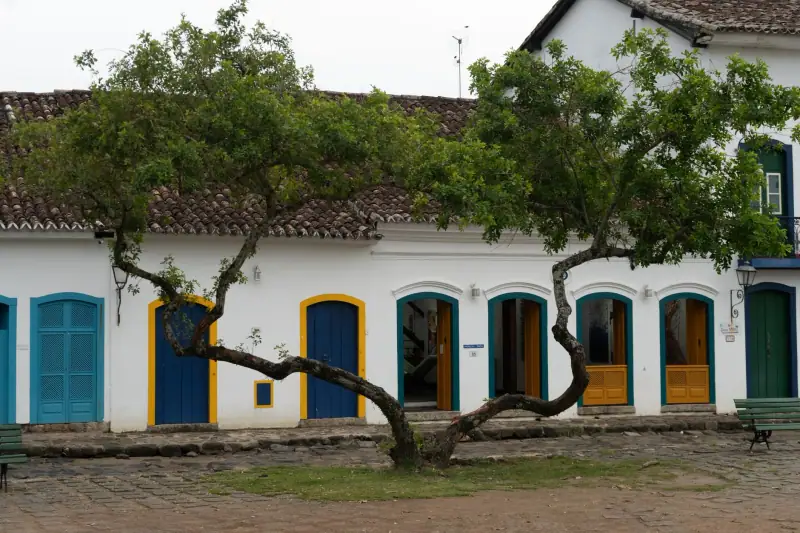
Recife, capital of Pernambuco, is the big metropolis of the east coast. It has been nicknamed “the Brazilian Venice” because of its rivers and bridges, and it has an old center, museums, a lively music scene and good food. It is also the best gateway for exploring the neighboring coast. The neighborhoods, sights and precautions are covered in the guide to visiting Recife, and in the article on where to stay in Recife.
Nearby, Olinda is one of the best-preserved colonial ensembles in the country. Its historic center, a UNESCO World Heritage site, stretches over hills around Baroque churches, convents and cobbled lanes lined with colorful houses. The town is also known for its popular carnival, made of street parades, giant puppets and brass bands. It is best strolled in the morning, when it is cooler: the slopes are steep and the sun is strong. As in all Northeast cities, keep valuables safe and avoid empty streets at the end of the day.
Porto de Galinhas and the beaches of southern Pernambuco
Less than an hour from Recife airport, Porto de Galinhas, in the municipality of Ipojuca, is one of the best-known seaside resorts of the Northeast. Its reputation rests on its natural pools: at low tide, reefs form basins of clear water where you can see tropical fish with a mask and snorkel, usually on raft (jangada) outings organized from the beach. Tide times matter: ask your accommodation before booking an outing.
The village is touristy and lively, lined with restaurants, craft shops and pousadas of all levels. Other beaches nearby, such as Muro Alto or Maracaípe, offer a calmer, sometimes wilder atmosphere. Always follow safety instructions: currents and waves can be strong outside the areas protected by the reefs, and coral protection means not touching or walking on it.
Hotels and pousadas in Porto de Galinhas
Compare accommodation on the south coast of Pernambuco for your dates, from the village center to calmer beaches.
Fernando de Noronha: the protected archipelago
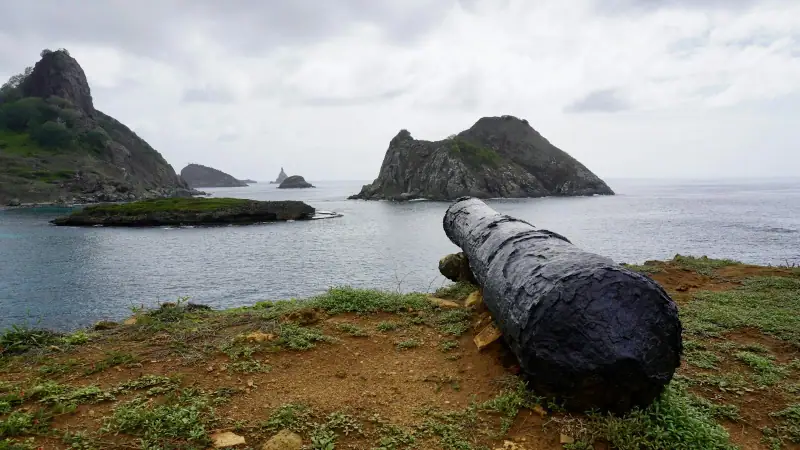
Off Pernambuco, Fernando de Noronha is a volcanic archipelago listed as a UNESCO World Heritage site. Its marine national park, managed by ICMBio, protects sea turtles and many seabirds, among others. Its beaches rank among the most beautiful in the country, and diving is well regarded thanks to generally very clear water.
It is also a destination apart in the Northeast: visitor numbers are limited and managed, a preservation fee is added to the cost of the stay, and lodging and meal prices are clearly higher than on the mainland. You need to book long in advance, especially in high season, and find out about the access rules before committing. For a first trip, many visitors prefer to keep Noronha for a second stay or for a few days’ stop if their budget allows.
Alagoas and Rio Grande do Norte: Maragogi, Natal and Pipa
Farther south, the state of Alagoas is known for its turquoise waters and natural pools, including those of Maragogi, explored by boat at low tide. The coast is lined with coconut palms and fishing villages where life runs at a quiet pace. The capital, Maceió, is a practical base with its airport and urban beaches.
On the northern part of the east coast, Rio Grande do Norte draws visitors with its dunes and beaches. Natal is known for its big dunes and buggy rides, and Pipa, farther south, is a seaside village known for its cliffs, secluded beaches and relaxed atmosphere, with a good choice of lodging and restaurants. Here too, check that the buggy driver is a licensed professional and always buckle up: the dunes hide abrupt slopes.
Fortaleza, Jericoacoara and the Ceará coast
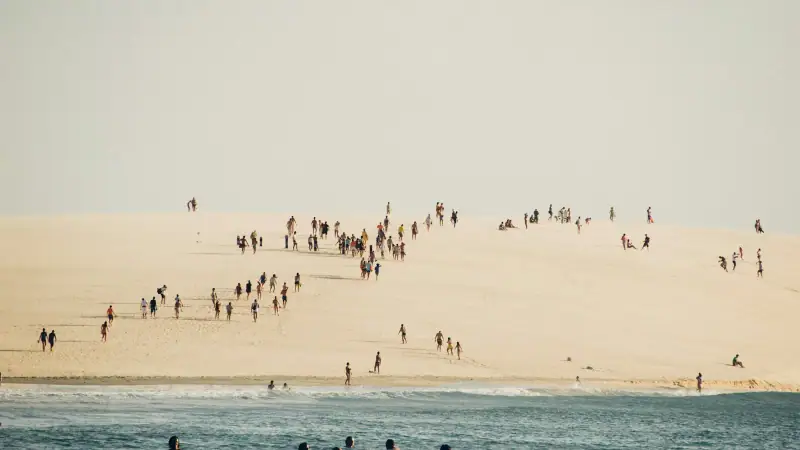
Fortaleza, the capital of Ceará, is a large seaside city with a historic center, a well-known craft market, a lively promenade and urban beaches. It also serves as a starting point for the coast. The article on visiting Fortaleza explains how to organize a two-day visit, which neighborhoods to choose and what precautions to take, and the one on where to stay in Fortaleza compares Meireles, Iracema and Praia do Futuro.
A few hours’ drive farther west, Jericoacoara is one of the most famous villages in the country. Once a simple fishing village, it is surrounded by dunes, lagoons and beaches, in a national park. The streets are sand, traffic is restricted and the atmosphere stays casual. People come for the sunset on the dune, the Pedra Furada, a rock arch at the edge of the ocean, and the Lagoa do Paraíso, where you swim and relax in hammocks by the water. Kitesurfing and windsurfing are very popular, thanks to the steady wind. Allow three to four days there to enjoy it without rushing.
The last stretch of road is done in a suitable vehicle, usually a 4x4 or a buggy, because the track is sandy. Use an organized transfer or a reputable operator, and avoid driving yourself in the dunes.
Excursions and outings in the Northeast
Buggy rides, guided tours and activities with a local guide, bookable online depending on the destination.
Parnaíba Delta and Lençóis Maranhenses: dunes and lagoons
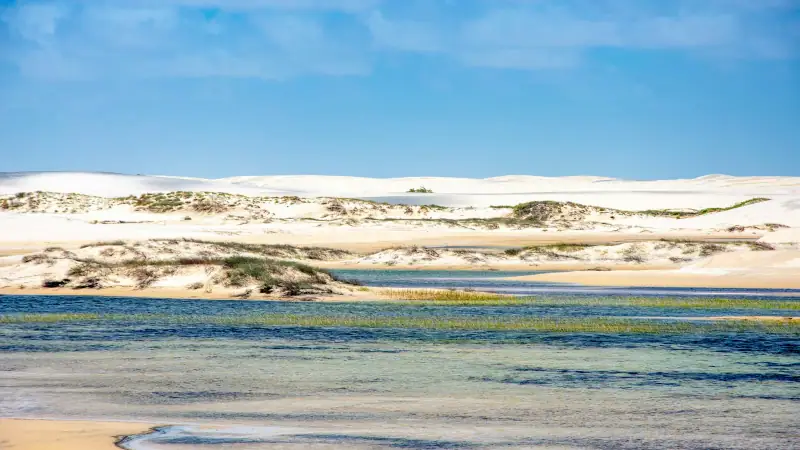
Between Ceará and Maranhão, the Parnaíba Delta region, in Piauí, is a vast maze of river branches, mangroves and sandy islets where you travel by boat. Together with Jericoacoara and the Lençóis it forms a circuit often called the “route of emotions”, covered over several days with organized transfers.
At the end of the route, Lençóis Maranhenses National Park is an almost unreal landscape: white sand dunes stretching as far as the eye can see, between which clear-water lagoons form after the rainy season. July to September is the most recommended period to see the lagoons well filled. The base is generally Barreirinhas, from where excursions leave by 4x4 and then on foot. There is a full article on this site: Lençóis Maranhenses, dunes, lagoons and Barreirinhas.
West of the Lençóis, São Luís, the capital of Maranhão, has a historic center with facades covered in azulejo tiles, a UNESCO site, and a distinctive musical and culinary culture. It is often the arrival or departure point for travelers heading to the Lençóis.
Salvador and Bahia: the Afro-Brazilian gateway
Most Northeast itineraries begin or end in Salvador, Brazil’s first capital. Its historic district, the Pelourinho, concentrates Baroque churches, cobbled squares and colorful houses, and the city is a center of Afro-Brazilian culture: music, capoeira, cooking with palm oil and coconut milk. To prepare this stop, read the guide on Salvador de Bahia and the Pelourinho and the one on where to stay in Salvador.
Bahia is also the gateway to well-known beaches south of the city, and to the Chapada Diamantina inland, with its waterfalls, caves and hikes. It is a good choice if you want to add nature to a rather seaside stay.
What to eat in the Northeast
Northeast cooking is among the best in the country. The coast offers grilled or simmered fish and shellfish, such as moqueca with coconut milk, but also more rustic specialties inherited from the sertão, the semi-arid interior: baião de dois (rice and beans), sun-dried beef (carne de sol) or cassava in all its forms. Tapioca, a cassava starch flatbread filled with cheese or coconut, is eaten at any hour, and caju, the fruit of the cashew tree, appears as juice and jam.
To go further, the article on Brazilian food presents the country’s great dishes. In fishing villages, choose places frequented by locals and drink bottled water.
Planning your Northeast itinerary
Here are three combinations that work well, depending on the time you have. For ten days, combine Recife and Olinda, Porto de Galinhas, then a flight to Fortaleza and Jericoacoara, two contrasting worlds: colonial towns and natural pools on one side, dunes and wind on the other. With a week more, add the Lençóis Maranhenses, reached by flight from Fortaleza or São Luís and then by road. For a stay centered on culture, combine Salvador and Recife, linked by plane.
A few simple principles avoid bad surprises. Limit yourself to two or three bases and radiate out from them. Book ahead the transfers to hard-to-reach villages, in particular Jericoacoara and Barreirinhas. Avoid long night journeys by road. Finally, be generous with the announced durations: traffic, sandy tracks and unplanned stops almost always lengthen travel time.
Your budget will depend mostly on the type of stops: the towns and villages of the coast are affordable, while Fernando de Noronha is an expensive destination. The article on the budget for traveling in Brazil will help you estimate your spending.
Practical tips: safety, health, connectivity
Safety. Government travel advice recommends vigilance in Brazilian cities (travel.state.gov in the US, GOV.UK in the UK, travel.gc.ca in Canada, Smartraveller in Australia). In the Northeast, street crime mostly concerns the centers of Recife, Fortaleza and Salvador, especially at night. Stay in busy neighborhoods, get around by ride-hailing app or taxi after dark, do not take your phone out in the street, leave original documents and valuables at the hotel, and avoid isolated beaches. Check the Brazil page of your government’s travel advice just before departure. The article on safety, health and entry requirements gives a full overview.
Health. Mosquitoes are present all year, with risks of dengue and other diseases transmitted by bites. Ask your doctor or a travel clinic several weeks before departure, see the official travel health pages (CDC in the US, TravelHealthPro in the UK), and bring a suitable repellent.
Connectivity. Check your carrier’s international plan, or use a travel eSIM. An eSIM keeps you reachable from the moment you land, useful for ride-hailing apps and maps. The article on the SIM card and eSIM in Brazil compares the options.
Stay connected in the Northeast
Saily offers plans in more than 150 countries; check the offer for Brazil before you go.
Insurance. Travel insurance with medical assistance and repatriation is strongly advised, especially if you plan water activities or excursions in isolated areas.
Bottom line: where to start?
If you had to keep just one combination for a first stay, the usual suggestion is Recife, Olinda and Porto de Galinhas for culture and beaches, then Fortaleza and Jericoacoara for dunes and wind. Fans of spectacular landscapes will add the Lençóis Maranhenses between July and September, and those who like history and music will make a stop in Salvador. Fernando de Noronha remains a luxury to keep for a trip where budget and calendar allow.
Whatever you choose, keep free time: the Northeast is savored slowly, between a swim at low tide, a tapioca at breakfast and a sunset on the dune.
Sources
Frequently asked questions
How long do you need to visit Northeast Brazil?
The region is immense: nine states and several thousand kilometers of coast. For a first trip, allow ten to fifteen days and choose only two or three stops, for example Recife and Olinda, Porto de Galinhas, then Fortaleza and Jericoacoara. Trying to see everything in a week means multiplying flights and long journeys.
What is the best time to go to the Northeast?
The climate is hot all year. On the north coast (Ceará, Maranhão), the driest period runs roughly from July to December. For the Lençóis Maranhenses, the lagoons are fullest from the late southern summer to mid-year, generally July to September. On the east coast (Pernambuco, Alagoas), rain is more frequent during the southern winter. See the article on the best time to go to Brazil.
Is the Northeast dangerous for travelers?
Street crime is present in big cities such as Recife, Fortaleza or Salvador, while beach resorts and tourist villages are generally calmer. Government travel advice recommends vigilance: avoid showing your phone and jewelry, do not walk alone at night or on isolated beaches, use ride-hailing apps or taxis and leave valuables at the hotel.
Do you need to speak Portuguese in the Northeast?
Outside big hotels and agencies, English is not widely spoken. A few words of Portuguese, a translation app and maps downloaded in advance make the trip much simpler, especially in villages.
Can you combine the Northeast with Rio de Janeiro?
Yes, but only by plane: distances are very large. Many travelers link Rio, Salvador, then Recife or Fortaleza by domestic flights. Book flights ahead in high season.
Do you need vaccines to travel in the Northeast?
Health requirements change. Ask your doctor or a travel clinic several weeks before departure, and see the official travel health pages (CDC in the US, TravelHealthPro in the UK). Also protect yourself from mosquito bites, present all year.
Is Fernando de Noronha affordable?
The archipelago is a protected area with managed visitor numbers: a preservation fee is added to the cost of the stay, and lodging and meals are more expensive than on the mainland. Plan a budget well above that of a stop on the coast. Check access conditions and current rates before booking.
More Brazil guides
Keep reading
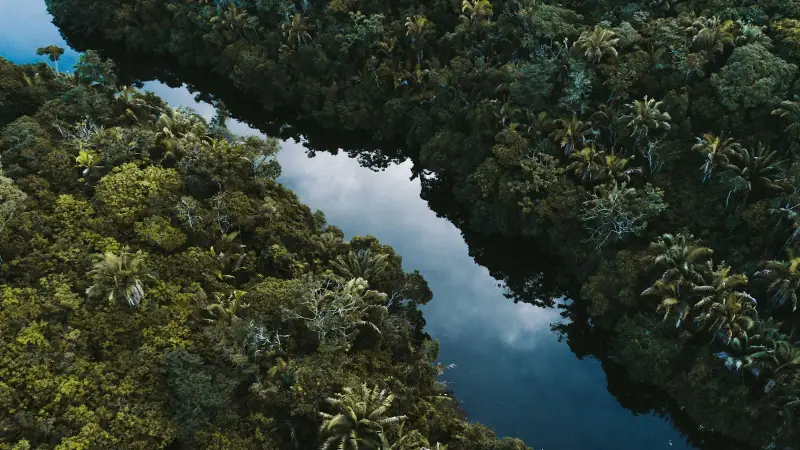
What to See in the Brazilian Amazon: Beyond Manaus, Anavilhanas, Alter do Chão and Belém
What to see in the Amazon region: Anavilhanas archipelago, Tapajós beaches at Alter do Chão, Belém's Ver-o-Peso market, Parintins. Tips, health and safety.

What to See in the Pantanal: Jaguars, Transpantaneira, Miranda and Bonito
What to see in the Pantanal: Porto Jofre jaguars, Transpantaneira, Corumbá, Miranda and Bonito. Seasons, wildlife, safety and tips to choose well.
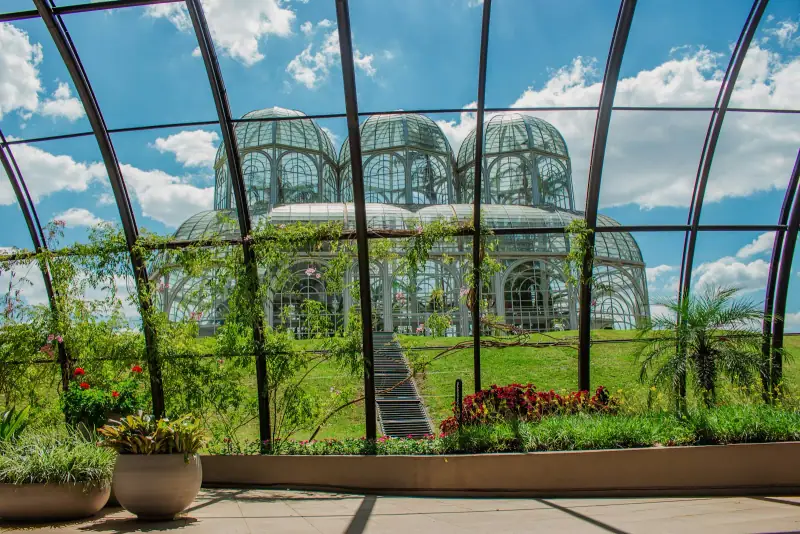
What to See in Southern Brazil: Curitiba, Gramado, Florianópolis
What to see in southern Brazil: Curitiba, Serra Gaúcha, canyons, Santa Catarina, Florianópolis and Foz do Iguaçu. Tips, seasons and safety.
Ready-made
Brazil itineraries
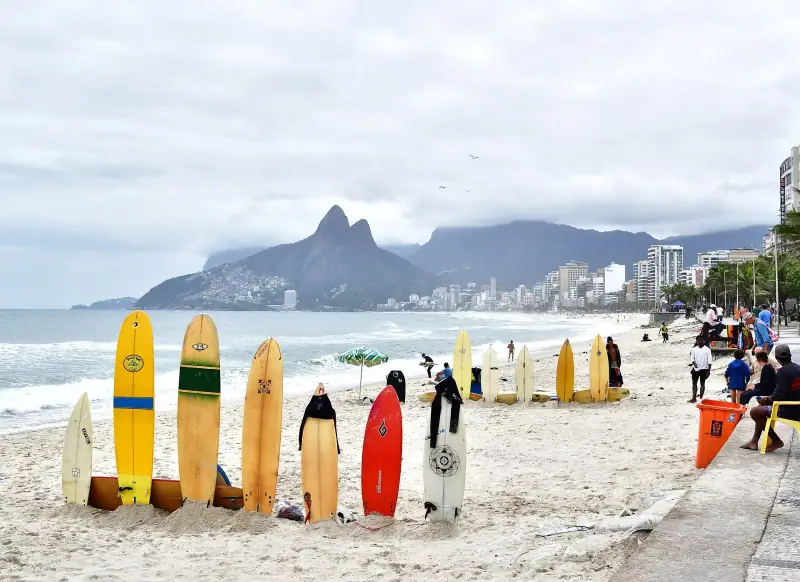
15 days
2-Week Brazil Itinerary: Rio, Paraty, Iguaçu and Salvador
Rio de JaneiroParatyFoz do IguaçuSalvador de Bahia