What to see
What to See in Southern Brazil: Curitiba, Gramado, Florianópolis
We may earn a commission when you book through links on this page, at no extra cost to you. We don't visit or try the places we cover: we summarize published sources. How we work
In short
- The South groups three states: Paraná (Curitiba, Foz do Iguaçu), Santa Catarina (Florianópolis) and Rio Grande do Sul (Porto Alegre, Serra Gaúcha): milder climate, real seasons, strong European immigration influence.
- Distances are large: choose two or three hubs at most, and link them by plane or daytime bus; allow at least ten days for a reasonable selection.
- Santa Catarina's beaches are best from December to March (also the busiest); the Serra Gaúcha is comfortable in spring and fall, and the southern winter (June to August) can bring frost.
- The Itaimbezinho canyon in Aparados da Serra National Park is the region's great natural spectacle: arrive early, mist can hide the view.
When people talk about Brazil, they first think of Rio, the Amazon or the beaches of the Northeast. The South often takes second place, and that is a shame: this region has a character of its own. There are towns that look like Alpine villages, vineyards, deep canyons, a tropical island known for its beaches, and Iguaçu Falls in the far west. The climate is more temperate, the seasons more marked, and the culture of churrasco and chimarrão is very present.
The South region groups three states: Paraná, Santa Catarina and Rio Grande do Sul. This guide offers an overview to choose what deserves your time, and helps you organize a realistic itinerary. To go deeper, there are already articles on Florianópolis and on Iguaçu Falls, Brazilian side.
The South in brief: three states, three moods
Paraná is the northernmost state of the region. It has Curitiba, its capital, strongly oriented toward urban planning and green spaces, the Atlantic coast with its bays and forests, and in the west Foz do Iguaçu and the falls. Santa Catarina is the coastal state, with many beaches, German-influenced towns inland and Florianópolis, the capital set on an island. Rio Grande do Sul, farthest south, is the land of the gauchos: grasslands, cattle ranching, Porto Alegre, and the Serra Gaúcha, where Italian and German immigration left a visible mark on architecture, food and wine.
Distances are greater than you imagine on a map. Between Foz do Iguaçu and the coast, as between Santa Catarina and the Serra Gaúcha, you are talking about many hours on the road. The principle to remember: choose two or three hubs at most, and link them by plane or daytime bus rather than multiplying stops. The two-week itinerary in Brazil gives an idea of how to fit Iguaçu into a big circuit.
Curitiba, the capital of Paraná
Curitiba is a pleasant city to live in, known in Brazil for its parks, well-organized public transport and pedestrian historic center. It is not the destination that makes you dream at first glance, but it is a very good gateway to the Paraná coast and a logical stopover between Iguaçu and Florianópolis.
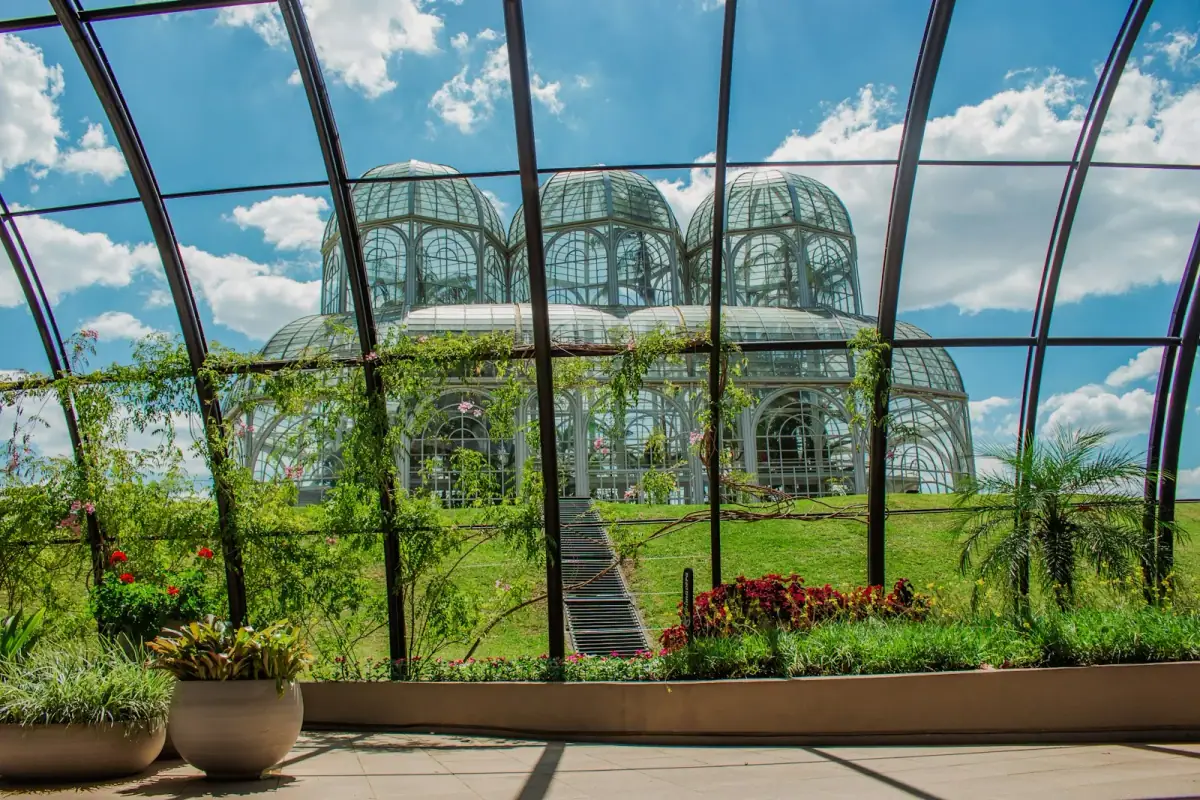
To see first: the Botanical Garden, with its large metal greenhouse that has become the city’s emblem, the urban parks that serve as residents’ walking places, and the old center around Tiradentes Square and the cathedral. The Santa Felicidade neighborhood recalls Italian immigration and concentrates many restaurants. Plan a day and a half to two days there, more if you like museums.
Curitiba is also the starting point of one of the region’s best-known excursions: the train that descends toward Morretes through the Atlantic forest, the Serra do Mar. The trip takes about four hours according to the operator Serra Verde Express’s site, and can be combined with a return by van. Morretes is a small colonial town known for its local dish, barreado, a long-simmered meat stew. This outing is very popular: book ahead in high season.
Excursions around Curitiba
Compare guided city visits and outings to Morretes and the Serra do Mar.
The Paraná coast and Ilha do Mel
Southeast of Curitiba, Paranaguá Bay shelters Ilha do Mel, a small car-free island where you get around on foot on sand paths. People come for the lightly developed beaches, walks to the lighthouses and sunsets. Access is by boat from the coast, and lodging remains simple: family pousadas, without the comfort of big seaside resorts.
It is a good plan for a stop of two or three nights, but not for those seeking lively evenings. Avoid coming with too much luggage: everything is carried by hand. Also check sea and weather conditions before the crossing, because schedules depend on tides and navigation conditions.
Foz do Iguaçu: the falls, Brazilian side
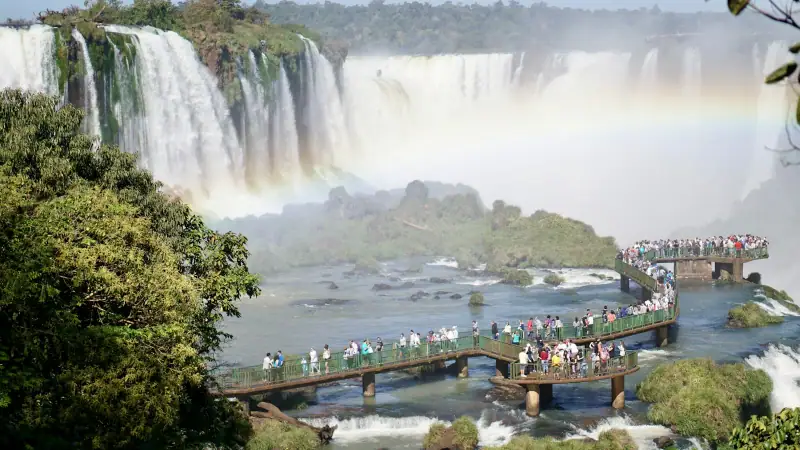
In the far west of Paraná, Iguaçu Falls are the region’s number one attraction, and one of the most beautiful in South America. On the Brazilian side, a built trail runs along the cliff and offers a spectacular overview, up to the walkway that extends out facing the Devil’s Throat. The national park is UNESCO-listed, and the city of Foz do Iguaçu serves as a practical base, with a nearby airport.
All this is detailed, with the schedules to check, the Parque das Aves and the Itaipu dam, in the guide to Iguaçu Falls, Brazilian side. The Argentine side, which lets you get closer to the cascades, is a separate visit.
For the South, remember above all that Foz do Iguaçu is far from the coast. A domestic flight is generally more practical than the road, which is more than 600 kilometers (373 mi) to Curitiba. Many travelers arrive in Iguaçu from São Paulo or Rio, then continue south by plane.
Hotels in the Serra Gaúcha
Compare accommodation in Gramado and Canela for your mountain stay.
Santa Catarina: beaches, German towns and mountains
Santa Catarina is the state where the coast is richest in beaches and small bays. Going from north to south, you meet seaside resorts that are very busy in summer, such as Balneário Camboriú, with its many seafront buildings, then wilder and more surf-oriented places. Bombinhas is known for its clear waters and diving, Garopaba and Praia do Rosa for their waves and relaxed atmosphere. Between July and November or so, right whales come to give birth near this southern coast, a spectacle you can watch from land or by boat with supervised operators.
Inland, the Itajaí valley was settled by German immigrants in the 19th century. Blumenau and Pomerode keep this heritage, with half-timbered architecture, sausage and cake cooking, and above all a big beer festival, Blumenau’s Oktoberfest, held in October. It draws huge crowds: book long ahead if you want to attend.
In the heights, the Serra Catarinense region, around Urubici, shows a completely different face: high-altitude landscapes, canyons and sometimes very cold winter nights. It is a destination for hiking and photography, more than a place to tick off quickly.
Florianópolis, the island of magic
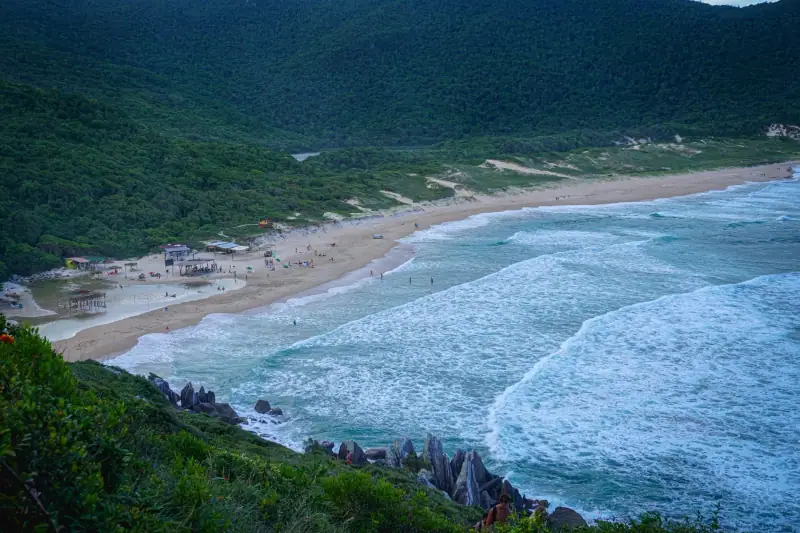
The capital of Santa Catarina occupies mostly an island, linked to the mainland by bridges, including the famous Hercílio Luz. The island has dozens of beaches with very different moods: surf at Joaquina and Mole, families in the north at Jurerê and Canasvieiras, lagoons and dunes at Lagoa da Conceição, fishing villages of Azorean heritage in the south. It is the ideal stop to slow down after several days on the move.
Everything is detailed in the article Visiting Florianópolis, and to choose the right area, see where to stay in Florianópolis. One point to keep in mind: in high season, from December to February or so, prices rise and traffic is dense. In spring and early fall, the island is calmer and temperatures remain pleasant.
The Serra Gaúcha: Gramado, Canela and the vineyards
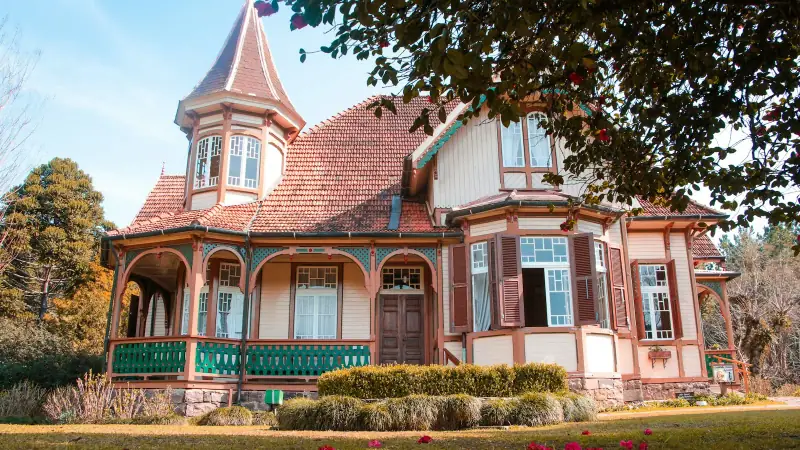
In the north of Rio Grande do Sul, the Serra Gaúcha is the state’s most touristy region. Gramado and Canela, two neighboring towns, have architecture inspired by the Alps and central Europe, flowered streets, chocolate shops and many pastry shops. Gramado also hosts a big film festival every year and a major Christmas program. The style is deliberately very touristy and decorative, which pleases Brazilian families a lot, but may seem kitsch to some travelers: approach it with a smile.
In Canela, the Caracol waterfall, about 130 meters (427 ft) high, is one of the most visited natural sites in the region, in a park about ten kilometers (6 mi) from the center. The surroundings suit short hikes, and the araucaria forest, those conifers typical of the South, gives the landscapes a special charm.
Around Bento Gonçalves, another region has grown in importance: the vineyards of the valley known as Vale dos Vinhedos, where wine and sparkling wine production has developed. Many estates offer visits with tasting. If you drive, plan a driver or an organized excursion: tolerance for drinking and driving is very low in Brazil.
The canyons of Aparados da Serra and Serra Geral
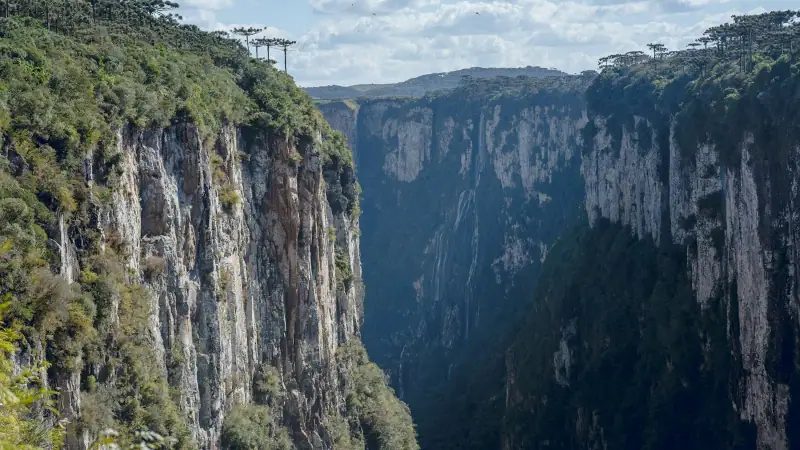
The region’s great spectacle lies on the border between Rio Grande do Sul and Santa Catarina. Aparados da Serra National Park, located at Cambará do Sul, protects about 13,000 hectares (32,000 acres) of Mata Atlântica, according to the Instituto Chico Mendes de Conservação da Biodiversidade (ICMBio), which manages the park. Its highlight is the Itaimbezinho canyon, an impressive rift several hundred meters deep, discovered from viewpoint trails and waterfalls plunging into the void.
Another canyon, longer and less visited, lies in the neighboring Serra Geral park. A few important tips: arrive early, because access is limited in the late afternoon, and check opening days and any restrictions before traveling. Mist can hide the view completely: check the day’s weather and plan some flexibility in your schedule. You reach it from Cambará do Sul, where you can sleep, or on an excursion from Gramado and Canela.
The trails are well built but remain mountain trails: good shoes, a windbreaker and water are essential, even in summer.
Rent a car in the South
Compare rental companies to explore the Serra Gaúcha and the canyons at your own pace.
Porto Alegre and gaúcho culture
Porto Alegre, capital of Rio Grande do Sul, is a large city of more than a million inhabitants, on the shore of Lake Guaíba. It is less touristy than the other hubs of the South, but it is the best place to understand gaúcho culture: the central market, sunsets on the lake, churrasco restaurants and the tradition of chimarrão, that maté infusion drunk hot from a gourd that is passed around.
The city is mainly useful as a gateway, because its airport serves the Serra Gaúcha well. If you spend a night there, choose lodging in a central, busy neighborhood, and find out which areas to avoid in the evening. More generally, do not stroll at night in deserted parts of the city center.
Food of the South: meat, wine and European traditions
The South has a cuisine very different from that of the Northeast. Gaúcho churrasco is the reference: meat grilled over embers, served rodízio-style in many restaurants. In Santa Catarina, seafood dominates on the coast, especially the oysters of Florianópolis, raised in the island’s bays. In the Serra Gaúcha, you taste Italian-inspired cooking, with pasta, polenta and local wine, while Blumenau and Pomerode are known for their cakes and German-inspired specialties.
For an overall presentation of the country’s dishes, see the article on Brazilian food. In the South, do not hesitate to ask for the dishes of the day: family restaurants are often the best.
When to go to southern Brazil
Seasons are the opposite of the northern hemisphere. The southern summer, from December to March, is high season on Santa Catarina’s beaches, with heat, humidity and frequent afternoon storms. It is also when you find the most people and the highest prices.
The southern winter, from June to August, is colder: temperatures drop clearly at altitude, frost is possible in the Serra Gaúcha and in the heights of Santa Catarina, and some houses are poorly heated. It is nevertheless the season when Gramado is liveliest, with a festive atmosphere. Spring (September to November) and fall (March to May) are often the best compromises for combining nature, cities and beaches, with fewer crowds. The article on when to go to Brazil details the seasons by region.
A ten-day itinerary in the South
Here is a realistic outline, to adapt to your flights:
- Days 1 and 2: Foz do Iguaçu. One day for the falls, Brazilian side, another for the Argentine side or for the Parque das Aves and the Itaipu dam.
- Days 3 and 4: Curitiba and Morretes. Flight to Curitiba, discovery of the city, then a train excursion to Morretes.
- Days 5 to 7: Florianópolis. Beaches, lagoon and fishing villages, taking the time to do nothing.
- Days 8 to 10: Serra Gaúcha. Flight or long road to Porto Alegre, then Gramado, Canela and, if possible, the canyons.
If you have less time, drop Curitiba or the Serra Gaúcha rather than squeezing everything in. Trips between these hubs are long, and it is the quality of the stay that suffers.
Budget, transport and organization
The South is generally a bit more expensive than the Northeast in high season, notably in Florianópolis and Gramado, but it offers good value outside Brazilian school holidays. For an overall estimate, see the article budget in Brazil.
On transport, the plane remains the simplest solution for long distances. Long-distance buses are comfortable and widely used by Brazilians, with reclining seats and reliable schedules on major routes. For mountain regions, a car is practical, but roads can be narrow, misty and poorly lit: avoid driving at night.
Safety, health and entry requirements
The South region is often considered calmer than other parts of the country, but the usual precautions apply: do not show your phone and jewelry, use ride-hailing apps or official taxis, leave no visible objects in a car, and avoid walking alone at night in deserted city centers. On beaches, leave nothing unattended.
Government travel advice includes safety notes on southern cities such as Foz do Iguaçu, Curitiba, Porto Alegre and Florianópolis (travel.state.gov in the US, GOV.UK in the UK, travel.gc.ca in Canada, Smartraveller in Australia). Check it before you leave. Entry rules depend on your passport. For health, ask your doctor or a travel clinic, and see the CDC (US) or TravelHealthPro (UK). The guide visa, health and safety in Brazil summarizes the points to prepare: mosquitoes, insurance and documents.
Also consider travel insurance with medical assistance and repatriation.
Bottom line
Southern Brazil appeals to those who want another face of the country: more temperate, more European in places, very varied in landscapes. If you have only ten days or so, concentrate on Iguaçu, Florianópolis and the Serra Gaúcha, with Curitiba as a transition stop. If you travel as a family, Gramado and Florianópolis island are the easiest. For hiking and big-panorama fans, the canyons of Aparados da Serra are worth the detour on their own.
Sources
Frequently asked questions
What are the three states of Brazil's South region?
The South region groups Paraná (capital Curitiba), Santa Catarina (capital Florianópolis) and Rio Grande do Sul (capital Porto Alegre). It is the part of the country with the most temperate climate, with real seasons and a strong influence of European immigration.
How much time should you plan to visit southern Brazil?
Allow at least ten days for a reasonable selection (Foz do Iguaçu, Curitiba, Florianópolis, Serra Gaúcha). Distances are large: it is better to limit the number of stops and take domestic flights or night buses for long journeys.
What is the best season for southern Brazil?
For Santa Catarina's beaches, December to March is the most pleasant period, but also the busiest. For the Serra Gaúcha mountains, spring and fall are comfortable, and the southern winter (June to August) can be cold, with frost. Seasons are the opposite of the northern hemisphere.
Can you visit the South without a car?
Yes for the big cities, linked by planes and long-distance buses, and for Florianópolis or Curitiba, where ride-hailing is common. A car is useful for mountain areas and small villages, provided you avoid driving at night and prepare routes well.
Is southern Brazil safe for tourists?
The region is generally seen as calmer than the country's big metropolises, but petty crime exists, especially in city centers and at the exit of beaches. Government travel advice includes safety notes on southern cities: read it before leaving.
Where can you see Iguaçu Falls from southern Brazil?
The Brazilian side is visited from Foz do Iguaçu, in Paraná state. See the dedicated guide to Iguaçu Falls, Brazilian side.
More Brazil guides
Keep reading
What to See in the Brazilian Amazon: Beyond Manaus, Anavilhanas, Alter do Chão and Belém
What to see in the Amazon region: Anavilhanas archipelago, Tapajós beaches at Alter do Chão, Belém's Ver-o-Peso market, Parintins. Tips, health and safety.
What to See in Northeast Brazil: Beaches, Dunes and Colonial Towns
What to see in Brazil's Northeast: Recife, Olinda, Porto de Galinhas, Jericoacoara, Lençóis Maranhenses, Fernando de Noronha. Tips, seasons and safety.
What to See in the Pantanal: Jaguars, Transpantaneira, Miranda and Bonito
What to see in the Pantanal: Porto Jofre jaguars, Transpantaneira, Corumbá, Miranda and Bonito. Seasons, wildlife, safety and tips to choose well.
Ready-made
Brazil itineraries
15 days
2-Week Brazil Itinerary: Rio, Paraty, Iguaçu and Salvador
Rio de JaneiroParatyFoz do IguaçuSalvador de Bahia