What to see
Paraty and Ilha Grande: What to See on Brazil's Costa Verde
We may earn a commission when you book through links on this page, at no extra cost to you. We don't visit or try the places we cover: we summarize published sources. How we work
In short
- Paraty and Ilha Grande were listed together by UNESCO in 2019 as a mixed cultural and natural site; the bus from Rio to Paraty usually takes four to five hours.
- Ilha Grande is reachable only by boat (from Angra dos Reis or Conceição de Jacareí, the shorter crossing at about half an hour) and has no cars.
- Two nights in Paraty and two on Ilha Grande give a good balance of culture and nature; always keep a margin for boat crossings, which depend on weather.
- The wetter months are December to March; many travelers prefer the drier southern winter, May to September, even though the sea is cooler.
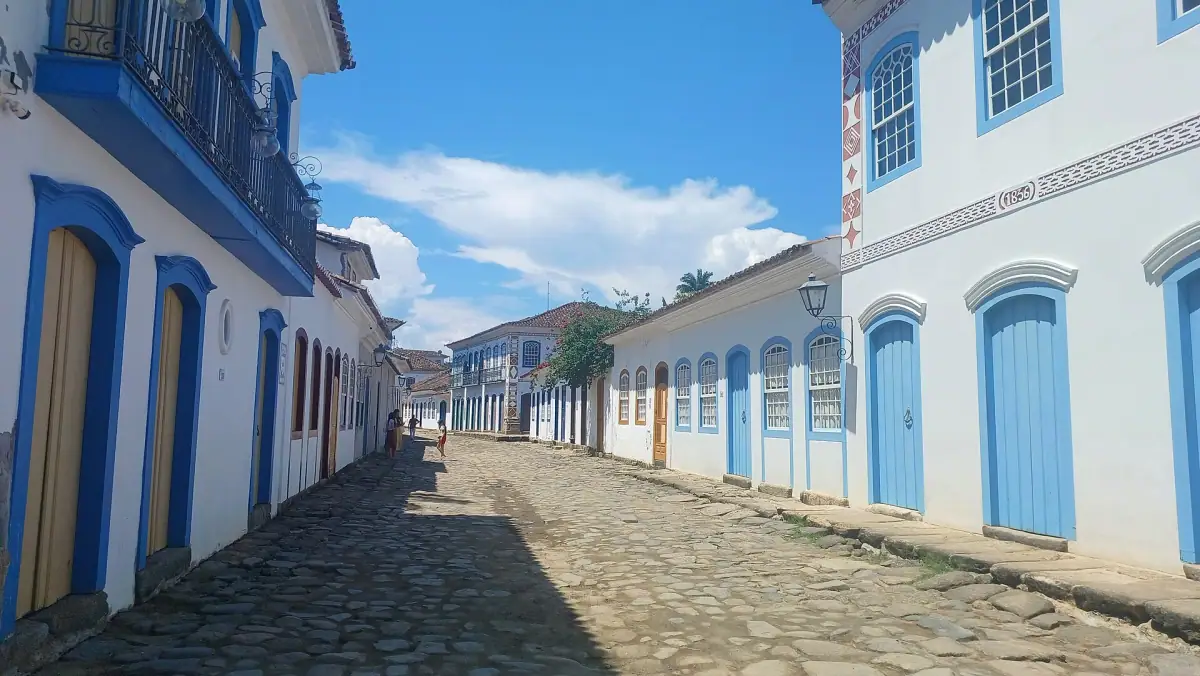
Between Rio de Janeiro and São Paulo, the Costa Verde unrolls a ragged coast where the Atlantic forest almost falls into the sea. Two stops stand out: Paraty, a small colonial town with streets paved in large pebbles, and Ilha Grande, a car-free island where you get around on foot and by boat. Together they were listed in 2019 as a UNESCO World Heritage mixed site, both cultural and natural. Here is how to visit them, link them and prepare your stay.
Paraty and Ilha Grande in brief
Paraty prospered in colonial times, when gold extracted from the interior came down to the coast by a path now called the Caminho do Ouro, the gold route, before being shipped to Portugal. The UNESCO-listed site covers the historic center, remains of this route and a vast area of Atlantic forest and coastline, including Ilha Grande.
The whole suits a stay of three to five days very well, as an extension of Rio. The two-week itinerary in Brazil places Paraty between Rio and Iguaçu Falls, which makes a gentle transition after the big city. Adding Ilha Grande needs one or two more nights, well used.
How to get there from Rio de Janeiro
Paraty is reached by road from Rio. The bus is the most common option: the trip generally takes between four and five hours, depending on traffic and stops. A private transfer costs more but saves hauling luggage around the bus station. By car, the coastal road is pleasant, but it gets busy on weekends and public holidays.
For Ilha Grande, two main ports serve as departure points: Angra dos Reis and Conceição de Jacareí, in the municipality of Mangaratiba. From Conceição de Jacareí, the crossing is clearly shorter, about half an hour; from Angra, it takes more than an hour. Schedules depend on the season, the tide and the weather, and some boats leave only once or twice a day. Check schedules the day before and plan a margin, especially for a flight or a bus on the return day.
Paraty’s historic center
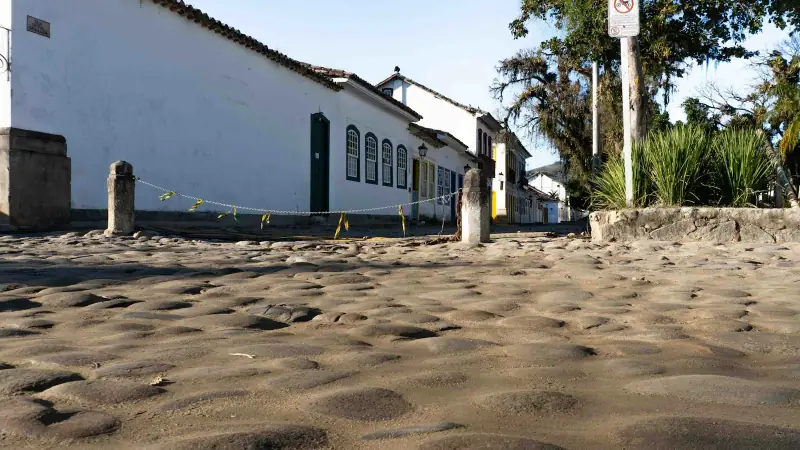
Paraty’s charm lies in its pedestrian center. The white houses with colored frames, the colonial churches and the lanes paved with irregular stones are discovered on foot, often without a map: just let yourself be carried along. The pebbles are uneven and slippery in the rain, so closed, comfortable shoes are better than flip-flops.
A feature of the place: the streets of the lower center can be flooded by seawater at the highest tides, a phenomenon known to residents. It is part of the town’s image and does not last, but it is better not to leave luggage on the ground floor of a low lodging. Ask your host whether a big tide is forecast during your stay.
The town is also known for its crafts, galleries and shops, and the region is known for producing cachaça, the sugarcane spirit. Several distilleries in the surrounding countryside can be visited, generally with a tasting: ask there about visiting days and conditions, which vary.
Safety. The center is lively and pedestrian, and travelers often describe it as more peaceful than the country’s big cities. Stay careful nonetheless: leave nothing visible in a car, avoid deserted streets at night and keep valuables at the hotel. Government travel advice applies to Brazil as a whole and should be checked before leaving (travel.state.gov in the US, GOV.UK in the UK, travel.gc.ca in Canada, Smartraveller in Australia).
Hotels and pousadas in Paraty
Compare lodging in the historic center and the surroundings for your dates.
Boat trips around Paraty
Paraty Bay is dotted with islands and small beaches reachable only by sea. The big classic is the schooner or motorboat outing, which often lasts a day and includes several swimming and snorkeling stops. Departures are from the port, near the center.
Choose an outing according to the weather: in rough seas or under a heavy sky, the interest drops a lot, and organizers sometimes postpone or cancel. Bring sunscreen, a cap and water, because shade is scarce on deck. If you want to save time, you can book ahead online, with free cancellation on most offers.
Boat excursions in Paraty
Bay cruises, swimming stops and guided visits of the historic center, bookable online.
Ilha Grande: the car-free island
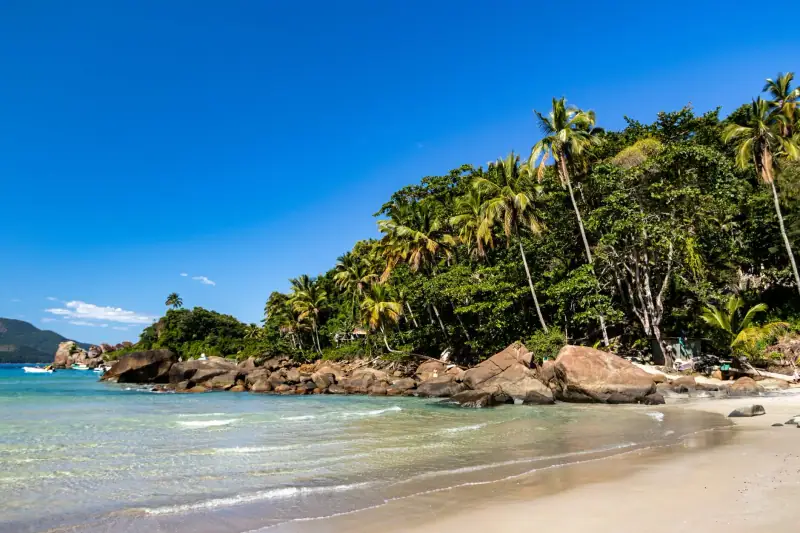
Ilha Grande is a world apart: terrain covered in Atlantic forest, dozens of beaches, fishing villages and no roads for cars. The main village, Vila do Abraão, is the arrival point for most travelers and concentrates pousadas, restaurants and agencies. You get around on foot there, and reach the rest of the island on foot or by water taxi.
Plan at least two nights. The first day can be devoted to a boat outing around the island, with swimming and snorkeling, the second to a hike. Many travelers come for the day from the mainland, but then miss the calm evenings and the morning light, when the excursions have left.
Beaches and hikes on Ilha Grande
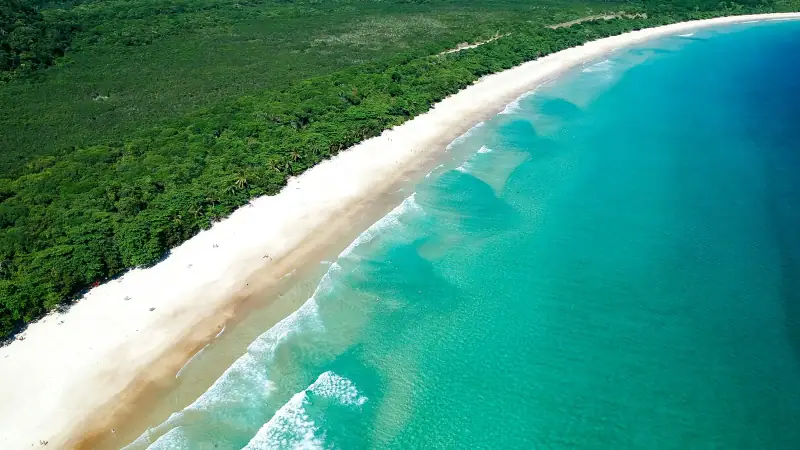
The most famous beach is Lopes Mendes, a long stretch of pale sand open to the ocean, where waves attract surfers. You get there either by water taxi to Pouso beach, then about 20 to 30 minutes’ walk, or on foot from Abraão by a trail that takes two hours or more each way. The sheltered beaches, such as those reached by boat, are calmer for swimming.
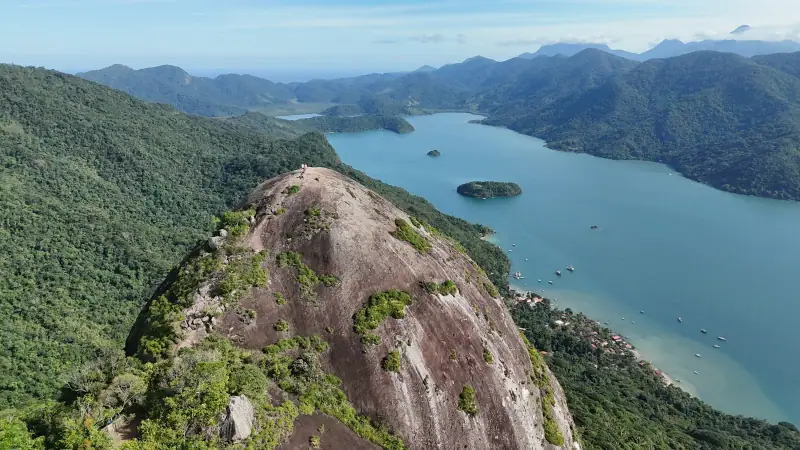
Walkers can also aim for Pico do Papagaio, a summit that overlooks the island and offers a wide view of the bay. The climb is demanding, with a large elevation gain and a sometimes slippery trail: leave early, bring plenty of water and, if you are not used to this kind of terrain, go with a local guide. Never set out alone after a storm.
Mosquitoes are present in the forest and near the beaches: repellent and covering clothing are useful. For health preparation, ask your doctor or a travel clinic, and see the official travel health pages (CDC in the US, TravelHealthPro in the UK); the guide visa, health and safety in Brazil details general precautions. On the island, ATMs and internet connections are limited: keep a little cash and download your maps in advance.
Pousadas on Ilha Grande
Compare lodging in Vila do Abraão and on the island for your dates.
Practical tips for the Costa Verde
When to go. The climate is hot and humid. Rain is more frequent in the southern summer, from December to March, while the southern winter, May to September, is drier and more bearable for hikes, with a slightly cooler sea. The guide to choosing the best time to go to Brazil gives the detail by region. Weekends and Brazilian holidays are very busy: book early.
Car. A car is useful if you want to explore the beaches and distilleries around Paraty freely, but useless on Ilha Grande, where there is no road. It is not essential for a short stay: buses and transfers are enough.
Insurance. Travel insurance with medical assistance and repatriation is strongly advised, especially if you plan hikes and sea outings.
Before or after Paraty. Rio de Janeiro is the natural gateway: see the guide to what to do in Rio de Janeiro before hitting the road.
Bottom line: who is the Costa Verde for?
The Costa Verde will appeal to those who want to catch their breath after the bustle of Rio: strolls in a colonial center, boat days, beaches and forest trails. It is not a destination for big nightlife, and the island’s infrastructure remains modest, but that is precisely what makes its charm.
For a first stay, two nights in Paraty and two nights on Ilha Grande give a good balance between culture and nature. Always keep a margin for boat crossings, which depend on the weather.
Frequently asked questions
How much time should you plan for Paraty and Ilha Grande?
Two nights in Paraty and two nights on Ilha Grande let you enjoy both sites without rushing. With less time, one night in Paraty and a boat day are enough for a glimpse.
How do you get from Rio de Janeiro to Paraty?
The simplest is the bus or a private transfer: expect four to five hours on the road depending on traffic. By car, the road follows the coast and is passable, but it is busy on weekends and public holidays.
How do you reach Ilha Grande?
The island is reachable only by boat, from Angra dos Reis or Mangaratiba, or from Conceição de Jacareí, where crossings are shorter. Schedules vary with the season and the weather: check them the day before.
Is Paraty safe for travelers?
The historic center, pedestrian and very busy, is considered calmer than the big metropolises, but vigilance remains in order: no visible valuables, no isolated walks at night. Check your government's travel advice for Brazil before leaving.
What is the best time to visit the Costa Verde?
The climate is hot and humid, with more rain in the southern summer, from December to March. Many travelers prefer the southern winter, May to September, drier and less hot, even though the sea is then cooler.
More Brazil guides
Keep reading

What to See in the Brazilian Amazon: Beyond Manaus, Anavilhanas, Alter do Chão and Belém
What to see in the Amazon region: Anavilhanas archipelago, Tapajós beaches at Alter do Chão, Belém's Ver-o-Peso market, Parintins. Tips, health and safety.
What to See in Northeast Brazil: Beaches, Dunes and Colonial Towns
What to see in Brazil's Northeast: Recife, Olinda, Porto de Galinhas, Jericoacoara, Lençóis Maranhenses, Fernando de Noronha. Tips, seasons and safety.

What to See in the Pantanal: Jaguars, Transpantaneira, Miranda and Bonito
What to see in the Pantanal: Porto Jofre jaguars, Transpantaneira, Corumbá, Miranda and Bonito. Seasons, wildlife, safety and tips to choose well.
Ready-made
Brazil itineraries
15 days
2-Week Brazil Itinerary: Rio, Paraty, Iguaçu and Salvador
Rio de JaneiroParatyFoz do IguaçuSalvador de Bahia