What to see
Visiting Perth: what to see and do in the capital of Western Australia
We may earn a commission when you book through links on this page, at no extra cost to you. We don't visit or try the places we cover: we summarize published sources. How we work
In short
- Three days cover the center, Kings Park, Fremantle and a beach; add one day for Rottnest Island and two to three for the Pinnacles or Margaret River.
- Fremantle is about 20 km (12 mi) from the center and reached by train in roughly half an hour; the Rottnest ferry takes about 30 minutes from Fremantle.
- The Pinnacles are about 245 km (152 mi) north and Margaret River about 270 km (168 mi) south of Perth.
- Spring (September to November) and early autumn (March-April) are the most pleasant; summer is hot and dry. Quokkas must not be fed or touched.
Perth is often the forgotten city of a first trip to Australia. Set on the west coast, several hours by air from the other big cities, it takes a detour. Yet those who come often leave won over: a relaxed city, a wide river, white-sand beaches a few minutes from the center and some of the most generous sunshine in the country.
This guide presents what to see and do in Perth and its nearby surroundings, how to get around, when to go and how to organize a stay of three to five days. If you are preparing a broader trip, start with our complete guide to Australia.
Perth in brief: a capital on the Indian Ocean
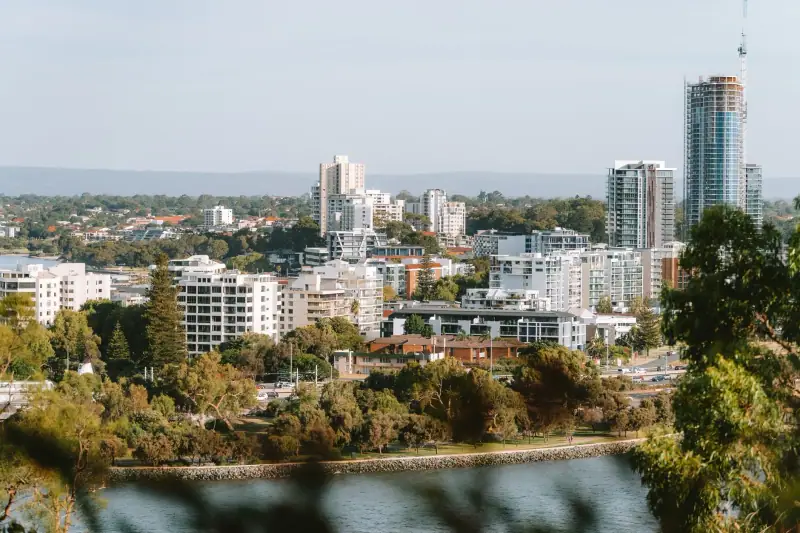
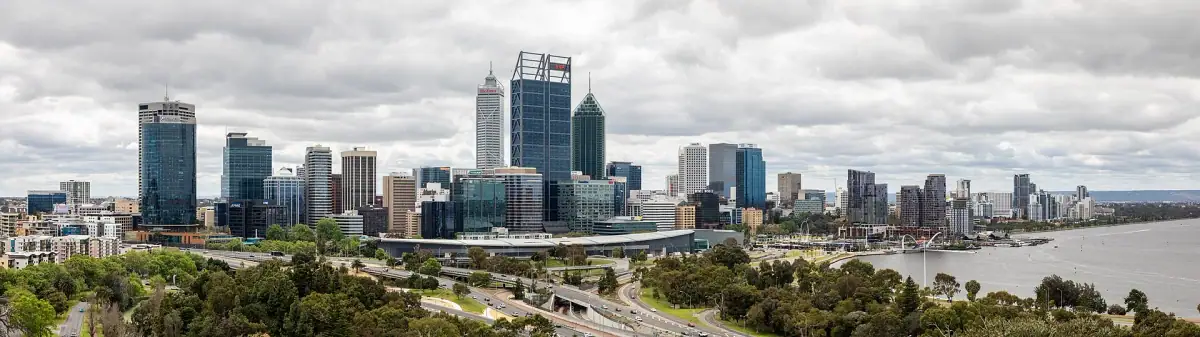
Perth is the capital of Western Australia, the largest state in the country. The city stretches between the Swan River and the Indian Ocean, with a compact center of glass towers, pedestrian lanes and lively squares. It is known for its very sunny climate and a calmer pace than Sydney or Melbourne.
Its isolation is both its weakness and its charm. The big cities of the east are far away, which has forged its own identity: residents readily describe themselves as a little apart, turned toward the sea, the beach and the open air. The time difference with the east coast is two or three hours depending on the time of year, a point to anticipate if you chain flights.
Finding your way
The city center is easy to cover on foot. North of the central station is the Northbridge district, lively in the evening; to the south, the river and the waterfront. The beaches are to the west, along the coast, while Fremantle, the former port town, lies at the river mouth, to the southwest.
Kings Park: the green lung with a view of the city
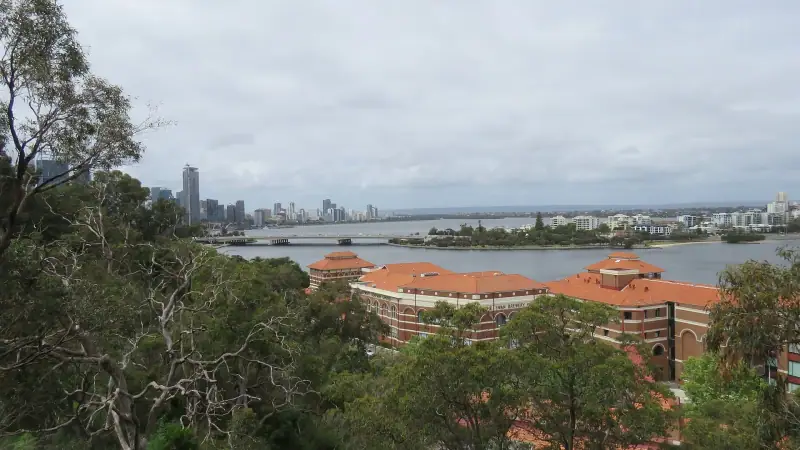
Kings Park overlooks the city center from a hill above the Swan River. It is one of the largest urban parks in the world, much bigger than a simple garden: part of it is landscaped, with lawns, picnic areas and a botanic garden devoted to the state’s flora, and another part remains natural bush.
What to do there
- The botanic garden presents plants from all over Western Australia. Spring, in particular, is wildflower season: it is the best time to walk there.
- The viewpoints look onto the towers of the center and the river. They are very popular late in the day.
- The trails let you walk quietly, on foot or by bike, without leaving the city.
- The war memorial is a place of reflection that also overlooks the landscape.
Allow half a day to enjoy it calmly. Entry is free, which makes it a very good option when you are watching your budget for Australia.
The city center and culture
The heart of Perth does not try to compete with Sydney’s landmarks, but it is pleasant to discover. The pedestrian lanes of the center hold cafés, bars and shops; some old facades stand next to modern towers. The waterfront, along the Swan River, is a pleasant place to walk late in the day.
The cultural district brings together museums, an art gallery and a state library. It is a good option for half a day if the weather is bad or the heat too strong. Aboriginal art has a prominent place in the collections: it is a way to understand the culture of the continent’s first inhabitants, to complement with a visit to a specialist gallery.
Where to stay in Perth
City center, waterfront or Fremantle: compare hotels and book ahead in high season.
Fremantle: the port with historic facades
About twenty kilometers (12 mi) from the center, Fremantle is Perth’s big getaway. This former port town has kept a group of 19th-century buildings, cobbled streets, cafés and a bohemian atmosphere very different from the capital’s. It is easily reached by train from the city center: the trip takes about half an hour.
What to see in Fremantle
- The old prison, a UNESCO World Heritage site as part of the Australian convict sites, is visited with a guide. It recalls Australia’s past as a penal colony.
- The covered market, set in a historic building, is a good place to stroll, taste specialties and pick up souvenirs. It operates mostly at the end of the week: check the opening days before you go. For more ideas in the same spirit, see our selection of local markets in Australia.
- The fishing harbor is ideal for eating fish and seafood facing the sea.
- The galleries and craft breweries are concentrated in the old center.
Allow a full day if you want to see everything, or half a day if you only do the prison and the old center.
Perth’s beaches: Cottesloe and the coast
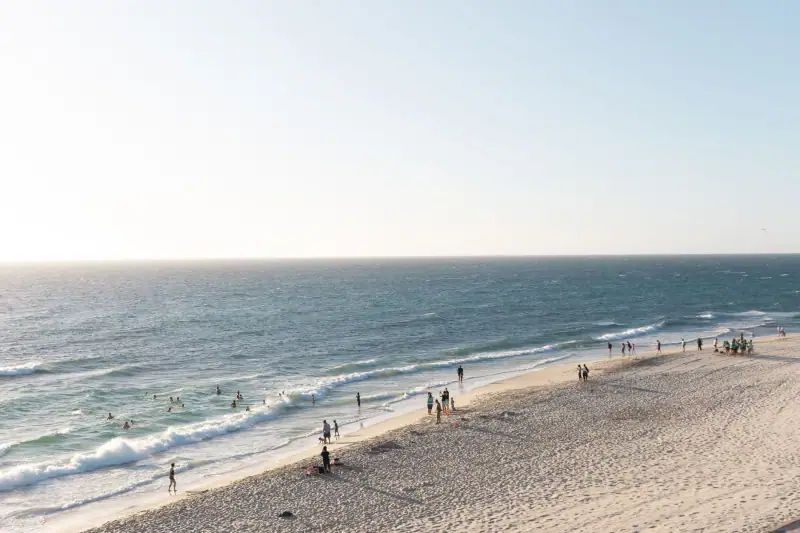
One of Perth’s great assets is going from an office tower to the beach in a few minutes. The coast is lined with long stretches of pale sand and turquoise water. Cottesloe is the best-known beach: white sand, a promenade, cafés and a family atmosphere. It is very busy in summer, especially late in the afternoon.
Other beaches stretch to the north and south, each with its own atmosphere: some are geared to surf, others calmer, perfect for swimming with children. Sunset over the Indian Ocean is one of the great moments of the day: the west coast faces the horizon, which is rare in Australia, where most cities look east.
A few safety tips apply to all Australian beaches: swim between the red and yellow lifeguard flags when there are any, avoid swimming out alone and protect yourself from the sun, which is very strong here, even in hazy weather.
Rottnest Island and the quokkas
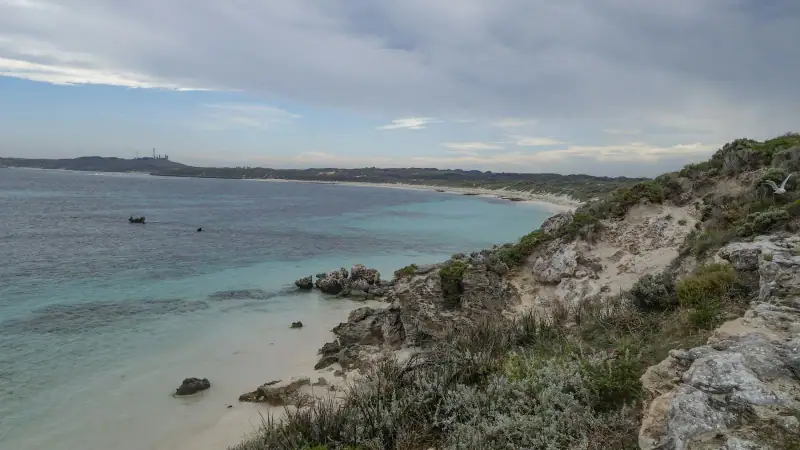
Off Fremantle, Rottnest is a small island without private cars, where you get around by bike, on foot or by shuttle. It is famous for its quokkas, small marsupials with a smiling face that have become an icon of Western Australia. You will also find white-sand coves, clear water good for swimming and snorkeling, and seaside paths.
The ferry crossing is short: about thirty minutes from Fremantle, a little more from central Perth. A round trip in a day is possible, but a night there lets you enjoy the island once the groups have left.
Respecting the quokkas
- Never feed them: their diet is fragile and it is forbidden.
- Do not touch them or pick them up for a photo.
- Keep your distance and do not leave food within reach.
For other wildlife encounters, see our guide to watching wildlife in Australia.
Excursions from Perth
To explore Western Australia, a car is quickly essential: distances are considerable and services are few outside towns. If you rent a vehicle, read the conditions on unpaved roads carefully.
To the north: the Pinnacles
About 245 km (152 mi) north of Perth, the Pinnacles desert is dotted with thousands of limestone columns rising from the yellow sand. Allow two and a half to three hours of driving and favor sunrise or sunset for the light. Many travelers go for the day with an organized tour.
To the south: Margaret River
The Margaret River region is about 270 km (168 mi) south of Perth, or nearly three hours by road. It combines vineyards, tall-tree forests, wild beaches and caves. It is one of the country’s great wine regions: our article on Australian wine and its wine regions covers it in more detail. To enjoy it without rushing, plan at least one night there.
Other ideas
- The Swan Valley, close to the city, is the state’s oldest wine region and can be visited in half a day.
- Wave Rock, a giant wave of rock, is several hours’ drive to the east: it is a long day, so it is better to spend a night there.
- Dolphins along the coast are watched on boat trips from certain coastal towns.
A good rule of thumb: under 200 km (124 mi) of driving per day is a good pace, as photo stops, breaks and country roads quickly slow you down.
What to eat in Perth
Perth’s cooking takes advantage of its location: the sea on one side, farmland on the other. Seafood is fresh, notably the rock lobsters of the west coast, an iconic product. Producers’ markets, craft breweries and cafés are very present. Asian cuisine is also well represented, linked to the proximity of Southeast Asia and immigration. For a national overview, read our article on what to eat in Australia.
Getting around Perth
The public transport network is simple to use. Trains serve Fremantle and several suburbs, and free buses in the city center make short trips easy: check which zones are covered when you arrive. A rechargeable transport card is sold locally and is more practical and cheaper than single tickets.
For distant beaches and excursions, a car offers more flexibility. Remember that you drive on the left. Cycling is also an excellent option: the city has cycle paths along the river and the coast.
To reach Perth, the simplest is to fly. Flights from the cities of the east last several hours, and international connections link the city to Asia.
When to go to Perth
Perth enjoys a Mediterranean-type climate: hot, dry summers and mild, wetter winters. Our article on when to visit Australia details the seasons of the whole country. For Perth:
- December to February (summer): heat and sun, lively beaches. Days can be very hot: go out early and protect yourself.
- March to May (autumn): pleasant temperatures, thinner crowds, sea still warm.
- June to August (winter): cooler and rainier weather, but frequent clear spells. A good time for museums and the city.
- September to November (spring): wildflowers, mild and bright days. It is often the best period to travel.
Example 4-day itinerary
- Day 1: city center, cultural district and a late-day walk on the waterfront.
- Day 2: Kings Park in the morning, Cottesloe beach in the afternoon and sunset over the ocean.
- Day 3: train to Fremantle, visit the prison, the market and the harbor.
- Day 4: Rottnest Island and its quokkas, or an excursion to the Pinnacles.
If you have more time, add a getaway to Margaret River. To compare with a stay in another big city, read our plans for Sydney in 4 days and Melbourne in 3 days.
Practical tips
- Entry rules: they depend on your passport. Check the official travel advice of your government before you book (travel.state.gov in the US, GOV.UK in the UK, travel.gc.ca in Canada, Smartraveller in Australia; checked November 2026).
- Sun: the UV index is high much of the year. Sunscreen, a hat and sunglasses are essential.
- Water: always carry a bottle on walks and excursions.
- Booking: in high season, lodging and ferries fill up. Book ahead.
- Insurance: travel insurance covering medical costs and repatriation is recommended, as care is expensive for non-residents.
- Distances: Western Australia is immense. Do not underestimate travel times.
Perth is not always part of the classic itineraries, but it rewards those who take the time to stop there: space, light and the Indian Ocean within reach of a tram, a train or a bike.
Frequently asked questions
How long do you need to visit Perth?
Three days let you see the center, Kings Park, Fremantle and a beach. Add a day for Rottnest Island and two to three days if you want to head to the Pinnacles or the Margaret River region.
What is the best time to go to Perth?
Spring (September to November) and early autumn (March-April) are the most pleasant: it is mild and sunny, and the heat stays bearable. The Australian summer (December to February) is hot and dry, ideal for the beach but tiring for walking by day.
Can you see quokkas in Perth?
Not in the city: quokkas live mostly on Rottnest Island, reached by ferry from Perth or Fremantle. Feeding or touching them is forbidden.
Do you need to rent a car in Perth?
For the center, Fremantle and the coastal beaches, trains and buses are enough. A car becomes useful for excursions to the north or south of the state, where distances are large and public transport is scarce.
Is Perth an expensive city?
It is around the average for major Australian cities. Lodging and restaurants weigh the most on the budget, while many pleasures (parks, beaches, walks) are free.
Is Perth far from the other major Australian cities?
Yes, it is one of the most isolated capitals in the world. Allow several hours of flying to reach Sydney or Melbourne, so factor travel time into your schedule.
More Australia guides
Keep reading
Complete guide to visiting Australia: regions, itineraries and tips
Visit Australia: regions and cities to see, highlights, best time to go, flights, transport, lodging and budget. The pillar guide to plan your trip.
Visiting Uluru and the Red Centre: a practical guide
Visit Uluru and the Red Centre: Kata Tjuta, Kings Canyon, Alice Springs, best season, respect for the Anangu sacred site, flights, car and planning tips.
Rottnest Island without a car: ferry, bike or bus to see the quokkas
Rottnest from Perth without a car: which port to choose, bike or Island Explorer bus, where to see quokkas and how to plan your day on the island.
Ready-made
Australia itineraries
7 days
Tasmania in 7 days: a road trip itinerary from Hobart to Launceston
Tasmania in 7 days: Hobart, Port Arthur, Bruny Island, Freycinet and Wineglass Bay, Launceston. Day-by-day itinerary, distances, seasons and driving tips.
3 days
Melbourne in 3 days: a culture, street art and seaside itinerary
What to do in Melbourne in 3 days? Laneways, street art, markets, museums, St Kilda and a nature escape: a day-by-day itinerary with practical tips.
4 days
Sydney in 4 days: a day-by-day itinerary to see it all
Sydney in 4 days: Opera House, Harbour Bridge, Bondi, Manly and the Blue Mountains. A day-by-day itinerary with transport and accommodation tips.