What to see
Complete guide to visiting Australia: regions, itineraries and tips
We may earn a commission when you book through links on this page, at no extra cost to you. We don't visit or try the places we cover: we summarize published sources. How we work
In short
- Australia is vast and most trips between major sights are by plane: choose two or three regions rather than trying to see everything.
- Seasons are reversed relative to the northern hemisphere (summer from December to February); the tropical north and the Red Centre are best in the drier Australian winter.
- Drive on the left, use the emergency number 000 and swim only in areas patrolled by lifeguards.
- Excluding flights, a budget-to-mid-range trip of a few weeks generally costs €2,000 to 3,000 (about $2,320 to $3,480) per person.
Australia is both a country and a continent. You go from the skyscrapers of Sydney to the red deserts of the center, from the tropical rainforests of Queensland to the cool mountains of Tasmania, with beaches almost around every bend. This diversity is its strength, but it also complicates planning: where to start, what to keep, what to sacrifice?
This guide is the starting point of our site. It presents the country, its main regions and cities, the highlights, the best season, ways to get there and get around, lodging options and budget. At each step, links send you to our detailed articles to go deeper into what interests you.
Australia in brief
Australia is a very vast country, but very unevenly populated. The great majority of its residents live in the cities of the east and southeast coast, as well as in Perth, on the west coast. Inland, very large areas are almost empty.
A few useful benchmarks before going further:
- Language: English, with a distinctive local accent and slang;
- Currency: the Australian dollar (AUD), and contactless card payment is very widespread, even for small amounts;
- Driving: on the left, as in the United Kingdom;
- Seasons: reversed relative to the northern hemisphere. The Australian summer runs from December to February, winter from June to August;
- Electricity: type I sockets. Check whether you need an adapter for your own plugs;
- Emergencies: 000 is the national emergency number.
A traveler’s first instinct is often to want to “see everything”. It is impossible in a single trip, and it would be exhausting: most journeys between major sights are by plane. It is better to choose two or three regions and explore them without hurrying.
The main regions to know
To find your way, you can divide the country into six large areas, the ones we cover on this site. Each has its character, its best season and its rhythm.
New South Wales: Sydney and the Blue Mountains
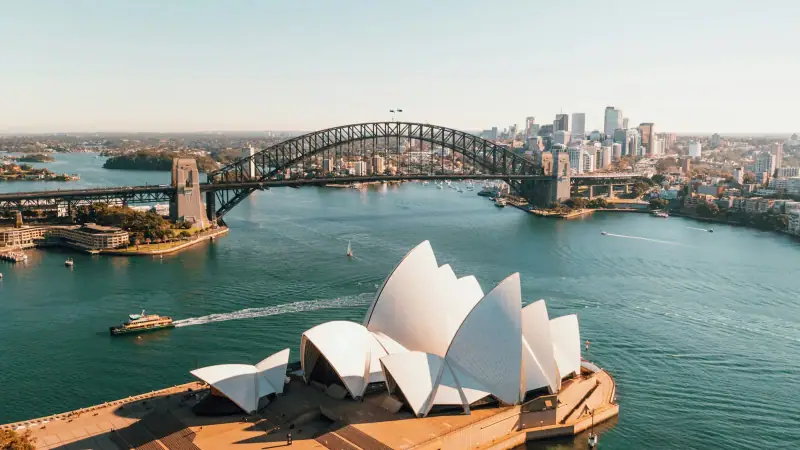
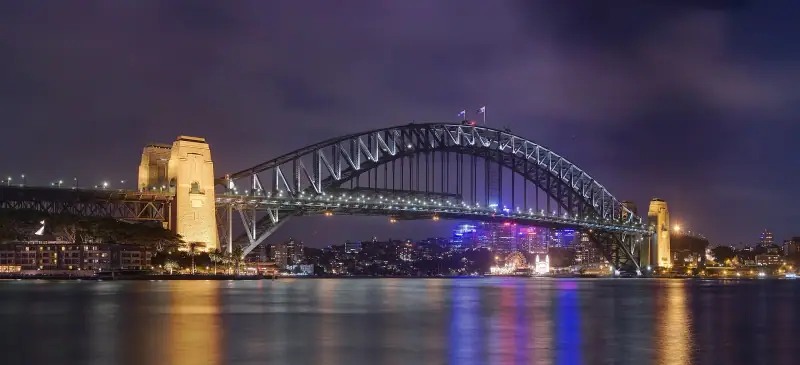
This is the usual gateway to the country. Sydney concentrates the Opera House, the Harbour Bridge, urban beaches such as Bondi and many neighborhoods to explore on foot or by ferry. About two hours to the west, the Blue Mountains offer cliffs, eucalyptus forests and hiking trails.
If you have little time, Sydney is the simplest city for a first visit. Our itinerary Sydney in 4 days groups the visits by area to limit travel, and our guide to where to stay in Sydney helps you choose the right neighborhood.
Victoria: Melbourne and the Great Ocean Road
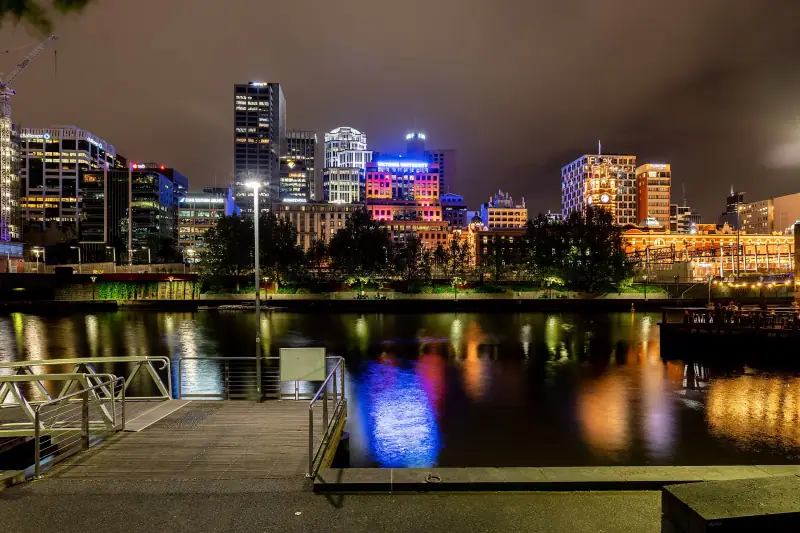
Melbourne is the country’s cultural capital: street art in the lanes, well-known cafés, galleries, neighborhoods very different from one another and, close by, beaches along the bay. Many travelers prefer it to Sydney for its atmosphere.
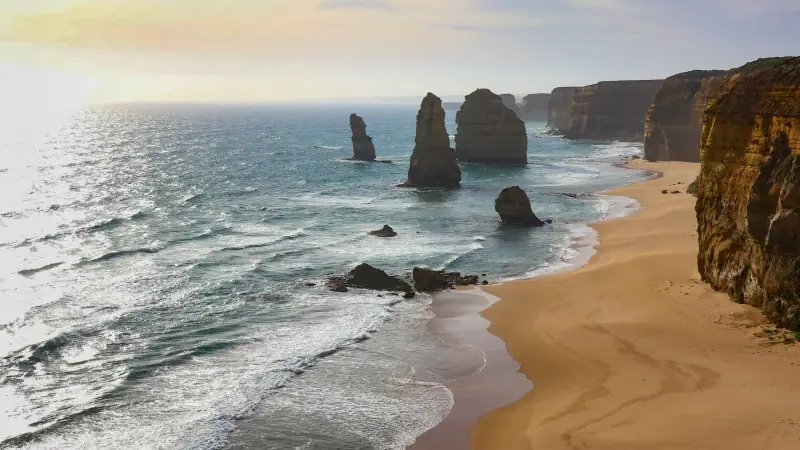
From there, the Great Ocean Road is one of the best-known road trips in the country. This road follows the south coast, between cliffs, surf beaches and forests. We detail it in Great Ocean Road in 3 days, and the city program is in Melbourne in 3 days.
Queensland: Great Barrier Reef and the tropical coast
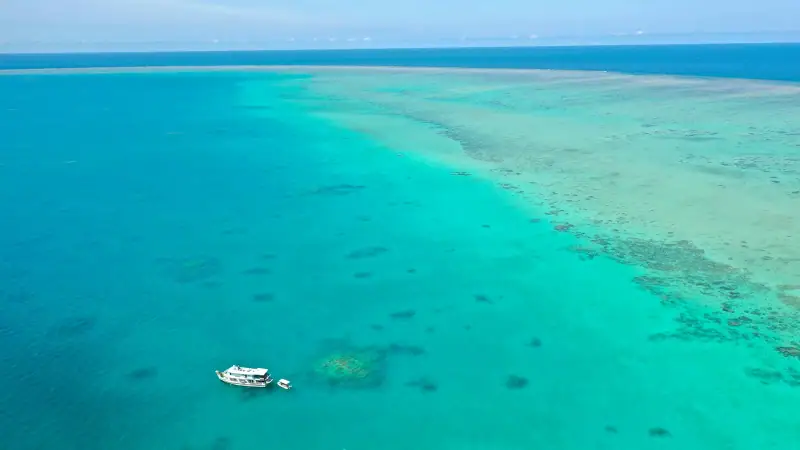
Queensland occupies the northeast of the country. This is where you find the Great Barrier Reef, the largest coral system in the world, stretching over more than 2,000 km (1,243 mi). Cairns, in the tropical north, is one of the most practical bases, with boat departures for diving and snorkeling. Farther south you find the Whitsundays, Brisbane and the Gold Coast, more oriented to beaches and leisure.
To organize a reef outing, read visiting the Great Barrier Reef from Cairns. The region is tropical: the choice of season matters a lot, with a wet period and a drier one.
The Red Centre: Uluru and Kings Canyon
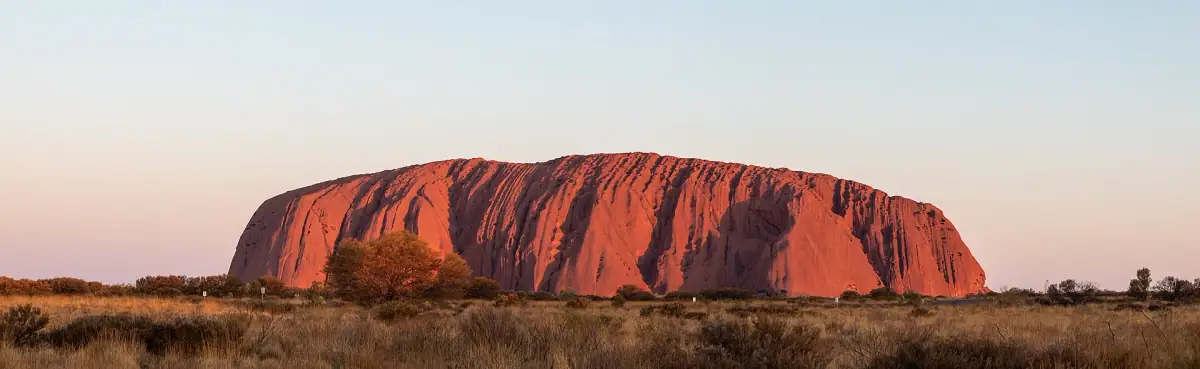
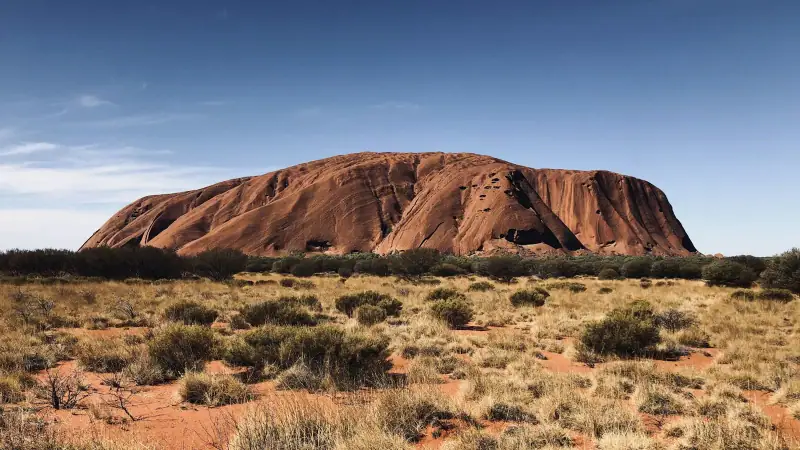
In the middle of the country, the desert shows a completely different face. Uluru, an enormous red sandstone monolith, is a sacred site for the Anangu people. Nearby, Kata Tjuta and Kings Canyon complete a stay of two to four days. The colors change through the day, and clear nights offer an exceptional starry sky.
Our guide to visiting Uluru and the Red Centre details access, lodging and the rules for respecting the site. Here, distances are considerable: you generally get there by plane, then by car or organized tour.
Western Australia: Perth and the Coral Coast
Perth is the large, isolated city of the west, closer to Southeast Asia than to Sydney. It appeals with its sunshine, its beaches and its relaxed lifestyle. Along the coast, farther north, the Coral Coast is known for its Ningaloo reef, where you can swim with large marine animals depending on the season.
It is a region for travelers who have time or who are returning to Australia: the west coast requires long journeys, and it combines poorly with a short stay on the east coast.
Tasmania: nature and wide open spaces
The island southeast of the mainland is a hiking paradise, with national parks such as Cradle Mountain and the Freycinet Peninsula. Hobart, the capital, has the charm of a historic port and an active food scene. The climate is temperate and cooler than on the mainland.
Our itinerary Tasmania in 7 days offers a driving loop from Hobart to Launceston, with the main natural sites.
Cities not to miss
Seven main cities often serve as entry points or stops:
- Sydney: the best known, between bay, beaches and historic neighborhoods;
- Melbourne: the cultural capital, appreciated for its cafés and street art;
- Brisbane: a subtropical city, starting point for southern Queensland;
- Cairns: base for the Great Barrier Reef and the rainforest;
- Perth: the large city of the west, with a quieter pace;
- Adelaide: a compact city in the south, close to wine regions;
- Hobart: the gateway to Tasmania.
For a first trip, Sydney and Melbourne make the most obvious duo. The other cities are added according to your itinerary, and several of them are above all practical stops on the way to natural sites.
Hotels in Australia
Compare places to stay in the big cities and book early for high season, from December to February.
Highlights for a first trip
Everyone builds a trip according to their wishes, but certain sites almost always come up in itineraries. Here are those worth putting on your list, with what you need to know to fit them into a realistic itinerary.
The Opera House and Sydney Harbour. Even if the image is familiar, seeing it in person remains striking. Plan at least one ferry crossing: it is one of the most pleasant ways to see the bay.
Bondi Beach and the coastal path. The walk along the cliffs to Coogee is easy and offers lovely viewpoints. Remember to swim only in areas patrolled by lifeguards.
The Great Ocean Road. From Melbourne, the coastal road deserves at least two days, ideally three, so you do not drive it in a rush.
The Great Barrier Reef. A boat trip from Cairns lets you swim above the corals, with or without scuba diving. Choose a reputable operator that cares about protecting the reef.
Uluru. Sunrise or sunset are highlights. Respect the instructions of the site’s traditional custodians: climbing is banned.
Tasmania. For those who like walking, the landscapes of Cradle Mountain or Freycinet are among the most beautiful in the country.
Wildlife. Kangaroos, koalas, wombats, colorful birds: you see them in reserves, national parks and sometimes along a path. Keep your distance and never feed wild animals.
These sites are very far from one another. Do not try to see them all in two weeks: it is better to choose four or five and take the time to enjoy them.
When to go
Because Australia is so vast, there is no “best period” valid everywhere. Here are the broad lines.
- September to November (Australian spring): pleasant temperatures in the south, flowers, start of the whale season on some coasts. It is a balanced period for combining Sydney, Melbourne and Tasmania;
- December to February (Australian summer): hot, very busy and more expensive. This is high season, with local school holidays. The tropical north then has its rainy season, with humid heat;
- March to May (Australian autumn): often pleasant, with fewer people than in summer, and more reasonable prices;
- June to August (Australian winter): mild in the north, cool in the south. It is generally the best period for the Red Centre and the drier tropical north.
To choose your date based on the regions you plan to visit, see our detailed article when to visit Australia, which presents each region, the natural hazards and the events not to miss.
Entry rules before you go
Entry rules depend on your passport. Check the official travel advice of your government before you book: travel.state.gov (US), GOV.UK (UK), travel.gc.ca (Canada), Smartraveller (Australia), as well as the Australian government’s official immigration site (checked November 2026). If an authorization is required for your passport, apply only through official channels: intermediary sites charge significant extra fees.
Your passport must be valid for the length of your stay, and it is wise to check its validity conditions before booking. Our formalities guide for Australia also covers the passport, health and customs.
One point deserves particular attention: biosecurity. Australia controls very strictly what enters its territory, in particular food, plant products and dirty outdoor gear. Declare anything that may be concerned on arrival, as fines for an incomplete declaration can be heavy.
How to get to Australia
Most visitors arrive on an international flight, often with at least one stopover. Plan on a full day of travel, more depending on connections. The time difference is significant; the exact offset depends on where you start and on the Australian city and time of year, so check it for your own trip. Sydney and Melbourne are the best-served airports.
A few tips for booking:
- Compare several arrival airports: Sydney and Melbourne are the best served, and an “open jaw” flight (arriving in one city, leaving from another) saves you from backtracking;
- Book early for holidays: fares rise noticeably in July, August and during the end-of-year holidays;
- Allow a margin: arrive the day before if you have a domestic flight or an excursion the next day, as travel fatigue is real;
- Check entry rules: do so before buying non-refundable tickets.
Flights to Australia
Compare routes and airlines, and compare domestic flights too before fixing your route.
Getting around the country
The choice of transport depends on distance and type of trip. In Australia, you almost always combine several modes.
Planes for long distances
Between two distant regions (Sydney and Cairns, Melbourne and Uluru, Sydney and Perth), the domestic flight is by far the most efficient option. It avoids days of driving, sometimes several, and prices remain affordable if you book ahead. Check the baggage conditions, which often differ from those of long-haul flights.
Car and campervan for the regions
For the Great Ocean Road, Tasmania, the Red Centre or the outback, a car gives freedom. A few rules to remember:
- you drive on the left, with extra vigilance at roundabouts and intersections for the first days;
- distances are very long: plan breaks and avoid driving at dusk in rural areas, where animals cross the road;
- fill up as soon as possible in remote regions, as gas stations can be very far apart;
- check the local rules before you go (speed limits, drink-driving, international permit or translation depending on the case).
Campervans and vans are also popular, particularly with travelers who stay several weeks. They require good organization for the nights: campgrounds have precise rules and free camping is regulated by state.
City transport and trains
In the big cities, public networks (trains, trams, buses, ferries) are reliable and use rechargeable cards. Long-distance trains exist, but they are slow and very expensive compared with flying: they are more a journey in themselves than a practical means of transport.
Where to stay
The accommodation supply is wide: hostels, motels, hotels, apartments, campgrounds, and lodges in remote tourist areas. Lodging is one of the biggest expenses, particularly in Sydney and during holidays.
A few simple principles:
- In the big cities, favor proximity to a station or a ferry wharf over a prestigious address: you will save time every day. For Sydney, we cover the neighborhoods in where to stay in Sydney;
- In remote areas (Uluru, Tasmania, national parks), supply is limited and fills up fast: book well ahead;
- For a long stay, alternate hotels and apartments with a kitchen to control the budget;
- On a road trip, motels are practical, with parking in front of the room.
For travel rhythms and places to avoid in high season, cross-check your dates with our seasons guide.
Eating in Australia
Australian cooking reflects immigration: British, Asian, Mediterranean and Pacific influences. You will find carefully run cafés, fish and seafood, markets, outdoor barbecues, well-known wines and a very varied restaurant scene in the big cities.
Some local specialties are classics to taste at least once. We have gathered them in what to eat in Australia, with tips for eating better without spending too much. Day to day, restaurant meals are expensive: markets, food courts and cooking in an apartment help keep the bill down.
Budget: what to expect
Australia is an expensive destination, especially for flights, lodging and activities. The cost of living is high on most items, although local wages are too.
To fix ideas, here are indicative ranges (excluding international flights), per person:
- Budget trip (hostels, home cooking, public transport, one or two excursions): in the order of €1,500 to 2,000 (about $1,740 to $2,320);
- Mid-range trip (motels or simple hotels, regular restaurants, car rental for a few days, several excursions): about €2,500 to 3,500 (about $2,900 to $4,060);
- Comfortable trip (higher-category hotels, domestic flights, premium experiences): from €4,000 (about $4,640).
These figures vary strongly with season, length and the number of domestic flights. The detail of each item is in our article on the budget for a trip to Australia.
A few tricks to cut the bill: travel outside high season, book flights and lodging early, share the car rental, and prepare some meals.
Activities and excursions to book
The range of activities is immense: cruises on Sydney Harbour, excursions in the Blue Mountains, snorkeling trips on the reef, guided visits of Uluru at sunrise, hikes in Tasmania, tastings in wine regions. For the most popular ones, it is better to book ahead, especially in high season and for sites with limited capacity.
Tours and activities
Cruises, reef trips, guided visits: compare the offers and check the cancellation terms.
For a reef trip, first read our guide to the Great Barrier Reef: it explains how to choose the boat, the spot and the period.
A few example itineraries
To help you build a realistic plan, here are three common formats. The durations are indicative and to be adjusted to your pace.
First trip of two weeks: the east coast. Sydney (4 days), Melbourne with the Great Ocean Road (5 days), then a flight to Cairns for the Great Barrier Reef (4 days). It is dense, but gives a good overview of the cities, the coast and the reef. You can rely on our itineraries Sydney in 4 days, Melbourne in 3 days and Great Ocean Road in 3 days.
Three weeks: cities, desert and reef. Add three or four days in the Red Centre to the previous format, with a flight from Sydney or Melbourne to Uluru. This program covers three very different landscapes, but requires several domestic flights: book them ahead.
Nature trip: Tasmania and the south. Combine Melbourne and Tasmania for a stay centered on hiking, scenery and local food. Our itinerary Tasmania in 7 days serves as the basis for this format.
Whatever the program, keep one rule: limit yourself to one base every two or three days. Journeys are longer than they look on a map, and jet lag is felt during the first days.
Safety, health and common sense
Australia is a safe country for travelers, but nature is powerful there, and a few precautions are needed.
- Sun: the UV index is high much of the year, even in cloudy weather. Sunscreen, a hat and sunglasses are essential;
- Swimming: swim only in patrolled areas and respect the flags. In the tropical north, follow local signs about marine animals;
- Heat and water: in the desert and in summer, carry plenty of water and avoid exertion in the hot hours;
- Bushfires: check official alerts in summer and follow the instructions of local authorities;
- Insurance: take travel insurance that covers medical expenses, as care can be costly for non-residents.
Finally, respect the environmental protection rules: do not leave trash, stay on the trails and do not approach wild animals.
Respecting places and cultures
Australia has been inhabited for tens of thousands of years by Aboriginal and Torres Strait Islander peoples. Several sites, including Uluru, have strong spiritual importance for them. Learn before you visit, follow the signs and the instructions of custodians, and, when possible, favor tours led by guides from the local communities: they give a much richer understanding of the landscapes.
How to prepare your trip
The most common mistake is thinking too big. A successful trip to Australia is built on three or four well-chosen stops, with time to enjoy each. Start by choosing your dates according to the regions that attract you, then check your entry requirements, book international and domestic flights, and only then the lodging.
To move forward, here are the articles to read in order:
- When to visit Australia to choose your dates;
- Formalities for Australia for your paperwork;
- The budget for a trip to size your project;
- Itineraries by city or region: Sydney, Melbourne, the Great Ocean Road and Tasmania;
- The highlights: the Great Barrier Reef and Uluru;
- Where to stay in Sydney and what to eat in Australia to refine your stay.
With a little preparation, Australia turns out to be a welcoming, varied and very easy country to travel. Take the time to build your itinerary: you will not regret having made choices.
Frequently asked questions
How much time do you need to visit Australia?
The country is immense: three weeks is a minimum to combine two or three regions, for example Sydney, Melbourne and the Great Barrier Reef. A single area (Sydney and its region, or Tasmania) can be explored well in one to two weeks.
What is the best time to go to Australia?
It depends on the region: the country is so vast that climates range from tropical to cool temperate. Spring (September to November) and autumn (March to May) suit many itineraries, but the tropical north and the Red Centre are best visited in the drier Australian winter.
Do you need a visa to go to Australia?
Entry rules depend on your passport. Check the official travel advice of your government before you book: travel.state.gov (US), GOV.UK (UK), travel.gc.ca (Canada), Smartraveller (Australia), as well as the Australian government's official immigration site (checked November 2026). Use only official government channels.
Do you need to rent a car in Australia?
In cities, public transport is generally enough. For the Great Ocean Road, Tasmania or the Red Centre, a car (or a campervan) gives you a lot of freedom. You drive on the left and distances between stops are often very long.
What budget should you plan for a trip to Australia?
Excluding flights, plan on €2,000 to 3,000 (about $2,320 to $3,480) per person for a budget-to-mid-range trip of a few weeks. Lodging and domestic flights weigh the most, especially in high season.
Do you need to fly to get from one region to another?
Almost always. The distances between Sydney, Cairns, Uluru and Perth are considerable: flying saves entire days. The road remains relevant for shorter trips, such as Sydney to Melbourne in several stages or the Great Ocean Road.
More Australia guides
Keep reading
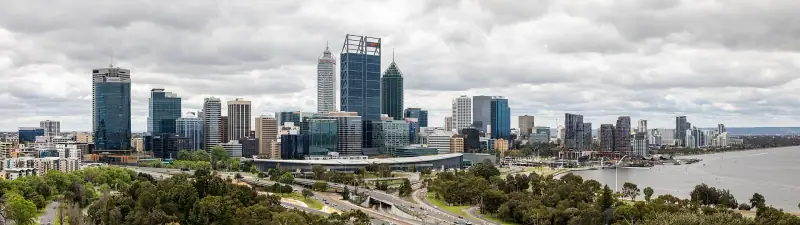
Visiting Perth: what to see and do in the capital of Western Australia
Visit Perth and around: Kings Park, Fremantle, Cottesloe, Rottnest and quokkas, excursions, when to go, transport, budget and tips for your stay.
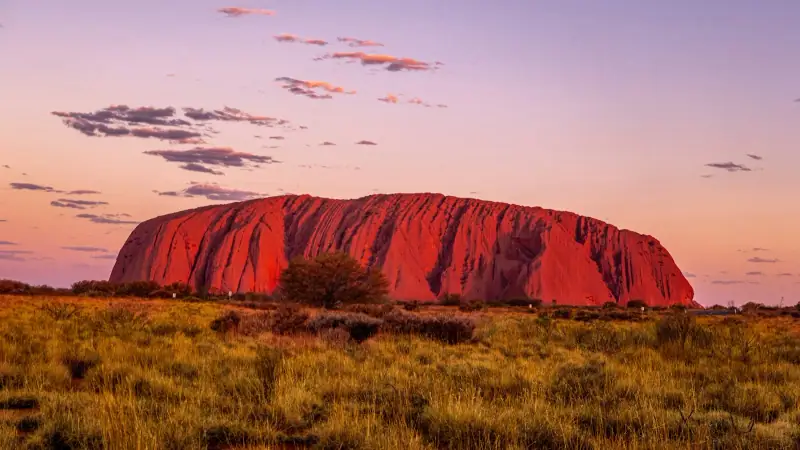
Visiting Uluru and the Red Centre: a practical guide
Visit Uluru and the Red Centre: Kata Tjuta, Kings Canyon, Alice Springs, best season, respect for the Anangu sacred site, flights, car and planning tips.
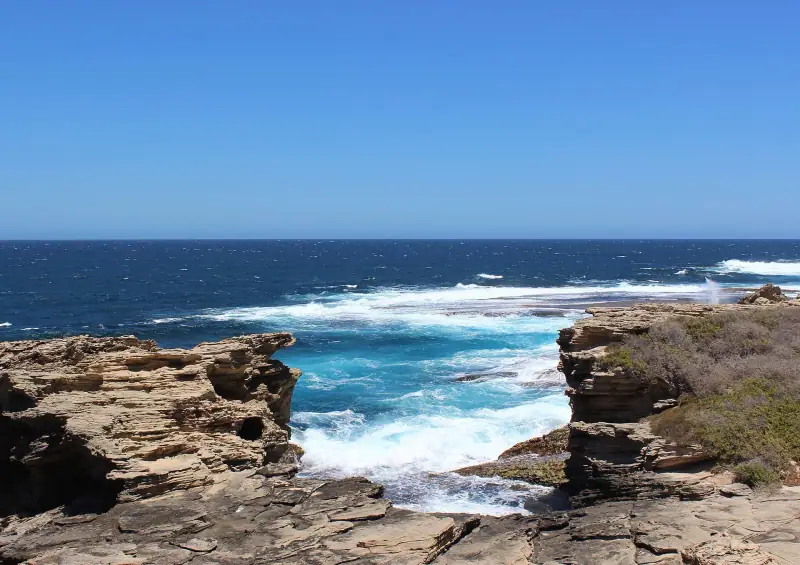
Rottnest Island without a car: ferry, bike or bus to see the quokkas
Rottnest from Perth without a car: which port to choose, bike or Island Explorer bus, where to see quokkas and how to plan your day on the island.
Ready-made
Australia itineraries
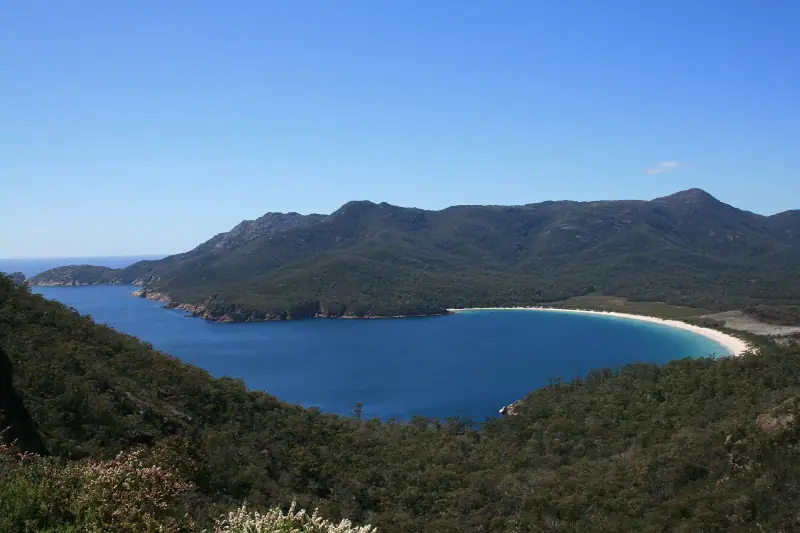
7 days
Tasmania in 7 days: a road trip itinerary from Hobart to Launceston
Tasmania in 7 days: Hobart, Port Arthur, Bruny Island, Freycinet and Wineglass Bay, Launceston. Day-by-day itinerary, distances, seasons and driving tips.
3 days
Melbourne in 3 days: a culture, street art and seaside itinerary
What to do in Melbourne in 3 days? Laneways, street art, markets, museums, St Kilda and a nature escape: a day-by-day itinerary with practical tips.
4 days
Sydney in 4 days: a day-by-day itinerary to see it all
Sydney in 4 days: Opera House, Harbour Bridge, Bondi, Manly and the Blue Mountains. A day-by-day itinerary with transport and accommodation tips.