What to see
Visiting Uluru and the Red Centre: a practical guide
We may earn a commission when you book through links on this page, at no extra cost to you. We don't visit or try the places we cover: we summarize published sources. How we work
In short
- Climbing Uluru has been banned since October 2019 at the request of the traditional Anangu owners; the base walk is about 10 km (6 mi) and takes two to three hours.
- Two full days cover Uluru, Kata Tjuta and the sunrise and sunset viewpoints; allow three to four days with Kings Canyon, about 300 km (186 mi) from Yulara.
- May to September is the most pleasant period for walking; in summer, temperatures often exceed 40 °C (104 °F) and walks are limited to the early morning.
- Almost all lodging is in Yulara, about 20 km (12 mi) from the rock; supply is limited and prices are high, so book far ahead.
Rising from the red plain in the middle of the desert, Uluru is one of the most powerful images of Australia. But the Red Centre is more than a monolith: Kata Tjuta, Kings Canyon, the gorges of the MacDonnell Ranges and the immensity of the outback make up a trip of their own, very different from the beaches of Sydney or the coastal roads of Victoria.
This guide presents what you need to know before you go: how to get there, what to see and do, how to respect a place sacred to the Anangu, when to go and how to organize your visit.
Uluru: a sacred site before being an attraction
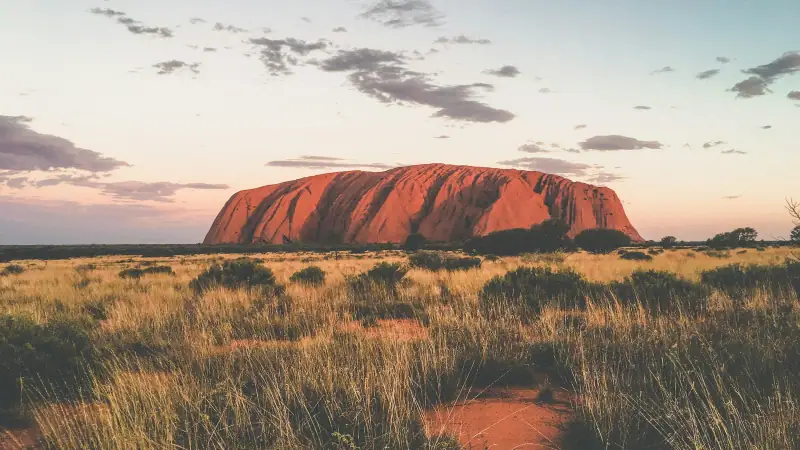
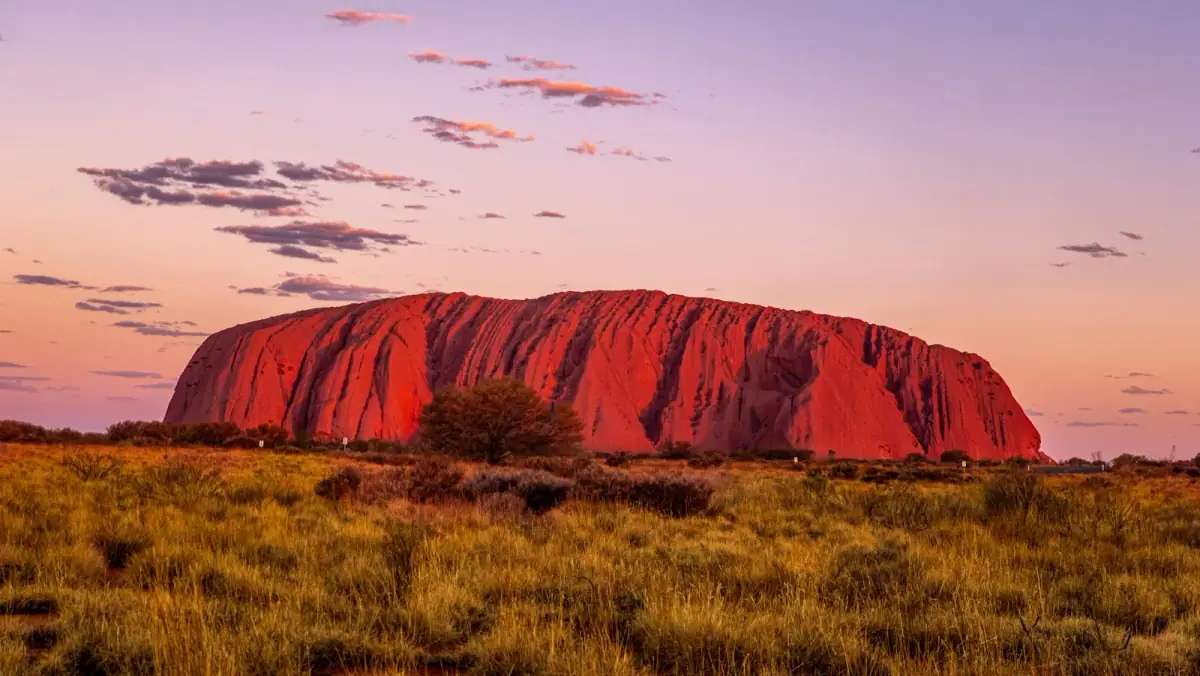
Uluru is an immense red sandstone monolith, a UNESCO World Heritage site for its natural and cultural value. It lies in Uluru-Kata Tjuta National Park, in the middle of the Northern Territory. For the Anangu, its traditional owners, it is the bearer of ancestral stories that have structured their culture for millennia.
This is why climbing has been closed since October 2019. Do not look for a “tolerated” variant: the rock is discovered in other ways, and it is often richer.
Walking around the base
The base trail is about 10 km (6 mi) and takes two to three hours, on flat ground. You find waterholes, painted caves, cracks and rock textures that look very different depending on the angle. It is the best way to grasp the scale of the site. Start at dawn: in summer, the heat makes the loop dangerous from mid-morning.
Shorter sections are accessible, for example to a waterhole at the foot of the rock, for those who lack the time or energy to do the full loop. Bring plenty of water, a hat and sunscreen in every season.
Sunrise and sunset
Uluru’s colors change through the day, from deep red to bright orange. There are viewing areas set up for dawn and for dusk: they are very busy, so arrive early to find a good spot. Times change with the season; ask locally or at your accommodation.
Respecting the place
- Do not climb the rock and do not leave the marked trails.
- Do not photograph areas marked as sacred.
- Do not take away stones or sand: removal is forbidden in the park.
- The park’s Cultural Centre is an excellent first stop to understand the context.
Stay near Uluru
Hotels, campgrounds and lodges: compare lodging in the region and book very early.
Kata Tjuta: the domes not to miss
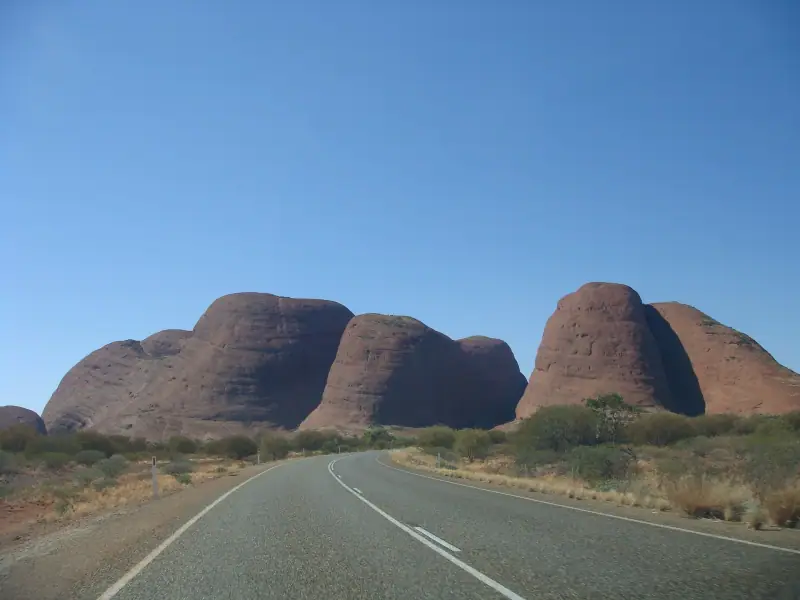
About 50 km (31 mi) west of Uluru, Kata Tjuta (formerly called the Olgas) is a group of rounded rock domes. Many travelers come for Uluru and leave preferring Kata Tjuta, because the walking is more varied and the atmosphere more intimate.
Two main hikes are possible:
- The Valley of the Winds, a loop of about 7 km (4 mi), more demanding, which crosses gorges and offers spectacular views. It can be closed in great heat: park authorities restrict access when forecast temperatures are very high.
- The Walpa Gorge, a shorter out-and-back of about 2.6 km (1.6 mi), which goes in between two red walls.
Early starts are essential, especially between October and March. Check access conditions at the visitor center before setting out.
Kings Canyon and Watarrka National Park
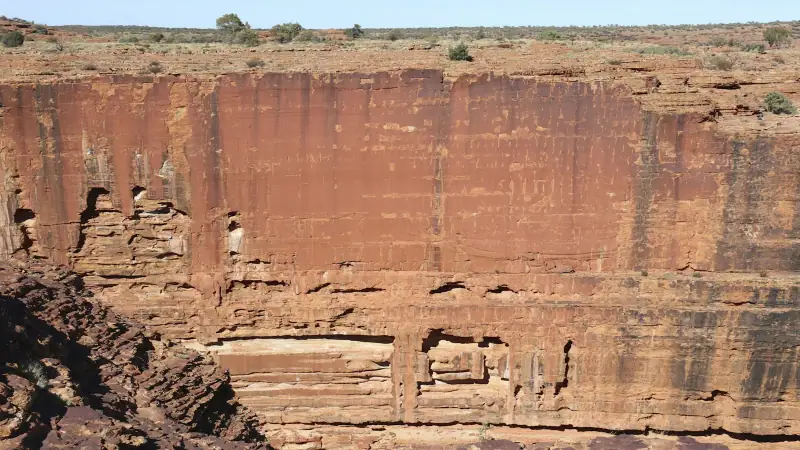
Kings Canyon is the third major stop of the Red Centre. This gorge with vertical sandstone walls is home to the Rim Walk, a loop of about 6 km (4 mi) along the edge of the plateau. The walk is beautiful, but physically demanding and open only in the cool hours in summer: it starts early and, in great heat, access is limited in the morning.
It is about 300 km (186 mi) by road between Yulara, the village that serves as the base for Uluru, and Kings Canyon, or a little over three hours of driving via the Lasseter Highway and then Luritja Road. Many travelers spend a night there to avoid an overly long day on the road.
How to get to Uluru
By plane
Ayers Rock (Connellan) Airport is the nearest airport, a few minutes from Yulara. Direct flights link the region to several major Australian cities, including Sydney and Melbourne; Alice Springs is also served. It is the simplest and fastest way, especially if your time is limited.
Flights to Ayers Rock
Compare flights from Sydney, Melbourne or Alice Springs to Uluru.
By car from Alice Springs
Alice Springs is about 450 km (280 mi) from Uluru, or roughly five hours by road via the Stuart Highway and then the Lasseter Highway. The road is straight, long and little traveled: fill up at every opportunity, bring water and avoid driving at dawn or dusk, when kangaroos and cattle cross. Check the terms of your contract, as many rental companies limit or forbid unpaved tracks.
On an organized tour
From Alice Springs, multi-day tours include Kings Canyon, Uluru and Kata Tjuta. It is a comfortable option if you do not like driving long distances, but it leaves less freedom. If you come up from Adelaide via the Stuart Highway, the stop at Coober Pedy and its underground lodgings breaks up the road nicely.
Where to stay near Uluru
Almost all accommodation is concentrated in Yulara, a purpose-built village outside the park, about 20 km (12 mi) from the rock. You find several categories of lodging there, from campgrounds to high-end lodges, as well as shops and restaurants. Supply is limited and prices are high, because all the logistics come from far away: book well ahead for holiday periods and in the Australian winter.
For Kings Canyon, a few places to stay exist nearby, from campgrounds to a hotel. There too, capacity is limited.
Alice Springs, the gateway to the desert
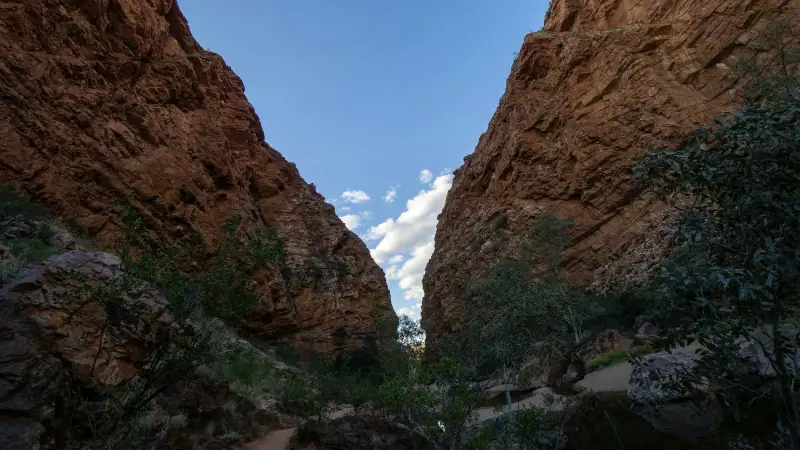
Alice Springs is the only real town in the Red Centre. It serves as a base for exploring the MacDonnell Ranges, with gorges, waterholes and hiking trails a short distance from town. It is also a good place to discover Aboriginal art in galleries and art centers.
If you have a few days, add it to your itinerary rather than making an express round trip to Uluru. The drive between the two is an excellent chance to feel the immensity of the outback.
When to go
The climate is desert: very hot days in summer, cold nights in winter. Our guide on when to visit Australia details the seasons of each region. For the Red Centre:
- May to September: the most pleasant period for walking, with mild days, but nights that can drop close to 0 °C (32 °F).
- October to March: intense heat, with temperatures often above 40 °C (104 °F). Hikes are done very early, and some are closed.
- Flies: they are plentiful in the warm season. A head net sold locally is useful.
Example 3-day itinerary
- Day 1: arrival in Yulara, cultural center, sunset over Uluru.
- Day 2: sunrise, base walk, then Kata Tjuta late in the day.
- Day 3: Valley of the Winds early in the morning, or the road to Kings Canyon.
For a broader trip, combine the Red Centre with a stop on the coast, such as Sydney (where to stay in Sydney) or a getaway in Victoria (Great Ocean Road in 3 days).
Practical tips
- Water: plan several liters per person per day. The desert dehydrates quickly.
- Entry fee: a pass is required to enter the park. See the official website for fares and validity period.
- Mobile coverage: it is patchy outside Yulara; check your carrier’s international plan or use a travel eSIM, and download offline maps.
- Insurance: travel insurance with repatriation is recommended in remote areas.
- Driving: you drive on the left. Distances look short on the map, but they are long on the ground.
- Sacred sites: respect the signs and the rangers’ instructions.
Nights in the desert
The Red Centre also offers one of the most beautiful starry skies in the world, thanks to the absence of light pollution. Several providers offer stargazing evenings in Yulara, sometimes with astronomers. Even outside these outings, a simple glance upward, away from the village lights, is enough to impress. Do not forget a jacket: nights are cool, even when the day has been stifling.
Frequently asked questions
Can you still climb Uluru?
No. Climbing has been banned since October 2019, at the request of the traditional Anangu owners, for whom the rock is sacred. You discover it on foot along the base trail, by car or at sunrise or sunset.
How long do you need to visit Uluru?
Two full days let you see Uluru, Kata Tjuta and the viewpoints at sunrise and sunset. Allow three to four days if you add Kings Canyon.
What is the best time to go to Uluru?
The Australian winter, from about May to September, offers mild days ideal for walking. In summer, temperatures regularly exceed 40 °C (104 °F) and hikes are limited to the early hours of the morning.
Do you need to rent a car to visit Uluru?
It is not required: you can reach Uluru by plane, then use shuttles or organized tours from Yulara. A car does, however, give more freedom for sunrise times and for reaching Kings Canyon.
Can you photograph Uluru?
Yes, generally. Some areas around the base are, however, sacred and photography is forbidden there: respect the signs.
More Australia guides
Keep reading
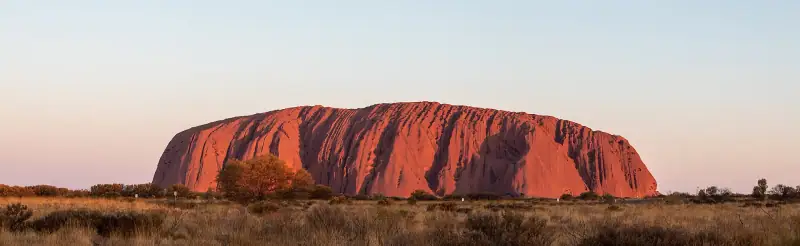
Complete guide to visiting Australia: regions, itineraries and tips
Visit Australia: regions and cities to see, highlights, best time to go, flights, transport, lodging and budget. The pillar guide to plan your trip.

Visiting Perth: what to see and do in the capital of Western Australia
Visit Perth and around: Kings Park, Fremantle, Cottesloe, Rottnest and quokkas, excursions, when to go, transport, budget and tips for your stay.
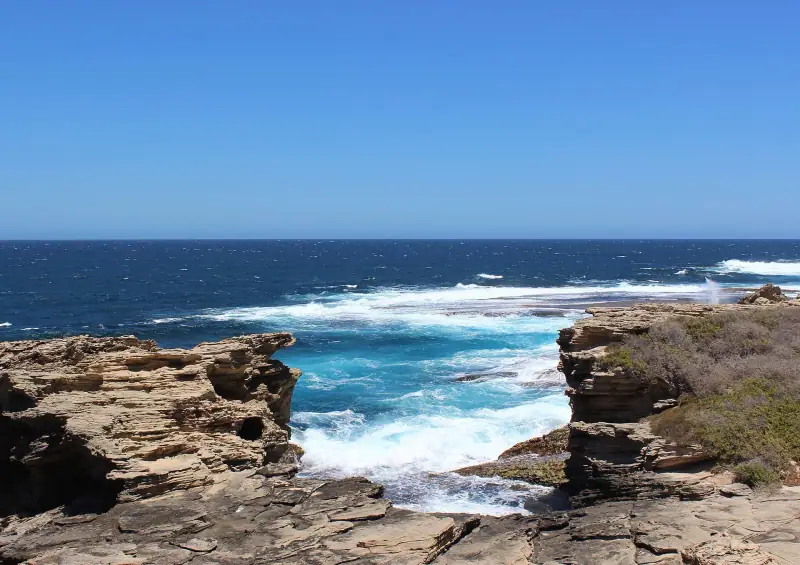
Rottnest Island without a car: ferry, bike or bus to see the quokkas
Rottnest from Perth without a car: which port to choose, bike or Island Explorer bus, where to see quokkas and how to plan your day on the island.
Ready-made
Australia itineraries
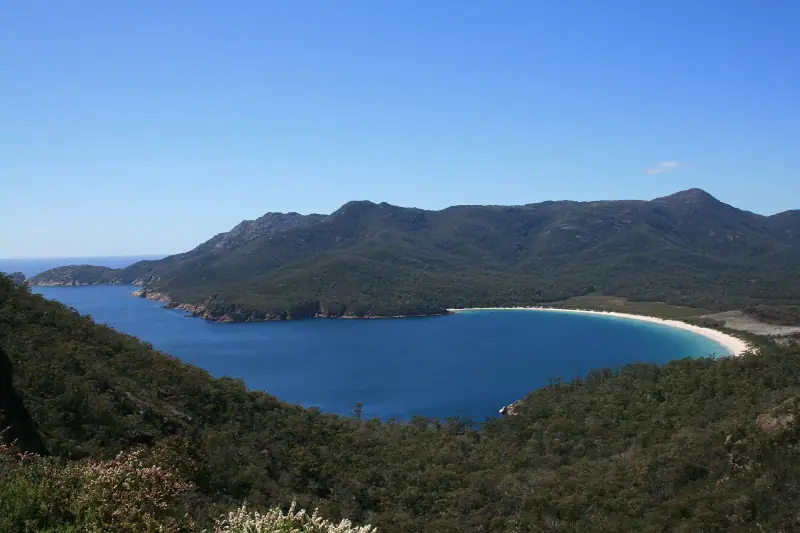
7 days
Tasmania in 7 days: a road trip itinerary from Hobart to Launceston
Tasmania in 7 days: Hobart, Port Arthur, Bruny Island, Freycinet and Wineglass Bay, Launceston. Day-by-day itinerary, distances, seasons and driving tips.
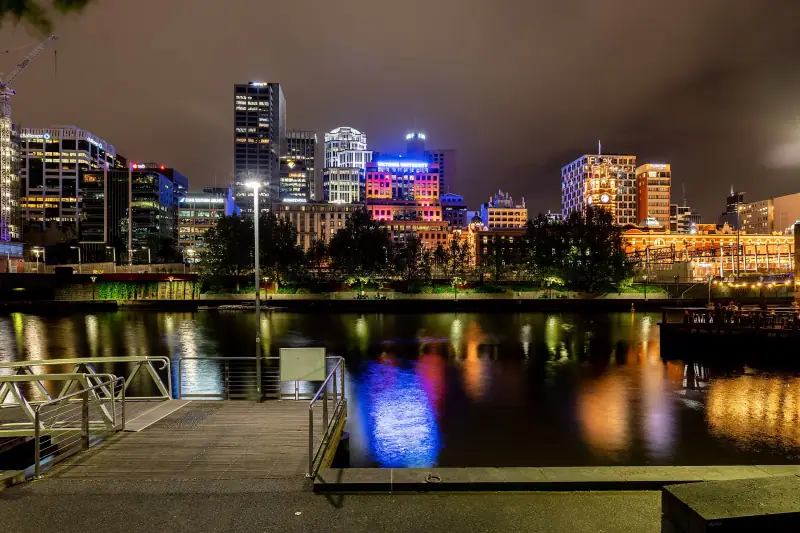
3 days
Melbourne in 3 days: a culture, street art and seaside itinerary
What to do in Melbourne in 3 days? Laneways, street art, markets, museums, St Kilda and a nature escape: a day-by-day itinerary with practical tips.

4 days
Sydney in 4 days: a day-by-day itinerary to see it all
Sydney in 4 days: Opera House, Harbour Bridge, Bondi, Manly and the Blue Mountains. A day-by-day itinerary with transport and accommodation tips.