Things to do
Wildlife in Australia: where to see kangaroos, koalas and penguins
We may earn a commission when you book through links on this page, at no extra cost to you. We don't visit or try the places we cover: we summarize published sources. How we work
In short
- Koalas can be seen in the Otways along the Great Ocean Road; kangaroos and wallabies are easiest to see at dawn and dusk.
- Phillip Island is about two hours from Melbourne and is known for the Penguin Parade at nightfall; flash photography is banned.
- Tasmania is the best destination for wildlife fans: Tasmanian devils, wombats, pademelons and, with patience, platypuses.
- Humpback whales migrate along the coasts, generally from the Australian winter to early spring (about June to November).
Australia is home to wildlife found almost nowhere else. The continent’s isolation for millions of years favored marsupials, monotremes such as the platypus, and a host of unique birds and reptiles. For a traveler, it is one of the country’s best arguments: meeting a kangaroo at the roadside, hearing a koala grunt in the night or watching a wombat graze at dusk remains a memorable experience.
But watching wild animals cannot be improvised. You need to know where to go, at what time, and how to behave. This guide reviews the main species, the regions where you have the best chance of seeing them, the useful organized outings and the common-sense rules to follow. To time your trip for the right season, see also our guide on when to visit Australia.
Koalas: eucalyptus forests and the Great Ocean Road
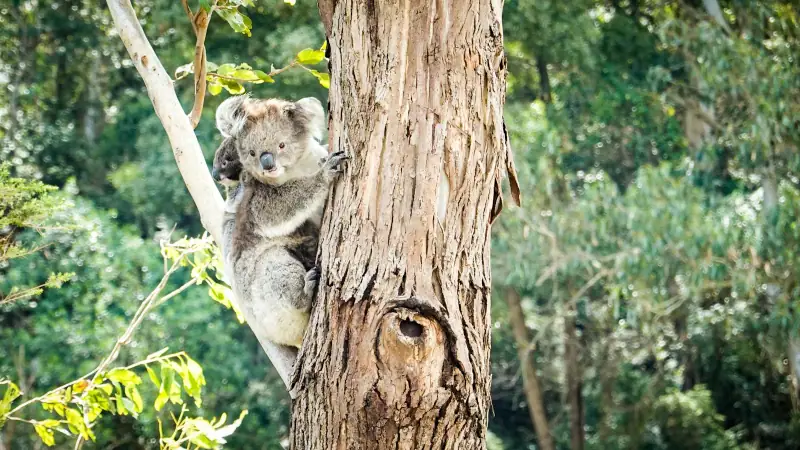
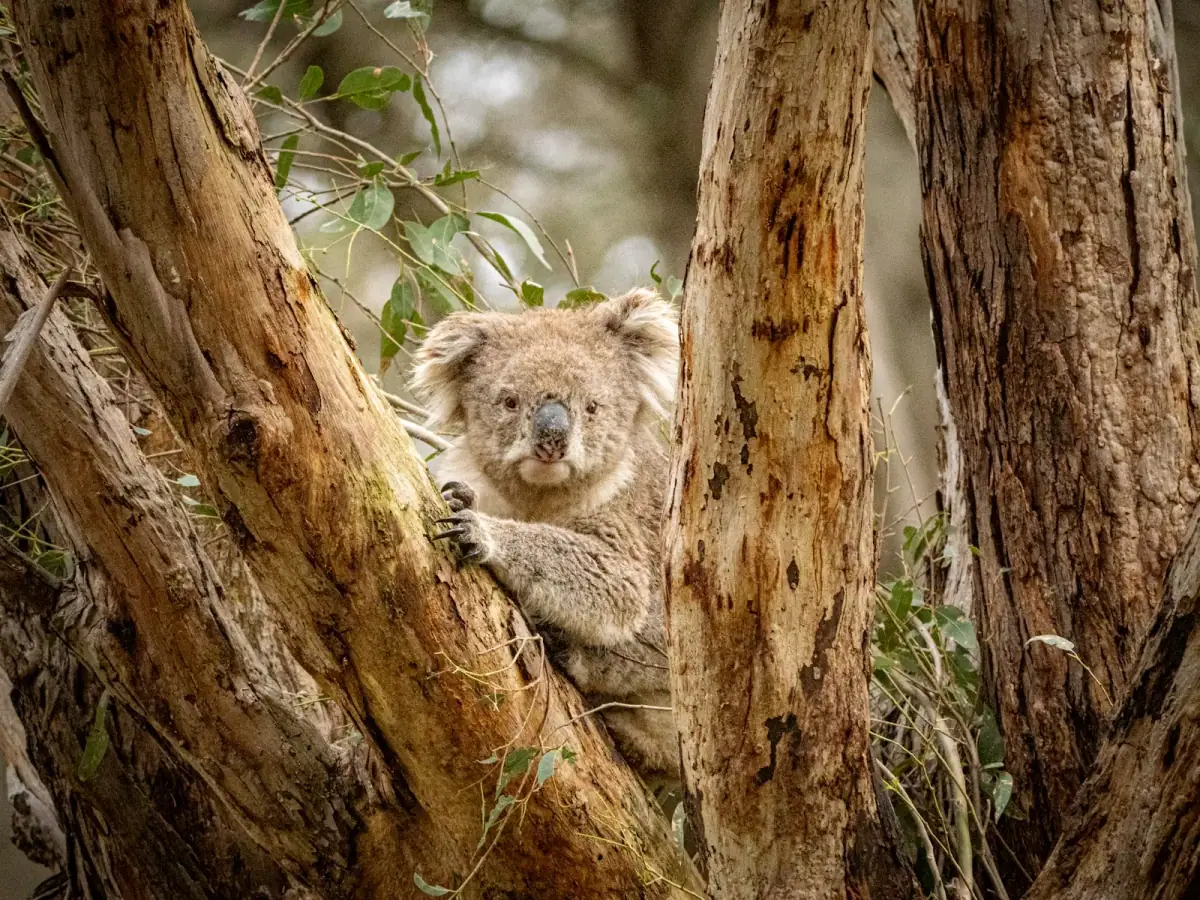
The koala is not a bear but a marsupial. It feeds almost exclusively on eucalyptus leaves, which are very low in energy, and therefore spends most of its day asleep. That is what makes watching it both easy and frustrating: it is often motionless, high in a tree.
In the southeast, the Otways region, along the Great Ocean Road, is one of the best-known places to spot koalas in their natural environment. Some stretches of forest road and a few rest areas are known for these encounters. If you are preparing this trip, our three-day Great Ocean Road itinerary details the stages and possible stops.
Tips for spotting them:
- Look for trees where the leaves are damaged or where droppings lie under the trunk: these are reliable clues.
- Bring binoculars: the animals are often perched very high.
- Speak quietly and do not stay under the tree too long, as a disturbed koala gets stressed.
- Koalas are more active at nightfall, but it is rare to see them move around.
In sanctuaries and wildlife parks, your chances of seeing them are highest, and some offer supervised encounters. It is a practical option for children or if your stay is short, as long as you choose a reputable operation that respects the animals’ welfare.
Kangaroos and wallabies: easier to see than you might think
The kangaroo is the country’s emblem, and it is found almost everywhere, from the pastures of the southeast to the arid regions of the center. The large species live on open plains, while the smaller wallabies also frequent forests and rocky areas.
The best times are dawn and dusk, when the animals come out to graze. On some golf courses, in national parks and on the edges of mid-sized towns, you sometimes meet them in quiet groups. In dry regions, they gather near water points late in the day.
Key points:
- Do not feed them: human food is bad for their health and makes them dependent on visitors.
- Keep your distance. An adult male can be powerful and will defend himself if he feels threatened.
- When driving, slow down sharply at dawn and dusk. Collisions with kangaroos are one of the main causes of accidents in rural areas, and they seriously damage a vehicle.
For a first supervised experience, wildlife parks and sanctuaries offer guided visits where you can get close to marsupials in good conditions. In the center of the country, the Uluru region also offers desert wildlife to discover; see our guide to visiting Uluru.
Nature and wildlife tours in Australia
Safaris, dusk outings and sanctuary visits: compare the offers with a naturalist guide.
Phillip Island: the Penguin Parade
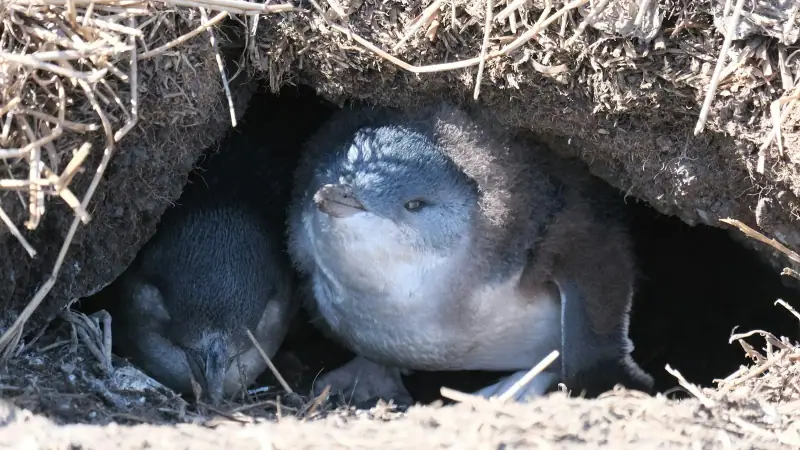
About two hours by road from Melbourne, Phillip Island is famous for the “Penguin Parade”. At nightfall, small penguins, called “little penguins” or fairy penguins, come out of the sea and climb the beach to their burrows. It is one of the most popular wildlife shows in the state of Victoria. To book, compare packages and get there from Melbourne, see our guide to the Phillip Island Penguin Parade.
Viewing is from purpose-built stands and walkways, to limit disturbance. Flash photography is banned, because the light disturbs the animals. Book ahead in high season, and bring warm clothes: the wind can be cool even in summer, especially after sunset.
The island also lets you see seals, wallabies and many seabirds. It combines well with a stay in Melbourne, as explained in our three-day Melbourne itinerary, by taking a day or an evening for the excursion.
Tasmania: devils, wombats and platypuses
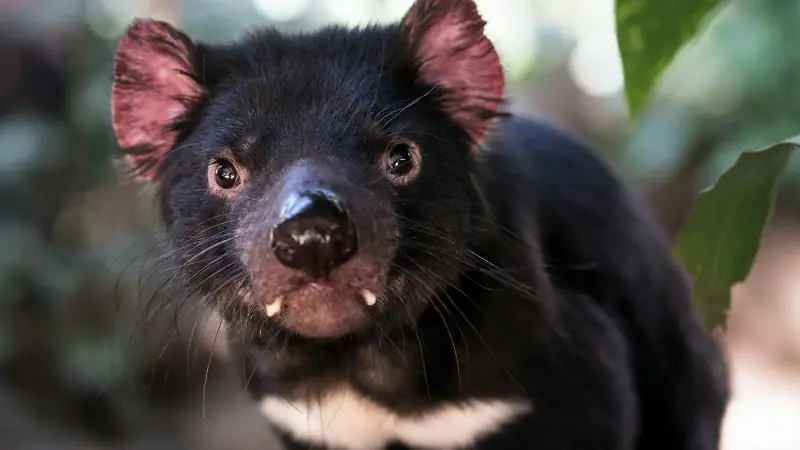
Tasmania is arguably the best destination for wildlife lovers. The island, better preserved and less densely populated than the mainland, is home to several iconic species, including the Tasmanian devil, a nocturnal carnivorous marsupial found in the wild only on the island. It is now under threat, which makes conservation sanctuaries all the more important.
In national parks such as Cradle Mountain, you can readily see wombats, wallabies and pademelons, small marsupials related to the wallaby, especially at dawn and dusk. Wombats are often visible on grassland or along trails, calm but unpredictable if approached too closely.
With a little patience, it is possible to glimpse a platypus in some calm waterways, at dawn or at dusk. It is a discreet animal: stay still near the bank and watch for ripples on the water’s surface.
To organize your route, our seven-day Tasmania guide offers an itinerary where nature and wildlife play a big part.
Tropical Queensland: crocodiles, cassowaries and the reef
In the tropical north, around Cairns and the Daintree forest, the wildlife changes radically. You will find saltwater crocodiles, which frequent estuaries and rivers, cassowaries, large rainforest birds that can be dangerous if they feel threatened, fruit bats and a great diversity of birds and butterflies.
Supervised cruises on the region’s rivers let you watch crocodiles safely, from a boat, with a guide who knows the area. Never approach the banks alone and strictly respect the warning signs: in this region, swimming in a river or the sea may be banned for good reasons.
Underwater, the Great Barrier Reef is another world to explore: tropical fish, sea turtles, rays and colorful corals. All the practical details are in our article on the Great Barrier Reef from Cairns.
Hotels in Cairns
A practical base for the rainforest, the Great Barrier Reef and nature cruises.
Whales and marine life: boat trips
Every year, humpback whales migrate along the Australian coasts. On the east coast, viewing trips leave from several ports, generally from the Australian winter to early spring. On the west coast and in the south, other regions also offer good opportunities in the same period.
A few tips for a good trip:
- Choose an operator that respects the regulated distances from the animals.
- If you are prone to seasickness, ask your doctor or a travel clinic before the trip, and see the official travel health pages (CDC in the US, TravelHealthPro in the UK): the swell can be noticeable offshore.
- Dress warmly, even in full sun: the wind at sea is cold.
- Bring binoculars and a camera with a good zoom.
No trip guarantees a sighting, but some operators offer a free second departure if no whales appear. Read the terms when you book.
Rottnest Island: quokkas near Perth
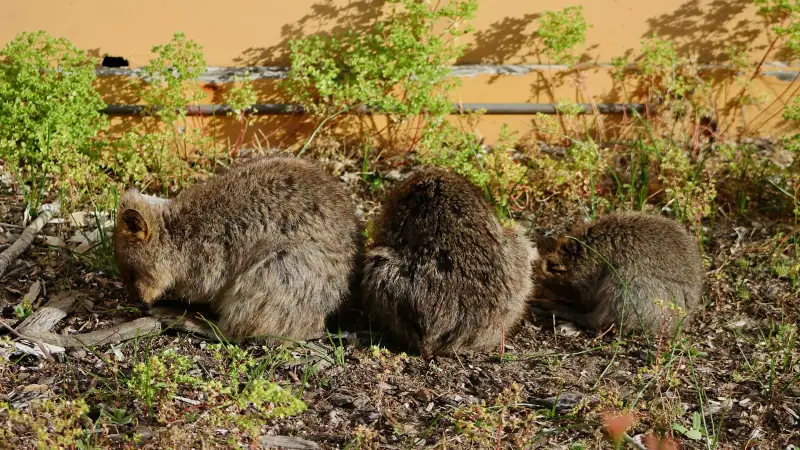
On the west coast, Rottnest Island, reached by ferry from the Perth area, is known for its quokkas, small marsupials with a smiling face that have become social media stars. They are curious and not very shy, but the law forbids touching or feeding them. Even approaching them for a photo should be done respectfully and without chasing them.
The island is explored by bike or on foot, with beaches, bays and clear water. Bring water, sunscreen and a hat: shade is scarce on some stretches.
How to watch without disturbing: the golden rules
Watching wildlife comes with a responsibility. The good practices are simple:
- Never feed the animals: it changes their behavior and can make them sick.
- Keep your distance: use a zoom rather than getting closer.
- Stay on the trails: you avoid trampling burrows or meeting a snake.
- Avoid flash and strong lights, especially at night.
- Do not leave any trash: plastics and packaging are dangerous for animals.
- Choose reputable operators: favor those who work with local guides and follow the regulations.
Also, biosecurity is taken very seriously on arrival in Australia. Before you leave, read carefully the rules on items to declare, in particular hiking boots and outdoor gear: see our article on entry formalities for Australia.
Gear and preparation
A little equipment makes a big difference:
- A pair of lightweight binoculars, essential for koalas and birds.
- A telephoto lens or a camera with a good zoom to keep your distance.
- A headlamp with red or dimmed light for night outings, which disturbs animals less.
- Closed shoes and lightweight pants in the vegetation.
- Sunscreen, a hat and enough water.
- Travel insurance suited to outdoor activity: look into the assistance and repatriation cover before you go.
Neutral-colored clothing, calm and patience are your best assets. Most good sightings come from staying still for a few minutes in a good spot, rather than rushing from one point to another.
Whale watching and nature cruises
Boat trips, river cruises and guided visits: book ahead in high season.
When to go to see wildlife
There is no bad time for Australian wildlife, but each season has its strengths:
- Australian spring (September to November): mild temperatures, active animals, the first young of many species, end of the whale season.
- Australian summer (December to February): long days and a pleasant penguin parade, but intense heat in the center and north, with the rainy and jellyfish season in tropical Queensland.
- Australian autumn (March to May): often pleasant conditions almost everywhere, fewer people.
- Australian winter (June to August): the best season for whales and for the Red Centre, where days are more bearable, but cold in Tasmania and the south.
Depending on your route, it is better to combine two or three complementary regions than to try to see everything: a stay in the southeast with Tasmania, or a loop around Cairns, already offers a great variety of animals.
In short
Watching wildlife in Australia mostly takes patience and respect. Get up early, stay alert at dusk, choose a few well-targeted regions and favor local guides for the most discreet species. Between the koalas of the forests, the penguins of Phillip Island, the devils and wombats of Tasmania, the quokkas of Rottnest and the whales of the coast, you will have enough to fill an entire trip. For an overview of your stay, see our complete guide to Australia.
Frequently asked questions
Where can you see wild koalas in Australia?
Koalas live in the eucalyptus forests of the east and southeast of the country. On the Great Ocean Road, the Otways region is known for spotting them in the trees. They sleep most of the day: look up and search for a gray ball of fur in the fork of a tree.
What is the best time of day to watch animals?
Dawn and dusk. Kangaroos, wallabies and wombats are mostly active at those hours, and many species are nocturnal. In the middle of the day, most look for shade and stay out of sight.
Can you pet a koala or a kangaroo?
In the wild, never touch or feed a wild animal: it endangers the animal and can expose you to bites or kicks. Some wildlife parks supervise contact with their animals, and their rules vary by state, so check before you book.
Are Australian animals really dangerous?
The risk is low if you follow the instructions. The most serious dangers are crocodiles in the tropical north, jellyfish in summer on some coasts and snakes in the vegetation. Stay on the trails, do not swim where a sign forbids it and follow the rangers' advice.
Where can you see whales in Australia?
Humpback whales travel along the east and west coasts during their migration, generally from the Australian winter to early spring (about June to November). Boat trips from several coastal ports let you watch them; exact dates vary by region.
Do you need to rent a car to see wildlife?
It is the most flexible option, especially in Tasmania and on the Great Ocean Road, because you can stop at dawn and dusk. Drive carefully at those hours: animals often cross the road and collisions are common in rural areas.
More Australia guides
Keep reading
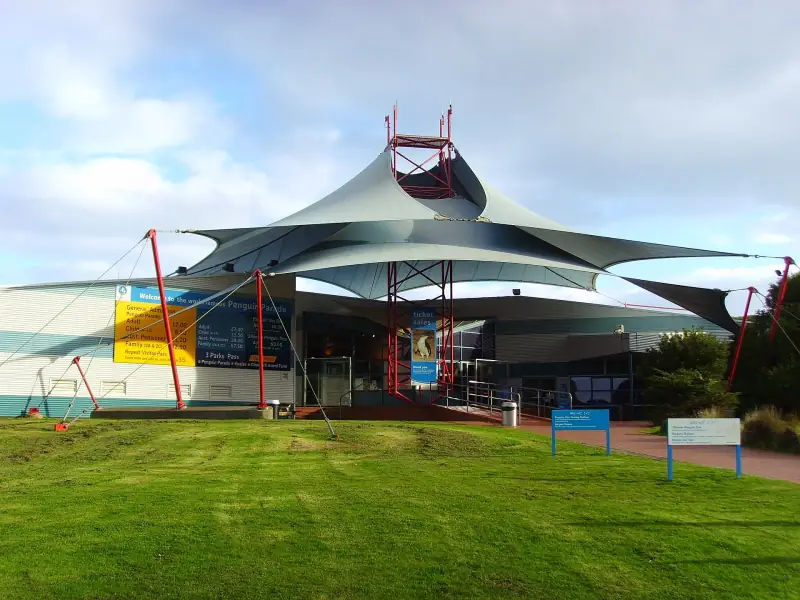
Phillip Island Penguin Parade: booking ahead, prices and getting there from Melbourne
See the Phillip Island penguins from Melbourne: required tickets, prices of the 3 options, arrival time, getting there without a car and with kids.
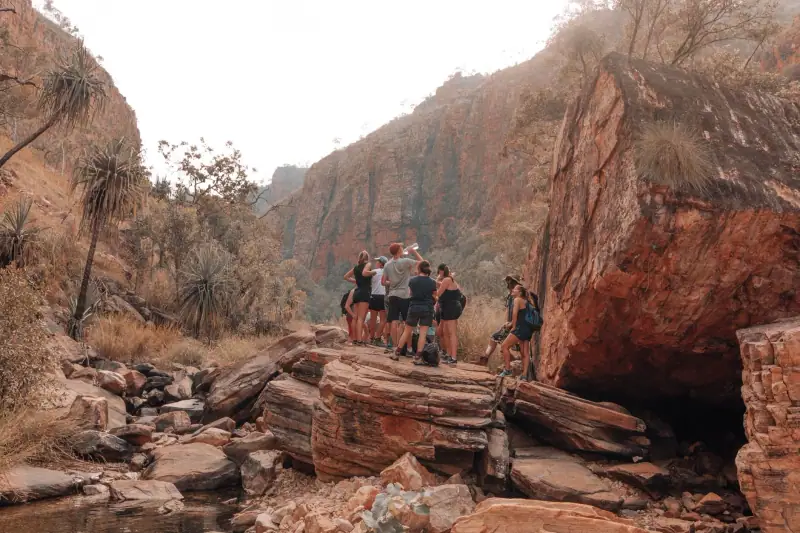
Hiking in Australia: the best walks (Blue Mountains, Tasmania, Red Centre)
The best hikes in Australia: Blue Mountains, Cradle Mountain, Freycinet, Kings Canyon and Sydney coastal paths. Levels, seasons and safety tips.
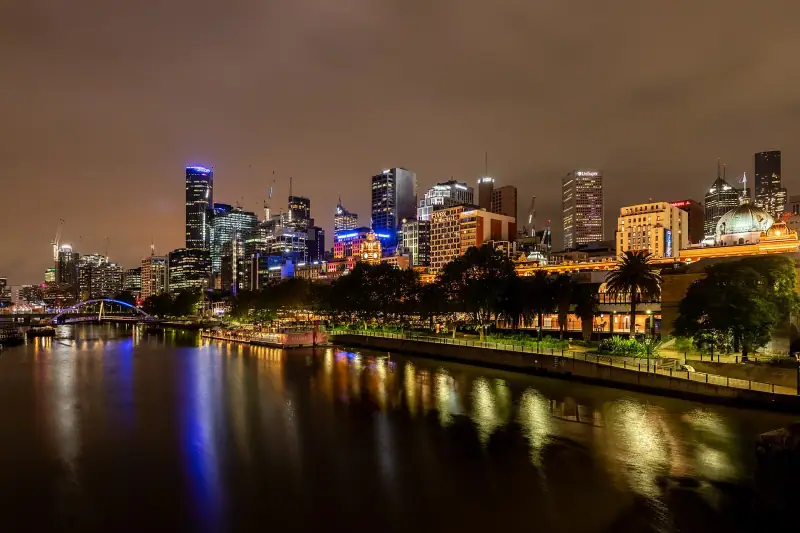
Where to stay in Melbourne: neighborhoods, budget and tips for choosing
Where to stay in Melbourne? CBD, Southbank, Fitzroy, Carlton, St Kilda, South Yarra compared: atmosphere, transport and budget to book with confidence.
Ready-made
Australia itineraries
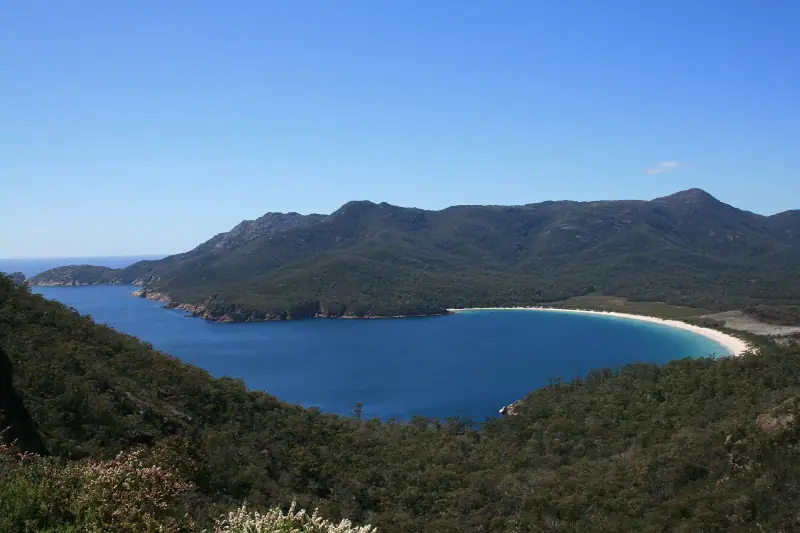
7 days
Tasmania in 7 days: a road trip itinerary from Hobart to Launceston
Tasmania in 7 days: Hobart, Port Arthur, Bruny Island, Freycinet and Wineglass Bay, Launceston. Day-by-day itinerary, distances, seasons and driving tips.

3 days
Melbourne in 3 days: a culture, street art and seaside itinerary
What to do in Melbourne in 3 days? Laneways, street art, markets, museums, St Kilda and a nature escape: a day-by-day itinerary with practical tips.

4 days
Sydney in 4 days: a day-by-day itinerary to see it all
Sydney in 4 days: Opera House, Harbour Bridge, Bondi, Manly and the Blue Mountains. A day-by-day itinerary with transport and accommodation tips.