Itineraries
Great Ocean Road in 3 days: an itinerary from Melbourne
We may earn a commission when you book through links on this page, at no extra cost to you. We don't visit or try the places we cover: we summarize published sources. How we work
Day by day
- Day 1Melbourne to Torquay, Eastern View arch, Lorne
- Day 2Lorne to Apollo Bay, Otways forest, Cape Otway, waterfall walk
- Day 3Twelve Apostles, Loch Ard Gorge, London Bridge, Port Campbell
Weather through the year on this route
| Jan | Feb | Mar | Apr | May | Jun | Jul | Aug | Sep | Oct | Nov | Dec | |
|---|---|---|---|---|---|---|---|---|---|---|---|---|
| High °F (°C) | 7625 | 7625 | 7323 | 6619 | 6016 | 5614 | 5513 | 5513 | 5815 | 6418 | 6820 | 7222 |
| Low °F (°C) | 5815 | 5815 | 5714 | 5412 | 5010 | 468 | 457 | 457 | 468 | 489 | 5211 | 5513 |
| Rain in (mm) | 2.050 | 1.950 | 1.845 | 2.460 | 2.565 | 3.075 | 2.975 | 3.180 | 3.075 | 2.770 | 2.770 | 2.360 |
Normals 1991–2020 at Melbourne and Apollo Bay: averages over 30 years, not a forecast. Source: NASA POWER (MERRA-2), grid of about 50 km. Figures computed by us in November 2026.
In short
- Three days is a relaxed pace: Lorne, Apollo Bay and the Otways, then the Twelve Apostles and Port Campbell. Two days cover the essentials.
- The scenic road runs about 240 km (149 mi) between Torquay and Allansford, plus about 1 h 30 from Melbourne to Torquay.
- Drive on the left, avoid dusk when kangaroos and wallabies cross the road, and book lodging several weeks ahead from December to February.
- Swim only at patrolled beaches, as currents can be strong.
The Great Ocean Road is one of the best-known road trips in Australia. Built along the coast of southern Victoria, it alternates surf beaches, limestone cliffs, rainforest and coastal villages. It starts around Torquay, about an hour and a half by road from Melbourne, and runs west for about 240 km (149 mi) to Allansford.
Here is a three-day itinerary that is deliberately realistic: daily distances stay modest, because the road is winding and you will stop often. To choose your dates, see our guide on when to visit Australia.
Before you go: driving and organization
In Australia, you drive on the left. On the Great Ocean Road, the road is winding, often runs along cliff edges, and traffic can be heavy in summer and during school holidays. Avoid driving at dusk: at dawn and twilight, kangaroos and wallabies cross the road.
The route goes from east to west from Melbourne, so the coast is on your side of the road, which makes it easier to stop at viewpoints. Fill up in Torquay or Geelong before you leave, as gas stations become scarce between villages.
For the rental, choose a compact car, enough for two to four people, and check the insurance and mileage terms.
Day 1: from Melbourne to Lorne via Torquay
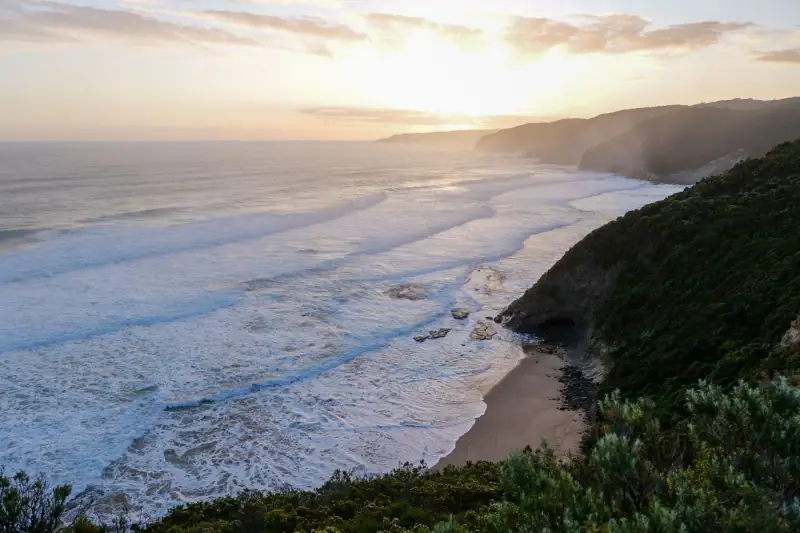
Leave Melbourne in the morning for Torquay, regarded as Australia’s surf capital. The town has a beach popular with surfers and the shops of the big surf brands. Nearby beaches, including Bells Beach, are known for their waves.
After Torquay, you pass under the symbolic arch marking the start of the Great Ocean Road at Eastern View, near Anglesea. The road then follows the sea, with several viewpoints over the coast, all the way to Lorne, a seaside resort set between the ocean and the forest.
In Lorne, plan a break on the beach or a short walk to a waterfall in the hinterland. It is a good place to sleep: there is a wide choice of accommodation, from campgrounds to motels and small hotels.
Places to stay on the Great Ocean Road
Lorne, Apollo Bay, Port Campbell: compare places to stay and book early in summer.
Day 2: Apollo Bay and the Otways forest
The second day covers the most spectacular stretch of road, between Lorne and Apollo Bay, where the road hugs the cliff above the ocean. Apollo Bay is a pretty little harbor town, ideal for a lunch break.
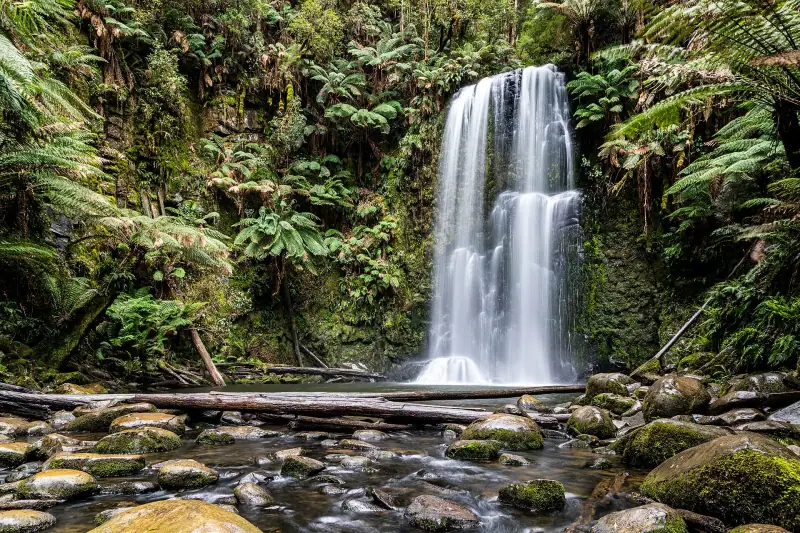
From Apollo Bay, turn inland into Great Otway National Park. The temperate rainforest has tall tree ferns and giant eucalyptus. On the road to Cape Otway, koalas can often be spotted in the trees: stop quietly and look at the high branches.
Cape Otway has a lighthouse, the oldest one still in service on the Australian mainland according to local tourist information. Check the opening times before you go, as they vary with the season.
This stage is also a chance for a short walk in the forest, to a waterfall that can be reached on foot from a parking lot. The trails are generally well marked; check the weather and bring water.
Day 3: the Twelve Apostles and Port Campbell
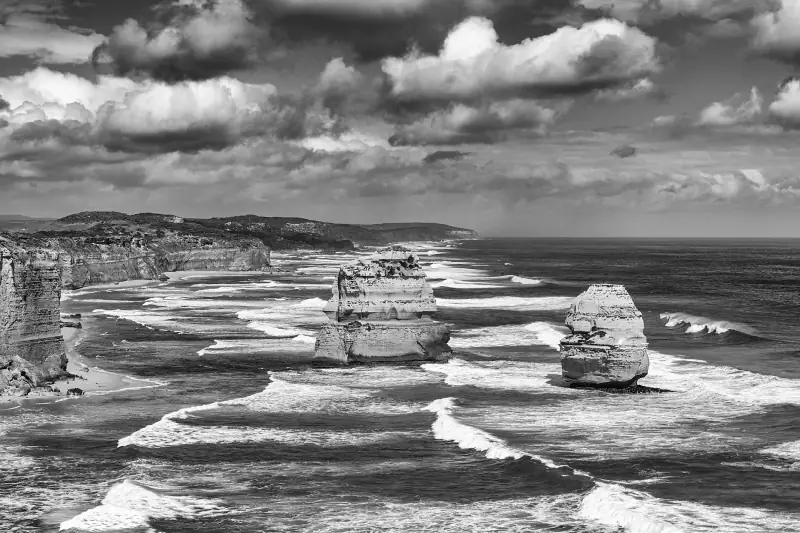
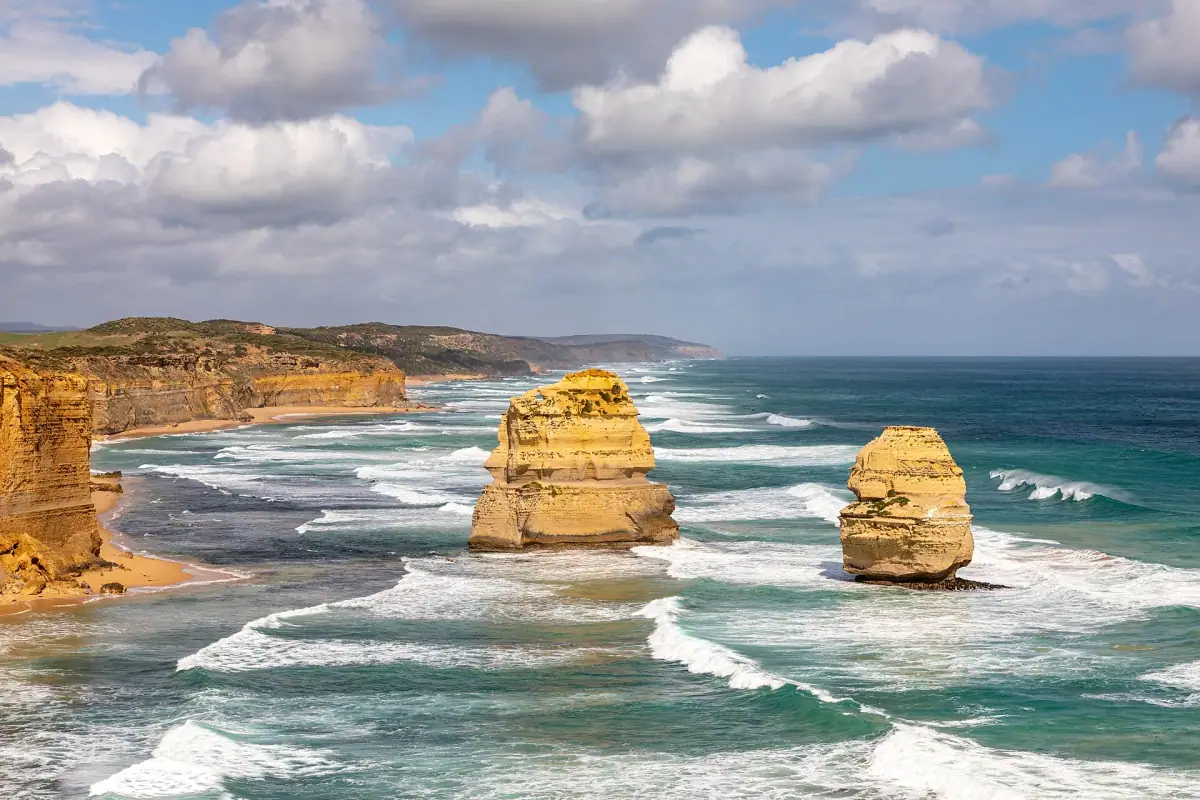
The third day takes you to the most famous part of the coast, around Port Campbell. Sea and wind erosion has shaped the limestone cliffs there, leaving isolated rock pillars standing in the water: the Twelve Apostles. Fewer than twelve are visible today, because some have collapsed over time.
Several viewpoints have been set up, with walkways from the parking lot. The early hours of the day and late afternoon offer the best light and slightly fewer people. The wind can be strong: bring a windbreaker, even in summer.
Other sites nearby are worth a stop: Loch Ard Gorge, with its small cove surrounded by cliffs, and the London Bridge arch, whose shape has changed through successive collapses. Read the signs there, as some access points may be closed for safety reasons.
End the day in Port Campbell, a quiet village in the middle of this area, before driving back to Melbourne the next day, or continuing to Warrnambool and western Victoria.
Where to sleep along the road
The three natural stops are Lorne, Apollo Bay and Port Campbell. Accommodation ranges from campgrounds and motels to guesthouses and boutique hotels, but supply is limited in high season: from December to February and during school holidays, book several weeks ahead.
If you are on a tight budget, compare equipped campgrounds and places with a kitchen to cut meal costs. If your trip also includes Sydney, our guide on where to stay in Sydney goes through the neighborhoods by traveler profile.
Practical tips
- Distances: the road between Torquay and Allansford is about 240 km (149 mi), but the real travel time is much longer than the distance suggests, because of the bends and the stops.
- Mobile coverage: it can be limited in some forest areas and on the coast. Download offline maps.
- Wildlife: do not feed the animals, and keep your distance from koalas and kangaroos.
- Sea: swimming is discouraged outside patrolled beaches, as currents can be powerful. Follow the posted instructions.
- Weather: it can change quickly. Pack layers, even in summer.
Flights to Melbourne
Compare flights for your dates: fares vary between high and low season.
Is it worth giving it three days?
If you have three days, it is the ideal format: you enjoy the road without being worn out by it, and you can add the Otways forest, which is often sacrificed on day tours. If your time is limited, two days are enough to see the classics, sleeping in Apollo Bay or Port Campbell.
Whatever the format, start early, keep some slack in your schedule and trust the local weather more than the previous day’s forecast. The Great Ocean Road is best enjoyed slowly.
Sources
- Victorian Heritage Database: figures checked November 2026
Frequently asked questions
How many days do you need for the Great Ocean Road?
Two days cover the essentials, but three days give a more pleasant pace: you can add the Otways forest, a few short walks and photo stops without rushing. A day trip from Melbourne is possible, but it means very long hours on the road.
How long is the Great Ocean Road?
The scenic road itself is about 240 km (149 mi), between Torquay and Allansford. From Melbourne, add about an hour and a half of driving to reach Torquay, the usual starting point.
Do you need to rent a car for the Great Ocean Road?
A car is the most flexible option, as it lets you stop at the many viewpoints. Guided tours from Melbourne exist for those who prefer not to drive. Remember that Australians drive on the left.
What is the best time of year for the Great Ocean Road?
The Australian summer (December to February) has the most settled weather but also the biggest crowds. Spring and autumn are good compromises, with fewer people. The weather can change quickly on the coast in any season.
Can you see koalas on the Great Ocean Road?
Yes, koalas live in the wild in the eucalyptus trees of the area, especially along the road to Cape Otway. Sightings are never guaranteed: look up at the branches and keep your distance from the animals.
More Australia guides
Keep reading
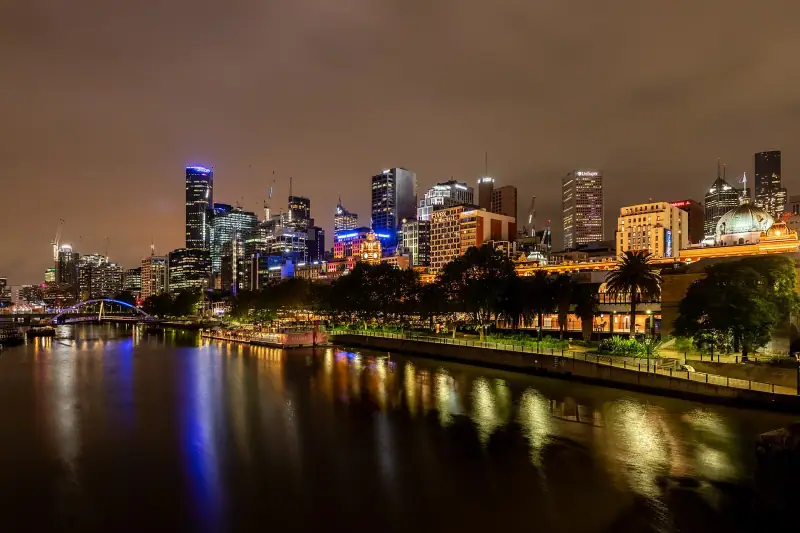
Where to stay in Melbourne: neighborhoods, budget and tips for choosing
Where to stay in Melbourne? CBD, Southbank, Fitzroy, Carlton, St Kilda, South Yarra compared: atmosphere, transport and budget to book with confidence.
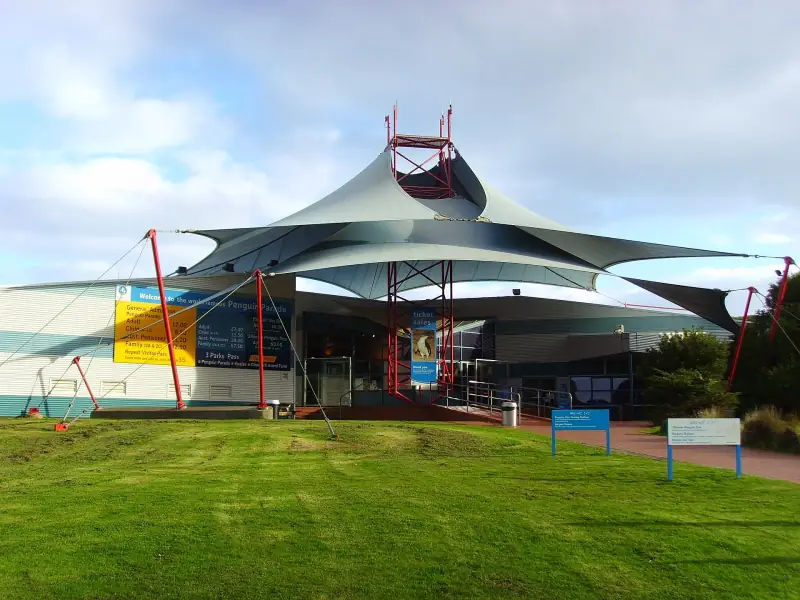
Phillip Island Penguin Parade: booking ahead, prices and getting there from Melbourne
See the Phillip Island penguins from Melbourne: required tickets, prices of the 3 options, arrival time, getting there without a car and with kids.

Wildlife in Australia: where to see kangaroos, koalas and penguins
Where and when to see Australian wildlife: koalas, kangaroos, wombats, Tasmanian devils, penguins, whales. Viewing tips and rules to follow.
Ready-made
Australia itineraries
7 days
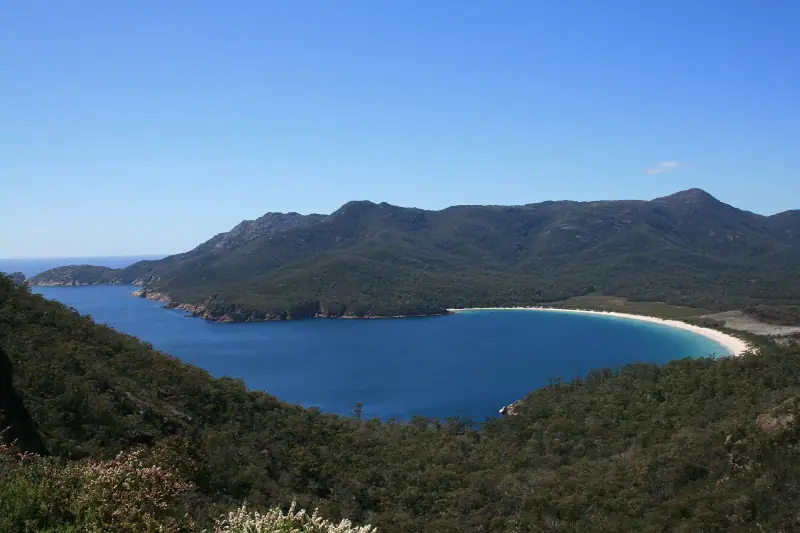
Tasmania in 7 days: a road trip itinerary from Hobart to Launceston
Tasmania in 7 days: Hobart, Port Arthur, Bruny Island, Freycinet and Wineglass Bay, Launceston. Day-by-day itinerary, distances, seasons and driving tips.
3 days
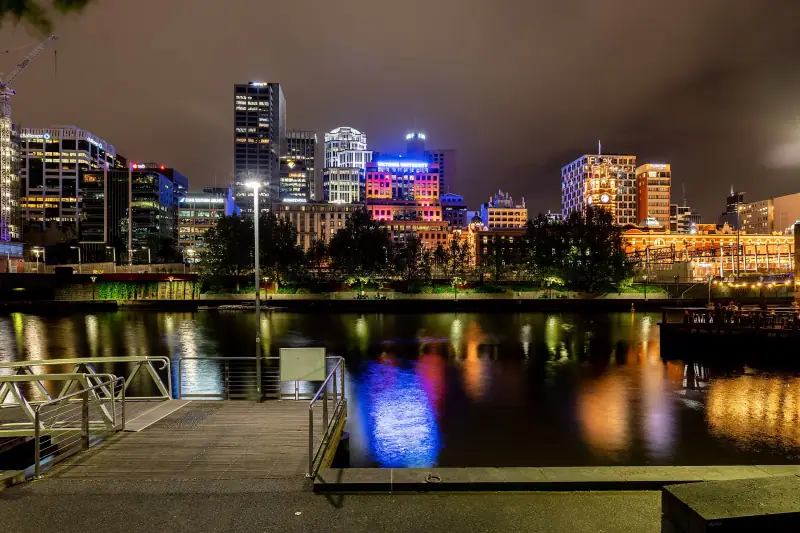
Melbourne in 3 days: a culture, street art and seaside itinerary
What to do in Melbourne in 3 days? Laneways, street art, markets, museums, St Kilda and a nature escape: a day-by-day itinerary with practical tips.
4 days
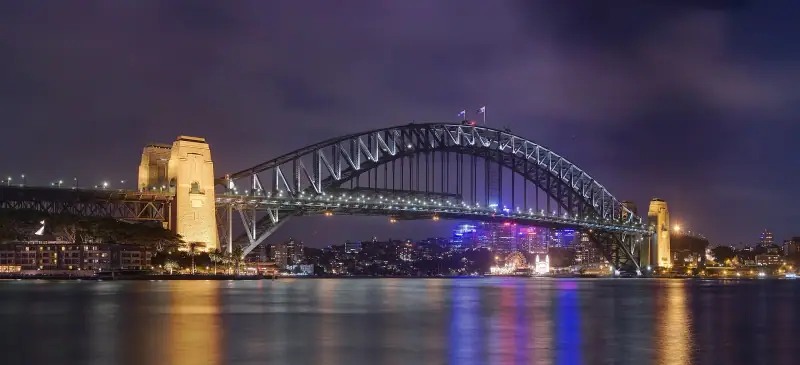
Sydney in 4 days: a day-by-day itinerary to see it all
Sydney in 4 days: Opera House, Harbour Bridge, Bondi, Manly and the Blue Mountains. A day-by-day itinerary with transport and accommodation tips.