What to see
Complete guide to visiting the US East Coast: cities, regions, budget and practical tips
We may earn a commission when you book through links on this page, at no extra cost to you. We don't visit or try the places we cover: we summarize published sources. How we work
In short
- The guide covers five groups: New York, New England, Washington and the Mid-Atlantic, Niagara Falls and Florida. The first four are linked by train along the Northeast corridor.
- Spring (April to June) and early fall (September to October) give the best balance of weather and crowds; New England turns color in fall.
- Amtrak takes about 4 hours between Boston and New York, a little over 1 h 30 to Philadelphia and nearly 3 h 30 to Washington.
- Sales tax is not included in shelf prices and an 18 to 20% tip is usual in restaurants with table service; lodging is the biggest expense.
The East Coast packs much of what people dream of in the United States into a few hundred miles: the skyscrapers of Manhattan, the brick streets of Boston, the monuments of Washington, the birth of the nation in Philadelphia, the power of Niagara Falls, then the beaches, marshes and theme parks of Florida. It is a destination where you can spend three days or three weeks without getting bored, and where each city has its own character.
This complete guide is the entry point to the site. It presents the main regions, the highlights, the best time to go, how to arrive and get around, lodging options and the budget to plan for. For each major topic, it points to a more detailed article, which you will find in the list at the end of this guide.
The East Coast at a glance
There is no official definition of “the East Coast”. For this guide, five large groups form coherent trips: New York and its region, New England, Washington and the Mid-Atlantic, Niagara Falls, and Florida. The first four follow one another along the northeast coast, in what Americans sometimes call the “Northeast Corridor”, very well served by train. Florida, much farther south, has a completely different climate and atmosphere, and is more of a second trip or an extension.
What all these stops have in common is how easy they are to organize. Tourist infrastructure is well established, English is the language of communication and booking is largely done online. In return, prices are high and distances between some places are greater than you might imagine. As always in the United States, it is better to do fewer things, but to do them well.
New York: the ideal starting point

For most travelers, everything starts with New York, and for good reasons. It is the main air gateway to the northeast coast, the city offers a huge choice of hotels, and it serves as a base for branching out to Boston, Philadelphia, Washington and Niagara Falls. It is also a destination in its own right that deserves at least four days.
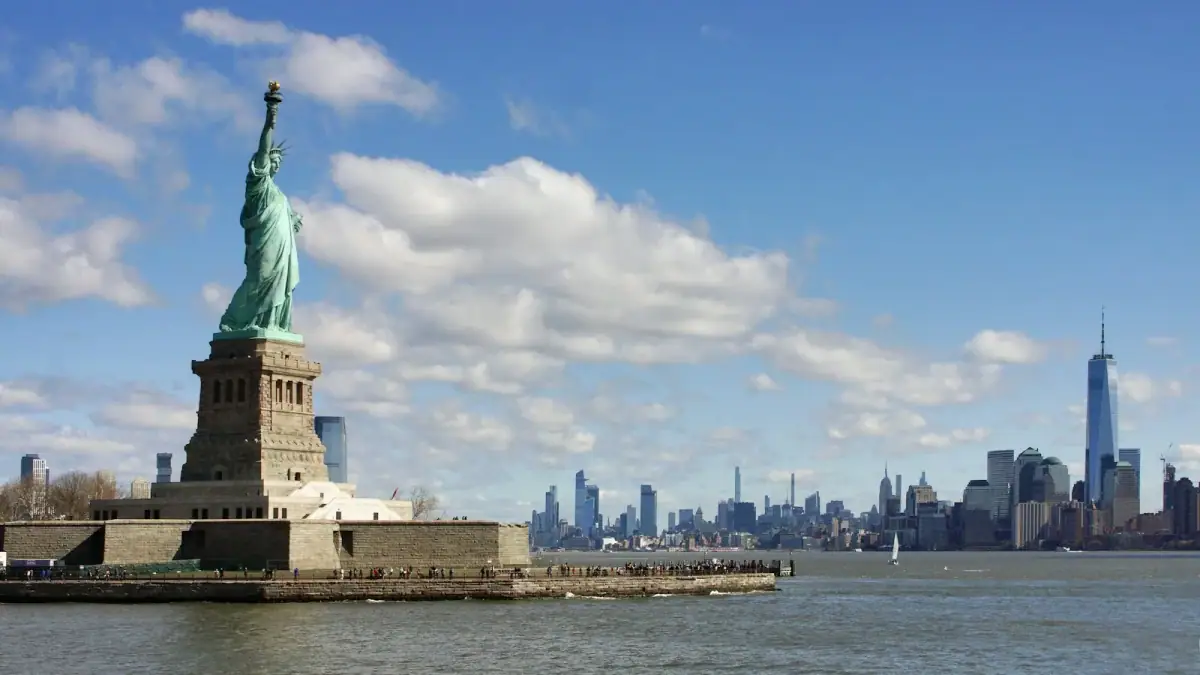
Manhattan is the part everyone knows: Times Square, Central Park, the Empire State Building, the Fifth Avenue museums, the Greenwich Village neighborhood, the southern tip with Wall Street and the 9/11 Memorial. Brooklyn completes the picture, with the walk across the Brooklyn Bridge, waterfront promenades and more residential neighborhoods. The Statue of Liberty is reached by ferry from the south of Manhattan.
To organize your days without wasting time in transit, the 4-day New York itinerary groups the visits by neighborhood. And if you hesitate about where to put down your bags, the article where to stay in New York by neighborhood compares Midtown, Lower Manhattan, the Upper West Side, Brooklyn and New Jersey.
The subway, a traveler’s best friend
In New York, you get around mainly by subway and on foot. Payment is made with a contactless bank card or phone directly at the turnstile, with a weekly cap on spending. Avoid taxis at rush hour, which are slow and expensive, and save your energy for walking: the city is discovered mostly on foot.
Compare New York hotels for your dates
Rates vary a lot from week to week: compare the total price, taxes and fees included, and keep a free-cancellation option.
New England: Boston, coasts and forests

North of New York, New England brings together six states with varied landscapes: historic cities, rocky coasts, small villages with white steeples, wooded mountains. Much of the American Revolution played out here, and the region keeps a very particular charm, more European than the rest of the country.
Boston, the historic city
Boston is the capital of Massachusetts and the easiest city to visit on foot on the East Coast. Its center is compact: the Freedom Trail, a route marked by a red-brick line, links the main Revolution sites. Beacon Hill, with its cobbled streets and brick houses, Back Bay and its Victorian facades, the waterfront and Harvard University, across the river in Cambridge, complete the visit. Three days are ideal, as the 3-day Boston itinerary details.
From New York, Boston is reached by train in about four hours, which makes it a natural stop. By road, allow a little over 185 miles (300 km).
New England by car: fall and its colors
The region is best discovered by car, especially from late September to mid-October, when the forests turn red and orange. The New England fall road trip offers four days from Boston, toward the White Mountains and Vermont. The color season varies from year to year and from place to place: check as your departure approaches and book early, because lodging fills up fast.
Beyond this loop, the region holds other destinations that repeat visitors enjoy: Cape Cod and its beaches in summer, Maine and its lobster coasts. They take more time and a vehicle, and are best kept for a second trip.
Washington and the Mid-Atlantic: capital and history

Between New York and Florida, the Mid-Atlantic offers a set of cities steeped in history. Philadelphia and Washington are the two most obvious for a first visit.
Philadelphia, cradle of the nation
The Declaration of Independence and the Constitution were signed in this city. Independence Hall, the Liberty Bell and the old town, called Old City, concentrate the history. But Philadelphia is also a city for food lovers, known for its sandwich of sliced steak and melted cheese, and for its large covered market. It is small enough to be visited in two days, and is reached from New York by train in a little over an hour. The 2-day Philadelphia itinerary guides you.
Washington, monumental capital
Washington is a city of open spaces, white monuments and museums. The National Mall, a long ribbon of greenery between the Capitol and the Lincoln Memorial, is lined by the Smithsonian museums, which are free. This makes the capital one of the most budget-friendly stops. A few museums still require a free timed-entry ticket reserved in advance, so take care of it early. Georgetown, for its cobbled streets, and Arlington National Cemetery complete the visit. Three days let you avoid rushing: see the 3-day Washington itinerary.
From New York, the train takes about three and a half hours, depending on the line. The distance is about 225 miles (360 km).
Niagara Falls: a spectacular excursion

In the northwest of New York State, on the border with Canada, Niagara Falls is among the most visited natural sites in North America. The American side lets you see the falls up close, with walkways overlooking the water, stairs that go down to the foot of part of the falls, and boats that approach the curtain of water.
The main difficulty is distance: from New York, the trip is long, about 405 miles (650 km) by road, so most travelers prefer to fly to Buffalo or to allow at least two days there. The article on Niagara Falls on the American side details what to see, how to get there and how much time to plan. Check the entry rules if you want to cross to the Canadian side, because it means crossing a border.
Florida: sun, beaches and parks
Florida is the sunny counterpoint of this trip. It lends itself to a beach stay, a family getaway or a road trip south.
Miami, the Latin atmosphere
Miami charms with its Art Deco architecture in South Beach, its beaches, its colorful neighborhoods like Wynwood and the Cuban flavor of Little Havana. Nearby, the Everglades offer a very different nature, made of marshes and wildlife. The 3-day Miami itinerary combines these assets.
Orlando, the capital of theme parks
Orlando is known worldwide for its theme parks, including Walt Disney World. A stay here takes real preparation: tickets, lines and meals in the parks weigh on the budget, and summer weather is hot and stormy. For families, it is often the highlight of the trip. Orlando is about three and a half hours by road from Miami.
Key West and the Keys
South of Miami, the Keys road links a series of islands to Key West, the southernmost point of the continent. The trip to Key West from Miami is about 155 miles (250 km), but it is slower than on a highway, with many bridges. It is a relaxing stop appreciated for its atmosphere, sunsets and underwater world.
The highlights
If you had to keep only a few experiences, here are the ones that come up most often:
- In New York: a walk in Central Park, the crossing of the Brooklyn Bridge and a view from a high point in Manhattan;
- In Boston: the Freedom Trail and an evening in Beacon Hill;
- In Philadelphia: Independence Hall and the Liberty Bell, then a food break in a covered market;
- In Washington: the National Mall at sunset, and the Smithsonian museums;
- At Niagara Falls: the viewpoint at the water’s edge and the boat ride;
- In Florida: South Beach Art Deco, the Everglades and, for families, a day in an Orlando park;
- In New England: a scenic road during the color season.
Do not try to see everything. Four or five well-chosen stops are better than a circuit that leaves little time to enjoy.
When to go to the East Coast
The East Coast has four real seasons, with sharper contrasts than in most European destinations. Spring, from April to June, is pleasant: mild temperatures, parks in bloom, reasonable crowds. Summer is hot and often humid, and it is high season, with higher prices and crowds everywhere. Fall, from September to October, is considered by many the best time: the climate is stable, crowds thin out and New England is covered in color. Winter is cold and sometimes snowy in the north, but it has its charm in New York around the holidays, and it is the best season for Florida.
Florida has its own calendar: winter is mild and dry, while summer is hot, humid and stormy, with a hurricane season that covers part of the year. Keep that in mind if you combine the two parts of the trip.
For a detailed table of weather, crowd periods and best months by region, see the guide to when to go to the East Coast.
How to get to the East Coast
By plane
New York is the main entry point. Boston, Washington, Miami and Orlando are other possible entry points. Depending on the season, airlines offer direct flights or flights with a stopover: compare options on several dates.
A practical tip: if you plan an itinerary that starts and ends in different cities, look at “open jaw” tickets, for example arriving in Boston and returning from Miami. This avoids retracing the route in reverse. Airlines do not always charge a supplement for this.
Compare flights to New York
Prices change a lot with the month and the day of departure: compare several dates, and look at neighboring arrival airports too.
Entry rules
Entry rules depend on your passport. Check the official travel advice of your government before you book: travel.state.gov (US), GOV.UK (UK), travel.gc.ca (Canada), Smartraveller (Australia) (checked November 2026). Also think about health insurance: medical care is very expensive in the United States. The article on entry formalities for the East Coast gives more context.
Getting around the East Coast
The train on the northeast coast
Between Boston, New York, Philadelphia and Washington, the Amtrak train is the most comfortable solution: it links downtowns, avoids traffic jams and lets you work or rest. Allow about four hours between Boston and New York, an hour and a half between New York and Philadelphia, and nearly three and a half hours between New York and Washington. Prices vary a lot with how early you book: book early.
Bus, plane and car
Intercity buses are a good budget option, but slower and subject to traffic jams. The plane makes sense for long distances: New York to Florida, or to Buffalo for Niagara. The car, finally, is mostly useful in New England outside the cities, in Florida and for the Everglades. In big cities, it is more of a constraint, because of expensive parking and dense traffic.
If you rent a car, look at one-way fees, the insurance deductible and the minimum age. Also think about tolls, frequent on the northeast coast. Check with the rental company which driver’s license and documents it requires.
City transportation
Each big city has its subway or bus network, simple to use with a contactless bank card or a reloadable card. In Boston, Philadelphia and Washington, the centers are compact and walking remains the best way to get around.
Where to stay on the East Coast
Lodging is the first expense item. Hotels in big cities are expensive, and the difference between neighborhoods can be significant. As a general rule, the farther you go from the center, the cheaper it is, but you have to weigh travel time. In New York, people often choose between Midtown, practical for everything, Lower Manhattan, quieter in the evening, and Brooklyn, more residential. In Boston, the historic center and Back Bay are the most practical. In Washington, the area around the National Mall and Georgetown suit well. In Florida, the choice is mostly between South Beach for the atmosphere, other Miami neighborhoods for gentler prices, and the Orlando area for the parks.
A few habits apply to the whole coast:
- look at the total price, taxes and facility fees included, before comparing;
- favor free-cancellation rates, which let you book early without risk;
- avoid weekends and holiday periods when possible;
- check the proximity of a subway station or a train station;
- think about apartments and hotels with a kitchen for families, which let you save on meals.
To refine your choice in New York, see the neighborhood comparison.
What to eat on the East Coast
East Coast cuisine is as varied as its regions. In New York, pizza by the slice, the bagel and pastrami are classics. Boston is the land of clam chowder and the lobster roll. Philadelphia has its cheesesteak, Washington a taste for Chesapeake Bay crabs, and Florida makes room for Cuban cuisine, seafood and Key lime pie. They are reviewed city by city in the article what to eat on the East Coast.
To better understand the local cuisine, a guided food tour is a good way to discover several places in half a day, with a guide.
Discover local cuisine with a guide
Walking food tours let you taste several specialties in a few hours and understand the neighborhoods better.
What budget to plan
Budget is the question that comes up most. The East Coast is not a cheap destination, and several costs add to the displayed price: sales tax is not included in prices in stores or restaurants, a tip is expected (generally 18 to 20% in restaurants) and hotels add taxes and sometimes facility fees.
The main items are, in order of importance, lodging, meals, activities and transport. The most powerful lever for savings remains the choice of season and neighborhood. Another good tip: Washington’s museums are free, and several emblematic walks cost nothing, such as Central Park or the Brooklyn Bridge. A multi-attraction pass can pay off if you have planned several paid visits, but not if you prefer to wander.
The article East Coast budget details costs item by item, with three priced profiles and tips for spending less. Keep in mind that exchange rates and prices change: always do an up-to-date calculation before you book.
Benchmarks to get organized
Without replacing the detailed figures of the dedicated article, remember that an economical stay remains possible by sleeping outside the centers, eating at the counter or in a covered market and favoring free visits. A comfortable stay requires planning a well-located hotel and a few paid activities. And a high-end trip, in New York especially, can climb very quickly.
Which activities to book ahead
Several visits fill quickly and require a reservation: the climb to the pedestal of the Statue of Liberty, some Washington museums that require a free ticket, the Orlando parks in high season, or visits at fixed times. Book several weeks before departure, and leave some flexibility in your days for weather and fatigue.
For excursions, guided tours and skip-the-line tickets, booking platforms let you compare options and choose flexible dates.
Tickets and guided tours in New York
Compare tours, cruises and entry tickets for the main attractions, with changeable dates.
Sample circuits for your first trip
Here are three ways to arrange the stops, to adapt to your length of stay and wishes. Travel times are approximate.
One week: the northeast classic
Four days in New York, one day in Philadelphia by train, then two days in Washington. You see three major cities without rushing, with short train trips between each stop. If you prefer Boston to Washington, swap that stop, because the city is easier to visit on foot.
Two weeks: cities and New England
Start with Boston, head down to New York by road or train, then continue to Philadelphia and Washington. In fall, add four days of road trip in the mountains. It is a balanced trip between culture, history and landscapes, which takes about fifteen days.
Ten to fifteen days: cities and Florida
Combine three or four days in New York, two days in Washington, then a flight to Miami for four or five days: South Beach, the Everglades, possibly Key West. For families, replace Miami with Orlando to enjoy the parks. It is an excellent format for those who want to combine city and relaxation.
Each of these circuits can be built from the articles on this site. The idea is that you can chain the day-by-day itineraries, without having to redo all the research.
Practical tips before you go
- Electricity: outlets are the American type and the voltage is 120 V. Bring an adapter, and check that your chargers accept this voltage.
- Phone: check your carrier’s international plan, or consider a travel eSIM on arrival.
- Payment: contactless bank cards are accepted almost everywhere, including for small amounts. Still keep a little cash for tips.
- Jet lag: if you arrive from far away, plan a light first day.
- Health: ask your doctor or a travel clinic, and see the official travel health pages (CDC in the US, TravelHealthPro in the UK). Good health insurance is essential, because medical care is very expensive.
- Safety: tourist cities are generally safe, with the usual precautions in big cities: watch your belongings on public transportation and in crowded places.
- Language: English is the language used. A few basic phrases are enough in shops and restaurants for visitors who speak another language.
Rent a car for New England or Florida
Compare prices, one-way fees and the deductible before you book your vehicle.
All the articles to prepare your trip
Here is the full list of the site’s articles, by theme. Each one goes deeper into a part of this guide.
Planning your trip
- When to go to the East Coast: seasons, weather and crowd periods;
- East Coast budget: real costs, three priced profiles and tips;
- East Coast formalities: passport, health, insurance and customs.
Itineraries
- New York in 4 days;
- Boston in 3 days;
- Philadelphia in 2 days;
- Washington in 3 days;
- Miami in 3 days;
- New England fall road trip.
Lodging, sights and food
- Where to stay in New York;
- Niagara Falls on the American side;
- What to eat on the East Coast.
New articles will complete this list, on other cities, other activities and other regions. Come back regularly, and keep this guide as a starting point for organizing your trip.
Final thoughts
The East Coast is a generous destination: it can be discovered by train, on foot, by car or by plane, and it adapts to every profile, from culture lovers to families looking for sun. The key to a good trip comes down to a few simple choices: a well-chosen season, a reasonable number of stops, well-located lodging and good anticipation of reservations. Start by defining the time you have, choose two or three stops, then rely on the detailed articles to prepare each day. Have a great trip!
Frequently asked questions
How long do you need to visit the East Coast?
Two weeks make a good first trip: four days in New York, two or three days in Boston, as many in Washington, one day in Philadelphia and a few days in Florida or New England. With one week, focus on a single axis, for example New York, Philadelphia and Washington.
Do you need a visa to travel to the East Coast?
Entry rules depend on your passport. Check the official travel advice of your government before you book: travel.state.gov (US), GOV.UK (UK), travel.gc.ca (Canada), Smartraveller (Australia) (checked November 2026).
What is the best time to visit the East Coast?
Spring (April to June) and early fall (September to October) offer the best compromise between weather and crowds. Fall is also the foliage season in New England. Summer is hot and humid in the cities, and winter is cold in the north but ideal for Florida.
Can you do without a car on the East Coast?
Yes, for the big cities. New York, Boston, Philadelphia and Washington are visited on foot and by public transportation, and trains link the cities. A car becomes useful for New England outside the cities, for Florida and for the Everglades.
How do you get from one city to another on the Northeast coast?
The Amtrak train is the most practical way between Boston, New York, Philadelphia and Washington: it links downtowns without the constraints of the road. Intercity buses are often cheaper but slower. For Florida, a domestic flight is generally the most efficient.
Is the East Coast suited to family travel?
Yes. Washington's free museums, Central Park, Florida's beaches and above all the Orlando parks make it a very complete destination for kids. Plan lighter days and book popular attractions ahead.
Do you need to tip in the United States?
Yes, it is common practice: in a restaurant with table service, the usual tip is 18 to 20% of the bill. It comes on top of sales tax, which is not included in displayed prices.
More US East Coast guides
Keep reading

What to see in Florida: Miami, the Everglades, the Keys, Orlando and the historic coast
What to see in Florida: Miami, Everglades, Keys, Key West, Orlando, Cape Canaveral, St. Augustine and the Gulf coast. Distances, durations and tips.

What to see in Washington and the Mid-Atlantic: Baltimore, Annapolis, Philadelphia
What to see around Washington and the Mid-Atlantic: Alexandria, Mount Vernon, Baltimore, Annapolis, Gettysburg and Philadelphia. Sights, trips and tips.

Visiting Chicago: what to see and do in the Windy City
What to see and do in Chicago: Millennium Park, architecture, the Art Institute, Riverwalk, Lake Michigan, deep dish and neighborhoods. Plan your stay.
Ready-made
US East Coast itineraries

4 days
New England fall road trip: 4 days from Boston to the White Mountains and Vermont
LincolnWoodstock
Can be adapted in the planner

3 days
Miami in 3 days: an itinerary through South Beach, Wynwood and the Everglades
What to see in Miami in 3 days: South Beach Art Deco, Wynwood, Little Havana, Coral Gables, Vizcaya and the Everglades. Day-by-day plan and tips.

2 days
Philadelphia in 2 days: an itinerary through American history and good food
What to see in Philadelphia in 2 days: Independence Hall, Liberty Bell, Old City, Reading Terminal Market, the art museum and neighborhoods. Plan and tips.