Itineraries
New York in 4 days: a day-by-day itinerary for a first visit
We may earn a commission when you book through links on this page, at no extra cost to you. We don't visit or try the places we cover: we summarize published sources. How we work
Day by day
- Day 1Statue of Liberty, Ellis Island, 9/11 Memorial, Wall Street
- Day 2Grand Central, Fifth Avenue, Rockefeller Center, Times Square
- Day 3Central Park and the Metropolitan Museum of Art
- Day 4Brooklyn Bridge, DUMBO, the High Line
Weather through the year on this route
| Jan | Feb | Mar | Apr | May | Jun | Jul | Aug | Sep | Oct | Nov | Dec | |
|---|---|---|---|---|---|---|---|---|---|---|---|---|
| High °F (°C) | 27-3 | 29-1 | 384 | 5211 | 6418 | 7323 | 7725 | 7725 | 7021 | 5714 | 457 | 341 |
| Low °F (°C) | 11-11 | 13-10 | 22-5 | 331 | 447 | 5412 | 6016 | 5815 | 5111 | 405 | 30-1 | 19-7 |
Normals 1991–2020 at Boston and Stowe: averages over 30 years, not a forecast. Source: NASA POWER (MERRA-2), grid of about 50 km. Figures computed by us in November 2026. Rain is shown only where a weather station confirms the figures.
In short
- Four days: Lower Manhattan and the Statue of Liberty (day 1), Midtown (day 2), Central Park and museums (day 3), Brooklyn and the High Line (day 4).
- Group sights by neighborhood and use the subway and walking: renting a car to visit the city is not advised.
- Ferries to the Statue of Liberty and Ellis Island leave from Battery Park; book ahead in high season, especially for the pedestal or crown.
- Spring and fall are generally the most pleasant seasons for walking; high season pushes lodging prices up.
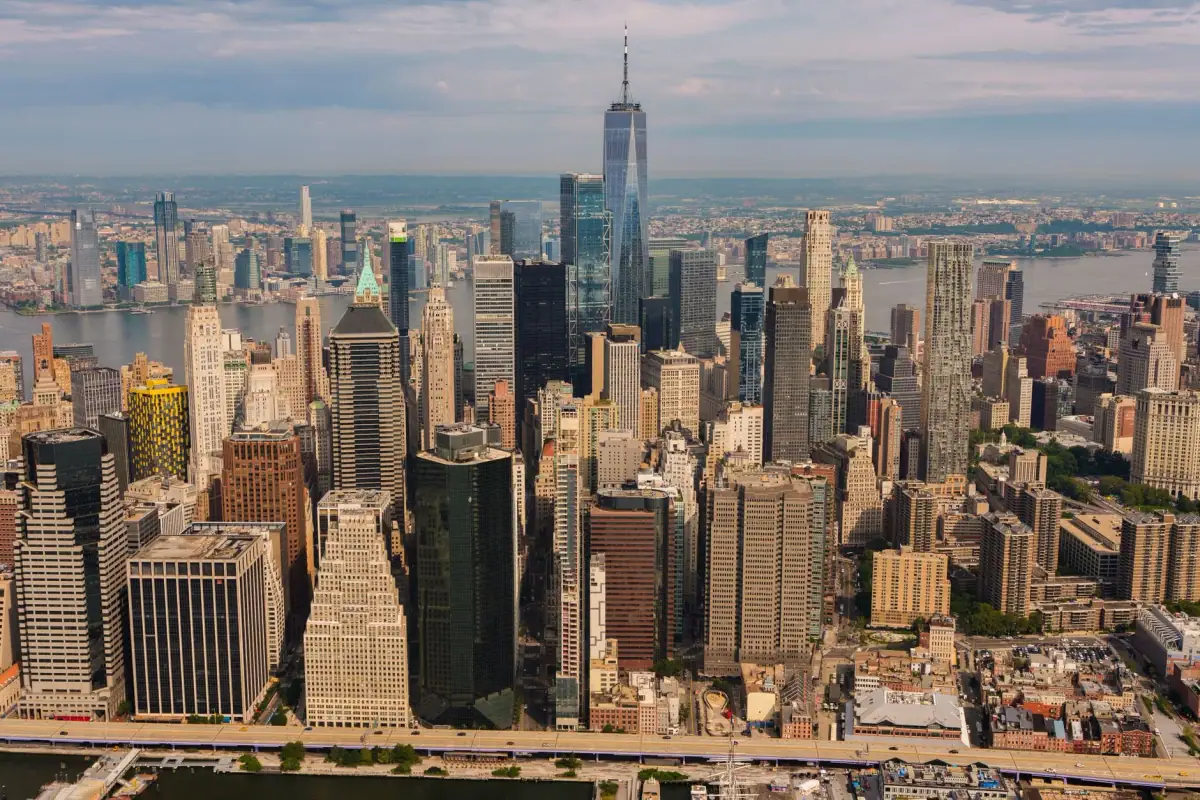
New York is not so much visited as walked. Between the skyscrapers of Manhattan, the neighborhoods of Brooklyn and the big parks, distances look short on the map but add up quickly on foot and by subway. For a first visit, four days let you see the essentials without rushing from morning to night, as long as you group the sights by neighborhood.
This itinerary follows a geographic logic: lower Manhattan and the Statue of Liberty first, then Midtown, Central Park and the museums, then Brooklyn to finish gently. Each day keeps a margin for strolling, because it is often in the streets, between two stops, that you find the atmosphere of the city.
Day 1: Lower Manhattan and the Statue of Liberty
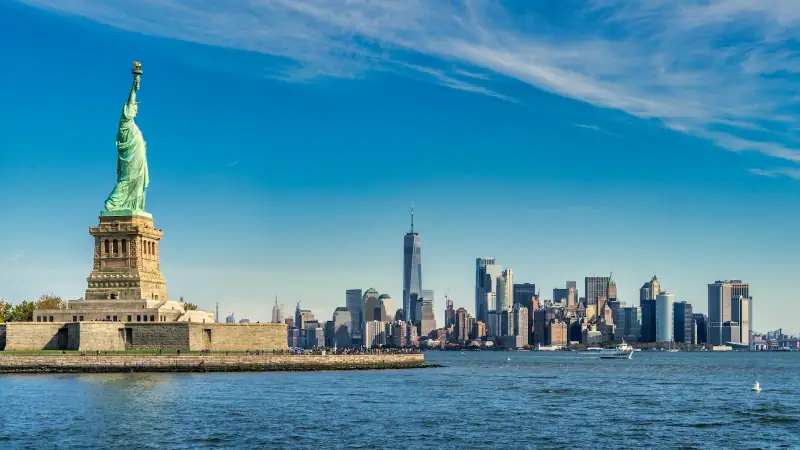
Start at the southern tip of the island. Ferries to the Statue of Liberty and Ellis Island leave from Battery Park: arrive early in the morning, when lines are shorter and the light is softer on the bay. Allow half a day to include Ellis Island, the former immigrant reception center, whose museum traces the history of millions of arrivals by boat.
If you are short on time, the free Staten Island Ferry offers a view of the statue and the skyline without setting foot ashore. It works well at the end of the day, when the towers light up.
In the afternoon, head back north to the 9/11 Memorial and Museum, set on the site of the former Twin Towers. The place is sober and moving: set aside time and quiet. Wall Street, Trinity Church and One World Trade Center are a few minutes away on foot, which lets you wrap up the neighborhood without taking the subway.
Where to sleep in New York
Compare hotels in Manhattan and Brooklyn for your dates: rates vary a lot from one season to another.
Day 2: Midtown, the Empire State Building and Times Square
The second day is devoted to Midtown Manhattan. Start at Grand Central Terminal, a magnificent early 20th-century train station whose main hall is worth a detour by itself. From there, walk toward Fifth Avenue, St. Patrick’s Cathedral and Rockefeller Center.
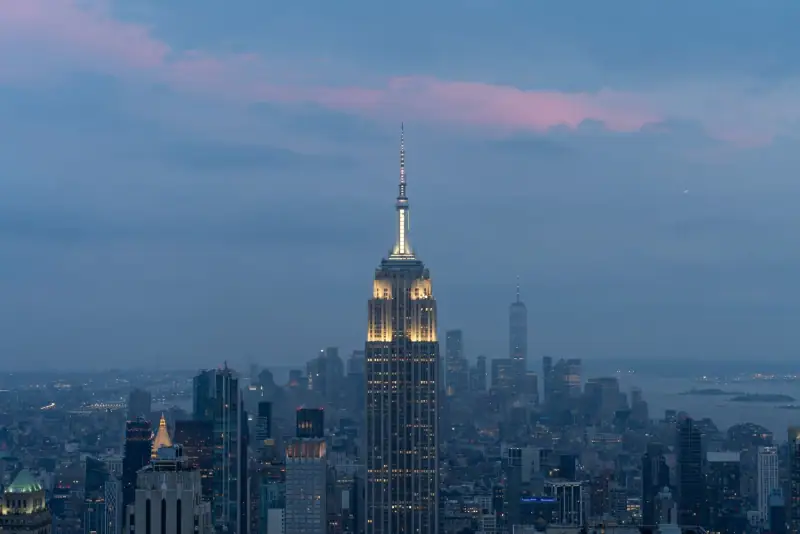
Two observation decks compete for the view of the city: the Empire State Building, opened in 1931 and a symbol of New York, and Top of the Rock, at Rockefeller Center, from which you can in fact see the Empire State Building. Choosing one of the two is generally enough. Visit at sunset if the sky is clear: you get daylight, dusk and the city lights in a single ride up.
Finish at Times Square, at nightfall. The place is noisy, saturated with screens and people, but it is part of the New York experience. A few minutes are enough to soak it in before dinner in the neighboring streets, or a Broadway musical if you have booked.
Day 3: Central Park and the museums

Central Park covers about 840 acres (340 hectares) in the middle of Manhattan and can be explored in a thousand ways. Enter from the south, near Fifth Avenue, and follow the paths toward the lake, Bethesda Terrace and the Mall. New Yorkers run, picnic or read there: take the same pace, without trying to see everything.
The park is lined with major museums. The Metropolitan Museum of Art, on Fifth Avenue, is one of the largest museums in the world, and you can spend a whole day there without seeing everything. Choose two or three sections that appeal to you rather than covering it all. On the other side of the park, the American Museum of Natural History is especially popular with families. MoMA, in Midtown, is another top choice if you prefer modern art.
Tours and activities in New York
Tickets, guided walking tours, bay cruises: compare offers and book before you leave.
Day 4: Brooklyn, the bridge and the High Line
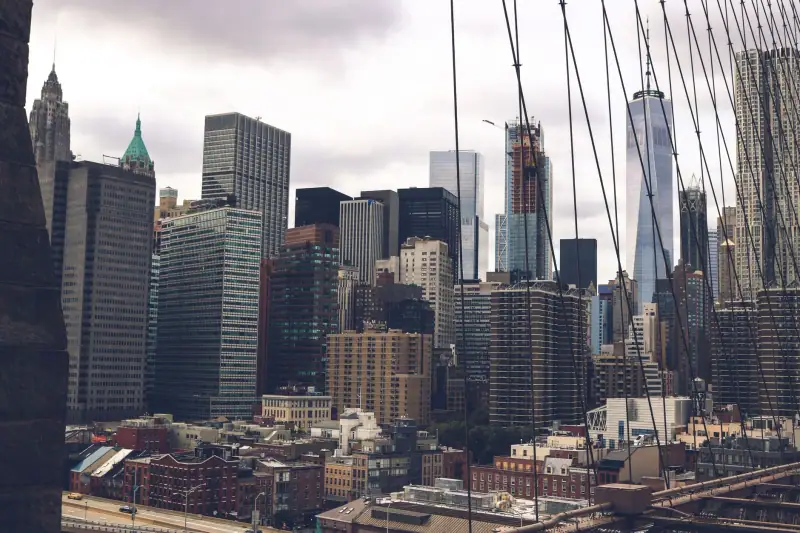
For the last day, cross the East River on foot over the Brooklyn Bridge, opened in 1883. The crossing takes a while, but the view of the lower Manhattan skyline is one of the finest in the city. Leave early: the walkway quickly becomes very busy, especially late in the morning and on weekends.
On the Brooklyn side, head down to DUMBO, a former industrial neighborhood of cobblestones and converted warehouses, then to the riverside park, which offers views of the bridges. Lunch in the neighborhood lets you catch your breath before what follows.
In the afternoon, return to Manhattan for a stroll on the High Line, a park built on a former elevated railway in the west of the island. It links neighborhoods with different atmospheres and ends near Hudson Yards. It is a calm way to close the stay, before a last meal in the area.
Getting around and preparing your trip
In New York, the subway is the most practical way to cover long distances, and walking links nearby sights. Car trips are slow and parking is complicated: rent a car only to leave the city, not to visit it. For a longer excursion, for example to Niagara Falls on the American side, the car or the train can be considered, but it needs at least one extra full day.
As for formalities, entry rules depend on your passport. Check the official travel advice of your government before you book: travel.state.gov (US), GOV.UK (UK), travel.gc.ca (Canada), Smartraveller (Australia) (checked November 2026). Also consider travel insurance covering health costs, which are very high in the United States.
When to go and how to plan your budget
Spring and fall are generally the most pleasant seasons for walking in the city, with moderate temperatures. Summer can be hot and humid, and winter is cold, but the year-end lights attract many visitors. High season pushes lodging prices up: book early, and compare neighborhoods rather than limiting yourself to Manhattan.
To save money, group your visits by neighborhood, favor walking and the subway, and choose one or two paid sights that really matter rather than ticking off everything. Precise ticket and hotel prices change from one season to another: check the official websites of the venues for current rates.
Frequently asked questions
Are four days enough to see New York?
Four days let you see the big classics of Manhattan and Brooklyn on a first visit. You will have to make choices: you cannot see everything, and one major museum can take up half a day by itself.
Where should you stay on a first visit to New York?
Midtown Manhattan is the most practical base, with many subway lines. Lower Manhattan is quieter in the evening, and Brooklyn often has gentler rates, at the cost of longer subway rides.
Do you need to rent a car in New York?
No, it is not advised for visiting the city: the subway, walking and buses are enough, and parking is difficult and expensive. A car becomes useful only for trips outside the city.
How do you get to the Statue of Liberty?
Ferries leave from Battery Park, at the southern tip of Manhattan, and from Liberty State Park in New Jersey. They also serve Ellis Island. Book ahead in high season, especially if you want to access the pedestal or the crown.
What documents do you need to enter the United States?
Entry rules depend on your passport. Check the official travel advice of your government before you book: travel.state.gov (US), GOV.UK (UK), travel.gc.ca (Canada), Smartraveller (Australia) (checked November 2026).
More US East Coast guides
Keep reading
US East Coast travel budget: real costs, 3 priced profiles and tips to spend less
Lodging, transport, meals, activities: how much does an East Coast trip cost? Three daily budgets with figures and tips to cut the bill.

When to go to the US East Coast: seasons, weather and best times
Spring, summer, fall foliage or winter: choose the best time to visit New York, Boston, Washington, Niagara and Florida, with weather and crowds.

Skiing in New England: Vermont, New Hampshire and resorts near New York and Boston
Skiing on the East Coast: Vermont and New Hampshire resorts, small areas near Boston and the Catskills from New York, lift tickets, season and tips.
Ready-made
US East Coast itineraries

4 days
New England fall road trip: 4 days from Boston to the White Mountains and Vermont
LincolnWoodstock
Can be adapted in the planner

3 days
Miami in 3 days: an itinerary through South Beach, Wynwood and the Everglades
What to see in Miami in 3 days: South Beach Art Deco, Wynwood, Little Havana, Coral Gables, Vizcaya and the Everglades. Day-by-day plan and tips.

2 days
Philadelphia in 2 days: an itinerary through American history and good food
What to see in Philadelphia in 2 days: Independence Hall, Liberty Bell, Old City, Reading Terminal Market, the art museum and neighborhoods. Plan and tips.