What to see
What to see in Washington and the Mid-Atlantic: Baltimore, Annapolis, Philadelphia

We may earn a commission when you book through links on this page, at no extra cost to you. We don't visit or try the places we cover: we summarize published sources. How we work
In short
- Washington, Baltimore and Philadelphia are linked by a busy rail line; Washington to Philadelphia is about 140 miles (225 km), two to two and a half hours by train.
- Two approaches: pick one base (usually Washington) with day trips, or chain two or three stops by train.
- Washington's Smithsonian museums on the Mall are free; some require a free timed ticket booked ahead.
- A car helps for Annapolis and Gettysburg; the train and the subway cover most other stops.
Between New York and the South, the American East Coast unrolls a ribbon of historic cities that made America. It is called the Mid-Atlantic, and for a traveler it is probably one of the richest regions in the country for history: this is where the Declaration of Independence and the Constitution were signed, where the great battles of the Civil War took place and where the federal institutions still sit today.
This guide does not detail a single city: it helps you choose what to see in the corridor running from Washington to Philadelphia, through Northern Virginia, Maryland and Pennsylvania. To go deeper into one place, it points to dedicated guides, such as the 3-day Washington itinerary or Philadelphia in 2 days.
How to plan your time in Washington and the Mid-Atlantic
The first thing to understand is the geography. Washington, Baltimore and Philadelphia are lined up from southwest to northeast, and a very busy rail line links them. Washington and Baltimore are only about 37 miles (60 km) apart, and Baltimore is about 95 miles (150 km) from Philadelphia. Between Washington and Philadelphia, allow about 140 miles (225 km), roughly two to two and a half hours by train depending on the service.
This proximity allows two approaches. The first is to choose one base (most often Washington) and make day trips. The second, more itinerant, chains two or three stops by train: Washington, then Baltimore or Annapolis, then Philadelphia, before continuing to New York. If you arrive from New York, the train is generally the simplest way, because it drops you downtown.
A few benchmarks to choose your pace:
- 4 days: Washington (2 days) and Philadelphia (2 days), without an excursion.
- 5 to 6 days: Washington, one excursion (Alexandria and Mount Vernon, or Baltimore) and Philadelphia.
- 7 days and more: add Annapolis, Gettysburg or a second day in Baltimore.
To compare seasons before booking, see the guide to when to go to the East Coast.
Washington, D.C.: the capital of monuments and free museums

It is the obvious stop in the region. Washington is not a metropolis of skyscrapers: zoning rules limit building height, and the city keeps wide avenues, lawns and white marble buildings. The tourist heart is around the National Mall, a long esplanade linking the Capitol to the Lincoln Memorial, with the Washington Monument as the central landmark.
Around this axis are concentrated the museums of the Smithsonian Institution, and those on the Mall are free to enter. There are collections devoted to aeronautics and space, natural history, African American history or fine arts. Some require a free timed ticket to be booked in advance: check on each museum’s official website.
Other highlights are the Tidal Basin memorials, the White House (mostly seen from the outside), the Library of Congress, and Arlington National Cemetery, across the Potomac, reached by subway. The Georgetown neighborhood, with its cobbled streets and brick houses, offers a more relaxed pause at the end of the day.
These sights are enough to fill three days. If your stay is shorter, two days let you see the essentials of the Mall and one or two museums. To choose your neighborhood, the guide to where to stay in Washington compares the options.
Where to sleep in Washington
Compare hotels near the National Mall, Georgetown or Union Station: rates vary a lot between weekdays and weekends.
Alexandria and Mount Vernon: George Washington’s Virginia
Just across the Potomac, in Virginia, Alexandria is a small colonial port town whose center, called Old Town, has kept its cobbled streets, 18th-century brick houses and riverfront. It is reached from Washington by subway in a few dozen minutes, which makes it an ideal excursion for half a day or an evening. You stroll, linger in independent shops and dine on the waterfront with a view of the water.
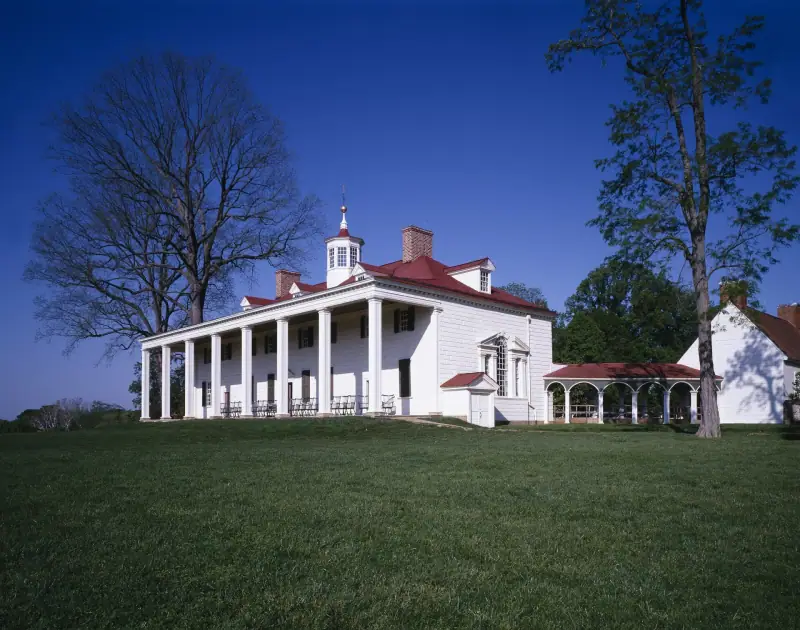
Farther south, about 15 miles (25 km) from the capital, is Mount Vernon, the estate of George Washington, first president of the United States. The house, its gardens, outbuildings and riverside lands can be visited, and the site offers a museum and a presentation of plantation life. This history also includes the presence of enslaved people on the estate, which the visit routes now address. Allow half a day to a day depending on your interest, and check hours and rates on the official website before you go.
To get there without a car, there are combinations of subway and bus, as well as organized excursions. If you rent a vehicle for the day, the trip is short, but parking in Washington itself remains complicated: it is better to pick up the car on the edge of the city.
Baltimore: a port with history and character
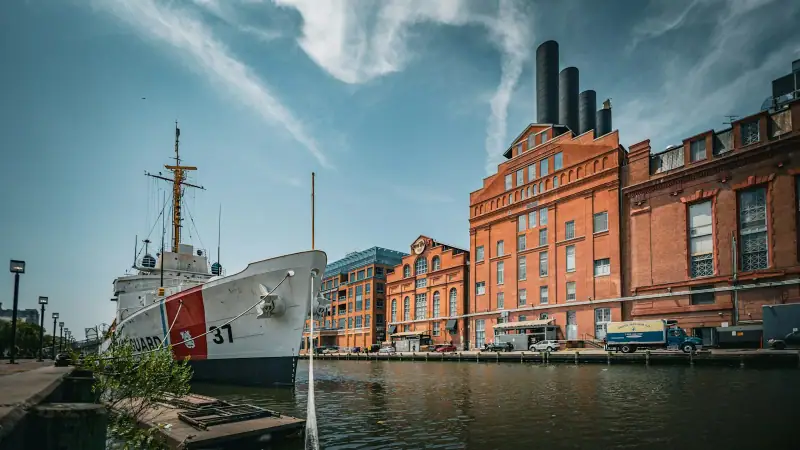
About 37 miles (60 km) northeast of Washington, Baltimore is Maryland’s big city and an important Atlantic port. Less visited than its neighbors, it surprises with its port-city atmosphere, its brick-house neighborhoods and its renovated waterfront, the Inner Harbor, where restaurants, promenades and family attractions gather.
Among the best-known visits, the National Aquarium in Baltimore, set on the harbor, is much loved by children. Fort McHenry, at the tip of the peninsula, entered history during the War of 1812: it was while watching its bombardment that a lawyer, Francis Scott Key, wrote the words of what would become the American national anthem. The site is visited with a small museum and explanations of the place.
Baltimore lends itself to walking in neighborhoods like Fells Point, a former sailors’ district with cobbled lanes, full of bars and restaurants. You taste local cuisine there, including the famous Chesapeake Bay crab preparation, a Maryland specialty. As in any big American city, find out which areas are advised in the evening and favor busy zones.
The train takes you there from Washington in a little under an hour, which allows a round trip in a day or a stop on the way to Philadelphia. If you have time, an overnight stay lets you enjoy the harbor at sunset.
Annapolis: Maryland’s capital and its bay
A small town on Chesapeake Bay, about 30 miles (50 km) from Washington, Annapolis is the capital of the state of Maryland. It charms with its colonial-style historic center, its streets sloping toward the harbor and its maritime atmosphere: the town readily presents itself as a sailing capital, and you see many sailboats as soon as the fine days arrive.
It is home to the United States Naval Academy, whose campus can be partly visited. You can also see the State House, current seat of the state government and the oldest state capitol still in continuous legislative use. The walk along the dock, with its shops and seafood restaurants, is the most pleasant moment of the day.
Annapolis is reached more easily by car or bus than by train, since no rail line serves it directly. It is therefore the excursion to choose if you have a vehicle or if you book an organized outing.
Excursions around Washington
Mount Vernon, Annapolis, Baltimore or Gettysburg: compare guided visits and day trips from the capital.
Gettysburg: the great Civil War battlefield
For history buffs, Gettysburg, in Pennsylvania, is one of the most striking places in the region. The battle fought there in July 1863 is considered a turning point of the Civil War, and President Abraham Lincoln gave his famous speech there a few months later, known as the Gettysburg Address.
The national military park protects the battlefield, dotted with monuments, cannons and viewpoints. A visitor center offers an introduction to the history of the event, and the site can be covered by car on a marked route, by bike or with a guide. The town itself, small and pleasant, keeps period houses.
The trip from Washington takes about two hours by car, which makes Gettysburg a long day if you leave early. No train serves it directly; an organized excursion is therefore the simplest solution if you have no car. Bring comfortable shoes and water, because the site is vast and often exposed to the sun.
Rent a car for excursions
For Annapolis, Gettysburg or a loop in Virginia, compare rental companies and pick up the vehicle on the edge of the city.
Philadelphia: the cradle of American independence
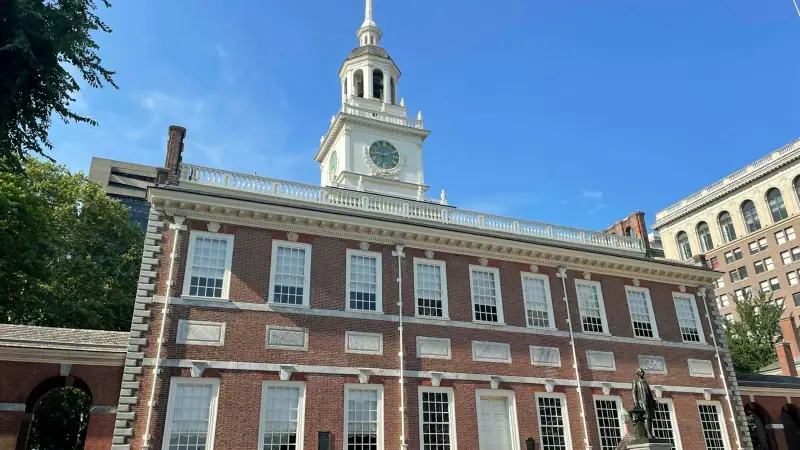
When you continue northeast, Philadelphia stands out as the great historic rendezvous. The Declaration of Independence was adopted in this city in 1776, then the Constitution in 1787. The historic district concentrates Independence Hall, where these texts were debated, and the Liberty Bell, the famous cracked bell that became a symbol of American liberty. It can all be covered on foot, within a compact perimeter.
Philadelphia is not just its monuments. The city’s art museum is famous for its great staircase, made popular by a boxing movie, and many museums line the grand avenue leading to it. The Old City neighborhood, its brick lanes and covered markets offer chances to taste the local specialty: the sandwich of beef and melted cheese, the cheesesteak. The 2-day Philadelphia itinerary details these stops, and the guide to where to stay in Philadelphia helps you choose your neighborhood.
The city is well placed to serve as a hinge: from there, New York is about two hours by train, which makes the rest of the trip easier. If you continue to New England, the New England fall road trip will give you ideas.
Which itinerary to choose depending on your profile?
Not all stops suit all travelers. Here are a few suggestions to help decide.
For a first stay on the East Coast. Focus on Washington and Philadelphia, two cities with a strong historical identity, linked by a direct train. Add Baltimore if you have an extra day. This formula fits easily between New York and the rest of your trip.
For history buffs. Combine Washington, Mount Vernon, Gettysburg and Philadelphia. You will cover the major stages of the birth of the United States, from the colony to the Civil War. Plan a car for Gettysburg or a guided excursion.
With family. Washington’s free museums, Baltimore’s aquarium and the wide open spaces of the National Mall suit children well. The timed tickets of some museums should be planned ahead, and walking days should stay reasonable.
For a quieter trip. Choose Alexandria and Annapolis, two small towns with a maritime or colonial atmosphere, easy to visit without rushing. They complement a stay centered on the capital well.
On a tight budget. The region is a good choice: Washington’s museums and memorials are free, trains help limit transport costs, and day trips avoid multiplying hotel nights. The East Coast budget guide gives broader benchmarks.
Getting around the region
The train is the corridor’s main asset. Amtrak links Washington (Union Station), Baltimore, Philadelphia and New York, with faster and slower services. Regional trains also run, often cheaper but slower. Book ahead if you want the best fares, and check schedules on the company’s official website.
In Washington, the subway serves the main sights, Arlington and Alexandria. In the other cities, walking and local public transportation are enough for the historic centers.
The car is useful for Annapolis, Gettysburg, or if you want to chain several sites in the same day. Outside city centers, driving is simple, but parking in town is expensive and sometimes complicated. Compare rental companies before departure and choose to pick up the vehicle outside central Washington.
Also think about practical equipment: American outlets are type A/B, so check that your chargers fit or bring an adapter.
Preparing your trip: formalities, insurance and connectivity
Entry rules depend on your passport. Check the official travel advice of your government before you book: travel.state.gov (US), GOV.UK (UK), travel.gc.ca (Canada), Smartraveller (Australia) (checked November 2026). See also the guide to East Coast formalities.
Because medical costs are very high in the United States, travel insurance covering medical care is strongly recommended.
To stay connected there, check your carrier’s international plan or consider a travel eSIM: Saily offers plans in more than 150 countries, so check the offer for the United States before you leave. The article on SIM cards and eSIMs on the East Coast compares the options.
When to go and how long to stay
Spring (April to June) and fall (September to October) are the most pleasant seasons: temperatures allow walking all day and the landscapes are superb, with Washington’s cherry trees in bloom or the colorful foliage late in the season. Summer is hot and humid, with frequent thunderstorms; it suits better if you favor air-conditioned museums. Winter is cold and sometimes snowy, but quieter and cheaper, and museums remain comfortable refuges.
As for length, a week is a good base to see Washington, one or two excursions and Philadelphia without rushing. If you have ten days, you can add New York or a stop in New England. Because lodging prices change with the season and events, always compare several dates before booking, and keep a margin in your schedule for the unexpected: train delays, lines at popular sites, or simply the wish to stay longer in a place you like.
Frequently asked questions
What does the Mid-Atlantic region include?
The term generally refers to the states between New England and the South, such as New York, Pennsylvania, Maryland, Delaware, Virginia and the federal capital. This guide concentrates on the corridor between Washington, Baltimore and Philadelphia, easy to cover by train.
How much time should you plan for Washington and the Mid-Atlantic?
Plan a week to combine Washington, one or two excursions (Alexandria, Mount Vernon, Annapolis or Baltimore) and Philadelphia. With four days, concentrate on Washington and Philadelphia, perhaps one extra excursion.
Can you visit the region without a car?
Yes, largely. The train links Washington, Baltimore and Philadelphia, and the capital's subway serves Arlington and Alexandria. A car becomes useful for Annapolis, for Mount Vernon with more flexibility, or for the Gettysburg battlefield.
Is Baltimore worth a visit?
Yes, for a day or half a day: the Inner Harbor waterfront, the museums, Fort McHenry and the historic neighborhoods offer an atmosphere different from Washington's. As in any big city, find out which neighborhoods to visit in the evening.
What is the best time to visit the region?
Spring and fall are the most pleasant, with mild temperatures for walking. Summer is hot and humid, winter can be cold but museums stay open. Washington's cherry trees generally bloom in late March or early April.
Do you need to book ahead for historic sites?
For the busiest sites, such as some Washington museums or Independence Hall in Philadelphia, a free or paid timed ticket may be required in high season. Always check the venue's official website before you go.
More US East Coast guides
Keep reading

What to see in Florida: Miami, the Everglades, the Keys, Orlando and the historic coast
What to see in Florida: Miami, Everglades, Keys, Key West, Orlando, Cape Canaveral, St. Augustine and the Gulf coast. Distances, durations and tips.
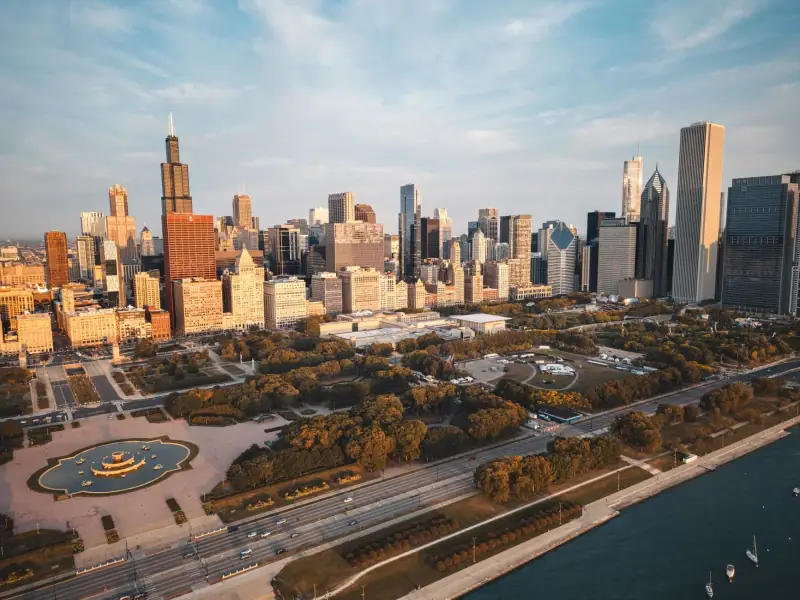
Visiting Chicago: what to see and do in the Windy City
What to see and do in Chicago: Millennium Park, architecture, the Art Institute, Riverwalk, Lake Michigan, deep dish and neighborhoods. Plan your stay.
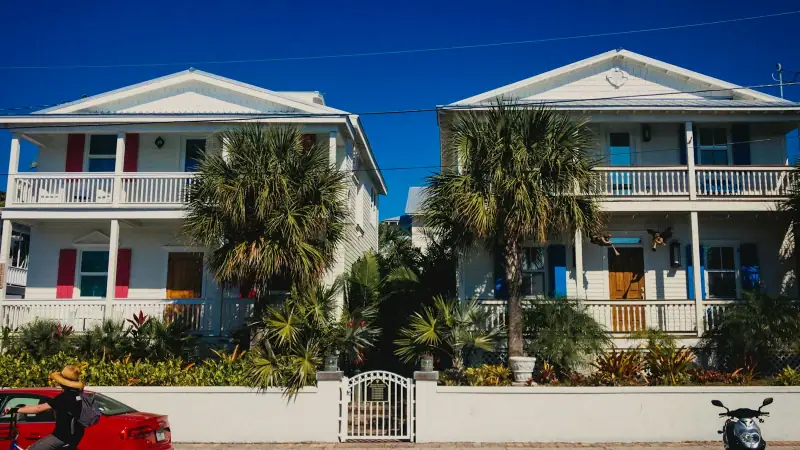
Visiting Key West: what to see and do at the end of the Keys
What to see and do in Key West: Duval Street, Hemingway House, sunset, the Dry Tortugas, beaches and food. Plan your Florida stay.
Ready-made
US East Coast itineraries

4 days
New England fall road trip: 4 days from Boston to the White Mountains and Vermont
LincolnWoodstock
Can be adapted in the planner
3 days
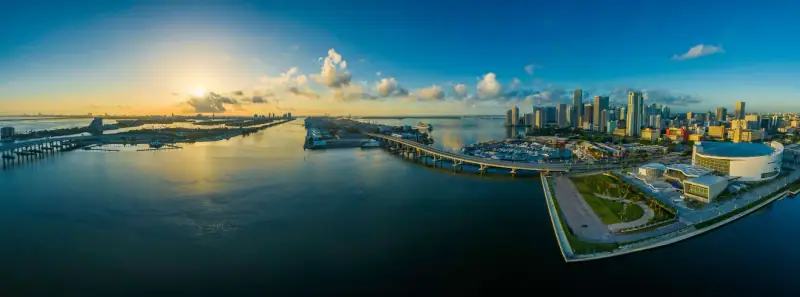
Miami in 3 days: an itinerary through South Beach, Wynwood and the Everglades
What to see in Miami in 3 days: South Beach Art Deco, Wynwood, Little Havana, Coral Gables, Vizcaya and the Everglades. Day-by-day plan and tips.

2 days
Philadelphia in 2 days: an itinerary through American history and good food
What to see in Philadelphia in 2 days: Independence Hall, Liberty Bell, Old City, Reading Terminal Market, the art museum and neighborhoods. Plan and tips.