Itineraries
Boston in 3 days: a walking itinerary through the Freedom Trail, Harvard and the waterfront
We may earn a commission when you book through links on this page, at no extra cost to you. We don't visit or try the places we cover: we summarize published sources. How we work
Day by day
- Day 1Freedom Trail from Boston Common to Charlestown
- Day 2Beacon Hill, Public Garden, Back Bay, museums
- Day 3Cambridge and Harvard, then Long Wharf waterfront
Weather through the year on this route
| Jan | Feb | Mar | Apr | May | Jun | Jul | Aug | Sep | Oct | Nov | Dec | |
|---|---|---|---|---|---|---|---|---|---|---|---|---|
| High °F (°C) | 27-3 | 29-1 | 384 | 5211 | 6418 | 7323 | 7725 | 7725 | 7021 | 5714 | 457 | 341 |
| Low °F (°C) | 11-11 | 13-10 | 22-5 | 331 | 447 | 5412 | 6016 | 5815 | 5111 | 405 | 30-1 | 19-7 |
Normals 1991–2020 at Boston and Stowe: averages over 30 years, not a forecast. Source: NASA POWER (MERRA-2), grid of about 50 km. Figures computed by us in November 2026. Rain is shown only where a weather station confirms the figures.
In short
- Three days cover the Freedom Trail (day 1), Beacon Hill, Back Bay and museums (day 2), then Cambridge, Harvard and the waterfront (day 3).
- The Freedom Trail is a marked line of about 2.5 miles (4 km) with around fifteen sites, and following it is free.
- You do not need a car in the city: walking and the T (the local subway) are enough.
- From New York, the Amtrak train takes a little under four hours and arrives at South Station.
Boston is one of the oldest cities in the United States, and one of the most pleasant to explore on foot. The capital of Massachusetts packs the major episodes of the American Revolution, red-brick streets, two world-famous universities and a still very lively port into a few square miles.
This guide offers a three-day itinerary, organized by neighborhood to limit travel time. It suits those arriving from New York (see the 4-day New York itinerary) as well as those who make New England their main destination.
Day 1: the Freedom Trail and historic Boston
Start the day at Boston Common, the large public park in the middle of the city, which is also the starting point of the Freedom Trail. The route of about 2.5 miles (4 km), marked by a red-brick line painted or set into the ground, links around fifteen sites tied to the city’s history. Just follow the line: you hardly need a map, although an app helps you locate the stops.
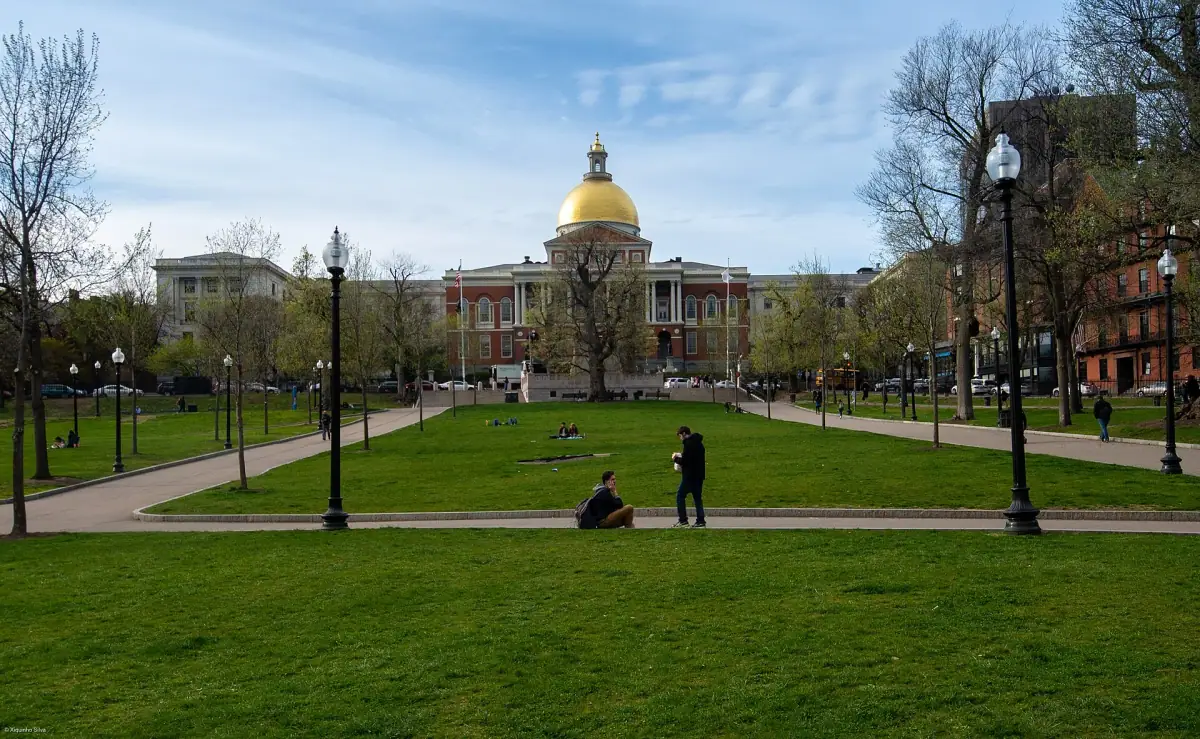
Among the most striking stops are the Massachusetts State House, with its gold dome overlooking Beacon Hill, the Granary Burying Ground, the Old State House, former seat of the colonial government, and Faneuil Hall, a market hall and gathering place since the 18th century. Right next door, Quincy Market is a good place for lunch among many food stalls with varied cuisine.
In the afternoon, continue to the North End, the former Italian neighborhood, where you will find the Paul Revere House and the Old North Church, associated with the famous ride of 1775. The route ends across the Charles River, in Charlestown, at the Bunker Hill Monument and the USS Constitution, one of the oldest warships still afloat. Depending on your pace, you can split the route into two half days.
Where to sleep in Boston
Compare hotels in the center, Back Bay or the waterfront for your dates: rates vary a lot with the season and university events.
Day 2: Beacon Hill, Back Bay and the museums
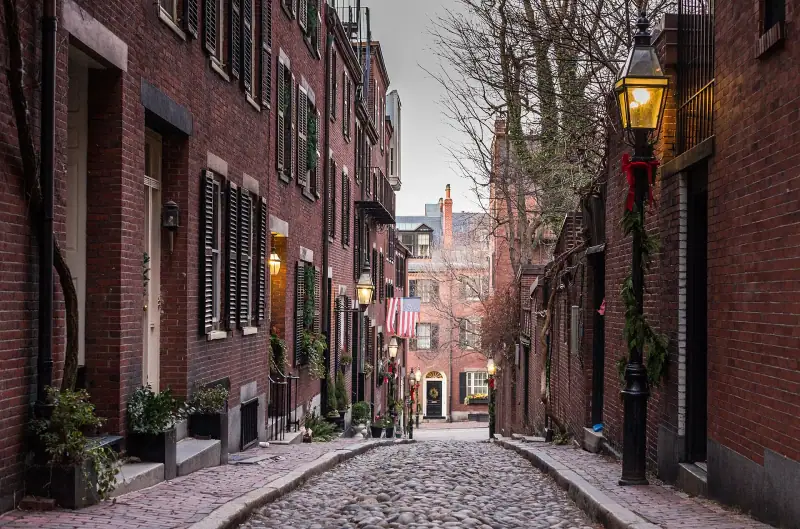
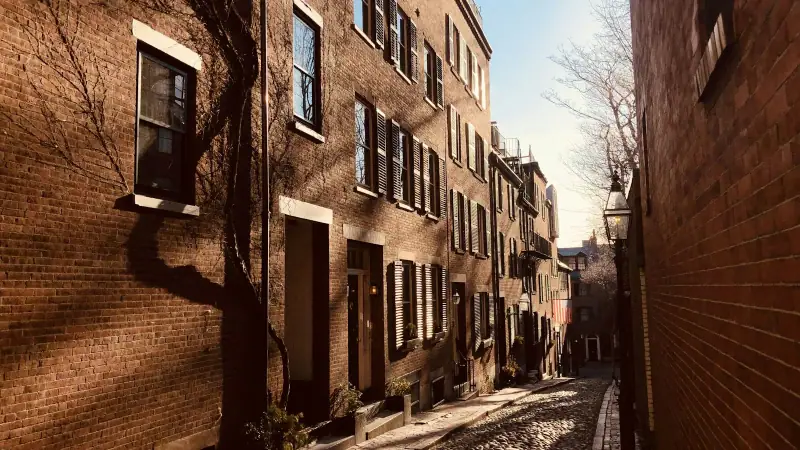
Devote the second day to the residential neighborhoods. Beacon Hill is one of the most charming: narrow cobbled streets, brick houses, gas lamps and colorful doors. Stroll there in the morning, before the streets fill with visitors, then head down to the Public Garden, an English-style garden known for its pond and its famous swan boats in season.
Then cross to Back Bay, a neighborhood of wide avenues lined with Victorian houses. Commonwealth Avenue is its most elegant axis. Farther on, Copley Square brings together the Romanesque-style Trinity Church and the Boston Public Library, whose great reading room can be visited for free. Neighboring Newbury Street is the shopping street, lined with boutiques and cafés.
Depending on your tastes, the afternoon can be set aside for a museum. The Museum of Fine Arts houses vast art collections from all eras, while the Isabella Stewart Gardner Museum, set in a Venetian-style palace, appeals with its distinctive atmosphere. Check hours and booking conditions on the official websites before you go.
Guided tours in Boston
Walking tours of the Freedom Trail, historical walks or harbor cruises: compare offers and book before you leave.
Day 3: Cambridge, Harvard and the waterfront
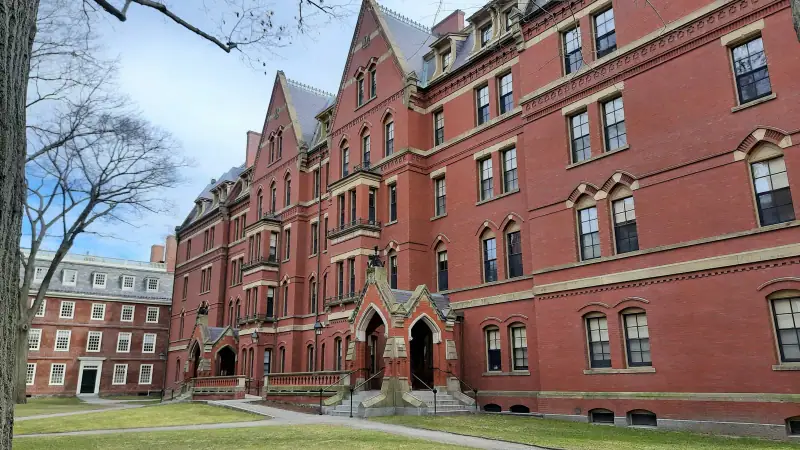
For the last day, cross the Charles River to Cambridge, the neighboring city reached in a few subway stops on the Red Line. Harvard Yard, the heart of the Harvard University campus, is freely accessible and explored on foot. The surrounding streets, with their bookstores and cafés, have a lively student atmosphere. Guided campus tours, often led by students, are a pleasant way to learn more about the history of the place.
If the weather allows, extend the day with a walk along the Charles River, popular with joggers and rowers, or take a look at the nearby MIT campus, known for its contemporary architecture.
In the late afternoon, head to the waterfront, around Long Wharf and the New England Aquarium. The harbor area is well suited to a sunset walk, and cruises let you see the city from the water. In season, some excursions also offer whale watching offshore: check the season dates with the operators.
Getting around and preparing your trip
From New York, the Amtrak train is the most practical choice: it arrives at South Station, south of the center, in a little under four hours depending on the service. The station is linked to the subway. Within the city, walking is enough for most stops in this guide, and the T, the local subway, covers the longer distances to Cambridge or the museums.
As for formalities, entry rules depend on your passport. Check the official travel advice of your government before you book: travel.state.gov (US), GOV.UK (UK), travel.gc.ca (Canada), Smartraveller (Australia) (checked November 2026). Also consider travel insurance covering health costs, which are very high in the United States.
When to go and how to plan your budget
Early fall is the most famous time to visit New England, with pleasant temperatures and colorful foliage, but hotels are then more expensive and fill quickly. Spring is a good, calmer alternative. Summer is hot and lively, and winter, often cold and snowy, suits mostly those who like a snowy city atmosphere.
Boston remains a fairly expensive destination, especially for lodging. The Freedom Trail and many walks are free, which helps keep the budget under control: it depends mostly on the nightly rate and meals. Prices change from one season to another, so compare dates before you book. To extend your trip south, see also the guide to Washington in 3 days.
Frequently asked questions
Is three days enough to see Boston?
Yes, the city is compact and largely visited on foot. Three days let you walk the Freedom Trail, discover Beacon Hill and Back Bay, spend half a day in Cambridge and enjoy the waterfront without rushing.
Do you need to rent a car in Boston?
No, not for the city itself. The local subway, called the T, and walking are enough, and parking is expensive and complicated downtown. A car becomes useful only to branch out to Cape Cod or the North Shore.
How do you get from New York to Boston?
The Amtrak train is the simplest option: it links the two cities in a little under four hours depending on the service, from downtown to downtown. Buses and short flights also exist, but the train avoids traffic jams and airport procedures.
What is the best time to visit Boston?
Early fall, with its mild days and colorful foliage, is very popular, as is spring. Summer is pleasant but hotter and busier, and winter can be very cold and snowy.
Does the Freedom Trail cost money?
The route itself is a line marked on the ground that you follow freely and at no cost. Some sites along the way, such as museums or historic buildings, may charge an entry fee or offer guided tours.
More US East Coast guides
Keep reading
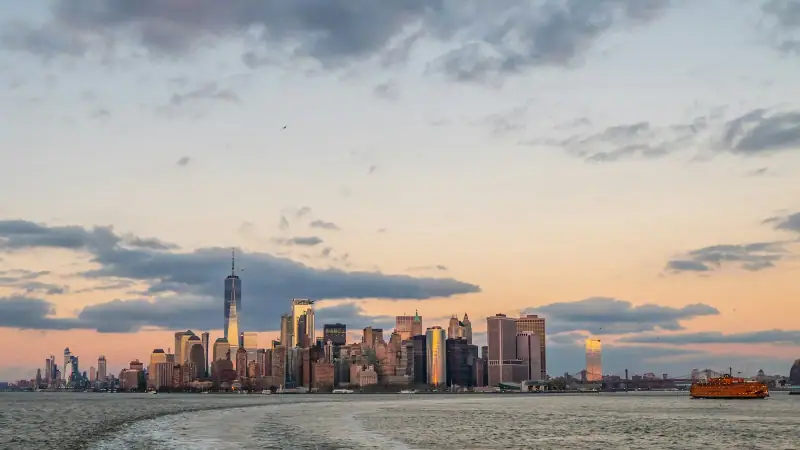
US East Coast travel budget: real costs, 3 priced profiles and tips to spend less
Lodging, transport, meals, activities: how much does an East Coast trip cost? Three daily budgets with figures and tips to cut the bill.
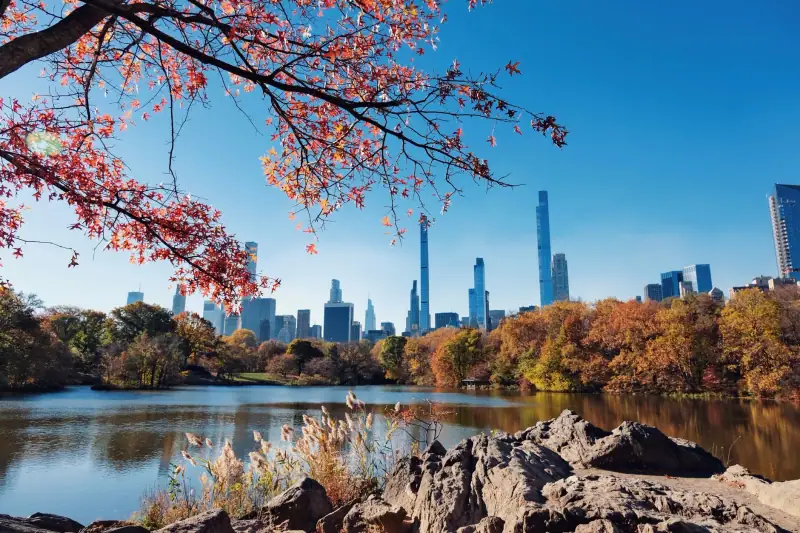
When to go to the US East Coast: seasons, weather and best times
Spring, summer, fall foliage or winter: choose the best time to visit New York, Boston, Washington, Niagara and Florida, with weather and crowds.

Skiing in New England: Vermont, New Hampshire and resorts near New York and Boston
Skiing on the East Coast: Vermont and New Hampshire resorts, small areas near Boston and the Catskills from New York, lift tickets, season and tips.
Ready-made
US East Coast itineraries
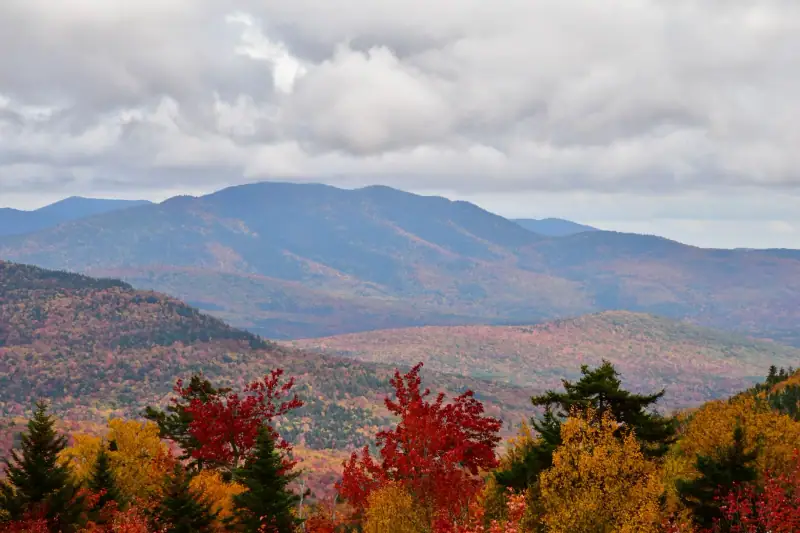
4 days
New England fall road trip: 4 days from Boston to the White Mountains and Vermont
LincolnWoodstock
Can be adapted in the planner
3 days
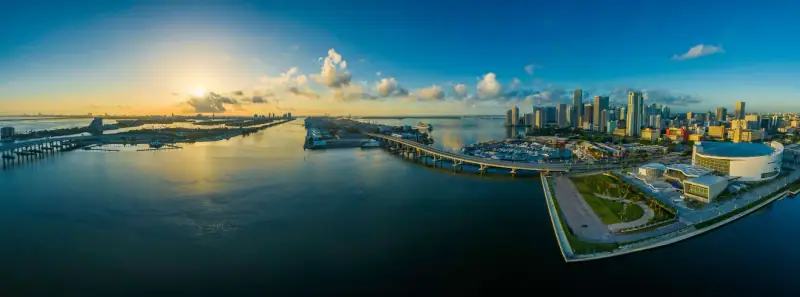
Miami in 3 days: an itinerary through South Beach, Wynwood and the Everglades
What to see in Miami in 3 days: South Beach Art Deco, Wynwood, Little Havana, Coral Gables, Vizcaya and the Everglades. Day-by-day plan and tips.
2 days
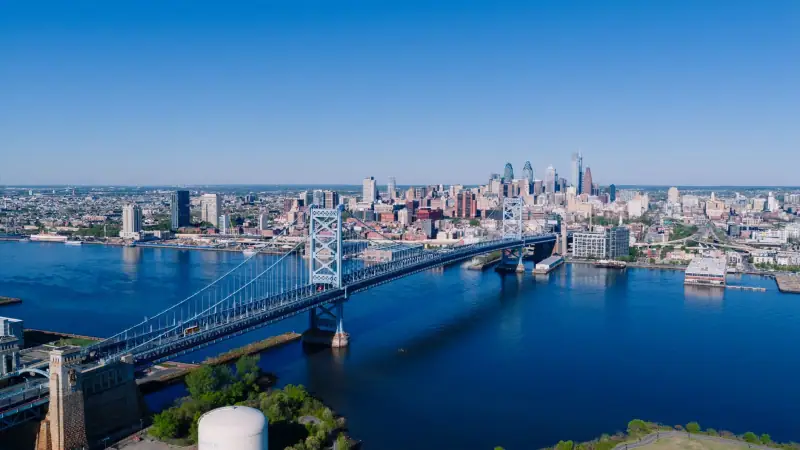
Philadelphia in 2 days: an itinerary through American history and good food
What to see in Philadelphia in 2 days: Independence Hall, Liberty Bell, Old City, Reading Terminal Market, the art museum and neighborhoods. Plan and tips.