Itineraries
Philadelphia in 2 days: an itinerary through American history and good food
We may earn a commission when you book through links on this page, at no extra cost to you. We don't visit or try the places we cover: we summarize published sources. How we work
Day by day
- Day 1Independence Hall, Liberty Bell, Old City, Reading Terminal Market, City Hall
- Day 2Philadelphia Museum of Art, Parkway, Eastern State Penitentiary, Schuylkill
Weather through the year on this route
| Jan | Feb | Mar | Apr | May | Jun | Jul | Aug | Sep | Oct | Nov | Dec | |
|---|---|---|---|---|---|---|---|---|---|---|---|---|
| High °F (°C) | 27-3 | 29-1 | 384 | 5211 | 6418 | 7323 | 7725 | 7725 | 7021 | 5714 | 457 | 341 |
| Low °F (°C) | 11-11 | 13-10 | 22-5 | 331 | 447 | 5412 | 6016 | 5815 | 5111 | 405 | 30-1 | 19-7 |
Normals 1991–2020 at Boston and Stowe: averages over 30 years, not a forecast. Source: NASA POWER (MERRA-2), grid of about 50 km. Figures computed by us in November 2026. Rain is shown only where a weather station confirms the figures.
In short
- Two days: Independence Hall, the Liberty Bell and Old City on day 1, then the art museum, the Parkway and Eastern State Penitentiary on day 2.
- Independence Hall is visited in timed slots: book ahead, especially in spring and summer, and check the National Park Service website.
- From New York the Amtrak train takes a little over an hour and a half; from Washington a little over two hours. 30th Street Station serves both.
- You do not need a car in the city; spring and fall are the most pleasant seasons for walking.
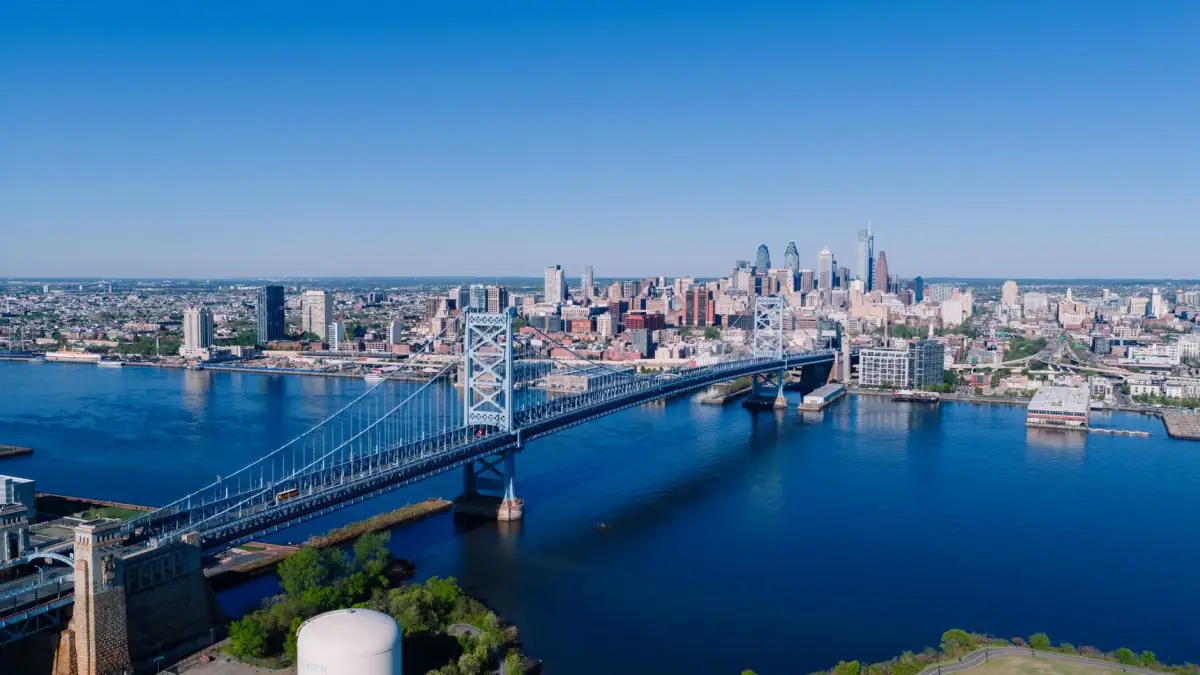
Philadelphia is often rushed through between New York and Washington, although it deserves more than a stopover. The Declaration of Independence and the Constitution were signed here, and the city was the capital of the United States for part of the 1790s. Its center is compact, its old neighborhoods are easy to explore on foot and its popular food, starting with the famous sliced-beef sandwich, is worth the trip.
Two days let you see the essentials: the first devoted to the history of the Old City district, the second to markets, museums and the atmosphere of the city’s neighborhoods. This guide is aimed at those arriving by train from New York or Washington, two cities covered in their own itineraries.
Day 1 morning: Independence Hall and the historic district
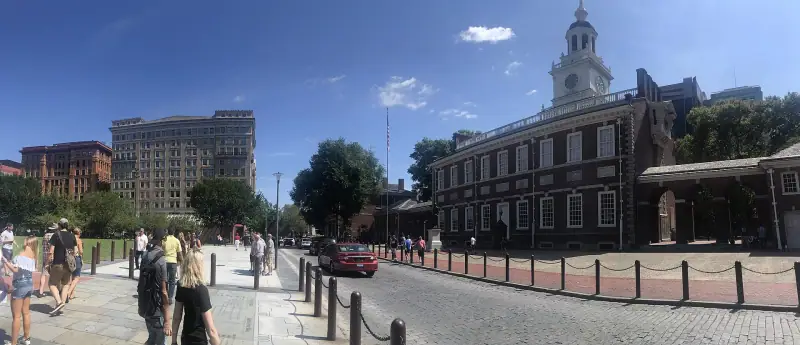
Start with Independence National Historical Park, which brings together most of the sites tied to the birth of the United States. The heart of the visit is Independence Hall, the brick building where the Declaration of Independence and the Constitution were debated and adopted. Visits are by group, in timed slots: book ahead, especially in high season, and arrive a little before the stated time to go through security.
Nearby, the Liberty Bell Center houses the famous cracked bell, a symbol of American liberty. Entry is generally free, but the line can be long in summer: visit early in the morning or late in the day. Allow about three hours for these two sites and walks among the neighboring historic buildings.
To get a feel for the period, stroll through the Old City district next. The cobbled streets and red-brick houses recall the colonial era. Elfreth’s Alley, often cited as one of the oldest residential streets still inhabited in the country, makes for a short walk.
Guided tours in Philadelphia
Walking tours of the historic district, food tours and excursions: compare offers before you leave.
Day 1 afternoon: Reading Terminal Market and downtown
Lunch naturally happens at Reading Terminal Market, a large covered market set in a former railway building and opened in 1893. You will find fresh produce stalls and many food counters. It is the best place to try a cheesesteak without standing in line in the rain, and to compare several local specialties. Hours vary by vendor: check them before you come.
In the afternoon, walk toward City Hall, an imposing building topped by a tower with a statue of William Penn, the city’s founder. The neighboring squares and streets are pleasant to explore, and the center remains very walkable. The end of the day can be spent in a bar or restaurant downtown, or around Rittenhouse Square, known for its outdoor cafés.
If you like cheesesteak, two rival shops in the south of the city, Pat’s King of Steaks and Geno’s Steaks, face each other in the Italian Market neighborhood. They have divided locals for decades, and the comparison is part of local folklore. The guide to choosing your cheesesteak and ordering it details the addresses.
Where to sleep in Philadelphia
Compare hotels in the center and Old City for your dates: rates vary a lot with the season.
Day 2 morning: the art museum and the Benjamin Franklin Parkway
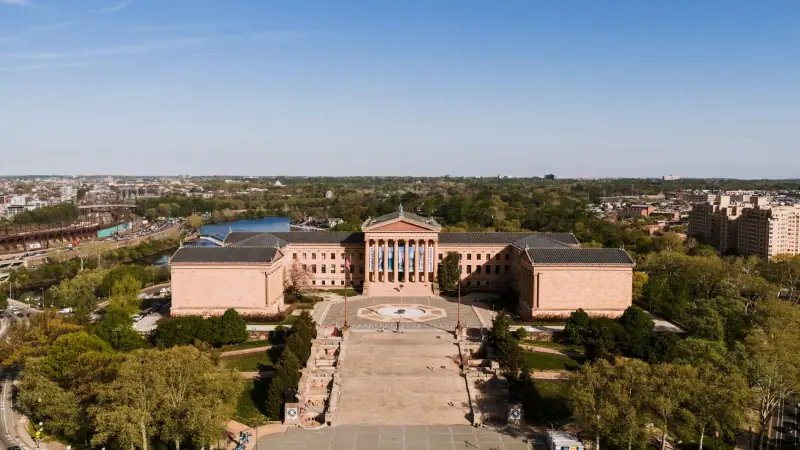
The second day is devoted to art and open spaces. The Benjamin Franklin Parkway, a wide avenue inspired by the Champs-Élysées, links downtown to the Philadelphia Museum of Art. This vast museum houses rich European, American and Asian collections. Allow two to three hours if you want to see the essentials.
The steps at the main entrance became famous thanks to the movie Rocky: visitors come to run up them and be photographed near the statue of the character at the foot of the steps. Access to the outside is free, and the view of the city from the top of the steps is worth the effort.
Along the Parkway, other institutions attract art lovers, such as the Barnes Foundation, famous for its modern art collection, or the Rodin Museum. Choose one as a complement according to your tastes, rather than trying to see everything in one morning.
Day 2 afternoon: Eastern State Penitentiary and the Schuylkill riverbank
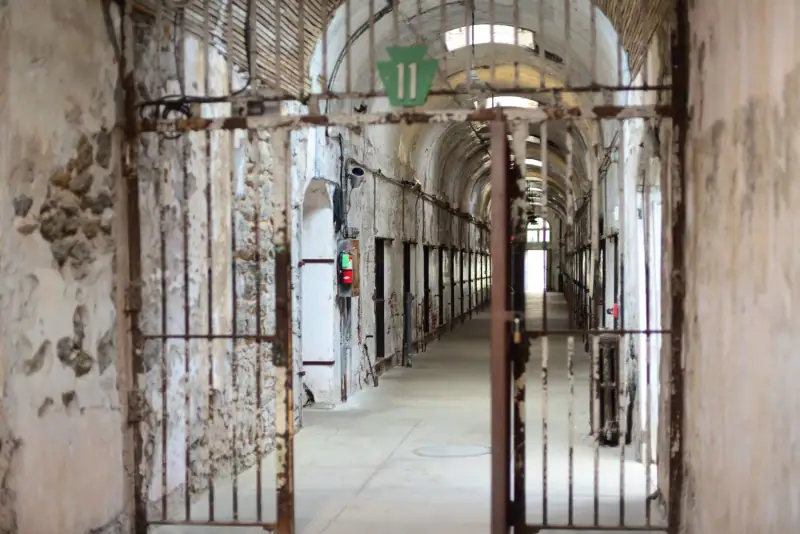
In the afternoon, head to Eastern State Penitentiary, a former prison opened in 1829 and now a visitor site. Its star-shaped architecture, crumbling corridors and history leave an impression, and the audio-guided visit is very popular. Allow about two hours and check hours and prices on the official website, as they vary with the season.
If the weather allows, finish with a walk along the Schuylkill River, where landscaped trails run alongside the water and offer views of the city. It is a quiet way to close two full days, before taking the train again at 30th Street Station, which serves both New York and Washington.
Getting around and preparing your stay
The simplest way to come is the Amtrak train. From New York, the trip takes a little over an hour and a half, and from Washington a little over two hours, depending on the service. 30th Street Station is a short distance from the center, and the subway or local buses complete the walking. A car is not needed in the city; it only becomes useful for an excursion into the surrounding countryside.
For sleeping, the Old City district is ideal to stay near the historic sites, while the center around City Hall offers more choice of restaurants and bars. Entry rules depend on your passport. Check the official travel advice of your government before you book: travel.state.gov (US), GOV.UK (UK), travel.gc.ca (Canada), Smartraveller (Australia) (checked November 2026). Because medical costs are very high in the United States, travel insurance is recommended.
When to go and how to combine Philadelphia with other stops
Spring and fall are the most pleasant seasons for exploring the city on foot. Summer can be hot and humid, and lines at the historic sites get longer. Winter is cold, but museums and covered markets offer plenty of shelter.
Philadelphia fits naturally into a trip along the East Coast, between two other major stops. Start with the 4-day New York itinerary, then head down to the federal capital with the 3-day Washington itinerary. If you want to see spectacular falls from New York, also see the guide to Niagara Falls on the American side.
Frequently asked questions
Are two days enough to see Philadelphia?
Yes, it is a good length of stay to see the historic district, taste the local specialties and visit a major museum. The center is compact and largely explored on foot; a third day lets you add more museums or more distant neighborhoods.
Do you need to book to visit Independence Hall?
Visits are in timed slots, and booking ahead is recommended, especially in spring and summer. Check the official National Park Service website for the rules in effect on the date of your trip.
How do you get from New York to Philadelphia?
The Amtrak train is the most practical: it links New York to Philadelphia's 30th Street Station in a little over an hour and a half depending on the service. The bus is an alternative that is generally cheaper but slower.
Do you need to rent a car in Philadelphia?
No, for a city stay. The historic district, the center and the museum row can be reached on foot or by public transportation, and parking is expensive. A car only makes sense if you continue with a road trip.
What is the best time to visit Philadelphia?
Spring and fall offer the most pleasant temperatures for walking. Summer can be hot and humid, and winter cold, but indoor attractions stay open all year.
More US East Coast guides
Keep reading
US East Coast travel budget: real costs, 3 priced profiles and tips to spend less
Lodging, transport, meals, activities: how much does an East Coast trip cost? Three daily budgets with figures and tips to cut the bill.
When to go to the US East Coast: seasons, weather and best times
Spring, summer, fall foliage or winter: choose the best time to visit New York, Boston, Washington, Niagara and Florida, with weather and crowds.

Skiing in New England: Vermont, New Hampshire and resorts near New York and Boston
Skiing on the East Coast: Vermont and New Hampshire resorts, small areas near Boston and the Catskills from New York, lift tickets, season and tips.
Ready-made
US East Coast itineraries
4 days
New England fall road trip: 4 days from Boston to the White Mountains and Vermont
LincolnWoodstock
Can be adapted in the planner
3 days
Miami in 3 days: an itinerary through South Beach, Wynwood and the Everglades
What to see in Miami in 3 days: South Beach Art Deco, Wynwood, Little Havana, Coral Gables, Vizcaya and the Everglades. Day-by-day plan and tips.
3 days
Boston in 3 days: a walking itinerary through the Freedom Trail, Harvard and the waterfront
A 3-day Boston itinerary: Freedom Trail, Beacon Hill, Back Bay, Cambridge and the harbor. Where to stay, how to get around and when to go.