What to see
Complete guide to visiting Tanzania: regions, safari, budget and tips
We may earn a commission when you book through links on this page, at no extra cost to you. We don't visit or try the places we cover: we summarize published sources. How we work
In short
- For a first safari in the north, plan about a week there: Tarangire, Lake Manyara, Ngorongoro and the Serengeti.
- The main dry season, June to October, offers the best wildlife viewing; the long rains run from March to May.
- Most travelers use a local operator that provides a 4x4, a driver-guide and bookings; park fees, vehicle and lodging make up most of the cost.
- Two international airports serve most visitors: Kilimanjaro, for the northern circuit, and Dar es Salaam.
Tanzania brings together in one country some of the biggest names of wild Africa: the Serengeti plains and their Great Migration, Ngorongoro Crater, the baobabs of Tarangire and the summit of Kilimanjaro, the highest point on the continent. An East African country opening onto the Indian Ocean, it also offers Swahili coasts, islands and a living culture well worth a detour.
This pillar guide presents the destination as a whole: regions, towns, highlights, the best time to go, how to get there and around, lodging and budget. It links to all the detailed articles on the site so you can go deeper on each step of your preparation.
Tanzania at a glance
Tanzania is a vast country bordering the Indian Ocean to the east and touching several great African lakes to the west, including Lake Victoria and Lake Tanganyika. Its territory also includes the Zanzibar archipelago, off the coast. The official capital is Dodoma, but the largest city and main port is Dar es Salaam, on the coast. Swahili and English are the two most widely used languages in daily life and tourism, and the currency is the Tanzanian shilling.
For a traveler, the essentials come down to a few landmarks:
- The north, around Arusha, holds the big parks of the “northern circuit”: Serengeti, Ngorongoro, Tarangire and Lake Manyara. It is the most visited area.
- Kilimanjaro, near Moshi, is the second big reason to travel, for hikers.
- The south and west are home to wilder, less visited parks such as Ruaha and Nyerere (the former Selous reserve).
- The coast and Zanzibar offer beaches, Swahili history and diving.
The country sits near the equator: seasons are distinguished mainly by rain, not temperature, and altitude matters a lot. The northern highlands are noticeably cooler than the coast.
Regions to know
The north: the big-parks circuit
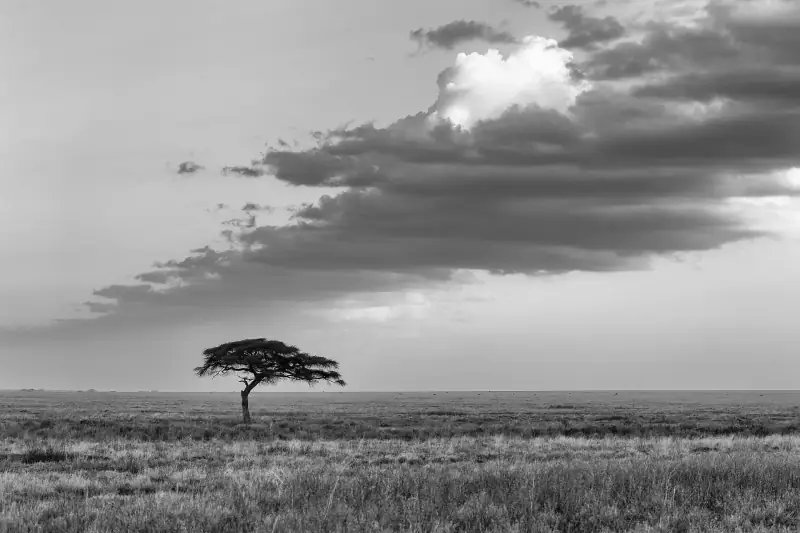
Northern Tanzania is the flagship region and the heart of this site. The parks follow one another on tracks that can be covered in a week, with a driver-guide and a 4x4 with a pop-up roof. The Serengeti draws visitors for its migration, Ngorongoro for its crater with concentrated wildlife, Tarangire for its elephants and baobabs, and Lake Manyara for its green setting at the foot of an escarpment. Each has a distinct character, and the combination is what makes a circuit rich.
Kilimanjaro and the Moshi region
East of Arusha, the Kilimanjaro region is organized around the town of Moshi, the usual base for climbs. The volcano rises to about 5,900 m (19,400 ft) and dominates the surrounding plains. Beyond the summit, the foothills offer farming villages, coffee plantations and waterfalls, so you can discover the region without necessarily climbing the mountain.
Southern Tanzania
The south is the destination for travelers who have already done the north or who want less crowded parks. Ruaha and Nyerere are very large protected areas, reached more often by small plane than by road, with a limited number of bush camps. Walking and boat safaris are more common there than in the north.
The coast and islands
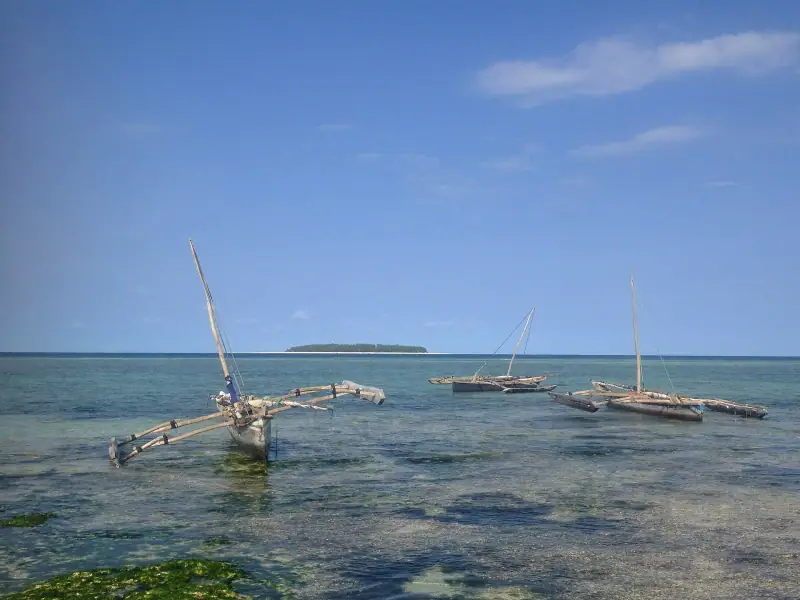
Dar es Salaam, Bagamoyo and the coastal villages tell a history shaped by Swahili trade and exchanges across the Indian Ocean. Offshore, Zanzibar, Pemba and Mafia offer beaches, reefs and old stone towns.
Base towns
Arusha, the gateway to safari
Arusha is the starting town for almost all northern safaris, at the foot of Mount Meru. This is where you meet your operator, get a last briefing and finish your shopping. The town is lively, noisy and short on major monuments, but it offers a wide range of hotels, restaurants and shops. Plan a night there before and, if your flight allows, a night after the safari, so you can head home without rushing.
Hotels in Arusha
A comfortable night before the safari departure and another on your return: compare the hotels available for your dates.
Moshi, at the foot of Kilimanjaro
Moshi is quieter and smaller than Arusha. It is the base for hikers preparing the climb: you find simple hotels, specialist agencies and shops to complete your gear. In clear weather, the silhouette of Kilimanjaro reveals itself above the town, especially early in the morning.
Karatu and Mto wa Mbu, between the parks
Karatu is a small highland town on the road to Ngorongoro, with many lodges set in the farming hills. Mto wa Mbu, at the foot of the Lake Manyara escarpment, is a lively, colorful village where you can discover the markets, banana groves and local crafts. These two stops serve as relays between the parks and let you sleep near the sites without camping in them.
Dar es Salaam, the coastal metropolis
Dar es Salaam is the largest city in the country and its main port. Hot, humid and busy, it is often passed through in transit rather than visited. It remains interesting for an immersion in Tanzanian urban life: markets, old neighborhoods, ferries to Zanzibar. It also serves as a starting point to reach the south of the country.
Tanzania’s highlights
The Serengeti and the Great Migration
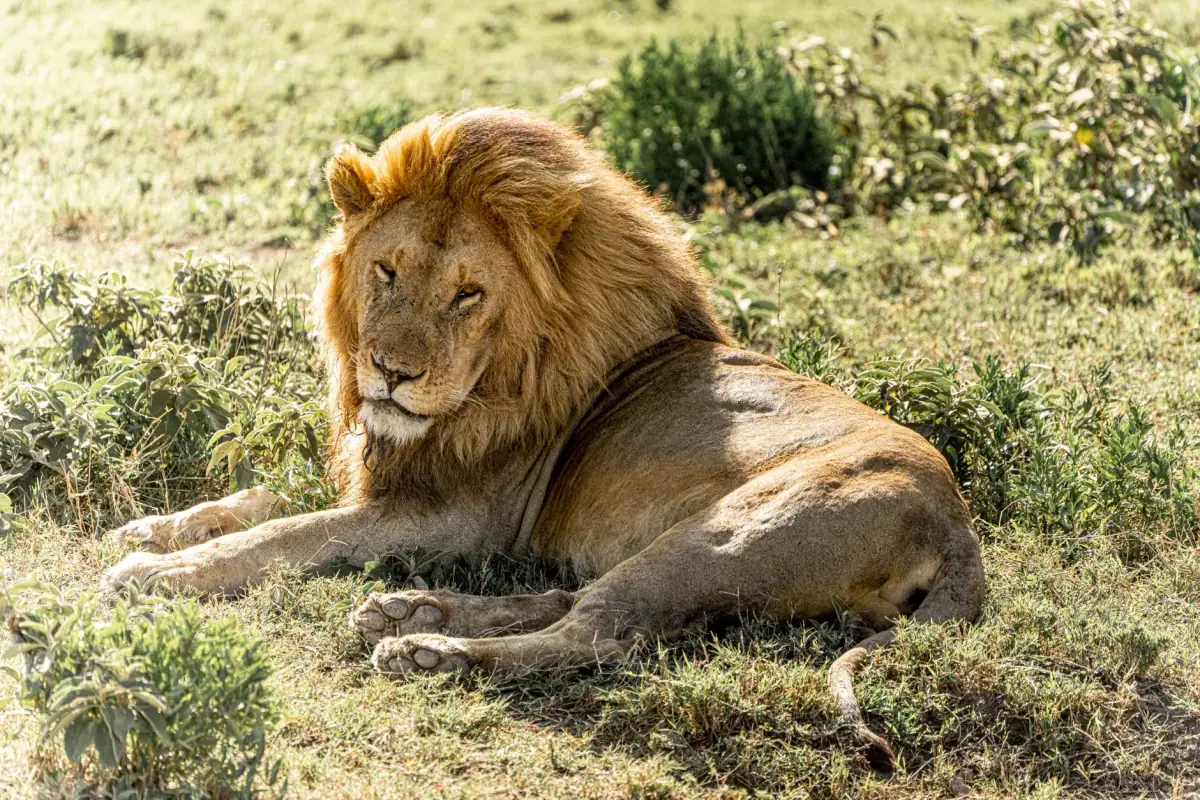
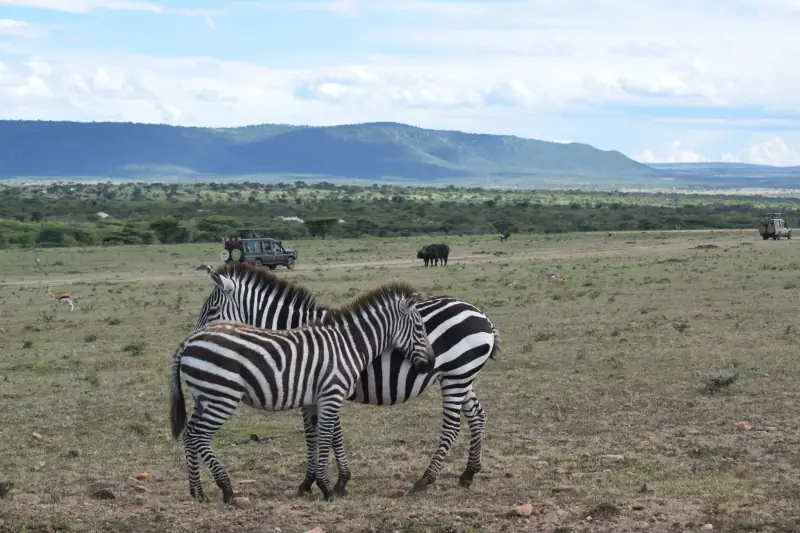
The Serengeti is the country’s most famous park. Its immense plains host each year the migration of wildebeest and zebras, a continuous circular movement driven by the rains and the growth of the grass. The herds’ position varies by month, and the spectacular river crossings are unpredictable. Even when the big herds are far away, the park holds lions, elephants, giraffes, hyenas and cheetahs. To understand where and when to watch the animals, read our guide to the Serengeti and the Great Migration.
Ngorongoro Crater
Ngorongoro is an immense volcanic caldera whose floor concentrates dense wildlife in a confined space: zebras, wildebeest, buffalo, hyenas, lions and, with luck, black rhinos. You descend early in the morning in a 4x4, and the time spent on the floor is regulated. The conservation area around the crater is also inhabited by Maasai communities, making it a place where wildlife and culture meet. All the practical details are in our article on visiting Ngorongoro Crater.
Tarangire, elephants and baobabs
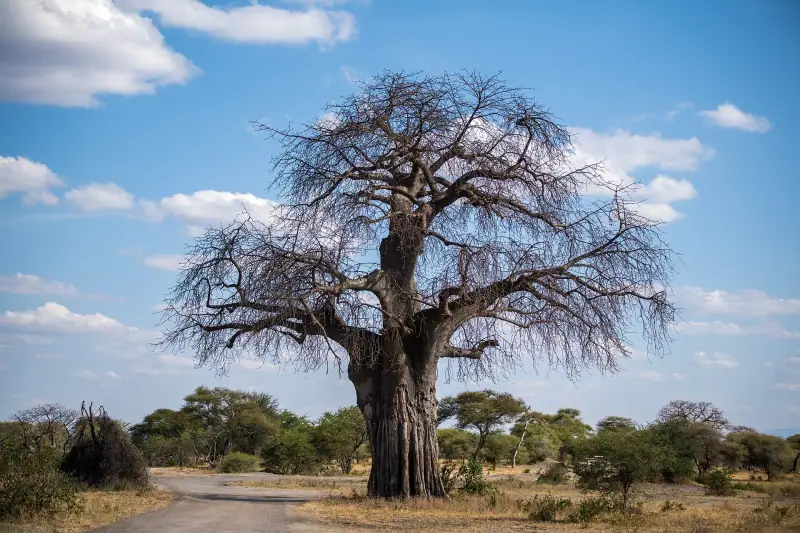
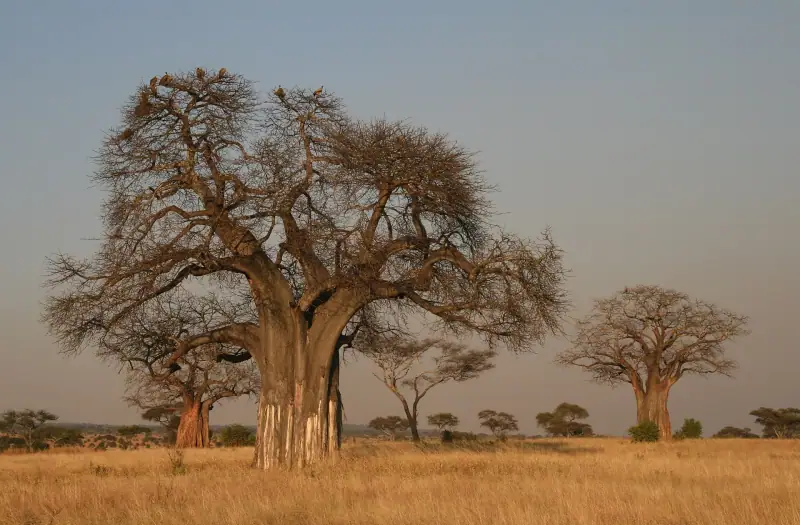
Tarangire National Park is famous for its large elephant herds and monumental baobabs. In the dry season, animals gather around the river that crosses the park, offering remarkable sightings. It is an excellent first stop, calmer than the Serengeti, and a good way to get started with wildlife viewing. Our guide to Tarangire National Park details the best season and the ideal length of visit.
Lake Manyara
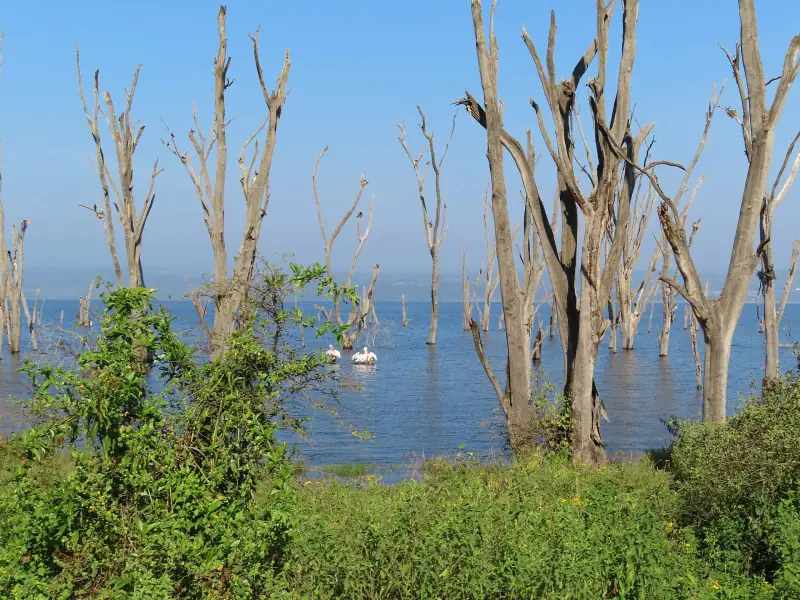
Lake Manyara is a smaller park set between a steep escarpment and a shallow lake. It is known for its groundwater forest, its birds and its varied scenery. It fits easily into a one-week circuit, often on the first day after Arusha, and suits a half-day visit.
Kilimanjaro
Kilimanjaro is the highest mountain in Africa. Climbing it requires no mountaineering technique, but it demands good fitness, time to acclimatize and suitable gear. Several routes lead to the summit, with different durations, landscapes and success rates. Ask your doctor or a travel clinic about altitude, and see the official travel health pages (CDC in the US, TravelHealthPro in the UK). Everything else you need to know is in our article on climbing Kilimanjaro.
Zanzibar and the coast
To end the trip gently, the Zanzibar archipelago offers pale sand beaches, turquoise water and a listed old town. It is the most common beach extension after a safari.
When to go to Tanzania
The right time depends on your plans. Here are the broad lines, detailed in our guide to when to go to Tanzania:
- June to October: the main dry season, the most popular. The grass is low, animals gather near water points, the tracks are in good condition. It is also the period of river crossings in the northern Serengeti, and the one with the highest rates.
- November and December: the short rains. Showers are often brief, the landscapes turn green again and crowds thin out.
- January and February: a hot short dry season, very popular. The herds are generally in the southern Serengeti, where much of the calving takes place.
- March to May: the long rains. This is the wettest period, with sometimes difficult tracks and some camps closed, but also lower rates and very quiet parks.
For Kilimanjaro, the driest periods are generally the most sought after, but the climb can be prepared year-round.
How to get to Tanzania
Airports
Two international airports receive most travelers. Kilimanjaro International Airport, between Arusha and Moshi, serves the northern circuit and the Kilimanjaro climb. Dar es Salaam Airport serves the coastal metropolis and the south. Zanzibar’s airport also receives international flights and domestic connections.
International flights
There are generally no direct flights from Europe: the trip involves a connection, often through a European, Gulf or East African hub, for a total duration that typically exceeds half a day. Compare fares several months ahead, especially for high season, and check layover times as well as baggage rules, particularly for domestic flights on small planes, which are stricter.
Flights to Tanzania
Flights generally arrive at Kilimanjaro Airport or Dar es Salaam: compare offers for your dates.
Formalities
Before booking, check your passport’s validity, the visa and health recommendations. Entry rules depend on your passport. Check the official travel advice of your government before you book: travel.state.gov (US), GOV.UK (UK), travel.gc.ca (Canada), Smartraveller (Australia) (checked November 2026). For health, ask your doctor or a travel clinic, and see the official travel health pages (CDC in the US, TravelHealthPro in the UK). More in our article on visa, vaccines and health. Rules change: always confirm them with official sources before you leave.
Getting around
Safari in a 4x4 with a driver-guide
To visit the northern parks, the dominant formula is the organized circuit: a 4x4 with a pop-up roof, an experienced driver-guide, and park fees and lodging booked by an operator. This is not only a convenience: the driver-guide knows the tracks, spots the animals, handles formalities at the park gates and ensures safety. You can choose a group circuit, cheaper, or a private circuit, more flexible.
Domestic flights
To reach the Serengeti, the south or Zanzibar, small bush planes save a lot of time. They cost more than the road and limit baggage weight, but they turn a day on the tracks into a short trip with, as a bonus, an aerial view of the scenery.
Roads and local transport
In and between towns, people travel by shared minibuses (dala dala), long-distance buses, taxis or motorcycle taxis. These options suit seasoned travelers and tight budgets, but they are less comfortable and less suited to a short stay. Driving is on the left and road conditions vary a lot. For the parks, renting a car without a driver is uncommon and not advised for beginners.
Where to stay in Tanzania
Lodging ranges from basic camping to luxury lodges, with tented camps and town hotels in between.
- Lodges are permanent buildings, often set on the edge of the parks or in the hills with views. They offer the most comfort: restaurant, pool, equipped rooms.
- Tented camps offer an experience closer to nature, with sometimes very comfortable tents, with real beds and private bathrooms.
- Mobile camps follow the migration in the Serengeti and place travelers at the heart of the savanna.
- Town hotels in Arusha, Moshi, Karatu or Dar es Salaam serve as stops before and after the safari.
- Public campsites exist in the parks for travelers with their own equipment, to be booked in advance.
The choice rests on three criteria: budget, comfort level and location, since a well-placed lodge can save hours of early-morning driving. Our guide to where to sleep on a safari in Tanzania compares the options and helps you book at the right time. The best places fill several months ahead in high season.
What budget to plan
Tanzania is not a cheap destination for a safari. Park entrance fees, vehicle and driver-guide costs and lodging make up most of the bill. The price of a trip therefore depends a lot on the length, the season, the comfort level and the type of circuit.
Items to plan for:
- International and domestic flights, very variable by season.
- The organized circuit, which usually includes the vehicle, driver-guide and park fees. Always check what is included.
- Lodging, whose share rises sharply in high season.
- Meals and drinks, often included in lodges but not always.
- Tips for the driver-guide and staff, a common practice in the country.
- Visa, insurance and health costs.
- Extras: optional activities, crafts, drinks.
To cut the bill without sacrificing the experience, travel outside high season, book early, favor a group circuit or camp lodging over a luxury lodge, and compare several local operators on identical programs. Our article on the safari budget in Tanzania details each expense item and ways to save.
How long and which itinerary
For a first trip, a week of safari in the north is a good compromise. It lets you link Tarangire, Lake Manyara, Ngorongoro and the Serengeti without rushing. If you have less time, a four- or five-day circuit lets you see the essentials, at the cost of long days on the tracks. If you have more time, add an extra night in the Serengeti or combine the safari with Kilimanjaro or Zanzibar.
Our detailed itinerary, the 7-day safari in northern Tanzania, guides you day by day through this sequence, with planning and lodging tips.
Combination ideas
- Classic safari: Arusha, Tarangire, Manyara, Ngorongoro, Serengeti, back to Arusha.
- Safari and mountain: a circuit of a few days followed by the Kilimanjaro climb, or the reverse. In that case, plan some rest between the two.
- Safari and beach: the north of the country, then a flight to Zanzibar for a few days of relaxation.
- Family trip: a shorter circuit, with limited drives and lodging suited to children. Check the minimum age required by lodges and activities.
Activities and experiences
Watching wildlife
The vehicle safari is the star activity. The best times are dawn and late afternoon, when animals are active. Bring binoculars and a camera with a good zoom, and follow the rules: quiet, no feeding, no leaving the vehicle outside authorized areas.
Safaris and excursions
Compare safaris and excursions from Arusha, with a guide and a suitable vehicle.
Hiking and walking
Besides Kilimanjaro, the region offers more accessible walks, notably around Mount Meru, in the Karatu hills or in the villages at the foot of the escarpment. Guided walks also let you encounter rural life and local communities.
Meeting local cultures
Tanzania has many communities, including the Maasai, present in the Ngorongoro area and in the northern savanna. Village visits should be done respectfully: favor initiatives organized with the communities, ask before photographing and accept that some scenes are not to be photographed.
Relaxing on the coast
After the safari, the beach is a welcome reward. Zanzibar has hotels for every budget, boat excursions and diving.
Eating in Tanzania
Tanzanian cooking is simple, hearty and generous. You find ugali, a maize paste served with meat and vegetables, nyama choma, grilled meat shared among friends, pilau, a spiced rice inherited from the Swahili coast, and chapati, a thin, widespread flatbread. The fruit is delicious, and Kilimanjaro coffee is worth tasting. In lodges, meals are generally varied and suited to visitors.
A practical tip: drink bottled or filtered water, and avoid ice and raw vegetables in doubtful places. Our article on Tanzanian food explains what to taste and how to eat well on a safari.
Health, safety and etiquette
- See a doctor or a travel clinic several weeks before you go, and check the official travel health pages (CDC in the US, TravelHealthPro in the UK).
- Protect yourself from mosquitoes: covering clothes in the evening, a suitable repellent, a mosquito net if needed.
- Take out insurance covering medical care and repatriation, and check that it covers altitude if you climb Kilimanjaro.
- Protect yourself from sun and dust: hat, glasses, sunscreen and a scarf.
- Dress modestly, especially on the coast and in rural areas, where covering outfits are more respectful.
- Respect the rules on plastic bags, banned in the country, and on drones, which require authorization.
- Keep change in small bills for tips and small purchases.
What to pack
For a safari, favor light clothes in neutral colors (beige, khaki, green), which blend into the scenery and reduce the appeal to insects. Bring a fleece and a windbreaker for dawn starts at altitude, a hat, good sunglasses, comfortable shoes, binoculars, a headlamp and a suitable power adapter. Choose soft luggage, easier to load into a vehicle or a small plane, and respect the weight limit of domestic flights. For Kilimanjaro, additional technical equipment is needed: see the dedicated guide.
Preparing your trip step by step
- Choose your dates and goals: migration, elephants, climb, beach.
- Set a trip length and a realistic budget with the help of our articles.
- Compare local operators on identical programs, and check what is included.
- Book flights and lodging early if you travel in high season.
- Do your paperwork: passport, visa, health, insurance.
- Pack your bag and sort your insurance, then enjoy.
All our articles to go further
Here is the list of all the guides on the site, by theme:
Discover the sites
Itinerary and activities
Preparing your trip
- When to go to Tanzania
- Safari budget in Tanzania
- Formalities for entering Tanzania
- Visa, vaccines and health
Sleeping and eating
- Where to sleep on a safari in Tanzania
- Tanzanian food
Wrapping up
Tanzania rewards those who prepare: a good calendar, a trusted operator, well-located lodging and a bit of patience on the tracks are enough to turn a trip into a lasting memory. Whether you aim for the Serengeti migration, the floor of Ngorongoro, the elephants of Tarangire or the summit of Kilimanjaro, start by choosing your dates, then follow the guides above to build your itinerary step by step.
Frequently asked questions
How many days do you need to visit Tanzania?
For a first safari in the north of the country, allow a week there, or about 10 days of travel including flights. A Kilimanjaro climb takes an extra week, and a beach extension on Zanzibar a few more days.
What is the best time to visit Tanzania?
The main dry season, from about June to October, offers the best viewing conditions. January and February are very good for the calving season of the migration in the southern Serengeti. The long rains from March to May are the wettest period.
Do you need a visa to go to Tanzania?
Entry rules depend on your passport. Check the official travel advice of your government before you book: travel.state.gov (US), GOV.UK (UK), travel.gc.ca (Canada), Smartraveller (Australia), and the Tanzanian authorities' official site (checked November 2026).
Can you do a safari in Tanzania without an agency?
It is possible but uncommon. The park tracks, the permit logistics and the Ngorongoro Conservation Area make organization complex. Most travelers use a local operator that provides a 4x4, a driver-guide and the bookings.
Is Tanzania a safe country for travelers?
Organized safari circuits generally run without difficulty. As anywhere, use common sense in big cities: avoid visible valuables and prefer organized transport at night. Check your government's travel advice before you go.
Can you combine a safari with a beach stay?
Yes, it is the most common formula: a few days of safari in the north, then an extension on Zanzibar.
More Tanzania guides
Keep reading
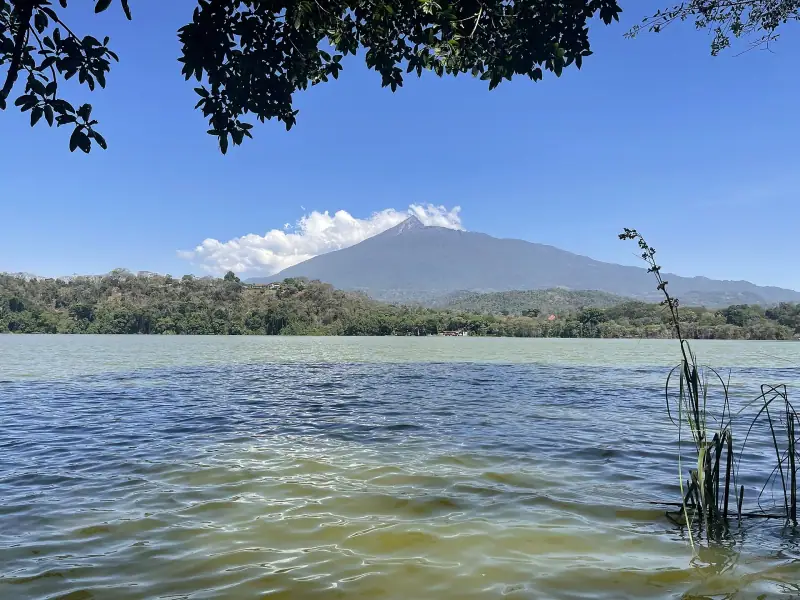
Lake Duluti near Arusha: canoeing, walking and prices for a half day
Is Lake Duluti worth a detour before or after a safari? Access from Arusha, canoeing, walking, birds, quoted prices and tips for a half day.
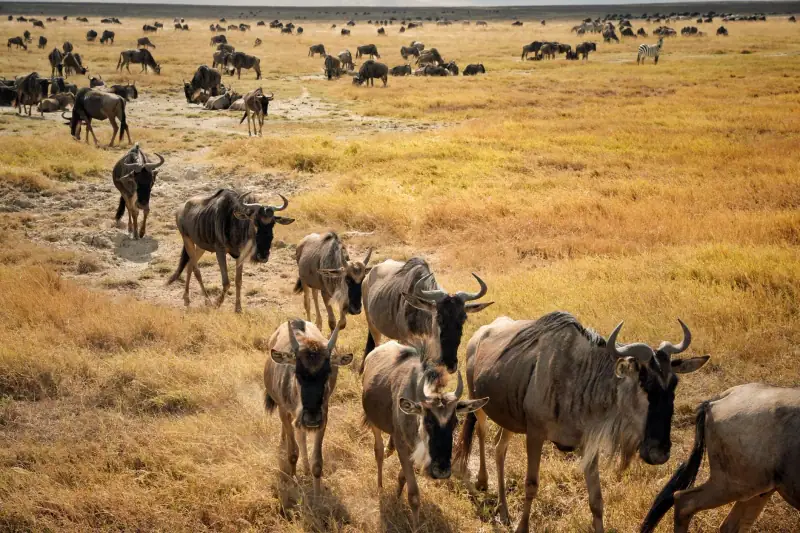
Serengeti and the Great Migration: when and where to see wildebeest in Tanzania
Visit the Serengeti in Tanzania: Great Migration calendar, viewing areas, ideal length, lodge or camp lodging and tips for a successful safari.
Tarangire National Park: elephants, baobabs and visiting tips
Visit Tarangire National Park in Tanzania: elephants, baobabs, best season, length of visit, lodging and tips for a successful safari.
Ready-made
Tanzania itineraries
4 days
4-day safari in Tanzania: Tarangire, Manyara and Ngorongoro
A 4-day itinerary for a short safari in northern Tanzania: Tarangire, Lake Manyara and Ngorongoro Crater, with lodging, budget and practical tips.

8 days
Family safari in Tanzania: an 8-day itinerary with kids
A Tanzania safari circuit suited to children: short stages, accessible parks, pace, lodging, health and tips so the whole family enjoys it.
7 days
7-day safari in northern Tanzania: the complete itinerary
A 7-day itinerary for a first Tanzania safari: Tarangire, Lake Manyara, Ngorongoro and the Serengeti, with tips on planning and where to stay.