Where to stay
Where to stay in Bern: neighborhoods and types of accommodation
We may earn a commission when you book through links on this page, at no extra cost to you. We don't visit or try the places we cover: we summarize published sources. How we work
In short
- For a first stay, the old town and its immediate surroundings are the best choice; the station area is the most practical if you travel by train.
- Länggasse, Mattenhof, Kirchenfeld, Lorraine and Breitenrain are usually cheaper, a few minutes by tram or bus from the old town.
- One night covers the essentials of the old town; two nights add a museum, the Gurten and the banks of the Aare.
- Book a few weeks ahead off-season, earlier in summer and during major events or Parliament sessions.
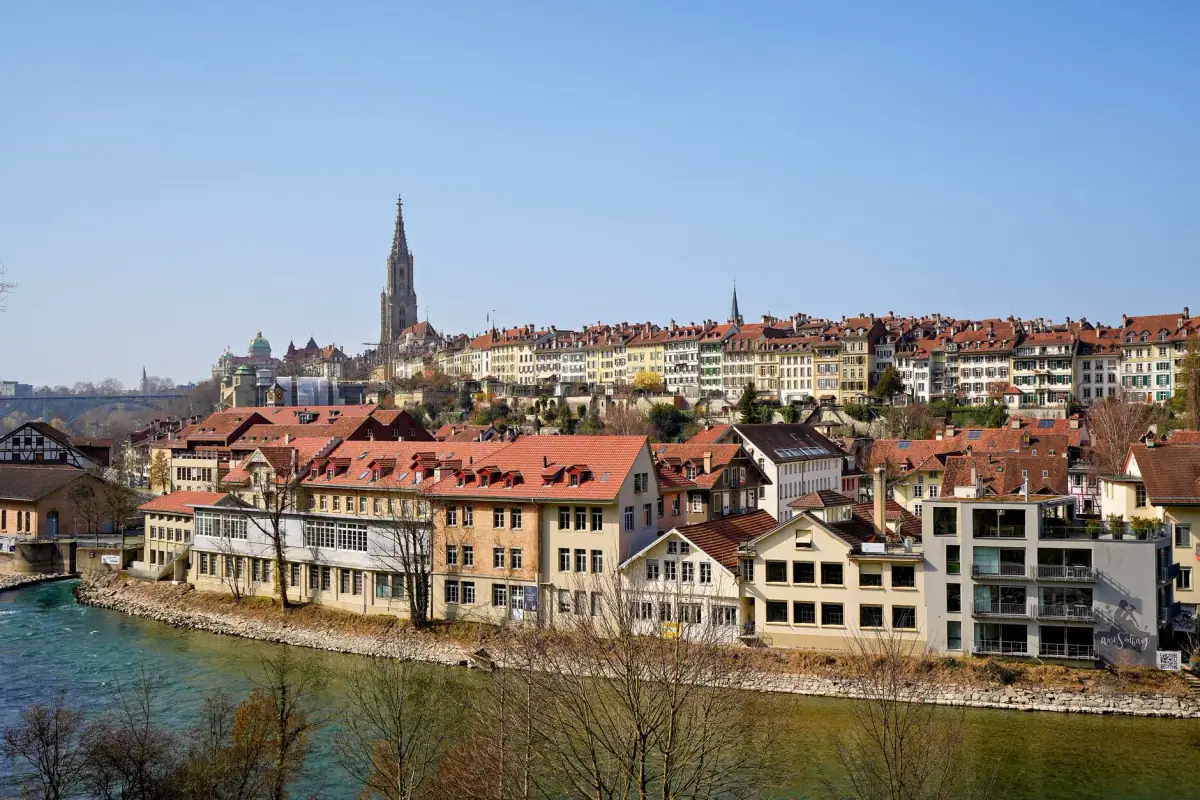
Bern does not have Zurich’s flashy reputation or Geneva’s panache, and that is exactly its charm. Set on a peninsula that the Aare circles in a large loop, the “federal city” lines up its sandstone arcades, colorful fountains and red roofs in a UNESCO-listed historic center. Everything is on a human scale, which simplifies the choice of accommodation… without making it trivial. Sleeping in the old town, near the station, in a residential district by the water or on the heights: each option changes the stay.
This guide goes through Bern’s neighborhoods, then the types of accommodation (hotels, hostels, apartments, campsites), the mistakes to avoid and tips for cutting the bill. Rates change sharply from one season to the next: check them for your dates. To place Bern among the country’s other bases, see our guide where to stay in Switzerland, and to plan your days there, our article visiting Bern in 1 to 2 days.
How Bern is laid out
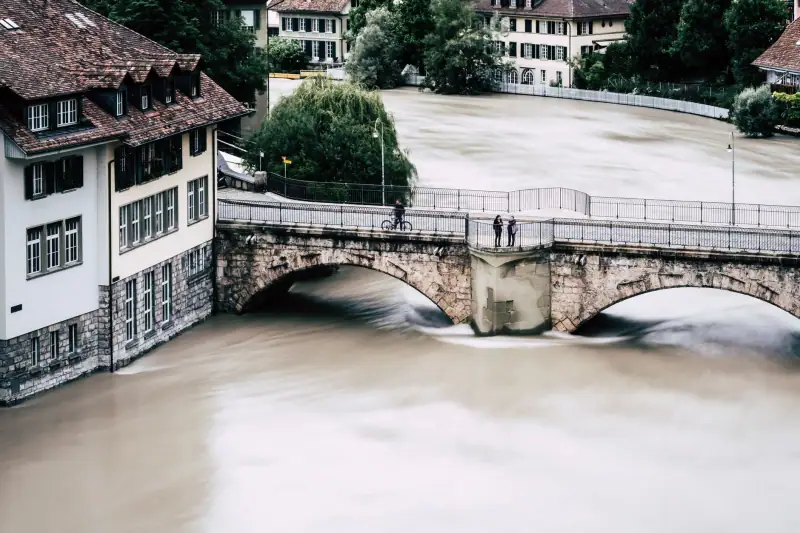
Bern’s geography is easy to grasp. The historic center sits on a narrow peninsula, enclosed by the Aare almost all the way around. It stretches from east to west along a single axis that changes name along the way: Marktgasse, Kramgasse, Gerechtigkeitsgasse. At the west end, the station marks the entrance to the center; at the east end, the river runs down toward the Bear Park and the rose garden.
Across the Aare, several districts form a ring: to the north, Lorraine and Breitenrain; to the south, Kirchenfeld and farther out Wabern and the Gurten; to the west, Länggasse and Mattenhof around the university and the station. This “loop” layout has an advantage: almost all the districts described below are a reasonable distance from the center, on foot or by tram and bus. What matters most is not whether a hotel is “in” the old town, but how far it really is from a tram stop or the station.
A useful detail: in Bern, many accommodations give their guests a pass for local public transport during their stay. This offer varies from one property to another and by period: ask your hotel before buying single tickets.
The old town: charm on foot
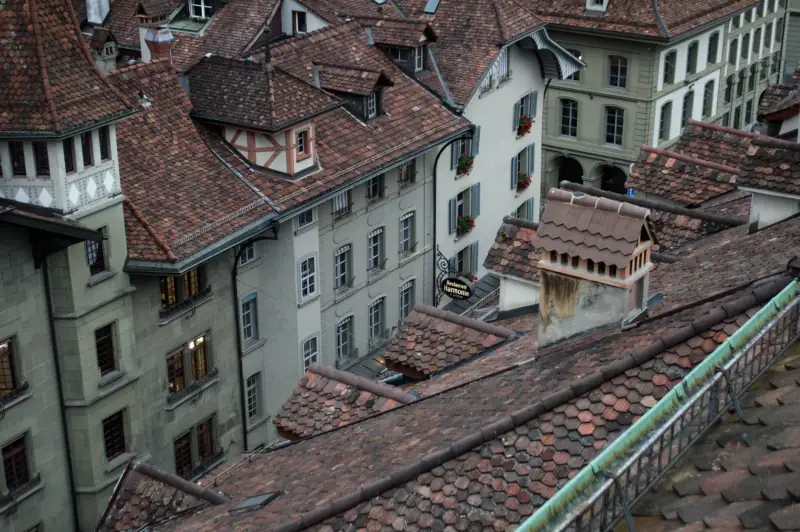
Sleeping in Bern’s old town means waking up under the arcades, steps from the Clock Tower, with the Münster bells as your alarm. The lanes are largely pedestrian, cafés and shops open at the foot of the buildings, and it takes only a few minutes to walk down to the river. Some old houses have been turned into small boutique hotels, sometimes with vaulted cellars or exposed beams.
Pros:
- Everything is within walking distance, day and night.
- The setting is the most authentic in the city, with arcades that shelter you from the rain.
- Cafés, bars and shops are within reach.
Cons:
- It is the most expensive area of Bern, even for modest rooms.
- Old buildings sometimes have small rooms, narrow stairs and not always an elevator.
- The busiest streets can be noisy on weekends: ask for a room on the courtyard side.
- Cars are almost absent from the center: parking is complicated.
It is the right choice for a couple’s getaway, a first stay or a short weekend, if your budget allows. If you are a light sleeper, choose side streets over the edges of the busiest squares.
The station area: the most practical
Bern station is one of the country’s major rail hubs, at the entrance to the old town. Around it are many hotels of all categories, from business hotels to simpler properties. The appeal is obvious: you arrive by train, drop your bags within a few minutes’ walk and head out on excursions without losing time. The old town literally begins across the street.
This area is functional, well served and lively at all hours, but a little less intimate than the historic center. The immediate surroundings of the station, which are very busy, are sometimes noisy: a room on the courtyard side or on the upper floors is quieter. Conversely, if you arrive late or leave very early, being close to the platforms is a comfort.
This district suits travelers linking stops by train, those using Bern as a base for Interlaken, Lucerne or Lake Geneva, and anyone who wants an uncomplicated place to land. To see how Bern fits into a circuit, see our 7-day itinerary by train.
🏨 Compare hotels in Bern: old town, station or neighboring districts, compare rates and amenities for your dates and budget.
Länggasse and Mattenhof: student-style and affordable
West of the station, the Länggasse district spreads around the university. Residential streets, small shops, student cafés and everyday restaurants create a more relaxed atmosphere than the center. Mattenhof, southwest of the station, offers a similar setting: early 20th-century buildings, good tram and bus service, and mid-range hotels.
Travelers generally find slightly gentler rates than in the old town, for ten to twenty minutes on foot or a few public transport stops. You sleep in a lived-in district, with bakeries, supermarkets and restaurants used by locals, which helps keep the meal bill down.
The atmosphere is that of a lively neighborhood, without the postcard backdrop. It suits travelers who prefer to save on the room and spend more on excursions. As always, look at the map and recent reviews before booking, rather than relying on the district name alone.
Kirchenfeld and the museum quarter: quiet and elegant
Across the Aare, south of the old town, Kirchenfeld is an upscale residential district with wide tree-lined avenues and prosperous buildings. It has several museums, as well as many diplomatic missions. The district is quiet, clean and airy.
You reach it from the center by crossing one of the big bridges over the Aare, on foot in about a quarter of an hour or by tram in a few minutes. The advantage is clear: you sleep in peace, with greenery around you, while staying close to the center. The Bern Historical Museum, home to the Einstein exhibition, is in the area, which helps on rainy days.
On the other hand, the choice of accommodation is more limited than in town, and there are fewer places to go out in the evening: plan your trip back if you dine in the old town. This district suits longer stays, travelers looking for quiet and those who want a starting point for the Gurten or the banks of the Aare.
Lorraine and Breitenrain: alternative and lively
North of the old town, across the Aare, Lorraine and Breitenrain form a younger, more relaxed area. Lorraine, which you reach by a railway bridge from the station, is known to locals for its neighborhood spirit: small independent shops, cafés, workshops, bars. Breitenrain, a little farther out, is a large residential district with its own shops.
For travelers, it is a way to experience Bern like a resident. Accommodation rates here are generally more affordable than in the center, and you find guesthouses, apartments and a few small hotels. The district remains well served by trams and buses, and the trip to the station is short.
The main drawback is the distance from the main sights: allow roughly ten to twenty minutes of travel to reach the old town, depending on where you are. This area appeals to curious travelers who like to leave the tourist track and prefer neighborhood atmosphere to a historic backdrop.
Marzili and the banks of the Aare: greenery and swimming
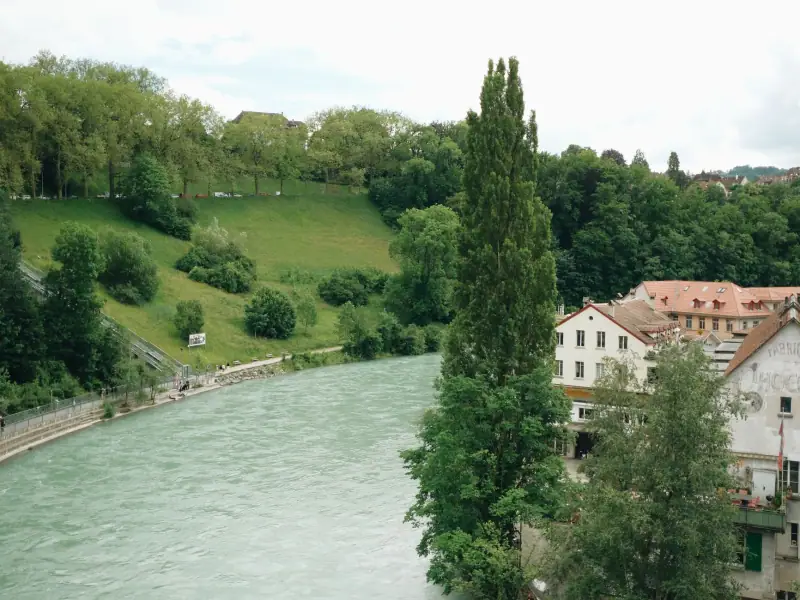
Marzili is a small district nestled at the foot of the Federal Palace, on the bank of the Aare, below the center. It has open-air baths that locals love and a large lawn where people come to picnic in summer. A funicular links this area to the level of the Federal Palace, which makes it very accessible from the center.
The choice of accommodation is limited, but the setting is appealing: in summer, the river a few steps away and the nearby terraces create an almost vacation atmosphere. On the other hand, rooms are expensive and few, and booking early is recommended.
If you want to enjoy the Aare without sleeping in Marzili itself, several riverside districts offer quick access to the water: the banks have paths for long walks. A safety reminder: the river is cold and fast, do not swim in it without precautions, and avoid any swimming after heavy rain. Our article visiting Bern details the guidelines.
🎟️ Tours and excursions from Bern: guided tours of the old town, day trips to the Oberland, cheese or chocolate tastings. Compare the offers you can book in advance.
Wabern, the Gurten and the southern outskirts
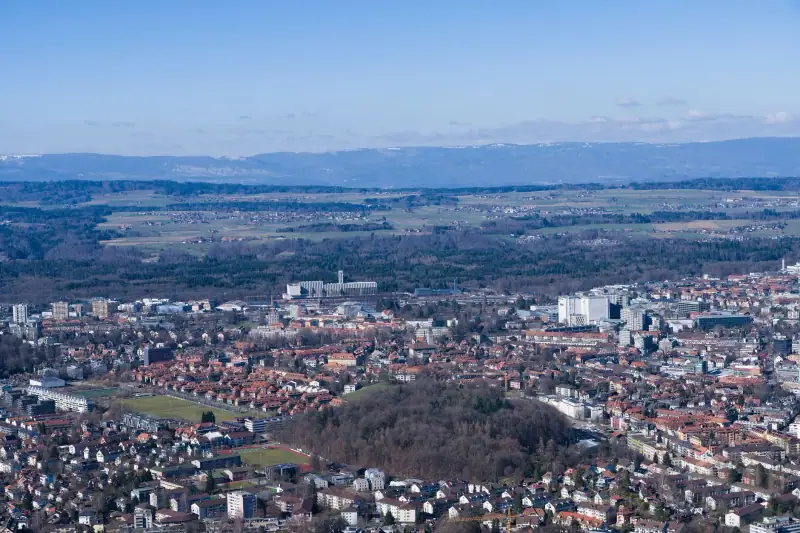
South of the city, the Gurten hill overlooks Bern. At its foot, Wabern is a residential municipality linked to the center by a tram line. It is the gateway to the Gurten funicular, which climbs in a few minutes to a large park with trails, a panoramic tower and playgrounds.
Staying on this side makes sense for families, travelers with a car and those seeking quiet. Rates are often gentler, parking is simpler than in town, and a campsite sits on the banks of the Aare in the southern part of the urban area: check its opening dates and rates before choosing it.
In exchange, you lose the old-town atmosphere and must plan on a daily tram ride to reach it. Check the last tram times if you plan to dine in town in the evening.
Wankdorf, Ostermundigen and the east: for events and tight budgets
Northeast of the center, the Wankdorf area has the city’s big football stadium and convention halls. Several chain hotels are concentrated here, designed for business travelers and event visitors. These properties are practical, functional and often cheaper than in the center outside major events; on the other hand, they offer little charm.
Farther east, the Zentrum Paul Klee is reached by bus from the center in around twenty minutes. Neighboring municipalities such as Ostermundigen also have simple accommodation for tight budgets. If you come mainly for a concert, a match or a trade fair, this area makes sense; for a classic sightseeing stay, it is less interesting.
When a big event is held in town, prices rise in every district and rooms become scarce: check the calendar before fixing your dates.
Types of accommodation in Bern
Hotels
Bern offers the whole range: boutique hotels in the old town’s historic houses, grand historic hotels, international chain properties and simpler hotels in outlying districts. The mid-range is well represented around the station and in Länggasse and Mattenhof. Rooms with a view of the Aare or the old town rooftops cost noticeably more than street-side rooms: decide whether the view is worth the extra.
Hostels and dorms
Bern has several hostels and dorm hotels, a useful way to limit the bill in a country where rooms are expensive. Some occupy old buildings in the center, others are farther out, in areas well served by public transport. Check the conditions for private rooms, sometimes offered as an extra, as well as any supplements for linen or breakfast.
Apartments and short-term rentals
For three nights or more, an apartment with a kitchen saves money on meals, which are pricey in restaurants. There are more in residential districts (Lorraine, Länggasse, Kirchenfeld) than in the old town. Read the cancellation terms, cleaning fees and arrival arrangements carefully before paying. For a one-night stopover, a hotel is often simpler.
Guesthouses and small properties
A few guesthouses and small family-run places exist in residential districts and on the heights. They offer a more personal welcome and often a generous breakfast. Check the distance to the nearest tram stop and the arrival arrangements, especially if you arrive late: some small properties have no permanent reception.
Camping
A campsite sits on the banks of the Aare, south of the urban area, an economical option for travelers with a tent, van or caravan, mainly in summer. Check opening dates and how it connects to the center before choosing. For other campsites in the area, look at the distance to public transport, which can make the difference.
When to book and which pitfalls to avoid
Bern is less saturated than Lucerne or Interlaken, but it has its peaks. From late spring to early autumn, sunny weekends and school-holiday periods push prices up. The city also hosts Parliament sessions, conventions and sporting or cultural events, which fill hotels on weekdays. In late November, the onion market (Zibelemärit) draws large crowds, and Christmas markets liven up the center in December. To choose the best period, see our article on when to go to Switzerland.
A few pointers to avoid unpleasant surprises:
- Read the cancellation terms: non-refundable rates are often lower, but risky if your plans change.
- Look at the real distance to a tram stop or the station, rather than just the distance to the center.
- Check the tourist tax, which is sometimes added to the displayed price, and what your rate includes.
- Ask for a quiet room if you sleep near a busy street or the station surroundings.
- Check accessibility: old buildings in the old town do not always have an elevator, which matters with heavy luggage.
- Beware of Sundays: most shops are closed, so plan your groceries the day before if you rent an apartment.
To estimate all your spending, from accommodation to meals, read our article on the budget for a trip to Switzerland.
Cutting the bill without sacrificing the stay
Bern is not a cheap destination, but a few habits help keep the budget in check:
- Sleep a few tram stops away: a hotel outside the very center is often much cheaper, and only a few minutes away.
- Eat breakfast elsewhere: the hotel often charges a lot for it. A neighborhood bakery is a cheaper alternative.
- Choose a room with a kitchenette if you stay several nights.
- Travel on weekdays or off-season, when rates are lower. Beware of convention weeks, though.
- Enjoy the free activities: arcades, fountains, Bear Park, rose garden, banks of the Aare.
- Compare several districts and several dates before booking.
Many of Bern’s pleasures are free: strolling under the arcades, walking along the Aare, climbing to the rose garden for the panorama. If you want to treat yourself to a guided visit, compare the guided tours and excursions on offer.
Bern as a base for day trips
Bern is a sensible base for anyone who likes trains. The station frequently links the country’s major cities: Zurich and Lucerne are about an hour away by train, Interlaken in an hour or less, and Lausanne or Geneva one to two hours. Check exact travel times on the Swiss Federal Railways app on the day.
Sleeping in Bern has another advantage: accommodation is often easier to find than in the Oberland in high season. Some travelers therefore settle in and reach the mountains on day trips, notably for the Jungfrau region (see our guide visiting Interlaken). Depending on your plans, compare with bases closer to the peaks, such as Lucerne or Zurich, described in our article where to stay in Zurich.
If you make many journeys, look at what the Swiss Travel Pass covers before buying single tickets. For a stay limited to the city, local public transport is enough, and a car is more of a handicap. It can be useful if you then continue off the main rail routes.
🚗 Rent a car in Switzerland: useful only if you continue off the main rail routes. For a stay in Bern itself, public transport is enough. Compare rental companies.
Which neighborhood for your profile?
For a first stay and a short weekend, the old town and its surroundings remain the simplest choice. For a stopover by train, the station area is unbeatable. To save money without going far, Länggasse and Mattenhof are good compromises. For quiet and walks, Kirchenfeld is a safe bet. To experience Bern like a resident, turn to Lorraine or Breitenrain. For families, travelers with a car and lovers of greenery, Wabern and the Gurten have their strengths. And for an event at the Wankdorf, a hotel in the area avoids long trips in the evening.
In every case, the network of trams, buses and trains makes each district an easy starting point: do not focus on the distance to the center, but on the proximity of a stop, the quality of recent reviews and how well the place fits your travel dates.
🏨 A quieter stay near the station: residential districts, mid-range hotels and apartments, compare Bern's accommodation for your dates.
In short
Old town: charm and walking, high rates. Station: practical for trains and excursions. Länggasse and Mattenhof: lively and more affordable. Kirchenfeld: quiet and elegant, near the museums. Lorraine and Breitenrain: neighborhood feel and alternative spirit. Marzili and the banks of the Aare: greenery and summer swimming. Wabern and the Gurten: quiet, families and car. Book early in summer and during events, compare dates and keep an eye on cancellation terms. With the right accommodation, Bern is an easy city to enjoy, rewarding walkers and anyone who simply likes watching the Aare flow by.
Frequently asked questions
What is the best neighborhood to stay in Bern?
For a first stay, the old town and its immediate surroundings are the best choice: arcades, fountains, the Zytglogge and the Münster are all on foot. The station area, on the edge of the historic center, is the most practical if you are linking train journeys.
Is accommodation in Bern expensive?
Bern is still a Swiss city, so it is expensive, but lodging is generally a little easier to find than in Zurich or Geneva. Rates vary a lot with dates, Parliament sessions and events: compare several days before you book.
Should you stay in the center or on the outskirts?
The center suits short stays and travelers without a car. A residential district such as Länggasse, Kirchenfeld or Lorraine often costs less, and is only a few minutes away on foot or by tram and bus.
How many nights should you plan in Bern?
One night is enough to see the essentials of the old town. With two nights, you add a museum, the Gurten and the banks of the Aare. If you use Bern as a base for train excursions, three nights or more are possible.
Is Bern a good base for exploring Switzerland?
Yes: the station is a major rail hub, with frequent connections to Zurich, Lucerne, Interlaken, Lausanne and Geneva. Check travel times on the Swiss Federal Railways app for your dates.
Do you need a car to stay in Bern?
No. The center is pedestrian and the tram and bus network is dense. If you arrive by car, check that your accommodation has parking or a solution nearby, because parking in the city is limited and paid.
When should you book accommodation in Bern?
A few weeks ahead is generally enough off-season. In summer, during major events and Parliament sessions, book earlier: rooms in the center go first.
Is there budget accommodation in Bern?
Yes: hostels, dorm hotels, simple rooms on the outskirts and campsites on the banks of the Aare in summer. Sleeping a few tram stops from the old town often lowers the bill.
More Switzerland guides
Keep reading
Where to stay in Interlaken: neighborhoods and types of accommodation
Interlaken West, Ost, Unterseen, Matten or nearby villages: compare Interlaken's areas, types of accommodation and tips for choosing well.
Where to stay in Lucerne: neighborhoods and types of accommodation
Old town, station, Hirschmatt, Tribschen or lake villages: compare Lucerne's neighborhoods, types of accommodation and tips for choosing well.
Where to stay in Geneva: neighborhoods and types of accommodation
Pâquis, Carouge, Plainpalais, Old Town or Eaux-Vives: compare Geneva's neighborhoods, types of accommodation and tips for cutting the bill.
Ready-made
Switzerland itineraries
Glacier Express and panoramic trains in winter: routes, prices and reservations
Glacier Express, Bernina Express and GoldenPass in winter: 2026-2027 running dates, reservation prices, recommended routes and tips for seeing the snow.
Glacier Express or Bernina Express: which panoramic train should you choose?
Glacier Express or Bernina Express: duration, scenery, reservations and passes. Compare Switzerland's two panoramic trains and pick the one for your trip.
7 days
7-day Switzerland itinerary by train: Lucerne, Interlaken, Zermatt and Lake Geneva
LucerneInterlakenZermattLausanne