What to see
Visiting Bern: what to see and do in 1 to 2 days
We may earn a commission when you book through links on this page, at no extra cost to you. We don't visit or try the places we cover: we summarize published sources. How we work
In short
- One day covers the old town, arcades, Bear Park and the Aare banks; two days add a museum (Einstein or Paul Klee), the rose garden and the Gurten.
- Officially Switzerland has no capital: Bern is the "federal city," seat of the government and Parliament.
- The Aare is fast and cold: check locally where swimming is allowed, and never swim during high water.
- Many sights are free (arcades, fountains, Bear Park, rose garden, Aare banks); the center is walkable and a car is more of a handicap.
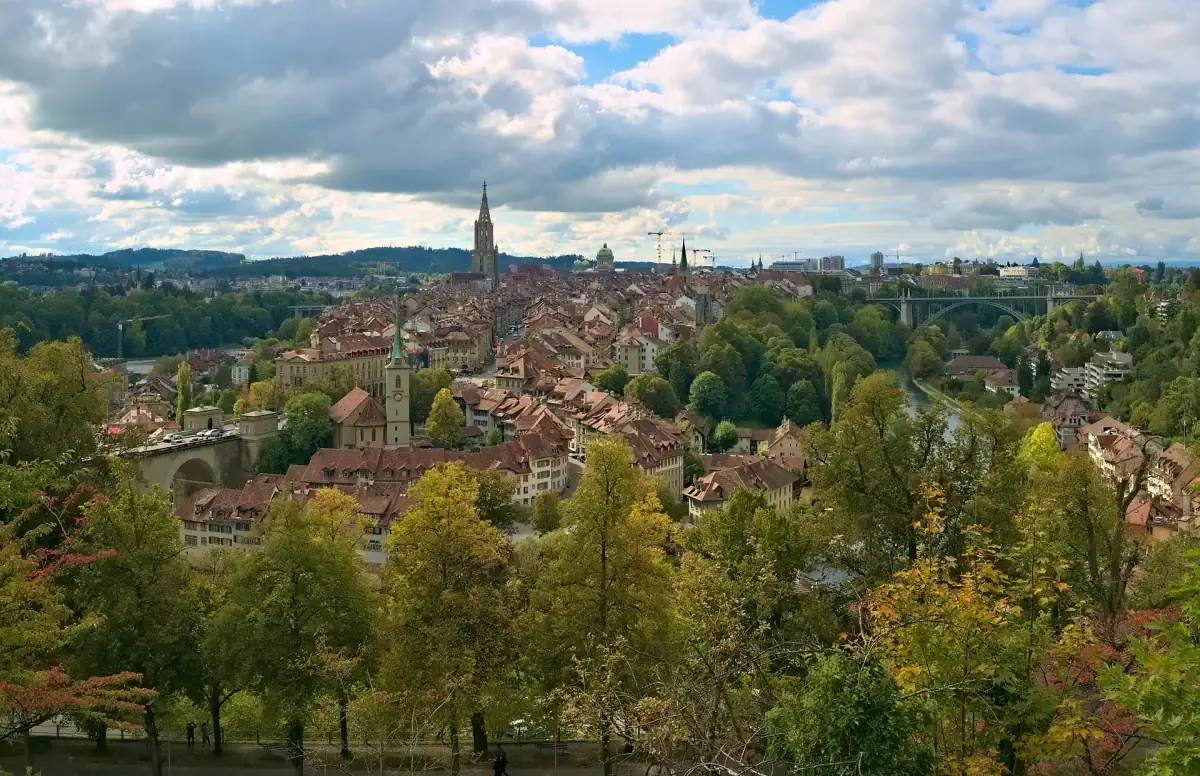
Bern is often the forgotten stop on Swiss itineraries. Travelers cross it by train between Zurich, Geneva and the Oberland, without always stopping. That is a pity: its medieval old town, nestled in a loop of the Aare, is among the best preserved in Europe and is a UNESCO World Heritage site. You stroll under kilometers of arcades, among colorful fountains and clock towers, at a pace of life far more peaceful than in the country’s big cities.
This guide helps you decide what to see, how to organize one or two days and how to get around. To place Bern in a wider trip, see our complete guide to Switzerland. If you are hesitating with another big city, our article on visiting Zurich offers a useful counterpoint.
Bern at a glance: what to expect
Bern is the “federal city”: it houses the government and Parliament, but Switzerland officially has no capital. The city is modest in size, smaller than Zurich, Geneva or Basel, and its historic center fits on a narrow peninsula surrounded by the Aare, which draws a large meander there. The bridges that span it offer fine views of the rooftops and the river.
People speak German here, or more precisely the Bernese dialect, known for its slow rhythm. English is widespread, and French is understood in most shops: Bern lies near the language border and the city is officially bilingual within its canton. In atmosphere, it is a quiet, university and administrative city, where you meet as many civil servants as students and where evenings are calm outside the weekend.
The old town: arcades, fountains and sandstone houses
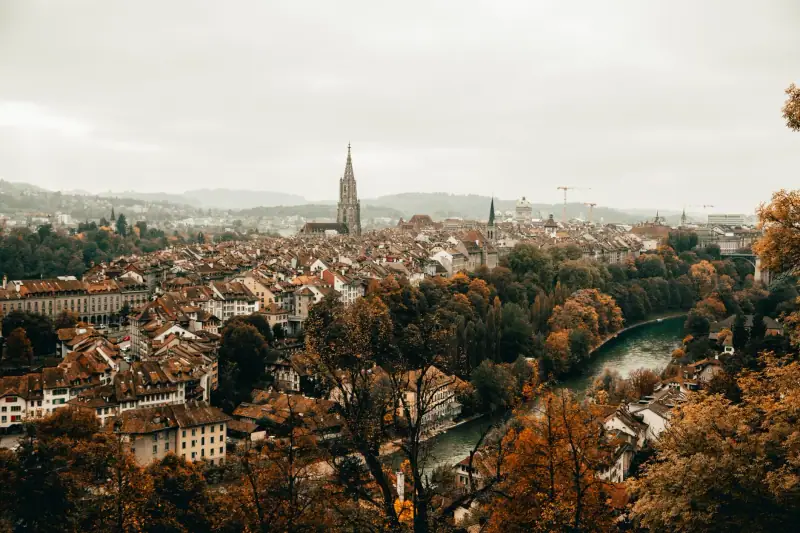
Bern’s old town is the heart of the visit. Its light sandstone facades, red roofs and long, straight streets give it a rare visual unity. The main axis, which crosses the peninsula from end to end, changes name along the way: Marktgasse, Kramgasse and Gerechtigkeitsgasse follow one another, lined with shops, cafés and galleries.
What strikes you immediately are the arcades, the “Lauben.” These covered galleries run along the facades for kilometers, making it one of the longest covered shopping areas in Europe. They let you shop sheltered from rain, snow or sun, and house shops, bookstores, craft workshops and stairs descending to cellars converted into bars or small theaters.
The fountains are the city’s other signature. Several dozen monumental fountains, often topped with statues painted in bright colors, line the streets. Some depict figures from Bernese history, others more surprising characters, such as an ogre devouring children. Take the time to look at them: they also serve as landmarks for finding your way.
A few practical tips:
- Walk the old town lengthwise, then come back along a parallel street to vary the perspectives.
- Look up, and also look at the wrought-iron signs and facade details.
- Shops generally close in the early evening, and most stay closed on Sunday: plan your purchases accordingly.
- Wear good shoes: some streets are cobbled and the center has slopes.
The Clock Tower (Zytglogge)
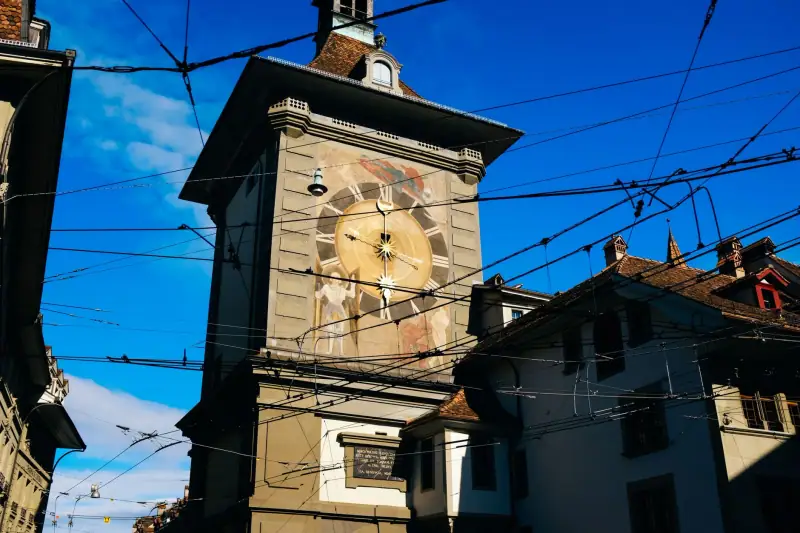
The Zytglogge, the Clock Tower, is Bern’s most photographed monument. This former city gate, reworked over the centuries, carries an astronomical clock from the late Middle Ages. It shows the time, but also the date, the phases of the moon and the position of the zodiac signs.
The show takes place a few minutes before each full hour: small animated figures start moving, accompanied by a rooster and a procession of bears, before the bell rings. Many visitors expect a big show, and the scene is actually brief and modest. It remains charming, and the atmosphere in the street, when everyone looks up at the same time, is part of the moment.
Guided tours let you discover the mechanism from the inside. Check the hours and rates with the tourist office, since they vary by season and not every tour language is always offered.
The Münster and its tower
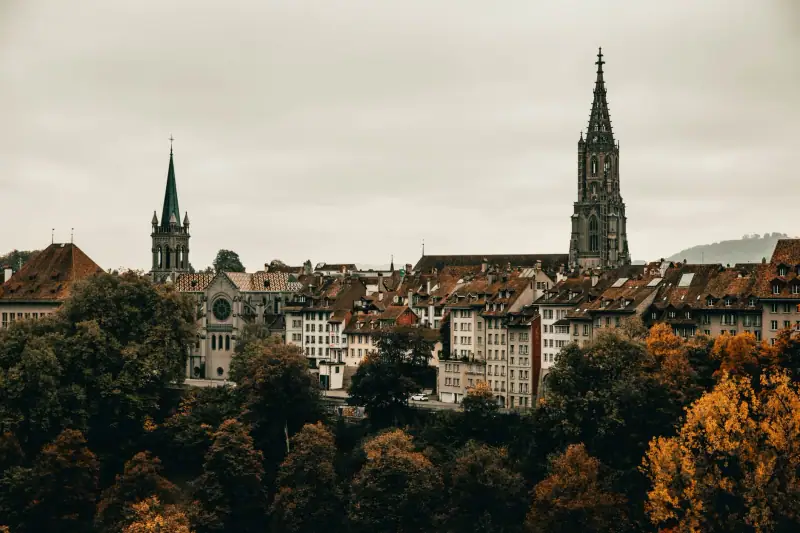
The Münster, Bern’s Gothic cathedral, dominates the peninsula near the Aare. Its construction began in the late Middle Ages and spread over several centuries. Its spire, about 100 meters (328 ft), is the tallest of any church in Switzerland.
Do not miss the main portal, decorated with a large sculpted Last Judgment, with its many figures in colored stone: it is one of the most remarkable Gothic ensembles in the country. Inside, the atmosphere is sober, in keeping with the spirit of the Reformation, which deeply marked the city.
Climbing the tower is a popular activity for those who do not fear narrow stairs. In return, the view over the rooftops, the meanders of the Aare and, in clear weather, the Alps in the distance, is superb. Check the hours and access conditions before coming: the climb may close in bad weather or for works.
Next to the Münster, the terrace bordering the church offers a pleasant break, with a fine panorama of the river below.
The Bear Pit and the Bear Park
The bear is Bern’s emblem: the city’s name is even said to be linked to the animal, which appears on the city’s coat of arms. For centuries, the city kept bears in narrow pits. Today, they live in the Bärenpark, a large sloping enclosure laid out on the banks of the Aare, near the old town, with free access.
The park gives the animals much more space, with wooded areas and access to the river. The visit is free and made from observation platforms. Bears remain wild animals: there is no guarantee you will see them moving about, but they often let themselves be watched.
To complete the visit, climb back up the path that leads to the rose garden.
The rose garden (Rosengarten) and the best viewpoint
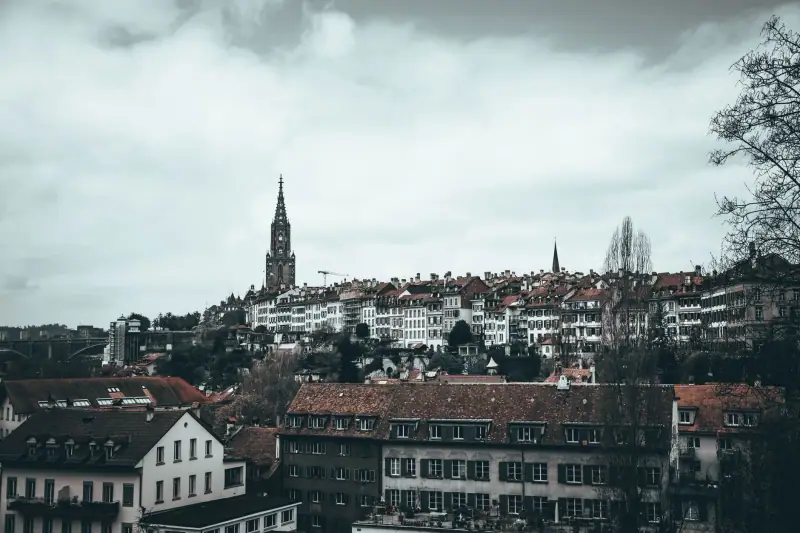
Above the Bärenpark, the rose garden is a landscaped park that offers one of the finest panoramas over the old town. From the terrace, you see the whole peninsula, the loop of the Aare, the sandstone roofs and the spire of the Münster. It is an excellent place to photograph the city, especially at the end of the day, when the light warms up.
The park has many varieties of roses, which bloom mostly in the good season, as well as irises and rhododendrons. A café-restaurant there offers a place for a break, and the whole is free for strolling. In autumn and winter, the view remains beautiful, even if the park is less in bloom.
🏨 Where to stay in Bern: the station area and the city center let you do everything on foot, and rooms are generally easier to find than in Zurich or Geneva. Compare hotels for your dates, especially in high season and during events.
The Aare: swimming, floating and walks
The Aare is Bern’s great summer asset. As soon as the first warm days arrive, residents gather there after work. Some swim, others let the current carry them for several hundred meters before getting out at an access point, a widespread local ritual. The color of the water, a glacier green-blue, surprises visitors.
The river is fast and cold, even in midsummer, and the current can be strong. An inexperienced swimmer should not venture in without precautions: respect the signs, spot the exit points before entering the water, and avoid any swimming after heavy rain or during high water. If you prefer to stay dry, the banks are laid out for walks, with benches, seasonal snack bars and lawns for picnics.
The Marzili district, at the foot of the Federal Palace, has open-air baths and a green corner much appreciated by residents. It is a good place to cool off or simply watch local life. Check the opening dates and rates locally.
The Federal Palace and Bundesplatz
The Federal Palace, the Bundeshaus, houses Parliament and part of the Swiss government. Its domed neo-Renaissance building is easy to spot, overlooking the Aare. The square in front, the Bundesplatz, hosts a market twice a week and serves as a gathering place.
Guided tours of the building are offered under certain conditions, notably outside parliamentary sessions. They generally require a reservation and ID: ask the organizers before planning your visit. Even if you do not visit the inside, a pause on the square and the neighboring terrace lets you enjoy the view of the river and the atmosphere of the city.
Albert Einstein in Bern
Albert Einstein lived in Bern in the early 20th century, while working at the patent office. It was in this city that he formulated several of his major theories in 1905. In the old town, the house where he lived is open to the public as a small museum.
The Einstein Museum, housed in the Bern Historical Museum, traces his life and work in an educational way, with documents, objects and reconstructions. It is an interesting visit, even if you are not a physics buff. Check the hours and closing days, often Monday for the city’s museums.
The Zentrum Paul Klee
The Zentrum Paul Klee, east of the center, holds a very large collection of works by the painter Paul Klee, who grew up in Bern. The building, designed by Renzo Piano, consists of three waves of metal and glass that follow the hills. It stands out even from the outside, and is worth the trip for modern art lovers.
You reach it by bus from the center in around twenty minutes. Exhibitions change regularly, and the center also offers workshops for children. Check the hours, program and rates on the official site before traveling.
Other museums and places to discover
Bern has many museums for its size, which is a good option on rainy days. Depending on your interests:
- The Kunstmuseum (fine arts museum) presents collections from the Middle Ages to contemporary art, with an important place for Swiss art.
- The Bern Historical Museum covers the history of the city and the region, and also hosts the Einstein exhibition.
- The Natural History Museum charms families with its animal dioramas.
- The Museum of Communication offers a playful approach to media and technology.
Hours and closing days vary. Always check the official sites before you go.
The Gurten: Bern’s hill
To gain height cheaply, go up the Gurten, the hill that overlooks the city to the south. A funicular leaves from a residential district reached by tram and gets to the top in a few minutes. Up there, a large park, walking trails, a panoramic tower and a restaurant offer a wide view of the city and, in clear weather, of the Bernese Alps.
It is an excellent plan for half a day, particularly with children, thanks to the playgrounds. Bring warm clothes outside summer: it is often cooler at the top than in town.
What to do in one or two days
If you have only one day
Start with the Marktgasse and Kramgasse, stop in front of the Zytglogge before the full hour, then go up to the Münster. Have lunch in the old town, go down to the Bärenpark and climb back up to the rose garden for the panorama. Finish with a walk along the Aare.
If you have two days
Keep the first day for the old town. The next day, visit the Zentrum Paul Klee or the Einstein Museum in the morning, then go up the Gurten or enjoy swimming and the banks of the Aare in summer. It is the ideal format for a quiet weekend.
Excursions from Bern
Bern is very well placed. Interlaken is reached by train in an hour or less, and our guide to visiting Interlaken will help you plan the next step, notably if you continue to the Jungfrau region. Zurich and Lucerne are about an hour by train, and Lausanne or Geneva are reached in one to two hours. Check exact travel times on the Swiss Federal Railways app on the day.
🎟️ Tours and excursions from Bern: guided tours of the old town, day trips to the Oberland, cheese or chocolate tastings. Compare the offers you can book in advance.
Where to eat in Bern
Bern offers classic Swiss cuisine, with traditional restaurants in the vaulted cellars of the old town. The typical dishes are those of all German-speaking Switzerland: rösti, sausages, fondue, raclette, as well as meat specialties. For an overview, see our article on Swiss specialties.
Among local events, the Zibelemärit, the onion market, takes place in late November. It is a popular festival much loved by Bernese, with onion braids, onion tarts and crowds in the streets from the morning. If you visit at that time, plan to come early.
To limit the budget, have lunch with a daily menu rather than ordering à la carte in the evening, and buy food for a picnic on the banks of the Aare. The markets on the Bundesplatz are also a good way to taste local products. Finally, consider reading our article on tipping in restaurants in Switzerland.
Getting around Bern
The center is best explored on foot. For the more distant districts, the tram and bus network is dense and punctual. The Zentrum Paul Klee and the Gurten are easily reached by public transport.
Bern station is one of the country’s biggest rail hubs, with frequent trains to all the major cities. It is a practical starting point for a train trip: if you link several stops, look at what the Swiss Travel Pass covers before buying single tickets. For a ready-made route, our 7-day itinerary by train passes through the country’s main stops.
You do not need a car for an urban stay. If you then plan a trip to a area with limited public transport, you can compare rental companies.
🚗 Rent a car in Switzerland: useful only if you continue off the main rail routes. For a stay in Bern itself, public transport is enough. Compare rental companies.
When to go and what to budget
The best time to visit Bern runs from May to September: the Aare, the terraces and the rose garden are then at their best. Autumn offers beautiful light, and December brings its Christmas markets, set up in the center. Since the arcades shelter you from rain, the city stays pleasant all year. To compare seasons across the country, see our article on the best time to go to Switzerland.
On budget, Bern remains a Swiss city, so expensive, but lodging is often a little more affordable than in Zurich or Geneva. To lighten spending:
- Plan on free activities: arcades, fountains, Bärenpark, rose garden, Aare banks.
- Fill your bottle at the fountains: the water is generally drinkable, unless otherwise indicated.
- Have lunch with a daily menu rather than ordering à la carte in the evening.
- Compare accommodation a little outside the center, well linked by tram or bus.
For an overview of spending, read our budget for a trip to Switzerland. If you are unsure which region to sleep in, our guide where to stay in Switzerland will help you compare.
Mistakes to avoid
A few pitfalls come up often among visitors:
- Stopping only for a connection: the station and the old town are very close, and even two hours let you see the essentials of the center.
- Expecting a big show at the Zytglogge: the scene is brief, come before the full hour to get a good spot.
- Underestimating the Aare: the current is fast and the water cold, do not swim without precautions.
- Neglecting closing times: museums are often closed on Monday and shops on Sunday.
- Forgetting the rose garden: it is the city’s best viewpoint and it is free.
In short
Bern is very well visited in one or two days, on foot, among arcades, fountains and the banks of the Aare. It does not offer the spectacular grandeur of an alpine peak, but it provides a peaceful, authentic pause that is easy to combine with the rest of a trip to Switzerland. Keep a day for it, book a hotel near the station, and leave room for improvisation: a coffee under the arcades, a sunset from the rose garden or a dip in the Aare is often enough to convince hurried travelers to come back.
Frequently asked questions
How long do you need to visit Bern?
One day is enough for the old town, the arcades, the Bear Park and the banks of the Aare. With two days, you add a museum (Einstein or Paul Klee), the rose garden, the Gurten and, in summer, a swim or a float down the Aare.
Is Bern the capital of Switzerland?
Officially, Switzerland has no capital: Bern is the "federal city," seat of the government and Parliament. In everyday usage, it is presented as the country's capital.
Is Bern worth the detour?
Yes, especially for its UNESCO-listed medieval center, very well preserved, and its relaxed atmosphere, far calmer than Zurich or Geneva. It combines easily with Interlaken, Lucerne or Lake Geneva.
Can you swim in the Aare in Bern?
Yes, in summer, locals swim and let the current carry them. The river is fast and cold: find out locally about the permitted areas, the state of the current and the safety guidelines before getting in. Do not do it during high water.
Do you need a car to visit Bern?
No. The center is pedestrian and walkable, trams and buses cover the rest, and the station is one of the country's major rail hubs. A car is mostly a handicap in town because of parking.
What is the best time to visit Bern?
May to September for the terraces and the Aare. The arcades shelter you from rain all year, which makes the city pleasant even in bad weather. In late November, the onion market (Zibelemärit) is a very local event.
Is Bern an expensive city?
Like the rest of Switzerland, it is expensive, but generally a little less than Zurich or Geneva for accommodation. Many things to see are free: arcades, fountains, the Aare banks, the rose garden and viewpoints.
More Switzerland guides
Keep reading
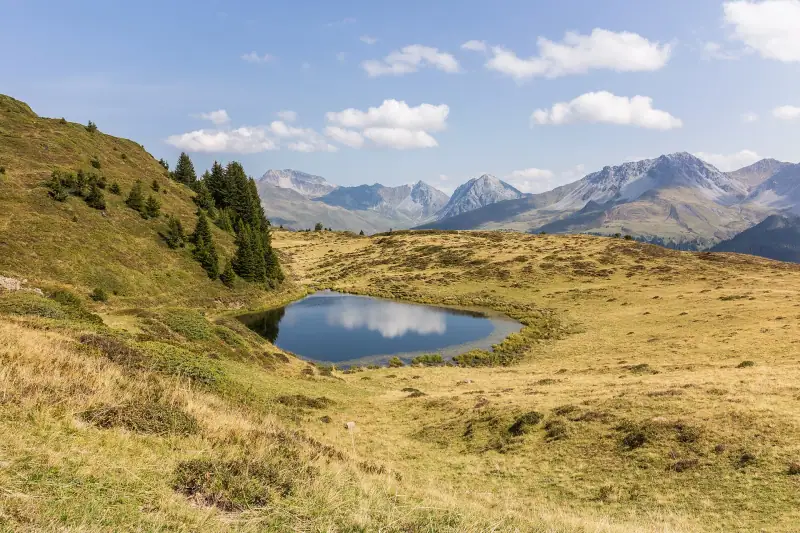
What to see in Graubünden: Chur, the Engadine, the National Park and UNESCO trains
What to see in Graubünden: Chur, Rhine Gorge, Flims, Engadine, St. Moritz, Swiss National Park, Müstair and UNESCO trains. Itineraries and practical tips.
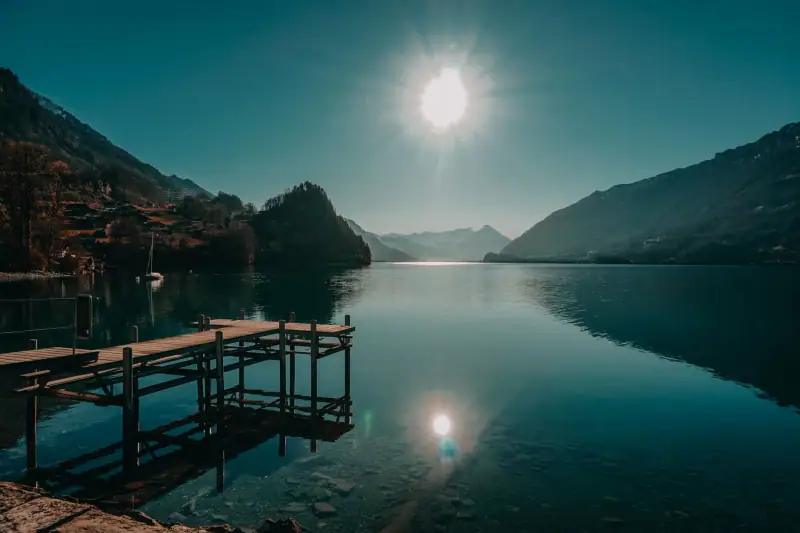
Visiting Interlaken: what to see and do between Lake Thun and Lake Brienz
Interlaken in 1 to 3 days: Harder Kulm, Höhematte, boats on both lakes, caves, paragliding and excursions. Tips to plan your stay and avoid pitfalls.
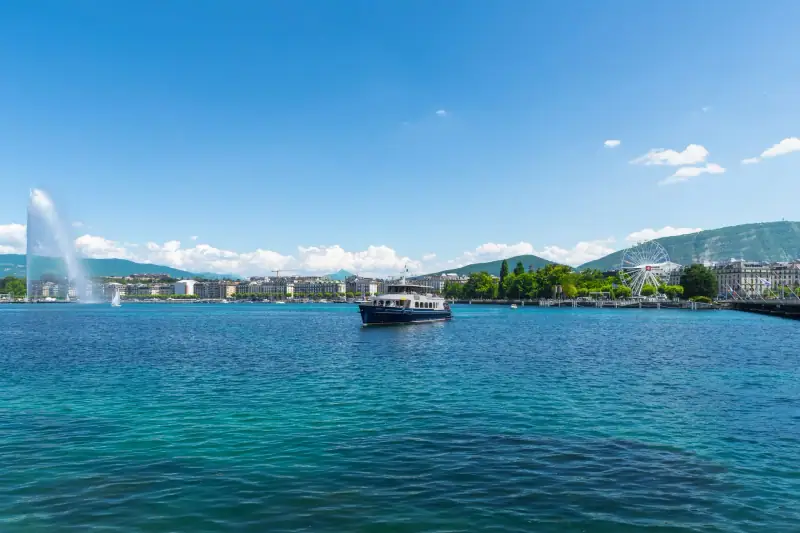
Visiting Geneva, Lausanne and Lavaux: a stay on Lake Geneva
Geneva, Lausanne and the Lavaux vineyards: what to see, how to get around by train and boat, how many days to plan. A guide to a stay on Lake Geneva.
Ready-made
Switzerland itineraries
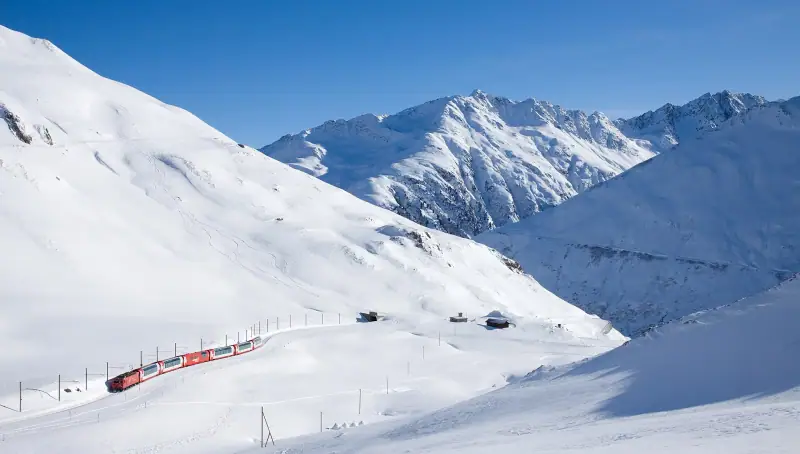
Glacier Express and panoramic trains in winter: routes, prices and reservations
Glacier Express, Bernina Express and GoldenPass in winter: 2026-2027 running dates, reservation prices, recommended routes and tips for seeing the snow.
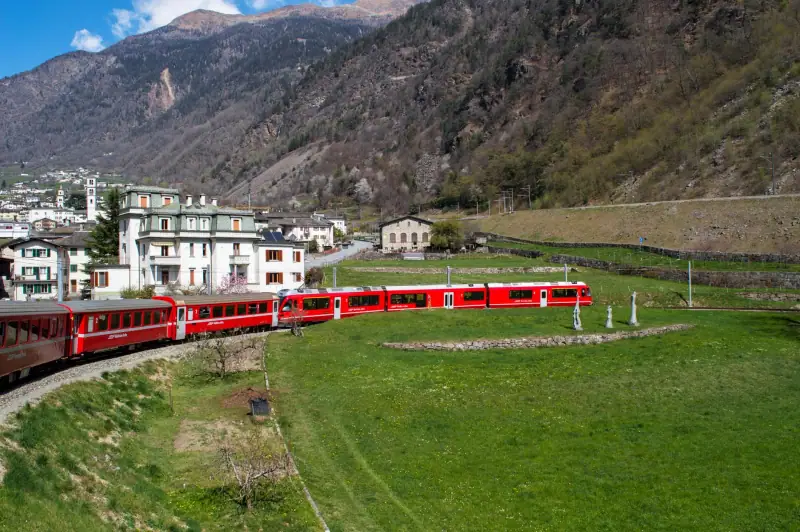
Glacier Express or Bernina Express: which panoramic train should you choose?
Glacier Express or Bernina Express: duration, scenery, reservations and passes. Compare Switzerland's two panoramic trains and pick the one for your trip.
7 days
7-day Switzerland itinerary by train: Lucerne, Interlaken, Zermatt and Lake Geneva
LucerneInterlakenZermattLausanne