Where to stay
Where to stay in Geneva: neighborhoods and types of accommodation
We may earn a commission when you book through links on this page, at no extra cost to you. We don't visit or try the places we cover: we summarize published sources. How we work
In short
- Pâquis is the best compromise for a first stay: next to Cornavin station and the lake, with a wide choice of hotels and hostels.
- Geneva is one of Switzerland's most expensive cities, especially during international conferences and trade fairs: book early and avoid those periods.
- Guests of Geneva hotels, hostels and campsites receive the Geneva Transport Card, free public transport during the stay.
- Two nights cover the essentials; three or four nights make Geneva a base for Lausanne and Lavaux by train.
Geneva is a compact city, but the choice of neighborhood really changes the experience: waking up facing the lake, an evening in the lanes of an Italian-style town, or a practical night steps from the station. It is also expensive: an international metropolis, home to many organizations and a congress venue, it has some of the highest accommodation rates in Switzerland. Choosing your neighborhood and type of lodging well is therefore the first lever for controlling your budget.
This guide goes through Geneva’s neighborhoods, from the most practical to the most charming, then the types of accommodation (hotels, hostels, apartments, campsites), the periods to avoid and the tips that make a difference. Prices change from one season to the next: check them for your dates. To compare Geneva with the country’s other bases, see our guide where to stay in Switzerland.
How Geneva is laid out
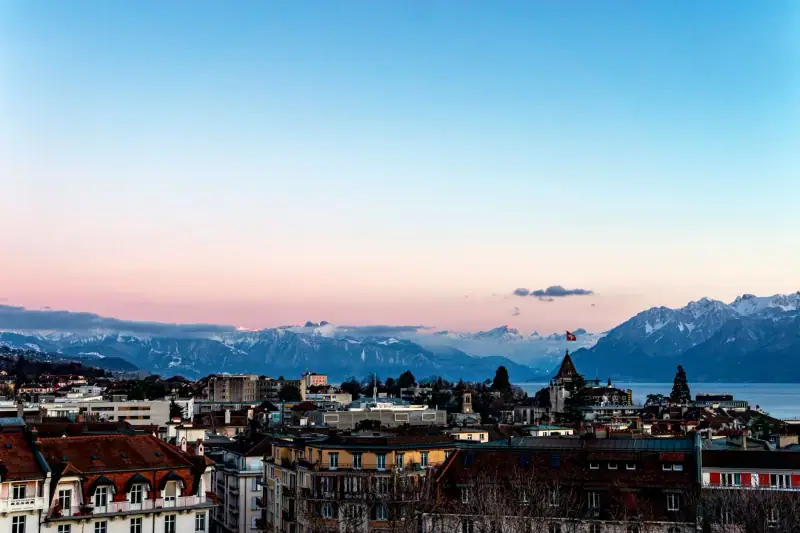
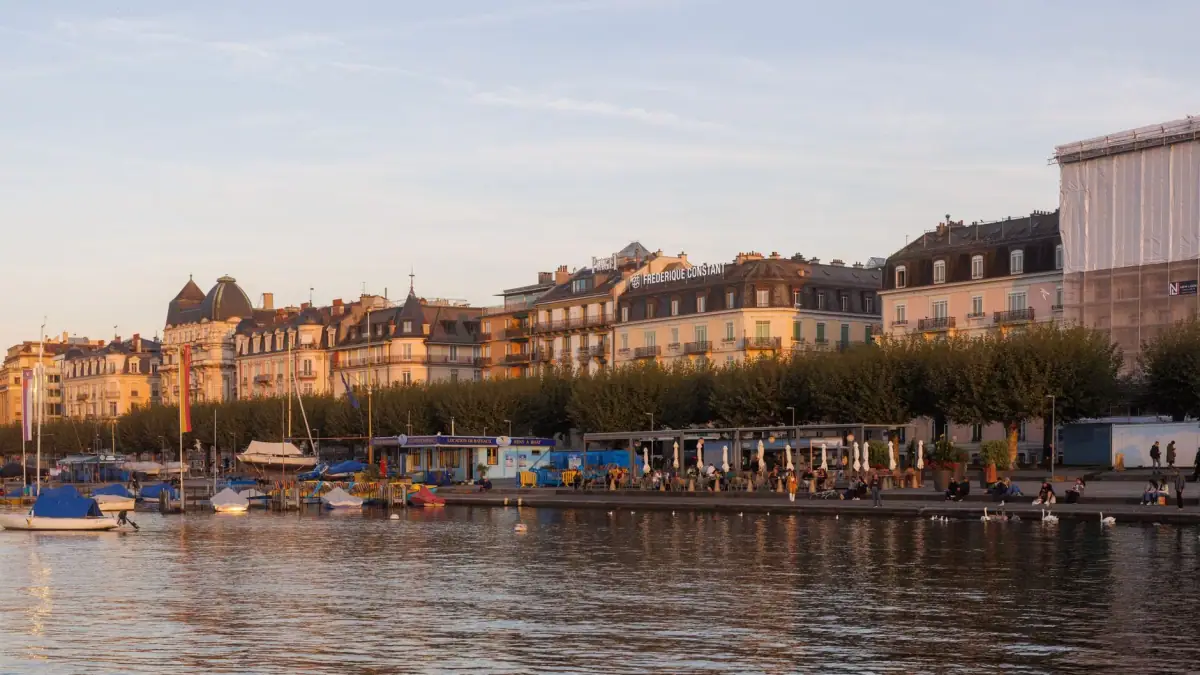
Geneva stretches around the southwest tip of Lake Geneva, where the Rhône leaves the lake. The city is split in two by the harbor and the river: the right bank, to the north, has Cornavin station, the Pâquis district and the international institutions; the left bank, to the south, concentrates the Old Town, the shops, Plainpalais and Eaux-Vives. Carouge lies a little farther south, beyond the Arve.
This simple geography makes the choice easier. On the right bank, you sleep for the proximity of the station, the trains and the quays. On the left bank, you sleep for the urban atmosphere and the historic center. In both cases, the center is largely walkable, and trams, buses and the harbor boats complete the network. Trips between districts stay short: you will never lose much time, whatever you choose.
More good news: guests of Geneva accommodation providers receive a free transport card for the length of the stay (see below). Sleeping a little away from the center therefore costs almost nothing in transport.
Pâquis: the best compromise for a first stay
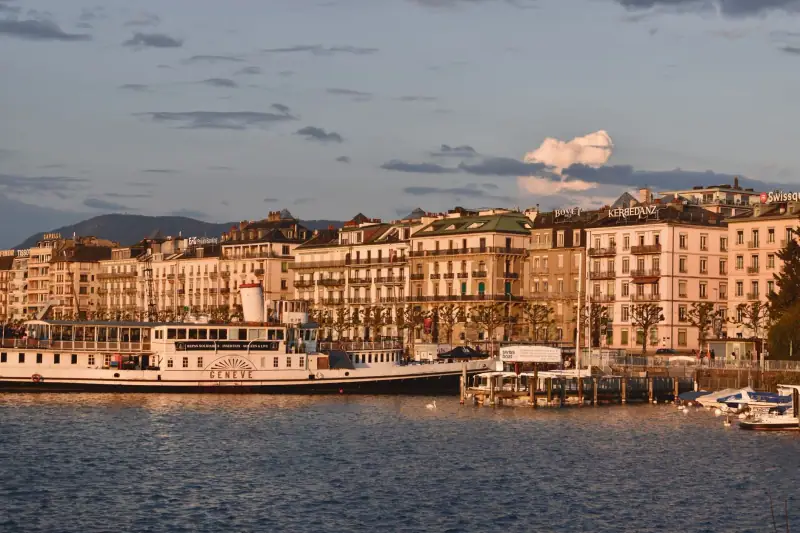
The Pâquis district stretches between Cornavin station and the lake, on the right bank. It is the most logical choice for a first stay: the station is a few minutes’ walk away, the quays and the pier are close, and you reach the historic center by crossing the Mont-Blanc bridge. It has the widest variety of accommodation, from hostels to upscale hotels, so you can match the address to almost any budget.
The atmosphere is cosmopolitan and lively: restaurants of every origin, cafés, small shops. The district is busy in the evening, and some streets near the station are noisier than others. If you are a light sleeper, ask for a room on the courtyard side or on a high floor. The quieter streets near the lake are often more pleasant than those on the station side.
Pâquis suits travelers by train, short stays, tight budgets and comfortable ones alike, and those who want to do everything on foot. It is also the most practical district for reaching the airport by train from the station, on a very short ride.
🏨 Stay in Pâquis: compare hotels and hostels near the station and the lake for your dates, before the best places fill up.
The Old Town: historic charm, not many rooms
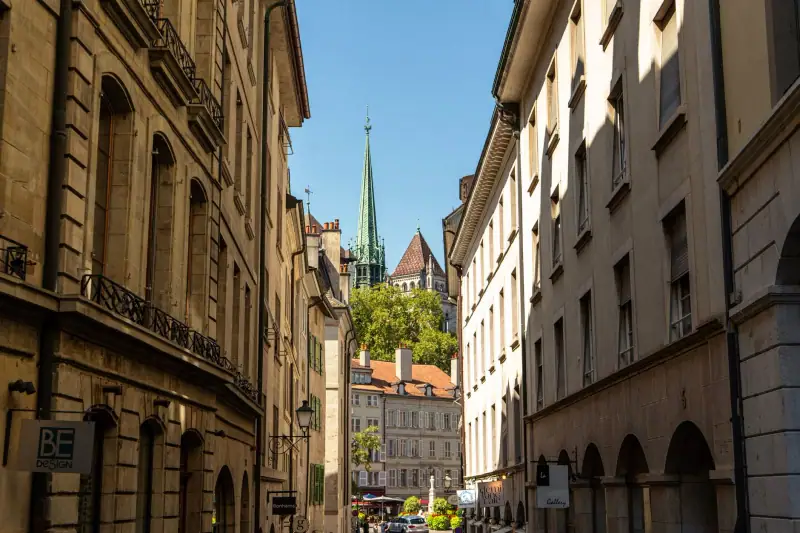
Perched on its hill on the left bank, Geneva’s Old Town is dominated by St. Peter’s Cathedral. Its cobbled lanes, squares, small shops and old houses make it the city’s historic core. Sleeping here offers a more atmospheric setting than the modern districts, with the chance to wander in the evening once the groups of visitors have gone.
The flip side: the choice of hotels is limited. Properties are few, small, often pricier than in neighboring districts, and quickly full. Old buildings sometimes mean compact rooms and few elevators. In return, you are at the center of everything, on foot.
The Old Town suits couples, travelers who put atmosphere first and those staying two or three nights. If you cannot find a reasonably priced room there, do not be discouraged: the neighboring streets are a few minutes’ walk away, and visiting it takes no special effort. For sightseeing ideas, see our guide to Geneva, Lausanne and Lavaux.
Plainpalais and downtown: local, cultural and well located
Plainpalais is a more working-class, local district, south of the historic center. It is known for its markets, cultural life and student atmosphere: you meet many Genevans and far fewer tourists. Cafés, bars and small restaurants are plentiful and generally more affordable than on the quays.
There are fewer hotels than in other districts. On the other hand, renting an apartment or a room in a local home is often more practical, especially for a stay of several nights or for a family. The district is well served by trams and buses, and downtown is reached on foot or in a few minutes.
Who is it for? Those who like living like a resident, slightly longer stays and travelers who want to leave the most touristy circuits. If you mainly want the bustle of the station and a large choice of hotels, Pâquis is simpler.
Carouge: a small-town feel, a few tram stops away
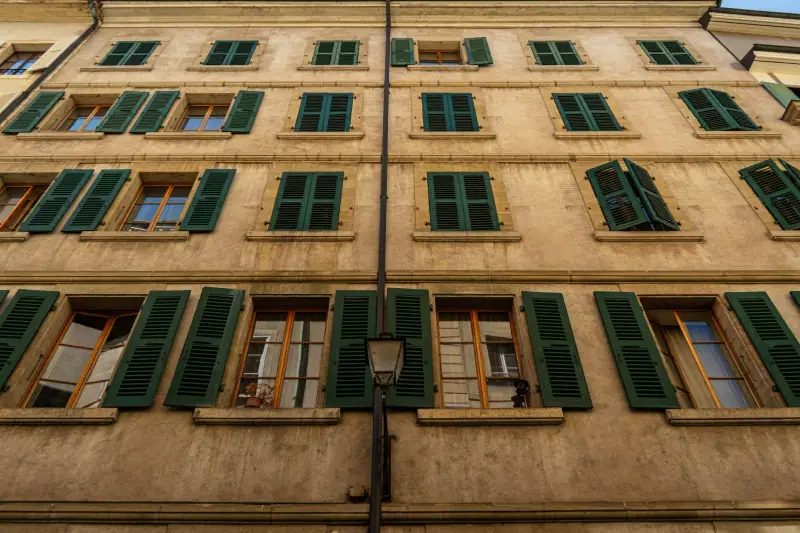
Carouge is a former new town built in the Sardinian era, with its grid of streets, inner courtyards, artisan workshops and terraces. It is attached to Geneva, but it has kept a separate identity, often described as bohemian and peaceful, a little Mediterranean in spirit. The tram takes you downtown in a few stops.
Properties here are rather small: boutique hotels, guesthouses, apartments. The evening pace is calm, far from the bustle of the station. You will like Carouge if you enjoy strolling, lunching on a terrace, visiting artisan shops, and if you prefer returning to a quiet district after a day of sightseeing.
It suits couples, travelers returning to Geneva and stays of three nights or more. If you arrive late by train, plan the ride from Cornavin station to the district (tram, day or evening): it is easy, but build it into your schedule.
Eaux-Vives: residential, close to the lake and parks
Eaux-Vives, on the left bank, borders the lake east of the center. The district is residential, lively and very pleasant: lakeside promenades, parks, cafés frequented by locals and a view of the harbor. It is quieter than Pâquis but still close to downtown, and it has its own station, served by the regional express network.
Here you sleep mostly in a mid-size hotel or an apartment. People come for the local atmosphere and the proximity of the lake, with the chance to swim in summer at the public baths and the beaches along the harbor, depending on the season. Restaurants are plentiful, with a less touristy atmosphere than the center.
Eaux-Vives suits families, couples, travelers staying several days and those who like walking by the water. On the other hand, Cornavin station is a little farther away: allow a short tram or bus ride.
🏨 Stay in Geneva: across all districts, compare hotels, apartments and guesthouses by budget and proximity to transport.
Hotels, hostels, apartments, campsites: which type of accommodation?
Neighborhoods are only part of the equation. Geneva offers every format, with large price gaps.
Hotels make up most of the lodging, heavily concentrated around the station and Pâquis, along with luxury and grand hotels on the quays. They are the simplest option for a short stay, with breakfast and a reception open late. Comfort is generally excellent, but rates are high, especially during major international events.
Hostels are the cheapest option. You find dorms, but also private rooms for two or more, with a shared kitchen in some places. They are concentrated mainly in Pâquis. They are not only for young people: many travelers of all ages stay there to save money.
Apartments and guesthouses suit stays of several nights, families and those who want to cook. In a city where eating out is expensive, a kitchenette can really lighten the bill. Watch the terms: cleaning, extra fees and tourist tax can be added.
Campsites are on the outskirts. They suit those traveling with a caravan or motorhome, or who like the outdoors, and they also entitle you to the transport card. Plan travel time to reach the center.
To compare the budget of a full stay, our article on the budget for Switzerland gives benchmarks on the cost of living.
When to book and which periods to avoid
Geneva is a congress city. Major international conferences and trade fairs fill the hotels and push prices up, sometimes sharply. The busiest periods are generally in autumn and spring. If your dates are flexible, compare several weeks: a shift of a few days can double the bill.
Another particularity: unlike mountain resorts, Geneva has no single very high tourist season. Demand is spread across the year, with a business peak on weekdays and rates often gentler on weekends in hotels that target business clients. So compare a Friday-to-Sunday stay with a weekday stay. To choose your dates, also see our guide to the best time to visit Switzerland.
Book as soon as your dates are fixed, especially if you are aiming for the Old Town or a small boutique hotel. Favor rates with free cancellation: you can adjust if your plans change.
The Geneva Transport Card and the tourist tax
Here is a good surprise for the budget: when you stay in a Geneva hotel, hostel or campsite, you receive the Geneva Transport Card free of charge, in digital form, which gives free access to public transport for the whole length of your stay. It covers buses and trams, regional trains in the relevant zone and the harbor boats, including the trip between Cornavin station and the airport. It is personal and non-transferable. Ask your accommodation provider for it on arrival and check the conditions with them.
This card changes the calculation: sleeping a little away, in Carouge, Eaux-Vives or Plainpalais, costs nothing in transport. It is partly funded by the tourist tax, a small amount per person per night that is added to your bill and whose rate varies by property. So do not be surprised to see it appear at payment.
If you continue your trip by train, our guide to the Swiss Travel Pass helps you decide whether it is worth it.
Sleeping in Geneva to explore: lake, Lausanne and mountains
Geneva is an excellent base for exploring the Swiss shore of Lake Geneva. Lausanne and Vevey are reached by train in under an hour, and Lavaux deserves a full day. A cruise on the lake, with stops in the towns along the shore, is a good way to enjoy the scenery without a car. Sleeping in Geneva three or four nights therefore lets you combine city and lake.
⛴️ Cruises and excursions on Lake Geneva: see the outings from Geneva and book ahead for the good season.
If your trip continues toward the Alps, you will probably need another base: Interlaken, Lucerne or Zermatt are reached by train from Geneva. If you prefer to sleep in Lausanne, Vevey or Lavaux for part of the stay, that is entirely possible and avoids back-and-forth trips.
A practical point: Switzerland is not in the European Union, and roaming rates for your mobile plan may differ. Check your carrier’s international plan or consider a travel eSIM before you go; see our guide to the SIM card and eSIM in Switzerland.
Tips for choosing and saving
For a first stay of two or three nights, choose Pâquis: the station, the lake and the main sights are within walking distance. For a quieter stay or a second visit, try Carouge or Eaux-Vives. For a historic setting, try your luck in the Old Town, but compare with the neighboring districts.
A few tips to lighten the bill: compare accommodation slightly out of the way (the transport card makes this choice almost free), favor stays that include a weekend when the hotel targets business clients, choose lodging with a kitchenette for a few meals and book early with free cancellation. Avoid sleeping in neighboring France only to save money, unless you are ready to handle the trips and the border: that is not the subject of this guide.
Finally, keep in mind that the best neighborhood is the one that fits your trip. A train traveler arriving late prefers the station; a couple on a weekend prefers charm; a family prefers an apartment with a kitchen. Take the time to compare rather than booking the first available hotel.
🏨 Continue to Lausanne: if you split your stay between Geneva and the lake, also compare accommodation in Lausanne.
In short: which neighborhood for which traveler?
Pâquis: first stay, short stay, small budget, arrival by train. Old Town: charm and history, limited supply. Plainpalais: local life, apartments, longer stays. Carouge: small-town feel, calm, couples. Eaux-Vives: lake, parks, families. Whatever you choose, the Geneva Transport Card makes every district an easy starting point.
Frequently asked questions
What is the best neighborhood to stay in Geneva?
Pâquis offers the best compromise for a first stay: next to Cornavin station and the lake, with a wide choice of hotels and hostels. For a quieter atmosphere, look at Carouge or Eaux-Vives.
Is Geneva an expensive city to stay in?
Yes, it is one of the most expensive cities in Switzerland, especially during major international conferences and trade fairs, which push prices up and fill the hotels. Booking early and avoiding those periods helps limit the bill.
Is public transport free for tourists who stay in Geneva?
Yes: Geneva accommodation providers (hotels, hostels, campsites) give their guests the Geneva Transport Card, which gives free access to public transport during the stay. Check when you book that your provider issues it.
Should you stay in the Old Town?
It is very picturesque, but the choice of hotels there is limited and often pricier. The neighboring districts are a few minutes away on foot or by transport and offer better value.
Can you stay in Geneva without a car?
Yes, and it is even preferable. Cornavin station, trams, buses and the lake's water taxis serve the whole city, and parking is expensive and complicated in the center.
How many nights should you plan in Geneva?
Two nights are enough to see the essentials of the city. With three or four nights, you can use it as a base for Lausanne and Lavaux, reachable by train.
Where to stay in Geneva on a small budget?
Hostels, guesthouses and the simple hotels of Pâquis are the cheapest options, along with campsites on the outskirts. Also compare accommodation slightly out of the way but well connected by transport.
More Switzerland guides
Keep reading
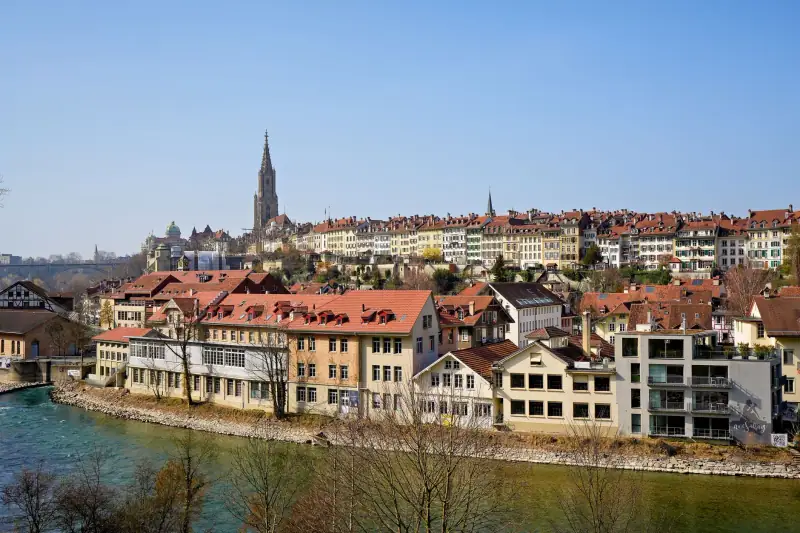
Where to stay in Bern: neighborhoods and types of accommodation
Old town, station, Länggasse, Kirchenfeld, Lorraine or Marzili: compare Bern's neighborhoods, types of accommodation and tips for choosing well.
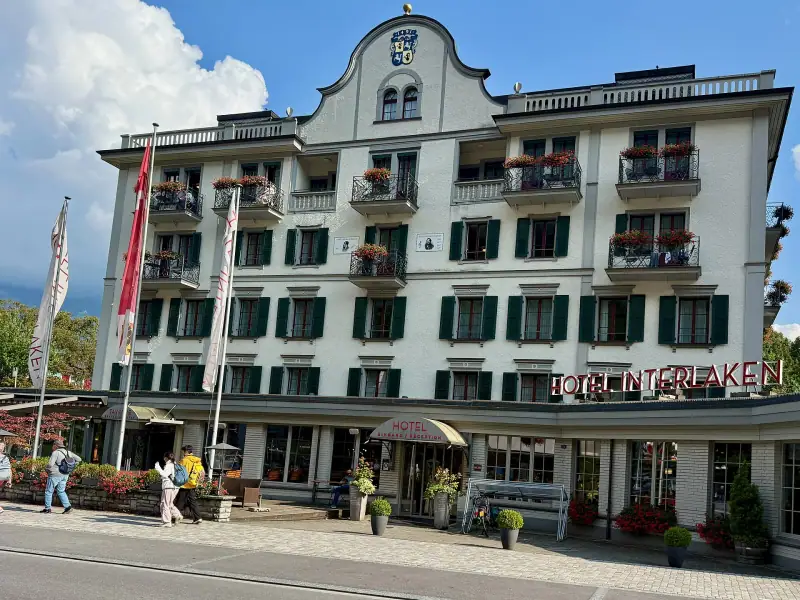
Where to stay in Interlaken: neighborhoods and types of accommodation
Interlaken West, Ost, Unterseen, Matten or nearby villages: compare Interlaken's areas, types of accommodation and tips for choosing well.
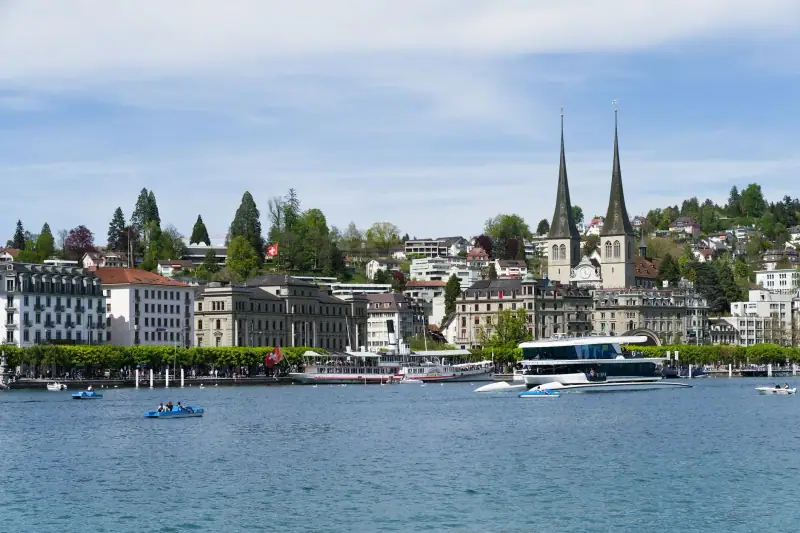
Where to stay in Lucerne: neighborhoods and types of accommodation
Old town, station, Hirschmatt, Tribschen or lake villages: compare Lucerne's neighborhoods, types of accommodation and tips for choosing well.
Ready-made
Switzerland itineraries
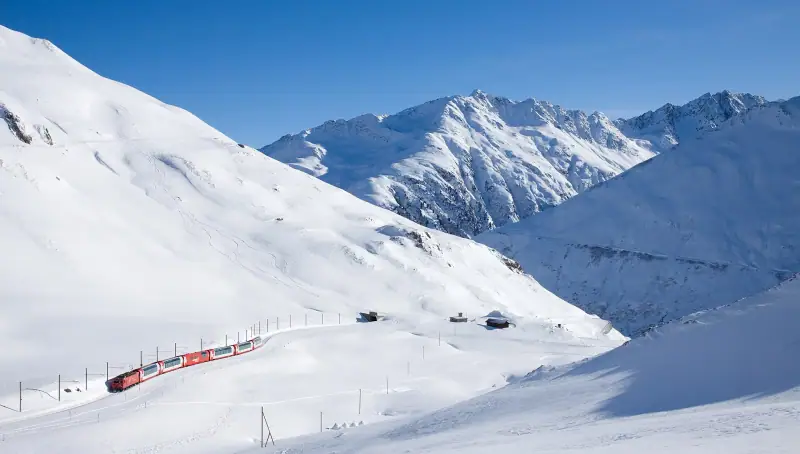
Glacier Express and panoramic trains in winter: routes, prices and reservations
Glacier Express, Bernina Express and GoldenPass in winter: 2026-2027 running dates, reservation prices, recommended routes and tips for seeing the snow.
Glacier Express or Bernina Express: which panoramic train should you choose?
Glacier Express or Bernina Express: duration, scenery, reservations and passes. Compare Switzerland's two panoramic trains and pick the one for your trip.
7 days
7-day Switzerland itinerary by train: Lucerne, Interlaken, Zermatt and Lake Geneva
LucerneInterlakenZermattLausanne