Itineraries
Glacier Express and panoramic trains in winter: routes, prices and reservations
We may earn a commission when you book through links on this page, at no extra cost to you. We don't visit or try the places we cover: we summarize published sources. How we work
In short
- According to the company, the Glacier Express runs December 5, 2026 to May 7, 2027 (about 7 h 47, Zermatt to St. Moritz), not October 11 to December 4.
- The full Zermatt to St. Moritz trip is CHF 220 in 2nd class at full fare, including CHF 54 for the mandatory seat reservation.
- Seats can be reserved up to 93 days before departure; Christmas and February holidays go first.
- The Bernina Express and the GoldenPass also run in winter: book early and check timetables for your dates.
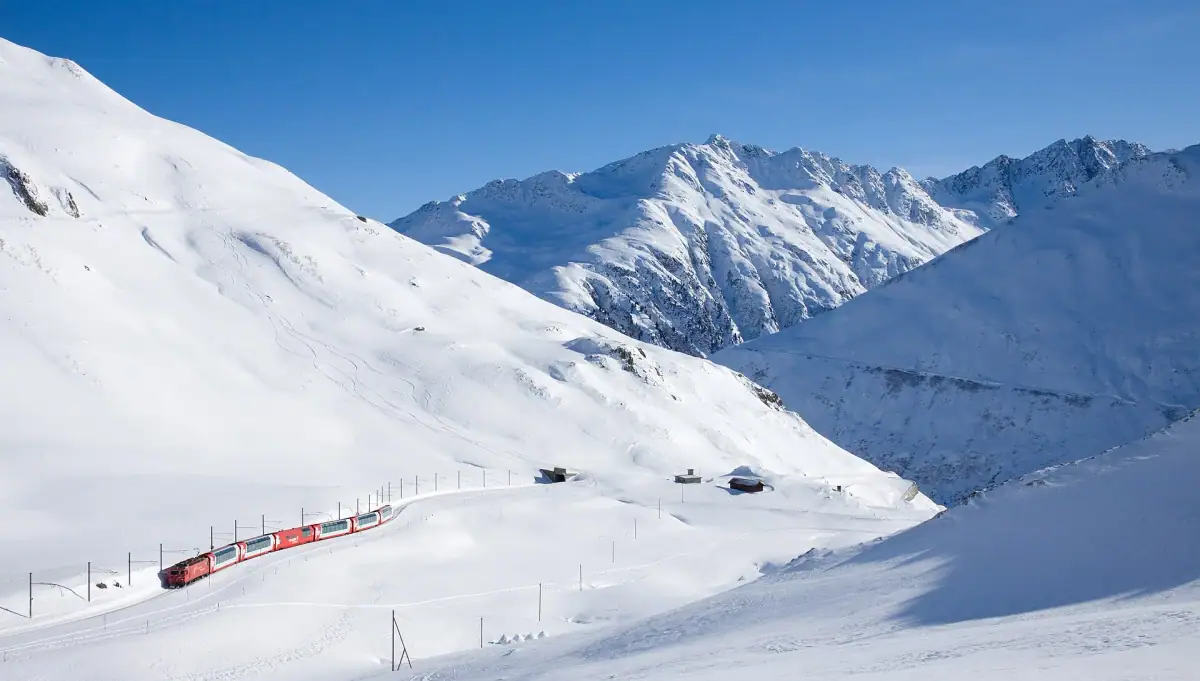
Seeing the Swiss Alps from a heated carriage, with snow covering the larches and the stone viaducts, is one of the best ways to see the country in winter. The Glacier Express, the Bernina Express and the GoldenPass line do not stop when the snow falls: they only change timetables, rhythm and sometimes running dates.
This guide focuses on winter 2026-2027: when the trains run, which routes to put together, how much the reservation costs and how to organize the day to make the most of the light. For the general choice between the two great trains, our comparison Glacier Express or Bernina Express remains the reference.
In short: according to the company, the Glacier Express runs from December 5, 2026 to May 7, 2027, in about 7 h 47 between Zermatt and St. Moritz. Expect CHF 220 in 2nd class at full fare for the full journey, including CHF 54 for the mandatory reservation. The Bernina Express and the GoldenPass also run in winter: book early and check the timetables for your dates.
Why take a panoramic train in winter
Winter changes everything in the carriages. The same tunnels and viaducts that look green in July turn white, with frozen waterfalls, villages under snow and smoking chimneys. The low light of December and January is very beautiful, and trains are generally less crowded than in midsummer, even if the Christmas and February holidays remain busy.
There is also a practical advantage: the train links ski resorts without a car. No chains to fit, no mountain-pass road conditions to check, no parking. For a stay where you ski a few days and then want to change valleys, it is a simple way to get around. Our guide to the best ski resorts in Switzerland helps choose the base, and the train does the rest.
The constraints are real, and worth knowing:
- Days are short: in December, an eight-hour trip starts in the morning light and ends almost at dusk.
- Running dates are limited: the Glacier Express stops for part of the autumn, and some departures run only in specific periods.
- Works may close a section: in spring, scheduled closures are announced.
- Ski luggage: plan to send it by post or leave it at the hotel if you make the trip in one day.
Glacier Express in winter: dates, times and route
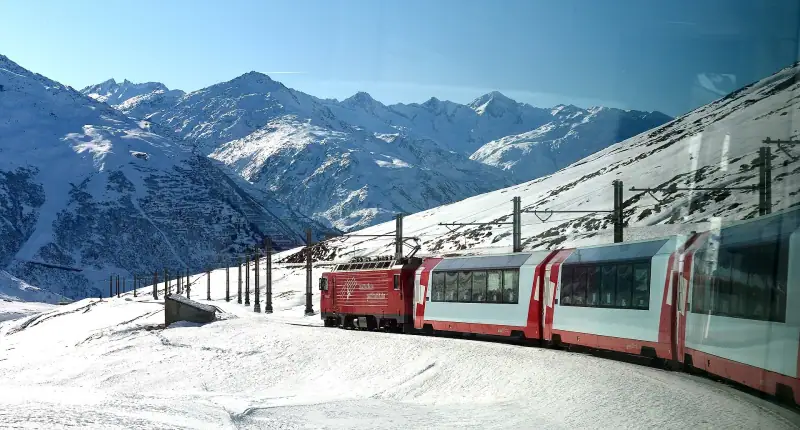
According to the Glacier Express timetable page, the winter period runs from December 5, 2026 to May 7, 2027. The train does not run from October 11 to December 4, 2026: so do not try to take it in November. Reservations for December trips open in mid-October, according to the same source.
The Zermatt to St. Moritz journey
The full route links Zermatt to St. Moritz, with a duration of about 7 h 47 according to the company. The winter table mentions two trains leaving Zermatt: a 7:50 am departure, which runs only in certain periods (around the year-end holidays, then from late January), and an 8:50 am departure. Arrivals in St. Moritz are listed at 3:37 pm and 4:37 pm. Timetables may be modified: check on the day of your departure.
The train crosses the Valais, passes through Brig and Andermatt, crosses the Oberalp Pass, then descends toward Disentis, the Vorderrhein gorges and Chur, before climbing toward the Albula and the Engadine. The company mentions 291 bridges and 91 tunnels over the whole route. In winter, the Andermatt high plateau and the Oberalp Pass are the most spectacular sections: you ride through an entirely white landscape.
To go to Davos, there is no direct link from the Glacier Express according to the timetable page: the change is made at Filisur. Chur is served by both trains.
One day or two stages?
Eight hours of train in December is a full day, with little margin if the connection gets complicated. Two formulas work well:
- The full trip in one day: the simplest for those who want the whole experience. Take the earliest departure your dates allow, and plan to sleep at your destination rather than chaining a connection.
- A trip split in two: get off at Andermatt or Chur, spend the night, then resume the next day. The ticket remains valid for the route, but check the seat reservation conditions before splitting the journey.
To sleep before departure on the Valais side, Zermatt is the logical base: our guide where to stay in Zermatt details the districts near the station. If you also visit the resort, our article Visiting Zermatt and the Matterhorn will help you organize your days there.
🏨 Sleep in Zermatt before departure: a 7:50 am or 8:50 am train is prepared the night before. Compare hotels near the station for your winter dates.
Spring 2027 closure
Worth knowing if you travel at the end of the season: the company announces a full closure of the Rhine gorge section for works from April 17 to May 2, 2027, with a replacement bus between Chur and Disentis. The Excellence Class car is also withdrawn on some trains in this period. If you leave in spring, look at these dates before booking.
Glacier Express prices and reservation
The total price of the Glacier Express is made up of two elements: the transport ticket and the seat reservation, which is mandatory. According to the company’s price page, for the full Zermatt to St. Moritz journey:
- Full-fare ticket in 2nd class: CHF 166.
- Full-fare ticket in 1st class: CHF 284.
- Seat reservation in 1st and 2nd class: CHF 54.
- Total in 2nd class: CHF 220, according to the company.
- Excellence Class: reservation at CHF 590 on top of the ticket, with a premium service formula. We do not detail this formula here: see the official page.
Children under 6 travel free, and those aged 6 to 16 get 50% off, according to the same page. Dogs are not accepted on the Glacier Express.
Pass or regular ticket?
A Swiss Travel Pass, a half-fare card or another recognized ticket can reduce the ticket price, but the seat reservation still has to be paid. To know whether a pass pays off for your itinerary, read our article Swiss Travel Pass: is it worth it?. If you only make two or three big trips, the single ticket may remain more advantageous: do the math before buying.
When to book
According to the company, tickets are on sale up to 180 days before travel, and seats up to 93 days before. For winter, two periods call for advance planning: the Christmas and New Year holidays, then the weeks of February. Outside these peaks, you can book later, but the seats on the view side go first.
🎟️ Winter excursions around the panoramic trains: guided tours, mountain outings and activities in Switzerland are worth comparing online for your dates.
Bernina Express in winter: the pass and the frozen lakes
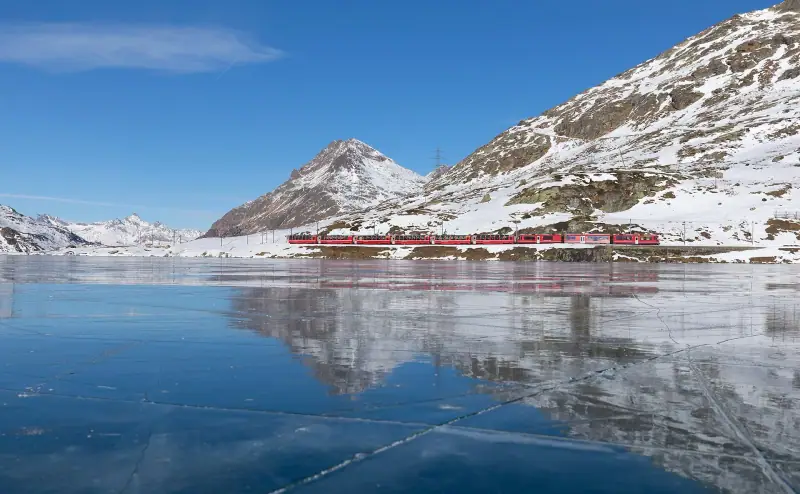
The Bernina Express links Chur or St. Moritz to Tirano, in Italy, via the Bernina line, listed as UNESCO World Heritage. In winter, it is probably the most exotic trip: the train climbs toward the Ospizio Bernina, at about 2,250 m (7,382 ft), between ice-bound lakes and white peaks, then descends in a few dozen kilometers to the vegetation of the Valtellina valley.
On reservations, a seat is mandatory in the panoramic cars. On the Switzerland Tourism site, the St. Moritz to Tirano seat reservation is offered from CHF 32, valid from November 4, 2026 to February 2, 2027, with unavailable dates around the holidays. The rate varies by season and section: confirm it on the Rhaetian Railway site before booking.
An organizational point: Tirano is in Italy. This guide does not cover the Italian side. If you stay on the Swiss side, the simplest solution is to make the round trip from St. Moritz, or to look at the bus service that reaches Lugano, whose winter operation needs to be checked. For sleeping on the Graubünden side, our article What to see in Graubünden presents Chur, the Engadine and the UNESCO trains.
Round trip in a day from St. Moritz
From St. Moritz, the round trip to Tirano is possible in a day, with a stopover there. Plan a morning departure and an early-afternoon return, so as not to ride at dusk on the most beautiful section. A regional train, with no panoramic car, follows the same track and can serve as a fallback.
🏨 Sleep in St. Moritz or Chur: to fit an early departure or a late arrival, compare hotels in the region for your dates.
GoldenPass: Montreux, Interlaken and Lucerne under the snow
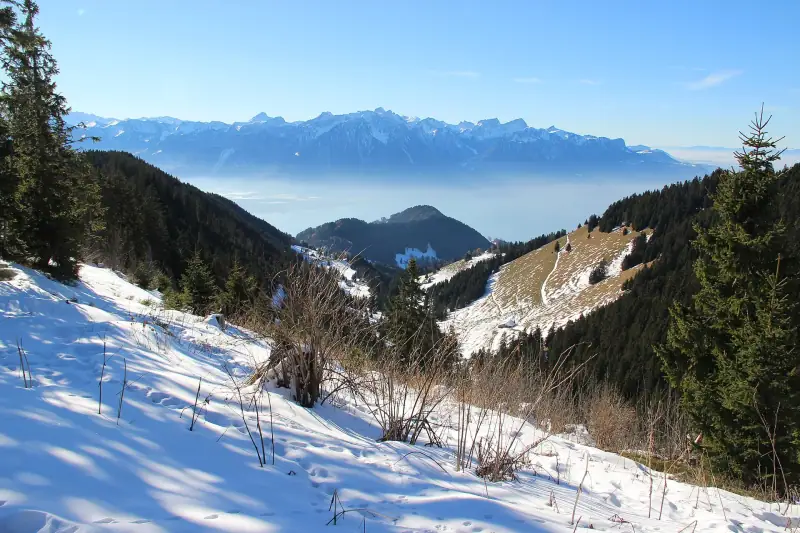
The GoldenPass line links Lake Geneva to the Bernese Oberland, then to Lucerne. From Montreux, the train climbs toward the resorts of Gstaad and Zweisimmen, then reaches Interlaken. The continuation to Lucerne goes over the Brünig Pass. In winter, the route crosses valleys where snow is often present and wooden chalets make a postcard setting.
Travel times, connections and direct trains vary by season and have changed in recent years: we therefore give no timetables here. Check on the line’s official site the train number and the presence of a connection, notably at Zweisimmen, before booking. Panoramic cars generally require a reservation: confirm it for your dates.
This line suits an itinerary linking Geneva or Lausanne to Lucerne. To build a complete circuit, our article 7-day Switzerland itinerary by train offers a sequence of the major cities, and Visiting Lucerne and Lake Lucerne details the arrival on the central Switzerland side.
Putting together a winter train itinerary
A few formulas that work well, depending on the time you have:
- Ski stay in Zermatt + a train day: ski two or three days, then devote a day to the Glacier Express toward St. Moritz or Chur. A morning departure, a night at your destination.
- Engadine and Bernina: stay in St. Moritz, ski, then make the round trip to Tirano in a day.
- Grand crossing: Zermatt, Glacier Express to St. Moritz, a two-night stay, then return by regional train to save money.
- Lakes and mountains circuit: GoldenPass from Montreux to Interlaken, then Lucerne, including a night in each town.
For budget ski stays, our guide Skiing in Switzerland without breaking the bank gives benchmarks on passes. If your trip depends on the weather, the best time to go to Switzerland details the climate of each season.
Practical tips for winter travel
- Dress in layers: the carriages are heated, but mountain stations are cold and outdoor stops can last.
- Sit on the right side: choose your seat at reservation, since some sections offer their best view on one side only. The windows of panoramic cars can also reflect light: a cloth helps for photos.
- Allow a margin: a tight connection is risky in winter, when a snowfall can shift a timetable.
- Bring something to eat: on board, meals are generally served at your seat on the Glacier Express, according to the company, but bring a snack in case of delay.
- Handle your luggage: skis often travel better sent to the arrival hotel than dragged in the carriage. Ask your accommodation.
- Check the timetable on the morning of departure: timetables may be modified, and disruptions are shown online.
Finally, travel insurance avoids unpleasant surprises in case of cancellation or a ski accident. Compare the coverage offered by insurers, checking what is covered for skiing and cancellation.
Should you choose a panoramic train or a regional train?
The question is mostly about budget. With a regional train, you largely use the same tracks, with no mandatory reservation or supplement. You lose the big picture windows, the service at your seat and the comfort of the panoramic cars, but you keep the snow, the viaducts and the passes.
Our view: if it is your first winter in Switzerland and you make only one big trip, the panoramic train is worth the price for the experience. If you chain several trips, or travel as a family on a small budget, mix the two: a big train for the star day, regular trains for the rest.
Sources
Frequently asked questions
Does the Glacier Express run in winter?
Yes, but not without interruption. According to the company's timetable page, the winter period runs from December 5, 2026 to May 7, 2027, and the train does not run from October 11 to December 4, 2026. Check the dates on the official site before booking.
How much does the Glacier Express cost in winter?
The total price is made up of the ticket and a mandatory seat reservation. For the full Zermatt to St. Moritz journey, the company lists CHF 220 in 2nd class at full fare, including CHF 54 for the reservation. Prices can change: check them for your dates.
Do you need to reserve the Glacier Express in winter?
Yes, seat reservation is mandatory, even with a Swiss Travel Pass. According to the company, seats can be reserved up to 93 days before departure and reservations for December trips open in mid-October. Christmas and February holidays go first.
Which direction in winter, Zermatt to St. Moritz or the reverse?
Both directions offer the same scenery. Choose according to your base: if you ski or sleep in Zermatt, leave from Zermatt; if you are in the Engadine, leave from St. Moritz. The morning departure leaves the most light, since days are short in December.
Is the Bernina Express more beautiful than the Glacier Express under the snow?
They are not alike. The Bernina Express crosses a pass at over 2,200 m (7,220 ft) in a high-mountain setting with frozen lakes, with a descent toward Italy. The Glacier Express is a longer crossing of snowy valleys. Our comparison details the choice.
Can you make these trips on a regional train to save money?
Yes, regular trains largely use the same tracks, with no panoramic car and no mandatory reservation. You keep the snowy landscapes for a smaller budget, but lose the big windows and the service at your seat.
Can panoramic trains be disrupted by snow?
These lines are cleared of snow and designed for winter, but disruptions can occur, for example during heavy snowfall. Keep some margin in your connections and check the timetable online on the morning of departure.
More Switzerland guides
Keep reading
Switzerland budget: what a trip costs, item by item (2026)
How much to plan for a trip to Switzerland? Real costs by item, three budget profiles in CHF and tips to spend less without giving up the scenery.
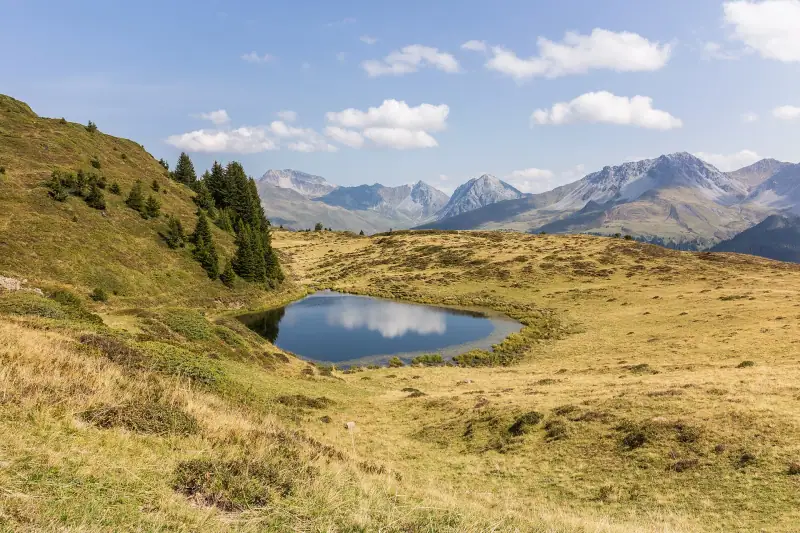
What to see in Graubünden: Chur, the Engadine, the National Park and UNESCO trains
What to see in Graubünden: Chur, Rhine Gorge, Flims, Engadine, St. Moritz, Swiss National Park, Müstair and UNESCO trains. Itineraries and practical tips.
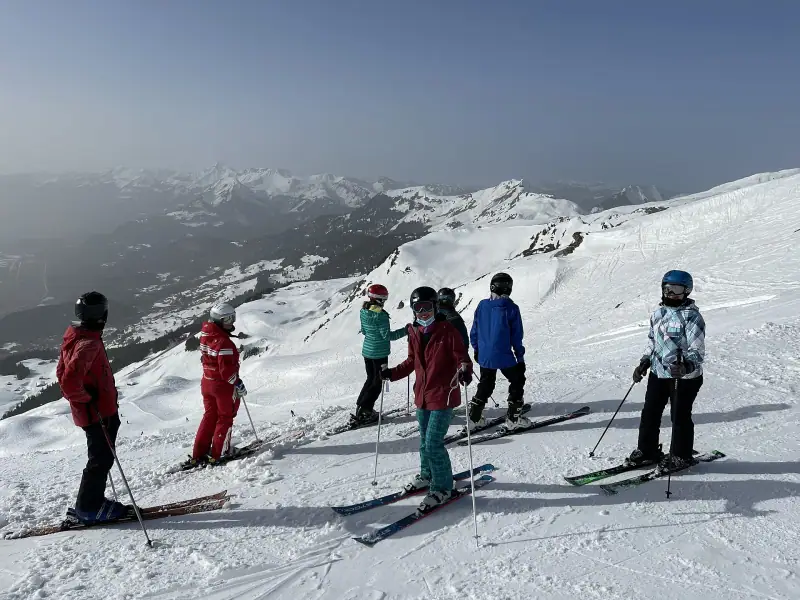
Switzerland's best ski resorts: Zermatt, Verbier, St. Moritz compared, with budgets
Zermatt, Verbier or St. Moritz: ski areas, atmosphere, access, lodging and budget. Compare Switzerland's three big resorts before booking your winter.
Ready-made
Switzerland itineraries
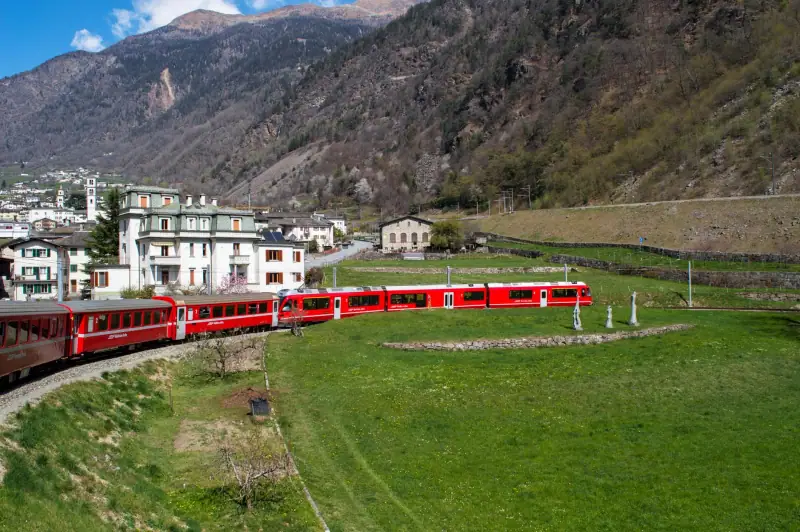
Glacier Express or Bernina Express: which panoramic train should you choose?
Glacier Express or Bernina Express: duration, scenery, reservations and passes. Compare Switzerland's two panoramic trains and pick the one for your trip.
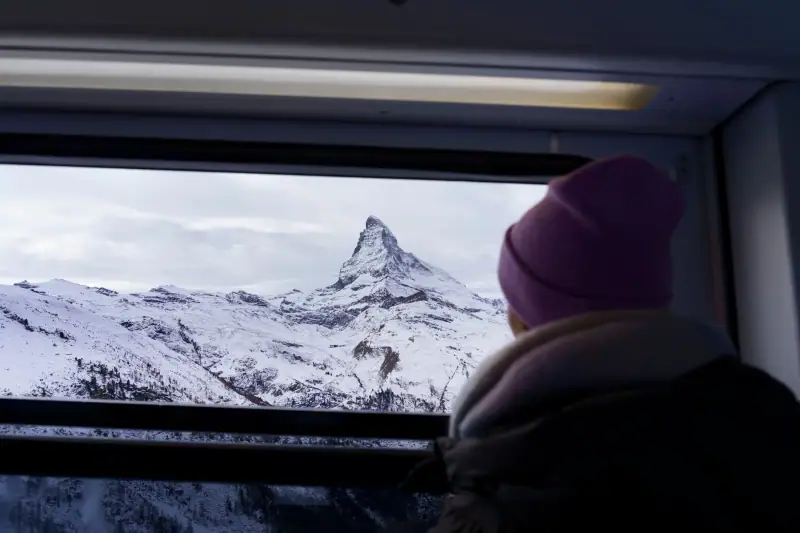
7 days
7-day Switzerland itinerary by train: Lucerne, Interlaken, Zermatt and Lake Geneva
LucerneInterlakenZermattLausanne