Things to do
Visiting the DMZ from Seoul: tours, tips and booking
We may earn a commission when you book through links on this page, at no extra cost to you. We don't visit or try the places we cover: we summarize published sources. How we work
In short
- Access to the DMZ is only through an organized tour from Seoul: half day, full day, or a package including the JSA at Panmunjom.
- Bring your passport all day (generally mandatory); a photocopy or a phone photo is usually not enough.
- Book ahead, especially in high season and for the JSA; visits can be suspended or changed at short notice.
- Tours usually run all year; spring and fall bring clearer skies, winter is very cold near the border.
Among the most striking experiences of a stay in South Korea, visiting the DMZ from Seoul holds a place of its own. This strip of land that has separated the two Koreas since the 1953 armistice is both one of the most militarized borders on the planet and a surprisingly preserved place, where nature has reclaimed its rights.
From the capital, several excursion formulas let you approach this border in a day or half a day. This guide presents what the DMZ is, the sites you visit, the differences between packages, the rules to know and tips for preparing the outing well.
What is the Korean DMZ?
The demilitarized zone (DMZ) was created by the July 1953 armistice, which ended the fighting of the Korean War without signing a peace treaty. It forms a strip about four kilometers (2.5 mi) wide that crosses the peninsula from east to west, over more than two hundred kilometers (124 mi). At its center lies the military demarcation line.
Despite its name, the zone is one of the most heavily watched in the world: on both sides, armed forces remain deployed. The paradox is that the absence of human activity for decades has let wildlife and plants develop in peace. The place is often cited as a biodiversity refuge, with migratory birds and rare species.
For the traveler, the DMZ is above all a place of memory. You gauge what the division of the peninsula still means to Koreans, many of whose families were separated. The tone of the visits is therefore rather serious and educational, although guides also know how to answer questions with humor and pragmatism.
Good to know: the political and security situation can change. Some visits are sometimes suspended or modified at short notice. Always check the conditions in force when you book.
Which formula to choose to visit the DMZ?
It is not possible to venture freely into the zone. You therefore go through an organized excursion, offered by local agencies and operators from Seoul. Three main families are generally distinguished.
- The half day: the shortest, centered on one or two sites. It suits you if your schedule is tight.
- The full day: it combines several stops (Imjingak Park, tunnel, observatory, border village) and leaves time to hear the historical context.
- The formula with the JSA: it includes a visit to the Joint Security Area, at Panmunjom, where soldiers of the two sides face each other. It is the most spectacular, but also the most supervised.
The trip from Seoul is by coach, generally in under two hours depending on traffic and the site. Pickups often take place in central neighborhoods of the capital, near major subway stations.
DMZ excursions
Compare guided visits of the demilitarized zone from Seoul: half day or full day.
Imjingak Park: a first approach to the border
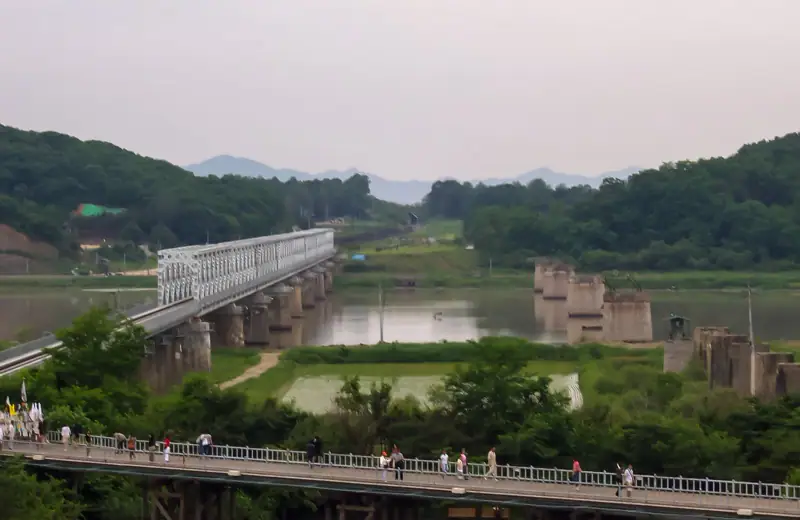
Imjingak Park, near the city of Paju, is one of the most frequent stops of excursions. It was developed in memory of the country’s division and gathers several monuments, including a memorial facing north, where families come to pay their respects on major holidays.
There you see the Freedom Bridge, over which prisoners of war were released at the end of the conflict, as well as a steam locomotive riddled with bullet impacts, left in place as testimony. The ribbons and peace messages tied to the fences give the place a distinctive atmosphere.
Tips: the park is located before the strictest checkpoints. It can therefore be visited independently, but the excursion offers valuable historical insight. Plan clothing suited to the weather: the site is very open and the wind can be cold in winter.
The Third Infiltration Tunnel
Another emblematic stop: the Third Tunnel, one of the galleries dug by North Korea under the border, discovered in 1978. It was designed to let troops pass discreetly to the south and shows the scale of the tensions of the time.
The visit consists of going down into the gallery, often via a fairly steep slope, then walking it to a stopping point near the demarcation line. The passage is narrow and low: you wear a helmet provided there. The walk is rather damp and cool, even in summer.
Good to know: the visit requires reasonable fitness, as the climb back is on foot. People who are claustrophobic or have trouble walking may prefer to skip it. Photography is generally forbidden inside the tunnel: plan to put your camera away.
Hotels in Seoul
Sleep near a major subway station to easily reach the departure point of your excursion.
Dora Observatory: a look to the north
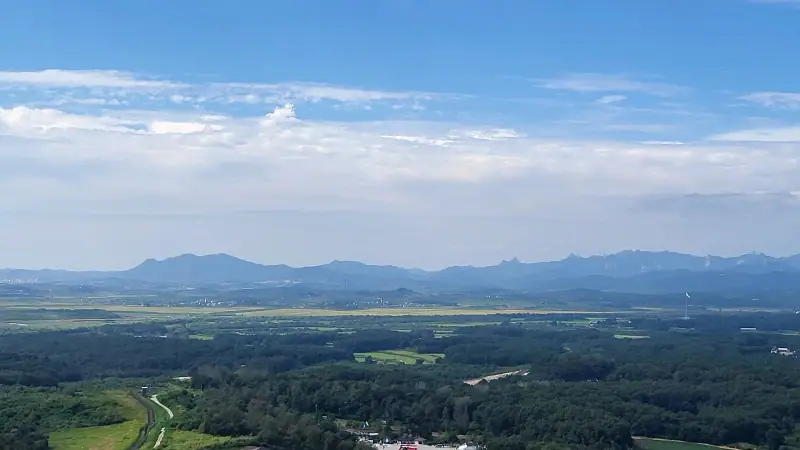
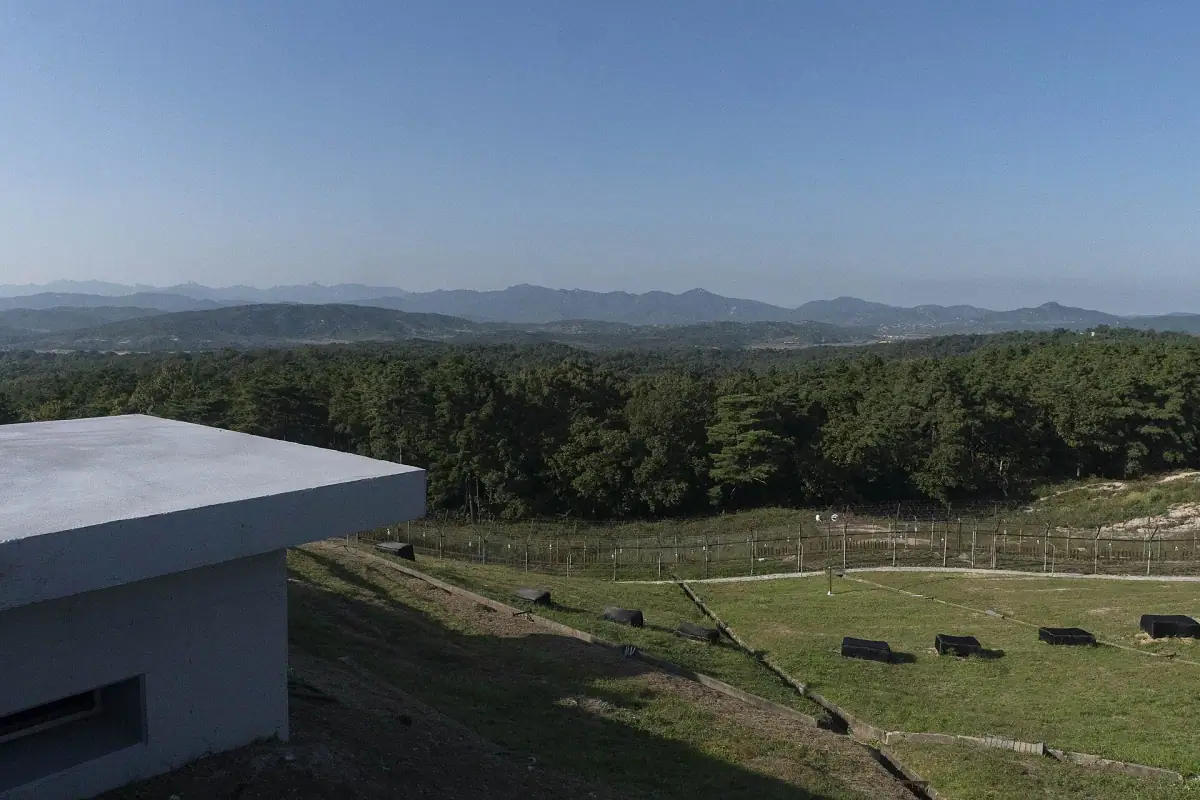
Dora Observatory offers a direct view of North Korean territory. From an observation deck equipped with binoculars, you make out the landscape on the other side of the border, with its hills, distant villages and, in clear weather, some buildings.
The place is appreciated for its concrete nature: after the history told along the way, you literally have the border in question before your eyes. Photography rules are strict: yellow lines on the ground mark the places behind which taking pictures is forbidden. Respect them, as checks are real.
Tips: visibility depends strongly on the weather. In hazy weather, the view is limited; if you can, choose a clear-sky day, which is more frequent in spring and fall. See our guide to choosing the right season.
The Panmunjom JSA: the most supervised visit
The Joint Security Area (JSA), at Panmunjom, is the only place where soldiers of the two sides face each other a few meters apart. There you discover the blue buildings built astride the demarcation line, where negotiations are held.
This visit is the most sought after, but also the one that imposes the most constraints. Formalities are heavier: advance booking, sharing your identity, mandatory passport, a strict dress code and a security briefing before entry. Some nationalities or age groups may be subject to additional restrictions.
Above all, access to the JSA depends on the situation at the time. Visits can be canceled at short notice following a military or diplomatic event, or during exercises. So do not build your whole trip around this single visit: keep flexibility in your schedule.
Guided visits from Seoul
Day excursions, cultural tours and themed visits: compare offers on your dates.
Rules, dress and behavior to respect
The DMZ is a military site. Even on an excursion, a few basic rules apply.
- Passport: bring it with you all day. A photocopy or a photo on your phone is generally not enough.
- Dress: sober and clean. Avoid flip-flops, torn, very short or slogan-covered clothing, as well as military-inspired outfits.
- Photos: follow the instructions scrupulously. In some zones they are forbidden; in others they are only allowed behind a specific line.
- Behavior: no gestures or jokes directed at the soldiers, and no shouting. Listen to your guide’s instructions.
- Drones and equipment: their use is obviously excluded. Bulky equipment, such as telephoto lenses, may be limited.
These instructions can vary by operator and current events. Read the booking confirmation carefully and follow the instructions received before departure.
When to go and how to organize the day
Excursions generally run all year, with very different conditions by season. Spring and fall are the most pleasant, with often clearer skies and comfortable temperatures. In winter, the cold and wind can be very biting near the border: plan warm clothes. In summer, the monsoon can complicate visits.
To organize the day, here are a few landmarks:
- Book early: in high season, places go fast, especially for the formulas with the JSA.
- Choose well-located lodging: a hotel near a major subway station makes the early meeting easier. Our guide to where to stay in Seoul details the neighborhoods.
- Plan a meal: depending on the formula, lunch is included or not. Check before leaving.
- Keep some margin: the return to Seoul can be slowed by traffic. Avoid planning a flight or a show that same evening.
To fit this excursion into a broader stay, see our three-day Seoul itinerary, and our guide to transport in South Korea for your trips.
Where to sleep in Seoul
Mapo, Jongno or Myeongdong: compare lodging by your budget and preferred neighborhood.
Budget and booking: what to expect
Prices depend on the length, the sites included and the operator. Half days are generally the most affordable, while full-day tours with several stops or the JSA visit cost more. Check what is included: transport, English-speaking guide, entrance fees, lunch.
A few tips for booking well:
- Compare several operators and read recent reviews.
- Check the guide’s language: most tours are in English, some with an audio guide.
- Look at the cancellation terms, particularly for the JSA, whose access can be suspended.
- Plan a safety margin of a few days in your stay to move the excursion if the weather or the situation requires it.
What else to do around the DMZ?
If you have a little time, the Paju area offers complementary visits such as publishing villages, galleries and cafés. Many excursions do not stop there: you can combine them with a free outing if you are independent.
Back in Seoul, plan a lighter evening. Many travelers like to unwind in a lively neighborhood after a day of strong emotions, with a Korean meal. Our article on Korean cuisine and typical dishes will give you ideas.
Should you visit the DMZ?
Yes, if contemporary history interests you. The DMZ is not a tourist attraction like the others: it is a place of tension, memory and reflection. It helps understand the country and how its people talk about the division.
Choose the formula according to your time and curiosity. Half a day is enough for a first look; a full day lets you better grasp the context. In all cases, stay attentive to instructions and keep in mind that the situation there can change.
Frequently asked questions
Can you visit the DMZ without a guide?
In practice, no for most sensitive sites: access to the demilitarized zone is supervised and goes through an organized tour. Some places before the checkpoint, such as Imjingak Park, can be reached on your own, but it is not the same experience.
Do you need to book the DMZ excursion in advance?
Yes, booking ahead is strongly advised, especially in high season. Visits passing through the Joint Security Area (JSA) generally require earlier booking and sharing your identity. Plan several weeks if possible.
Do you need to bring your passport?
Yes, it is generally mandatory. Military checks are done on presentation of an official ID document, and the passport is the document requested for foreign visitors.
What should you wear to visit the DMZ?
A sober, clean outfit: avoid torn clothing, overly casual or very tight outfits, flip-flops and clothing with military connotations. Rules are stricter for the JSA visit; check with the organizer.
How long does a DMZ excursion last?
Depending on the package, plan half a day or a full day, including the trip from Seoul. Tours including the JSA or several sites are generally the longest.
More South Korea guides
Keep reading
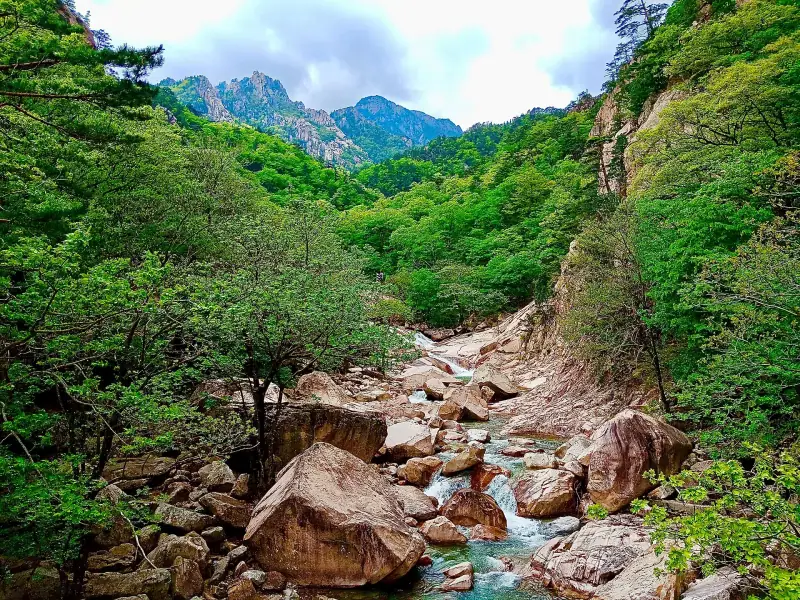
Visiting Seoraksan and Sokcho: hikes, temples and the East Sea
Visiting Seoraksan and Sokcho: Ulsanbawi, cable car, Sinheungsa Temple, Abai village, fish market. Access from Seoul, seasons and practical tips.
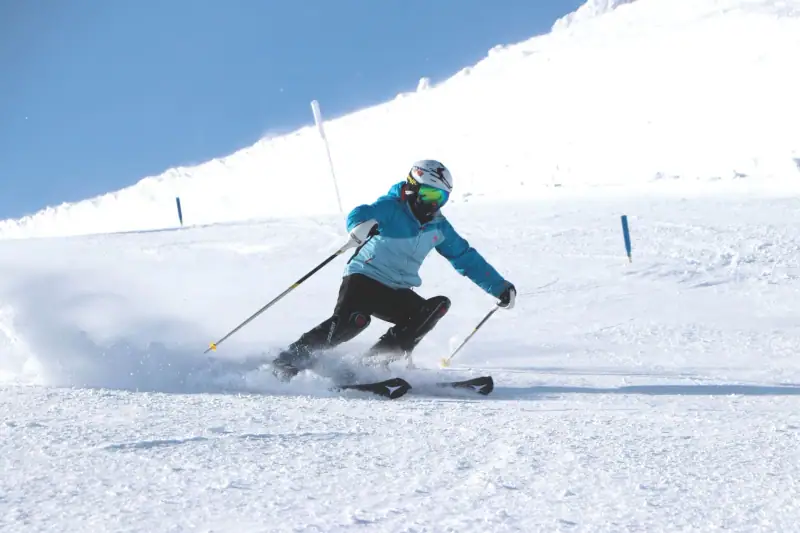
Skiing in South Korea: Pyeongchang, Yongpyong and the resorts near Seoul
Skiing in South Korea: Pyeongchang, Yongpyong, Alpensia, Vivaldi Park, Jisan and Gangchon. Which resort to choose, access from Seoul, season and tips.
Visiting Gyeongju: the highlights of the Silla capital
Visiting Gyeongju, South Korea: Bulguksa Temple, Seokguram Grotto, Daereungwon mounds, Wolji Pond, Yangdong village. Tips, transport and planning.
Ready-made
South Korea itineraries
7 days
4 days
10 days
South Korea in 10 days: an itinerary through Seoul, Gyeongju, Busan and Jeju
SeoulGyeongjuBusanJeju