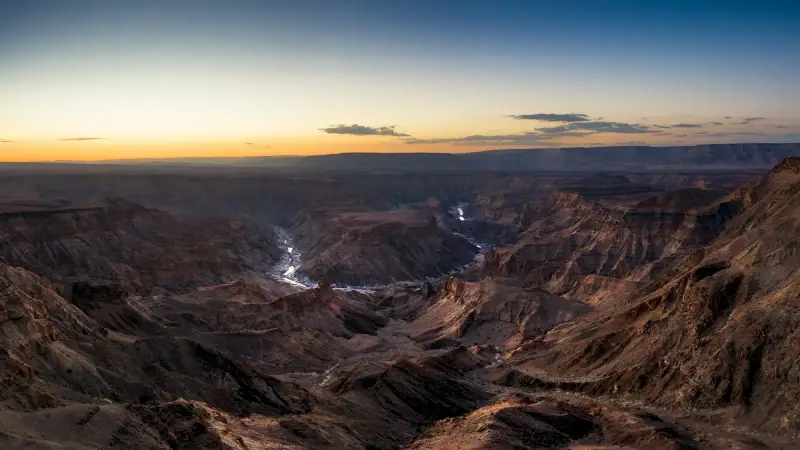
19 days
Cape Town to Windhoek by road in 19 days: one car, one border
Cape TownFranschhoekSpringbokFish River CanyonKeetmanshoopSesriem and SossusvleiSwakopmundEtosha (Okaukuejo)Windhoek
Two countries, one road trip
Cape Town's mountains and vineyards, then Namibia's dunes, coast and Etosha waterholes. Here is how to combine them by rental car, and what the border costs.
We may earn a commission when you book through links on this page, at no extra cost to you. We don't visit or try the places we cover: we summarize published sources. How we work
Itineraries
Ready-made routes across several countries, with real drive times, the border crossings and where to sleep.
19 days
Cape TownFranschhoekSpringbokFish River CanyonKeetmanshoopSesriem and SossusvleiSwakopmundEtosha (Okaukuejo)Windhoek
21 days
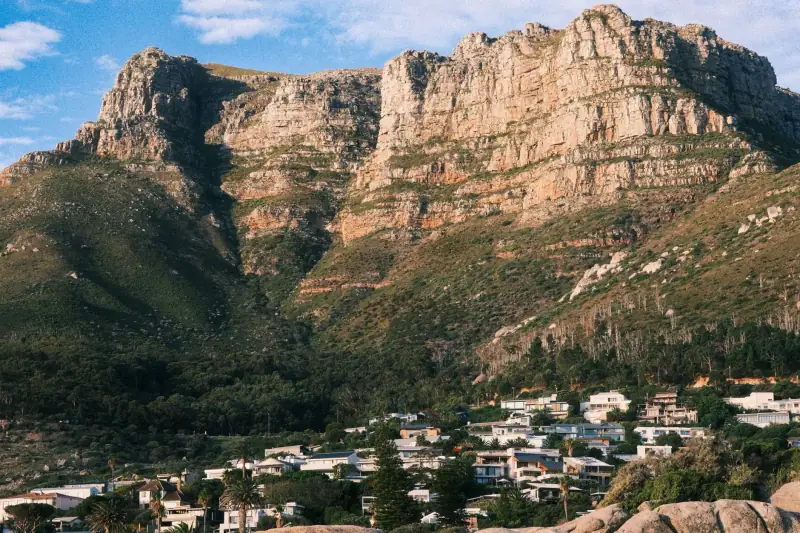
Cape TownFranschhoekHermanusKnysnaCape TownWindhoekSesriem and SossusvleiSwakopmundEtosha (Okaukuejo)
South Africa and Namibia suit each other. The Cape side brings Table Mountain, the Cape Peninsula, wine estates in Franschhoek and Stellenbosch, whales at Hermanus in season and the lagoon at Knysna. Namibia brings the Fish River Canyon, the dunes at Sossusvlei, the cool coast at Swakopmund and self-drive wildlife viewing in Etosha. The first half is easy driving; the second is a desert adventure on long gravel roads.
The catch is distance. Cape Town to Fish River Canyon, the first major Namibian stop on the road, is 10 h 20 and 856 km (532 mi), and that is only the start of the Namibian leg. That is why this tour has two shapes: a 21-day trip with a flight and two rentals, and a 19-day one-way drive from Cape Town to Windhoek with one border crossing.
What to skip: Kruger, Durban and Johannesburg sit far from this route, and our guides treat them as separate trips (see Kruger for first-timers or visiting Durban). On the Namibian side, Lüderitz and Twyfelfontein are possible extras only if you add days: read visiting Lüderitz and visiting Twyfelfontein first.
Drive times below come from real road figures and do not include stops or border waits.
There is no trip planner on this tour: no stop of our guides lies between Cape Town and southern Namibia, and the usual link is a flight.
The two countries peak at different times, so you choose a compromise.
Reading both guides together, September and October and the April-May shoulder are the periods where both countries work. Canada’s official advice (October 2026) adds that gravel is very slippery from November to March.
Our guides budget each country separately, in euros; no guide gives a combined figure. Dollar amounts use 1 € = $1.16.
Add the border costs below: the cross-border fee (R1,870 to R2,000), N$445 at the border, and either a one-way fee or a flight.
This applies to a car picked up in South Africa and driven into Namibia. The rand and the Namibian dollar (N$) are pegged 1:1.
Declare Namibia when you book. A South African rental car may enter Namibia only with the company’s written cross-border authorisation, the “letter of authority”, requested in advance. Published examples (2026): Hertz South Africa charges R2,000 per authorisation, with a request by email at least 48 hours (2 business days) before crossing, with passport, licence and proof of residence. Europcar South Africa charges R1,870 per rental, on a fee sheet valid February to October 2026, so check the current one. Avis Budget says the letter must be obtained at collection, otherwise it cannot be held responsible if you are refused entry.
No Green Card is needed on this route. When the car crosses, the rental cover of the country entered applies (Avis Budget). Tyre damage is usually covered only with a tyre and windscreen waiver (Avis), which matters on Namibia’s gravel: check it.
There is no toll on the N7 between Cape Town and the border. Our South Africa guide mentions tolls on major national routes and some scenic roads, so keep a card or cash handy.
Foreign-registered cars, a South African rental car included, pay Namibia’s Cross-Border Charge at the border: N$445 for a car (Road Fund Administration, Government Gazette 8356, in force since May 1, 2024; no later change found). Pay in cash and keep the receipt, which Avis Budget asks for at the return counter.
Passport, driving licence, the rental contract, the letter of authority and cash for the N$445 charge.
South Africa and Namibia are both outside Schengen, so there are no internal-border shortcuts and no EES registration. The main crossing on the Cape Town road is Vioolsdrif (South Africa) / Noordoewer (Namibia), on the N7 / B1 over the Orange River. The other in the south is Nakop / Ariamsvlei near Upington. Our sources give no queue times, and they conflict on opening hours (24 hours versus 6 am-10 pm): check with South Africa’s Border Management Authority before planning a late crossing.
A car picked up in South Africa and dropped in Namibia costs a high one-way fee: Europcar South Africa listed R11,000 in 2026, against R1,217 for a one-way inside South Africa. A loop back to the pick-up country adds only the cross-border fee (R1,870 to R2,000), but from Cape Town it means driving the long N7 twice. The usual alternative is two rentals and a flight: nonstop flights link Cape Town and Windhoek (Airlink, about 2 h 10, several a day in 2026 schedules). Our 21-day itinerary does exactly that; the 19-day itinerary is the one-way drive and accepts the fee.
For entry rules, visas and driving licences or International Driving Permits, check your government’s official pages: travel.state.gov (US), gov.uk/foreign-travel-advice (UK), travel.gc.ca/destinations (Canada) or smartraveller.gov.au (Australia).
Both countries drive on the left. In South Africa, our driving guide advises avoiding night driving, keeping doors locked, fueling as soon as the gauge falls below half in isolated areas, and downloading offline maps because coverage can fail. Attendants fill the tank at gas stations; a small tip is usual. The easy hops are Cape Town to Franschhoek (1 h 00, 77 km / 48 mi) and Franschhoek to Hermanus (1 h 30, 99 km / 62 mi). Read driving in South Africa before you collect the car.
Namibia is different. Our guide recommends 3 to 6 hours of driving a day, no gravel days over 500 km (310 mi), a spare 20-liter (5.3 US gal) jerrycan for remote areas because fuel stations can be 200 km (124 mi) apart, and N$5,000 to 10,000 in cash for campsites and rural fuel. Flat tires, washboard surfaces and deep sand are the usual difficulties. Never drive on gravel at night. Canada’s official advice also warns about unreliable roadside help outside Windhoek. See the Namibia road trip guide and Namibia in the rainy season.
Both itineraries are open-jaw: you arrive at Cape Town International Airport (CPT) and leave from Hosea Kutako International Airport, Windhoek (WDH), so you never backtrack. CPT is 20 min and 19 km (12 mi) from the city; WDH is 35 min and 44 km (28 mi) from Windhoek.
After a long flight, sleep near the airport or in Cape Town and collect the car the next day, as the left-hand traffic is easier when rested. Our where to stay in Cape Town and where to stay in Windhoek guides help you choose. George Airport (GRJ) and Gqeberha International Airport (PLZ) serve the Garden Route if you extend the South African half: see the Garden Route road trip. Check airlines and schedules before booking.
2 destinations
Each country or region of the trip has its own guides, itineraries and, often, its own planner.
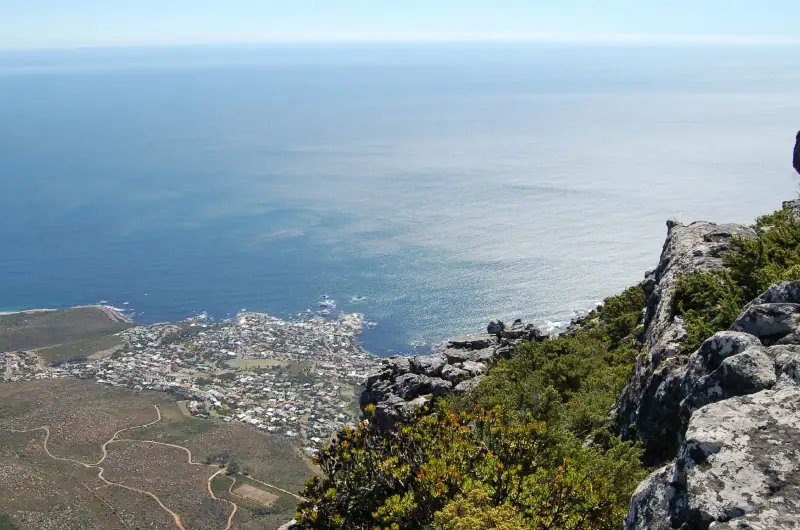
Cape Town & the Garden Route · South Africa
Cape Town and its peninsula, the Winelands, the Garden Route and safaris, on long and easy roads.
18 guides3 itinerariesTrip planner
Cape Town, the Winelands, the whale coast at Hermanus and the Garden Route: short drives, good tarmac and a gentle start on the left side of the road.
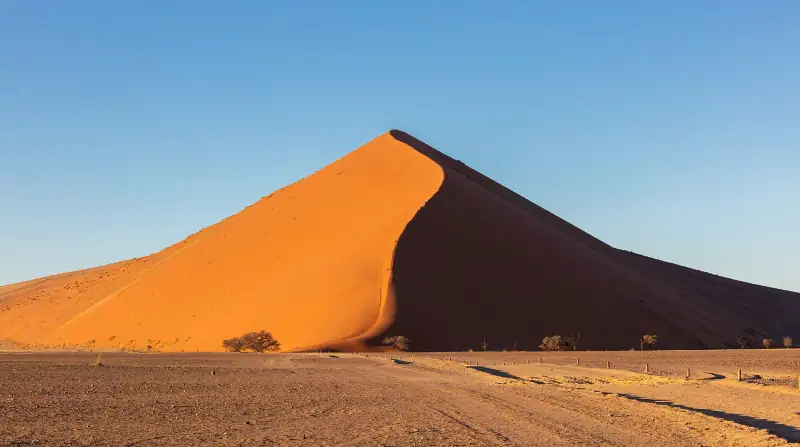
Desert self-drive · Namibia
The red dunes of Sossusvlei, Swakopmund on the Atlantic, Damaraland and the wildlife of Etosha, on long gravel roads.
18 guides3 itinerariesTrip planner
Fish River Canyon, Sossusvlei, Swakopmund and Etosha: long gravel days, desert scenery and self-drive wildlife viewing.
Yes, but only with the rental company's written cross-border authorisation, requested in advance. Hertz South Africa lists R2,000 per authorisation and asks for 48 hours' notice; Europcar South Africa lists R1,870 per rental (2026). Avis Budget issues the letter at collection.
N$445 for a car, paid in cash at the border (Road Fund Administration, in force since May 1, 2024; no later change found). Keep the receipt: Avis Budget asks for it at the return counter.
Yes, but expect a high one-way fee. Europcar South Africa's 2026 sheet lists R11,000 from South Africa to Namibia, against R1,217 for a one-way inside South Africa. Check the current fee with each company.
Often, yes. Nonstop flights take about 2 h 10 and run several times a day in the 2026 schedules. You return one car in Cape Town and pick up another in Windhoek, with no border paperwork. Check current airlines and times.
The left, in both countries, so the steering wheel is on the right in most rental cars. Avoid collecting the car right after a long flight, and use your first evening for a short, calm drive.
No Green Card is needed on this route. When the car crosses, the rental cover of the country entered applies (Avis Budget). Ask the company what its cross-border cover includes, and whether tyre damage is covered.
Avoid it. Canada's official advice (October 2026) warns about night driving outside towns, speed on gravel and unreliable roadside help outside Windhoek. Our Namibia guide also says never to drive on gravel at night.