Where to stay
Where to stay in Cape Town: neighborhoods, budget and tips for choosing well
We may earn a commission when you book through links on this page, at no extra cost to you. We don't visit or try the places we cover: we summarize published sources. How we work
In short
- For a first stay, the V&A Waterfront, the City Bowl and Green Point are the most practical: well equipped, lively and close to the main sights.
- Camps Bay and Sea Point suit you if you want ocean views; Constantia and Hout Bay are quieter and more residential.
- Allow at least 3 to 4 nights; 5 to 6 nights if you add the winelands and a boat trip.
- In high season (December to February), book several months ahead.
Cape Town spreads between the ocean, the mountains and the bay, and the neighborhood you choose makes a big difference to your stay. Depending on whether you prefer restaurants within walking distance, beaches or the calm of the vineyards, the ideal address is not the same. This guide compares the main areas to help you choose where to stay in Cape Town, with their strengths, their limits and a few budget guidelines.
If you are still unsure about when to go, first see our guide to the best time to visit South Africa: the season strongly affects supply and prices.
How to choose your neighborhood in Cape Town
The city is stretched out and the terrain matters. The center nestles at the foot of Table Mountain, the Atlantic coast strings out to the southwest, and the Cape Peninsula extends even farther. Three questions simplify the choice:
- Do you want to get around without a car? Then favor the center, the Waterfront or Green Point.
- Are you looking for the beach and sunsets? Head for Sea Point or Camps Bay.
- Are you traveling with family or looking for calm? Constantia or Hout Bay offer a more residential feel.
Also keep in mind that distances look short on the map but traffic can be heavy at rush hour. It is better to stay near what you plan to do most often.
Compare lodging in Cape Town
Hotels, guesthouses and apartments: compare offers by neighborhood and your dates, especially in high season.
The Waterfront: practical and lively
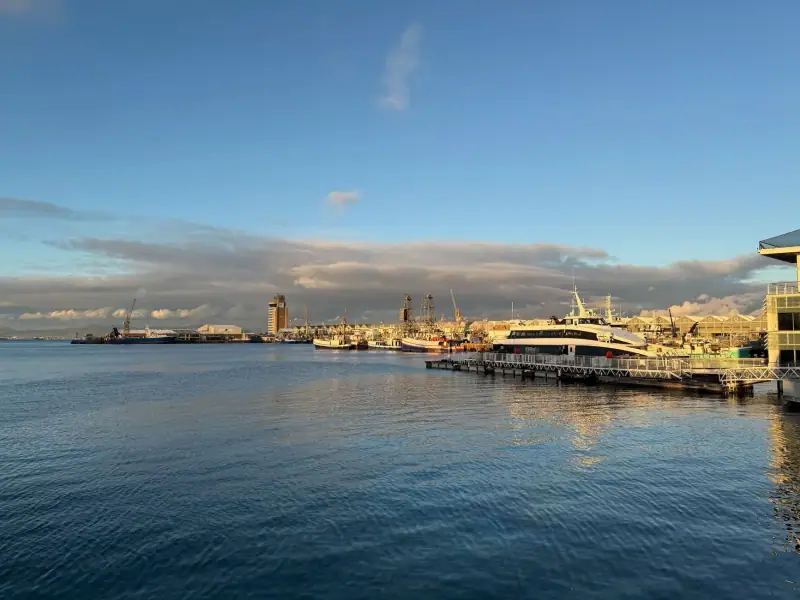
The V&A Waterfront is the former port district, now turned into a large area of shops, restaurants and hotels facing the mountain. It is one of the most reassuring places for a first stay: very busy, well lit and easy to enjoy in the evening.
It is also the usual departure point for boats to Robben Island, which saves early-morning trips. On the other hand, the atmosphere is very touristy and prices are among the highest in the city. If you are looking for the authenticity of local neighborhoods, you will need to step out of the bubble a little.
Best for: a first stay, short stays, travelers who want to do everything on foot.
The center (City Bowl) and Gardens: the spirit of the city

The City Bowl is the urban basin that opens at the foot of Table Mountain. It includes the historic center, the Gardens district and more residential streets that climb toward the mountain. There is a good choice of guesthouses, boutique hotels and cafés, in a more urban than seaside atmosphere.
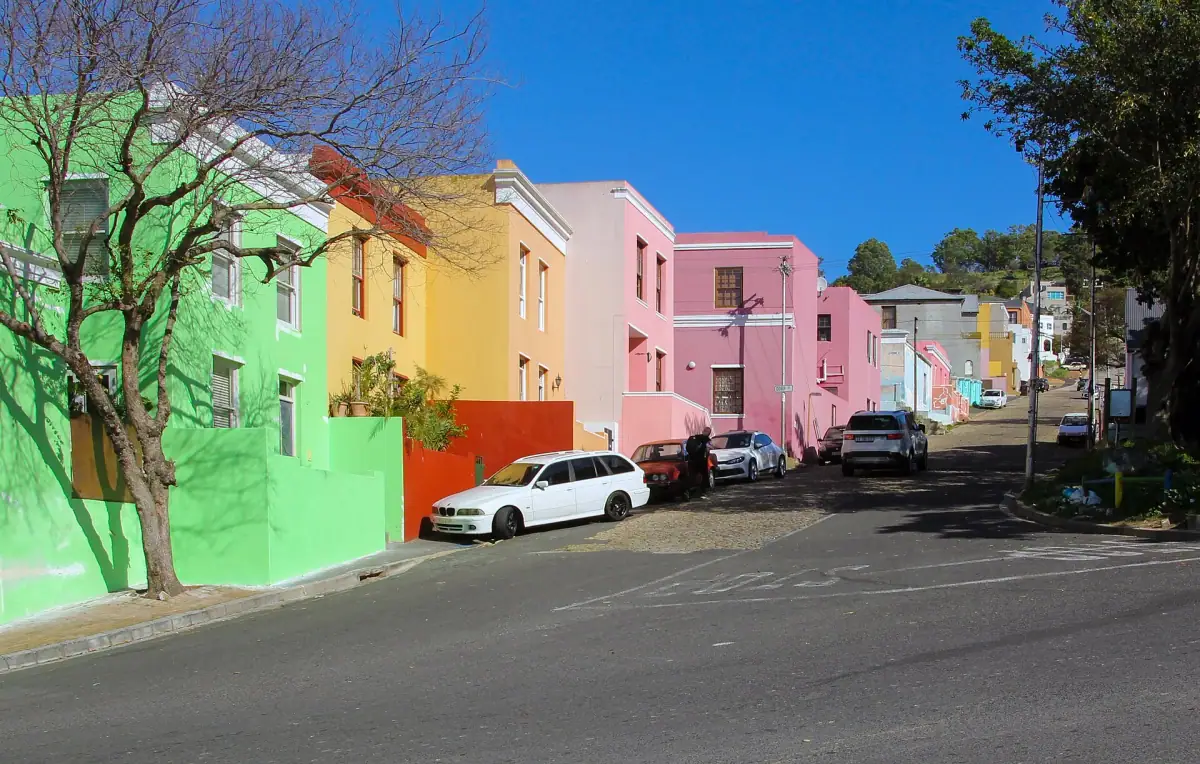
The colorful Bo-Kaap district, with its painted houses, is easy to visit from this area. The center is well placed for day trips: the Table Mountain cable car station, the museums and the city’s gardens are all close.
In the evening, favor lively streets and ride-hailing over long walks in deserted areas. The more residential addresses in Gardens are generally valued for their calm.
Best for: lovers of culture, architecture and food, and those who want good value in town.
Green Point and Sea Point: the promenade facing the ocean
Northwest of the center, Green Point and then Sea Point form a seafront much loved by locals. A long coastal promenade lets you walk or run facing the Atlantic, with restaurants, cafés and rental apartments all along the way.
Sea Point offers a good compromise: a lively atmosphere, quick access to the center and the Waterfront, and a more varied choice of lodging than in the smartest areas. Swimming in the Atlantic is, however, very cold all year, which often surprises travelers.
Excursions from Cape Town
Table Mountain, the Cape Peninsula, vineyards or a boat trip: compare the activities on offer, with free cancellation on many offers.
Best for: stays of several days, active travelers, mid-range budgets.
Camps Bay and Clifton: beaches and sunsets

A little farther south, Camps Bay and Clifton have the postcard views: pale sandy beaches backed by mountains, villas on the heights and terraces facing the sunset. Camps Bay has a lively seafront of restaurants and bars.
It is a highly sought-after area, so generally expensive in high season. It is farther from the center than Sea Point, and the wind can pick up on the beach. For daily life, a vehicle or ride-hailing is more practical than in Green Point. Many travelers choose to spend only a few nights here, on top of a stay downtown.
Best for: a beach stay, a couple’s trip, a special occasion.
Stays in Camps Bay and Sea Point
Ocean views or a seaside atmosphere: compare the addresses along the Atlantic coast.
Constantia and the nearby Winelands: calm and vineyards

South of the center, Constantia is a residential and wine-growing valley, one of the oldest in the country. Lodging here often takes the form of guesthouses surrounded by gardens, far from urban bustle. You rest, taste the wines and drive back to town.
For a fuller immersion in the vineyards, many travelers plan a stop in Stellenbosch or Franschhoek, about an hour’s drive from Cape Town depending on traffic. It is an excellent complement if you rent a car, but less practical for a stay centered on the city.
Best for: couples, wine lovers, travelers looking for calm.
Hout Bay and Simon’s Town: to explore the peninsula
On the Cape Peninsula, Hout Bay is a small fishing port nestled in a bay surrounded by mountains, with a craft market and fish restaurants. Simon’s Town, farther south, is best known for the African penguin colony that visits the neighboring Boulders beaches.
These towns are ideal for one or two quiet nights and for day trips to the Cape of Good Hope. They are less suitable if you want to go out in town in the evening without a car. Be sure to check the travel time to the center before booking.
Flights to Cape Town
Fares vary with the season: compare several dates before booking your flight to Cape Town.
What budget to plan for lodging in Cape Town
Prices vary greatly with the season, the neighborhood and the type of lodging. Cape Town offers a very wide range: hostels, guesthouses, apartments, mid-range hotels and luxury addresses. In general, value for money is good, especially out of high season.
A few guidelines to compare:
- High season (December to February): supply fills quickly and prices rise, particularly in Camps Bay and at the Waterfront.
- Shoulder season (March-April, October-November): a good balance of pleasant weather, availability and prices.
- Cool season (June to August): quieter and often cheaper, but with rainier days.
Guesthouses, which are very common, often include breakfast and valuable local advice. Apartments suit families and long stays well.
Practical tips before booking
Check for power cuts. South Africa has scheduled power cuts. Many accommodations have a generator or an inverter: ask before booking.
Look at parking security. If you rent a car, favor lodging with enclosed or supervised parking. Never leave objects visible in the vehicle.
Read recent reviews. They tell you about noise, cleanliness, neighborhood safety and the quality of the welcome.
Plan ahead for high season. Book several months ahead between December and February, with free cancellation if possible, to keep flexibility.
Combine several neighborhoods. For a stay of five nights or more, splitting your time between the center and the coast lets you enjoy both atmospheres.
Our picks by profile
- First stay, without a car: Waterfront or City Bowl.
- Seafront atmosphere, mid-range budget: Sea Point or Green Point.
- Beaches and sunset: Camps Bay or Clifton.
- Calm and wine: Constantia.
- Nature and the peninsula: Hout Bay or Simon’s Town.
Once you have chosen your base, continue with our 8-day Garden Route road trip or plan a safari in Kruger National Park to complete your trip.
Frequently asked questions
What is the best neighborhood to stay in Cape Town for a first visit?
For a first visit, the Waterfront area, the city center (City Bowl) and Green Point are the most practical: they are well equipped, lively and close to the main sights. Camps Bay and Sea Point suit you if you want ocean views.
How many nights should you plan in Cape Town?
Allow at least 3 to 4 nights to see Table Mountain, the Cape Peninsula and the city center without rushing. With the vineyards and a boat trip, 5 to 6 nights are more comfortable.
Do you need a rental car if you stay in Cape Town?
It is not essential if you stay downtown, where you can rely on ride-hailing and tourist transport. A car becomes useful for the Cape Peninsula, the vineyards and the coastal villages.
Is Cape Town safe to stay in?
The tourist neighborhoods are busy and well monitored, but caution is still needed: avoid walking alone at night, leave nothing visible in the car and follow your accommodation's advice.
When should you book accommodation in Cape Town?
In high season, from December to February, book several months ahead, because the best places fill quickly. Out of season, a few weeks is generally enough.
More South Africa guides
Keep reading

Knysna or Plettenberg Bay: where to stay on the Garden Route
Knysna or Plettenberg Bay for sleeping on the Garden Route? Lagoon or beaches, neighborhoods, number of nights, car and tips to choose without regrets.
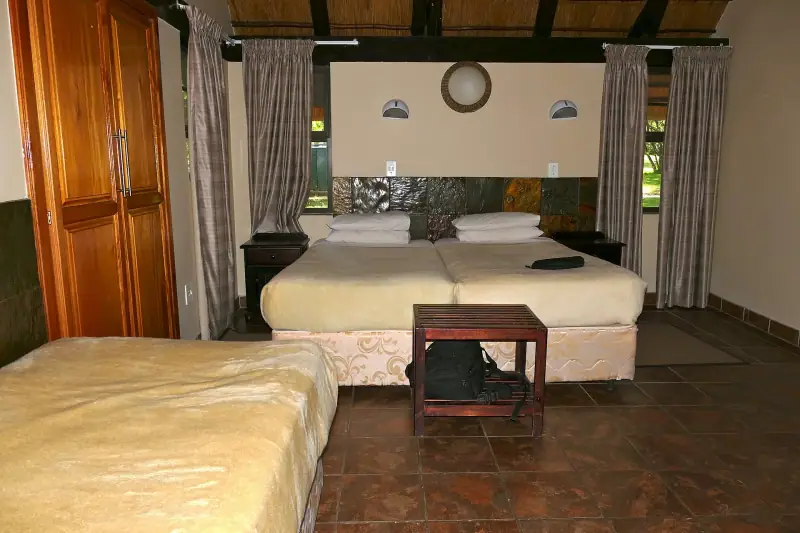
Where to stay in Kruger National Park: SANParks camps, lodges and private reserves
Where to stay in Kruger National Park? SANParks camps, bush camps, lodges and private reserves: comparison, budget, booking tips and mistakes to avoid.
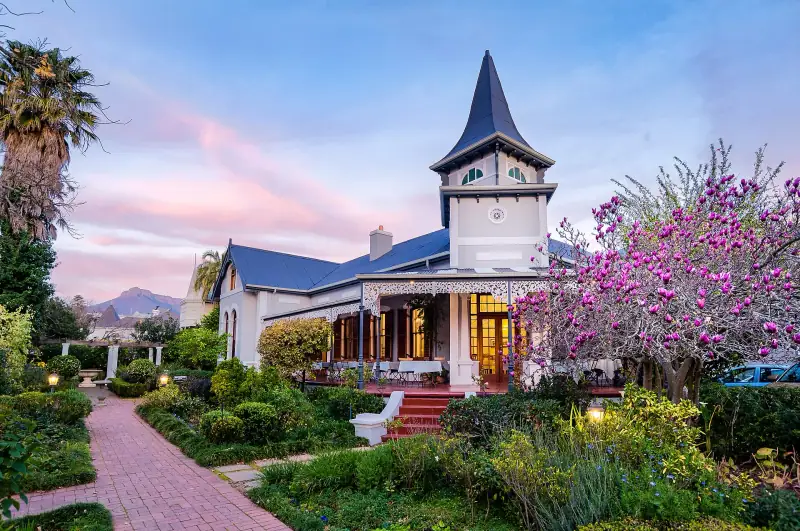
Where to stay in the Winelands: Stellenbosch, Franschhoek or Paarl?
Where to stay in the Winelands? Stellenbosch, Franschhoek, Paarl: bases compared, types of lodging, budget, seasons and tips for booking well.
Ready-made
South Africa itineraries

8 days
Garden Route road trip: 8 days from Cape Town to Gqeberha
An 8-day Garden Route road trip: Hermanus, Swellendam, Mossel Bay, Knysna, Plettenberg Bay and Tsitsikamma, with realistic stages and distances.

14 days
South Africa in 2 weeks: Kruger, Cape Town and Garden Route itinerary
A 14-day South Africa itinerary: Kruger safari, Cape Town, Winelands and the Garden Route, with domestic flights, drives and practical tips.

5 days
Cape Town in 5 days: day-by-day itinerary, peninsula and Winelands
A 5-day Cape Town itinerary: Table Mountain, Waterfront, Bo-Kaap, the Cape of Good Hope peninsula, Winelands and Hermanus, with distances and tips.