What to see
Visiting Lüderitz: a complete guide to the desert ghost town
We may earn a commission when you book through links on this page, at no extra cost to you. We don't visit or try the places we cover: we summarize published sources. How we work
In short
- Kolmanskop, a ghost town 10 km (6 mi) away, is visited only with the official operator, at 9:30 am or 11 am; book ahead in high season.
- Halifax Island, 15 minutes by boat, has a large colony of African penguins all year; boat excursions run about 2 h 30.
- The best period is April to September, with mild temperatures (15 to 22 °C / 59 to 72 °F) and less wind; the southern summer is windy.
- From Windhoek it is about 750 km (466 mi), 8 to 9 hours by road, on a paved route.
Lüderitz is a Namibian anomaly. This port town wedged between the Namib Desert and the South Atlantic piles up striking contrasts: colorful half-timbered houses that would be at home in Bavaria, a ghost town swallowed by sand 10 km (6 mi) away, penguins on an island 15 minutes by boat, and a wind that blows without interruption from Antarctica. It is one of the most singular towns in Africa, often ignored by travelers in a hurry, to their loss.
History: the town that was worth gold… and diamonds
Lüderitz was born in 1883, when the Bremen merchant Adolf Lüderitz bought a stretch of desert coast from a Nama chief for £100 and 200 rifles. This territory was the first German possession in Africa, triggering the colonial rush on the continent. The town was first called Angra Pequena (“small bay” in Portuguese, a name given by Bartolomeu Dias in 1488) before taking the name of its buyer.
Everything changed in 1908. A worker named Zacharias Lewala picked up a shiny stone in the sand at Grasplatz: it was a diamond. Within months the region caught fire. Thousands of fortune seekers arrived. The Deutsche Diamanten Gesellschaft was founded. The neighboring town of Kolmanskop sprang up in a few years: hotel, ballroom, theater, bowling alley, school, hospital…
World War I, then the exhaustion of the surface deposits, hastened the abandonment. The inhabitants left for the new mines on the coast. Kolmanskop was abandoned in 1956. The desert reclaimed the town.
Today Lüderitz lives mainly from lobster fishing (Lüderitz Bay is one of the most productive in southern Africa), tourism and residual mining. With a population of about 15,000, it is the fourth-largest town in Namibia.
Kolmanskop: the diamond ghost town
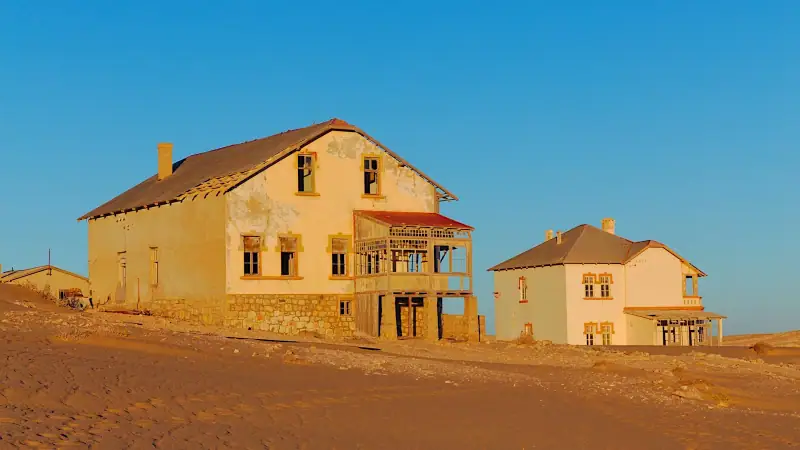
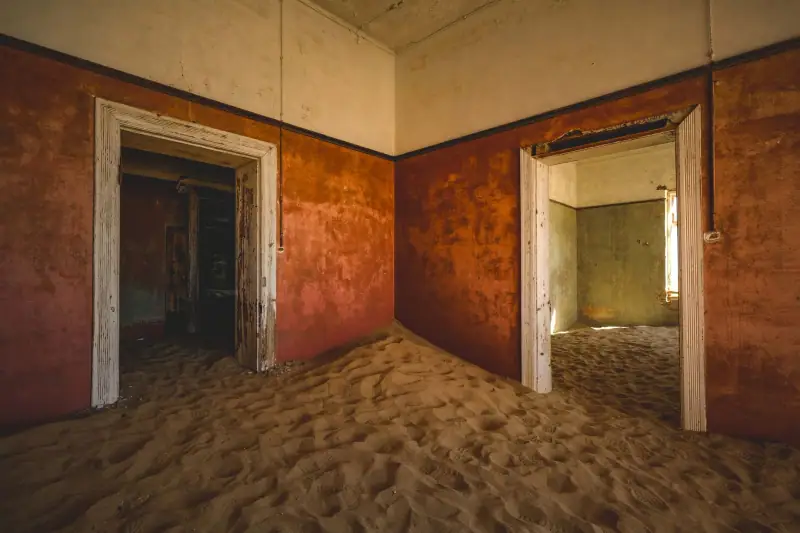
This is the region’s flagship attraction, one of the most photographed in Africa. Kolmanskop is a ghost town 10 km (6 mi) from Lüderitz, drowned in sand since the 1950s. The German houses, the bowling alley, the bakery and the theater are half-buried; red sand dunes have invaded the interiors, creating visual compositions of surreal beauty.
Visits are run only by the official operator (Namdeb Diamond Corp) with two daily slots:
- 9:30 am (recommended for the golden morning light)
- 11 am
The guided tour lasts about 1 h 15. After the tour you are free to photograph the ruins.
Practical tips:
- Book several days ahead in high season (July to August)
- Wear closed shoes (sand hides shards of glass)
- The morning light (9:30 am) filters beautifully through the windows
- Bring a UV or polarizing filter to cut the sand haze
Fee: about N$200 per adult (2026), coffee included.
Tours and excursions in Lüderitz
Kolmanskop, Halifax Island and guided excursions from Lüderitz.
Halifax Island and marine wildlife
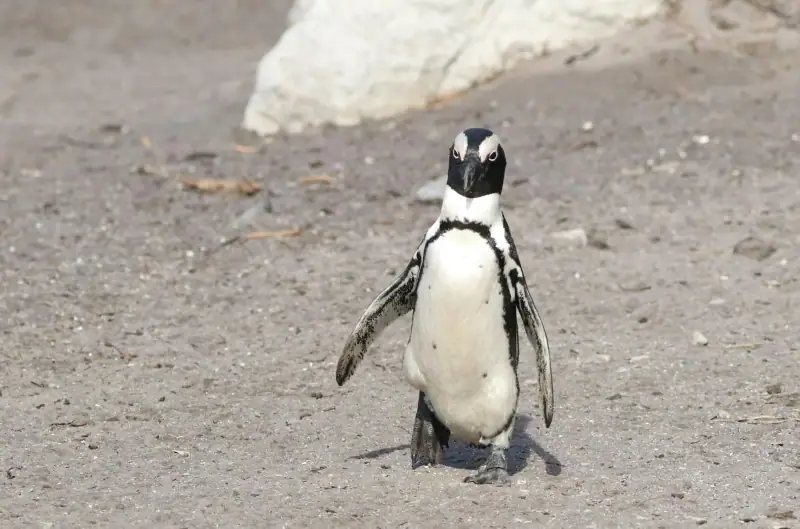
Fifteen minutes by boat from the Lüderitz quay, Halifax Island has one of the largest colonies of African penguins (Spheniscus demersus) in Namibia. These small, sturdy penguins with pink eyes ringed in white nest by the hundreds on the black rocks. You can see them all year.
Boat excursions from Lüderitz systematically include Halifax Island. Allow 2 h 30 round trip with a stop off the island. Boats often pass the local Cape fur seal colony, and dolphins regularly follow the boats in the bay.
Species you can see in Lüderitz Bay:
- African penguins (all year)
- Cape fur seals (all year)
- Bottlenose dolphins (frequent)
- Southern right whales (July to November)
- Pelicans, cormorants, terns (all year)
Operators: Lüderitz Safaris & Tours, Sea Adventures. Average price: N$450 to 600 per person for a penguin excursion (2 h 30).
Lüderitz: German colonial architecture
The center of Lüderitz is an open-air museum of Wilhelmine architecture. Built between 1905 and 1914 with materials imported from Germany, the colorful half-timbered houses contrast sharply with the surrounding desert landscape. A few highlights:
Felsenkirche (Church on the Rock)
Perched on a rocky spur overlooking the town, this Lutheran church (1912) in local granite and pink sandstone is the emblem of Lüderitz. Its bell tower can be seen from far out at sea. The stained-glass window in the chancel, a gift from Empress Auguste Viktoria, shows Christ walking on water, a particularly striking image in this landscape of desert and ocean.
Hours: Monday to Friday 5 pm to 6 pm, Saturday 9 am to 12 pm (and flexible opening depending on the caretaker’s availability). Access: 10 minutes on foot from the town center.
Goerke Haus
The finest colonial house in Lüderitz, the residence of Lieutenant Hans Goerke (1910), is now a historic monument open to visitors. Its interiors recreate bourgeois German life in Namibia: Art Nouveau furniture, Meissen porcelain, Persian carpets. Panoramic view of the bay from the terrace.
Fee: N$80 per adult.
Diamantenhaus and the Waterfront
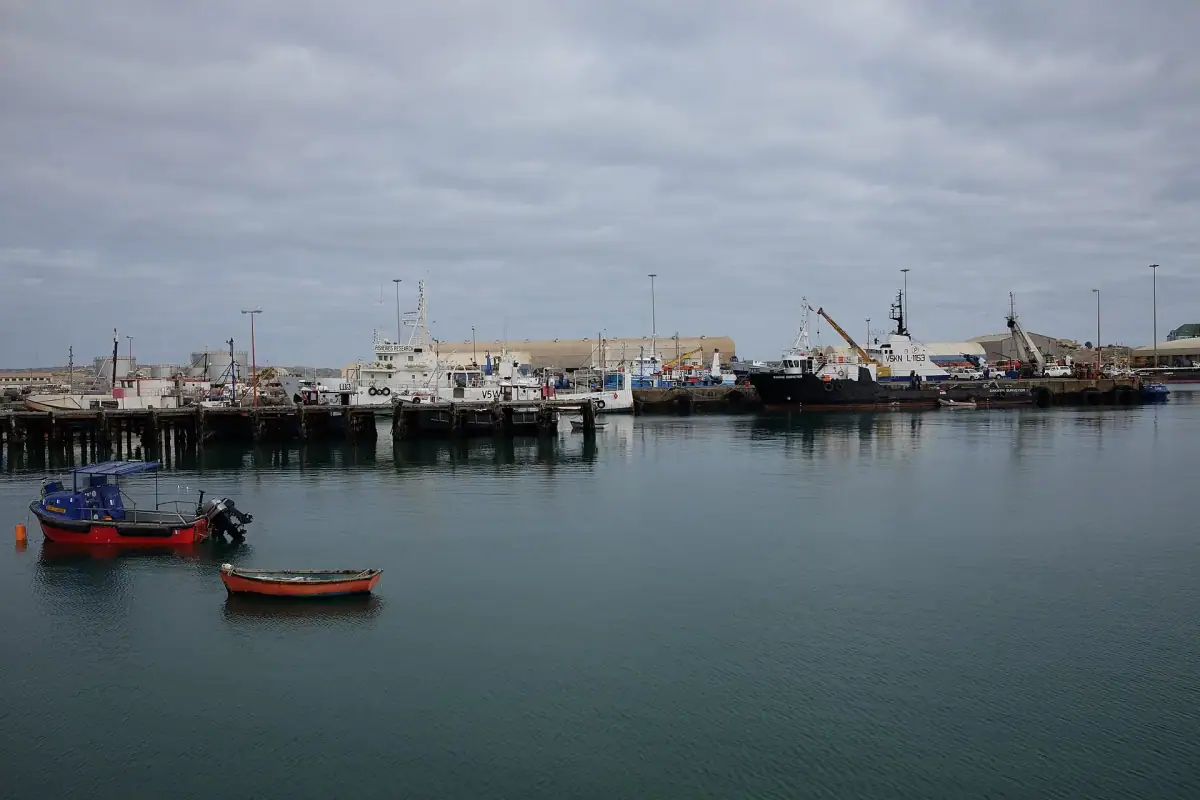
The seaside district around Diamond House has several restored colonial buildings, fish restaurants and the marina. This is where the lobster boats come in in the morning. Arrive early (7 am to 8 am) to see the landings.
Hotels in Lüderitz
From colonial guesthouses to modern lodges, all the accommodation in Lüderitz.
The Lüderitz peninsula
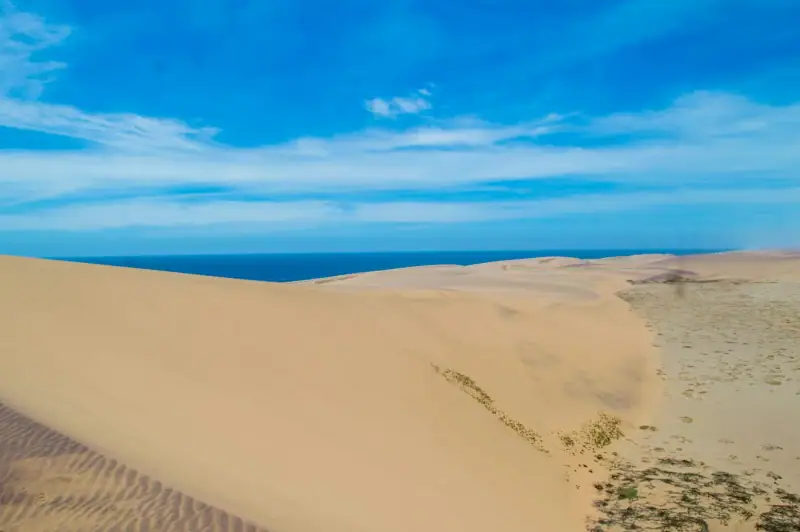
The peninsula that shelters Lüderitz Bay is a half-day excursion. The road (B4 then tracks) reaches several remarkable sites:
Diaz Point
Located 20 km (12 mi) northwest of Lüderitz, Diaz Point is where Bartolomeu Dias planted a cross in 1488 to mark his progress toward the Cape of Good Hope. A replica of the original cross (kept in Lisbon) still stands on the rock. The view over the wild Atlantic is striking. Seals colonize the rocks.
Grosse Bucht (Big Bay)
A fine sand beach, sheltered from the wind, with relatively calm waters. Swimming is possible in summer (but the water stays cold: 15 to 18 °C / 59 to 64 °F thanks to the Benguela Current). In winter the waves can be spectacular.
Sturmvogel Bucht
A small cove visited by flamingos, pelicans and cormorants. The Benguela Current brings up the cold, nutrient-rich waters of the South Atlantic, feeding exceptional marine wildlife.
Getting there and logistics
From Windhoek: 750 km (466 mi) on the B1 (toward Keetmanshoop) then the B4 (toward Lüderitz). Allow 8 to 9 hours on the road, full of wide-open spaces and wildlife (oryx, springbok, ostriches). The road is fully paved. Fill up at Keetmanshoop; the next station is in Lüderitz.
By air: Air Namibia ceased operations in 2021 and no regular Windhoek to Lüderitz connection is confirmed in 2026. Ask regional airlines about possible flights, as they vary by season.
Car rental: essential to reach Lüderitz and the peninsula. The big agencies (Avis, Budget, Europcar) are in Windhoek. A standard car is enough; the peninsula tracks are passable without a 4x4.
Where to eat in Lüderitz
Lüderitz is the Namibian destination for seafood. The Cape rock lobster (kreef) caught in the bay is known throughout southern Africa. A few addresses:
Krabbenhöft & Lampe: the historic fish restaurant of Lüderitz, in a colonial house. Lobster, langoustines, grilled tuna. The best value for seafood.
The Nest Hotel: the restaurant of the best-known hotel in Lüderitz has a nice view of the bay. International cuisine with local specialties. A good choice for a quiet meal.
Shark Island Campsite: the only restaurant of this communal campsite on the peninsula serves basic grills, but in an unusual setting facing the Atlantic.
Street stalls: a few stalls near the harbor sell lobster rolls in the morning when the boats return, the best food experience for under N$80.
Weather and best time to visit
Lüderitz’s climate is dictated by two factors: the Benguela Current (which cools the coast all year) and the wind.
Winds: the Südwester, a violent wind from the southwest, blows regularly from November to January. It can reach 60 to 80 km/h (37 to 50 mph) and makes sea excursions difficult. Outside the windy season the wind is more moderate but almost constant (Lüderitz is one of the windiest towns in Africa).
Temperatures: mild all year thanks to the cold current (15 to 22 °C / 59 to 72 °F by day). Nights can be cold in the southern winter (May to August: 8 to 12 °C / 46 to 54 °F).
Recommendation: April to September, to combine thermal comfort, moderate wind and good photographic light. July and August are the busiest months (European holidays).
Practical tips
Average daily budget: N$800 to 1,500 per day (accommodation + meals + Kolmanskop entry + boat excursion).
Accommodation: The Nest Hotel (3 stars, well located), Shark Island Campsite (iconic campsite on the peninsula), Lüderitz Backpackers (budget).
Connectivity: 4G network available in town (MTC or TN Mobile). The connection disappears in the surrounding desert. Check your carrier’s international plan or consider a travel eSIM.
Safety: Lüderitz is one of the safest towns in Namibia. The usual precautions (do not leave objects visible in the car) are enough.
Fuel: fill up at Keetmanshoop (350 km / 217 mi before Lüderitz) and in Lüderitz before leaving. There is no station between the two.
Money: only one reliable ATM in town (First National Bank, Main Street). Carry enough cash.
Lüderitz is not on the way to anything. To get there, you have to want to. But those who make the detour discover one of the strangest and most fascinating towns on the African continent, a place where colonial history, hostile nature and wild beauty are layered in total disorientation. The desert invading the living rooms of Kolmanskop, penguins waddling in front of the Atlantic, the red Lutheran church on its rock at the end of the world: Lüderitz is unforgettable.
To round out your exploration of southern Namibia, see our guides to the Skeleton Coast and the Namib Desert, or plan your whole trip with our Namibia road trip guide.
Frequently asked questions
How do you get to Lüderitz from Windhoek?
Allow 750 km (466 mi) from Windhoek, or 8 to 9 hours by road on the B1 then the B4. The road is paved and in good condition. Direct Windhoek to Lüderitz flights are rare and irregular (Air Namibia ceased operations in 2021): check with regional airlines before counting on them. A rental car remains the best option.
Do you need to book ahead to visit Kolmanskop?
Yes, a reservation is essential. Guided tours of Kolmanskop are run only by the official operator Diamond Area 1 (Namdeb), with two slots a day: 9:30 am and 11 am. Book online or at the Nest hotel several days ahead in high season.
What is the best time to visit Lüderitz?
The southern summer (November to January) is best avoided: strong winds (Südwester) blow constantly and make boat trips difficult. The best time is April to September, with mild temperatures (15 to 22 °C / 59 to 72 °F) and less wind. The penguin colony is visible all year at Halifax Island.
Can you photograph Kolmanskop freely?
Yes, photography is allowed and encouraged. Morning visits (9:30 am) are best for the golden light filtering through the windows onto the sand. Bring a wide-angle lens and a cloth to wipe the lens: sand dust is everywhere.
Are there penguins in Lüderitz?
Yes, Halifax Island (15 minutes by boat from Lüderitz) has a large colony of African penguins (Spheniscus demersus). Boat excursions run daily. As a bonus, dolphins and fur seals are often seen in the bay.
How long do you need to visit Lüderitz?
Two full days is ideal: half a day for Kolmanskop, a day for the town and Halifax Island, and time on the road. If you are passing on the road between Swakopmund and the Orange River, one night is the minimum for Kolmanskop.
More Namibia guides
Keep reading
Visiting Etosha National Park: a complete guide to the Namibian safari
Complete guide to Etosha National Park: best season, camps, waterholes and animals to see. Everything to plan your safari in Namibia.
Visiting Swakopmund: a complete guide to Namibia's colonial pearl
Complete guide to Swakopmund: German architecture, sandboarding, Living Desert tours and restaurants. Everything to visit this unique Namibian town.
Visiting Walvis Bay: a complete guide to the flamingo lagoon
Complete guide to Walvis Bay: lagoon, flamingos, dolphins, Sandwich Harbour and fresh oysters. All you need to visit this unique Namibian town.
Ready-made
Namibia itineraries
10 days
Namibia in 10 days without a car: a realistic itinerary by shuttle and transfer
WindhoekEtoshaDamaralandSwakopmundSesriem / SossusvleiWindhoek
10 days
Namibia road trip in the rainy season (January to March): itinerary and passable roads
WindhoekEtosha (Okaukuejo)Khorixas / TwyfelfonteinSwakopmundSesriemWindhoek

21 days
Namibia road trip: a complete 2 to 3 week 4x4 itinerary
WindhoekSossusvlei / Namib-NaukluftSwakopmund / Walvis BayDamaraland / SpitzkoppeTwyfelfonteinSkeleton Coast, southern partEtoshaWaterberg PlateauFish River CanyonLüderitz and return to Windhoek