Itineraries
Namibia road trip: a complete 2 to 3 week 4x4 itinerary

We may earn a commission when you book through links on this page, at no extra cost to you. We don't visit or try the places we cover: we summarize published sources. How we work
Day by day: 3-week classic loop from Windhoek
- Day 1Windhoek
- Days 2-3Sossusvlei and Namib-Naukluft
- Days 4-5Swakopmund and Walvis Bay
- Days 6-7Damaraland and Spitzkoppe
- Days 8-9Twyfelfontein
- Days 10-11Skeleton Coast, southern part
- Days 12-14Etosha
- Days 15-16Waterberg Plateau
- Days 17-18Fish River Canyon
- Days 19-21Lüderitz, then back to Windhoek
Where to sleep
- Windhoek1 night
- Sossusvlei / Namib-Naukluft2 nights
- Swakopmund / Walvis Bay2 nights
- Damaraland / Spitzkoppe2 nights
- Twyfelfontein2 nights
- Skeleton Coast, southern part2 nights
- Etosha3 nights
- Waterberg Plateau2 nights
- Fish River Canyon2 nights
- Lüderitz and return to Windhoek3 nights
In short
- The classic loop runs Windhoek, Sossusvlei, Swakopmund, Twyfelfontein, Etosha and back to Windhoek: about 3,500 km (2,175 mi) over 3 weeks.
- Plan 3 to 6 hours of driving per day and avoid days of more than 500 km (310 mi) on gravel.
- Never drive at night on gravel roads, and carry N$5,000 to 10,000 in cash for campsites and rural fuel stations.
- Roadworks were reported in 2026 between Okaukuejo and Namutoni in Etosha: ask NWR about detours before you go.
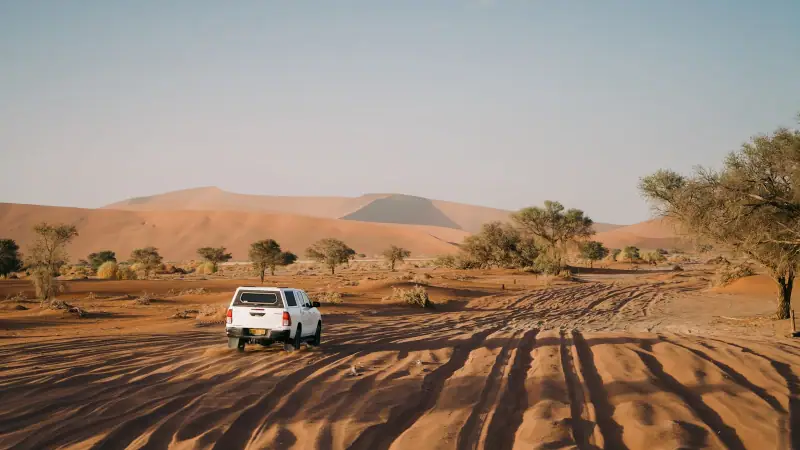
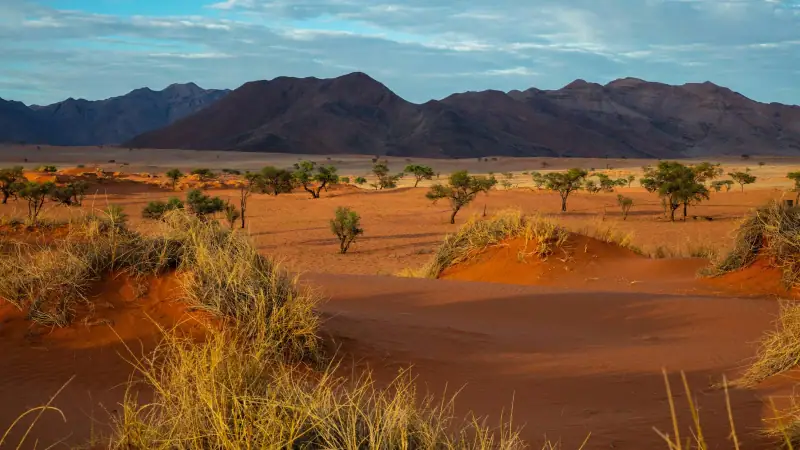
The Namibian road trip is one of the most legendary adventures in Africa. Thousands of kilometers of red gravel roads lined with acacias, dunes as far as the eye can see, herds of oryx galloping across the plains, and that end-of-the-world silence that wraps around you as soon as you switch off the engine. Namibia is made to be explored self-drive in a 4x4, at your own pace.
The classic 3-week itinerary
This 3-week (21-day) loop covers the main stops in Namibia and can be shortened to 2 weeks by skipping some of them.
Stage 1: Windhoek (1 night) Stages 2-3: Sossusvlei / Namib-Naukluft (2 nights) Stages 4-5: Swakopmund / Walvis Bay (2 nights) Stages 6-7: Damaraland / Spitzkoppe (2 nights) Stages 8-9: Twyfelfontein (2 nights) Stages 10-11: Skeleton Coast, southern part (2 nights) Stages 12-14: Etosha (3 nights) Stages 15-16: Waterberg Plateau (2 nights) Stages 17-18: Fish River Canyon (2 nights) Stages 19-21: Lüderitz and return to Windhoek (3 nights)
Total: ~3,500 km (2,175 mi).
Getting your 4x4 ready
Choosing your vehicle
For a 3-week road trip, the Toyota Hilux double cab with a rooftop tent is the most popular setup. It combines toughness, comfort and storage capacity. Popular alternatives: the Land Rover Defender (better in sand) and the Ford Ranger (good value for money).
Essential equipment supplied by the rental company:
- Rooftop or ground tent
- Full camping kit (stove, dishes, compressor cooler)
- Extra water and fuel jerrycans
- Puncture repair kit
- Shovel and sand recovery plate
- GPS or maps.me downloaded offline
What to bring yourself:
- First-aid kit (antiseptic, bandages). For health preparation in the north of the country, ask your doctor or a travel clinic, and see the official travel health pages (CDC in the US, TravelHealthPro in the UK).
- SPF 50+ sunscreen, DEET insect repellent
- Satellite phone or SPOT beacon for areas without coverage
Stage by stage
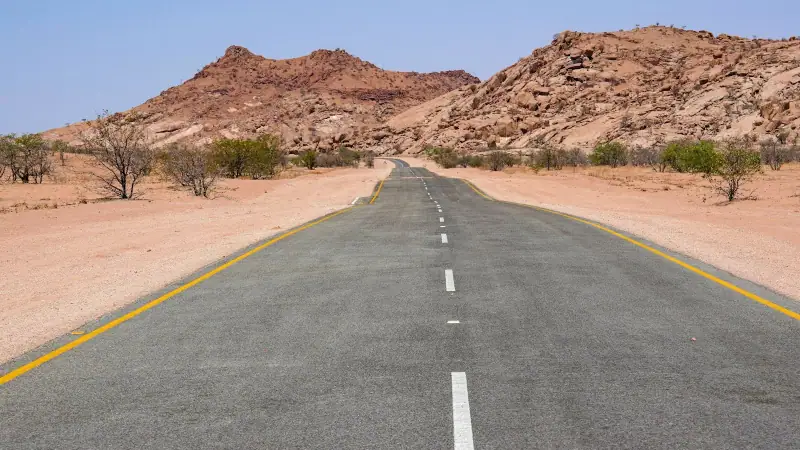
Windhoek → Sossusvlei (385 km / 239 mi)
Route: B1 south → C24 → C19 (Solitaire) → C19 to Sesriem. Surface: paved to Solitaire, then 60 km (37 mi) of gravel to the park entrance. Stops: Rehoboth (lunch), Solitaire (legendary apple pie).
Sossusvlei → Swakopmund (350 km / 217 mi)
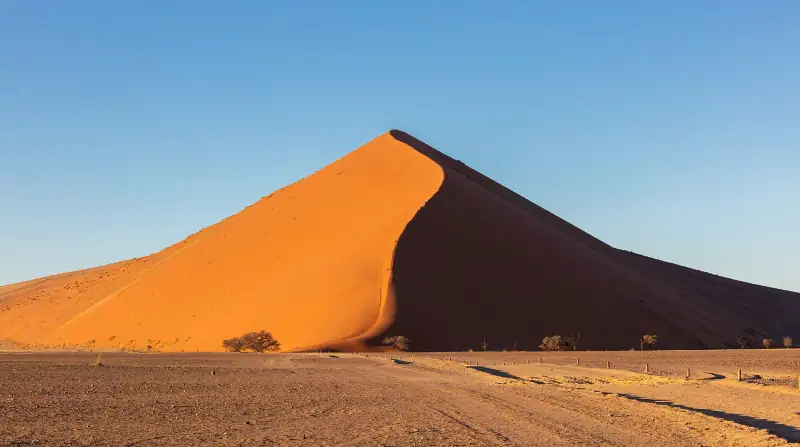
Route: C19 → C14 → B2 via Walvis Bay. Highlights: Kuiseb Pass, Moon Landscape, Walvis Bay (flamingos). Tip: leave Sossusvlei early (5:30 am) to be on the dunes at dawn.
Swakopmund → Damaraland (250 km / 155 mi)
Route: B2 → D2303 → C35 toward Uis or Brandberg. Highlights: Brandberg (San rock paintings), Messum Crater. Surface: partly gravel, passable in a 4x4.
Damaraland → Twyfelfontein (200 km / 124 mi)
Route: C35 → D3254. Highlights: Petrified Forest (260 million years old), Organ Pipes (volcanic formation), Twyfelfontein (UNESCO rock engravings). Accommodation: Twyfelfontein Adventure Camp or Aba Huab campsite (check availability with the property).
Twyfelfontein → Skeleton Coast (300 km / 186 mi)
Route: C35 → D2620 → Springbokwasser Gate. Surface: gravel and sandy track. A 4x4 is essential. Highlights: Möwe Bay (seal colony), shipwrecks, coastal lions. Note: the Skeleton Coast requires a permit (transit permit at the park entrance) and a prior reservation with NWR for Torra Bay and Terrace Bay; the north of the park remains reserved for licensed tours. Check the rules and gate hours with NWR before you leave.
Skeleton Coast → Etosha (350 km / 217 mi)
Route: C35 → B1 → Anderson Gate (south Etosha). Tip: enter Etosha in mid-afternoon so you have time to explore before the gates close at sunset.
Etosha (3 nights minimum)
Sleep in the NWR camps (Okaukuejo, Halali, Namutoni) to be inside the park. Plan your game drives to the waterholes at dawn and in the evening. Road resurfacing works between Okaukuejo and Namutoni have been under way since 2026: ask NWR about detours before you leave.
Campsites and lodges in Namibia
Book your stops ahead to secure your road trip.
Etosha → Fish River Canyon (750 km / 466 mi)
This is the longest stage. Two options:
- Direct via the B1 and B4 (paved, 8 to 9 hours on the road)
- Via the Waterberg Plateau (recommended detour: a 650 m (2,130 ft) red sandstone plateau with rhinos, giraffes and vultures)
Fish River Canyon: the second-largest canyon in the world (after the Grand Canyon). The 85 km (53 mi) hike along the canyon floor is open only in the dry season (in principle from May 1 to September 15, depending on the river level: the 2026 opening was delayed by floods). The view from the rim is enough to appreciate the scale of the place.
Fish River Canyon → Lüderitz → Windhoek (750 km / 466 mi)
Lüderitz: a ghost-town feel on the south coast, a former diamond capital. Its German Art Nouveau architecture contrasts with the arid Namib desert. Kolmanskop, the sand-covered ghost town (5 km / 3 mi from Lüderitz), is one of the most photographed places in Namibia.
Return to Windhoek: B4 → B1 via Keetmanshoop.
Golden rules for the Namibian road-tripper
- Never drive at night on gravel roads: animals cross after sunset. Plan your days to arrive at your stop before 5:30 pm.
- Always carry cash: keep N$5,000 to 10,000 in notes for campsites, rural fuel stations and purchases.
- Check road conditions: some tracks close after rain. Ask the lodges about the state of the roads.
- Tell someone your route: leave your plan with your rental company and your family or friends. If you break down in an isolated area, your declared route can save lives.
- Photograph from the car: in the parks, stay in the vehicle. The car is an excellent hide for animals that do not see it as a threat.
The Namibian road trip is an introduction to African travel at its best: freedom, silence, endless landscapes and encounters with wildlife in its natural habitat, with no safety net and no artifice. An experience that changes the way you see the world.
Sources
- Namibia Wildlife Resorts: national parks
- Namibia Wildlife Resorts: figures checked November 2026
Frequently asked questions
Can you do a Namibia road trip solo?
Yes, Namibia is one of the best African destinations for solo self-drive travel. The roads are safe, the signage is decent, and lodges and campsites are well spread out.
What is the best route for a Namibia road trip?
The classic loop goes through Windhoek, Sossusvlei, Swakopmund, Twyfelfontein, Etosha and back to Windhoek. It covers about 2,500 to 3,000 km (1,550 to 1,865 mi) in 2 to 3 weeks. Before you leave, check the roadworks reported in 2026 on the road between Okaukuejo and Namutoni (Etosha).
How many hours do you drive per day on a Namibian road trip?
Allow 3 to 6 hours of driving per day depending on the stage. Avoid days of more than 500 km (310 mi) on gravel. Leave time for photo stops and wildlife.
How much extra fuel should you carry?
An extra 20-liter (5.3 US gal) jerrycan is recommended for remote areas. Fuel stations can be 200 km (124 mi) apart on some stretches.
Are the gravel roads in Namibia hard to drive?
Most gravel roads are passable in a 4x4 with careful driving. The main difficulties are heat, washboard surfaces, deep sand in some areas and flat tires.
More Namibia guides
Keep reading
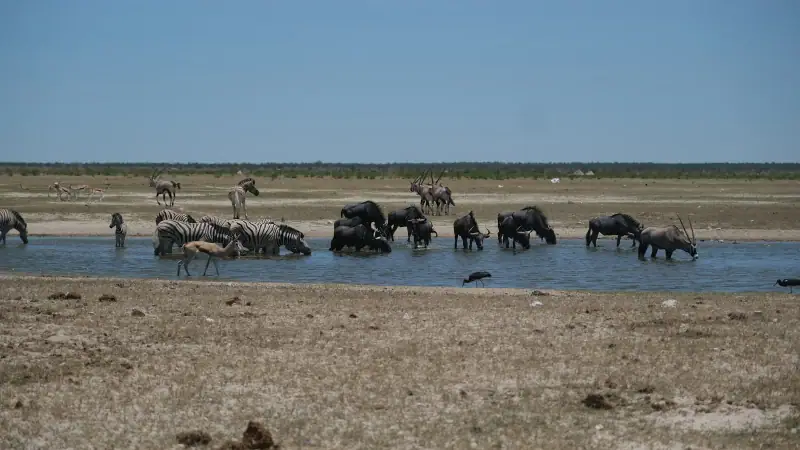
Where to stay in Etosha: NWR camps, lodges and practical tips
Choose where to stay in Etosha: official Okaukuejo, Halali and Namutoni camps or lodges outside the park. Budget, booking and safari tips.
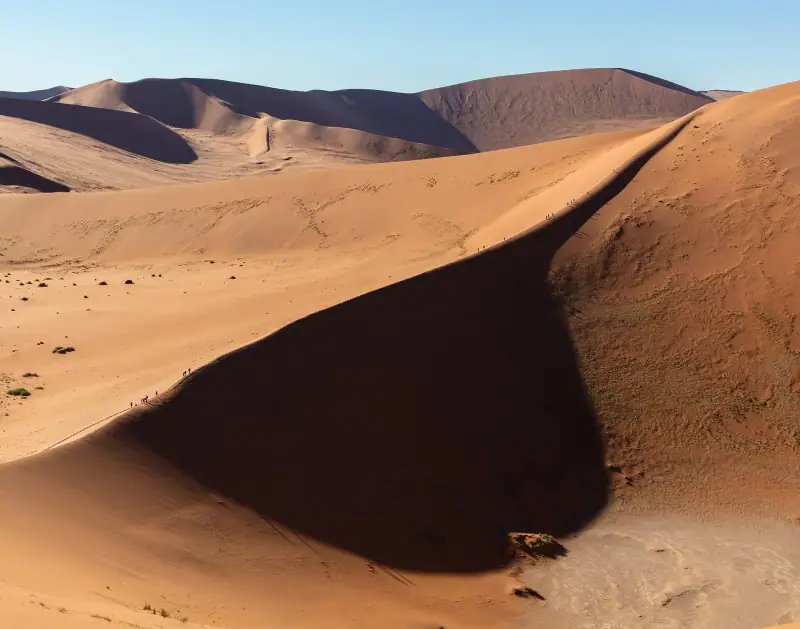
Best time to visit Namibia: a month-by-month guide
When to go to Namibia? Climate, seasons, wildlife and month-by-month advice to choose the best time for what you want to do.
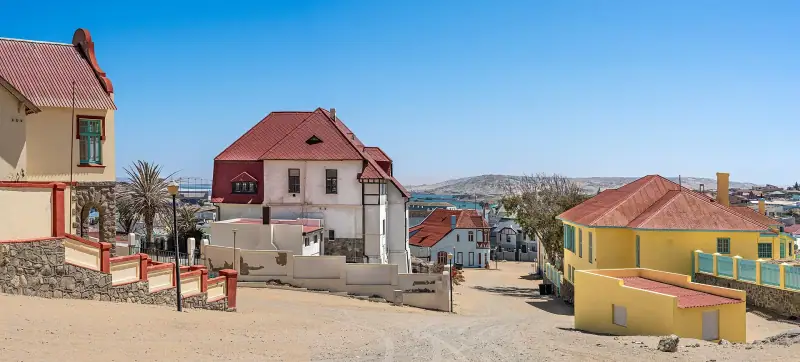
What to do in Lüderitz: activities and must-see visits
Kolmanskop, penguins at Halifax Island, Bogenfels, diving, flamingos: a complete guide to things to do in Lüderitz, Namibia's southern colonial gem.
Ready-made
Namibia itineraries
10 days
Namibia in 10 days without a car: a realistic itinerary by shuttle and transfer
WindhoekEtoshaDamaralandSwakopmundSesriem / SossusvleiWindhoek
10 days
Namibia road trip in the rainy season (January to March): itinerary and passable roads
WindhoekEtosha (Okaukuejo)Khorixas / TwyfelfonteinSwakopmundSesriemWindhoek