Plan your trip
South Africa budget: real trip cost by item and by profile
We may earn a commission when you book through links on this page, at no extra cost to you. We don't visit or try the places we cover: we summarize published sources. How we work
In short
- Excluding flights, two weeks cost roughly €700 to 1,000 (~$810 to $1,160) on a budget, €1,800 to 2,400 (~$2,090 to $2,785) in comfort, €3,500 (~$4,060)+ high end.
- Meals, wine and mid-range lodging are the best value; safaris, car rental in high season and long-haul flights weigh heavily.
- Kruger conservation fee for an international visitor: R602 per adult per day (valid Nov 1, 2025 to Oct 31, 2026), about €32 (~$37).
- Table Mountain cable car, July 1, 2026 to June 30, 2027: R475 online, R530 at the ticket office. Prices are indicative and rates change.
How much does a trip to South Africa really cost? The answer often surprises: the country can be visited at very low prices on the ground, but the bill climbs as soon as you add the long-haul flight, the car and a safari. The gap between a budget trip and a high-end stay is considerable, which is good news: you can build a trip suited to your wallet, provided you know where the money goes.
This guide details costs item by item, offers three budget profiles priced in euros (with dollar equivalents at €1 = $1.16) and ends with concrete tips to spend less. The amounts quoted come from official fee schedules (Kruger Park, Table Mountain cable car) and public comparisons consulted in September-October 2026. They are indicative: prices change every year, and the rand fluctuates.
The exchange rate: the key to reading prices
The local currency is the South African rand (ZAR). In mid-September 2026, one euro traded around 18.8 rand, versus about 20.4 a year earlier. In practice, R100 is worth roughly €5.30 (~$6). This is useful for mentally converting prices shown in a shop or restaurant.
Two simple habits:
- Divide by 19 to get an approximate amount in euros (a R190 dish is about €10 / $12).
- Add a 10% margin to your budget: the rand is a volatile currency, and a weaker or stronger euro noticeably changes the final bill.
For entry requirements and the documents to plan for, check the official travel advice of your government before you book: travel.state.gov (US), GOV.UK (UK), travel.gc.ca (Canada), Smartraveller (Australia) (checked November 2026).
The flight: the first item of the budget
For a two-week trip, the plane ticket is a large share of the total. Prices vary strongly with the season and your departure city: holiday periods cost more than spring or autumn.
A few levers to limit the bill:
- Travel outside school holidays: April-May and September-October are often more affordable, and the climate is pleasant (see the best time to visit South Africa).
- Book early and compare several arrival airports: Cape Town and Johannesburg are not always the same price.
- Consider an “open-jaw” flight: arriving in Johannesburg for the safari and leaving from Cape Town avoids backtracking and buying a domestic flight on top.
Compare flights to South Africa
The ticket price varies a lot with the dates: compare several periods before fixing your calendar.
Lodging: from hostel to lodge
This is the item where South Africa offers the best value. According to public comparisons, you find nights from about €25 (~$29) in the 1-2 star category (hostels, small guesthouses), from €60 (~$70) in 3-4 star, and from €110 (~$128) in 4-5 star hotels and resorts.
The gaps between cities are real. An average estimate puts a night in a 3-star hotel in Cape Town around €88 (~$102), versus about €44 (~$51) in Johannesburg. Cape Town, very touristy, is clearly more expensive, especially from December to February. The choice of neighborhood matters as much as the category: we detail the options in our guide on where to stay in Cape Town.
Options by profile
- Hostels and simple guest rooms: ideal for a budget trip, with a shared kitchen to cut meal costs.
- Guesthouses and B&Bs: very common, often with a hearty breakfast included and excellent value.
- 4-star hotels and lodges: high comfort, sometimes a pool and a view of the mountain or ocean.
- Private safari lodges: full-board rates, with activities included, which make for a whole different budget level.
Find lodging that fits your budget
Filter by price, rating and free cancellation to compare hostels, guesthouses and hotels on your dates.
Transport: car, domestic flights and local transport
The country is vast and intercity public transport is limited. Most travelers rent a car, especially for the Cape Peninsula, the Winelands and the Garden Route.
Car rental
According to public comparisons, a small car rents from about €40 (~$46) a day, a midsize car from €50 (~$58), and an SUV around €70 to 80 (~$81 to $93). Prices climb in high season and for a one-way rental returned in another city. Also check the insurance deductible and included mileage. All our practical tips (driving on the left, tolls, parking) are in the guide to driving in South Africa and renting a car.
Fuel
Fuel is an item to watch. Projections published for October 2026 put 95-octane unleaded gasoline around R29 to R30 a liter (about R110 to R114 per US gallon; about €1.55 / $1.80 a liter), a record level according to the South African business press. For a road trip of 1,500 to 2,000 km (932 to 1,243 mi), allow €150 to 250 (~$175 to $290) of fuel depending on the vehicle’s consumption.
Taxis, ride-hailing and local transport
Ride-hailing apps are very handy in big cities, with fares that are often low: the comparisons suggest roughly €0.80 a kilometer (~$0.93). A city bus ride costs about €1.80 (~$2). For safety reasons, many travelers prefer ride-hailing to walking at night (see our safety tips for South Africa).
Meals: a very affordable item
This is one of the great pleasures of the trip: eating well for little. Public ranges indicate:
- Fast food: €3 to 5 (~$3 to $6).
- Meal at an everyday restaurant: €5 to 18 (~$6 to $21), with an average around €10 (~$12) for lunch.
- 3-course menu in a good restaurant: about €18 to 25 (~$21 to $29) on average, up to €60 (~$70) at a fine-dining table.
- Coffee: about €1.70 (~$2). Local beer: about €1.80 (~$2).
Grilled meat, the braai (barbecue) and seafood are safe bets. To know what to order and where to taste the specialties, see our article on South African cuisine. Wine, very affordable for its quality, deserves a mention: the Winelands offer tastings at modest prices, detailed in our guide to the Stellenbosch and Franschhoek wine route.
For a daily meal budget, allow about €15 to 25 (~$17 to $29) per person on a budget trip (breakfast at the lodging, simple lunch, dinner at an everyday restaurant), €30 to 50 (~$35 to $58) in comfort, and €60 (~$70) or more at the high end.
Activities: where you really spend
Many of the country’s wonders are free or inexpensive: beaches, hikes, viewpoints, walks on the peninsula. The most popular paid attractions, however, cost more than you might imagine.
A few reference prices
- Table Mountain cable car: for the period from July 1, 2026 to June 30, 2027, the adult round trip costs R475 online (about €25 / $29) and R530 at the ticket office. Buying online is therefore cheaper.
- Kruger National Park: the conservation fee for an international visitor is R602 per adult per day (about €32 / $37), rate valid from Nov 1, 2025 to Oct 31, 2026. It is added to lodging.
- Popular guided tours: the comparisons indicate €50 to 65 (~$58 to $75) per person for a day excursion, and about €230 (~$265) for a private safari in Kruger.
- Lodge safari: offers start around $150 per person per day for basic packages, $350 to 650 a night mid-range, and exceed $1,000 at the high end.
Excursions and tours in Cape Town
Peninsula tours, cruises, tastings: compare activities with flexible cancellation before booking.
To prepare your first safari and choose between the public park and a private reserve, read our guide to a first safari in Kruger. The choice of lodging type (SANParks camps or private lodge) is what makes the bill vary most.
Three priced budget profiles
Here are three profiles for a 14-day trip, per person and excluding the international flight, with two travelers sharing a room and a car. They are built from the public ranges above and are indicative.
Profile 1: the thrifty traveler (about €50 to 70 / $58 to $81 a day)
- Lodging: hostels and simple guesthouses, €25 to 35 (~$29 to $41) per night per person.
- Transport: a compact car shared by two, with fuel and local transport.
- Meals: breakfasts included, shared kitchen or everyday restaurants.
- Activities: free hikes and beaches, one or two paid visits, a base camp in Kruger Park on a self-drive.
- 14-day total: about €700 to 1,000 (~$810 to $1,160).
Profile 2: the comfort traveler (about €130 to 170 / $151 to $197 a day)
- Lodging: 3-4 star hotels and charming guesthouses, €60 to 110 (~$70 to $128) per night for two.
- Transport: a midsize car, fuel for a full road trip.
- Meals: varied restaurants, wine tastings.
- Activities: the cable car, guided excursions, one or two safari outings.
- 14-day total: about €1,800 to 2,400 (~$2,090 to $2,785).
Profile 3: the high-end traveler (from €250 / $290 a day)
- Lodging: 4-5 star hotels, boutique hotels, a few nights in a private safari lodge.
- Transport: an SUV or private driver, a possible domestic flight.
- Meals: fine-dining tables, estate wines.
- Activities: a safari in a private reserve, private excursions.
- 14-day total: about €3,500 (~$4,060) and more, often well beyond if there are many nights in safari lodges.
Private safari lodges follow a different logic: rates per night, with meals and outings included. A few nights are enough to double the budget of a week, so it makes sense to concentrate them on a short stay rather than the whole trip.
The hidden costs not to forget
Several expenses easily slip under the radar when building the budget:
- Travel insurance: essential, notably for medical costs and repatriation, which an embassy does not cover. Check the exclusions for risky activities.
- Tips: restaurants, gas station attendants who serve you, car guards, safari guides. About 10 to 15% at restaurants if service is not included.
- Bank fees: withdrawals and payments in foreign currency. A card with no foreign fees saves a fair amount over the trip.
- Tolls: present on some routes, they add to fuel on a road trip.
- Mobile connection: a local SIM card or an eSIM often costs less than roaming; check your carrier’s international plan or use a travel eSIM.
- Safari extras: drinks, tips to rangers, night drives or bush walks are sometimes charged extra.
10 tips to spend less
- Go outside high season. Avoid Christmas and January in Cape Town, where lodging and car rental hit their maximum rates. The southern spring and autumn offer a good compromise.
- Book the cable car online. The saving is about R55 per adult compared with the ticket office, and you avoid the queue.
- Favor guesthouses with breakfast. A hearty breakfast often lets you settle for a light lunch.
- Cook or picnic. Supermarkets are well stocked and fresh produce is affordable. A picnic by the sea or in a vineyard is a lovely, low-cost experience.
- Share the car and the room. The cost per person drops clearly with two, and even more with three or four.
- Do your safari as a self-drive in Kruger. The conservation fee of R602 a day remains far below a night in a private lodge, and you drive yourself.
- Choose free activities. Hikes on the peninsula, beaches, panoramas, walks in the Winelands: enough to fill many days without spending.
- Compare excursions before booking. Prices vary from one operator to another for the same outing. Favor free cancellation when it is offered.
- Watch fuel. Driving slower, avoiding detours and grouping stops cuts the bill. Fuel prices differ between the interior and the coast.
- Pay in rand rather than in your home currency. If a payment terminal offers conversion into your home currency, decline: the rate applied is generally less favorable.
Affordable lodging in Cape Town
Compare guesthouses and hotels in the country's most visited city, outside peak dates to pay less.
Sample budget: 10 days as a couple, comfort profile
To make the figures concrete, here is a simulation for a couple over 10 days (Cape Town, Winelands, Garden Route), excluding the flight. These are estimates based on the ranges cited above, not guaranteed prices.
| Item | Estimate for two |
|---|---|
| Lodging (10 nights at about €80 / $93) | €800 (~$930) |
| Car rental (10 days at about €50 / $58) | €500 (~$580) |
| Fuel (about 1,000 km / 620 mi) | €100 to 150 (~$115 to $175) |
| Meals (about €40 / $46 per person per day) | €800 (~$930) |
| Activities (cable car, excursions, tastings) | €250 to 350 (~$290 to $405) |
| Miscellaneous and tips | €100 to 150 (~$115 to $175) |
| Total | about €2,550 to 2,750 (~$2,960 to $3,190) |
That is about €1,300 to 1,400 (~$1,510 to $1,625) per person, or €130 to 140 (~$151 to $162) a day. This matches the comfort profile range. Add the flight to get the total cost, and keep a margin of about 10% for the unexpected and for rand variations.
How to organize your budget before leaving
A good method is to set the overall envelope first, then divide it according to your priorities:
- Book the fixed items first: flight, first and last night, car.
- Set a daily envelope for meals and extras, with a margin for the unexpected.
- Choose one or two “highlights” (safari, helicopter flight, a night in a lodge) and save elsewhere to treat yourself.
- Keep a reserve of about 10% for exchange variations and unexpected expenses.
- Track your spending during the trip with a simple notes app, to adjust along the way.
Finally, keep in mind that the cheapest is not always the wisest: on some items, such as insurance or vehicle security, it is better not to skimp.
Sources
- Table Mountain Aerial Cableway: figures checked November 2026
Frequently asked questions
What budget should you plan for two weeks in South Africa?
Excluding flights, roughly €700 to 1,000 (~$810 to $1,160) per person on a budget trip, €1,800 to 2,400 (~$2,090 to $2,785) in comfort and €3,500 (~$4,060) or more at the high end. These figures are rough estimates from public comparisons. International flight prices depend on your departure city and the season.
Is South Africa a cheap country?
It is mostly so for meals, drinks, wine and mid-range lodging, often noticeably inexpensive. On the other hand, safaris, car rental in high season and long-haul flights weigh heavily in the total budget.
What is the euro to rand exchange rate?
In mid-September 2026, one euro was worth about 18.8 rand (ZAR). The rate fluctuates: check it before you leave and keep a 10% margin in your budget to absorb variations.
How much is entry to Kruger Park?
For an international visitor, the conservation fee is R602 per adult per day (rate valid Nov 1, 2025 to Oct 31, 2026), about €32 (~$37). It is added to lodging in the park. Rates are revised every year: check the SANParks website for the period of your stay.
Should you pay in cash or by card?
Bank cards are widely accepted in cities and tourist areas, including at most gas stations where you are served. Keep some cash in rand for tips, car guards and rural areas.
Should you tip?
Yes, tipping is customary in restaurants (about 10 to 15% if service is not included), as well as for gas station attendants, car guards and safari guides. Include it in your daily budget.
More South Africa guides
Keep reading
When to go to South Africa: weather, seasons and best months
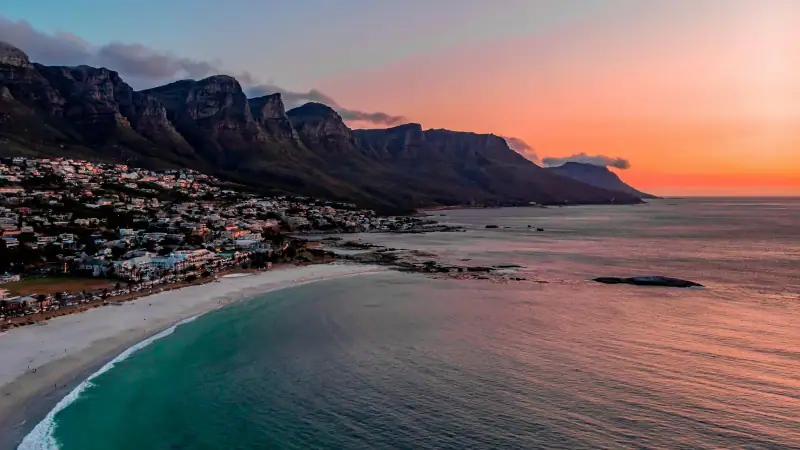
When to go to South Africa? Safari, Cape Town, whales, Garden Route, Drakensberg: our region-by-region guide to choosing the best month.

Driving in South Africa: renting a car, rules and tips
Driving in South Africa: driving on the left, licenses, tolls, gas stations, safety and tips for renting a car on your road trip.

Complete guide to visiting South Africa: regions, budget, tips
Visiting South Africa: regions, cities, highlights, when to go, transport, lodging and budget. The pillar guide to prepare your trip.
Ready-made
South Africa itineraries
8 days
Garden Route road trip: 8 days from Cape Town to Gqeberha
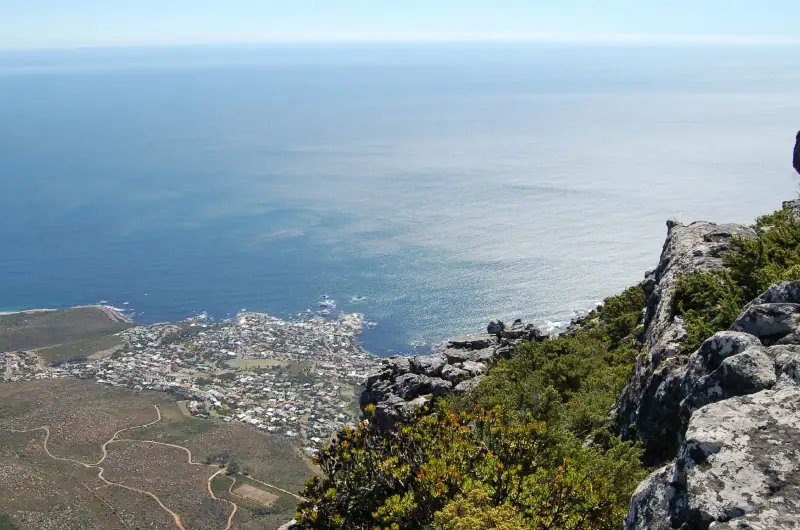
An 8-day Garden Route road trip: Hermanus, Swellendam, Mossel Bay, Knysna, Plettenberg Bay and Tsitsikamma, with realistic stages and distances.
14 days
South Africa in 2 weeks: Kruger, Cape Town and Garden Route itinerary
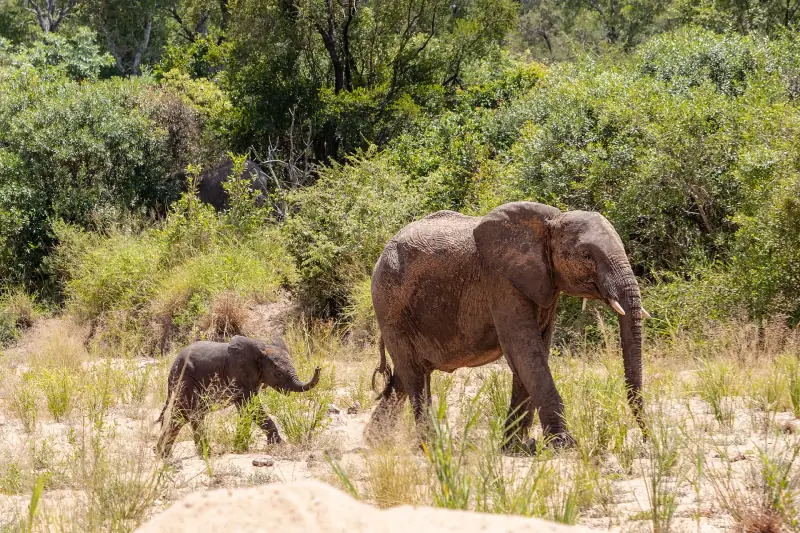
A 14-day South Africa itinerary: Kruger safari, Cape Town, Winelands and the Garden Route, with domestic flights, drives and practical tips.
5 days
Cape Town in 5 days: day-by-day itinerary, peninsula and Winelands
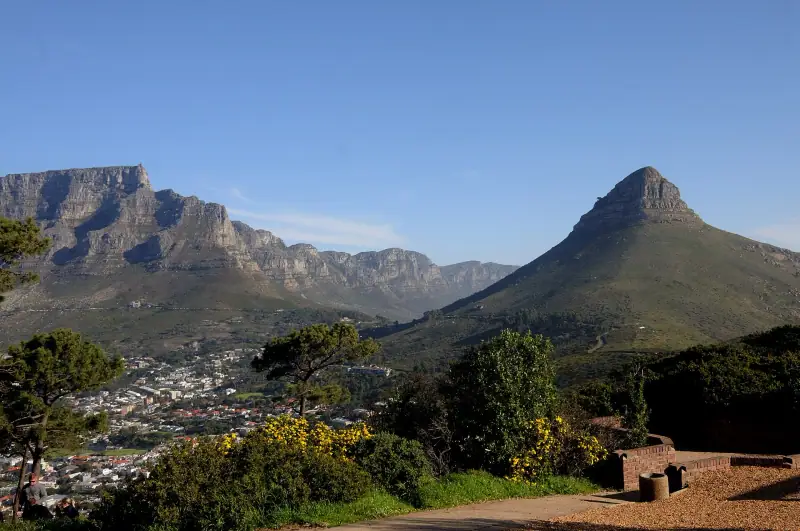
A 5-day Cape Town itinerary: Table Mountain, Waterfront, Bo-Kaap, the Cape of Good Hope peninsula, Winelands and Hermanus, with distances and tips.