Plan your trip
Driving in South Africa: renting a car, rules and tips
We may earn a commission when you book through links on this page, at no extra cost to you. We don't visit or try the places we cover: we summarize published sources. How we work
In short
- Traffic drives on the left, so the steering wheel is on the right in most rental cars; allow half a day to adjust.
- Typical limits: 120 km/h (75 mph) on highways, 100 km/h (62 mph) on national roads outside towns, 60 km/h (37 mph) in town; posted signs prevail.
- Avoid driving at night, keep doors locked and leave nothing visible in a parked car.
- Check one-way drop-off fees (for example Cape Town to Gqeberha), insurance, deductible and mileage before signing.
Renting a car is often the best way to discover South Africa. The country is vast, attractions are scattered and intercity public transport remains limited. By car, you stop when a landscape appeals to you, you avoid restrictive schedules and you reach sites off the classic circuits. But driving in South Africa calls for knowing a few particularities: driving on the left, tolls, gas stations, local vocabulary and safety precautions.
This guide gathers the essentials to organize your rental calmly and enjoy the road. If you are preparing a specific itinerary, also see our 8-day Garden Route road trip.
Do you really need to rent a car?
It depends on your program. A car is almost essential if you want to link several distant stops, for example Cape Town, the vineyards, the Hermanus coast and then the Garden Route. It is also very useful for exploring the Cape Peninsula at your own pace, with its viewpoints, beaches and coastal villages.
Conversely, if you stay a few days in a single big city, using ride-hailing, taxis booked by app or organized transfers is often simpler and avoids parking worries. For a safari in a private reserve, the lodge generally organizes the outings in its own vehicles.
An intermediate solution is to rent a car only for the road trip part, and get around another way before or after. You thus reduce the number of rental days and the stress of driving in city centers.
Driving on the left: adjusting gently
In South Africa, you drive on the left. The driver sits on the right, the turn signals and wipers are often reversed compared with left-hand-drive cars, and roundabouts are taken clockwise, yielding to vehicles coming from the right.
A few habits help you adapt quickly:
- Always keep the driver toward the center of the road: seated on the right, you stay close to the center line.
- At the start, repeat the rule to yourself at each intersection, especially after a break where you left the road.
- Choose an automatic transmission if you are not comfortable: it frees the left hand and reduces mental load. Manual transmissions remain common and often cheaper.
- Do your first kilometers in calm conditions, preferably outside rush hour and away from the center of big cities.
Most travelers feel comfortable after a day or two.
License, documents and rental conditions
To pick up your vehicle, you generally present your driver’s license, your passport and a bank card in the main driver’s name. The card is used to block a deposit, the amount of which varies by rental company and car category.
License rules depend on where your license was issued. Some rental companies or road authorities may ask for an international driving permit: ask your rental company before you leave, and check the official travel advice of your government (travel.state.gov in the US, GOV.UK in the UK, travel.gc.ca in Canada, Smartraveller in Australia; checked November 2026). Also check the minimum driver age and any “young driver” surcharge.
Before signing, check:
- the included insurance (damage, theft) and the amount of the deductible;
- the mileage: unlimited is preferable for a road trip;
- the drop-off fees in another city, significant if you start in Cape Town and finish in Gqeberha (Port Elizabeth);
- permission to cross a border if you plan to go to Eswatini or Lesotho: it must be requested in advance;
- the condition of the vehicle, with photos of all sides and the tires before departure.
If you plan to drive on dirt tracks, for example to some reserves, ask whether your contract allows them.
Lodging with parking
On a road trip, check that your hotel or guesthouse has secure parking. Compare offers by stop.
Rules of the road and local vocabulary
The main rules are similar to those in many other countries, with a few nuances. Speed limits are generally 120 km/h (75 mph) on highways, 100 km/h (62 mph) on national roads outside built-up areas and 60 km/h (37 mph) in town, but the signs prevail: always respect the posted speed. Speed cameras are frequent and fines can be passed on to the rental company, which bills you for them.
Seat belts are mandatory, handheld phone use is forbidden and the alcohol limit is low. The safest choice is not to drink at all if you are driving, especially after a tasting in the Winelands.
A few useful words:
- Robot: traffic light.
- Four-way stop: an intersection where each vehicle stops, the first to arrive leaves first.
- Bakkie: pickup truck, very common.
- Petrol attendant: gas station employee.
In a power cut, traffic lights can go out. The intersection is then treated as a four-way stop: caution and patience.
On two-lane national roads, you will often see slow vehicles pull onto the shoulder to let you pass. The gesture is common: a thank-you with a wave of the hand or a flash of the lights is appreciated.
Tolls, gas and parking
Tolls. Several major national routes have toll plazas, notably on links between big cities. Bring a bank card or a little cash: the barriers generally accept both.
Gas. Gas stations are generally not self-service: an attendant fills the tank, sometimes checks the oil and tire pressure, and cleans the windshield. Say which fuel and how much you want, then leave a small tip. Fill up as soon as the gauge goes below half when you cross isolated areas like the Karoo: gas stations are farther apart there.
Parking. In cities, car guards in high-visibility vests often watch street spaces. A small tip when you leave is customary. Prefer supervised parking lots in tourist centers.
Safety behind the wheel: the right habits
The great majority of travelers drive without incident, but a few common-sense rules apply. For a full picture, see our guide on safety in South Africa.
- Avoid driving at night, particularly outside big cities: animals on the road, pedestrians, poorly lit vehicles.
- Keep doors locked and windows up in town, and put phones, bags and cameras out of sight, preferably in the trunk.
- Never leave objects visible in a parked car.
- Plan your route in advance and download offline maps, as mobile coverage is sometimes absent in rural areas.
- Follow your accommodation’s instructions about neighborhoods to avoid.
- Take regular breaks: distances are long and fatigue is a real risk.
In case of breakdown or accident, stay cautious, contact the assistance number given in your rental contract and do not stop for strangers who insistently offer help.
Flights to South Africa
To set your rental dates, first compare flights by season and departure city.
Which routes to drive?
South Africa lends itself very well to a road trip, with main roads generally well maintained on the major tourist routes.
The Cape Peninsula and the Winelands. From Cape Town, the road to Stellenbosch and Franschhoek is easy and short. The peninsula offers spectacular coastal roads, some of which are paid or sometimes closed in bad weather or after a rockfall: check that they are open before leaving. Our guide to the Stellenbosch and Franschhoek vineyards helps you organize your stops without driving after tastings.
The Garden Route. This is the great classic: lagoons, forests, beaches and cliffs between Cape Town and Gqeberha. The stages are of reasonable length and the route suits a first road trip well. The details are in our 8-day program.
Kruger Park on your own. The park is one of the few big parks in Africa where you can drive yourself on paved roads and tracks. You must respect speed limits, stay in the vehicle outside authorized areas and return to camp before the gates close. To prepare this stop, read our guide to a first safari in Kruger.
The Karoo and the interior. Distances are long, gas stations far apart and landscapes grand. It is a fine experience, but plan for more self-sufficiency and a vehicle in good condition.
Choosing the right vehicle
A small city car is enough for most paved roads on the peninsula, in the Winelands and on the Garden Route. For long distances, a more comfortable model with a generous trunk is worth the extra cost: luggage stays out of sight. An SUV or higher car is useful if you plan dirt tracks, but does not turn a city vehicle into an off-roader.
Book well ahead for school holidays and in high season, when automatic cars become scarce. To choose your dates, see our guide to the best time to visit South Africa. Then compare offers, taking insurance, deductible and mileage into account.
How much time to plan for drives
Keep in mind that the distance shown on a map does not tell the whole story. Photo stops, roadworks, traffic near big cities and lunch breaks easily lengthen the day. A simple rule: limit stages to a few hours of driving a day and keep time for the visit itself.
For a balanced road trip, alternate a longer driving day with a day of walking or swimming. You will enjoy the stops more and avoid fatigue, especially with children.
Excursions without driving
Want a break from the wheel? Some visits, like wine tastings, are more relaxed with a guide.
Checklist before hitting the road
- Driver’s license, passport and bank card in the driver’s name.
- Insurance, deductible and mileage checked in the contract.
- Offline maps downloaded and assistance number saved.
- A little cash for tolls and tips.
- Water, snacks and a phone charger for long stages.
- Photos of the car’s condition at pickup and return.
- Full tank before returning the vehicle, depending on the contract terms.
With a little preparation, driving in South Africa becomes a pleasure, and the best way to discover the diversity of the country’s landscapes at your own pace.
Frequently asked questions
Do you drive on the left in South Africa?
Yes, traffic drives on the left, as in the United Kingdom. The steering wheel is therefore on the right in most rental cars. Allow half a day to get used to it, avoiding if possible getting back on the road right after a long flight.
Is my driver's license valid?
Rules depend on where your license was issued. Check with your rental company before you leave, ask whether an international driving permit is required, and check the official travel advice of your government.
Do you need to rent a car to visit South Africa?
For the Garden Route, the Winelands or Kruger Park on your own, it is the most practical way. For a stay limited to one big city, ride-hailing and organized transfers are often enough.
Is it dangerous to drive in South Africa?
On the tourist routes, driving generally goes well if you follow a few rules: avoid driving at night, keep doors locked and objects out of sight, and follow your accommodation's advice. Secondary roads call for more vigilance.
Are the roads toll roads?
The major national routes have tolls, and some scenic roads are also paid. They are paid at the barriers by bank card or cash: keep a means of payment at hand.
More South Africa guides
Keep reading
South Africa budget: real trip cost by item and by profile
What budget for South Africa? Lodging, transport, meals, activities: three profiles priced in euros and dollars, plus tips to spend less.
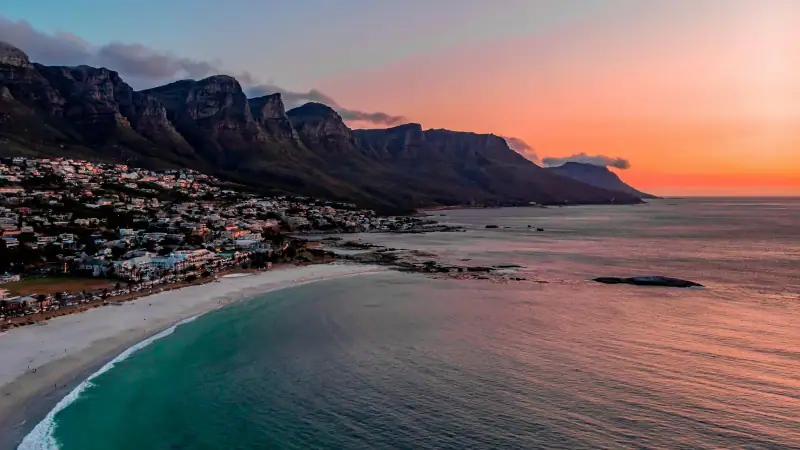
When to go to South Africa: weather, seasons and best months
When to go to South Africa? Safari, Cape Town, whales, Garden Route, Drakensberg: our region-by-region guide to choosing the best month.
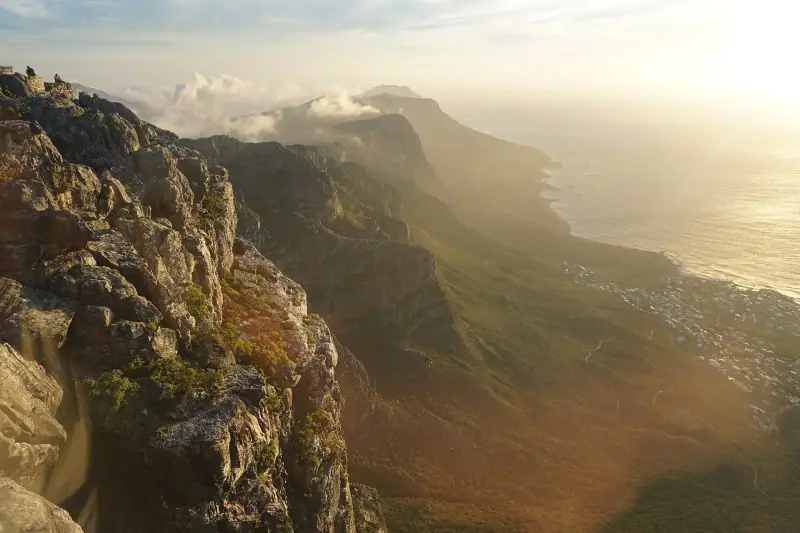
Complete guide to visiting South Africa: regions, budget, tips
Visiting South Africa: regions, cities, highlights, when to go, transport, lodging and budget. The pillar guide to prepare your trip.
Ready-made
South Africa itineraries
8 days
Garden Route road trip: 8 days from Cape Town to Gqeberha
An 8-day Garden Route road trip: Hermanus, Swellendam, Mossel Bay, Knysna, Plettenberg Bay and Tsitsikamma, with realistic stages and distances.

14 days
South Africa in 2 weeks: Kruger, Cape Town and Garden Route itinerary
A 14-day South Africa itinerary: Kruger safari, Cape Town, Winelands and the Garden Route, with domestic flights, drives and practical tips.
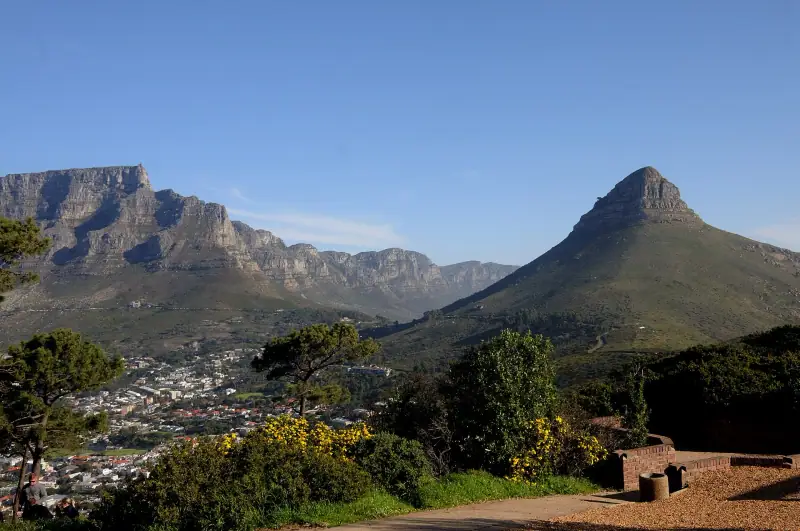
5 days
Cape Town in 5 days: day-by-day itinerary, peninsula and Winelands
A 5-day Cape Town itinerary: Table Mountain, Waterfront, Bo-Kaap, the Cape of Good Hope peninsula, Winelands and Hermanus, with distances and tips.