What to see
Visiting Durban: beaches, Indian food and Zulu culture
We may earn a commission when you book through links on this page, at no extra cost to you. We don't visit or try the places we cover: we summarize published sources. How we work
In short
- Two to three days cover the Golden Mile seafront, uShaka Marine World, the Victoria Street market, Umhlanga and a bunny chow; add a day for a Zulu hinterland excursion.
- The climate is subtropical: hot, humid summers and pleasant, dry winters; the southern winter (about May to August) is much appreciated.
- Swim only in signposted, supervised areas and follow the flags: currents can be strong on the Indian Ocean coast.
- King Shaka airport is about 35 km (22 mi) north of the center; domestic flights link Durban to Johannesburg and Cape Town.
On the Indian Ocean coast, in the province of KwaZulu-Natal, Durban is South Africa’s big tropical city. It has neither the postcard silhouette of Cape Town nor the safari aura of Johannesburg and Kruger Park, and that is exactly what makes it charming: here, you swim in winter, eat curries in bread, haggle in a spice market and come across Zulu culture around the corner. With more than 3.7 million inhabitants in its metropolitan area, it is also a major port, one of the busiest on the continent. Here is how to discover it in two or three days.
Why Durban deserves a stop
Most travelers concentrate on Cape Town, the Winelands and Kruger Park. Durban offers a different face of the country, warmer and more mixed. The climate is subtropical, with hot, humid summers and mild, dry winters: July days are often much more pleasant than in the southwest, which is then in full rainy season. If you are unsure about the season, our guide to the best time to visit South Africa details these regional contrasts.
The city is also a cultural crossroads. The population is mostly Black, with Zulu the most spoken language, but Durban is home to one of the largest communities of Indian origin outside India. You can see it, feel it and above all eat it: spices, temples, markets, saris and mosques are part of the urban landscape.
Finally, Durban is an excellent gateway to the rest of KwaZulu-Natal: the Zulu hinterland, the north coast and, farther inland, the Drakensberg mountains. To place this stop in a wider trip, see our complete guide to South Africa.
The seafront and the Golden Mile
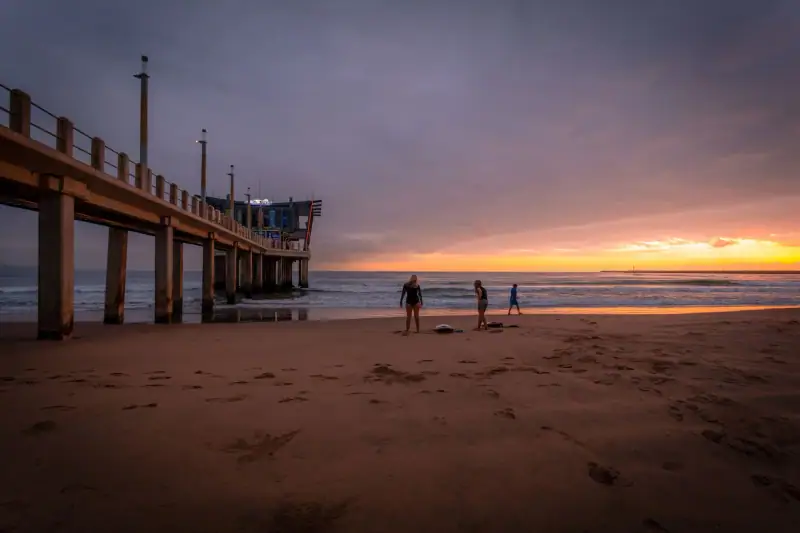
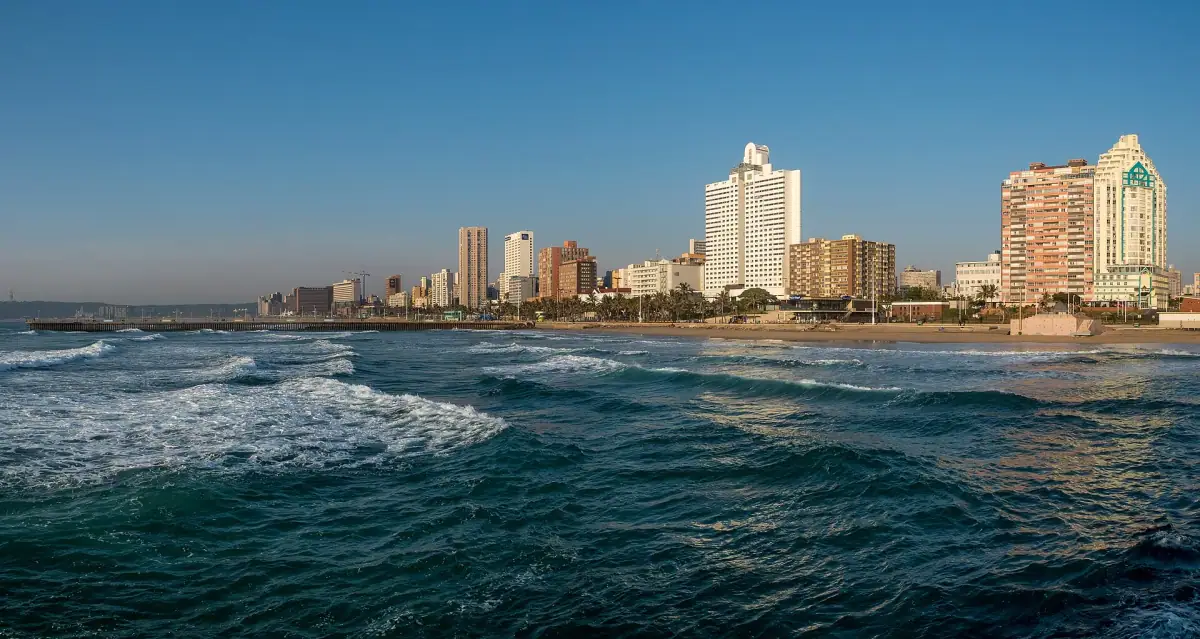
Durban’s trademark is the Golden Mile, the big promenade that runs along the city-center beaches. It brings together hotels, restaurants, surf shops, playgrounds and paths where joggers, cyclists and families cross. Depending on the source, it is described as a promenade of several kilometers: the simplest is to walk or cycle it in stretches, depending on your energy.
What you do there:
- Stroll in the morning, when the light is soft and the crowd still thin. The seafront gets much livelier on weekends and during South African school holidays.
- Take a surf lesson: several schools offer introductions, and the regular Indian Ocean waves suit beginners well.
- Swim only in supervised sectors, marked by flags. Currents can be powerful; follow the lifeguards’ instructions.
- Stop at the South Beach pier, a place appreciated by anglers and walkers.
A word of caution: as everywhere in South African city centers, avoid walking alone at nightfall and keep nothing precious visible. Our article on safety in South Africa gives the habits to adopt.
Sleeping in Durban facing the ocean
Seafront hotels, apartments and guesthouses: compare lodging by your budget and neighborhood.
uShaka Marine World and Moses Mabhida Stadium
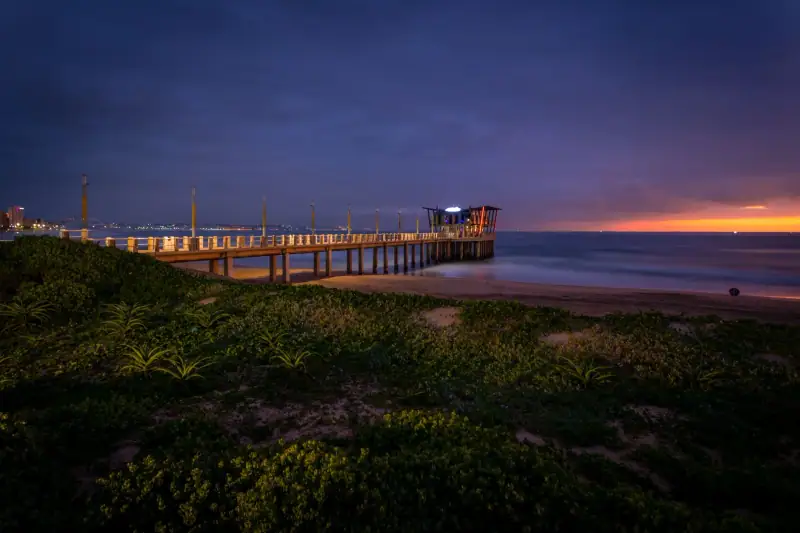
At the south end of the seafront, uShaka Marine World combines an aquarium, a water park and an area of shops and restaurants. It is presented as the largest aquarium in Africa, which makes it a safe bet with children, or in very hot weather. Allow half a day if you visit both the aquarium and the water park, and check the hours and fees on the official website before you come: they vary by season.
Farther north, the Moses Mabhida Stadium, built for the 2010 football World Cup, has become a visit in its own right. Its monumental arch is visible from afar, and the stadium offers activities for visitors: a climb on the arch, a panoramic walk and sports attractions. Even without a match, the view over the city and the ocean justifies a short excursion.
These two sites are fairly close to the center, which lets you combine them with a walk on the promenade. If you travel with family, this is probably the easiest day to organize of the whole stay.
Victoria Street market and Indian culture
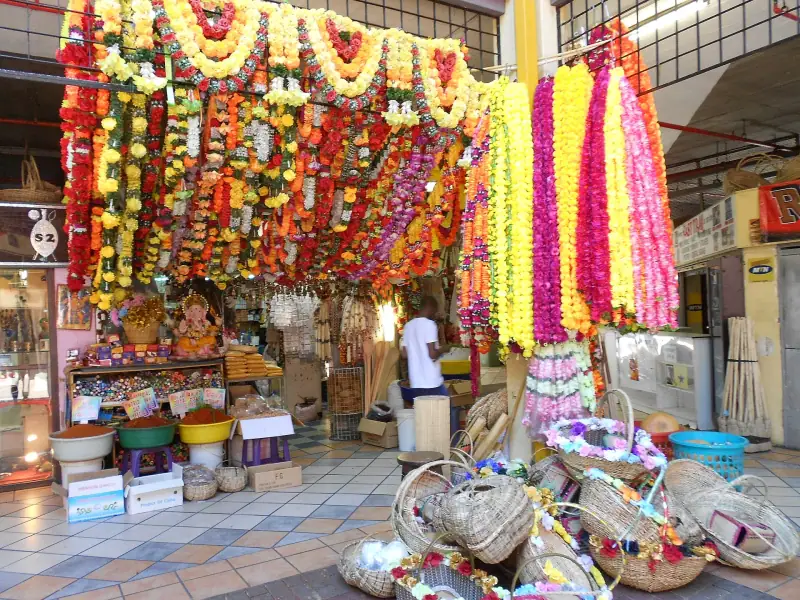
In the city center, the Victoria Street market, often called the Indian market, is a dive into another atmosphere: bright-colored spice stalls, masala blends, fabrics, handicrafts, but also fishmongers and butchers. The place is lively, sometimes dizzying, and haggling is common.
A few tips for a pleasant visit:
- Come during the day, preferably in the morning, and keep your belongings close.
- Haggle politely for handicrafts, but not for food products with posted prices.
- Taste before you buy the spice blends: vendors often offer a sample.
- Carry little cash and leave your passport and valuables at the hotel.
This Indian community was built up over the history of the region, and its influence can be found in the architecture, the places of worship and above all in the cooking. The neighborhoods around the center have Hindu temples and mosques that can be visited with respect: take off your shoes when asked and cover shoulders and knees.
Bunny chow and Durban cooking
If you remember only one dish from Durban, it will be the bunny chow: a hollowed-out loaf of bread filled with a spicy curry (lamb, chicken, beans, depending on the place), eaten with the fingers by tearing off the crumb to mop up the sauce. The dish was born in the local Indian community and remains a symbol of the city. It is enjoyed in many restaurants and small stalls, from the neighborhood snack bar to the more refined address on the seafront.
Beyond bunny chow, the city is an excellent place to taste curries, samosas, biryanis and flatbread rolls, often spicier than elsewhere in the country. Expect seafood too, very present on the coast. To place these flavors in the national picture, read our article on South African cuisine, from braai to bobotie.
A tip: if chili worries you, ask for a mild or medium level. Durban curries can be very spicy, and water is not always enough to put out the fire: bread and yogurt help more.
Discover the city with a local guide
Guided visits, markets, neighborhoods and food experiences in Durban: compare offers and traveler reviews.
Botanic Gardens, old fort and the city’s history
For a calmer break, head to the botanic gardens, founded in the mid-19th century (1849). This large green space, rich in subtropical plants, offers shade and coolness: a good idea for a late afternoon after a day of market and beach.
The city center also preserves a few witnesses of the colonial era: the city hall (1910), inspired by Belfast’s, the former 19th-century courthouse, now a local history museum, and the old fort (1842), which traces the history of the Natal colony. These visits are short and combine easily in half a day on foot in the center, in daylight and without visible valuables.
To better understand the country’s historical context, a detour to a museum is worth it: the city is a good place to reflect on the coexistence of the Zulu, Indian and European communities that shaped it.
Umhlanga Rocks: the upscale coast to the north
About twenty minutes’ drive north of the center, Umhlanga Rocks is the upscale seaside resort of the metropolitan area. Newer, airier and often seen as quieter than the central seafront, it appeals with its beaches, its recognizable lighthouse, its hotels and its restaurants. It is a good choice of base for those who prefer a resort atmosphere, with King Shaka airport a short distance away: the trip remains simple.
The district is discovered on foot, along a coastal promenade. Seafood restaurants, cafés and modern shopping centers make it a comfortable alternative for travelers who do not want to stay right in the center. If you are torn between the two, remember that the center is more authentic and lively, Umhlanga calmer and more residential.
Zulu culture: exploring KwaZulu-Natal
Zulu is the most spoken language in the city, and the province of KwaZulu-Natal is the historic heart of the Zulu people. From Durban, excursions let you meet this culture: cultural villages, dance and song presentations, the history of King Shaka. The N2 coast road serves some of these sites, including a memorial linked to King Shaka on the north coast.
To avoid overly touristy stagings, favor visits led by residents and clearly identified community structures. Ask questions, respect the photography rules and buy handicrafts directly from the makers when possible.
If you plan a full day outside the city, a car or a driver-guide offers more flexibility. Before renting, see our article on driving in South Africa and renting a car for driving on the left and good practices.
Getting there and around
By plane: King Shaka international airport, about 35 km (22 mi) north of the center, receives domestic flights from Johannesburg and Cape Town. It is the fastest option, especially if you combine Durban with Kruger Park or Cape Town in a long itinerary, as in our two-week itinerary between Kruger and Cape Town.
By car: the road from Johannesburg is long, several hours of driving, and calls for caution, especially at night. For comfort, it is better to plan a stop or fly.
In town: on foot for the seafront and the center in daytime, by taxi or ride-hailing for the evening and longer trips, by rental car to leave the city. Avoid walking at night.
Flights to Durban
Compare flights to South Africa and prepare your arrival on the KwaZulu-Natal coast.
Organizing your two- to three-day stay
Here is an example of a realistic split:
- Day 1: morning on the Golden Mile, bunny chow for lunch, afternoon at uShaka Marine World, sunset on the promenade.
- Day 2: Victoria Street market in the morning, botanic gardens and historic center in the afternoon, curry dinner.
- Day 3: Umhlanga Rocks or a Zulu excursion, depending on your wishes and time.
Adapt the pace to the heat: in summer, plan outdoor visits early in the morning, with a hat, sunscreen and water. Also consider taking out travel insurance before you leave, useful for medical costs and repatriation.
Budget and practical tips
Durban generally remains more affordable than Cape Town for lodging and dining, although prices vary a lot with the season and proximity to the sea. For an overview of your spending, see our guide to the budget for South Africa.
A few useful habits:
- Keep a copy of your passport and leave the original at the hotel when possible.
- Use reputable ride-hailing or taxis in the evening, rather than walking.
- Protect yourself from the sun and stay hydrated, even in winter.
- Entry rules depend on your passport: check the official travel advice of your government before you book (travel.state.gov in the US, GOV.UK in the UK, travel.gc.ca in Canada, Smartraveller in Australia; checked November 2026).
- Always ask permission before photographing people, especially in markets and places of worship.
Durban is a city you earn through attention: rawer than the country’s other big cities, but also livelier, spicier and more surprising. Give it two or three days, and it often becomes one of the best memories of a South African trip.
Frequently asked questions
How long do you need to visit Durban?
Two to three days are enough to see the essentials: the seafront, uShaka Marine World, the Victoria Street market, a modern neighborhood like Umhlanga and a food immersion. Add a day if you want an excursion into the Zulu hinterland.
What is the best time to go to Durban?
The climate is subtropical: summers are hot and humid, winters pleasant and dry. The southern winter (about May to August) is much appreciated for its mild days, while summer suits swimmers and lovers of heat.
Is Durban safe for tourists?
As in the big South African cities, you need to stay vigilant: avoid walking at night, do not show valuables and favor busy tourist neighborhoods. See our safety guide and the official recommendations before you go.
What is bunny chow?
It is the city's emblematic specialty: half or a quarter loaf of bread hollowed out and filled with a spicy curry. It was born in Durban's Indian community and is traditionally eaten with the fingers.
Can you swim in Durban?
Yes, the seafront beaches are very popular. Swim only in signposted, supervised areas, and respect the flags: currents can be strong on the Indian Ocean coast.
How do you get to Durban from Johannesburg or Cape Town?
Flying is the most practical: direct flights link Durban to Johannesburg and Cape Town. King Shaka airport is about 35 km (22 mi) north of the center. The road from Johannesburg is possible but long; allow a day of driving.
Do you need to rent a car in Durban?
To stay in town and on the seafront, ride-hailing and taxis are enough. A car becomes useful to explore the coast, the Zulu hinterland or to reach the Drakensberg.
More South Africa guides
Keep reading
Complete guide to visiting South Africa: regions, budget, tips
Visiting South Africa: regions, cities, highlights, when to go, transport, lodging and budget. The pillar guide to prepare your trip.
Boulders Beach: seeing the penguins, access, fees and how to avoid the crowd
Boulders Beach in Simon's Town: how to get there from Cape Town, free boardwalks or paid beach, hours, best time of day and season to avoid the crowd.
What to see in Cape Town and the Peninsula: 10 highlights
What to see in Cape Town? Table Mountain, Robben Island, Cape Point, Boulders penguins, Bo-Kaap, Kirstenbosch: 10 highlights and tips to combine them.
Ready-made
South Africa itineraries
8 days
Garden Route road trip: 8 days from Cape Town to Gqeberha
An 8-day Garden Route road trip: Hermanus, Swellendam, Mossel Bay, Knysna, Plettenberg Bay and Tsitsikamma, with realistic stages and distances.
14 days
South Africa in 2 weeks: Kruger, Cape Town and Garden Route itinerary
A 14-day South Africa itinerary: Kruger safari, Cape Town, Winelands and the Garden Route, with domestic flights, drives and practical tips.
5 days
Cape Town in 5 days: day-by-day itinerary, peninsula and Winelands
A 5-day Cape Town itinerary: Table Mountain, Waterfront, Bo-Kaap, the Cape of Good Hope peninsula, Winelands and Hermanus, with distances and tips.