What to see
Complete guide to visiting Quebec: regions, cities, budget and tips
We may earn a commission when you book through links on this page, at no extra cost to you. We don't visit or try the places we cover: we summarize published sources. How we work
In short
- Allow a week for Montreal, Quebec City and a taste of Charlevoix, and nine to twelve days to add Tadoussac or Gaspésie; see fewer regions rather than rushing.
- Displayed prices are generally before tax, and a 15% to 20% tip is added at restaurants; always compare the total price.
- Best period for most travelers: mid-August to mid-October, for pleasant temperatures, whales still in the St. Lawrence, then fall colors.
- No car is needed in Montreal or Quebec City; for Charlevoix, Tadoussac or Gaspésie a car is very practical, even essential.
Quebec is a destination that almost always surprises first-time visitors. French is spoken there, but life runs on North American time, with wide sidewalks, immense distances and cities that sometimes feel like nothing else on the continent. Between Montreal’s skyscrapers, Quebec City’s ramparts, the cliffs of Charlevoix, the river where whales pass and the forests of the Laurentians, the province brings together very different landscapes and atmospheres, a few hours’ drive from one another.
This guide is the pillar article of our site: it presents the destination as a whole, its regions and cities, the highlights, the best time to go, how to get there and around, lodging options and the budget to plan. At each step, links send you to our detailed guides to go deeper. If you remember only one thing: in Quebec, distances are large, and the best trip is the one that leaves time between stops.
Quebec in brief: what to know before you go
Quebec is the largest province in Canada by area, and one of the largest French-speaking regions in the world. Its population, about nine million, is concentrated along the St. Lawrence valley, around Montreal and Quebec City. Beyond that are immense territories of forests, lakes and tundra where villages are rare.
A few practical points to start well:
- Language: French is the official language and the language of daily life. The accent and some words surprise at first (“déjeuner” for breakfast, “dîner” for the midday meal, “souper” for the evening meal), but you will understand each other very well.
- Currency: the Canadian dollar. Bank cards are accepted almost everywhere, including for small amounts.
- Electricity: outlets are North American type, with a voltage of 120 V. An adapter is needed for chargers from other regions.
- Prices and tips: prices displayed in shops and restaurants are generally before tax, and the tip (15% to 20% at restaurants) is left on top of the bill.
- Entry requirements: they depend on your passport. Check the official travel advice of your government before you book: travel.state.gov (US), GOV.UK (UK), travel.gc.ca (Canada), Smartraveller (Australia) (checked November 2026).
None of this is complicated, but knowing it helps you avoid bad surprises: the restaurant bill that looks higher than expected, or the phone charger that does not fit the hotel outlet.
The main regions of Quebec
For a first trip, people generally concentrate on the St. Lawrence corridor, between Montreal and Quebec City, with extensions toward Charlevoix, the Saguenay, Gaspésie or the Laurentians. Here is how the tourist geography is organized.
Montreal, the metropolis
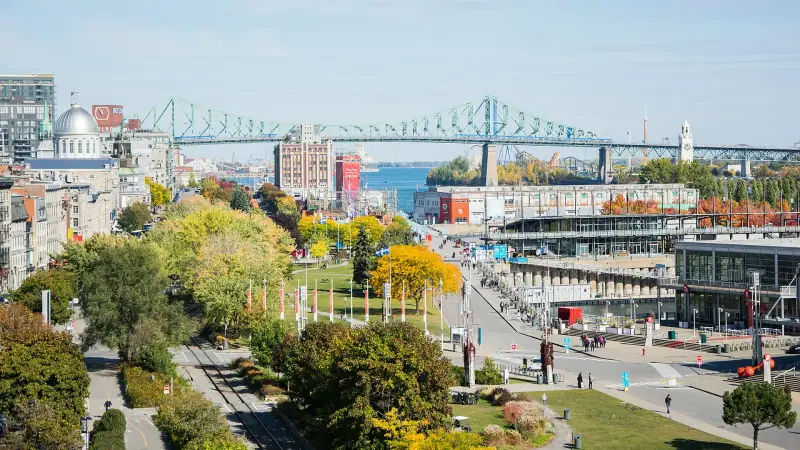
Montreal is the largest city in Quebec, set on an island in the heart of the St. Lawrence. It is a city of contrasts: Old Montreal and its cobbled streets, Mount Royal overlooking downtown, lively neighborhoods like the Plateau-Mont-Royal, markets, festivals and a very active food scene. Many travelers arrive there by plane and spend three to four days. Our guide what to see in Montreal in 3 days details a neighborhood-by-neighborhood itinerary.
Quebec City
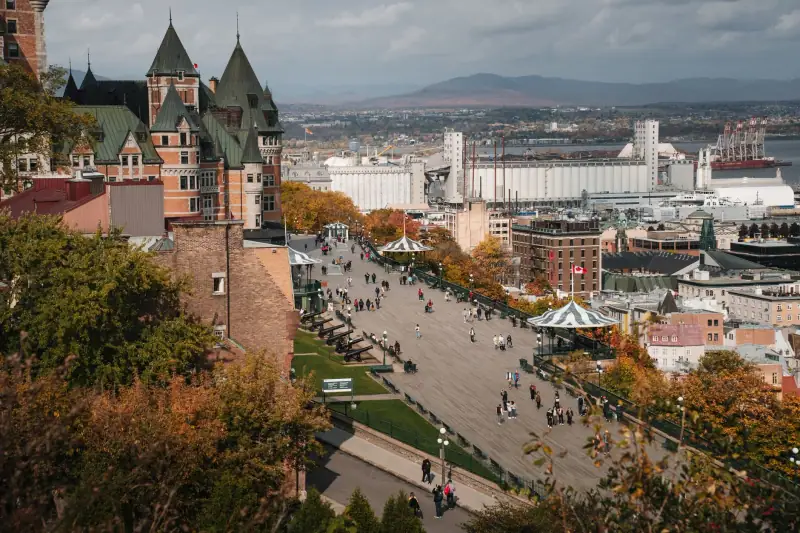
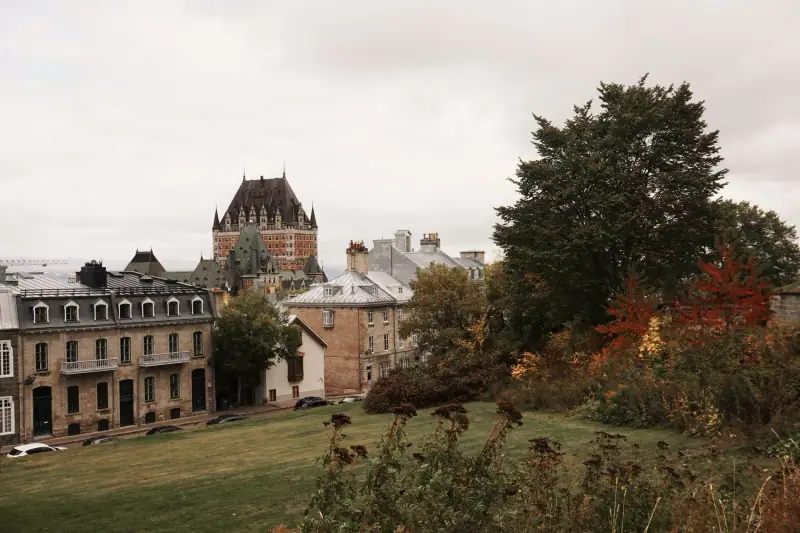
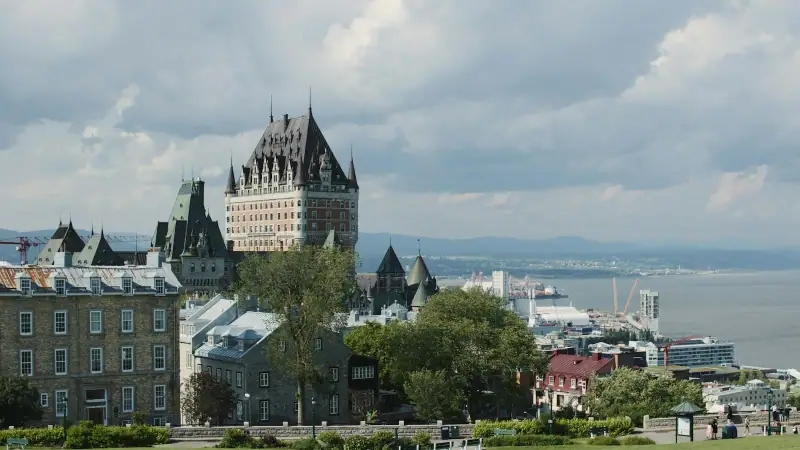
The capital of the province is about 250 km (155 mi) from Montreal, a little under three hours by road. Its historic center, Old Quebec, is a UNESCO World Heritage site and overlooks the river from its promontory. The Château Frontenac, Dufferin Terrace, Petit Champlain and the fortifications are discovered on foot. Two days are enough for the essentials: follow our itinerary what to see in Quebec City in 2 days.
Charlevoix
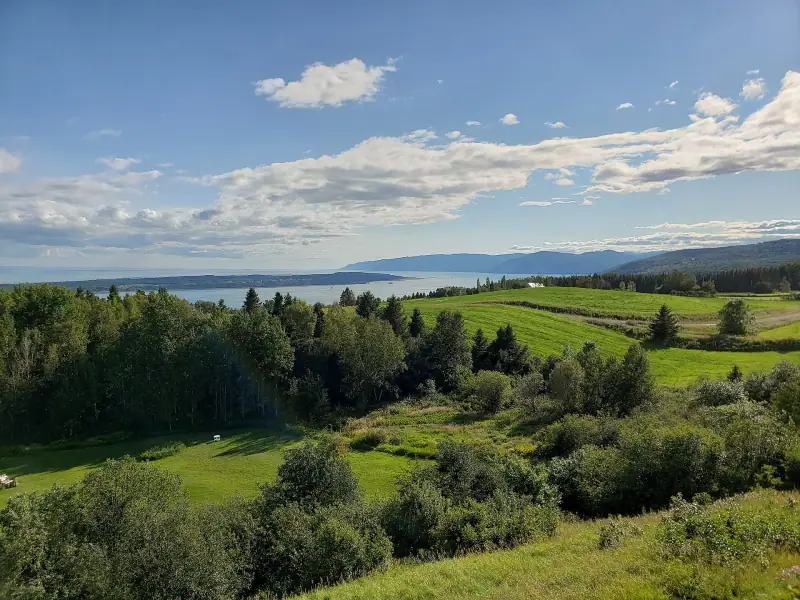
About a hundred kilometers (62 mi) east of Quebec City, Charlevoix is a region of mountains plunging into the river. It is known for its rolling landscapes, waterside villages, artistic tradition and local food. Baie-Saint-Paul is its gateway, with La Malbaie and Île-aux-Coudres completing the picture. Everything is in our article visiting Charlevoix and Baie-Saint-Paul.
The Côte-Nord and the Saguenay
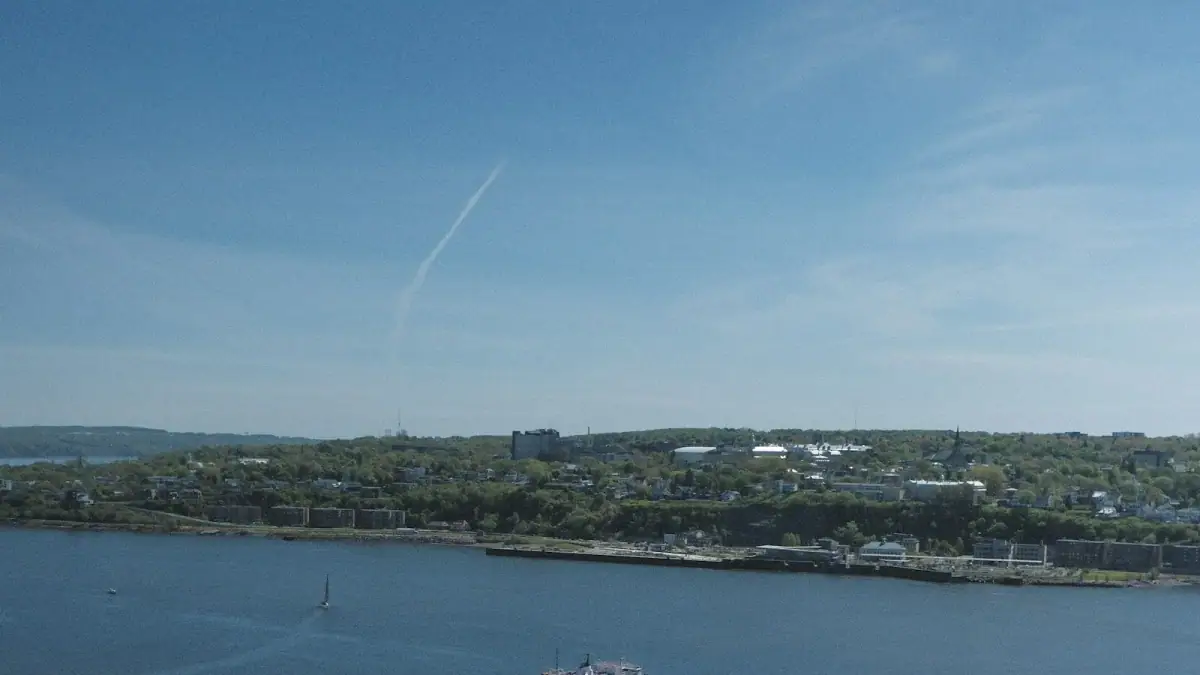
Farther east, where the Saguenay fjord joins the St. Lawrence, Tadoussac is the departure point for whale-watching trips. The region is wild, the estuary is a sought-after feeding site for marine mammals, and crossing the Saguenay by ferry is part of the experience. To choose the season and the trip, read whale watching in Tadoussac.
Gaspésie
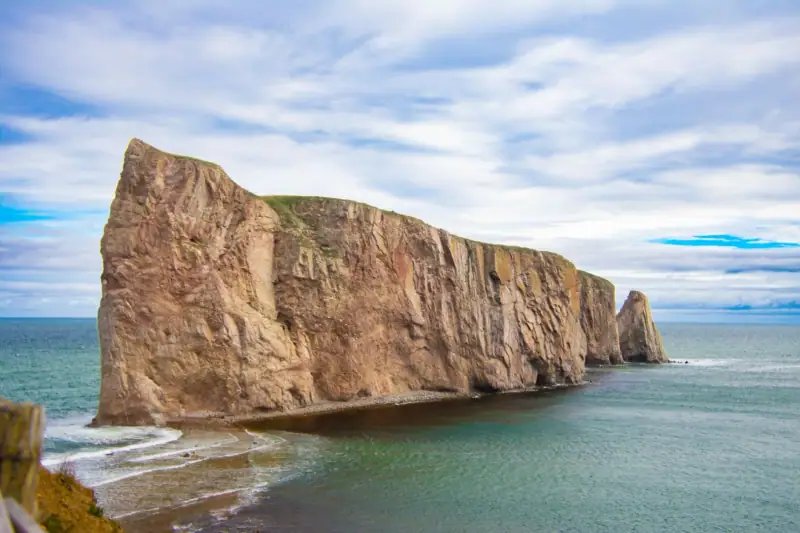
This is the big adventure of a Quebec trip: a peninsula ringed by a coastal road that goes around the Gulf of St. Lawrence, with the village of Percé, its famous rock and Forillon National Park. It takes time, because distances from Montreal are significant, but it rewards with end-of-the-world landscapes. Our guide to visiting Gaspésie, Percé and Forillon details the organization.
The Laurentians
North of Montreal, the Laurentians are the playground of Montrealers: lakes, forests, mountain villages and the Mont-Tremblant resort. People come for skiing and snowboarding in winter, for hiking, cycling and water activities in summer, and for the spectacular colors of fall. Discover the options in Mont-Tremblant and the Laurentians: things to do in summer, fall and winter.
The Eastern Townships
Southeast of Montreal, near the American border, the Eastern Townships offer country villages, vineyards, lakes and pleasant roads. Sherbrooke is the main city. It is an ideal region for a quiet getaway or to complement a family stay, away from the crowds of the big destinations.
Quebec highlights
Depending on the time you have, here are the experiences that come up most often in successful trips.
Getting lost in Old Quebec
The only walled city north of Mexico is worth the trip on its own. You wander between the Château Frontenac, the lanes of the Upper Town, the stairs down to Petit Champlain and the streets of the Lower Town. The atmosphere changes with the seasons: patios in summer, colors in fall, a postcard setting under the snow in winter.
Discovering Montreal on foot and by bike
Montreal is mostly visited by alternating neighborhoods: Old Montreal and its port, Mount Royal for the view, the Plateau and its outdoor staircases, the markets to taste local products. The city also has a real bike culture, and many bike paths make getting around easier in summer.
Watching whales in the St. Lawrence
The St. Lawrence estuary is one of the most accessible whale-watching places in eastern Canada. From Tadoussac, cruises leave in season, generally from May to October, with more regular encounters from July to September. Nothing is guaranteed: they are wild animals, and sea conditions matter. Bring warm clothes, even in summer, as it is much cooler on the water.
Whale-watching trips from Tadoussac
Compare watching cruises and excursions on the Saguenay fjord.
Driving the Charlevoix and Gaspésie roads
Quebec is also discovered on the road. Between the Charlevoix coast and its viewpoints over the river, and the road that follows the Gaspé peninsula, the drives are part of the trip. Plan regular stops, and do not underestimate driving times.
Tasting Quebec cuisine
Poutine is the most famous specialty, but it is far from the only one. Sugar shacks in spring, local products, cheeses, ciders, microbrewery beers: the Quebec table is worth the detour. Our article what to eat in Quebec details the dishes to try and the good habits to take up, from tipping to mealtimes.
Fall colors
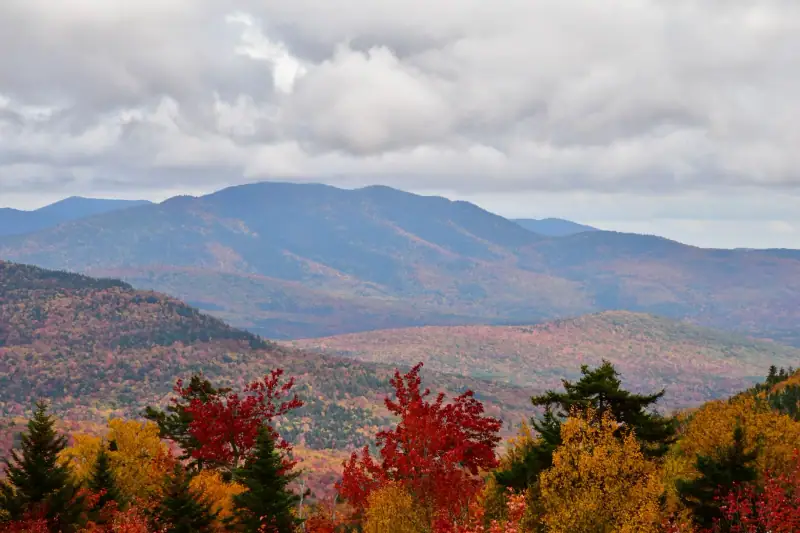
The phenomenon is known worldwide: at the end of summer, maples and birches turn red, orange and yellow. The forests of the Laurentians, Charlevoix and the Eastern Townships are among the most spectacular. The peak varies from year to year, and it is best to check local forecasts just before leaving.
Winter sports and outdoor life
Winter in Quebec is not a season for staying indoors. Skiing, snowshoeing, snowmobiling, skating, dogsledding: activities are plentiful, and the Laurentians resorts are very busy. Basic gear (warm coat, hat, gloves, good shoes) matters most.
When to go to Quebec
Quebec’s climate is continental, with large swings between summer and winter. Summers are hot and sometimes humid, falls mild then cool, winters long and cold with snow, and spring is a sometimes muddy transition season.
- Summer (June to August): the time for festivals, patios, hiking, cycling and whales. It is also high season, with higher prices and busier sites.
- Fall (September to October): many travelers’ favorite period, with pleasant days and the foliage show, generally from late September to mid-October.
- Winter (December to March): for skiing, snowy landscapes and the atmosphere of cities under the snow. You really need to equip yourself well.
- Spring (April to May): quieter, cheaper, with the sugar shack season. The weather is more changeable, and some sites are not yet open.
For most first trips, the period from mid-August to mid-October offers the best compromise. To compare in detail, see our guide when to visit Quebec, season by season.
How to get to Quebec
By plane
The vast majority of travelers arrive via Montreal airport (Montreal-Trudeau, YUL). Quebec City also has an airport (YQB), with a more limited offer, often via Montreal.
A few tips for booking well:
- book early for high season (July-August) and the fall colors period;
- compare several departure dates: a shift of a day or two can change the price;
- think about “open jaw” flights (arriving in Montreal, returning from Quebec City) so you do not retrace the trip in reverse;
- check baggage conditions, notably carry-on.
Before booking, also make sure your passport is valid and that you meet the entry requirements for your nationality (see the official sources above).
Flights to Montreal or Quebec City
Compare flights and book early for high season.
Entry requirements
Entry rules depend on your passport. Check the official travel advice of your government before you book: travel.state.gov (US), GOV.UK (UK), travel.gc.ca (Canada), Smartraveller (Australia) (checked November 2026). Beware of fraudulent websites that charge much more than the official fee for any travel authorization: go only through the Government of Canada website. A customs declaration is also requested on arrival.
Insurance and health
Health care is of good quality, but check what your own health coverage includes abroad. Travel insurance with good medical and repatriation cover is therefore strongly advised. Also check the guarantees of your bank card before leaving.
How to get around Quebec
Between cities
The Montreal-Quebec City trip is the most common. It is made by car (about 250 km / 155 mi, a little under three hours), but also by coach or train, which avoids renting a vehicle if you do not go beyond these two cities. Connections to distant regions are rarer and slower.
The rental car
As soon as you leave the two big cities, a car becomes the simplest way to travel. A few basic rules:
- check the rental company’s driving licence requirements for your country;
- you drive on the right, and limits are in km/h;
- distances are longer than you imagine: allow margins;
- in winter, suitable tires are mandatory during the period set by law, and rental companies provide them. Ask when booking;
- the vast majority of cars are automatic.
Pick up and return the car in the same city if possible: drop-off fees at another agency can weigh on the bill.
In the cities
In Montreal, the metro, bus and bike let you do without a car. In Quebec City, Old Quebec is explored on foot, and buses serve the main sights outside the center. In both cases, downtown parking is paid and limited.
Ferries and roads
To reach Tadoussac from Charlevoix, the road crosses the Saguenay by a free ferry, which takes about ten minutes but may involve a wait in high season. Allow slack in your schedule.
Recommended itineraries
One week: the great classics
With seven days, the winning trio is Montreal (3 days), Quebec City (2 days) and Charlevoix (1 to 2 days). It is the best compromise between city discovery and nature, without chaining endless drives.
Nine days: the St. Lawrence road trip
With nine days, you can add Tadoussac and the whales. Our 9-day road trip in Quebec links Montreal, Quebec City, Charlevoix and the fjord region with distances, stops and booking tips.
Two weeks or more: Gaspésie
Gaspésie needs at least four to five extra days to be appreciated without rushing. With two weeks, you can combine the St. Lawrence corridor and the peninsula, keeping driving days reasonable.
A small getaway for families or couples
For a calmer trip, choose only two bases, for example Montreal and a stay in the Laurentians or the Eastern Townships. You limit travel and gain rest time.
Where to stay in Quebec
The lodging offer is wide: city hotels, inns, gîtes (the equivalent of bed and breakfasts), cabins, campgrounds and charming properties in the regions. Prices vary a lot by season.
- In Montreal: the most practical neighborhoods for a first stay are Old Montreal, downtown and the Plateau. Our guide where to stay in Montreal compares neighborhoods, types of lodging and booking tips.
- In Quebec City: preferably stay in Old Quebec or immediately nearby to do everything on foot. Prices are higher there, but the time saved is real.
- In the regions: in Charlevoix, Tadoussac or Gaspésie, book well ahead in summer and during the fall colors period, because supply is more limited.
Where to stay in Quebec?
Compare hotels in Montreal, Quebec City and the regions for your dates.
A few simple habits for choosing well: favor lodging with free cancellation, check whether parking is included (and its cost), and always compare on the total price, taxes and fees included.
What budget should you plan for a trip to Quebec?
Without going into precise figures that change from year to year, here are the items that weigh on the budget, from heaviest to lightest:
- The flight: variable by season. The cheapest periods are generally April-May and November; the most expensive, July-August and the fall colors period.
- Lodging: the first expense once you arrive, especially in high season and in Old Quebec.
- The rental car: essential for the regions, to compare well in advance.
- Food: with taxes and the tip added to the bill. Lunch at restaurants and sugar shacks are good options to control the bill.
- Activities: whale-watching cruises, park entries, lifts. Some guided excursions are worth it, others are done very well independently.
To save without sacrificing the experience:
- go in the low season or early fall;
- visit Montreal and Quebec City without a car;
- choose lodging with a kitchen or breakfast included;
- keep paid excursions for the highlights, like the whales or a mountain outing.
These tips do not replace real costing: do your sums with current prices, including taxes and tips in your estimates.
Practical tips for traveling well
Dressing for the season
The Quebec rule: dress in layers. In summer, bring a jacket for cool evenings and boat trips. In fall, add a real coat. In winter, a warm coat, hat, gloves, thermal underwear and suitable shoes are essential.
Mosquitoes and nature
In the forest, in spring and early summer, insects can be plentiful. A good repellent is useful for hiking. In nature, follow the parks’ rules, keep your distance from wildlife and never feed animals.
Staying connected
Check your carrier’s international plan or use a travel eSIM. In cities, Wi-Fi is common in cafés and hotels, but the network is weaker in isolated regions.
Respecting local customs
A tip is expected at restaurants, in bars and for several services (taxi, guided tour). Punctuality and politeness matter. Say hello when entering a shop: the famous “bonjour-hi” has become a symbol of Montreal, where the two languages mix.
Safety
Quebec is a safe destination. The risks come mostly from nature: changeable weather, icy roads in winter, swimming in cold water. Tell someone your plans if you hike, and never set out without water and suitable clothing.
What this guide does not cover, and where to go next
This guide gives the overview. To go into detail, here are our articles by theme:
Preparing the trip
- Entry requirements for Quebec
- When to visit Quebec? Season by season
Cities
Regions
- Visiting Charlevoix: Baie-Saint-Paul, La Malbaie and Île-aux-Coudres
- Visiting Gaspésie: Percé, Forillon and Route 132
Itinerary
Activities
- Whale watching in Tadoussac
- Mont-Tremblant and the Laurentians: things to do in summer, fall and winter
Lodging and food
- Where to stay in Montreal
- What to eat in Quebec
In short: how to succeed at your first trip to Quebec
For a first trip, keep four ideas in mind. First, choose your season according to the experience you want: late summer and early fall are the most versatile. Second, limit the number of stops: three well-explored bases are better than six cities in a rush. Third, book lodging and the car early, especially in high season and for the regions. Finally, leave room for the unexpected: a stop on the road, a market, a lookout, an evening on a Montreal patio. That is often where the best memories hide.
Enjoy your trip to Quebec!
Frequently asked questions
How long do you need to visit Quebec?
Allow a week for Montreal, Quebec City and an overview of Charlevoix, and nine to twelve days to add Tadoussac or Gaspésie. Distances are long: it is better to see fewer regions than to rush from stop to stop.
Do you need a visa or travel authorization for Quebec?
Entry rules depend on your passport. Check the official travel advice of your government before you book: travel.state.gov (US), GOV.UK (UK), travel.gc.ca (Canada), Smartraveller (Australia) (checked November 2026).
Do you need to speak French in Quebec?
French is the official language of Quebec and is used everywhere in daily life. English is common in Montreal and in very touristy places.
What is the best time to go to Quebec?
For most travelers, from mid-August to mid-October: pleasant temperatures, whales still present in the St. Lawrence, then fall colors. Summer suits festivals and nature, winter suits snow sports.
Do you need to rent a car to visit Quebec?
For Montreal and Quebec City, no: the centers are explored on foot and by public transit. For Charlevoix, Tadoussac or Gaspésie, a car is very practical, even essential, because public transit is limited there.
What budget should you plan for a trip to Quebec?
The budget depends mainly on the season, the flight and the type of lodging. Hotels, car rental and guided activities weigh the most. Prices are displayed before tax and a 15% to 20% tip is added at restaurants: always compare the total price.
More Quebec guides
Keep reading
What to see in Montreal in 3 days: Old Montreal, Mount Royal and neighborhoods
What to see in Montreal in 3 days? Old Montreal, Mount Royal, the Plateau, Mile End, markets and the Underground City: day-by-day plan and practical tips.
Visiting Charlevoix: Baie-Saint-Paul, La Malbaie and Île-aux-Coudres
Visiting Charlevoix, Quebec: Baie-Saint-Paul, Île-aux-Coudres, La Malbaie, national parks and the river road. Itinerary, ideal length, seasons and tips.
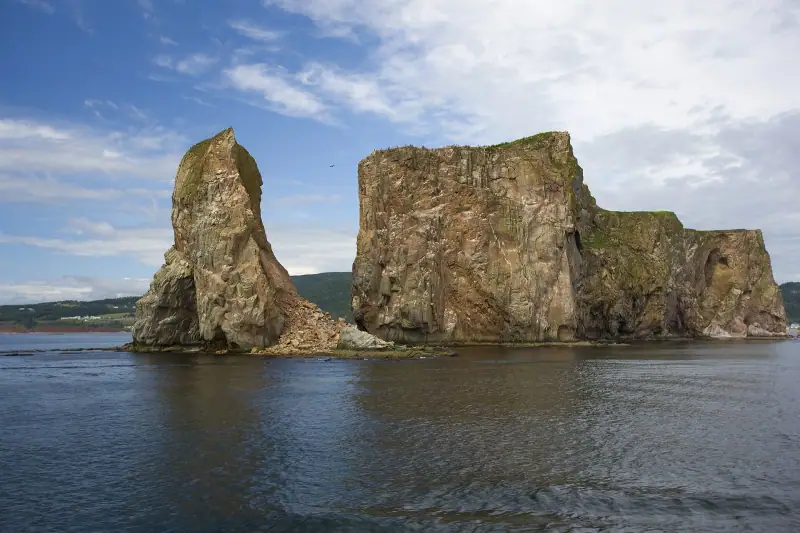
Visiting Gaspésie: Percé, Forillon and Route 132
Visiting Gaspésie: Percé Rock, Bonaventure Island, Forillon Park, the Chic-Chocs and Route 132. Length, season, budget and tips for your road trip.
Ready-made
Quebec itineraries
5 days
5 days
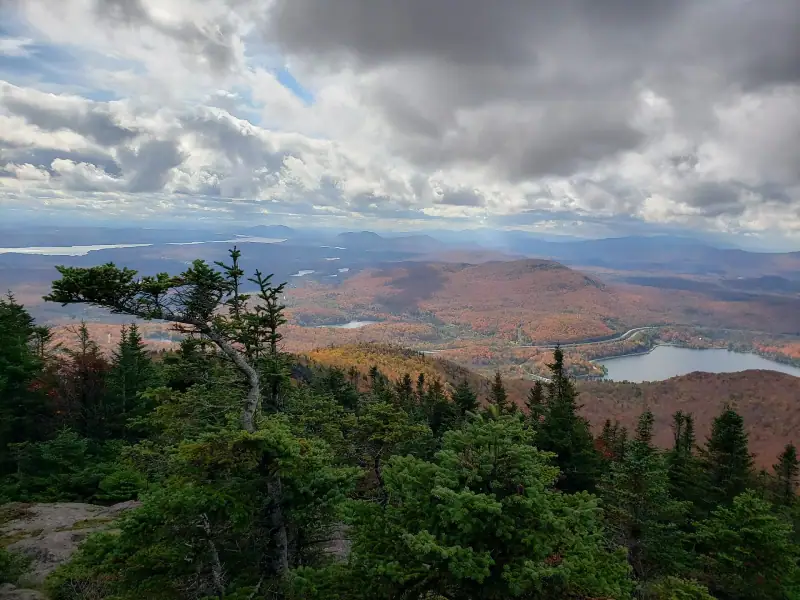
Eastern Townships in 5 days: Magog, Orford, Sherbrooke and wine country itinerary
MagogSherbrooke or North HatleySutton or Dunham area
8 days
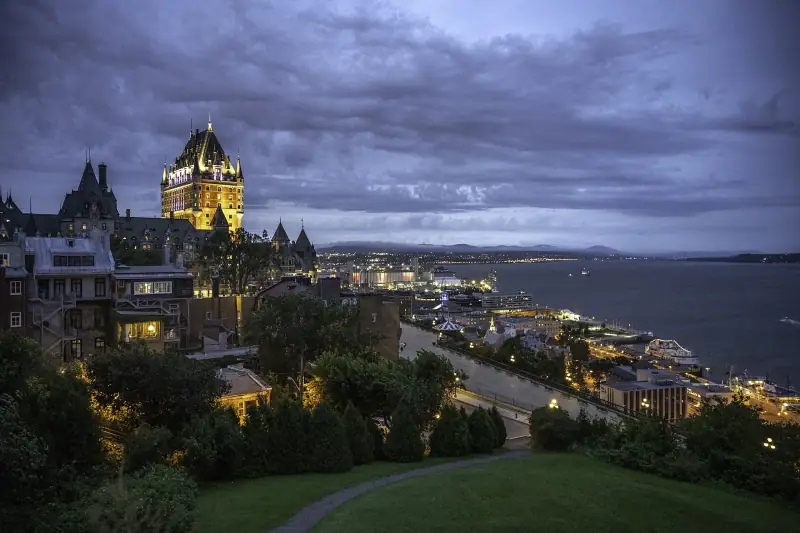
Quebec with kids: an 8-day itinerary (Montreal, Quebec City, Charlevoix)
8-day Quebec itinerary with children: Montreal, Quebec City, Montmorency Falls, Charlevoix and whales. Stops, pace, distances and tips.