Where to stay
Where to stay in Montreal: neighborhoods, types of lodging and tips
We may earn a commission when you book through links on this page, at no extra cost to you. We don't visit or try the places we cover: we summarize published sources. How we work
In short
- For a first stay, Old Montreal and downtown are the most practical; the Plateau-Mont-Royal and Mile End suit a more local, residential feel.
- Displayed hotel prices are generally before taxes: federal and provincial sales taxes and a lodging tax are added at payment, so compare the total price.
- You do not need a car in Montreal; rent one only on the day you leave, if you continue to Charlevoix, Gaspésie or the Laurentians.
- Book several months ahead for summer, major festivals and fall foliage season, and favor free cancellation.
Montreal is a city of neighborhoods, and where you sleep really changes the experience. Sleeping on a cobbled street in Old Montreal, above a café on the Plateau or steps from the venues of the Quartier des spectacles is not the same stay. The city spreads over an island, the metro serves it efficiently, and most tourist sights are reachable on foot or in a few stops: a wrong choice is therefore not serious, but a good one saves time and energy.
This guide compares the main neighborhoods, reviews the types of lodging and recalls a few practical pitfalls specific to Canada, such as the taxes added to the displayed price. It is aimed mainly at those preparing a stay of two to four nights before continuing to Quebec City or Charlevoix, as in our 9-day road trip.
How to choose your neighborhood in Montreal
Three criteria are enough to decide: the atmosphere you want, proximity to the metro and budget.
- Atmosphere: touristy and historic (Old Montreal), urban and lively (downtown, Quartier des spectacles), residential and creative (Plateau, Mile End).
- Transport: the metro has four lines (green, orange, yellow and blue). Lodging five to ten minutes on foot from a station simplifies all your trips.
- Budget: the most touristy neighborhoods are generally the most expensive. Moving a few metro stops away often saves money without losing comfort.
Keep the season in mind too: summer attracts many visitors, and nights during festival season or fall foliage season book up early. Our guide on when to visit Quebec details the periods of high and low traffic.
Old Montreal: historic charm

Old Montreal is the most photogenic neighborhood in the city. Cobbled streets, gray stone buildings, Place Jacques-Cartier, Notre-Dame Basilica and the edge of the Old Port: everything can be visited on foot. Lodgings there often occupy former warehouses or converted commercial buildings, which gives the rooms a lot of character (stone walls, exposed beams, high ceilings).
Who is it for? Couples, short-stay travelers and those who want to “feel” the city as soon as they step out of the hotel.
Pros: exceptional setting, restaurants and bars nearby, walks to the river and the Old Port, pleasant atmosphere in the evening.
Cons: prices are higher than in the rest of the city, the neighborhood is very touristy in summer, and cobbled streets are awkward with a big suitcase. Some properties are in old buildings without an elevator: check before booking if you travel with heavy luggage.
Hotels in Old Montreal
Compare the charming properties of the historic district for your dates and budget.
Downtown and the Quartier des spectacles: the most practical
Downtown Montreal, around Sainte-Catherine Street and the big office towers, is the transit hub. Several metro lines cross there, Central Station is very close, and the famous “Underground City” links shopping galleries, stations and buildings, which is valuable during the deep freezes of winter.
The Quartier des spectacles, around Place des Arts, concentrates concert halls, theaters and festivals. In summer, several squares host outdoor events, often free.
Who is it for? Travelers arriving by train or bus, those who like large hotels, business trips mixed with tourism, and winter visitors.
Pros: excellent metro service, a wide choice of hotels in every category, many shops and restaurants, easy access to Old Montreal on foot or in a few stops.
Cons: a more “urban” than picturesque atmosphere, some streets are noisy at night, and the neighborhood is less charming than Old Montreal or the Plateau.
It is often the best balance of convenience and price for a short stay. If your priority is not to lose time in transit, it is the safest choice.
The Plateau-Mont-Royal and Mile End: living like a Montrealer
The Plateau-Mont-Royal is famous for its rows of houses with spiral outdoor staircases, typical of Montreal architecture. Patios, cafés and independent shops are plentiful. Nearby, Mount Royal Park offers a big green breathing space and a viewpoint over the city. Mile End, farther northwest, is known for its creative scene, murals and bagels, a Montreal specialty.
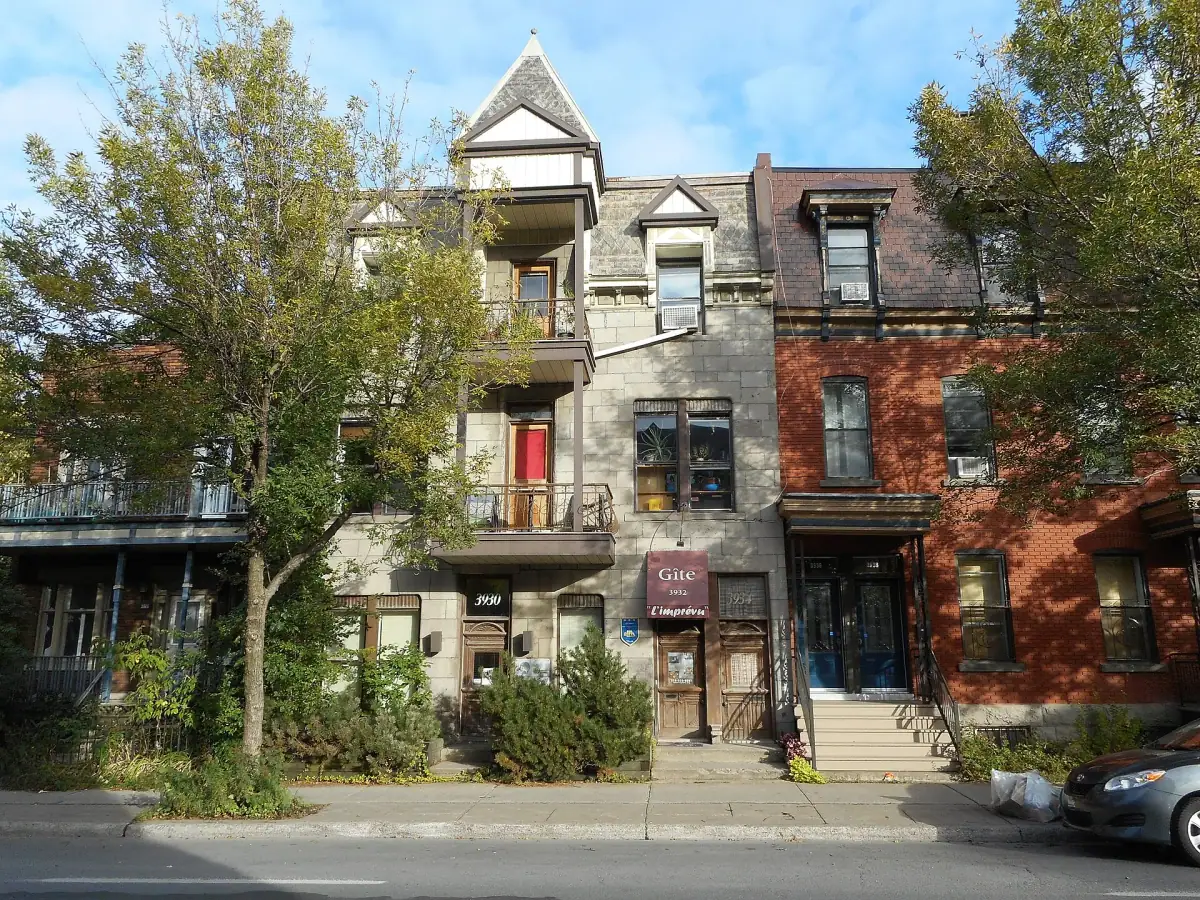
Here, lodging mostly takes the form of gîtes (the Quebec term for bed and breakfasts), small inns and short-term rentals in apartments. Large hotels are rare.
Who is it for? Travelers returning to Montreal, stays of more than three nights, and fans of cafés, markets and walks without a big program.
Pros: authentic atmosphere, good restaurants, a pleasant setting for walking or renting a bike, rates sometimes lower than downtown.
Cons: the choice is more limited, the neighborhood is a little far from Old Montreal (plan on the metro or bus), and some accommodations are more modest than what you find in a hotel.
To avoid bad surprises, read recent reviews carefully and check the distance to the nearest metro station before confirming.
The Village and the Latin Quarter: lively and affordable
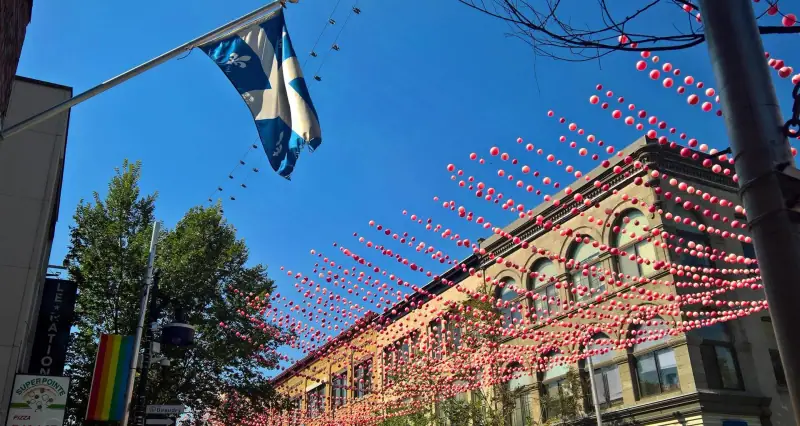
The Village, the historic neighborhood of Montreal’s LGBTQ+ community, is organized around Sainte-Catherine Street East. In summer, part of the street is reserved for pedestrians and is covered with patios and colorful decorations. The neighboring Latin Quarter is a very lively student area, with many restaurants, bars and performance venues.
There is a varied offer: mid-range hotels, youth hostels, gîtes. Berri-UQAM metro station, which brings together several lines, makes these neighborhoods very accessible.
Who is it for? Travelers who like neighborhoods that are lively in the evening, small budgets, groups of friends.
Pros: good transit service, festive atmosphere, quick access to Old Montreal.
Cons: night noise can bother light sleepers, especially on weekends and in summer. Ask for a courtyard-side room if you are sensitive.
Types of lodging
Beyond the neighborhood, the type of lodging affects budget and comfort.
Hotels
From budget hotels to luxury properties, the choice is wide, especially downtown and in Old Montreal. Chain hotels offer predictable comfort, boutique hotels a particular character. Breakfast is sometimes included, but not always: check what is included in the rate.
Gîtes and youth hostels
Gîtes are the Quebec equivalent of bed and breakfasts. They often offer a warm welcome and a hearty breakfast, a good option for meeting locals. Youth hostels offer dorms and private rooms at reduced prices, with shared kitchens. They are very practical for solo travelers or small budgets.
Short-term rentals
Apartments can suit families or long stays, with a kitchen and more space. In Quebec, regulations strictly govern tourist rentals: lodging offered to tourists must in principle have a classification certificate issued by the authorities, whose number must appear in the listing. Check that this number is present and favor listings with recent, detailed reviews.
Taxes, tips and hidden fees
This is the most common trap for visitors: in Canada, prices are rarely displayed with all taxes included. At booking you will see an amount that goes up at payment.
- Sales taxes (federal and provincial) are added to the room price.
- A lodging tax applies on top in the Montreal tourist region.
- Parking fees are charged per night at many downtown hotels.
- Service fees or “resort fees” can appear at some properties.
So compare offers on the total price, not the base rate. In restaurants, the tip, generally 15% to 20%, is not included in the bill and is left on top. For the overall trip budget, these gaps weigh more than you might imagine.
Arriving in Montreal and getting around
Montreal-Trudeau International Airport (YUL) is on the island of Montreal, about thirty minutes from downtown outside heavy traffic. An express bus line of the STM links the airport to downtown, and taxis and ride-hailing are also available. Depending on the hour, traffic can lengthen the trip: allow slack for a return flight.
Once settled, the metro is the simplest way to get around. The bike-sharing network and the many bike paths are pleasant from spring to fall. A car is not needed to visit the city: parking is expensive and traffic is sometimes heavy. If you plan to continue by car to Quebec City, Charlevoix or Gaspésie, rent the vehicle only on the day you leave Montreal.
Tours and activities in Montreal
Guided tours, St. Lawrence cruises and food experiences in the city.
Tips for booking well
- Book early for summer, festivals and fall foliage season. The best rooms in the central neighborhoods go first.
- Choose free cancellation when your plans are not completely fixed: it lets you readjust at no cost.
- Read recent reviews, in particular on noise, cleanliness and the real location relative to the metro.
- Compare the total price with taxes and fees, not the teaser rate.
- Consider the season: in winter, a hotel connected to the underground network is a real comfort. In summer, an air-conditioned room is an asset during hot and humid spells.
- Group your nights: two or three nights in the same lodging avoid losing half a day changing accommodation.
For the rest of the trip, our 9-day itinerary shows how to link Montreal, Quebec City, Charlevoix and Tadoussac without rushing.
In short: which neighborhood for which traveler?
| Profile | Recommended neighborhood |
|---|---|
| First, short stay | Old Montreal or downtown |
| Arriving by train or bus | Downtown |
| Couple looking for charm | Old Montreal |
| Stay of more than three nights, local atmosphere | Plateau-Mont-Royal, Mile End |
| Small budget, evenings out | The Village, Latin Quarter |
| Winter trip | Downtown, near the underground network |
Whatever your choice, Montreal is compact enough that every neighborhood stays within reach of the metro. The essential thing is to book early, compare the total price with taxes, and choose a place you will enjoy coming back to after a day of sightseeing.
Frequently asked questions
What is the best neighborhood to stay in Montreal?
For a first stay, Old Montreal and downtown are the most practical: they concentrate the major sights, restaurants and metro stations. The Plateau-Mont-Royal and Mile End suit those looking for a neighborhood feel, more residential and more local.
Do hotel prices in Montreal include taxes?
No. As in the rest of Canada, the displayed price is generally before taxes. Federal and provincial sales taxes, as well as a lodging tax, are added at payment. Always check the final total before confirming a booking.
Do you need a car to stay in Montreal?
No, not to visit the city. The metro, buses and bikes are enough, and downtown parking is expensive and complicated. A car is useful only if you continue to Charlevoix, Gaspésie or the Laurentians: it is then better to rent it in Montreal on the day you leave.
How do you get from the airport to downtown Montreal?
Montreal-Trudeau International Airport (YUL) is linked to downtown by an express bus line of the STM, by taxi or by ride-hailing. Allow about 30 to 45 minutes depending on traffic. Check current fares and service on the STM website before you go.
When should you book lodging in Montreal?
Book several months ahead for summer, the big festivals and the fall foliage period. Off-season, you can find availability later, but the best options fill up fast. Favor rates with free cancellation.
More Quebec guides
Keep reading
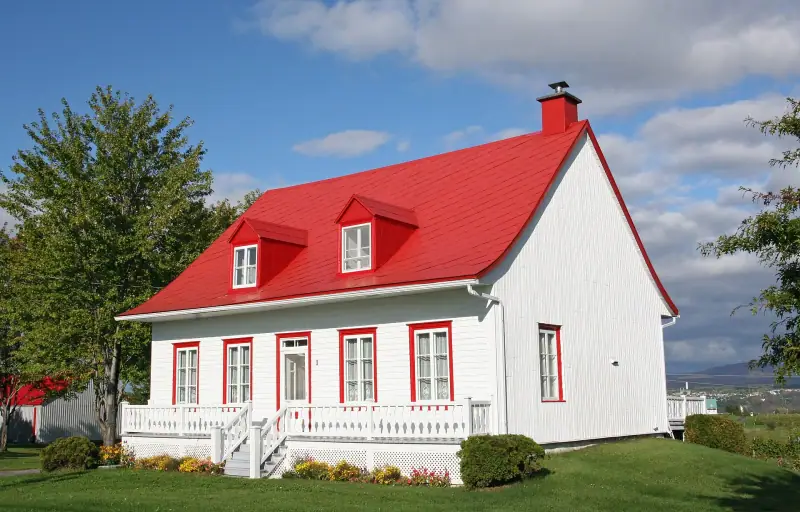
Sleeping on Île d'Orléans or in Quebec City: gîte, inn or city?
Should you sleep on Île d'Orléans or stay in Quebec City? Compare gîtes, inns and cabins, with three real properties and tips on cars and booking.
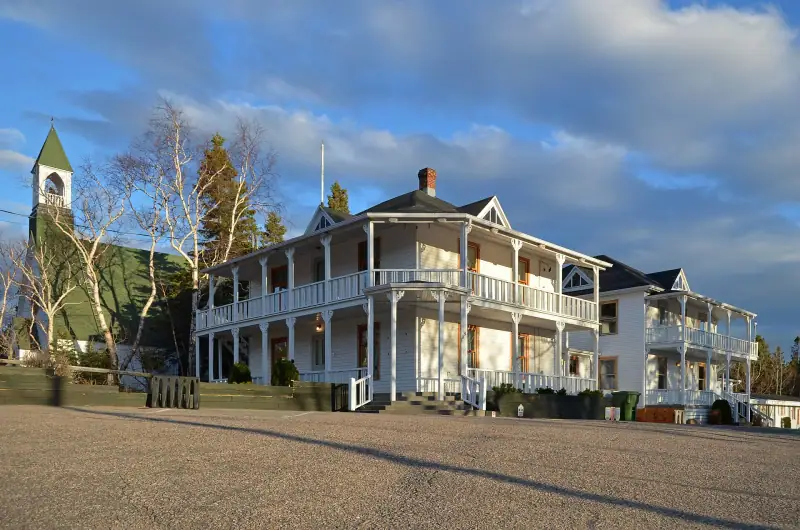
Where to stay in Tadoussac for whale watching: the village, Les Bergeronnes or a campground?
Tadoussac full or too pricey? Compare sleeping in the village, in Les Bergeronnes or at the campground for a whale-watching cruise, with booking tips.
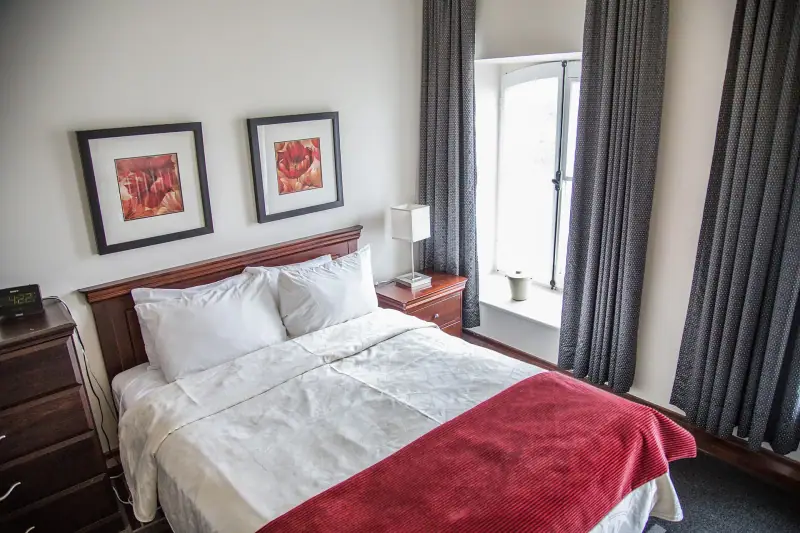
Hotel with parking in Quebec City: Old Quebec or outside the walls, which neighborhood?
Arriving in Quebec City by car? Compare Old Quebec, Saint-Jean-Baptiste, Saint-Roch and Sainte-Foy to find a hotel with parking, stress-free.
Ready-made
Quebec itineraries
5 days

5 days
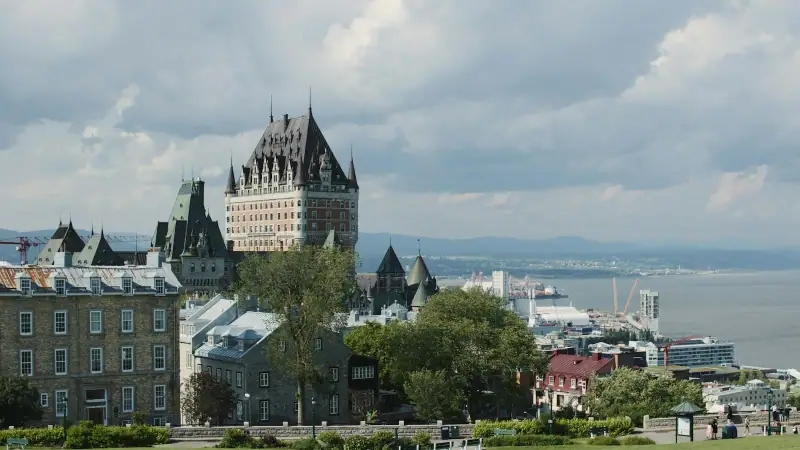
Eastern Townships in 5 days: Magog, Orford, Sherbrooke and wine country itinerary
MagogSherbrooke or North HatleySutton or Dunham area
8 days
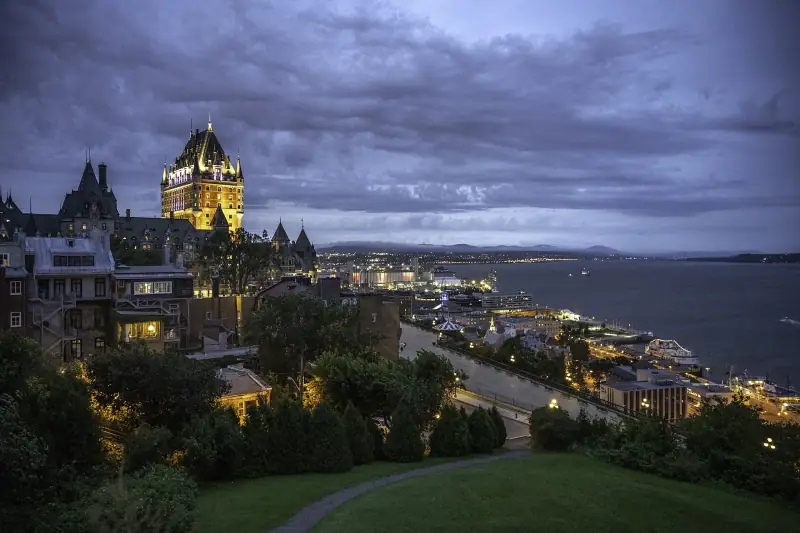
Quebec with kids: an 8-day itinerary (Montreal, Quebec City, Charlevoix)
8-day Quebec itinerary with children: Montreal, Quebec City, Montmorency Falls, Charlevoix and whales. Stops, pace, distances and tips.