Itineraries
Quebec road trip in 9 days: Montreal, Quebec City and Charlevoix
We may earn a commission when you book through links on this page, at no extra cost to you. We don't visit or try the places we cover: we summarize published sources. How we work
Day by day
- Day 1Old Montreal, Notre-Dame Basilica, Old Port
- Day 2Mount Royal and the Plateau-Mont-Royal
- Day 3Jean-Talon Market and Mile End
- Day 4Drive Montreal to Quebec City, first visits in Old Quebec
- Day 5Plains of Abraham, Montmorency Falls, Île d'Orléans
- Day 6Côte-de-Beaupré, then Baie-Saint-Paul
- Day 7Charlevoix, La Malbaie, ferry to Tadoussac
- Day 8Whale-watching trip, Saguenay fjord, Tadoussac dunes
- Day 9Ferry and drive back to Quebec City
Where to sleep
- Montreal3 nights
- Quebec City2 nights
- Baie-Saint-Paul1 night
- Tadoussac2 nights
In short
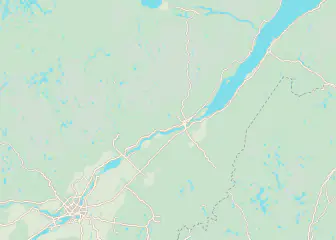
- Nine days follow the St. Lawrence: 3 nights in Montreal, 2 in Quebec City, 1 in Baie-Saint-Paul and 2 in Tadoussac.
- Montreal and Quebec City are easy without a car; pick up the rental on day 4. The longest drive is the last, a little over 200 km (124 mi).
- The free ferry from Baie-Sainte-Catherine to Tadoussac takes about ten minutes, but the wait can be long on weekends and in high season.
- Whale-watching season runs roughly May to October, with July to September the most regular. Sightings are never guaranteed.
Quebec is a natural fit for a road trip. Between two cities steeped in history, a river that widens until it looks like a sea and villages along its banks, the atmosphere changes every day without endless hours behind the wheel. This 9-day itinerary follows the St. Lawrence corridor: Montreal, Quebec City, the Charlevoix region, then Tadoussac, at the mouth of the Saguenay fjord.
It suits first-time visitors to Quebec. The stages are reasonable, the roads are well maintained, and each day mixes heritage, nature and food. The distances given are rough figures, to be confirmed with your GPS on the day you leave.
The itinerary at a glance
- Days 1 to 3: Montreal, on foot and by public transit
- Day 4: drive to Quebec City (about 250 km / 155 mi) and first visits
- Day 5: Quebec City, Montmorency Falls and Île d’Orléans
- Day 6: Côte-de-Beaupré, then Baie-Saint-Paul (about 95 km / 59 mi from Quebec City)
- Day 7: Charlevoix, ferry and arrival in Tadoussac
- Day 8: Tadoussac, whales and the fjord
- Day 9: back to Quebec City (a little over 200 km / 124 mi) and end of the trip
The total mileage, not counting local trips, stays modest for a road trip: you drive little and see a lot. To choose the season, our guide on when to visit Quebec covers the strengths of each period.
Days 1 to 3: Montreal, the relaxed metropolis

Montreal is the largest city in Quebec and a natural gateway to the trip (Montreal-Trudeau International Airport, YUL). French is spoken there, but the feel is North American, with contrasting neighborhoods and a very rich cultural life. There is no point renting a car here: the metro, bikes and walking are enough, and parking is a headache.
Day 1: Old Montreal
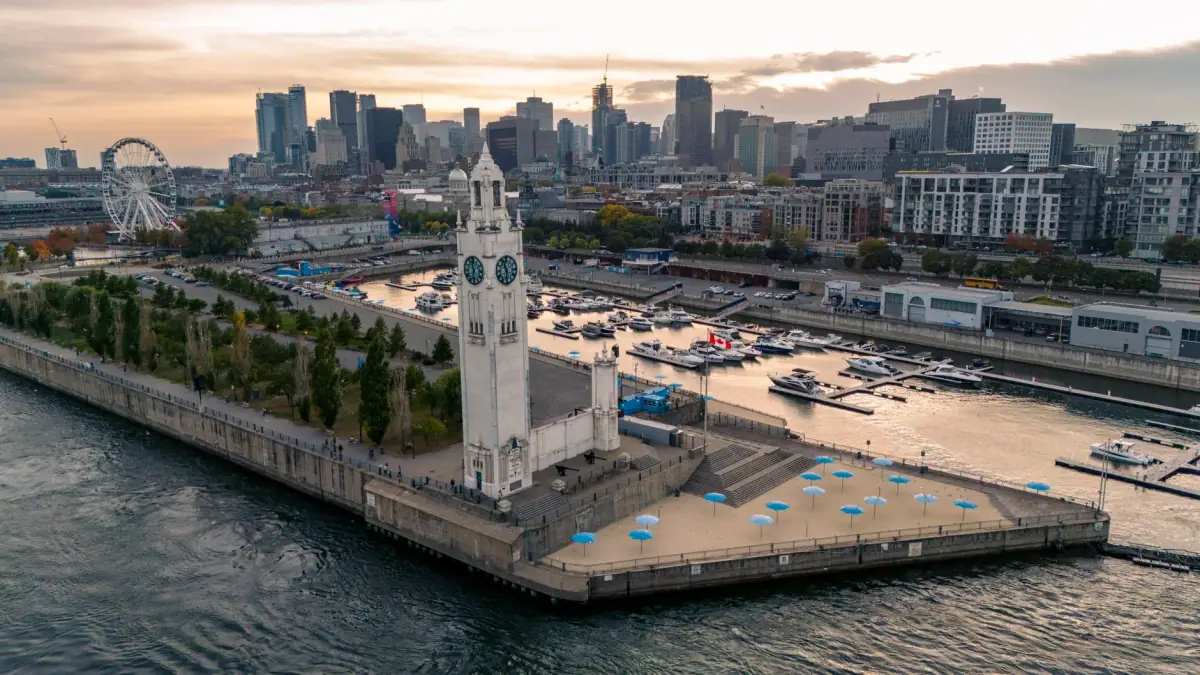
Start with Old Montreal, with its cobbled streets, stone facades and European feel. Walk past Notre-Dame Basilica, whose interior is known for its blue and gold decor, then stroll to the Old Port, where the river reminds you that Montreal is an island. At the end of the day, a patio in the neighborhood lets you soak up the local atmosphere.
Where to stay in Montreal?
Compare hotels in Old Montreal, downtown and the Plateau for your dates.
Day 2: Mount Royal and the Plateau
Mount Royal is the city’s green lung, with a lookout offering a fine view of downtown and the river. The walk up from the center is pleasant in good weather. Then head back down to the Plateau-Mont-Royal, a neighborhood known for its colorful outdoor staircases, independent shops and cafés.
Day 3: markets and lively neighborhoods
Devote this day to local life: a visit to Jean-Talon Market, one of the city’s major public markets, then a stroll through Mile End, known for its bagels, artists’ studios and patios. It is a chance to try a few Quebec specialties such as poutine or maple products, favoring places that locals frequent.
Day 4: from Montreal to Quebec City
Pick up your car in the morning and take Highway 20 or 40 east. Allow about 250 km (155 mi) and 2 h 30 to 3 h of driving, depending on traffic leaving Montreal. Avoid leaving at rush hour so you do not lose time in traffic jams.
Flights to Montreal or Quebec City
Compare flights and book early for high season.
The rental car is best picked up in the city, before you leave. When you pick it up, keep in mind the possible fees for dropping it off at a different agency if you do not return to your starting point.
Days 4 and 5: Quebec City
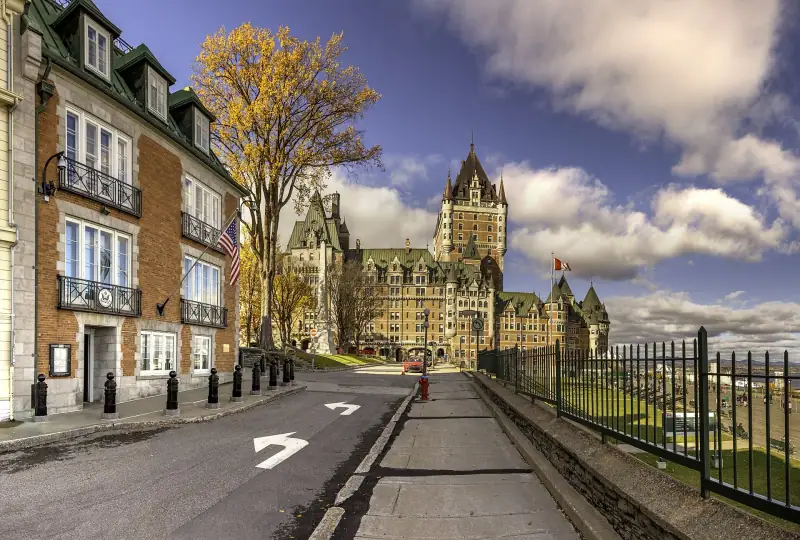
Old Quebec, a UNESCO World Heritage site
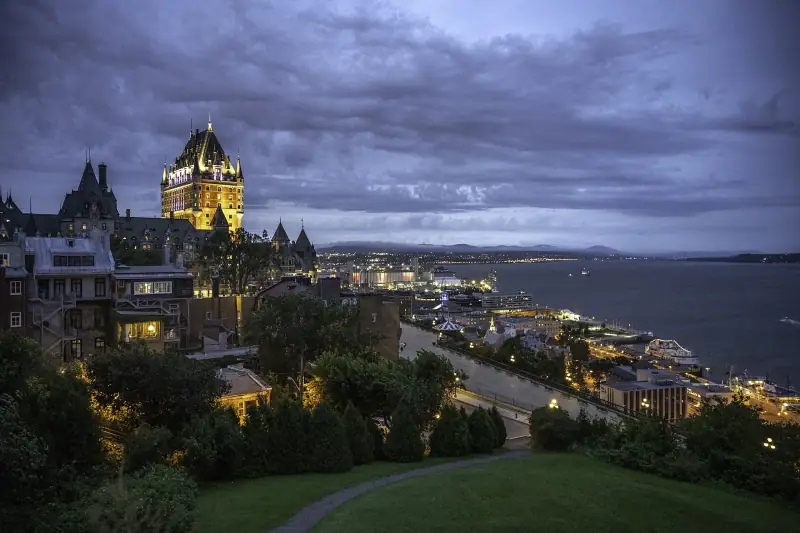
Old Quebec is the only fortified historic center in North America north of Mexico, and it is a UNESCO World Heritage site. You explore it on foot: Dufferin Terrace runs along the river in front of the Château Frontenac, the symbol of the city, and the Citadelle overlooks Cap Diamant. A walk along the ramparts offers fine views over the Upper Town and the Lower Town.
Then head down to the Petit Champlain district, a narrow lane lined with shops and old houses, reached by a staircase or a funicular. It is one of the most photographed spots in the city, so it is rather crowded during the day: visit early in the morning or in the evening.
Day 5: Plains of Abraham, Montmorency Falls and Île d’Orléans
The Battlefields Park, better known as the Plains of Abraham, is a vast green space in the heart of the city, evoking a major episode in the history of New France. It makes a good morning walk.
In the afternoon, head to Montmorency Falls, about ten kilometers (6 mi) from downtown Quebec City. They are taller than Niagara Falls, which makes them impressive, even though their flow is much smaller. You reach them by trails and stairs, with a cable car as an alternative.
Continue to Île d’Orléans, linked to the mainland by a bridge. It is often called the “garden of Quebec”: orchards, farms, local food producers, vineyards, cider houses and viewpoints over the river. A drive around the island lets you put together your own tasting from local products.
Tours and excursions in Quebec City
Guided tours of Old Quebec, river cruises and outdoor activities.
Day 6: Côte-de-Beaupré and Baie-Saint-Paul
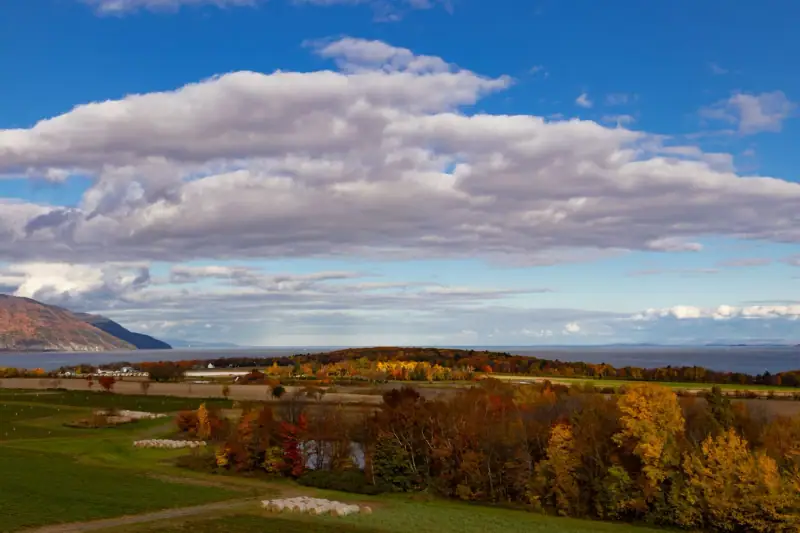
Leave Quebec City on the road that follows the north shore of the St. Lawrence. The distance to Baie-Saint-Paul is about 95 km (59 mi), a little over an hour without stops. That leaves time for plenty of breaks: Montmorency Falls if you did not visit them the day before, or the villages of the Côte-de-Beaupré.
Baie-Saint-Paul is the entry point to the Charlevoix region, recognized as a UNESCO world biosphere reserve. The village is known for its art galleries, artists’ studios and lively main street. The landscape, with mountains plunging toward the river, has long attracted painters. Take the time to wander, visit a gallery or two and taste the cheeses and local products of the region.
For the night, choose an inn or a bed and breakfast, often more authentic than the big chains in this region.
Day 7: from Charlevoix to Tadoussac
The Charlevoix road follows the river, alternating villages, cliffs and viewpoints. It passes through La Malbaie, the region’s historic resort town. Hiking fans can devote several hours to a national park nearby, but that means setting out earlier in the morning.
The trip to Tadoussac is about 150 km (93 mi) depending on stops, to which you must add the ferry crossing from Baie-Sainte-Catherine to Tadoussac. The crossing is free and takes about ten minutes, but the wait can be long on weekends and in high season: do not arrive at the last minute and keep some slack for the rest of the day.
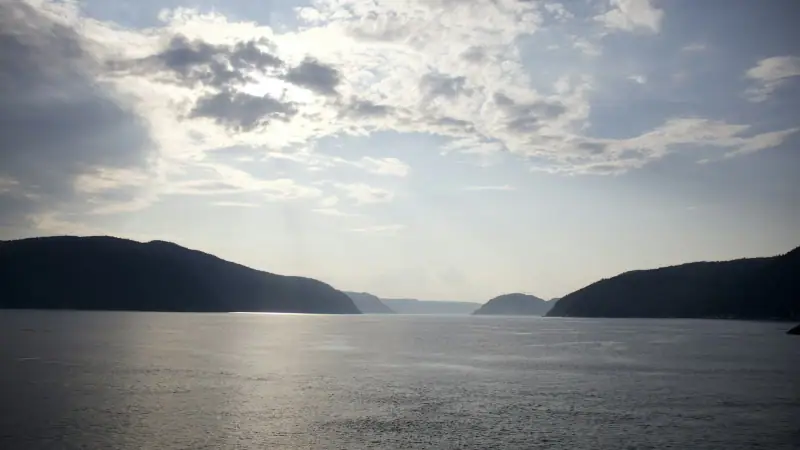
Tadoussac sits at the mouth of the Saguenay fjord and the St. Lawrence estuary. It is a small village where the sea seems very close, with white houses, a small wooden chapel and sandy beaches.
Day 8: Tadoussac, whales and the fjord
Whale watching
Tadoussac is one of the best-known places in Quebec for watching whales. In the warm season the estuary attracts several species that come to feed. Trips run on inflatable boats or larger boats, depending on the company. The season runs roughly from May to October, and the months of July to September are the most regular.
Remember that conditions vary a lot: the presence of the animals is never guaranteed, and it can be cool on the water, even in midsummer. Always bring a windbreaker, whatever the temperature on land.
Whale-watching trips from Tadoussac
Compare whale-watching cruises and fjord excursions.
The Saguenay fjord
The Saguenay fjord is one of the largest fjords in the world accessible by boat, lined with steep cliffs. There, several hiking trails offer views of the mouth of the fjord. The Tadoussac dunes, very close to the village, make an easy and unusual walk, with an unexpected sandy landscape facing the river.
Keep time to visit an interpretation center devoted to marine mammals, which explains why whales come to the estuary and helps you understand the ecosystem.
Day 9: back to Quebec City
Take the ferry again, then the road to Quebec City. Allow a little over 200 km (124 mi) and about 3 hours, including a possible wait at the ferry. It is the longest driving day of the itinerary: leave early if you have a flight that same evening, or plan a last night in Quebec City to return the car without stress.
From Quebec City, you can reach Montreal by bus, train or car (about 250 km / 155 mi). If your flight leaves from Montreal, add a night to avoid any bad surprise: a delay on the road or at the ferry happens easily.
Practical tips for this road trip
- Book early: from July to early October, lodgings in Charlevoix and Tadoussac fill up fast, sometimes several months ahead.
- Allow slack: the distances are reasonable, but the ferry, road construction and photo stops easily lengthen trips.
- Watch the weather: even in summer, it can be cool on the river. In fall, days get shorter quickly: avoid driving at night in rural areas.
- Wildlife on the road: in forested areas, there may be moose and deer on the road, especially at dawn and dusk.
- Driving: you drive on the right, and speed limits are posted in kilometers per hour. Speed checks are frequent.
- Winter tires: they are mandatory from December 1 to March 15. They do not apply in summer, but matter if you travel in winter.
Going further
If you have more time, Gaspésie (Percé, Forillon Park) deserves a trip of its own: the distances from Quebec City are well over a day’s drive, and it is better to devote at least an extra week to this region. Likewise, the Laurentians (Mont-Tremblant) are easy to visit from Montreal in one or two days. To choose the best season, see our guide on when to visit Quebec.
Frequently asked questions
How many days do you need for a road trip between Montreal, Quebec City and Tadoussac?
Nine days is a good compromise: three nights in Montreal, two in Quebec City, one in Baie-Saint-Paul, two in Tadoussac, then a last night in Quebec City before returning the car. With one week, you have to drop a stop, for example Charlevoix or a day in Montreal.
Do you need to rent a car for the whole itinerary?
Not necessarily. Montreal and Quebec City are easy to visit on foot and by public transit, and a bus or train links the two cities. A car becomes useful once you leave Quebec City for Charlevoix and Tadoussac, where distances are long and public transport is scarce. One option is to take the car only from Quebec City.
How do you cross the Saguenay to get to Tadoussac?
A free ferry links Baie-Sainte-Catherine to Tadoussac, at the mouth of the Saguenay fjord. The crossing takes about ten minutes. The wait can be long in high season and on weekends, so leave some slack in your schedule.
Can you see whales on this road trip?
Yes. Tadoussac is one of the best-known departure points for whale-watching in the St. Lawrence estuary. The season runs roughly from May to October. Trips depend on the weather, and the presence of the animals is never guaranteed.
What is the best time of year for this itinerary?
From June to mid-October, with a preference for late summer and early fall, when foliage colors add to still mild conditions. See our guide to choose the season that suits you.
More Quebec guides
Keep reading
Quebec trip budget: real costs and 3 profiles
What budget for Quebec? Costs by item (lodging, transport, meals, activities), three costed profiles and tips to spend less.
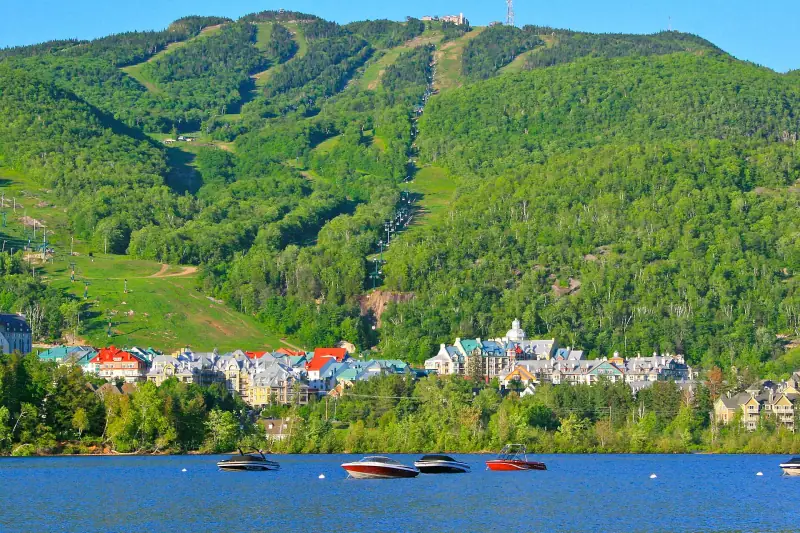
Mont-Tremblant and the Laurentians: things to do in summer, fall and winter
Mont-Tremblant and the Laurentians: hiking, P'tit Train du Nord, fall colors, skiing and winter activities. Seasons, length of stay and tips.
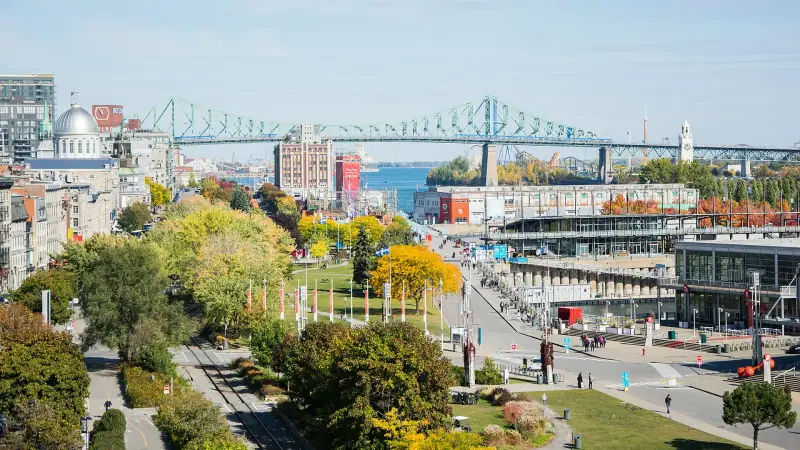
What to see in Montreal in 3 days: Old Montreal, Mount Royal and neighborhoods
What to see in Montreal in 3 days? Old Montreal, Mount Royal, the Plateau, Mile End, markets and the Underground City: day-by-day plan and practical tips.
Ready-made
Quebec itineraries
5 days
5 days
Eastern Townships in 5 days: Magog, Orford, Sherbrooke and wine country itinerary
MagogSherbrooke or North HatleySutton or Dunham area
8 days
Quebec with kids: an 8-day itinerary (Montreal, Quebec City, Charlevoix)
8-day Quebec itinerary with children: Montreal, Quebec City, Montmorency Falls, Charlevoix and whales. Stops, pace, distances and tips.