Things to do
Mont-Tremblant and the Laurentians: things to do in summer, fall and winter
We may earn a commission when you book through links on this page, at no extra cost to you. We don't visit or try the places we cover: we summarize published sources. How we work
In short
- Mont-Tremblant is about an hour and a half to two hours north of Montreal by car, via Highway 15 then Route 117; the summit is about 875 m (2,871 ft).
- Summer is for hiking, cycling and swimming, fall colors usually run from late September to mid-October, and ski season often runs December to March.
- The P'tit Train du Nord, a former railway, stretches about 200 km (124 mi) through Laurentians villages, with a gentle grade.
- Book ahead for summer weekends, fall colors and winter holidays; Mont-Tremblant is one of the priciest destinations in Quebec.
About an hour and a half’s drive north of Montreal, the Laurentians are the favorite playground of Quebecers: lakes, wooded hills, chalet villages and, at the heart of the region, Mont-Tremblant. People come to walk in the forest, cycle on a former railway, admire the fall colors or ski as soon as the snow settles in.
This guide explains how to organize a stay by season, which activities to favor and how to get there. It complements our guide to visiting Montreal in 3 days, the natural starting point, and our article on the best time to visit Quebec.
Mont-Tremblant: the resort and its pedestrian village
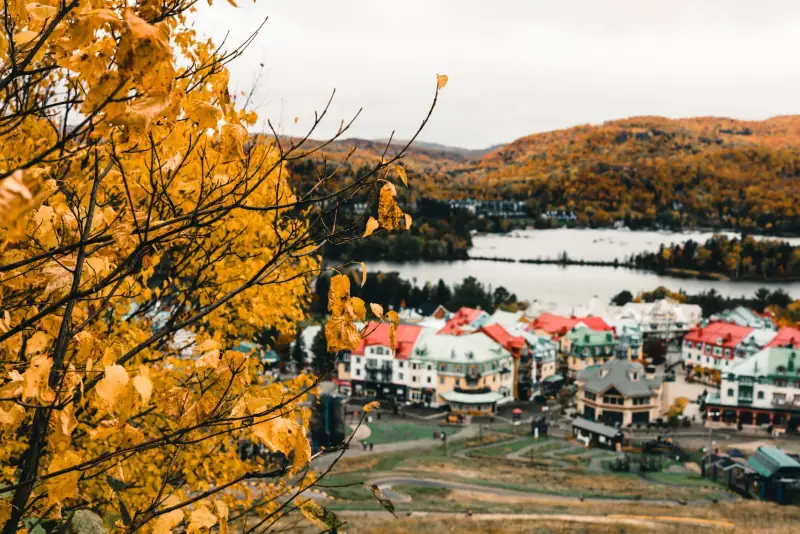
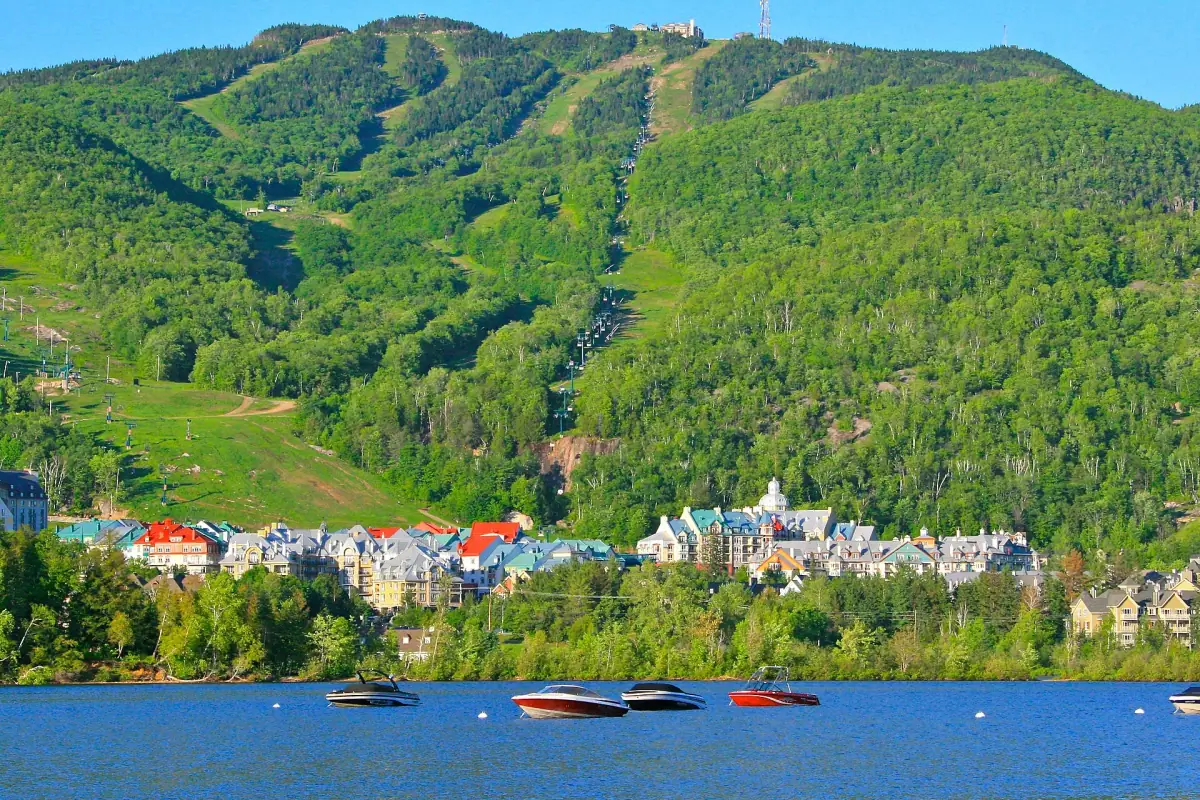
Mont-Tremblant refers at once to a mountain, a municipality and a large ski resort. The summit is the highest point in the Laurentians, at about 875 meters (2,871 ft). At the foot of the mountain, the resort village is entirely pedestrian: cobbled streets, shops, restaurants, patios and in-season entertainment, with an atmosphere very different from a traditional Quebec village.
The gondola takes you to the summit in summer as well as winter. In summer, it gives access to viewpoints over the surrounding lakes and forests; in winter, it serves the ski runs. The village is practical for a first stay, since almost everything is done on foot, but it is also more touristy and more expensive than the neighboring villages. For a tighter budget, many travelers sleep in the neighboring municipality or in a lakeside chalet and come to the resort for the day.
Flights to Montreal
The Laurentians are easy to reach from Montreal: compare flights before planning your stay.
Mont-Tremblant National Park: hiking and lakes
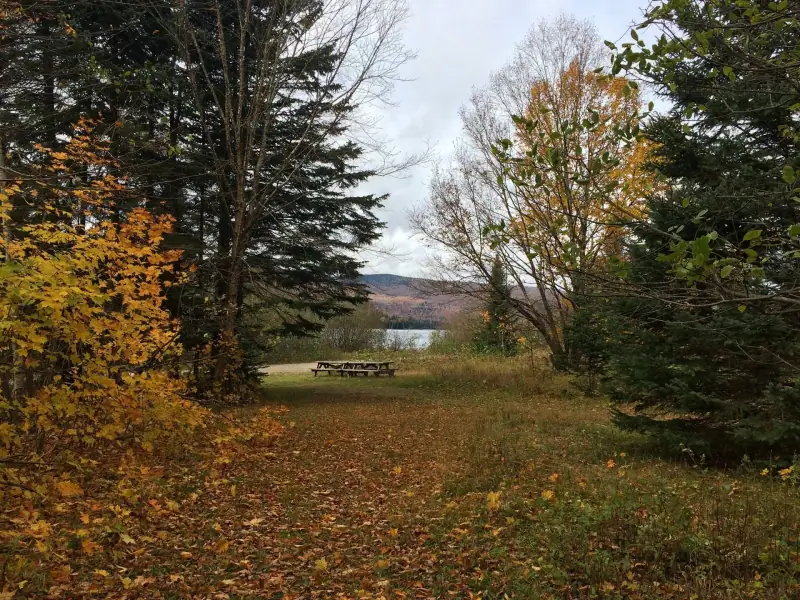
Mont-Tremblant National Park is one of the oldest in Quebec and one of the most visited. It covers a vast territory of forests, rivers and lakes, with trails of varying difficulty, lake beaches, canoe-camping sites and lookout points. Access and services vary by sector of the park; check the official Sépaq website for open sectors, access fees and available trails before you go.
A few ideas to organize your visit:
- A day hike on a marked trail, chosen according to your level and the season.
- Canoeing or kayaking on a lake, a very popular summer activity, with rentals available in some sectors.
- A swim in a lake, in July and August, when the water is warmest.
- Wildlife: moose, beavers and birds are possible, especially early in the morning, from a respectful distance.
Bring water, insect repellent, since mosquitoes and black flies are very present in spring and early summer, and suitable clothing: mountain weather can change quickly.
The P’tit Train du Nord: cycling and walking on the former railway
The P’tit Train du Nord is a linear park built on the former railway that linked Saint-Jérôme to Mont-Laurier. It stretches about 200 kilometers (124 mi) and crosses many Laurentians villages, including Sainte-Adèle, Val-David, Sainte-Agathe-des-Monts and Mont-Tremblant. The route, with a gentle grade since it is a former railway, suits families and casual cyclists.
There is no need to cover all of it: many travelers choose a stretch of a few dozen kilometers, with a coffee break in a village. You find renovated stations, bike rental services and inns. In winter, part of the trail is used for cross-country skiing or walking, depending on maintenance; ask locally.
Activities around Mont-Tremblant
Rafting, guided hikes, dogsled outings depending on the season: compare the offers.
Saint-Sauveur and the Laurentians villages
On the road between Montreal and Mont-Tremblant, several villages deserve a stop. Saint-Sauveur is one of the best known: a lively main street, patios, shops and access to ski areas and seasonal water parks. Sainte-Adèle and Val-David are known for their calmer atmosphere, craft studios and nearby trails. Val-David is also known to climbers for its climbing walls.
These villages are a good option for a first night after arriving in Montreal, or to break up the trip to Mont-Tremblant. You can taste local cuisine there, from maple products to the region’s cheeses, which we detail in our guide on what to eat in Quebec.
Fall colors in the Laurentians
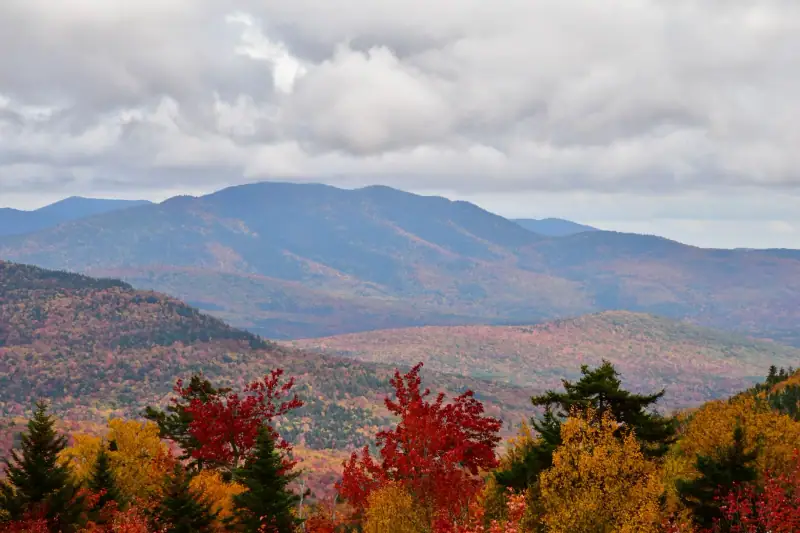
Fall is one of the most spectacular periods. The maples turn red, orange and yellow, and the hills of the Laurentians offer much-photographed panoramas. The peak of the colors depends on the year and the altitude: it often falls between late September and mid-October, a little earlier toward the north and at altitude. Temperatures are cool, nights cold, and clear days give the best light.
It is also a period of heavy traffic, especially on weekends: book lodging well ahead and set out early to enjoy the trails. If you have flexibility, a weekday is much quieter. The colors combine well with a stay in Montreal and an excursion to Quebec City, as in our 9-day road trip.
Mont-Tremblant in winter: skiing and snow activities
Winter transforms the region. Downhill skiing and snowboarding are the star activities, with many ski areas in the Laurentians, including those of Mont-Tremblant and Saint-Sauveur. The season generally starts in December and can last until March or April depending on snow cover. Conditions vary from year to year; check run openings before booking.
For those who do not ski, other activities are offered (for snowmobiling, see our guide snowmobiling in Quebec: where to go, permits and tips):
- Snowshoeing and cross-country skiing on the trails and in the national park.
- Dogsledding with local companies.
- Tubing and skating on some lakes or prepared rinks.
- Nordic relaxation: Scandinavian spas, alternating hot and cold in the middle of nature, are very popular in the region.
Dress in layers, with thermal underwear, gloves and a hat: temperatures can drop very low. Our guide to the best time to go details winter conditions.
How to get there and where to stay in Mont-Tremblant
From Montreal, a car is the simplest way: about an hour and a half to two hours by road via Highway 15 then Route 117, more on Friday and Sunday evenings in high season. Coach shuttles also serve the resort from Montreal, but they do not let you explore the villages and the park easily.
For lodging, three main options exist: the hotels and condos of the resort, practical but expensive; the inns and gîtes of the villages, more authentic; and lakeside chalets, perfect for a group or a family. For a weekend, two nights are enough; to enjoy the park, cycling and a village, allow three or four nights.
Lodging in Mont-Tremblant
Chalets, inns and hotels fill up fast in high season and during fall colors.
Budget and practical tips
Mont-Tremblant is one of the most expensive destinations in Quebec, especially in the resort and in high season. To limit spending, sleep outside the resort, favor meals in the neighboring villages, travel on weekdays and book early. Park access fees, the gondola, ski passes and equipment rentals should be checked on the official websites before you leave, as rates change from one season to the next.
A few useful habits:
- Download offline maps: the mobile network is patchy in the park.
- Keep a bank card on you: it is accepted almost everywhere in Quebec.
- Respect the park’s rules: marked trails, take your trash out, no fires outside designated areas.
- Check the weather, as conditions can change quickly in the mountains.
To conclude
Mont-Tremblant and the Laurentians suit almost every wish, from summer hiking to winter gliding, by way of fall colors. For a first trip, a stay of two to four days from Montreal, with a hike in the park, a stretch of the P’tit Train du Nord and a village to explore, gives a good overview without long drives.
Frequently asked questions
How much time do you need to visit Mont-Tremblant?
A two-day weekend lets you sample the resort and one trail in the national park. With three or four days, you add the P'tit Train du Nord, a lake and the neighboring villages without rushing.
How do you get from Montreal to Mont-Tremblant?
By car, allow about an hour and a half to two hours depending on traffic, via Highway 15 then Route 117. Bus shuttles also run from Montreal, but a car is more flexible for exploring the surroundings.
What is the best season for the Laurentians?
It depends on the activity. Summer suits hiking, cycling and swimming, fall suits the colors, generally from late September to mid-October, and winter suits skiing and snow sports, often from December to March depending on snow cover.
Can you do the Laurentians without a car?
It is possible for the Mont-Tremblant resort, served by shuttles from Montreal, but difficult for the rest. Villages, trails and lakes are scattered, and a car gives much more freedom.
Do you need to book in advance?
Yes in high season: summer weekends, the fall colors period and winter holidays. Lodgings and some guided activities fill up several weeks ahead.
More Quebec guides
Keep reading
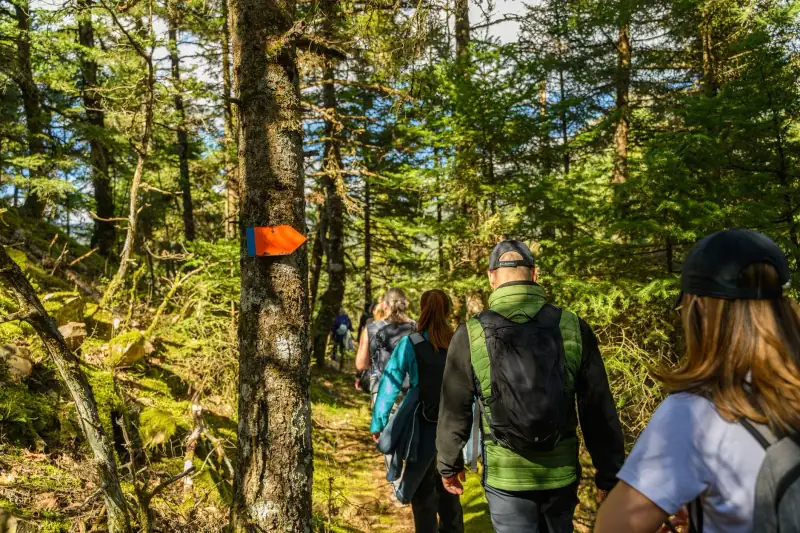
Hiking in Quebec: the best national parks (Sépaq)
Hiking in Quebec: a selection of national parks (Jacques-Cartier, Fjord-du-Saguenay, Forillon, Hautes-Gorges), seasons, gear, wildlife and practical tips.

Whale watching in Tadoussac: season, trips and tips
Whale watching in Tadoussac: best time, inflatable boat or large boat, watching from shore, lodging and tips to prepare your trip.
Quebec trip budget: real costs and 3 profiles
What budget for Quebec? Costs by item (lodging, transport, meals, activities), three costed profiles and tips to spend less.
Ready-made
Quebec itineraries
5 days
5 days
Eastern Townships in 5 days: Magog, Orford, Sherbrooke and wine country itinerary
MagogSherbrooke or North HatleySutton or Dunham area
8 days
Quebec with kids: an 8-day itinerary (Montreal, Quebec City, Charlevoix)
8-day Quebec itinerary with children: Montreal, Quebec City, Montmorency Falls, Charlevoix and whales. Stops, pace, distances and tips.