Things to do
Whale watching in Tadoussac: season, trips and tips
We may earn a commission when you book through links on this page, at no extra cost to you. We don't visit or try the places we cover: we summarize published sources. How we work
In short
- The whale-watching season runs roughly from May to October; July to September is generally the most regular, with the widest choice of trips.
- No sighting is guaranteed: the animals are wild and their presence depends on food, weather and tide. Keep some slack in your stay.
- Inflatable boats are fast and close to the water; larger boats are more stable and suit families. A trip generally lasts two to three hours.
- Tadoussac is about three hours by road from Quebec City, plus the free Baie-Sainte-Catherine ferry, where the wait can be long on weekends and in high season.
Tadoussac is a small village on the Côte-Nord, at the exact spot where the Saguenay fjord meets the St. Lawrence estuary. This mix of deep, cold waters rich in food attracts several species of marine mammals each summer, which makes it one of the best places in Quebec to watch whales. For many travelers, it is the highlight of a stay in the province.
This guide explains when to come, which species you can hope to see, how to choose between the different types of trips and how to organize your stay. It complements our 9-day road trip in Quebec, of which Tadoussac is one of the last stops.
Why Tadoussac is an exceptional watching spot
The secret is geography. The Saguenay fjord is very deep, while the St. Lawrence estuary receives cold waters from the Atlantic. Where the two meet, currents and upwellings concentrate the plankton and small fish that whales feed on. The area is protected by the Saguenay–St. Lawrence Marine Park, which regulates navigation and watching to limit disturbance to the animals.
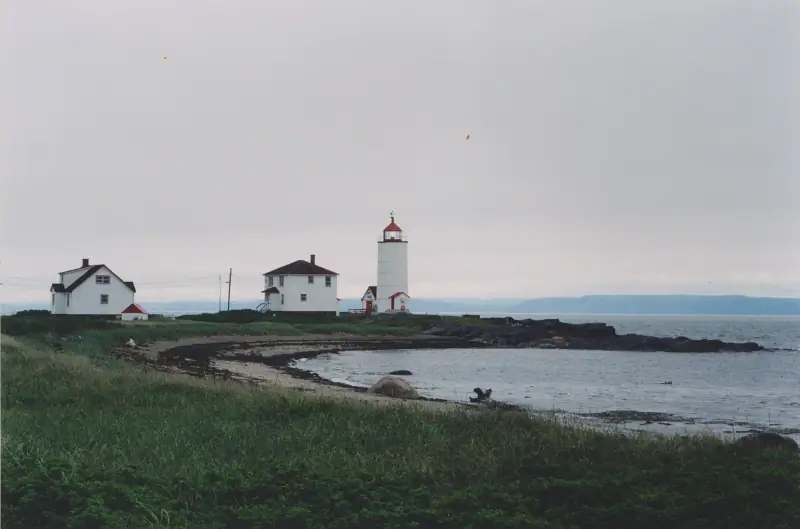
The village itself is pleasant: white houses with colorful roofs, a small wooden chapel, sandy beaches and the feel of a quiet seaside resort. You can easily spend a night or two, which leaves time to adjust your plans to the weather.
Which species can you see?
Sightings vary from day to day, but several species are regularly reported in the area in season:
- The minke whale, the most frequent and often the most curious, which sometimes approaches boats.
- The fin whale, a very fast giant, the second largest animal on the planet after the blue whale.
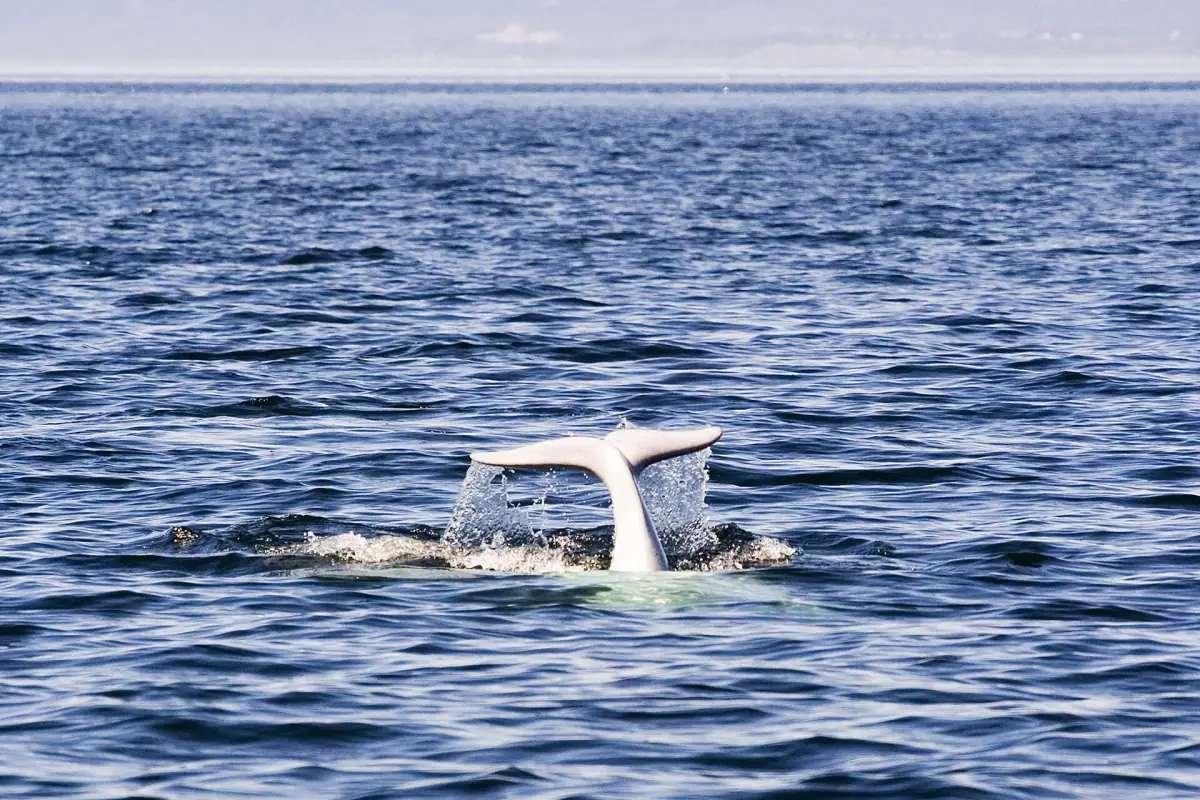
- The humpback whale, famous for its leaps and long flippers, sometimes seen lifting its tail before diving.
- The beluga, a small white whale whose St. Lawrence population is in a fragile situation and is seen mostly in the fjord and estuary area, with less certain sightings.
- The blue whale, very rare: if a trip meets one, it is an exceptional stroke of luck and should not be counted on.
You also see seals and many seabirds. The guides on board generally explain the behaviors and particularities of each species, which makes the trip much more interesting for non-specialists.
When to come: the whale season
The watching season runs roughly from May to October. The start of the season is quieter, with colder waters and fewer people, while summer concentrates departures and crowds.
- May-June: the season starting up, fewer tourists, cool and changeable weather.
- July-August: peak season, more trips and generally milder conditions, but also higher lodging prices and heavy traffic.
- September-early October: a very good period if the weather allows, with the bonus of fall colors on the banks of the fjord.
To compare these periods with the rest of Quebec, see our guide on when to visit Quebec. Whatever the date, book your lodging early for summer: the village is small and fills up fast.
Lodging in Tadoussac
Compare the inns, gîtes and hotels of the village for your dates, before the season is in full swing.
Inflatable boat or large boat: how to choose
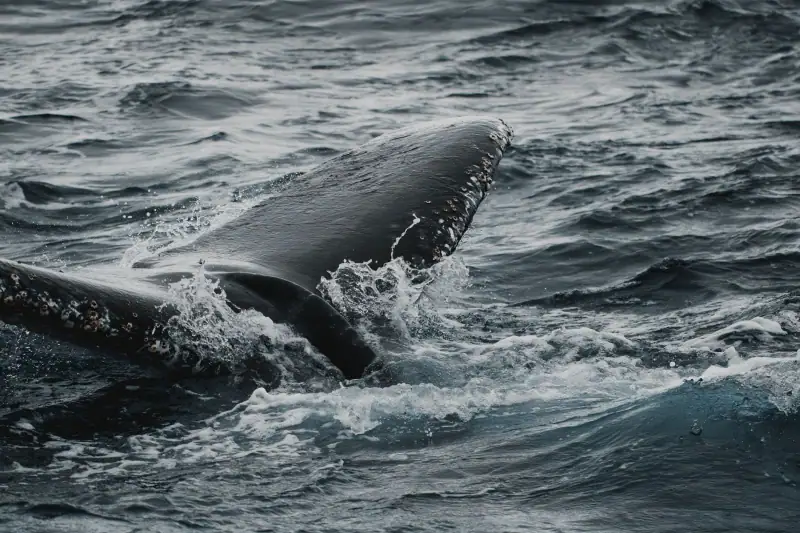
Two main types of trips are offered from Tadoussac and the neighboring villages.
The inflatable boat
Fast and maneuverable, it lets you reach the watching areas quickly and get as close to the water as possible. The experience is sportier: you sit astride, get sea spray and are shaken by the waves. A flotation suit is generally provided, but it is always cooler than on land.
Who is it for? Adults and teens comfortable on the water, looking for an immersive experience. Conditions are less suited to young children: ask the company.
The large boat
More stable and comfortable, it has decks, a shelter and sometimes a cafeteria. The view is higher, the watching calmer and the trip suits families, mixed groups and people prone to seasickness better.
Who is it for? All audiences, notably with children, or if the weather is uncertain. The trade-off is slightly less close contact with the water.
In both cases, generally allow two to three hours for the trip, and check the real schedules when you book, as they change with the season and the tide.
Whale-watching cruises
Compare boat trips and fjord excursions, with cancellation depending on conditions.
Watching whales from shore
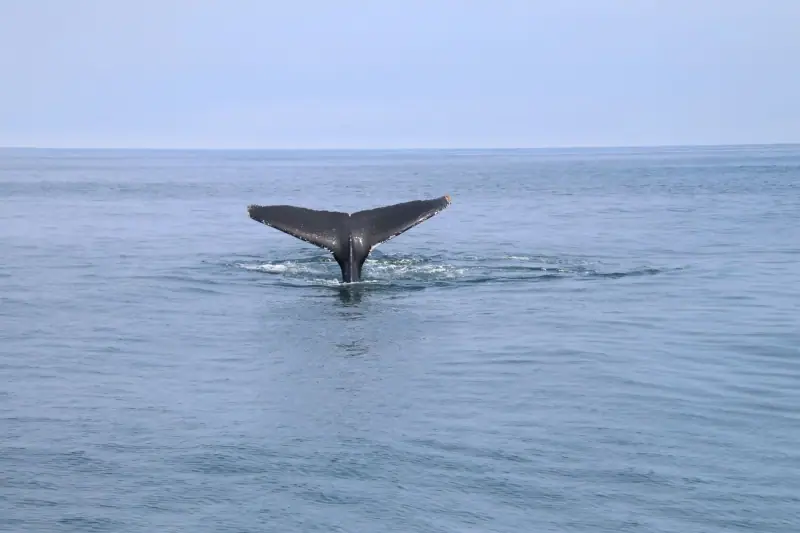
A boat is not the only option. Several viewpoints on the shore, around Tadoussac and along the road north, offer the chance to spot blows, backs or seals, especially on a rising tide or in calm seas. Bring binoculars, patience and a little luck.
The Tadoussac Marine Mammal Interpretation Center is a good stop before or after the trip: it explains the biology of cetaceans, the threats they face and how the estuary ecosystem works. It is also a fallback if the weather prevents sailing.
The Tadoussac dunes, very close to the village, round out the visit with an unexpected sandy landscape facing the river: an easy walk that suits the whole family.
The Saguenay fjord
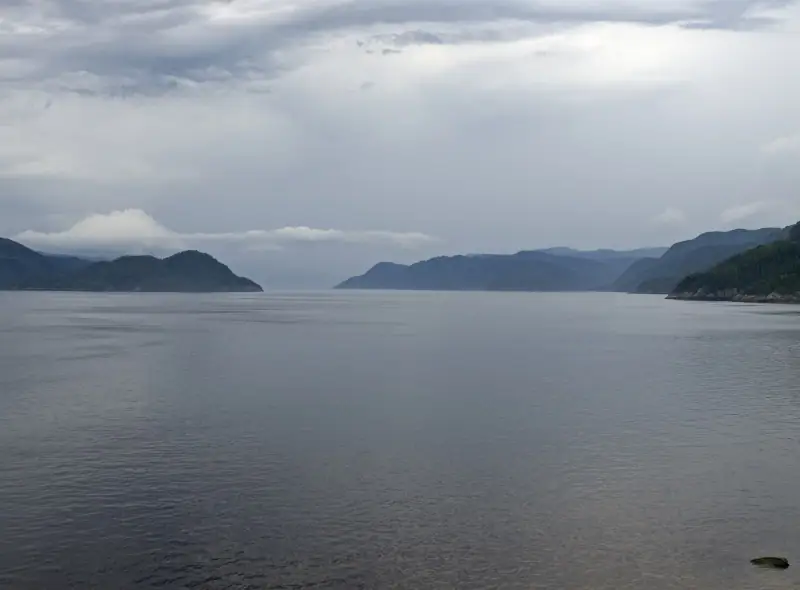
The whale trip can be combined with a cruise on the fjord, lined with steep cliffs plunging into dark water. The Saguenay is one of the largest navigable fjords in the world, and crossing it by boat gives another dimension to the region: silence, cliffs, forests, with sometimes seals or a beluga.
If you have little time, favor the whale trip. If you have an extra day, add a walk on the trails overlooking the mouth: the viewpoints are superb, especially at the end of the day.
How to get to Tadoussac
Tadoussac lies northeast of Quebec City, on the north shore of the mouth of the Saguenay. The most common access is by car on Route 138, passing through Charlevoix. An important practical detail: you have to cross the Saguenay by ferry, between Baie-Sainte-Catherine and Tadoussac. The crossing is free and takes about ten minutes, but the wait can become long on weekends and in high season.
A few tips:
- Allow about three hours of driving from Quebec City, plus any wait at the ferry.
- Arrive with slack if you have a trip booked at a fixed time.
- A car is much more practical than public transit in the region.
Quebec City is the logical base to prepare for this trip: our guide what to see in Quebec City helps you organize a day or two before heading north.
Flights to Quebec
Compare flights to Montreal or Quebec City before building your itinerary to Tadoussac.
Preparing well for the trip
A few habits greatly simplify the experience.
- Dress in layers: even in midsummer, it is much cooler on the water. Bring a windbreaker, a warm sweater, a hat and gloves outside peak season.
- Closed shoes and clothes that can handle spray and wind.
- Binoculars and a camera with good protection against water. A zoom is useful, since the animals keep their distance.
- Seasickness: if you are prone to it, choose the large boat. Ask your doctor or a travel clinic, and see the official travel health pages (CDC in the US, TravelHealthPro in the UK).
- Sunscreen and sunglasses: the glare off the water amplifies the sun, even in hazy weather.
- Booking: in July and August, book the day before or several days ahead to get the slot you want.
Reputable companies respect the distance rules set by the marine park. Never encourage an approach too close to the animals: a good sighting is first of all a respectful one.
How much time to plan?
To enjoy Tadoussac without rushing, allow one night minimum, ideally two. The first day is for arriving and discovering the village, the dunes and the interpretation center. The second is devoted to the boat trip, with the option of postponing it if the weather turns.
If you continue to other regions, our 9-day road trip shows how to fit this stop into a circuit between Montreal, Quebec City and Charlevoix. And to extend the experience at the table, our guide what to eat in Quebec suggests specialties to taste along the way.
In short
Tadoussac brings together everything you expect from a nature outing: a spectacular setting, exceptional wildlife and a pleasant village. Come between July and September to maximize your chances, choose your boat according to your comfort, dress more warmly than planned and keep slack in your schedule. Even without a whale, the fjord and the estuary are worth the detour.
Frequently asked questions
What is the best time to watch whales in Tadoussac?
The watching season runs roughly from May to October. July to September are generally the most regular, with the widest choice of trips. At the start and end of the season there are fewer people and some companies reduce their departures.
Are you sure to see whales on a trip?
No. They are wild animals and their presence depends on the available food, the weather and the tide. In-season trips give good chances, but no reputable company can guarantee a sighting. Allow some slack in your stay to try again.
Should you choose an inflatable boat or a large boat?
The inflatable boat is faster and puts passengers at water level, but it is bumpier and cooler, with a suit provided. The large boat is more stable and comfortable, with decks and a shelter, which suits families, young children and people prone to seasickness better.
Can you see whales without taking a boat?
Yes, sometimes. Some viewpoints on the shore, near Tadoussac and along the road north, let you spot blows and backs from a distance, especially with binoculars. It is less spectacular than by boat, but free, and a good complement.
How long does a watching trip last?
Depending on the type of boat and the company, a trip generally lasts between two and three hours. Check the exact duration, the boarding point and the schedules when you book, as they vary by season.
More Quebec guides
Keep reading
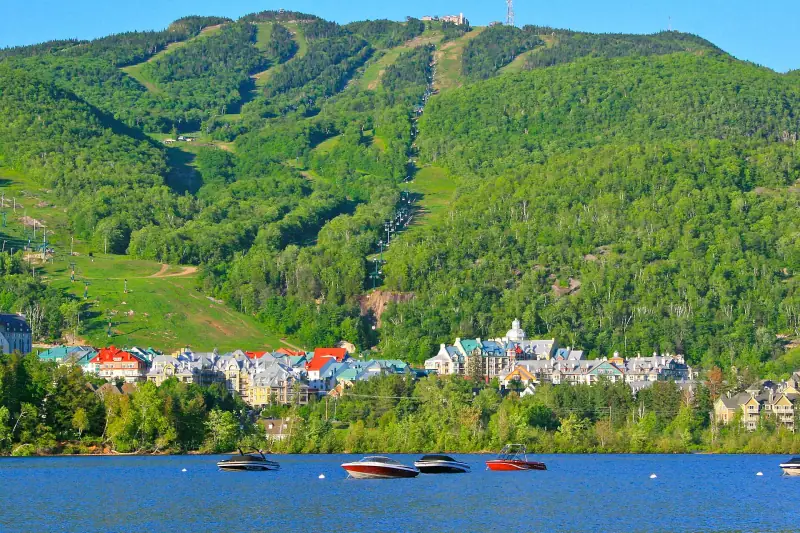
Mont-Tremblant and the Laurentians: things to do in summer, fall and winter
Mont-Tremblant and the Laurentians: hiking, P'tit Train du Nord, fall colors, skiing and winter activities. Seasons, length of stay and tips.
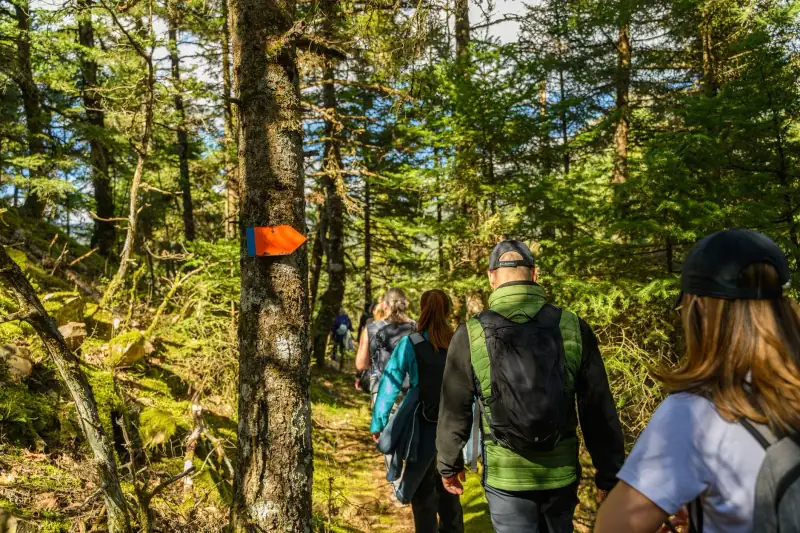
Hiking in Quebec: the best national parks (Sépaq)
Hiking in Quebec: a selection of national parks (Jacques-Cartier, Fjord-du-Saguenay, Forillon, Hautes-Gorges), seasons, gear, wildlife and practical tips.
Quebec trip budget: real costs and 3 profiles
What budget for Quebec? Costs by item (lodging, transport, meals, activities), three costed profiles and tips to spend less.
Ready-made
Quebec itineraries
5 days
5 days
Eastern Townships in 5 days: Magog, Orford, Sherbrooke and wine country itinerary
MagogSherbrooke or North HatleySutton or Dunham area
8 days
Quebec with kids: an 8-day itinerary (Montreal, Quebec City, Charlevoix)
8-day Quebec itinerary with children: Montreal, Quebec City, Montmorency Falls, Charlevoix and whales. Stops, pace, distances and tips.