What to see
Visiting Gaspésie: Percé, Forillon and Route 132
We may earn a commission when you book through links on this page, at no extra cost to you. We don't visit or try the places we cover: we summarize published sources. How we work
In short
- Gaspésie is far from everything: more than 700 km (435 mi) from Quebec City to Percé and over 1,000 km (621 mi) from Montreal; plan at least a week.
- A car is essential; the full loop on Route 132 is close to 900 km (560 mi).
- Most services run from June to September; many lodgings and attractions close or cut hours off-season, and rooms near Percé book up in July and August.
- Highlights: Percé Rock, Bonaventure Island and its gannets, Forillon National Park and the Chic-Chocs in Gaspésie National Park.
At the end of Route 132, where the St. Lawrence widens into a gulf, Gaspésie is one of the most spectacular regions of Quebec. Cliffs dropping into the sea, white lighthouses, fishing villages, mountains still wild inland: the scenery changes at every bend and gives the feeling of being at the end of the world. It is also a region you have to earn, because it is far from everything.
This guide presents the highlights, a realistic itinerary and practical tips so you do not underestimate the distances. It complements our 9-day road trip in Quebec, which stays centered on Montreal, Quebec City, Charlevoix and Tadoussac.
Where Gaspésie is and how to approach it
Gaspésie is a large peninsula jutting into the Gulf of St. Lawrence, east of Quebec City. Most people discover it by following Route 132, which runs along the south shore of the river and then rounds the peninsula. The full loop is close to 900 km (560 mi), to which you add the trip from your starting point.
From Quebec City, allow more than 700 km (435 mi) to Percé, a long day on the road. From Montreal, the distance exceeds 1,000 km (621 mi). It is therefore better to split the trip with one or two stops, for example in the Bas-Saint-Laurent, and not try to see everything in a short time.
A few points of reference to get organized:
- A car is essential: the sights are scattered and public transit links remain very limited.
- Driving days are longer than they look: the road is scenic, and you will stop often.
- The season is short: most services run from June to September.
To choose your dates, see our guide on when to visit Quebec.
Flights to Quebec
Compare flights to Montreal or Quebec City before building your itinerary to Gaspésie.
Percé and its rock
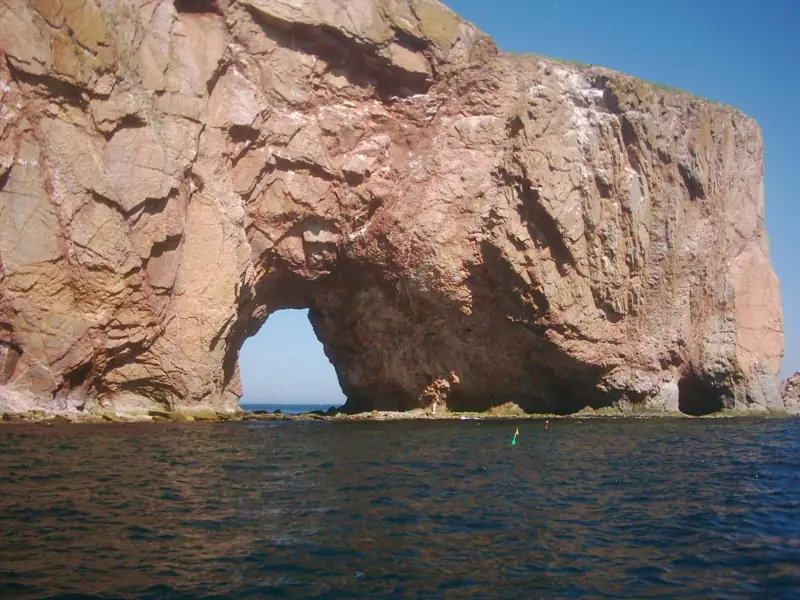
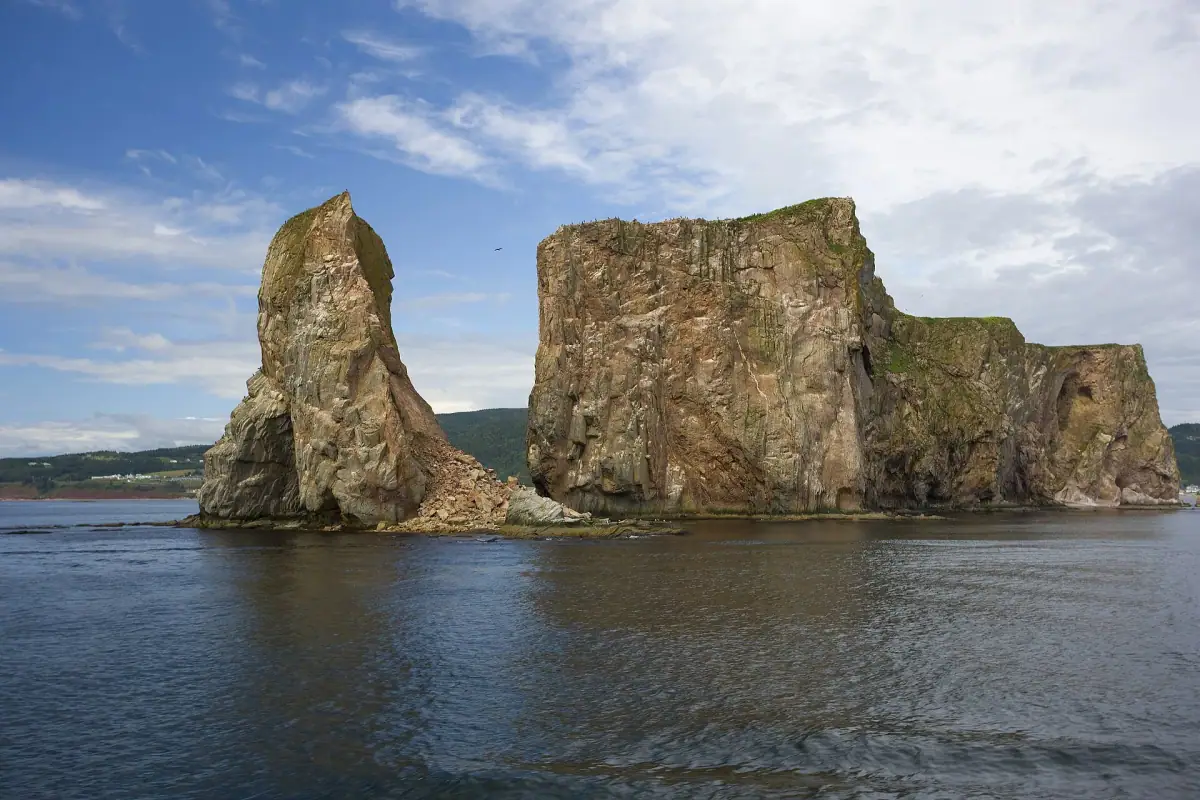
Percé is the emblematic village of Gaspésie, and its Percé Rock is the postcard: an immense block of limestone isolated in the sea, pierced by a natural arch, standing out in front of the village. Depending on the tide, you can approach it on foot from the beach by walking on a bank of sand and pebbles. Always check the tide times before venturing out, because the passage closes.
The village itself is small and lively in summer: craft shops, patios, fish markets and a few galleries. The best moment to admire the rock remains the end of the day, when the light warms the stone, or in the morning, when the sea is calm.
To round out the visit, several trails and high viewpoints offer a panorama of the bay and the whole site. They are accessible to most walkers and reward the effort handsomely.
Bonaventure Island and its birds
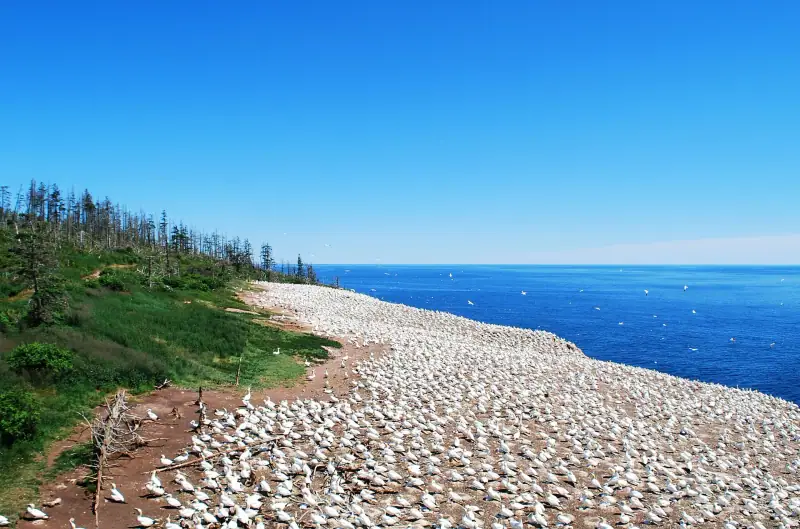
Just across from Percé, Bonaventure Island is a protected national park, best known for its seabird colony. You can see in particular northern gannets, which nest by the tens of thousands on the cliffs in the warm season, along with other seabird species. The mass effect, with the noise and constant movement, is striking even for travelers who do not consider themselves birdwatchers.
You get there by boat from Percé wharf. Many excursions combine a tour of the rock, the crossing to the island and sometimes seal watching along the way. There, trails let you walk to the colony and enjoy a fine view of the rock from offshore.
To avoid disappointment:
- Crossings depend on the weather and the state of the sea: keep some flexibility in your schedule.
- Dress warmly, it is often cooler and windier on the water.
- Bring binoculars to watch the birds better without disturbing them.
- Check the hours and opening periods, which vary by season.
Excursions in Gaspésie
Compare boat trips and activities around Percé for your dates.
Forillon National Park
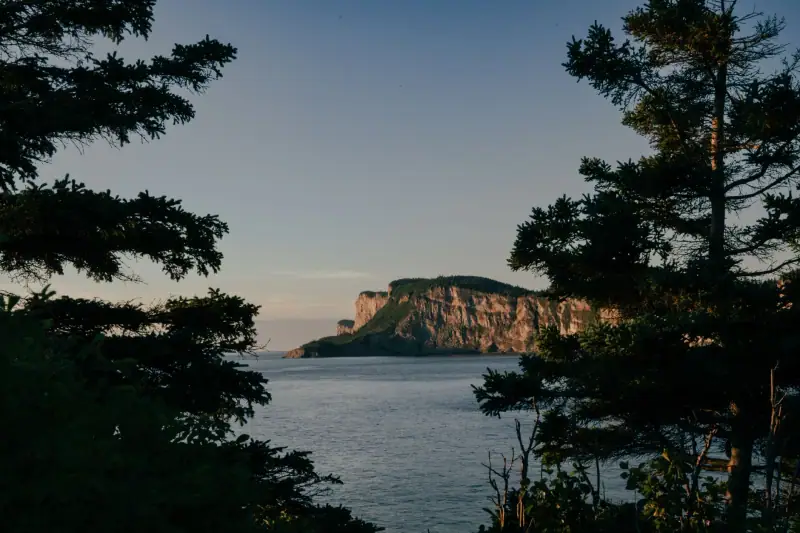
Located at the northeastern tip of the peninsula, near Gaspé, Forillon National Park brings together cliffs, forests, pebble beaches and cold waters rich in marine life. It is one of the region’s great natural sites, and it can easily be visited in one full day, or two if you like to walk.
Among the best-known attractions:
- Cap Bon-Ami, a viewpoint over the cliffs and the sea, easy to reach and ideal for a first look.
- The Grande-Grave sector, where old fishing buildings tell the story of the fishermen of the past.
- The coastal and forest trails, of varying difficulty, which offer fine panoramas over the gulf.
- The Cap-des-Rosiers lighthouse, on the access road to the park, often presented as the tallest lighthouse in Canada.
The park is also a good place to spot wildlife: seals on the rocks, seabirds and, with luck, other wild animals. Keep your distance and respect the posted rules. Whale-watching trips are also offered in season in the area, with the same caveat as everywhere: the presence of the animals is never guaranteed. For comparison, see our guide on whale watching in Tadoussac.
Gaspésie National Park and the Chic-Chocs
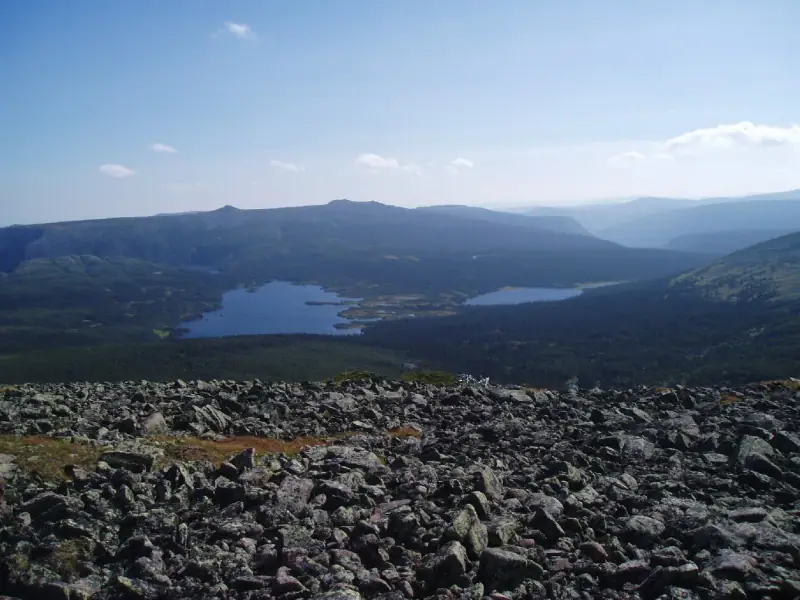
If the coast attracts most travelers, the interior of the peninsula is worth the detour. Gaspésie National Park holds the Chic-Chocs mountains, one of the highest massifs in southern Quebec, with tundra and boreal forest landscapes rare at these latitudes. There are hiking trails of different levels, some leading to very panoramic summits.
The area is known for sheltering a population of caribou, a fragile and protected species. To protect them, some trails or sectors are regulated, with rules to follow. Get information from the park before you go and follow the staff’s instructions.
Our advice: if you have little time, choose a day hike rather than trying to cover everything. The weather at altitude changes quickly, even in summer: bring warm layers, a windbreaker and water.
A 7-day itinerary from Quebec City
Here is a realistic proposal for a week, to adapt to your pace and dates. The stages are deliberately long on the road: do not combine them with too many visits.
- Day 1: Quebec City to the Bas-Saint-Laurent. Drive along the river, first night in a south-shore village.
- Day 2: to Haute-Gaspésie. Route 132 along the coast, stops in villages and at viewpoints, night in the Sainte-Anne-des-Monts area.
- Day 3: Gaspésie National Park. Day hike in the Chic-Chocs, back in the late afternoon.
- Day 4: to Forillon. Coastal road to the tip of the peninsula, stop at the Cap-des-Rosiers lighthouse.
- Day 5: Forillon Park. Cap Bon-Ami, Grande-Grave, hiking and a possible boat trip.
- Day 6: Percé. Rock, Bonaventure Island, a walk on the scenic trails.
- Day 7: return. A long day on the road, or more if you are going back to Montreal.
The distances between stages stay reasonable for a day of driving, but check them on a road map when booking, because times vary with the weather and the season. For a fuller trip, our 9-day road trip shows how to combine cities, Charlevoix and Tadoussac.
Lodging in Percé
Book early: rooms are limited in summer and the season is short.
Where to stay and what to eat in Gaspésie
Lodging options are varied: seaside hotels and motels, inns, gîtes, cabins and campgrounds, including inside the national parks. The number of beds is limited compared with summer traffic, especially around Percé: book several weeks ahead for July and August, and keep a margin for the most requested stops.
At the table, the region is known for its seafood. You will find fresh shellfish and fish in many roadside restaurants, notably lobster and shrimp in season, depending on the catch. Do not hesitate to ask locals what is local and in season. To find your way among Quebec specialties, our guide on what to eat in Quebec gives useful pointers before you go.
Budget and practical tips
Gaspésie is a destination where the heaviest item is often transport: car rental, fuel and the number of kilometers driven. Lodging climbs quickly in peak season, especially in the most touristy places.
A few tips to limit the budget without cutting into the experience:
- Book early the car, lodgings and boat trips.
- Travel in June or September if possible, when rates and crowds are lower.
- Have picnics: the landscapes lend themselves to it and free viewpoints are plentiful.
- Fill up regularly: gas stations can be far apart in the least populated areas.
- Anticipate the weather: fog, wind and rain can transform a day. Plan fallback activities.
Should you add Gaspésie to your Quebec trip?
It depends on your length of stay. With less than ten days, it is better to concentrate on Montreal, Quebec City, Charlevoix and Tadoussac: the drives are shorter and the program more balanced. With two weeks or more, Gaspésie brings a wilder and more unfamiliar dimension, with end-of-the-world landscapes you do not find elsewhere in Quebec.
Whatever you decide, keep a simple rule in mind: fewer places and more time in each is better. Percé, Forillon and the Chic-Chocs each deserve a real day.
In short
- Recommended length: a week minimum from Quebec City.
- Ideal season: June to September.
- Highlights: Percé Rock, Bonaventure Island, Forillon Park, the Chic-Chocs.
- Transport: a car is essential.
- Book early: lodgings, car and boat trips.
Frequently asked questions
How many days do you need to visit Gaspésie?
Allow at least 5 to 7 days to reach Percé and Forillon Park from Quebec City without rushing. To do the whole loop of the peninsula on Route 132, a week to ten days is more comfortable, as distances are long and the landscapes invite you to stop.
What is the best time to go to Gaspésie?
From June to September for most activities: tourist services are open, boat trips run and hiking is pleasant. September is appreciated for its smaller crowds and the first fall colors. Many lodgings and attractions close or reduce their hours outside the season.
Do you need a car to visit Gaspésie?
Yes, it is almost indispensable. Public transit is limited and the sights are far from one another. Rent your vehicle in advance, especially in summer, and allow slack for the distances.
Can you see whales in Gaspésie?
Yes, boat trips are offered in season, notably around Forillon Park. Sightings depend on the weather and the presence of the animals, and are never guaranteed. Ask the operators when you book.
Can you visit Gaspésie from Montreal in a weekend?
That is not realistic: Gaspésie is more than 1,000 km (621 mi) from Montreal by road. To enjoy it, allow at least a week, or combine it with a stay in Quebec City to spread out the driving.
More Quebec guides
Keep reading
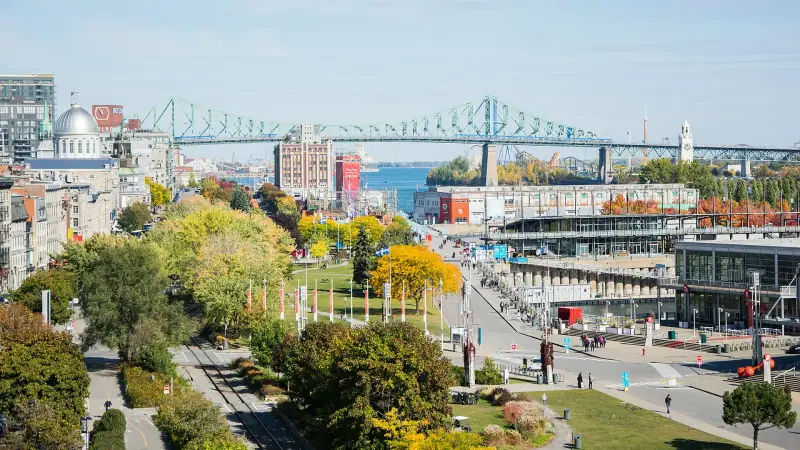
What to see in Montreal in 3 days: Old Montreal, Mount Royal and neighborhoods
What to see in Montreal in 3 days? Old Montreal, Mount Royal, the Plateau, Mile End, markets and the Underground City: day-by-day plan and practical tips.
Complete guide to visiting Quebec: regions, cities, budget and tips
Visiting Quebec: cities, regions, highlights, when to go, transport, lodging and budget. The pillar guide to prepare your trip from A to Z.
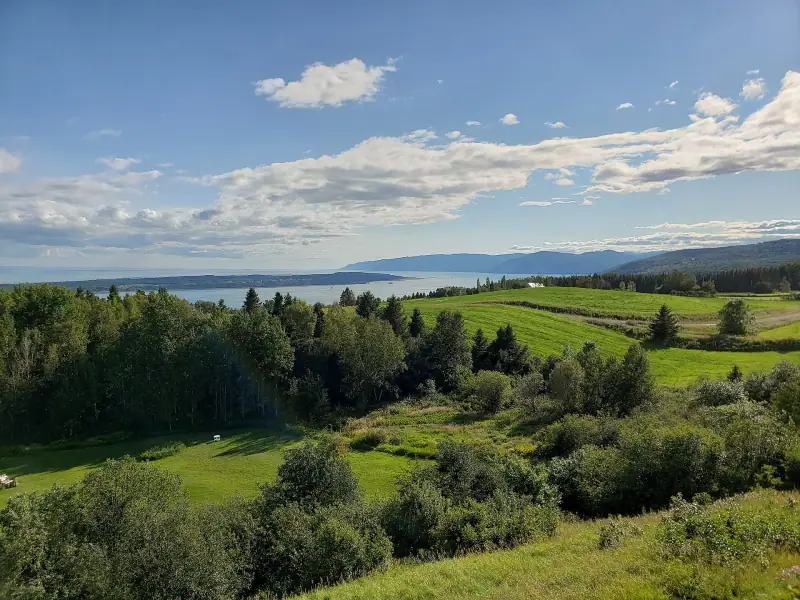
Visiting Charlevoix: Baie-Saint-Paul, La Malbaie and Île-aux-Coudres
Visiting Charlevoix, Quebec: Baie-Saint-Paul, Île-aux-Coudres, La Malbaie, national parks and the river road. Itinerary, ideal length, seasons and tips.
Ready-made
Quebec itineraries
5 days
5 days
Eastern Townships in 5 days: Magog, Orford, Sherbrooke and wine country itinerary
MagogSherbrooke or North HatleySutton or Dunham area
8 days
Quebec with kids: an 8-day itinerary (Montreal, Quebec City, Charlevoix)
8-day Quebec itinerary with children: Montreal, Quebec City, Montmorency Falls, Charlevoix and whales. Stops, pace, distances and tips.