Plan your trip
When to visit Quebec? Season by season
We may earn a commission when you book through links on this page, at no extra cost to you. We don't visit or try the places we cover: we summarize published sources. How we work
In short
- For most travelers, mid-August to mid-October is the best balance: pleasant temperatures, whales still present, then fall foliage from late September.
- Fall colors generally run from late September to mid-October, starting in the north; whales are watched roughly May to October, best July to September.
- Winter (December to March) is cold and snowy, with lows well below -20 °C (-4 °F); winter tires are mandatory in Quebec from December 1 to March 15.
- Low season (April-May, November) is generally the cheapest; prices rise in July-August, during fall colors and around the year-end holidays.
Quebec is not a destination you visit “at any time”. Between a Montreal patio in July and a lane in Old Quebec under the snow in January, the trip has almost nothing in common. The temperature swings are among the widest you can meet while traveling: summer can be hot and humid, winter frankly polar, and the in-between seasons are short but spectacular.
Choosing the right period is therefore deciding which Quebec you want to see: the one of wide open spaces, whales and festivals, the one of red and orange forests, or the one of powder snow and sugar shacks. This guide goes through each season, with its advantages, constraints and activities to look for, to help you set your dates and budget.
Quebec at a glance: the climate
Quebec has a continental climate, with four very distinct seasons. The following are rough figures, to refine with forecasts when you leave.
- Spring (April-May): snowmelt, mud, then a rapid warm-up. Days are cool, sometimes still frosty in the north.
- Summer (June-August): hot days, often around 25 °C (77 °F) in Montreal, with episodes of high humidity and thunderstorms.
- Fall (September-November): mild days at first, then increasingly cool. The colors blaze from late September to mid-October.
- Winter (December-March): lasting cold and snow, short days, but often a very bright sky.
The farther north you go (Côte-Nord, Saguenay, Gaspésie), the more the seasons are shifted and the lower the temperatures. Keep this in mind if you link several regions: a day in Montreal can be mild when the riverbank at Tadoussac already calls for a warm jacket.
Spring (April-May): sugar season
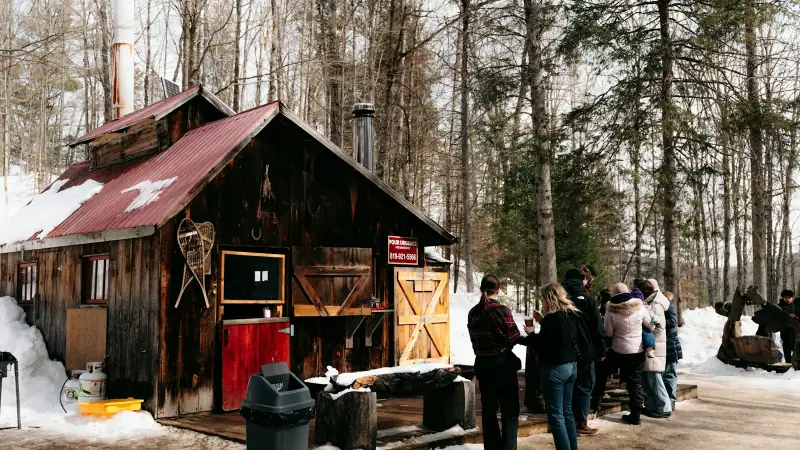
Spring is the transition season, and the least favored by travelers. The snow melts, roads are wet, and nature is not yet green. Yet this period has a real local charm.
The sugar shack
From late winter to early spring, maple sap is collected and turned into syrup. Sugar shacks open their doors for hearty meals where maple syrup goes with almost everything: eggs, ham, baked beans, pancakes, and the famous maple taffy poured on snow. It is a tasty and very Quebec experience, especially pleasant with family. The exact period depends on each year’s weather.
Pros and cons
- Pros: lower rates, quiet sites, authentic local atmosphere.
- Cons: unpredictable weather, trails often muddy or still snowy, some tourist activities not yet open early in the season.
Spring suits flexible travelers who prioritize peace and budget, and who focus on cities and food rather than hiking.
Where to stay in Montreal?
Compare hotels in Old Montreal, downtown and the Plateau for your dates.
Summer (June-August): festivals, river and wide open spaces
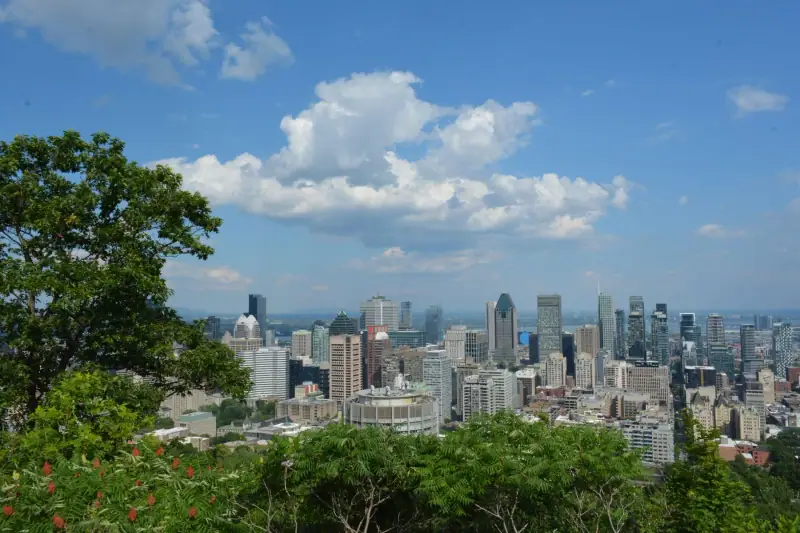
Summer is high season, and for good reasons. The days are long, the patios full, and all the regions are accessible, including the most distant like Gaspésie.
Montreal and Quebec City in festival mode
Montreal is renowned for its festivals. Late spring and summer concentrate music, comedy and circus events, notably the Montreal International Jazz Festival (generally late June to early July) and the Francos de Montréal. Quebec City is not left out with the Festival d’été de Québec, in July. Dates change every year: check the official programs before booking.
Patios, public markets, bike paths and parks make the cities very pleasant to explore on foot or by bike. Just bring light clothing, sunscreen and a windbreaker for cooler evenings.
Charlevoix, Tadoussac and the river road
Summer is the ideal time to drive along the St. Lawrence. Between Quebec City and Tadoussac, the Charlevoix region (with Baie-Saint-Paul) offers landscapes of mountains plunging into the river, artists’ villages and local producers. At Tadoussac, where the Saguenay meets the St. Lawrence, whale-watching excursions are one of the highlights of the trip.
Gaspésie and Percé
Farther out, Gaspésie is best discovered between June and September, when roads, trails and lodgings are open. Percé and its famous pierced rock, as well as the Forillon peninsula, are emblematic stops. Allow several days: distances are long and the region deserves a lingering visit.
Excursions and activities in Quebec
Whale watching, St. Lawrence cruises, guided tours and outdoor activities.
Summer points to watch
- Prices: lodging is more expensive and must be booked far ahead, especially in tourist regions.
- Insects: late May and June are the months of black flies and mosquitoes in natural areas. An effective repellent is advised for hikes.
- Heat: some days are heavy and humid, notably in Montreal.
Fall (September-October): Indian summer and colors
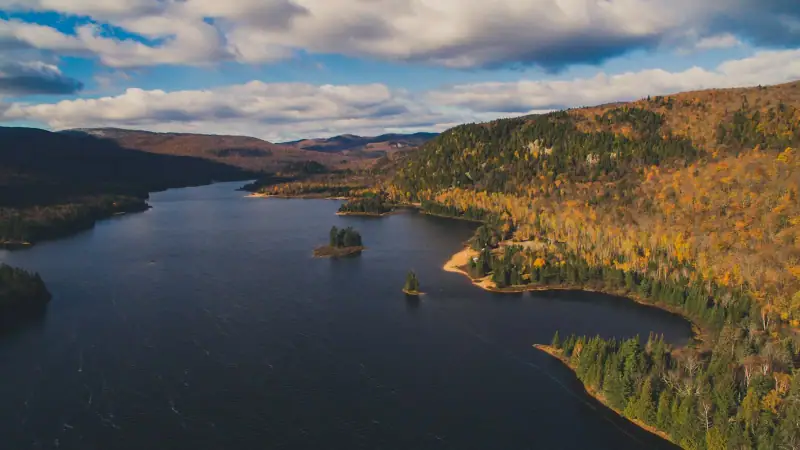
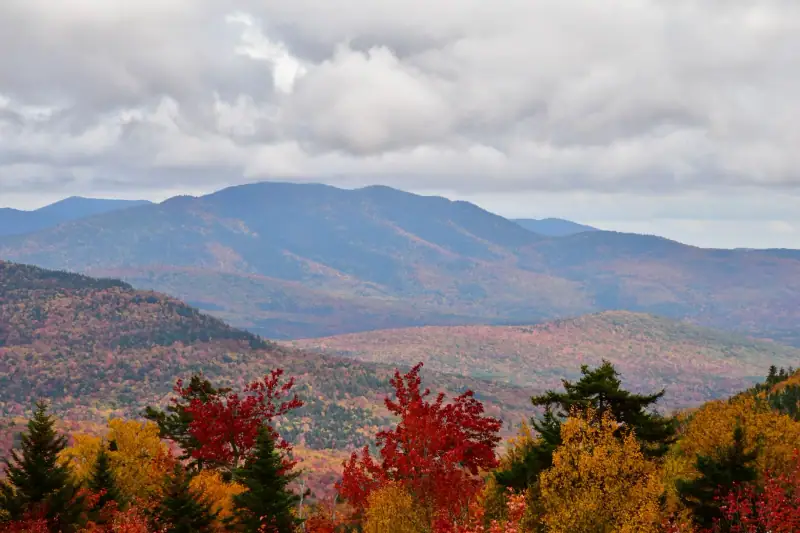
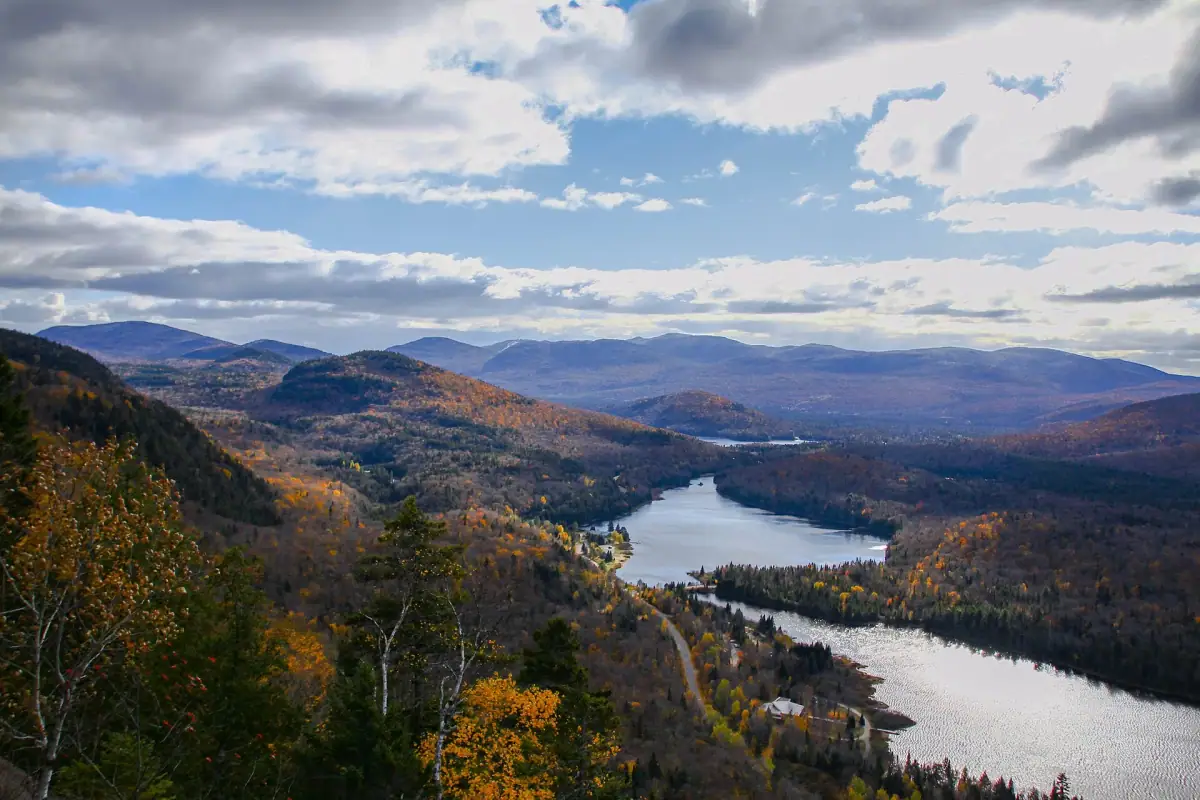
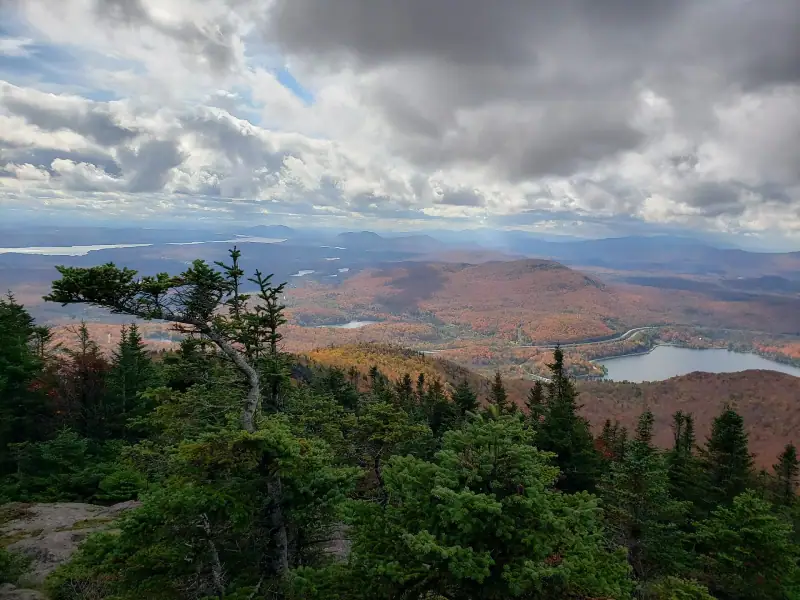
This is Quebec’s most emblematic season, the one that attracts travelers from around the world. Forests of maple, birch and poplar turn yellow, orange and bright red in a mix of colors associated with “Indian summer”, the period of late mildness that sometimes extends summer.
When to see the colors?
The foliage generally changes from late September to mid-October. It starts in the north, notably in the Laurentians and Charlevoix, before reaching the south and the big cities. The peak varies from year to year with the weather. To avoid missing the best moment, aim for a window of several days and follow the foliage maps published by tourism bodies.
Where to enjoy it?
- The Laurentians and the Mont-Tremblant area, reachable by car from Montreal, for lakes and mountains.
- Charlevoix, where the colors combine with views of the river.
- The Eastern Townships, with their villages, vineyards and orchards, particularly pleasant for a food-focused getaway.
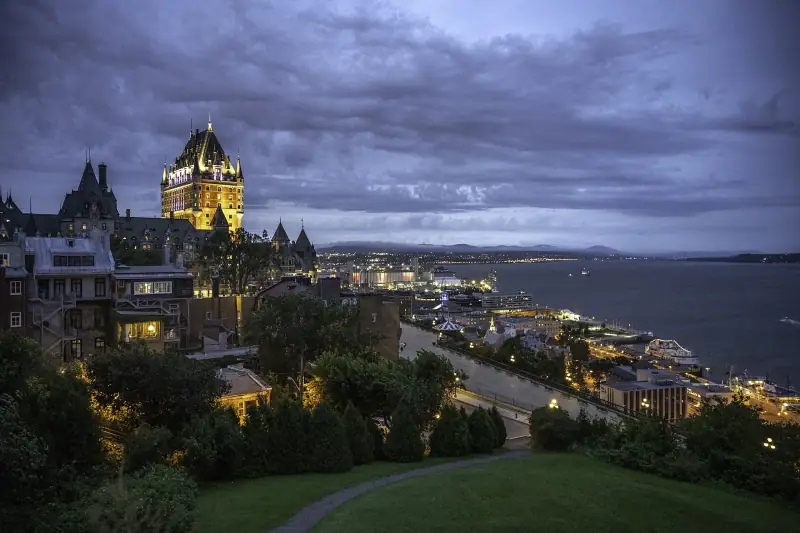
- Quebec City, whose ramparts and lanes are very photogenic under the foliage.
Pros and cons
- Pros: spectacular landscapes, pleasant temperatures in September, fewer insects, whales still present early in the season.
- Cons: strong demand, rising prices and full lodgings in the most popular regions. Book early, especially for weekends.
Flights to Montreal or Quebec City
Compare flights and book early for the colors season.
Winter (December-March): snow, skiing and festivities
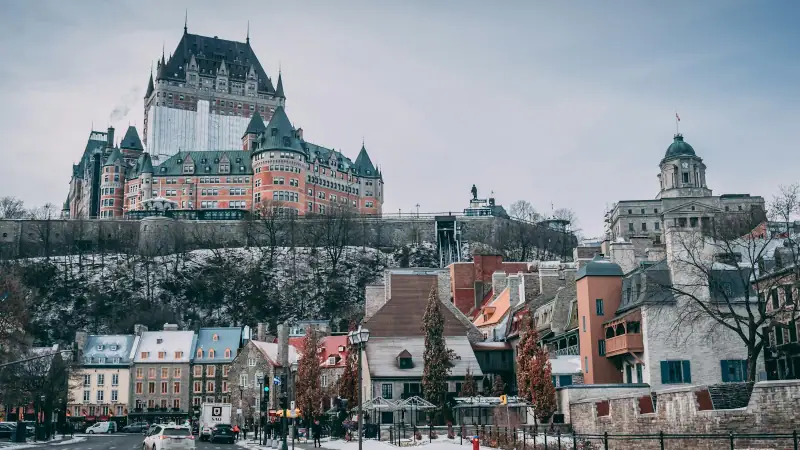
Winter in Quebec impresses with its intensity. It is cold, but it is also lived with enthusiasm: Quebecers do not hole up at home, they go out to skate, ski and celebrate winter.
Star activities
- Skiing and snowboarding: the Mont-Tremblant area is one of the major resorts in eastern Canada, with a very lively pedestrian village. The season generally runs from December to April depending on snow cover.
- The Quebec Winter Carnival: this big winter event is generally held from late January to mid-February, in Quebec City.
- Snowmobiling, dogsledding, snowshoeing and skating: offered in several regions.
- Nordic spas: alternating hot and cold outdoors is a very popular activity.
Getting ready for the cold
Shops, museums and transit are well heated, but outside you need to equip yourself: thermal underwear, a windproof winter coat, a hat, gloves or mittens, good insulated shoes. The principle is successive layers, which you remove when you go inside. A dedicated guide to gear will help complete your suitcase.
Winter driving
Winter tires are mandatory on vehicles registered in Quebec from December 1 to March 15, and strongly recommended for any rental during this period. Allow extra time for your trips in case of a storm.
Choosing according to your profile
If you are still hesitating, here are a few simple pointers.
- First trip, road trip, nature: mid-August to mid-October.
- Festivals, city life, patios: June to August.
- Whales and the river: July to September.
- Skiing, winter atmosphere, Carnival: January-February.
- Small budget, food, quiet: April-May or November.
- Gaspésie: June to September.
If you can only go once, September is often the best compromise: mild temperatures, whales, rates still reasonable before the high demand of the colors, and first foliage in the north.
Budget and booking by season
The cost of a trip to Quebec varies noticeably with the season, in particular for the plane ticket and lodging.
- High season (July-August, late September-early October, year-end holidays): prices are highest and availability tightest. Book several months ahead.
- Mid season (June, early September): a good balance between weather and rates.
- Low season (April-May, November, early December): the lowest rates, but less reliable weather.
A few habits to optimize the budget: compare several departure dates, be flexible on days of the week, favor lodging with free cancellation, and book the car in advance in high season.
Before you go, check the entry requirements for Canada. Entry rules depend on your passport. Check the official travel advice of your government before you book: travel.state.gov (US), GOV.UK (UK), travel.gc.ca (Canada), Smartraveller (Australia) (checked November 2026).
Practical tips for organizing your trip
- Allow margins: distances in Quebec are long. Between Montreal and Quebec City, the distance is about 250 km (155 mi), a little under 3 hours of driving. Distant regions need much more time.
- Layer your clothing: even in summer, evenings can be cool near the river.
- Book early in high season, in particular lodging in Gaspésie, Charlevoix and Tadoussac.
- Bring a repellent for late spring and summer hikes.
- Check openings: some activities and lodgings close off-season.
- Say bonjour: in Quebec, French is the official language. A simple “bonjour” on entering a shop is a much-appreciated habit.
Quebec suits every season as long as you know what you come looking for. Whether you are drawn by the blaze of fall, the conviviality of summer festivals, the snow of winter or the calm of spring, good preparation will make the difference.
Frequently asked questions
What is the best time to go to Quebec?
For most travelers, late summer and early fall (mid-August to mid-October) offer the best balance: pleasant temperatures, whales still present in the St. Lawrence, then spectacular foliage from late September. June to August suits road trips and festivals, December to March suits snow fans.
When can you see fall colors in Quebec?
The foliage generally changes from late September to mid-October, starting in the north (Laurentians, Charlevoix) and moving south toward Montreal. The peak varies from year to year with the weather: check the foliage tracking maps published by tourism bodies before locking in your dates.
When can you watch whales in Tadoussac?
The watching season runs roughly from May to October. July to September are the most regular for meeting several species in the St. Lawrence estuary and the Saguenay fjord. Trips always depend on the weather and the presence of the animals is never guaranteed.
Is it very cold in Quebec in winter?
Yes, winter is cold and snowy: temperatures often stay below freezing from December to March, with cold snaps that can fall well below -20 °C (-4 °F), especially with wind chill. In exchange, buildings are very well heated and winter activities (skiing, snowmobiling, skating, snowshoeing) are a real reason to travel.
What is the cheapest season to visit Quebec?
Low season (April-May and November, outside holiday periods) is generally the cheapest for lodging and plane tickets. Prices rise in July-August, during the fall colors period and around the year-end holidays. Booking early remains the best way to limit the bill.
Do you need to rent a car depending on the season?
A car is almost essential for Gaspésie, Charlevoix or the Côte-Nord, especially in summer and fall. Between Montreal and Quebec City, the bus or train is enough. In winter, check that the vehicle has winter tires, mandatory in Quebec from December 1 to March 15.
More Quebec guides
Keep reading
Quebec trip budget: real costs and 3 profiles
What budget for Quebec? Costs by item (lodging, transport, meals, activities), three costed profiles and tips to spend less.
Mont-Tremblant and the Laurentians: things to do in summer, fall and winter
Mont-Tremblant and the Laurentians: hiking, P'tit Train du Nord, fall colors, skiing and winter activities. Seasons, length of stay and tips.
What to see in Montreal in 3 days: Old Montreal, Mount Royal and neighborhoods
What to see in Montreal in 3 days? Old Montreal, Mount Royal, the Plateau, Mile End, markets and the Underground City: day-by-day plan and practical tips.
Ready-made
Quebec itineraries
5 days
5 days
Eastern Townships in 5 days: Magog, Orford, Sherbrooke and wine country itinerary
MagogSherbrooke or North HatleySutton or Dunham area
8 days
Quebec with kids: an 8-day itinerary (Montreal, Quebec City, Charlevoix)
8-day Quebec itinerary with children: Montreal, Quebec City, Montmorency Falls, Charlevoix and whales. Stops, pace, distances and tips.