What to see
What to See in Lesser Poland: Kraków, Ojców, the Dunajec and UNESCO Sites
We may earn a commission when you book through links on this page, at no extra cost to you. We don't visit or try the places we cover: we summarize published sources. How we work
In short
- Lesser Poland (Małopolska) is a region in the south of the country, with Kraków as its main city, bringing together historic sites, mountain villages and part of the Tatras.
- Plan three days for Kraków, then two to four more to branch out: a half day at Wieliczka, a day at Ojców or the Pieniny, two days for Zakopane.
- The Dunajec raft trip covers about 15 km (9 mi) in around two and a half hours, generally from April to October depending on the weather and water level.
- Auschwitz-Birkenau is a place of remembrance: set aside a separate day for it and do not combine it with another visit.
When people talk about southern Poland, they think of Kraków first. Yet Lesser Poland, or Małopolska, is much more than a city: it is a region where old salt mines, limestone valleys, centuries-old wooden churches, river gorges and the peaks of the Tatras sit side by side. All of it can be discovered by branching out from a single base, without changing hotels every night.
This guide gives an overview of the region: what to see, how to build your days and how to get around. For details, see our dedicated guides, such as the three-day Kraków itinerary or the visit to the Wieliczka mine.
Kraków, the gateway to the region
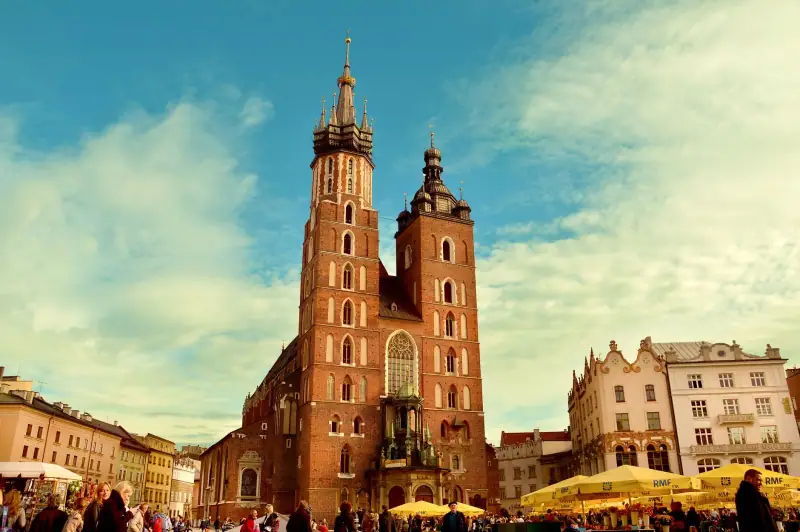
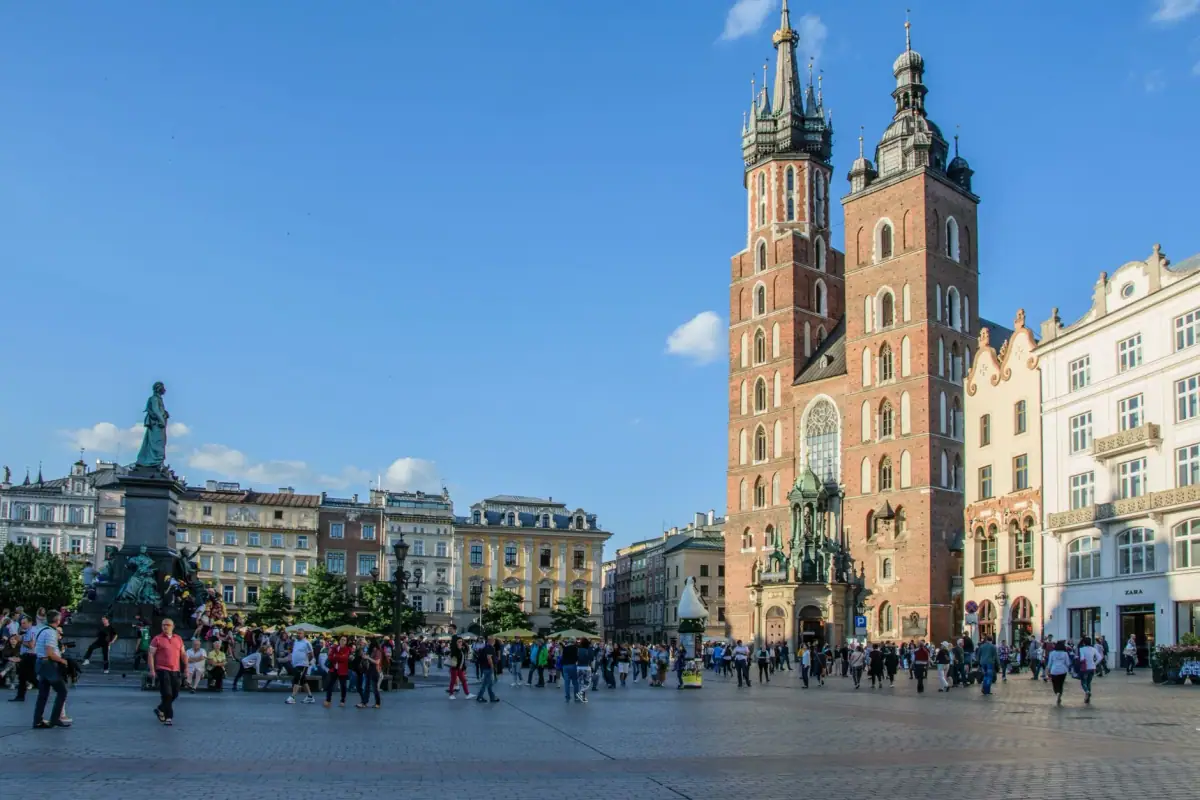
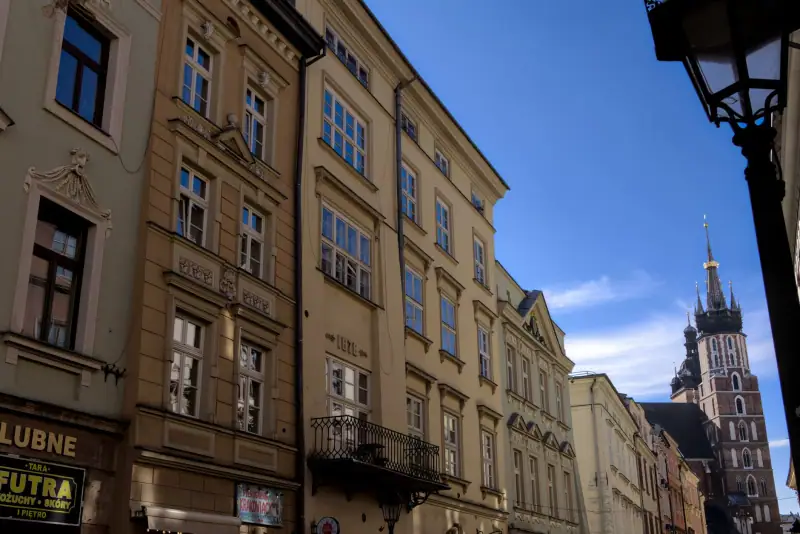
Kraków is the natural starting point. Its historic center is on the UNESCO World Heritage list, with its great market square, St. Mary’s Basilica, Wawel Hill and the Kazimierz district. It is also where you find the widest choice of accommodation, the train stations and the airport.
Three days are enough for the city’s essentials, and our Kraków program details the flow. If you have more time, the city becomes the ideal base for day trips: most of the sites mentioned below can be reached by bus, train or an organized excursion.
To choose your area, see our guide on where to stay in Poland. Staying near the old town or Kazimierz makes early departures easier.
🏨 Sleeping in Kraków: hotels, apartments and hostels near the old town, a practical base for branching out across the whole region. Compare availability for your dates.
Wieliczka and Bochnia: the Royal Salt Mines
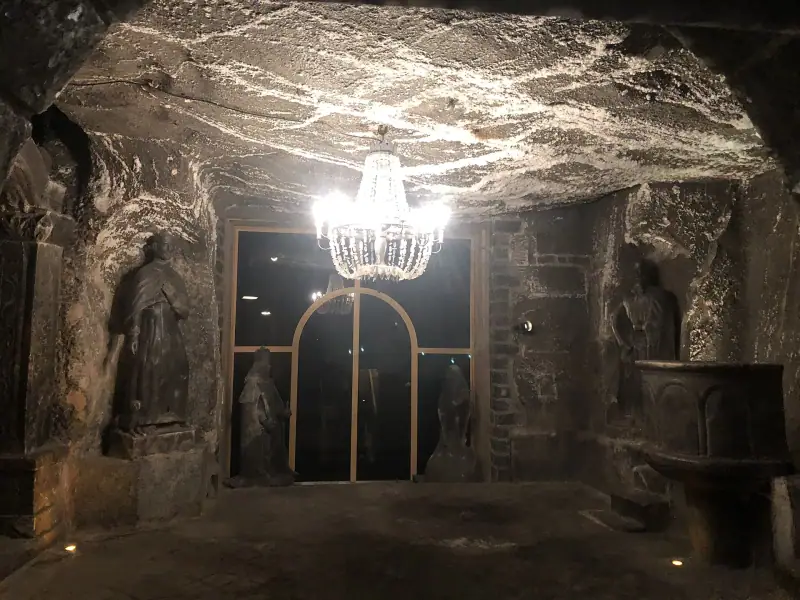
About 15 km (9 mi) from Kraków, the Wieliczka mine is the classic excursion. Listed by UNESCO in 1978, it was extended in 2013 to include the Bochnia mine: the site is now called the Wieliczka and Bochnia Royal Salt Mines. The two mines are about 20 km (12 mi) apart.
Wieliczka remains the most visited, with its St. Kinga’s Chapel carved in salt. Our Wieliczka guide explains tickets, booking times and the trip there. Bochnia, less busy, suits travelers who have already visited Wieliczka or who prefer a calmer atmosphere; check the visiting arrangements on the mine’s website before you go.
Plan a half day for Wieliczka, travel included. This excursion combines well with a late afternoon in Kraków.
Auschwitz-Birkenau: a place of remembrance
West of Kraków, within Lesser Poland, lies the former Nazi camp of Auschwitz-Birkenau, listed by UNESCO. It is not a tourist attraction like the others: it is a place of remembrance where more than a million people were murdered, the great majority of them European Jews.
The visit calls for restraint, time and some preparation, notably for children. A guide to visiting Auschwitz-Birkenau covers booking and conduct advice. Set aside a separate day for it, without combining it with another visit, and keep some time for yourself afterward.
Ojców National Park and its castles
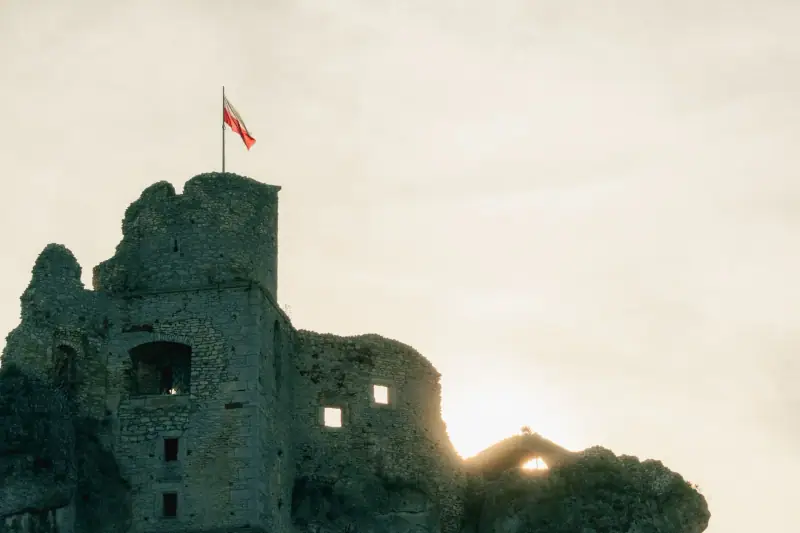
North of Kraków, Ojców National Park is the smallest national park in Poland, with an area of about twenty square kilometers (about 8 sq mi). It protects a limestone valley dotted with white cliffs, caves and rock formations. Allow about 25 km (16 mi) from Kraków by road, thirty to forty minutes by car outside heavy traffic.
Among the best-known landmarks are Pieskowa Skała Castle, a Renaissance residence perched above the valley, and the Hercules’ Club (Maczuga Herkulesa), a club-shaped rock that stands nearby. The park is explored on foot along small trails without great difficulty: it is an ideal outing for a day in the countryside, with the family or after a few days of city visits.
Public transport serves the area, but connections are less frequent than to Wieliczka. If you want to link several points in the park, a car or an organized excursion makes things easier.
🚗 Renting a car for the region: handy for linking Ojców, the wooden churches and the mountain villages at your own pace. Compare rental companies.
Kalwaria Zebrzydowska and the wooden churches
Southwest of Kraków, Kalwaria Zebrzydowska is a large pilgrimage complex from the early 17th century, made up of a basilica, a monastery and Stations of the Cross paths scattered across a wooded landscape on the slopes of Mount Żar. It has been on the UNESCO list since 1999. Major processions take place there at certain times of the year, notably at Easter and in August; outside these dates, the place is quiet and good for a walk.
The region also has a remarkable group of Gothic wooden churches. In 2003 UNESCO listed six churches under the title “Wooden Churches of Southern Lesser Poland”: Binarowa, Dębno, Lipnica Murowana, Sękowa, Blizne and Haczów. The last two are actually in the Subcarpathian Voivodeship, but they belong to the same group. These log buildings, with shingle roofs and painted interiors, are often open on request or during services: find out before you go.
These sites are scattered, hence the value of a car. For a traveler without a vehicle, an organized excursion from Kraków avoids the transport constraints.
The Dunajec gorge and the Pieniny
On the Slovak border, the Pieniny mountains are crossed by the Dunajec River, which carves spectacular gorges there. The traditional raft trip is the star activity: the route, about 15 km (9 mi) long, starts at Sromowce and ends at Szczawnica or Krościenko. It lasts about two and a half hours and generally runs from April to October, depending on the weather and the water level.
From Kraków, allow about two and a half hours by road to the starting point. A day excursion exists, but it is long, often close to nine to ten hours with transport. If you have the time, sleeping in the area or combining it with Zakopane is more comfortable.
🛶 Dunajec raft trip: day excursions from Kraków with transport and the raft trip. Compare durations, languages offered and cancellation conditions.
Zakopane and the Tatras
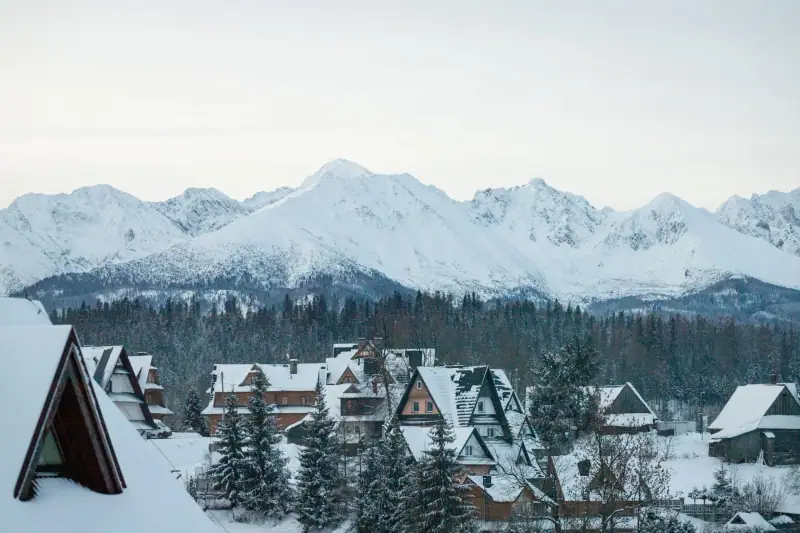
Zakopane, at the foot of the Tatras, is also part of Lesser Poland. It is the capital of the Polish mountains: traditional wooden architecture, a lively pedestrian street, hiking in summer and skiing in winter. Our guide to hiking around Zakopane and in the Tatras details the accessible outings.
You reach Zakopane from Kraków by bus or minibus, with the trip generally taking between two and three hours depending on traffic, which can be heavy in high season and on weekends. Two nights there let you enjoy a hike without hurrying.
How to build your stay in the region
Here are three ways to combine these stops, depending on your length of stay.
Five days, without a car. Three days in Kraków, a half day at Wieliczka, then a day devoted to Auschwitz-Birkenau if you wish to visit it. Everything is done by public transport or on an excursion.
One week, with a base in Kraków. Add a day at Ojców, then a Dunajec excursion or a visit to Kalwaria and the wooden churches by car.
Ten days, with the mountains. Spend two or three nights in Zakopane to hike in the Tatras, then return to Kraków. This pace leaves time for a getaway into the Pieniny on the way.
Avoid multiplying changes of accommodation: Kraków serves as a base for almost everything, except the Tatras. To extend the trip, Poland combines easily with Central Europe: Budapest is a natural addition, and Germany lies to the west.
Practical tips for traveling in Lesser Poland
Book the busiest sites. Wieliczka and Auschwitz-Birkenau require advance booking in high season, with a specific time slot and language.
Check opening hours before you leave. The wooden churches, castles and small museums have hours that vary with the season. Consult the official sites or local tourist offices.
Pack suitable clothes. The climate is continental: pleasant summers, cold winters, and lasting coolness in the mountains. A waterproof jacket is useful all year.
Budget. Poland remains generally affordable. Our guide to the budget in Poland gives pointers for planning your spending.
Travel insurance. Before you leave, check your health and repatriation coverage.
Entry rules. Entry rules depend on your passport. Check the official travel advice of your government before you book: travel.state.gov (US), GOV.UK (UK), travel.gc.ca (Canada), Smartraveller (Australia) (checked November 2026). Also check your carrier’s international plan or consider a travel eSIM.
Where to start
If you could only make one excursion out of Kraków, choose Wieliczka: it is close, simple to organize and memorable. For a contrast of landscapes, Ojców offers a real breath of nature in a half day. If you like wide open spaces, set aside time for Zakopane and the Pieniny, and if history interests you, plan Auschwitz-Birkenau under good conditions, with the reverence the place demands.
Lesser Poland is best discovered without haste. A few well-chosen stops beat a list that is too long: the region is rich, and each site deserves to be seen with time.
Frequently asked questions
What is Lesser Poland?
Lesser Poland (Małopolska in Polish) is a region in the south of the country, with Kraków as its main city. It brings together historic sites, mountain villages and part of the Tatras.
How many days should you plan for Lesser Poland?
Plan three days for Kraków alone, then two to four more days to branch out: a half day at Wieliczka, a day at Ojców or in the Pieniny, and two days for Zakopane and the Tatras.
Do you need to rent a car to visit the region?
It is not essential for Kraków, Wieliczka or Zakopane, which are served by train or bus. A car is useful for the wooden churches, Kalwaria or the Pieniny, which are more scattered.
What is the best time to visit Lesser Poland?
From May to September for hiking and the Dunajec raft trip, which generally runs from April to October. Fall offers lovely colors, and winter suits skiers in Zakopane.
What are the UNESCO sites of Lesser Poland?
The historic center of Kraków, the Wieliczka and Bochnia Royal Salt Mines, the Auschwitz-Birkenau memorial, the Kalwaria Zebrzydowska pilgrimage park and several wooden churches, listed as the Wooden Churches of Southern Lesser Poland.
Can you visit Auschwitz-Birkenau on the same day as other sites?
We advise against it: it is a place of remembrance that calls for reverence and time. Set aside a separate day for it.
More Poland guides
Keep reading
Warsaw in 2 Days: What to See in the Polish Capital
Warsaw in 2 days: rebuilt old town, Royal Castle, Royal Way, Łazienki Park, the Uprising and POLIN museums, and the Praga district.
What to See in Lower Silesia: Wrocław, the Karkonosze, the Kłodzko Valley and Castles
What to see in Lower Silesia: Wrocław, Świdnica's Church of Peace, Książ Castle, the Giant Mountains, the Kłodzko Valley and Errant Rocks, with tips.
Complete Guide to Visiting Poland: Cities, Regions, Budget and Tips
Visiting Poland: regions, must-see cities, when to go, transport, accommodation and budget. The pillar guide to plan your trip step by step.
Ready-made
Poland itineraries
2 days
Gdańsk in 2 Days: An Itinerary Through the Old Town, the Shipyard and the Baltic
Gdańsk in 2 days: Royal Way, St. Mary's Basilica, Motława quays, European Solidarity Centre, Westerplatte and a getaway to Sopot.
3 days
What to Do in Kraków in 3 Days: A Complete Itinerary
Kraków in 3 days: old town, Wawel Hill, the Kazimierz district, the Wieliczka salt mine and a respectful visit to Auschwitz-Birkenau.
2 days
What to Do in Wrocław in 2 Days: A Complete Itinerary
Wrocław in 2 days: Market Square, Cathedral Island, bronze dwarfs, Centennial Hall and the Racławice Panorama. Walking itinerary, tips and budget.