Things to do
Wieliczka Salt Mine: Visiting the Underground Galleries from Kraków
We may earn a commission when you book through links on this page, at no extra cost to you. We don't visit or try the places we cover: we summarize published sources. How we work
In short
- Wieliczka is about 14 km (9 mi) southeast of central Kraków and can be reached by train, bus or an organized excursion.
- The guided tourist route lasts about 2 h 30; with travel and waiting at the entrance, plan a half day.
- The temperature stays cool all year, around 14 °C (57 °F) according to the mine: bring a light jacket, even in midsummer.
- Book ahead in high season, on weekends and during school holidays, and do not combine the mine with Auschwitz-Birkenau on the same day.
About fifteen kilometers (9 mi) from Kraków, the Wieliczka salt mine is one of the most popular excursions in Lesser Poland. You go down a long wooden staircase to walk through galleries dug into rock salt, cross chambers held up by imposing timberwork and discover entire chapels carved in the salt rock.
Worked since the Middle Ages, the mine was among the first sites listed as UNESCO World Heritage, in 1978. This guide explains how to organize your visit: what you see, how to get there from Kraków, how to book and how to fit it into your stay. To place the excursion in a full program, see our three-day Kraków itinerary.
Wieliczka in brief: a mine worked for centuries
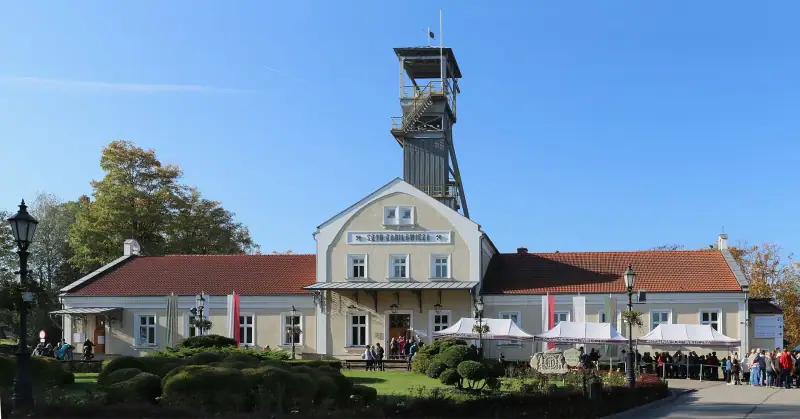
The Wieliczka mine produced salt without interruption for several centuries. Salt was long a precious resource and a major source of wealth for the Kingdom of Poland. Commercial extraction ended in the late 20th century, and the site now operates as a museum and visitor attraction.
The underground network is immense: it has more than 280 km (174 mi) of galleries spread over nine levels, and goes down to about 327 m (1,073 ft) deep. Visitors see only a tiny part of it. The tourist route goes no deeper than about 135 m (443 ft) and extends over only a few kilometers.
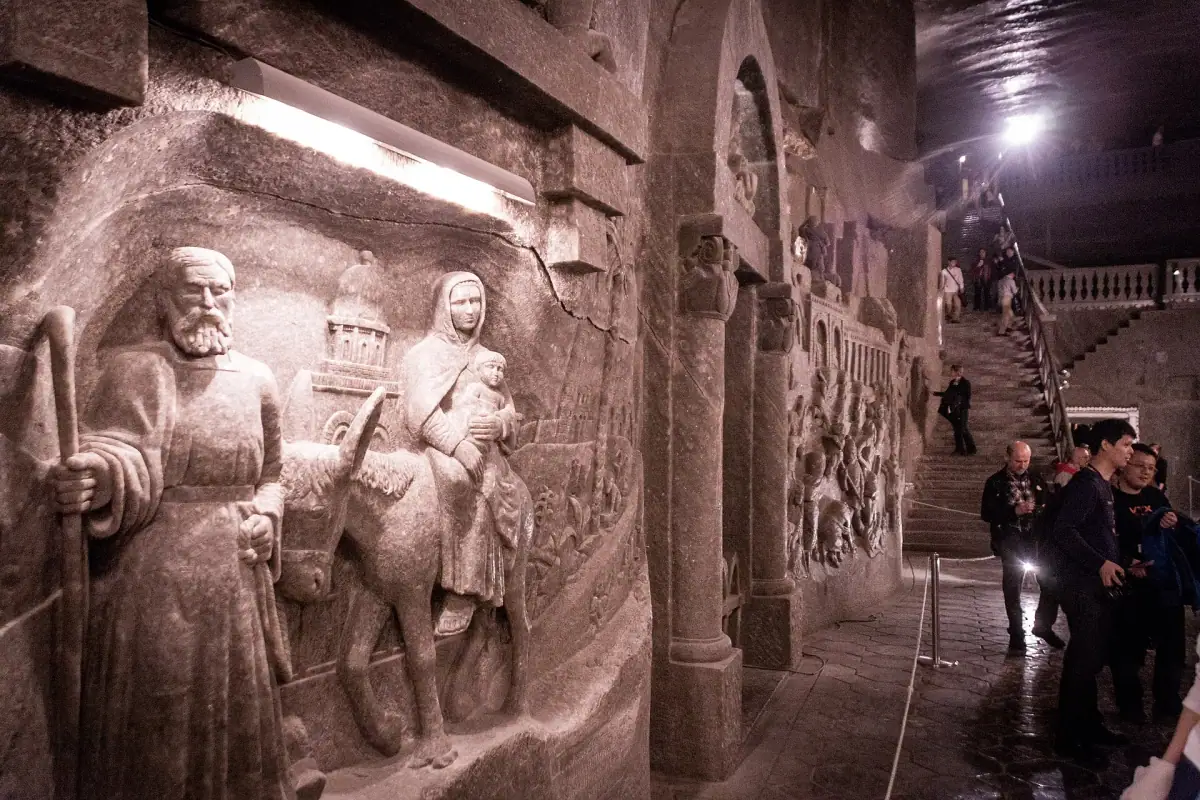
What makes the visit unusual is the miners’ work. Over the generations, they carved statues, bas-reliefs and chapels in the salt, for reasons of faith as much as tradition. Rock salt takes on grayish tints, far from the white one imagines, which often surprises.
How the guided tour unfolds
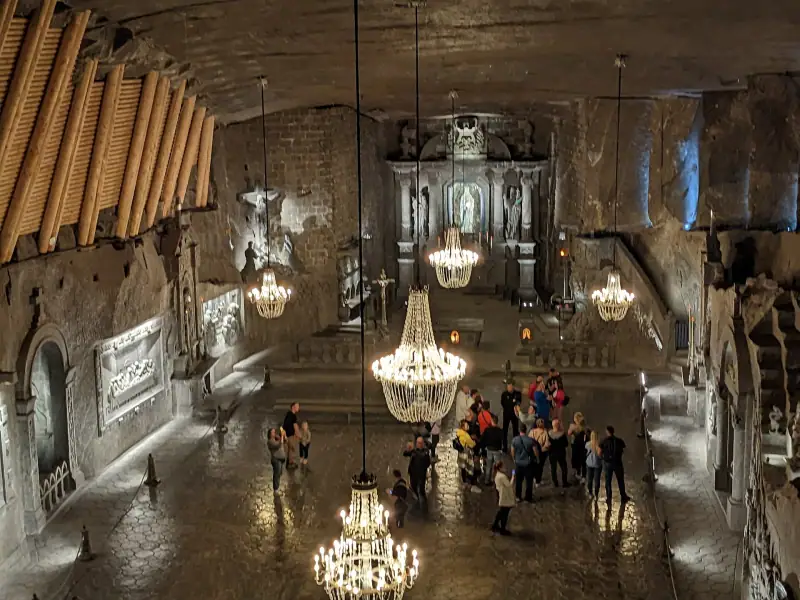
The tourist route must be visited with a guide, in groups, in several languages. It lasts about 2 h 30. Several languages are offered, but not at every slot: check the language of the departure when you book.
The descent starts with a wooden staircase of about 380 steps, leading to the first level, some 60 m (200 ft) underground. The full route has roughly a thousand steps, spread across the whole visit. You do not walk back up: the ascent is by elevator, which spares you the fatigue of a climb.
Along the way, you pass through narrow galleries, then large chambers. You discover statues of miners, scenes drawn from Polish legends, impressive timberwork holding back the rock and very salty underground lakes. Guides tell the story of the mine, the old extraction techniques and the life of the miners.
Bring comfortable, non-slip shoes. The route is well maintained, but there are many steps and the floor can be damp in places. A bulky backpack should be left in the cloakroom, according to the mine’s rules in force at the time of your visit.
St. Kinga’s Chapel, the high point of the route
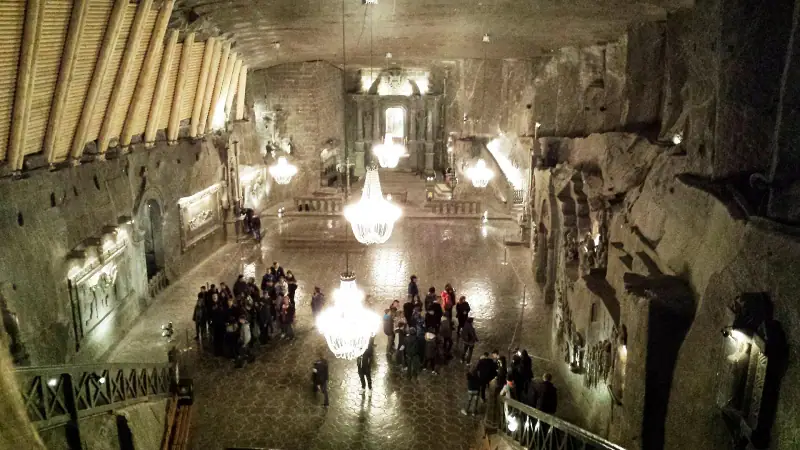
St. Kinga’s Chapel is the most striking moment of the visit. Located about a hundred meters (330 ft) underground, this vast chapel was entirely dug out and decorated by miners in the salt: altar, bas-reliefs, sculptures, and even the chandeliers, cut from salt crystals.
St. Kinga is the patron saint of salt miners in Poland. The chapel is still used for religious services. It commands a certain respect: speak quietly, photograph without flash when the guide allows it and follow the guide’s instructions.
People generally stay there a while, long enough to observe the details of the bas-reliefs, which depict scenes from the Bible. The contrast between the austerity of the workplace and the fineness of the decoration is striking.
🎟️ Wieliczka excursions: tickets with a guided tour and organized departures from Kraków, with transport included for some options. Compare durations, languages offered and cancellation conditions.
Getting from Kraków to Wieliczka
Wieliczka is about 14 km (9 mi) from the center of Kraków, and the trip is simple. You have three main options.
The commuter train. Trains link Kraków’s main station to Wieliczka. The town’s station is a reasonable distance from the mine, which you reach on foot or by local bus. This is generally the cheapest option.
The bus. Bus lines link central Kraków to Wieliczka. The trip depends on traffic, especially at rush hour: allow a margin, notably if you have booked a specific time slot.
The organized excursion. Handy if you do not want to manage transport: departure is from Kraków and the visit comes with a guide. The price is higher than an independent trip, but you gain time and peace of mind.
If you come by rental car, the mine has parking lots near the entrance, but they can be full in high season. For a stay limited to Kraków, a car is not essential.
Plan to arrive a little early: the group leaves on time and it is generally impossible to join a visit already under way.
Tickets and booking: choosing your slot well
Two simple principles. First, book ahead in summer, during school holidays, on weekends and on long weekends: slots in a given language are fewer and fill up quickly. Second, check that your ticket is tied to a specific slot and language.
The mine’s rates vary with the season, the language and the visitor’s status. Consult the official website of the Wieliczka Salt Mine museum for the current rates, as well as any discounts for children, students or groups. Opening hours also change with the season.
An option exists in addition to the tourist route: the Miners’ Route, more active, where you gear up and take part in activities in the galleries. It is more physical, requires booking and may be subject to age or fitness conditions. Ask the mine directly.
Practical tips for your visit
Plan a half day. Between the trip, the wait at the entrance and the 2 h 30 of the visit, allow about four to five hours from Kraków, more if you eat there.
Dress accordingly. The underground temperature is stable and cool all year. A light jacket and walking shoes are enough.
Be mindful of your physical condition. The descent is long, and the visit includes many steps. If you have mobility difficulties or are claustrophobic, contact the mine before booking.
Stay with your group. The route is marked, and the guides enforce the pace and the safety instructions.
Photos. Photography is generally allowed on the route, but some rules apply, notably in the chapel. Follow the guide’s instructions.
Travel insurance. Before you leave, check your health and repatriation coverage.
Fitting Wieliczka into a stay in Kraków
Wieliczka fits easily into a stay of three or four days in Kraków. The mine readily takes a half day: you go in the morning, and return to Kraków for lunch and to explore the Kazimierz district or the old town.
If you also want to visit Auschwitz-Birkenau, do not group the two on the same day. Our guide to visiting Auschwitz-Birkenau explains how to prepare that visit under good conditions, in a place that calls for reverence. Adding a day to the stay is preferable.
For accommodation, staying in Kraków remains the most practical: you find the widest choice there and the connections to Wieliczka. To choose your area, see our guide on where to stay in Poland.
🏨 Sleeping in Kraków: hotels, apartments and hostels near the old town, an ideal base for branching out to Wieliczka. Compare availability for your dates.
Extending the trip
After Kraków and Wieliczka, you can continue south to discover Zakopane and the Tatras, to meet the Polish mountains. For a stop in the capital, our guide to Warsaw in two days completes the itinerary. You can also widen the trip to Central Europe: Budapest is a possible addition, and Germany lies to the west.
Frequently asked questions
Where is the Wieliczka salt mine?
It is in Wieliczka, a small town about 14 km (9 mi) southeast of central Kraków. You can get there by train, bus or an organized excursion.
How long does the visit last?
The guided tourist route lasts about 2 h 30. Counting the trip from Kraków and any wait at the entrance, plan a half day.
Do you need to book in advance?
It is strongly advised in high season, on weekends and during school holidays: guided tour slots fill up. Off-season, it is often possible to buy on the spot, with no guarantee.
Is it cold in the mine?
Yes, the temperature stays cool all year, around 14 °C (57 °F) according to the mine's information. Bring a light jacket, even in midsummer.
Is the visit accessible to people with reduced mobility?
The descent is by a long staircase and the ascent by elevator. Arrangements exist for some visitors, but you need to ask and notify the mine before the visit.
Can you do Wieliczka and Auschwitz-Birkenau on the same day?
We advise against it. Both visits are long, and Auschwitz-Birkenau is a place of remembrance that calls for calm and availability. It is better to devote a separate day to it.
More Poland guides
Keep reading
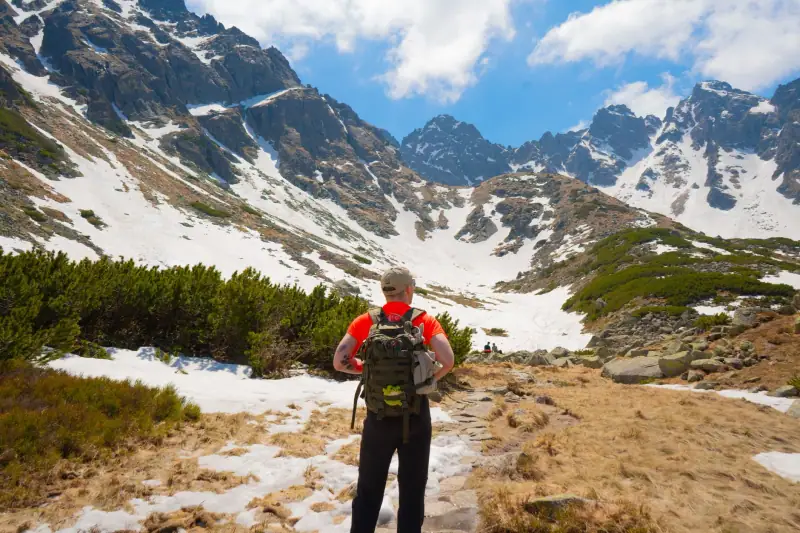
Zakopane and the Tatras: Hikes and Excursions from Kraków
Zakopane and the Tatras: Morskie Oko, Kasprowy Wierch, Krupówki Street, oscypek and tips for organizing a day trip or stay from Kraków.
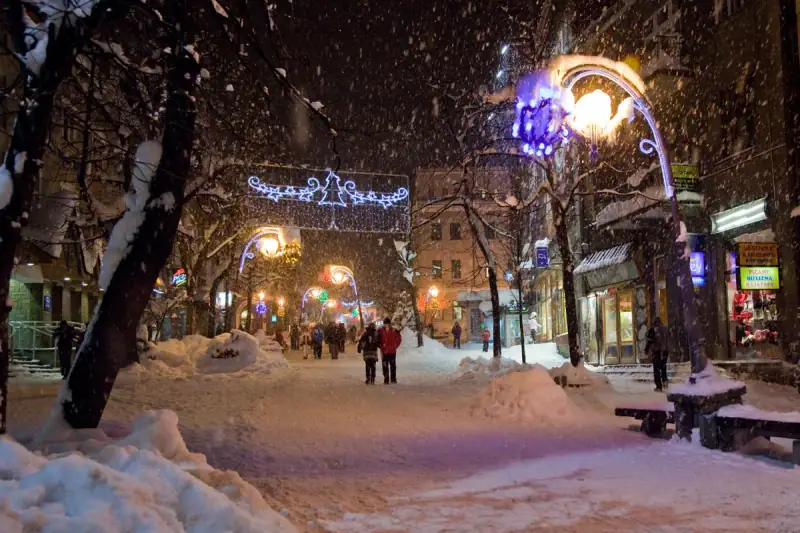
Zakopane in Winter: Skiing, the Tatras, Thermal Baths and Markets, a Practical Guide
Zakopane in winter: skiing at Kasprowy Wierch and Polana Szymoszkowa, thermal baths, sleigh rides, Krupówki. Official prices, tips and accommodation.
Budget for a Trip to Poland: Real Costs and Tips to Spend Less
How much does Poland cost? Accommodation, transport, meals, visits: prices in zlotys, euros and dollars, three budget profiles and money-saving tips.
Ready-made
Poland itineraries
2 days
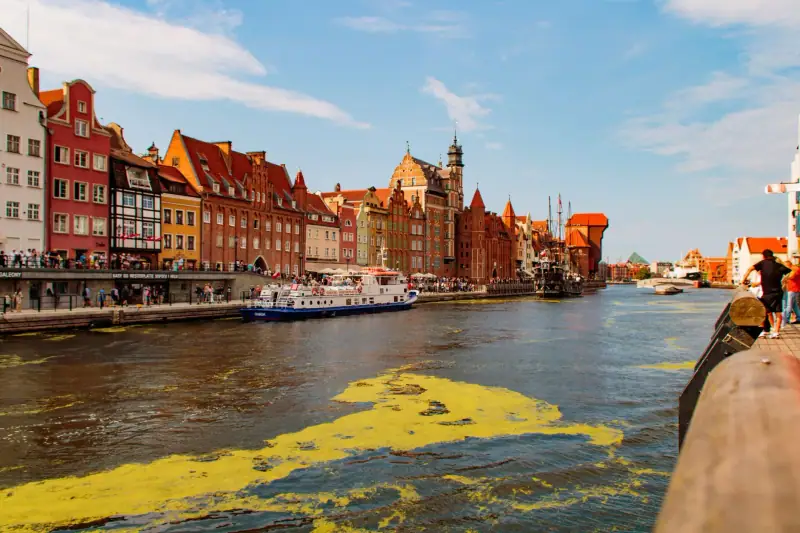
Gdańsk in 2 Days: An Itinerary Through the Old Town, the Shipyard and the Baltic
Gdańsk in 2 days: Royal Way, St. Mary's Basilica, Motława quays, European Solidarity Centre, Westerplatte and a getaway to Sopot.
3 days
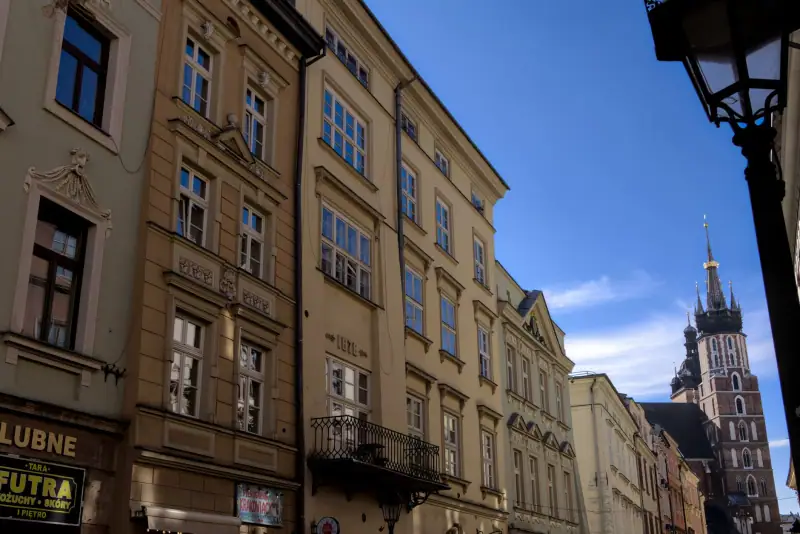
What to Do in Kraków in 3 Days: A Complete Itinerary
Kraków in 3 days: old town, Wawel Hill, the Kazimierz district, the Wieliczka salt mine and a respectful visit to Auschwitz-Birkenau.
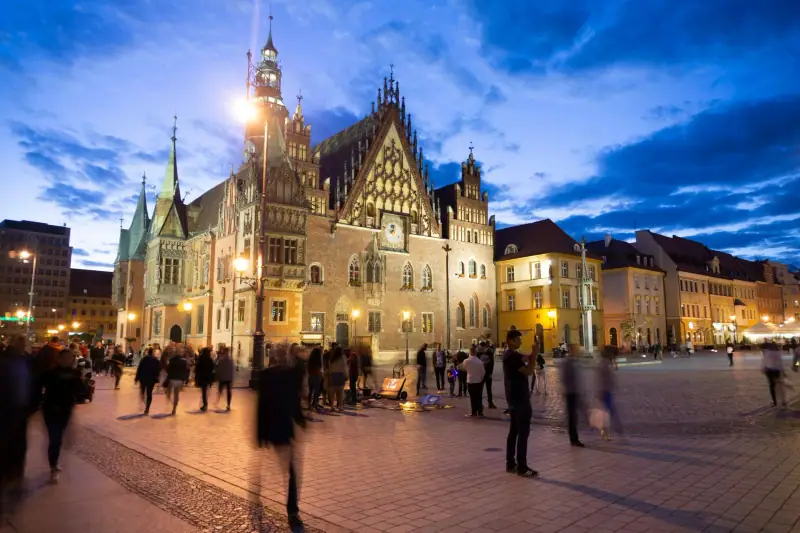
2 days
What to Do in Wrocław in 2 Days: A Complete Itinerary
Wrocław in 2 days: Market Square, Cathedral Island, bronze dwarfs, Centennial Hall and the Racławice Panorama. Walking itinerary, tips and budget.