Itineraries
Gdańsk in 2 Days: An Itinerary Through the Old Town, the Shipyard and the Baltic
We may earn a commission when you book through links on this page, at no extra cost to you. We don't visit or try the places we cover: we summarize published sources. How we work
Day by day
- Day 1Royal Way, Old Town, Mariacka Street, St. Mary's Basilica, Motława quays
- Day 2Shipyard and Solidarity Centre, Westerplatte, evening in Sopot
Weather through the year on this route
| Jan | Feb | Mar | Apr | May | Jun | Jul | Aug | Sep | Oct | Nov | Dec | |
|---|---|---|---|---|---|---|---|---|---|---|---|---|
| High °F (°C) | 320 | 362 | 457 | 5714 | 6619 | 7222 | 7725 | 7725 | 6820 | 5714 | 457 | 341 |
| Low °F (°C) | 21-6 | 23-5 | 28-2 | 373 | 468 | 5412 | 5714 | 5714 | 489 | 394 | 320 | 25-4 |
| Rain in (mm) | 1.845 | 1.845 | 2.050 | 2.460 | 3.590 | 3.795 | 4.3110 | 3.075 | 3.075 | 2.460 | 1.845 | 1.640 |
Normals 1991–2020 at Kraków: averages over 30 years, not a forecast. Source: NASA POWER (MERRA-2), grid of about 50 km. Figures computed by us in November 2026.
In short
- Day 1 covers the Royal Way, the Old Town, Mariacka Street, St. Mary's Basilica and the Motława quays; day 2 covers the shipyard, Westerplatte and Sopot.
- A commuter train (SKM) links Gdańsk, Sopot and Gdynia frequently; the Gdańsk to Sopot trip takes around twenty minutes.
- Gdańsk and Warsaw are about three hours apart by fast direct train; book ahead in high season.
- A third day lets you add Malbork Castle, about an hour by train from Gdańsk.
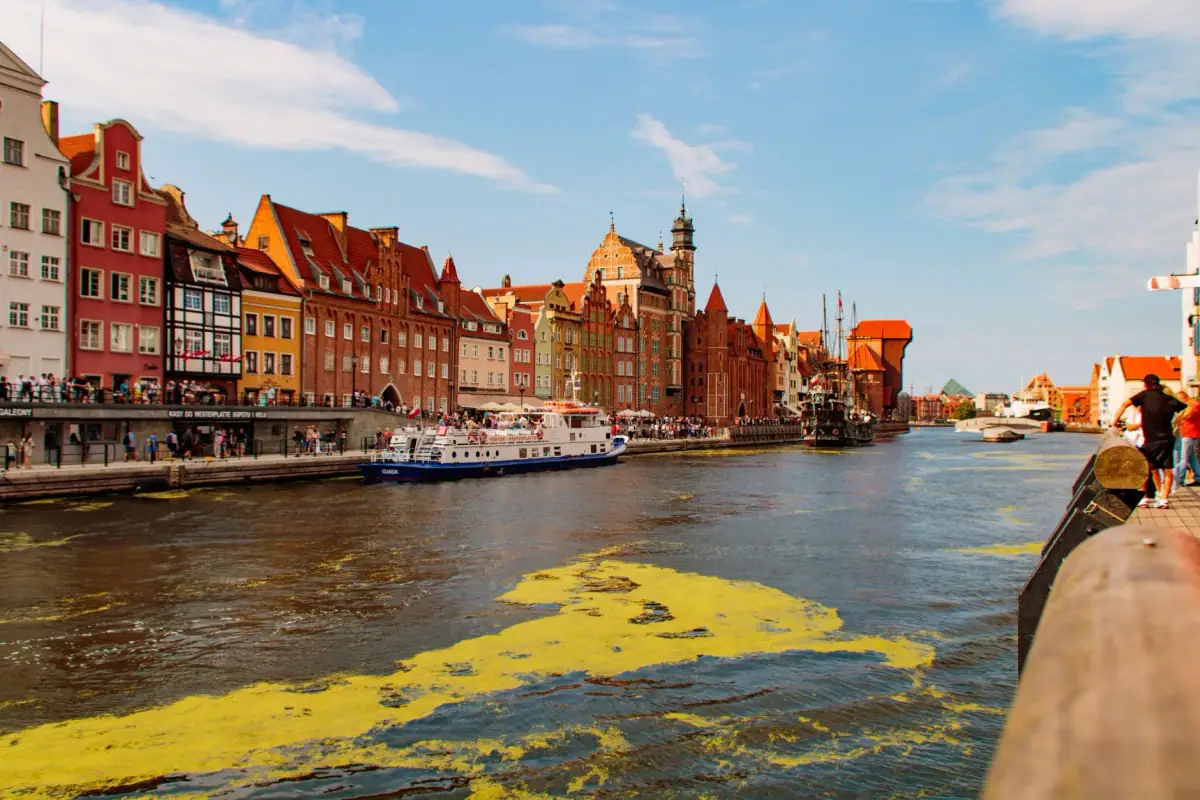
Gdańsk is the great city of the Polish Baltic coast, and one of the most endearing in the country. A former Hanseatic port, it was largely destroyed at the end of World War II and then carefully rebuilt: its narrow façades, gables and quays now evoke a northern merchant city, with some Dutch touches.
It is also a major place of history. World War II began there in September 1939, and it was in its shipyard that the Solidarity (Solidarność) trade union was born in 1980, which would help bring down the communist regime. Two days let you combine these two faces: the city of art and commerce, then the city of remembrance, with a detour to the sea at Sopot.
Day 1 morning: the Royal Way and the Old Town
Start at the High Gate and the Golden Gate, which mark the entrance to the Royal Way (Droga Królewska), the axis along which sovereigns once entered. Długa Street, lined with merchants’ houses with richly decorated façades, leads to the Town Hall, whose tower can be seen from afar.
It opens onto Długi Targ, the “Long Market,” the city’s main square. There you will see the Neptune Fountain, one of the symbols of Gdańsk, and Artus Court, the former meeting place of merchants. In the morning, before the groups arrive, the atmosphere is calmer and the façades are well lit for photography.
Take the time to look up: most of the houses were rebuilt from old documents, and their carved details, coats of arms and gables deserve a close look. Visits to interiors, such as the Town Hall, depend on the season: days and hours vary, so check them before you go.
🏨 Sleeping in Gdańsk: compare the hotels and apartments of the Old Town and the banks of the Motława for your dates. Staying within walking distance of Długi Targ saves transport and lets you enjoy the streets in the evening, once the groups have left.
Day 1 afternoon: Mariacka Street and St. Mary’s Basilica
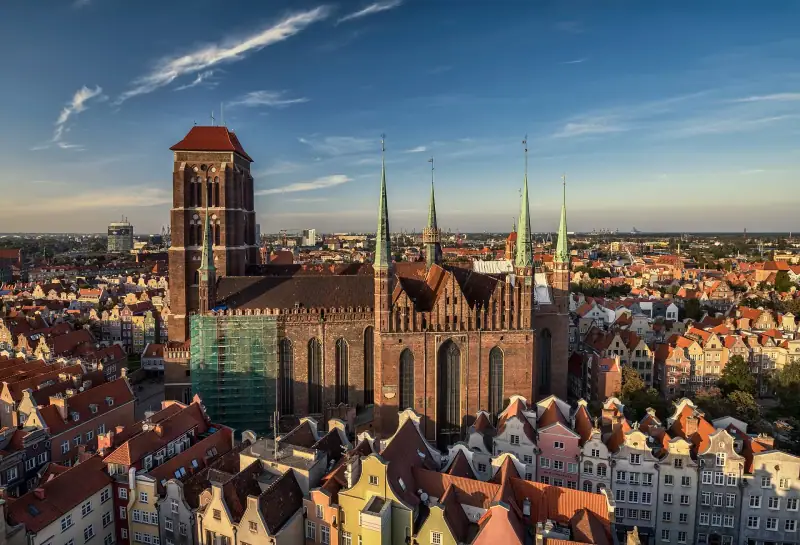
Leave Długi Targ by Mariacka Street, one of the prettiest in the city. Lined with raised terraces and gargoyles, it is famous for its amber shops, amber being the emblematic stone of the Baltic. If you want to buy some, compare several shops and ask how the piece is certified: the market also has many resin or glass imitations.
At the end of the street stands St. Mary’s Basilica, an immense Gothic brick church, often presented as one of the largest brick churches in the world. The interior is plain and vast. A tower is open to visitors and offers an overview of the city’s red roofs: the climb is by a narrow staircase and does not suit everyone, but the panorama is worth it in clear weather.
Then continue toward the Motława, the river that runs through the city.
Day 1 evening: the Motława quays
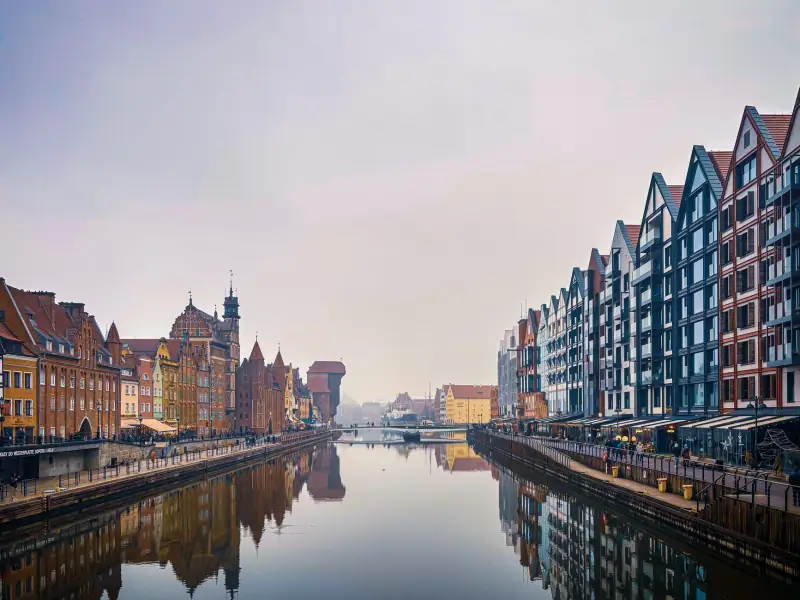
The Motława quays are the lively heart of Gdańsk in the evening. There you find the Crane (Żuraw), an old wood-and-brick port crane that was used to load ships and raise masts, now one of the city’s emblems. It now houses part of the Gdańsk maritime museum.
The promenade is lined with restaurants, bars and small excursion boats. It is the right moment to try seafood: smoked fish, herring, soups and coastal specialties. For more ideas on the country’s cuisine, our guide to Polish cuisine and its specialties details the dishes to try.
🍽️ Tasting local cuisine: a food tour or a cooking class is a simple way to discover Polish specialties with a guide. Compare the options, durations and cancellation conditions.
Day 2 morning: the shipyard and the European Solidarity Centre
Devote the morning to recent history. The European Solidarity Centre, set near the shipyard, traces the birth of the Solidarity movement in August 1980 and the struggle for freedoms in the Eastern bloc. The exhibition is very rich in documents, objects and testimonies: plan about two hours, more if you like to read.
The shipyard district, with its cranes and hangars, is an unusual setting, far from the Old Town. It is easy to reach on foot or by tram from the center.
If you have more time, the Museum of the Second World War, near the center, presents the conflict on an international scale. It is very comprehensive and can take up a half day on its own: choose between this museum and the Solidarity Centre if you are short on time. Both places deal with grave subjects, so approach them with respect.
Day 2 afternoon: Westerplatte
Westerplatte is a peninsula at the entrance to the port of Gdańsk. It was there, on September 1, 1939, that the first shots of World War II were fired, when the Polish garrison resisted the German attack for several days. The site is now a place of remembrance, with remains, a monument and a short open-air visitor route.
You get there by bus, by boat from the quays in season, or by car. Plan about an hour there to walk among the remains and read the panels. As at the country’s other places of remembrance, visit soberly and speak quietly.
🎟️ Excursions around Gdańsk: guided tours of the city, of Westerplatte or cruises on the Motława and the port. Compare the options and schedules before you book.
Day 2 evening: Sopot and the seafront
To end the day more lightly, take the commuter train to Sopot, a seaside resort popular with Poles. The trip is short and trains are frequent. The Monte Cassino pedestrian street, its terraces and its lively summer nightlife make it a pleasant stop.
Sopot’s pier is the main attraction: made of wood, it is often cited among the longest in Europe, and the walk to the end offers a view over the Gulf of Gdańsk. In summer, the beach is very busy, but the Baltic water stays cool: do not expect Mediterranean temperatures. Outside the summer season, the seafront promenade keeps a real charm, with fresh air and wide horizons.
The train also links Gdynia, a modern neighboring city: if you have time, it rounds out the Gdańsk-Sopot-Gdynia trio, often called the “Tricity.”
A third day: Malbork Castle
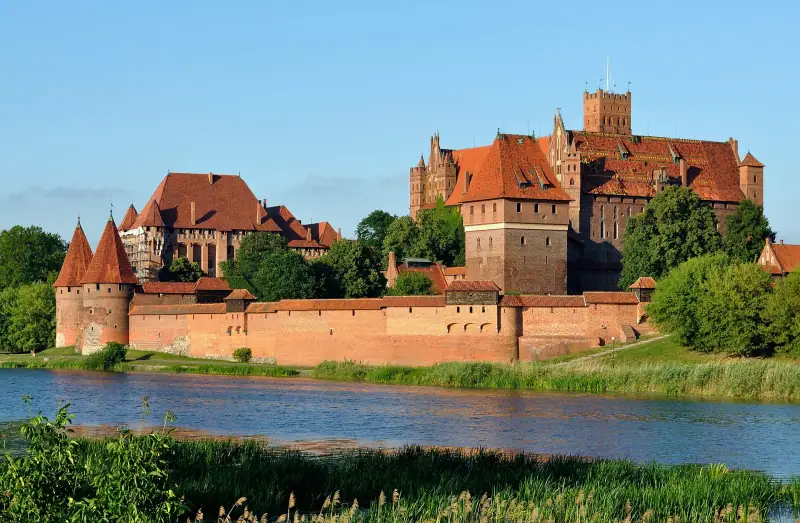
If you have an extra day, Malbork Castle, a former fortress of the Teutonic Order, is the classic excursion from Gdańsk. This immense brick complex is on the UNESCO World Heritage list and is visited with an audio guide. You reach it by train from Gdańsk, on a trip of about an hour: it is practical to leave early in the morning.
Getting around and getting organized
The center of Gdańsk is walkable. For longer distances, trams and buses cover the city, and the commuter train links Sopot and Gdynia. Tickets are bought at machines or through transport apps.
Poland’s currency is the zloty (PLN), not the euro. Bank cards are accepted almost everywhere. Entry rules depend on your passport. Check the official travel advice of your government before you book: travel.state.gov (US), GOV.UK (UK), travel.gc.ca (Canada), Smartraveller (Australia) (checked November 2026). Also check your carrier’s international plan or consider a travel eSIM.
Gdańsk combines very well with Warsaw, about three hours away by train: see our two-day itinerary for Warsaw. To choose where to sleep according to your route, see our guide on where to stay in Poland.
Insurance. For a stay abroad, remember to check your health and repatriation coverage before you leave.
Extending the trip
Poland is worth a multi-stop trip. After the Baltic, the south offers a completely different atmosphere: Kraków, with our three-day Kraków itinerary, then the mountains of Zakopane. To go beyond the borders, neighboring Germany and Hungary can be combined into a multi-country trip. A stay in Gdańsk also fits well into a circuit of one to two weeks: the Baltic to start, Warsaw on the way, then Kraków and the Tatras to finish in the mountains.
Frequently asked questions
Are two days enough to visit Gdańsk?
Yes for the essentials. One day for the Old Town and the quays, a second for 20th-century history (shipyard, Westerplatte) and a getaway to Sopot. A third day lets you add Malbork Castle.
How do you get from Gdańsk to Sopot?
The simplest way is the commuter train (SKM), which links Gdańsk, Sopot and Gdynia frequently. The trip between Gdańsk and Sopot is short, around twenty minutes.
Can you swim in the Baltic Sea?
Yes, in summer, on the beaches of Sopot and Brzeźno. The water stays cool even in peak season: swimming is mostly pleasant in July and August.
How do you get from Warsaw to Gdańsk?
The direct train is the most practical way: allow about 3 hours on fast services. Booking ahead is advised in high season.
What is the best time to visit Gdańsk?
From May to September for mild weather and the beach, with heavier crowds in July and August. The Christmas market also adds a lot of charm to the city in winter.
More Poland guides
Keep reading
Budget for a Trip to Poland: Real Costs and Tips to Spend Less
How much does Poland cost? Accommodation, transport, meals, visits: prices in zlotys, euros and dollars, three budget profiles and money-saving tips.
When to Visit Poland: Seasons, Budget and Transport to Plan Your Trip
When to go to Poland? Seasons, budget, currency and trains between Kraków, Warsaw and Gdańsk: what you need to plan a first trip without surprises.
Where to Stay in Poland: Recommended Areas in Kraków, Warsaw and Zakopane
Where to stay in Poland: the best areas of Kraków, Warsaw and Zakopane for your budget and travel style, with booking tips.
Ready-made
Poland itineraries
3 days
What to Do in Kraków in 3 Days: A Complete Itinerary
Kraków in 3 days: old town, Wawel Hill, the Kazimierz district, the Wieliczka salt mine and a respectful visit to Auschwitz-Birkenau.
2 days
What to Do in Wrocław in 2 Days: A Complete Itinerary
Wrocław in 2 days: Market Square, Cathedral Island, bronze dwarfs, Centennial Hall and the Racławice Panorama. Walking itinerary, tips and budget.