What to see
What to See in Lower Silesia: Wrocław, the Karkonosze, the Kłodzko Valley and Castles
We may earn a commission when you book through links on this page, at no extra cost to you. We don't visit or try the places we cover: we summarize published sources. How we work
In short
- Two days cover Wrocław; four to five add Świdnica, Książ Castle and a mountain day; a week also reaches the Kłodzko Valley and the Giant Mountains.
- Wrocław is a rail hub: Świdnica, Wałbrzych, Kłodzko and Jelenia Góra are one to three hours by train; a car suits isolated castles and mountain villages.
- Highlights include the UNESCO-listed Centennial Hall in Wrocław, the Church of Peace in Świdnica, Książ Castle, Lubiąż Abbey, Karpacz and Śnieżka, and the Errant Rocks in the Table Mountains.
- May to September suits hiking and visits; fall is superb in the mountains and calmer.
When you prepare a trip to Poland, you first think of Kraków, Warsaw or Gdańsk. Yet the southwest of the country remains one of its richest regions in surprises: a big city of bridges and islands, castles perched on hills, wooden churches listed by UNESCO, spa valleys and mountains where you hike almost without crowds. This is Lower Silesia.
This guide presents the region as a whole: what to see, in what order, and how not to rush from one site to the next. It complements our two-day Wrocław itinerary, which details the regional capital, and our complete guide to Poland, which places the region within the country.
Wrocław, the capital of a hundred bridges and islands
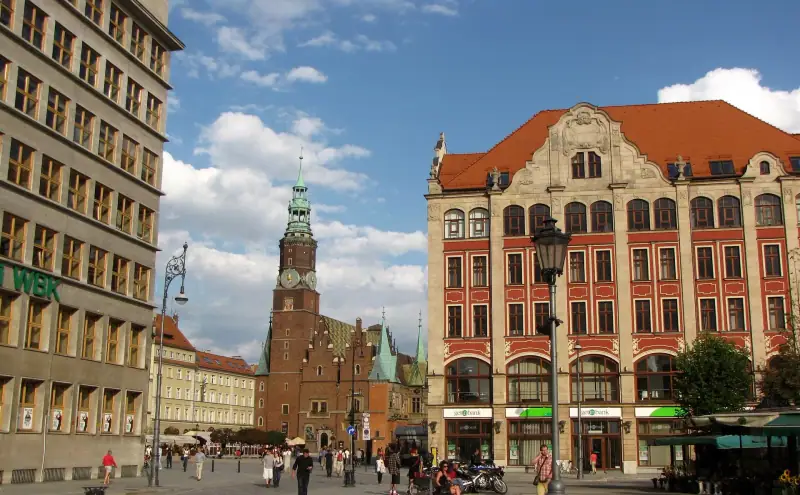
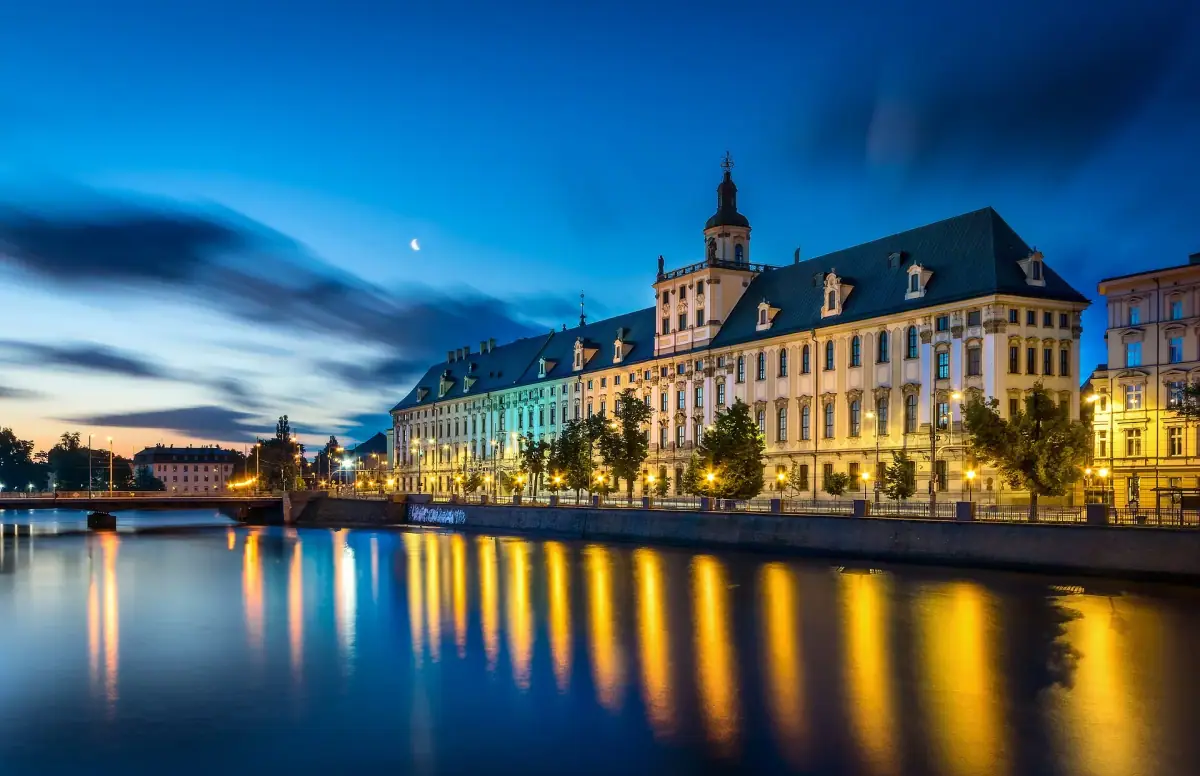
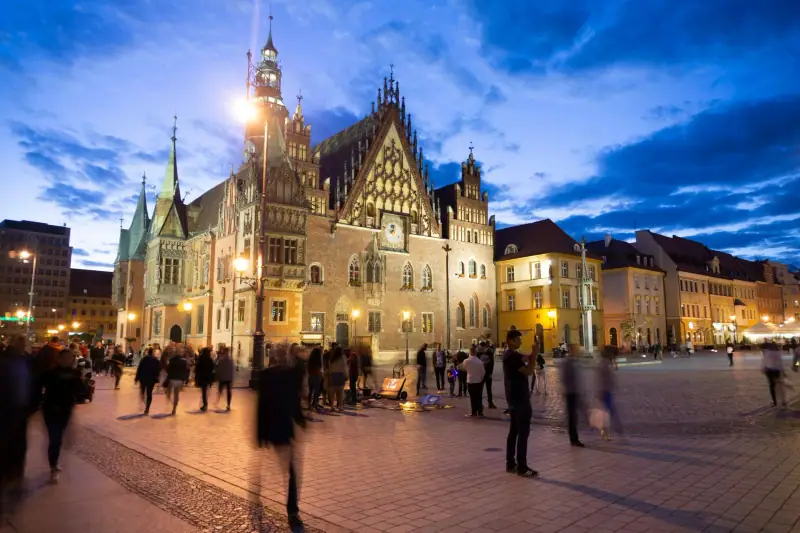
The region’s big city is a river port built on the Oder, divided into islands linked by many bridges. Its heart is the Market Square (Rynek), one of the largest medieval squares in the country, lined with colorful houses with neat gables. In its center stands the Gothic town hall, with its carved façades and astronomical clock, one of the most photographed monuments in Poland.
Around the Rynek, lanes lead to the university, St. Elizabeth’s Church and passages lined with cafés. In the evening, the square comes alive: café terraces, musicians, students. You also come across, around street corners, the little bronze dwarf statuettes (krasnale), which have become a treasure hunt for children and adults alike. A map of the dwarfs is available in tourist offices and on some websites.
The Ostrów Tumski district, Cathedral Island, is one of the city’s most romantic. You cross pedestrian bridges, pass brick churches and, at nightfall, can see gas lamps still lit by hand by a lamplighter. To choose your accommodation district, our article where to stay in Wrocław compares the center, Cathedral Island and the areas near the station.
🏨 Sleeping in Wrocław: hotels, apartments and hostels around the Rynek or Cathedral Island, an ideal base for then branching out across the whole region. Compare availability for your dates.
Centennial Hall and Wrocław’s museums
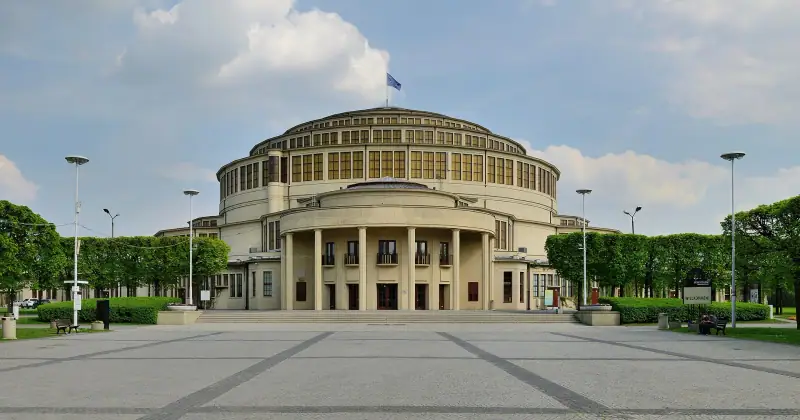
Beyond the old town, Wrocław hides a UNESCO World Heritage site: Centennial Hall (Hala Stulecia). Built in the early 20th century, it is a milestone of reinforced-concrete architecture, with an immense dome that impresses as much from outside as inside. It stands in a pleasant park, next to a large Japanese garden and a pergola with a fountain that comes alive in summer.
For museums, the Racławice Panorama presents an immense circular canvas devoted to a 1794 battle, in a dedicated building. The university’s main building, with its Baroque hall, also deserves a detour if its visiting hours suit you. As hours vary with the season, consult the official sites before you go.
For a few ideas on the culinary atmosphere, such as pierogi, soups or local beers, our article on Polish cuisine presents the dishes to try across Poland.
Świdnica and the Church of Peace, a timber treasure
About 50 km (31 mi) southwest of Wrocław, the small town of Świdnica is home to one of the most unusual sites in Poland: the Church of Peace. Together with the one in Jawor, it is one of two Protestant timber-framed wooden churches listed by UNESCO. It was built in the 17th century, after the Thirty Years’ War, under strict conditions imposed on the Protestants of the time: perishable materials, no tower or bell tower, and a very short construction deadline.
Inside, the space is vast and richly decorated: stacked galleries, paintings on wood, a Baroque pulpit and an organ. The whole surprises with the contrast between the modest exterior and the profusion inside. Plan about an hour there, then a stroll through the center of Świdnica, with its market square and its cathedral.
Świdnica is easily reached by train from Wrocław, in about an hour depending on the connection. It pairs well, in a single day, with Książ Castle, farther southwest.
Książ Castle and the mysteries of the Wałbrzych region
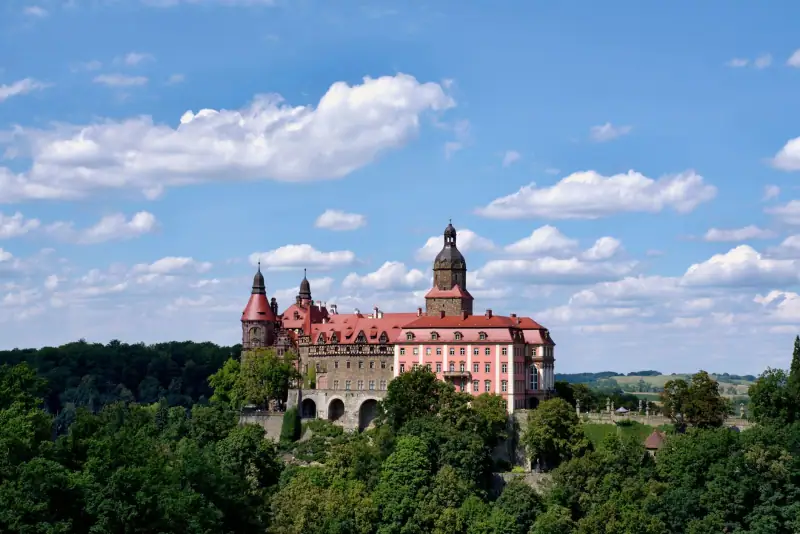
Near the town of Wałbrzych, Książ Castle dominates a wooded valley from a rocky spur. It is one of the largest castles in Poland, with several hundred rooms, terraces and gardens that descend toward the valley. Its origins go back to the Middle Ages, but its present silhouette is the result of successive remodelings, notably in the 18th and 20th centuries. The neighboring park and the stables are also pleasant to walk through.
The Wałbrzych region is tied to a darker history: during World War II, Nazi Germany launched a vast project of underground galleries there, known as Project Riese (“giant”), whose exact purpose remains partly mysterious. Several sites in the region present remains of it. These are places of remembrance, marked by the forced labor of prisoners: approach them seriously and prefer guided tours to understand the context.
Plan a half day for Książ, more if you add the galleries or the center of Wałbrzych. Without a car, the simplest is to take the train to Wałbrzych, then a bus or taxi for the final leg. Check the timetables before leaving.
Czocha Castle and the fortresses of the west
In the west of the region, near the German and Czech border, several fortresses dot the hills. Czocha Castle, overlooking Lake Leśna on the Kwisa River, is one of the most picturesque: towers, ramparts, an inner courtyard and views over the water. It is sometimes used as a film set and offers visits as well as accommodation inside.
Other, more modest castles are scattered across the hills around Jelenia Góra and the Jelenia Góra valley. Some have been restored and turned into hotels, others remain ruins reached on foot. It is an ideal playground for a trip by car, with short stages and spontaneous stops.
Lubiąż Abbey, a Baroque giant
Northwest of Wrocław, the Cistercian abbey of Lubiąż is among the largest monastic complexes in Europe. Its immense Baroque façade, stretching more than 200 m (656 ft), surprises in a discreet village. The abbey had a turbulent history in the 20th century, and its restoration, still under way, is partial: some rooms are superb, others raw, which adds to the atmosphere of the place.
The visit is generally with a guide, for about an hour and a half. As hours vary with the season, consult the official site before leaving. A car is the simplest way to get there from Wrocław, the trip being about an hour.
The Giant Mountains (Karkonosze): Karpacz and Szklarska Poręba
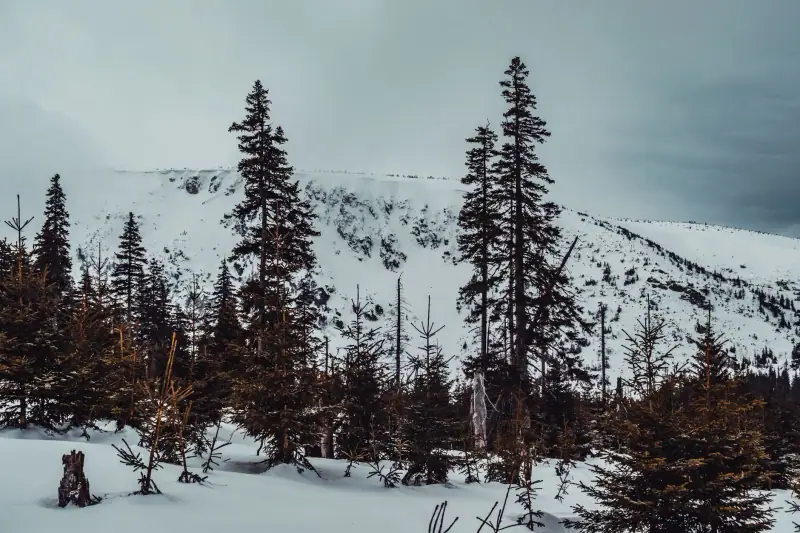
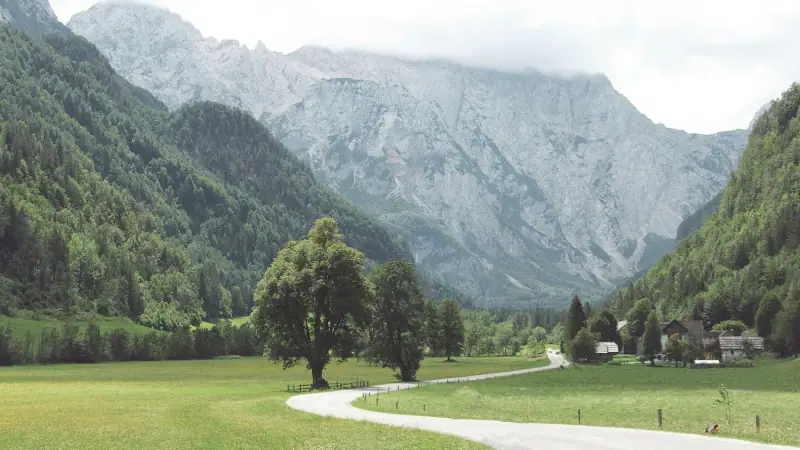
In the far southwest of the region, the Karkonosze range, or Giant Mountains, forms the natural border with the Czech Republic. Its highest point, Śnieżka, rises above 1,600 m (5,250 ft) and is reached by several trails from Karpacz or from neighboring passes. In good weather, the view stretches over both countries; in bad weather, the summit is battered by wind and fog, hence the importance of a windbreaker and good shoes.
Karpacz is the best-known resort on the Polish side. There you visit the Wang Temple (Świątynia Wang), a Scandinavian-style wooden church that was bought in Norway and reassembled there in the 19th century. It can be seen in about an hour, in a very photogenic mountain setting. Szklarska Poręba, on the other side of the massif, serves as a base for hikes to the summits and for the nearby waterfalls.
The whole massif is protected by a national park, and the trails are marked. Follow the rules posted at the entrances, notably on closed or seasonally restricted zones. In winter, the region becomes a ski destination that is more family-oriented and more affordable than the big Alpine resorts.
To compare with another mountain area in the country, our article on Lesser Poland presents the south of the country, with the Tatras farther southeast.
🚗 Renting a car in Lower Silesia: handy for linking the castles, mountain villages and the Kłodzko Valley at your own pace. Compare rental companies.
The Kłodzko Valley, fortresses and spa towns
In the south of the region, the Kłodzko Valley is a basin surrounded by mountains, dotted with small towns and spa resorts that prospered in the 19th century. The town of Kłodzko itself has a fortress and a network of underground passages that can be visited, as well as a medieval stone bridge and a human-scale historic center.
Around it, several spa towns invite a pause: Kudowa-Zdrój, Polanica-Zdrój or Lądek-Zdrój offer parks, bandstands and treatment establishments. The atmosphere recalls a little the spa towns of Central Europe, with flowered promenades and old-fashioned pavilions. At Czermna, near Kudowa, a chapel decorated with skulls and bones bears witness to the epidemics and wars of the past: it is an unusual place, to be visited discreetly.
The Errant Rocks and the Table Mountains
Among the valley’s most astonishing landscapes, Table Mountains National Park (Góry Stołowe) takes its name from sandstone plateaus shaped like tables. The Errant Rocks site (Błędne Skały) is a labyrinth of narrow corridors between blocks of stone, which delights families. You walk on walkways and stairs, between walls that force you to squeeze through.
The summit of Szczeliniec Wielki, about 900 m (2,950 ft) of altitude, offers a viewpoint over the plateau and its rock formations with colorful names, such as the Devil’s Armchair or the Camel’s Head. It is reached by a stone staircase from a neighboring village. Allow about two to three hours for the loop, and bring non-slip shoes: the steps can be damp.
The flavors of Lower Silesia
The region has its own personality at the table. Bolesławiec, in the west, is famous for its white ceramics decorated with small blue motifs, called “Bolesławiec pottery,” much sought after as a souvenir: cups, plates, salad bowls. Take the time to compare workshops and shops, and to check that it really is a local handmade product.
In the mountains, traditional restaurants serve hearty soups, pierogi, roast meats and mountain cheeses. In Wrocław, the food scene is more varied: beer bars, reinvented Polish cuisine, pastries, specialty cafés. Our article on Polish cuisine helps you identify the basic dishes before you order.
🎟️ Guided tours and excursions in Wrocław: walking tours of the old town, excursions to the castles and mountains, walks on the Oder. Compare the options, languages and cancellation conditions before you book.
How to build your stay in Lower Silesia
Here are three ways to organize your days, depending on your length of stay.
A long weekend, without a car. Two days in Wrocław, then a day at Świdnica and Książ by train, with a bus or taxi for the castle. This is the simplest and most accessible formula.
Five to six days, with a car. Two days in Wrocław, a day for Lubiąż and the fortresses of the west, two days in the Karkonosze, with Karpacz and Śnieżka. The drive between stages is short, well below the reasonable limit of a day’s driving.
One week, with the Kłodzko Valley. Add two days for Kłodzko, the spa towns and the Errant Rocks, ending with a rest day. If you want to extend toward the south of the country, then continue to Kraków: our article on Lesser Poland details that part of the trip. For a big European circuit, Poland also combines with neighboring Germany, for Dresden, Berlin and the west, or with Hungary, for Budapest to the south.
Getting around Lower Silesia
Wrocław is well served by train, and several towns in the region can be reached without a car: Świdnica, Wałbrzych, Kłodzko or Jelenia Góra. Trips generally take between one and three hours. For mountain villages, local buses complete the network, but with reduced frequencies on weekends and in low season.
A car makes visits to castles and trails much easier. Roads are in good condition overall, but mountain driving calls for caution, especially in winter. For more pointers on seasons and transport, read our article on when to go and how to get around Poland.
Practical tips for traveling in Lower Silesia
Pack layers. In the mountains, the weather changes fast, even in summer. A windbreaker and walking shoes are useful all year.
Book in high season. July, August and the ski season concentrate Polish vacationers: mountain accommodation fills up quickly. May, June and September are calmer.
Keep a margin. Opening hours of museums and castles change with the season and holidays. Check them the day before, on the official sites.
Travel insurance. Before you leave, check your health and repatriation coverage.
Entry rules. Entry rules depend on your passport. Check the official travel advice of your government before you book: travel.state.gov (US), GOV.UK (UK), travel.gc.ca (Canada), Smartraveller (Australia) (checked November 2026). Also check your carrier’s international plan or consider a travel eSIM.
Where to start
If you only have a few days, stay in Wrocław and add Świdnica and Książ: it is the best balance between travel time and richness of visits. If you like nature, the Karkonosze and the Table Mountains are the two most spectacular stops, with trails of every level. Architecture fans will gladly head to Centennial Hall and Lubiąż Abbey.
Lower Silesia is best discovered without haste. Four or five well-chosen stops, with time to walk on the Rynek, in a castle park or on a ridge trail, beat a list that is too long: it is a region of contrasts, and that is what gives it its charm.
Frequently asked questions
Where is Lower Silesia?
Lower Silesia (Dolny Śląsk) occupies the southwest of Poland, on the border with Germany and the Czech Republic. Its capital is Wrocław, and the region stretches from the plains of the Oder to the Sudetes, the mountain range that includes the Giant Mountains (Karkonosze).
How many days do you need to visit Lower Silesia?
Two days are enough for Wrocław alone. With four to five days, you add Świdnica, Książ Castle and a mountain day. A week lets you also branch out to the Kłodzko Valley and the Giant Mountains without rushing.
Do you need to rent a car in Lower Silesia?
Not for Wrocław, very pleasant on foot and by tram. For isolated castles, mountain villages and the Errant Rocks, a car gives a lot of flexibility. The train does serve Świdnica, Wałbrzych, Kłodzko or Jelenia Góra, but timetables should be checked.
What is the best time to go?
From May to September for hiking and visits. Fall is superb in the mountains and calmer. Winter suits skiers and fans of decorated towns, but some mountain sites are harder to reach.
Can you do Lower Silesia by train from Wrocław?
Yes, Wrocław is a rail hub and several towns in the region can be reached by train, in roughly one to three hours depending on the destination. Check timetables the day before, especially on weekends, and allow a margin for the return.
Can Lower Silesia be combined with Germany or the Czech Republic?
Yes, the region is on the border and lends itself well to a multi-country circuit. Germany and the Czech Republic lie just across the border, and Budapest is a possible extension toward Central Europe.
Is Książ Castle easy to visit without a car?
It is near Wałbrzych, reached by train from Wrocław, then by bus or taxi for the last leg. Check the official hours before leaving, as they vary with the season.
More Poland guides
Keep reading
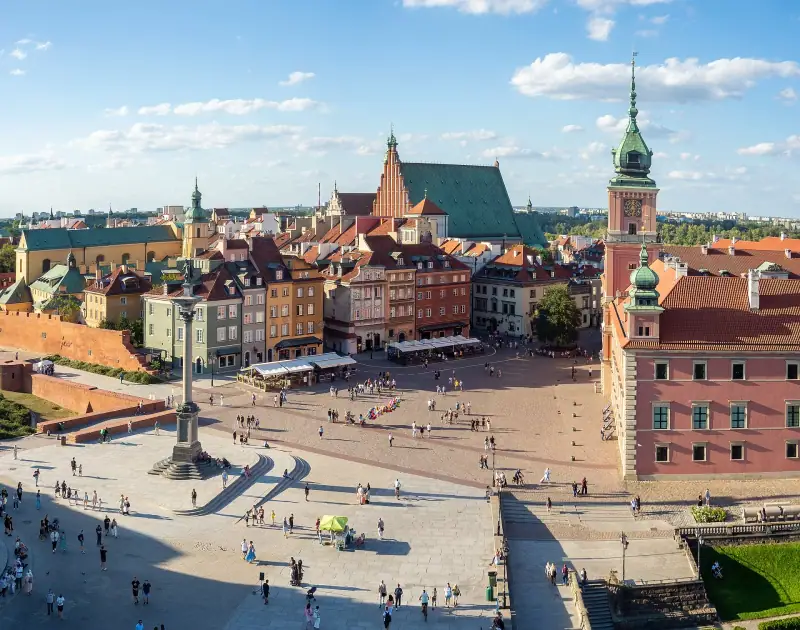
Warsaw in 2 Days: What to See in the Polish Capital
Warsaw in 2 days: rebuilt old town, Royal Castle, Royal Way, Łazienki Park, the Uprising and POLIN museums, and the Praga district.
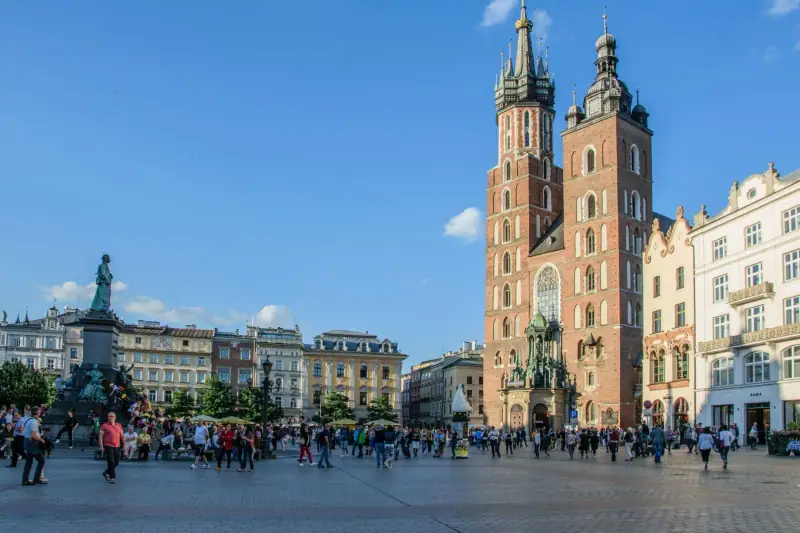
What to See in Lesser Poland: Kraków, Ojców, the Dunajec and UNESCO Sites
What to see in Lesser Poland around Kraków: Wieliczka, Ojców, UNESCO wooden churches, Kalwaria, the Dunajec gorge and the Tatras. Stop ideas and tips.
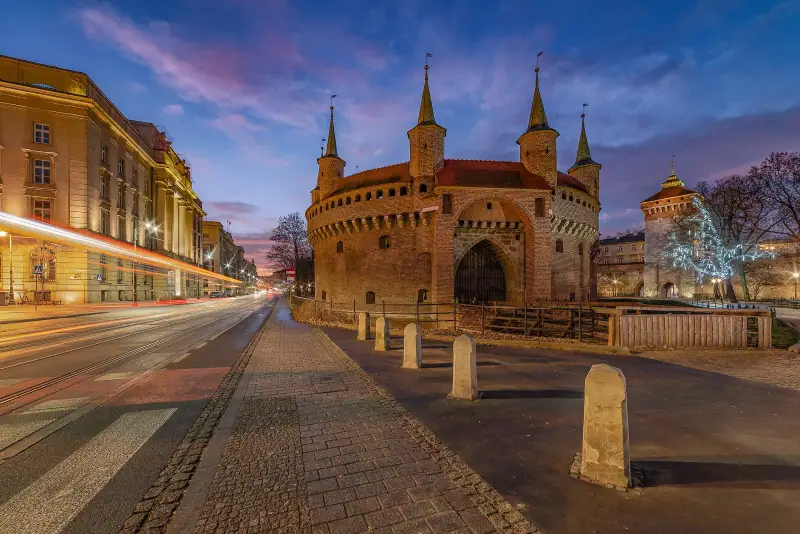
Complete Guide to Visiting Poland: Cities, Regions, Budget and Tips
Visiting Poland: regions, must-see cities, when to go, transport, accommodation and budget. The pillar guide to plan your trip step by step.
Ready-made
Poland itineraries
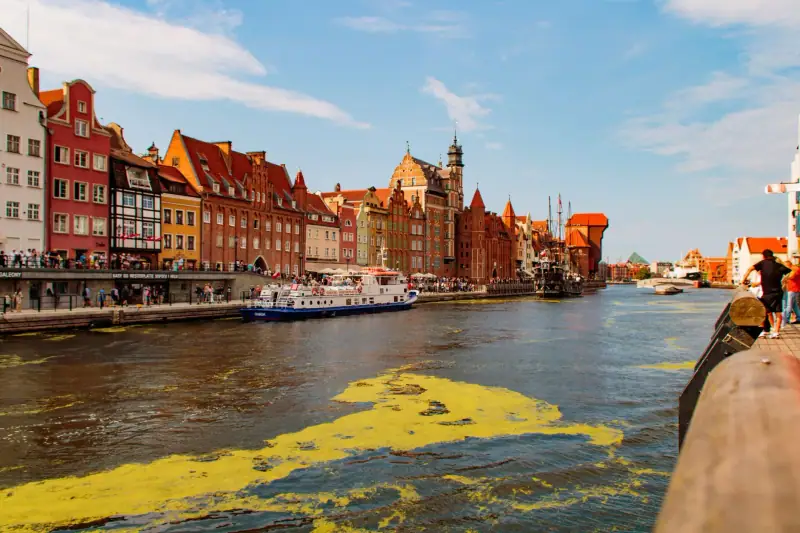
2 days
Gdańsk in 2 Days: An Itinerary Through the Old Town, the Shipyard and the Baltic
Gdańsk in 2 days: Royal Way, St. Mary's Basilica, Motława quays, European Solidarity Centre, Westerplatte and a getaway to Sopot.
3 days
What to Do in Kraków in 3 Days: A Complete Itinerary
Kraków in 3 days: old town, Wawel Hill, the Kazimierz district, the Wieliczka salt mine and a respectful visit to Auschwitz-Birkenau.
2 days
What to Do in Wrocław in 2 Days: A Complete Itinerary
Wrocław in 2 days: Market Square, Cathedral Island, bronze dwarfs, Centennial Hall and the Racławice Panorama. Walking itinerary, tips and budget.