Itineraries
What to Do in Wrocław in 2 Days: A Complete Itinerary
We may earn a commission when you book through links on this page, at no extra cost to you. We don't visit or try the places we cover: we summarize published sources. How we work
Day by day
- Day 1Market Square, bronze dwarfs, university district, Cathedral Island
- Day 2Racławice Panorama, Centennial Hall, Szczytnicki Park, Polish dinner
Weather through the year on this route
| Jan | Feb | Mar | Apr | May | Jun | Jul | Aug | Sep | Oct | Nov | Dec | |
|---|---|---|---|---|---|---|---|---|---|---|---|---|
| High °F (°C) | 320 | 362 | 457 | 5714 | 6619 | 7222 | 7725 | 7725 | 6820 | 5714 | 457 | 341 |
| Low °F (°C) | 21-6 | 23-5 | 28-2 | 373 | 468 | 5412 | 5714 | 5714 | 489 | 394 | 320 | 25-4 |
| Rain in (mm) | 1.845 | 1.845 | 2.050 | 2.460 | 3.590 | 3.795 | 4.3110 | 3.075 | 3.075 | 2.460 | 1.845 | 1.640 |
Normals 1991–2020 at Kraków: averages over 30 years, not a forecast. Source: NASA POWER (MERRA-2), grid of about 50 km. Figures computed by us in November 2026.
In short
- Day 1 covers the Market Square (Rynek), the bronze dwarfs, the university district and Cathedral Island; day 2 covers the Racławice Panorama, Centennial Hall and Szczytnicki Park.
- The historic center is walkable; the tram serves the rest of the city, including Centennial Hall.
- The Racławice Panorama is a circular painting more than 100 m (328 ft) long; entry is often by time slot, so book ahead in high season.
- Best times to visit are spring and early fall: mild temperatures, open terraces and few crowds.
Wrocław is the great city of Lower Silesia, in the southwest of Poland. Built on the Oder and its branches, it has about a hundred bridges and several islands, which gives it the charm of a water city that you do not suspect on arrival. European Capital of Culture in 2016, it appeals with its great Market Square, its Gothic brick churches and its student life.
It has stayed more discreet than Kraków or Gdańsk, and that is an asset: lines are rarer and prices often softer. Two days are enough for a first stay. Here is a walking itinerary, designed to limit backtracking.
Day 1 morning: the Market Square and its town hall
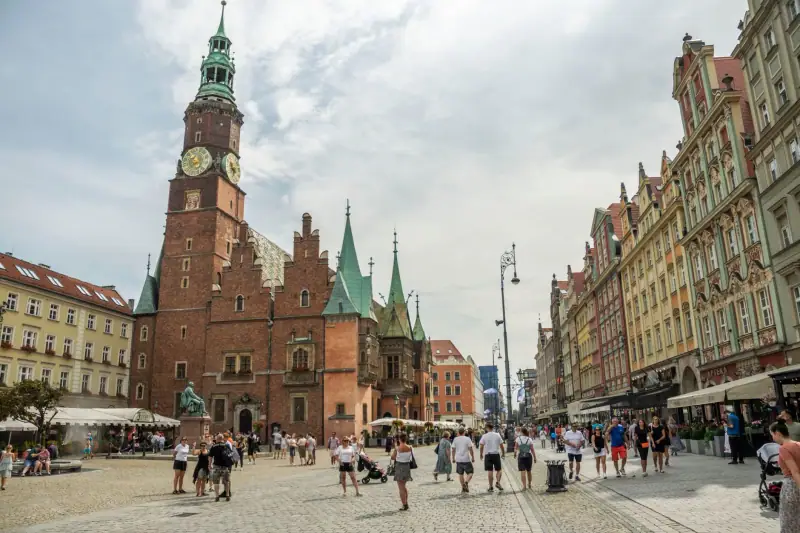
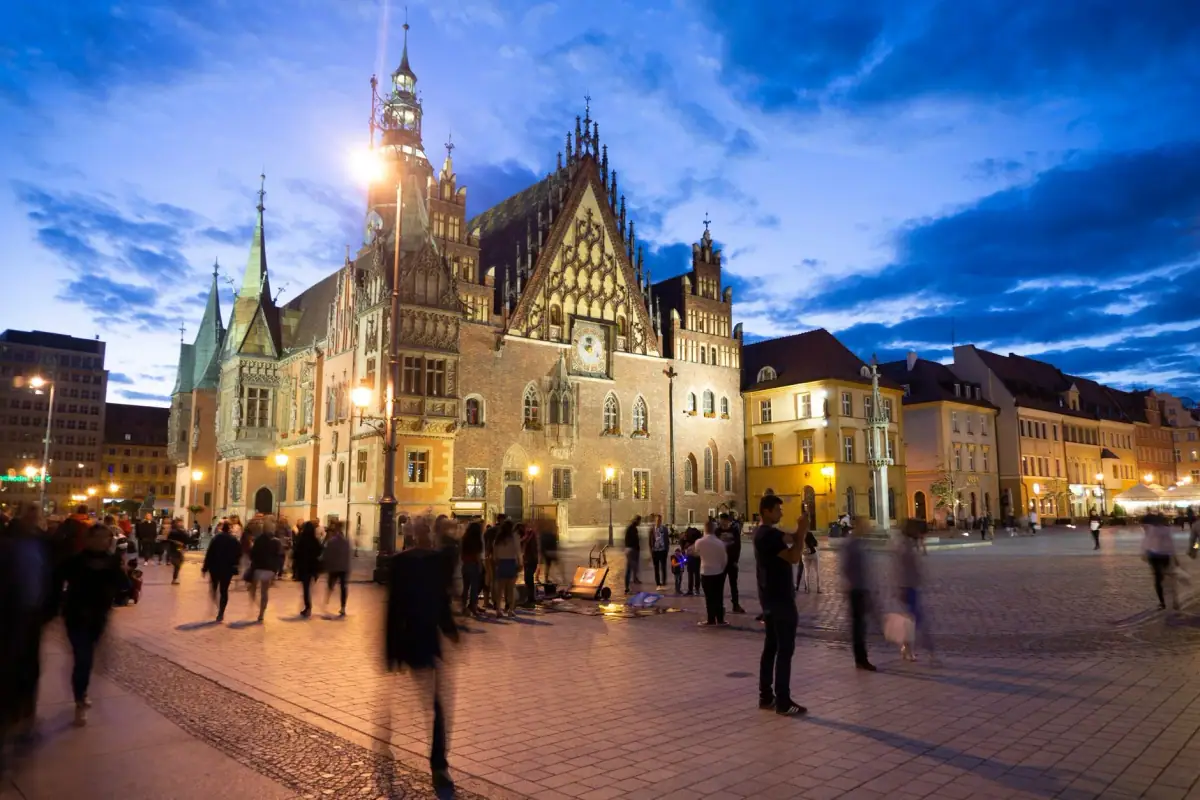
Start with the heart of the city, the Rynek. This square is among the largest in Europe and dates back to the 13th century. It is surrounded by gabled houses painted in bright colors, many of them rebuilt after the destruction of World War II. The perimeter deserves a full loop, slowly, because each façade has its decoration, coat of arms or sculpture.
In the center, the town hall is one of the finest examples of civic Gothic architecture in Central Europe. Its carved façades and its astronomical clock are worth a look. The building now houses a museum on the history of the city. Hours vary with the season: check them before you go.
Right next door, Salt Square (plac Solny) hosts a well-known flower market, open very long hours. It is a good place to stroll before heading off to the neighboring churches. Plan a full half day for this district, including café terrace breaks, one of the great pleasures of the square.
🏨 Sleeping in Wrocław: compare the hotels and apartments of the historic center for your dates. Staying near the Rynek lets you do everything on foot and enjoy the square in the evening, once the groups have left.
Day 1 afternoon: the bronze dwarfs, small statues everywhere
During the walk, you will soon come across the first dwarf. These bronze figurines, a few dozen centimeters tall (roughly a foot or so), are set on sidewalks, against walls, at the foot of street lamps or on window ledges. More than 600 have been counted. The phenomenon was born in the 1980s as a humorous symbol of peaceful resistance to the communist regime, then the city took up the idea and the dwarfs multiplied.
There are maps, apps and even small “passports” to find them. Each has its own attitude: one reads, another naps, another holds a camera. It is a playful way to discover streets you might have overlooked, and children love this treasure hunt.
End the afternoon with a tour of the university district. The Baroque university building, which overlooks the bank of the Oder, houses the Leopoldina Hall, a spectacular Baroque setting that can be visited on opening days. The neighboring café terraces are ideal for watching the river.
Day 1 evening: Cathedral Island
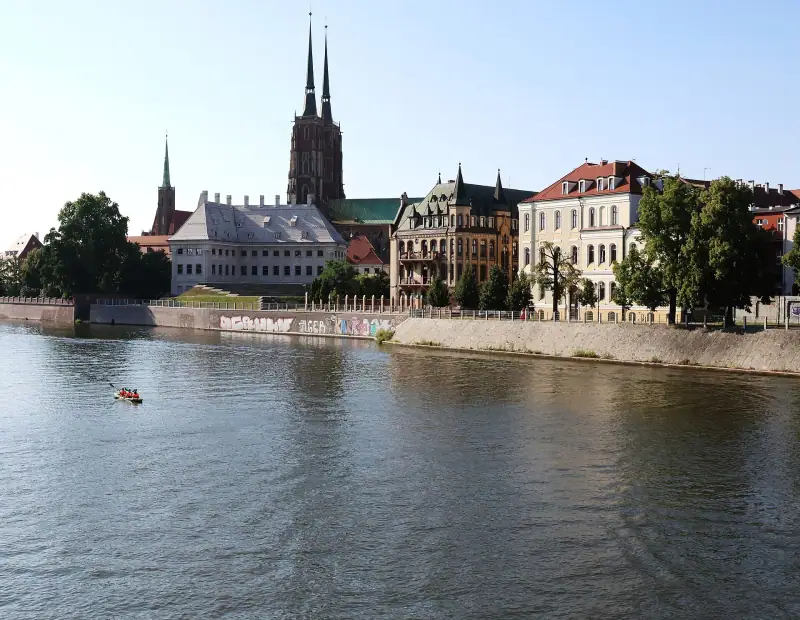
At dusk, cross the Oder to Cathedral Island, Ostrów Tumski. It is the oldest district of the city and the quietest: cobbled streets, brick churches, gardens and an almost monastic atmosphere. The Gothic Cathedral of St. John the Baptist is its high point.
According to tradition, a lamplighter still comes by in the evening to tend the district’s gas street lamps, which gives the walk a flavor of another time. Seasons and hours change, but the atmosphere remains very photogenic.
The return is on foot across the bridges, which lets you see the reflections on the water. On the way, you can pass through nearby Sand Island (Wyspa Piasek), with its church and its small village atmosphere in the middle of the city.
Day 2 morning: the Racławice Panorama
The second day opens with an unusual visit. The Racławice Panorama is an immense circular painting, more than 100 m (328 ft) long, which depicts the 1794 battle during the uprising led by Tadeusz Kościuszko against the Russian armies. It was made in the late 19th century and has been in Wrocław since the postwar period. The viewer stands in the center of a rotunda, surrounded by the scene, with relief effects that reinforce the illusion.
The visit is with an audio guide, in many languages. Access is often organized by time slots: check and book ahead in high season. Plan one to one and a half hours, travel included.
To round out the morning, stroll through the surrounding district, where there are several museums and small squares. You can also simply enjoy a café on a terrace while watching city life: that is also what a successful city break is.
🎟️ Tours and activities in Wrocław: guided tours of the old town, dwarf-hunting circuits, walks along the Oder: compare the offers available for your dates and book ahead in high season.
Day 2 afternoon: Centennial Hall and Szczytnicki Park
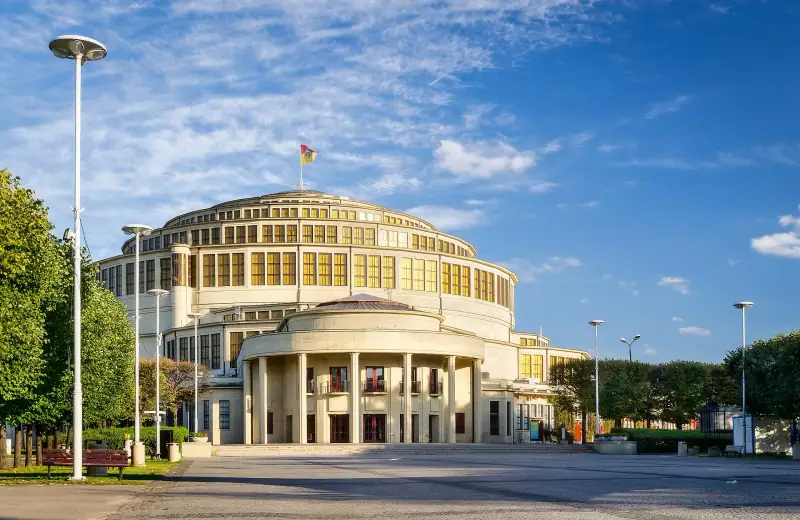
Take the tram to Centennial Hall, a little east of the center. This reinforced-concrete monument, built in the early 20th century, was at the time one of the largest structures of its kind. Its dome makes it a milestone of modern architecture and it is on the UNESCO World Heritage list. Around it stretch a pergola, a Japanese garden and the vast Szczytnicki Park, perfect for a family walk.
Nearby, a multimedia fountain sends up its water jets in good weather, with light shows in the evening. The show schedule depends on the season. Even without a show, the site is worth the visit for its architecture, very different from the rest of the city.
The zoo and the neighboring park are two other good ideas if you are traveling with children, but they take time. Choose according to your pace and the weather.
Day 2 evening: a Polish dinner
To conclude the stay, treat yourself to a meal in the old town. The specialties not to miss are pierogi, żurek (a sour soup), slow-cooked meat dishes and pastries. Milk bars, those popular canteens inherited from the communist era, serve simple meals at very low prices. For a complete overview of the dishes, see our guide to Polish cuisine.
🍽️ Tasting local cuisine: tastings, food tours and gourmet visits to discover the city's specialties with a local guide.
Getting around and getting organized
The historic center is walkable. For Centennial Hall or the more distant districts, the tram is practical and inexpensive. The city is served by an international airport and by train from the country’s major cities. If you arrive from Kraków or Warsaw, allow a few hours by train and check the timetables before you leave.
The best times to visit are spring and early fall: mild temperatures, open terraces and few crowds. Summer is lively, winter cold but pleasant, with Christmas markets on the Market Square. For the choice of season and the overall trip budget, read our guide to when to go to Poland and how much to plan.
For accommodation, our guide on where to stay in Poland details the areas and budgets of the big cities. Wrocław offers good value for money, with hotels of every category in the center.
Entry rules depend on your passport. Check the official travel advice of your government before you book: travel.state.gov (US), GOV.UK (UK), travel.gc.ca (Canada), Smartraveller (Australia) (checked November 2026). Also check your carrier’s international plan or consider a travel eSIM.
Insurance. For a stay abroad, remember to check your health and repatriation coverage before you leave.
Extending the trip
Wrocław fits easily into a Polish circuit. Continue south with our three-day Kraków itinerary, or to the capital with our guide to Warsaw in two days. Lower Silesia also has many castles and small towns to explore by car if you have a few more days.
To go beyond the borders, neighboring Germany and Hungary can be combined into a multi-country trip. Wrocław lies in the west of the country, which makes it a natural gateway if you arrive from Germany.
Sources
- Racławice Panorama (National Museum in Wrocław): figures checked November 2026
Frequently asked questions
Are two days enough to visit Wrocław?
Yes. The center is compact and can be covered on foot. Two days let you see the Market Square, Cathedral Island, the university district, Centennial Hall and a museum, without rushing.
Why are there so many dwarfs in Wrocław?
These small bronze statues, more than 600 today, descend from a peaceful protest movement of the 1980s. They multiplied in the streets and became the humorous emblem of the city. Looking for them is part of the fun of the walk.
Is Wrocław worth the detour compared with Kraków?
They complement each other. Kraków is more medieval and touristy; Wrocław is more student-oriented, more spread out over its islands and bridges, and often calmer. If you have the time, combine the two in one circuit.
Do you need a car in Wrocław?
No. The historic center is pedestrian and the tram serves the rest of the city. A car is only useful for branching out to the castles of Lower Silesia.
What currency should you use in Wrocław?
Poland uses the zloty (PLN). Cards are widely accepted; for cash, withdraw zlotys at an ATM rather than exchanging cash.
More Poland guides
Keep reading
Budget for a Trip to Poland: Real Costs and Tips to Spend Less
How much does Poland cost? Accommodation, transport, meals, visits: prices in zlotys, euros and dollars, three budget profiles and money-saving tips.
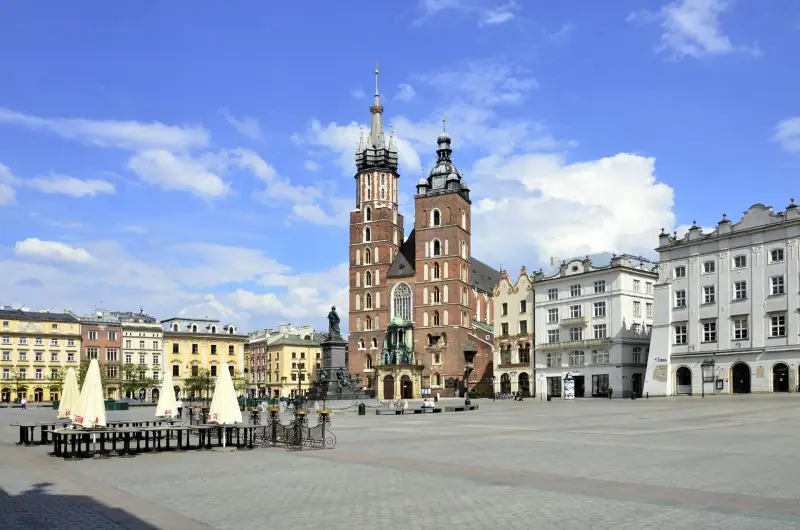
When to Visit Poland: Seasons, Budget and Transport to Plan Your Trip
When to go to Poland? Seasons, budget, currency and trains between Kraków, Warsaw and Gdańsk: what you need to plan a first trip without surprises.
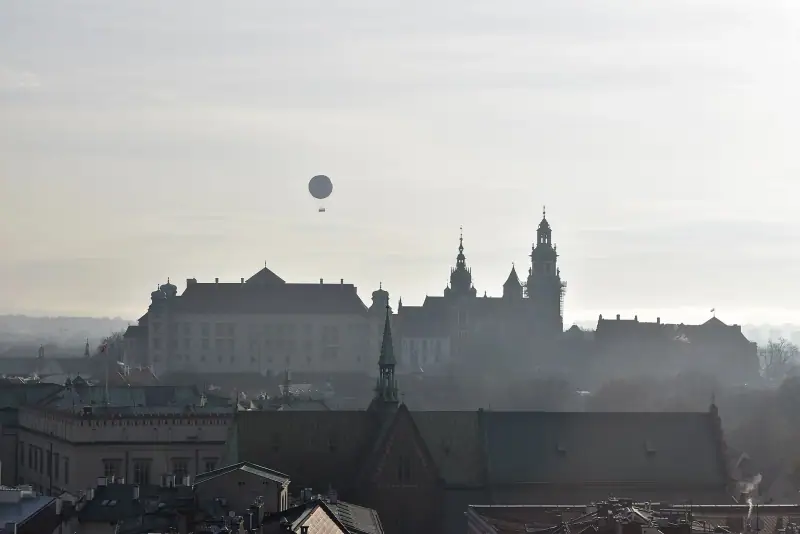
Where to Stay in Poland: Recommended Areas in Kraków, Warsaw and Zakopane
Where to stay in Poland: the best areas of Kraków, Warsaw and Zakopane for your budget and travel style, with booking tips.
Ready-made
Poland itineraries
2 days
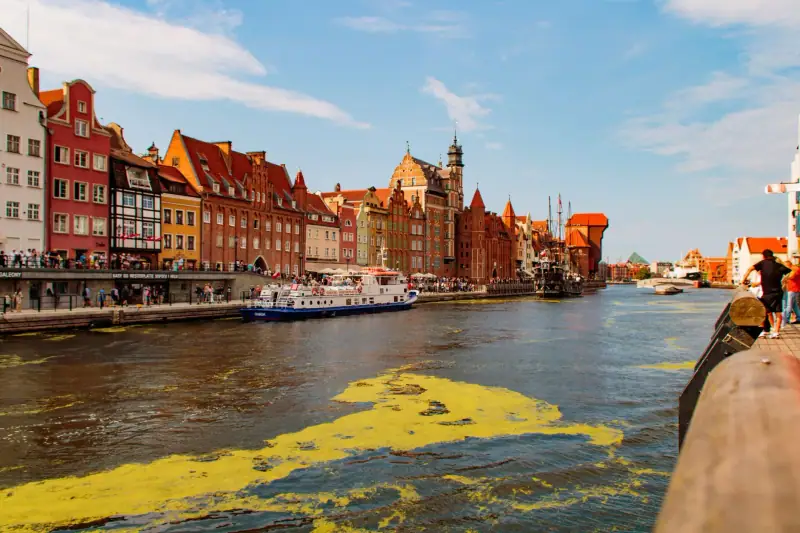
Gdańsk in 2 Days: An Itinerary Through the Old Town, the Shipyard and the Baltic
Gdańsk in 2 days: Royal Way, St. Mary's Basilica, Motława quays, European Solidarity Centre, Westerplatte and a getaway to Sopot.
3 days
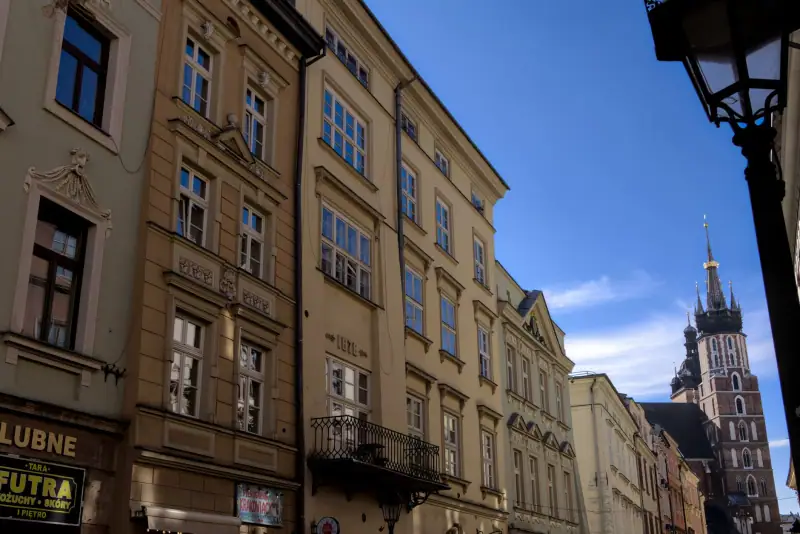
What to Do in Kraków in 3 Days: A Complete Itinerary
Kraków in 3 days: old town, Wawel Hill, the Kazimierz district, the Wieliczka salt mine and a respectful visit to Auschwitz-Birkenau.