Things to do
Zakopane and the Tatras: Hikes and Excursions from Kraków
We may earn a commission when you book through links on this page, at no extra cost to you. We don't visit or try the places we cover: we summarize published sources. How we work
In short
- Zakopane is about two hours from Kraków by bus, a little longer by train. A day trip is possible, but one night there makes early mountain starts easier.
- Lake Morskie Oko is about two and a half hours on foot from the Palenica Białczańska parking lot, on a paved road closed to ordinary traffic.
- Kasprowy Wierch (about 1,990 m / 6,530 ft) is reached from Kuźnice by a two-stage cable car in about twenty minutes.
- Start early: summer afternoon storms are frequent, and July and August are very crowded.
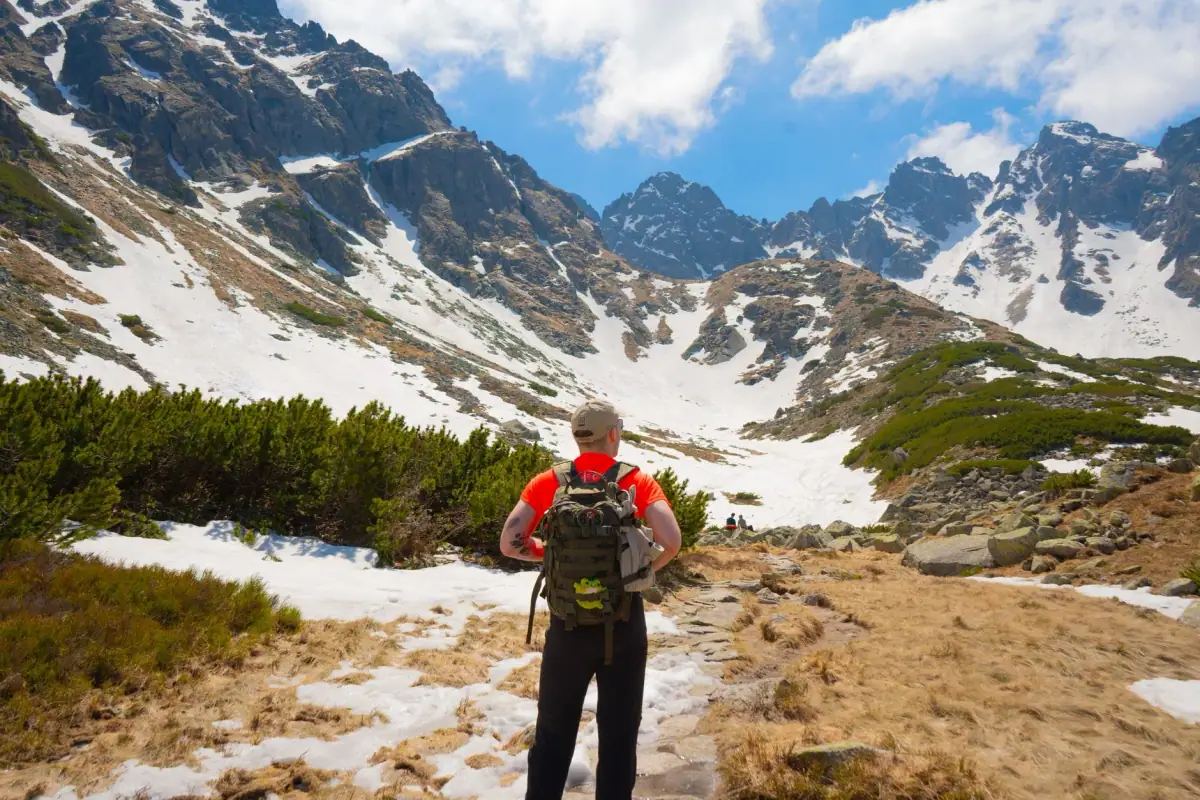
In the south of Poland, on the Slovak border, the Tatras form the highest range of the Carpathians. Their limestone and granite peaks, glacial lakes and fir-filled valleys make them the country’s most popular mountain destination. And the gateway to this massif is Zakopane, a small town of fewer than 30,000 inhabitants perched at an altitude of about 800 m (2,625 ft).
Zakopane is nicknamed the winter capital of Poland: it has hosted several Nordic skiing world championships and major university competitions. But people also come in summer to walk, breathe and taste a distinct mountain culture, with its carved wooden chalets, its music and its smoked cuisine. Here is how to make the most of the area, whether you come for the day or for several nights.
Getting to Zakopane from Kraków
From Kraków, allow about two hours by bus, a little more by train. There are many buses during the day and they are generally faster and cheaper than the train. A rental car is not essential: the town and the trailheads are served by minibuses and local buses. It becomes useful if you want to branch out freely across the area.
If you are staying in Kraków, our three-day itinerary for the city will help you divide your time between the old town, Kazimierz and an excursion. If you are coming for the snow, our guide to Zakopane in winter details skiing, thermal baths and sleigh rides. Zakopane suits a full day or a weekend getaway: leaving at the end of the week is also the best way to enjoy the mountain evenings.
Think about equipment: even in summer, the weather changes quickly at altitude. Walking shoes, a waterproof jacket and a warm layer are essential. Afternoon storms are frequent in summer: start early and come back down before the end of the day.
Krupówki Street and old Zakopane
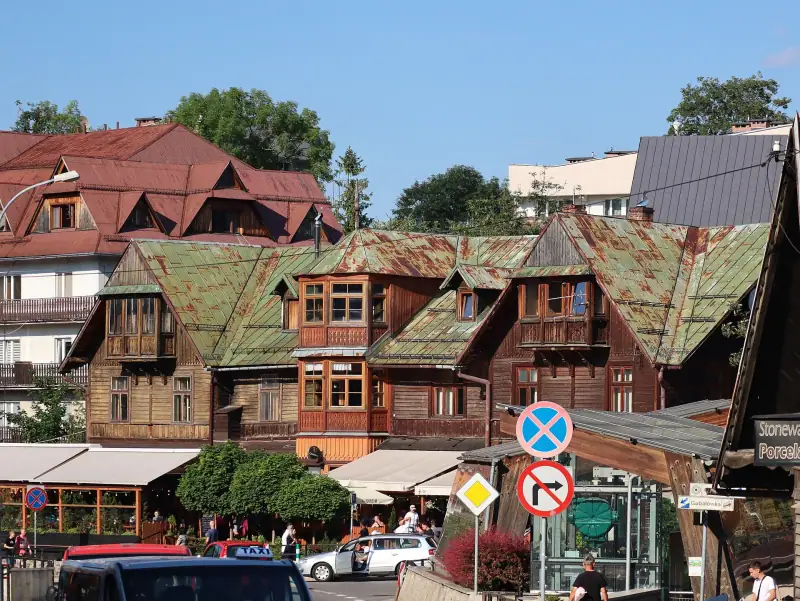
Krupówki Street is the pedestrian artery that runs through the center. Lively from morning to night, it is lined with craft shops, cafés, restaurants and souvenir stalls. It is touristy, but it sets the tone of the town and deserves a stroll in the late afternoon, on the way back from a hike.
Zakopane is also known for its wooden architecture, the so-called “Zakopane style,” born in the late 19th century and inspired by the chalets of the highlanders, the górals. It can be spotted on some villas in the center: steep roofs, openwork balconies, carved motifs. A few side streets, a bit away from Krupówki, let you appreciate fine examples away from the crowd.
🏨 Sleeping in Zakopane: mountain guesthouses, chalets and hotels, from the center to near the trailheads. Compare availability for your dates, especially in the summer and winter high seasons.
Morskie Oko, the most famous lake in the Tatras
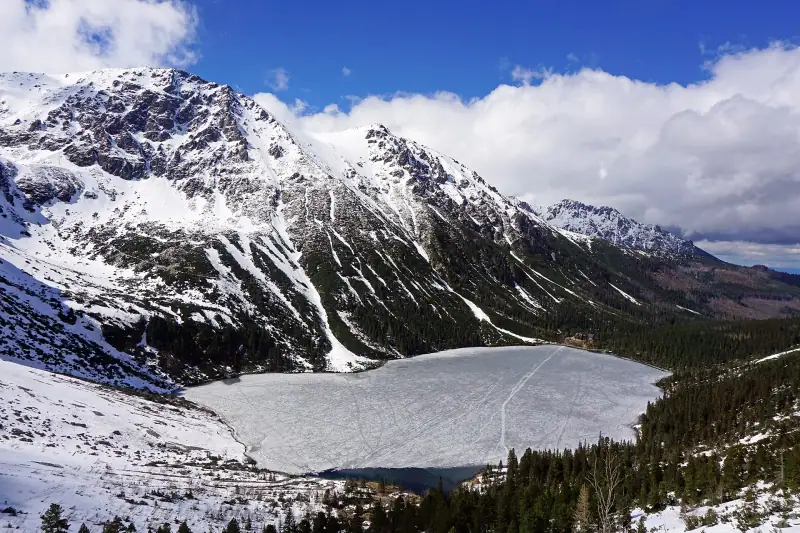
Lake Morskie Oko, whose name means “the eye of the sea,” is the largest glacial lake in the Polish Tatras. It lies at nearly 1,400 m (4,590 ft) of altitude, surrounded by peaks that are reflected in it on calm days, and it has the well-deserved reputation of being one of the most beautiful mountain sites in the country.
The starting point is the Palenica Białczańska parking lot. From there, a paved road, closed to ordinary traffic, climbs to the lake in about two and a half hours on foot. The path is not technical, which makes it a hike accessible to most walkers, including families. Still, plan a half day, return included, and bring something to eat: a mountain hut on the lakeshore offers food and rest.
An entrance fee to Tatra National Park is charged, payable at the start of the trail. Crowds are very heavy in July and August: for a quieter road and a more peaceful lake, leave early, or choose midweek, or the start of fall, when the colors are superb.
More experienced walkers can extend the outing along high-mountain trails that start from the lake. They require good fitness and suitable equipment. Check trail conditions and the weather before committing.
Kasprowy Wierch, the mountain by cable car
To reach a summit without effort, Kasprowy Wierch is the simplest option. This peak rises to about 1,990 m (6,530 ft): you go up from Kuźnice, on the edge of Zakopane, by a two-stage cable car. The ride takes about twenty minutes.
From the top, the view takes in the border ridge between Poland and Slovakia and the valleys below. It is a very practical half-day excursion, including for those who are not seasoned hikers. In winter, it is the region’s main ski area. In summer, high-altitude trails start from the summit, reserved for experienced and well-equipped walkers.
Lines at the departure station can be long in good weather. Arrive early in the morning, and check the weather before going up: if the summit is in the clouds, the view is not worth the trip.
🎟️ Excursions in the Tatras: organized departures from Kraków serve Zakopane and the Tatras with transport included. Compare programs, durations and cancellation conditions.
Giewont and shorter hikes
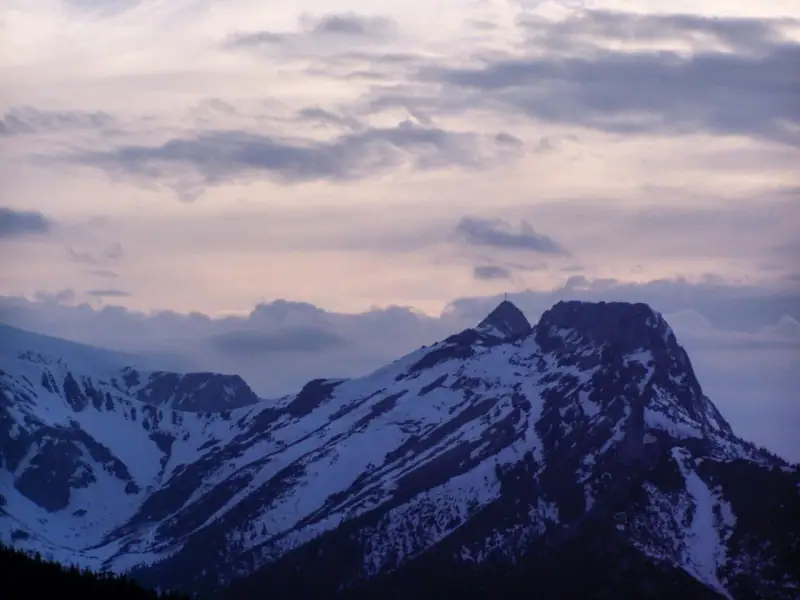
Giewont is the silhouette that dominates Zakopane. A large peak crowned by a cross, visible from the town, and a local symbol. It is climbed by trails that require a sustained walk and, near the summit, sections equipped with chains. It is a hike of several hours that requires mountain boots and stable weather. Do not venture there in stormy weather.
If you prefer easier walks, the valleys near Zakopane offer wooded trails, meadows and shepherds’ huts. These mid-mountain routes are perfect for a half day, or as a first approach before considering bigger stages. The town’s tourist information office provides maps and advises on routes according to your level.
A general safety tip: in the mountains, tell your host your route, carry water, and do not hesitate to turn back if the weather turns. Also consider travel insurance covering medical costs and repatriation.
Eating: oscypek and mountain cuisine
Zakopane is the ideal place to taste the cuisine of the górals. The regional star is oscypek, a small smoked sheep’s-milk cheese molded into a spindle shape. It is most often eaten grilled, with cranberry jam: an ideal snack after a walk. It is sold at the stalls on Krupówki Street and in the markets.
In the traditional inns, you will also find hearty soups, pierogi, slow-cooked meat dishes and local beer. These places, often decorated with wood and sheepskins, offer a warm atmosphere after a day at altitude. The restaurants in the center are numerous, but prices and quality vary: it is better to move a little away from the main street to eat at more reasonable prices.
🍲 Tastings and guided visits: discover Polish cuisine and mountain specialties on a food tour or a guided excursion. Compare the options before you book.
Organizing your stay
For a getaway, two days and one night are a good minimum. On the first day, arrive in the morning, drop your bags, then spend the afternoon on Krupówki Street and Kasprowy Wierch. The next day, leave early for Morskie Oko, before the crowds. With three or four days, you can add a longer hike and some free time.
Outside the summer and winter seasons, prices drop and the town is calmer. Spring and fall are interesting, but some high-altitude trails may remain closed or snowy: check conditions before booking your stay.
To extend the trip, Poland offers many stops: Warsaw to the northeast, Gdańsk on the Baltic. And if the border tempts you, the Tatras continue on the Slovak side, while Budapest is a possible addition to the south. Germany lies to the west.
Frequently asked questions
Can you visit Zakopane in one day from Kraków?
Yes, it is possible: the trip takes about two hours each way by bus, a little more by train. But the day will be short. One night there lets you leave early for the mountains without rushing, especially if you are aiming for Lake Morskie Oko.
What is the best time to hike in the Tatras?
From late spring to early fall, when the mid-mountain trails are clear. The high trails can stay snowy late in the season: check trail conditions before you go. Winter is the ski season, with Kasprowy Wierch as the main area.
Is Lake Morskie Oko accessible to everyone?
Yes, the road leading to it is paved, closed to ordinary traffic and takes about two and a half hours on foot from the Palenica Białczańska parking lot. It has no technical difficulty, but plan good shoes and the walk back.
Do you have to pay to enter Tatra National Park?
Yes, a modest entrance fee is paid at the entrance to the main trails, for example at the Palenica Białczańska parking lot. Rates change: check them on the park's official website before you come.
What is oscypek?
It is a small smoked sheep's-milk cheese, typical of the Polish mountains, often sold grilled and served with cranberry jam. You will find it at the stalls on Krupówki Street and in Zakopane's markets.
More Poland guides
Keep reading
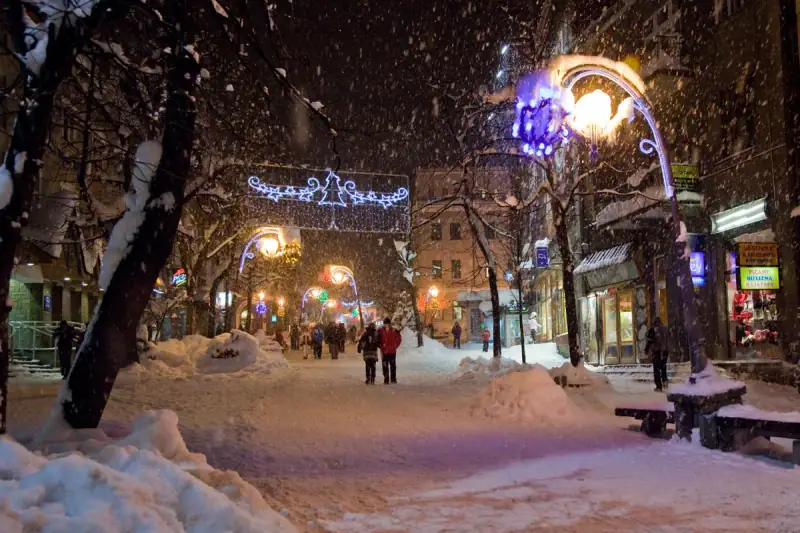
Zakopane in Winter: Skiing, the Tatras, Thermal Baths and Markets, a Practical Guide
Zakopane in winter: skiing at Kasprowy Wierch and Polana Szymoszkowa, thermal baths, sleigh rides, Krupówki. Official prices, tips and accommodation.
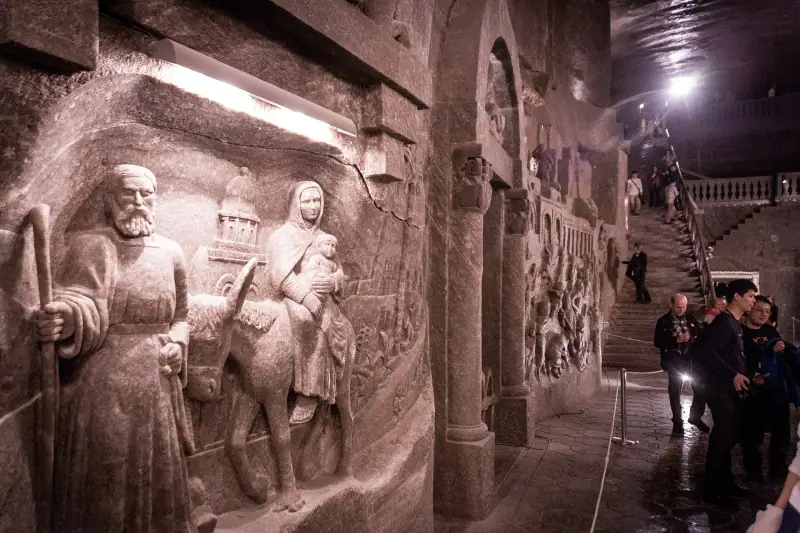
Wieliczka Salt Mine: Visiting the Underground Galleries from Kraków
Visiting the Wieliczka salt mine from Kraków: underground route, St. Kinga's Chapel, tickets, transport and tips to prepare your excursion.
Budget for a Trip to Poland: Real Costs and Tips to Spend Less
How much does Poland cost? Accommodation, transport, meals, visits: prices in zlotys, euros and dollars, three budget profiles and money-saving tips.
Ready-made
Poland itineraries
2 days
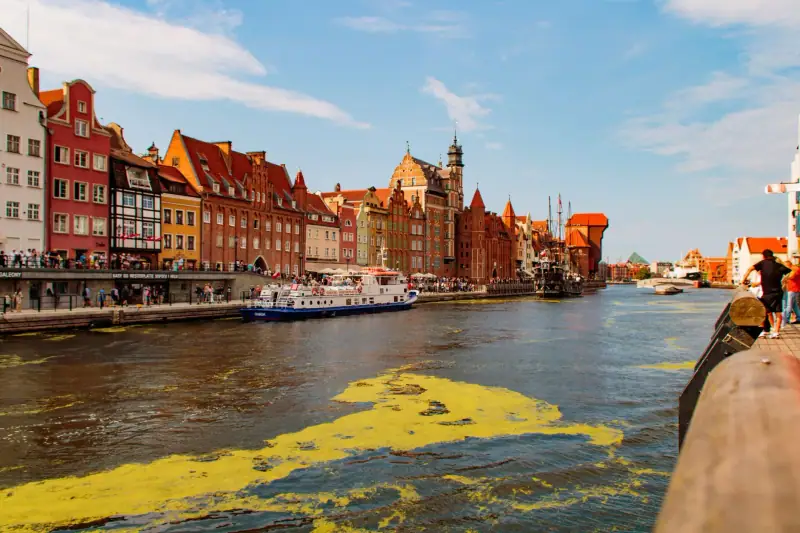
Gdańsk in 2 Days: An Itinerary Through the Old Town, the Shipyard and the Baltic
Gdańsk in 2 days: Royal Way, St. Mary's Basilica, Motława quays, European Solidarity Centre, Westerplatte and a getaway to Sopot.
3 days
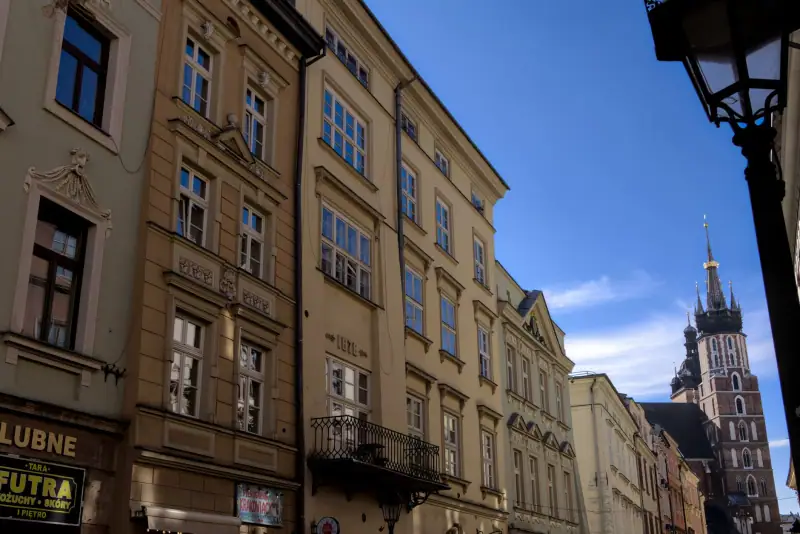
What to Do in Kraków in 3 Days: A Complete Itinerary
Kraków in 3 days: old town, Wawel Hill, the Kazimierz district, the Wieliczka salt mine and a respectful visit to Auschwitz-Birkenau.
2 days
What to Do in Wrocław in 2 Days: A Complete Itinerary
Wrocław in 2 days: Market Square, Cathedral Island, bronze dwarfs, Centennial Hall and the Racławice Panorama. Walking itinerary, tips and budget.