What to see
Visiting New Caledonia: The Complete Guide to Planning Your Trip
We may earn a commission when you book through links on this page, at no extra cost to you. We don't visit or try the places we cover: we summarize published sources. How we work
In short
- Plan at least ten days to combine Nouméa, a loop of Grande Terre and one island; two weeks lets you add a second island or slow down.
- The cool, drier season, about May to October, is the best compromise between pleasant weather and low cyclone risk; humpback whales visit from July to September.
- A rental car is the simplest way to explore Grande Terre beyond Nouméa; the islands are reached by domestic plane or boat.
- The local currency is the Pacific franc (XPF), at a fixed rate of about 119.3 XPF per euro; keep cash for markets, tribal stays and some islands.
New Caledonia is a South Pacific archipelago, more than 16,000 km (9,900 mi) from mainland France, where French is spoken, where you pay in Pacific francs and where, within a few dozen kilometers, you find a rare diversity of landscapes: red mountains, bush savanna, kauri forests, white sand beaches and one of the largest lagoons in the world. It is also a land of living Kanak culture, which gives the trip a depth you do not find in a simple beach destination.
This guide is the site’s pillar article: it presents the destination as a whole, its regions, its highlights, the best time to go, how to get there and around, lodging options and the budget to plan. At each step, links send you to our detailed articles to go deeper into what interests you.
In this guide:
- The destination at a glance
- The six main regions
- The highlights
- When to go
- Getting there and getting around
- Where to sleep
- Budget and practical tips
New Caledonia at a glance
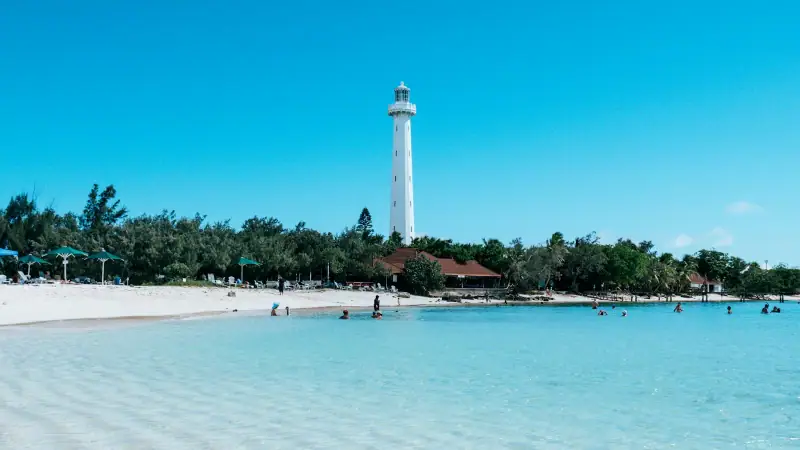
New Caledonia is a French overseas collectivity in the South Pacific, east of Australia. It consists of one main island, Grande Terre, about 400 km (250 mi) long and about 50 km (31 mi) wide, and several island groups: the Isle of Pines in the south, the Loyalty Islands to the east (Lifou, Maré, Ouvéa) and, farther north, islets and reefs most of which are hard for travelers to reach.
What strikes you first is the contrast. A mountain range runs the length of Grande Terre and separates two worlds. The West Coast, drier, opens onto savanna and ranching landscapes known as the bush. The East Coast, facing the trade winds, is wetter and greener, dotted with tribes, waterfalls and rivers. In the south, nickel-rich red soils give the earth a color that surprises.
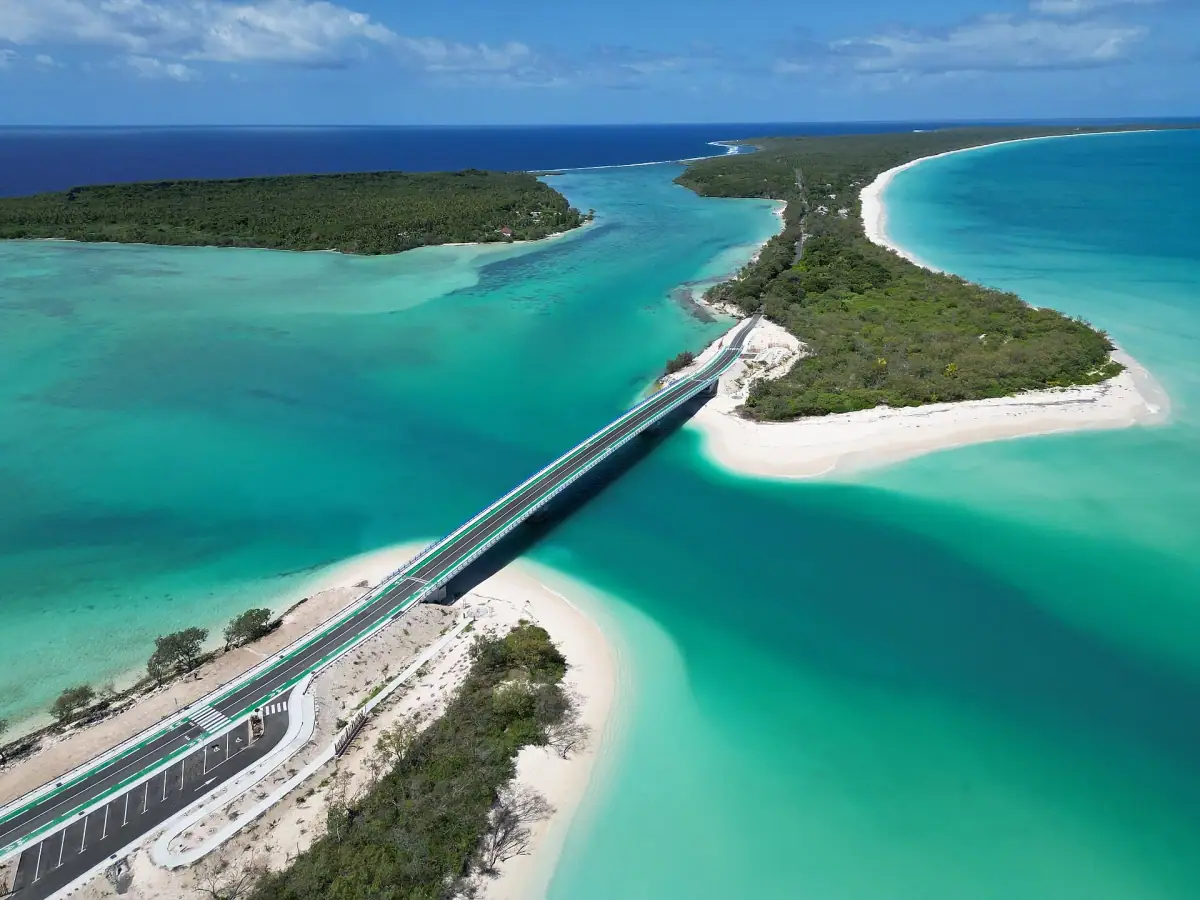
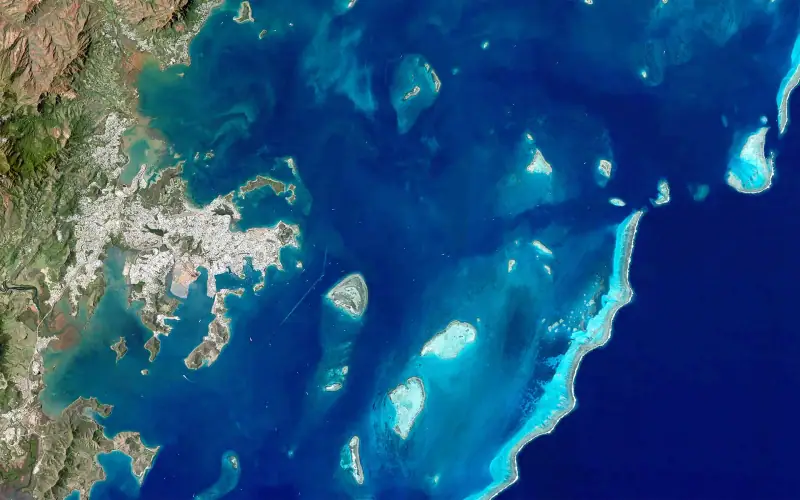
All around lies the lagoon, listed as a UNESCO World Heritage site in 2008 for the diversity of its reefs and ecosystems. It structures local life: people fish, sail and dive in it, and it draws most travelers.
On the practical side, here are the points to keep in mind:
- Status: French territory, with its own local rules on some matters.
- Language: French is spoken everywhere. There are many Kanak languages, and you will also hear Caledonian terms that locals will gladly explain.
- Currency: the Pacific franc (XPF), pegged to the euro.
- Time: New Caledonia does not change its clocks (UTC+11 all year).
- Capital: Nouméa, which concentrates the domestic airport, hotels, restaurants and most of the population.
The six main regions to know
To avoid getting lost, you only need to remember six zones. Each has its own character, and most travelers combine three or four.
Greater Nouméa: the gateway
Nouméa and its surroundings form the almost obligatory gateway to the trip. The city stretches between bays and peninsulas, with a downtown, a market, seaside districts such as Anse Vata and Baie des Citrons, and quick access to the lagoon. It is the best place for a first immersion before taking the road or a plane to the rest of the archipelago. Our guide Nouméa: what to do and see details the capital’s highlights.
The West Coast and the bush
North of Nouméa, the road follows the West Coast: Bourail, Koné and several ranching villages make up the typical bush landscape. You find beaches, mangroves, historic sites and an atmosphere very different from the capital’s, more rural and slower. It is a good area for a two- or three-day stop on a circuit.
The East Coast: green Caledonia
On the other side of the range, the East Coast charms with its lush scenery. Hienghène, with its emblematic rock formations, is its great symbol (our guide Is Hienghène worth the detour? helps you decide). There are many tribes here, and this is where meeting Kanak culture happens most naturally, as long as you respect local customs. Our article on Kanak culture explains how to approach this encounter respectfully.
The Grand Sud
South of Nouméa, the Grand Sud offers landscapes of red earth, lakes and forests. Rivière Bleue Park is the main attraction: a reserve where you walk among very tall kauri trees and may be lucky enough to glimpse the kagu, the country’s emblem bird. Everything is detailed in our guide to hiking in Rivière Bleue Park. Yaté, on the southeast coast, completes this region.
The Isle of Pines
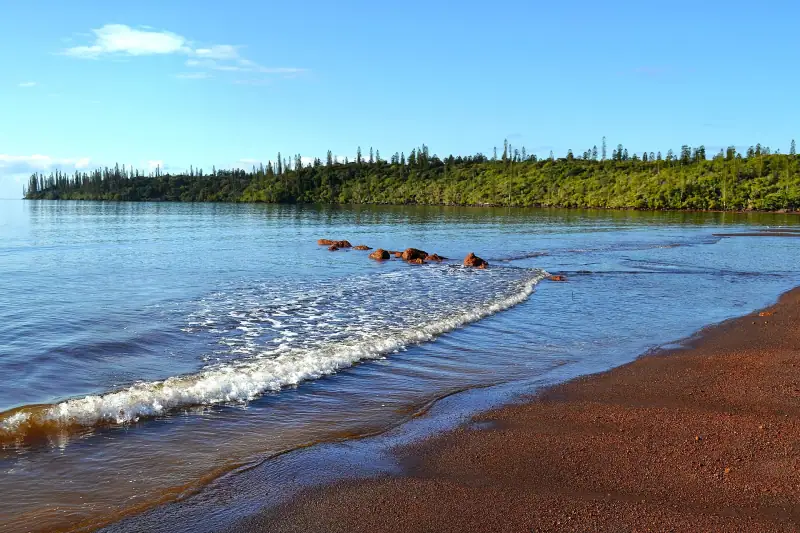
Sometimes nicknamed “the jewel of the Pacific,” the Isle of Pines is famous for its white sand beaches, clear water, columnar pines and Oro Bay. The atmosphere is calm, almost suspended. It is one of the most sought-after destinations in the archipelago, and our guide Isle of Pines: what to do and see helps you organize your stay.
The Loyalty Islands
East of Grande Terre, Lifou, Maré and Ouvéa form a coral world, flat and breezy, where tribal life and marine nature take first place. Each has its own personality: one is the most populated and easy to reach, another wilder and more wooded, the third famous for its long lagoon. To choose, read our comparison Lifou, Maré or Ouvéa.
Flights to New Caledonia
Fix your dates before booking the rest: compare flights to Nouméa.
The highlights of a trip to New Caledonia
Once you have the regions in mind, here are the experiences that come up in almost every travel account.
The lagoon, by boat, mask or tank
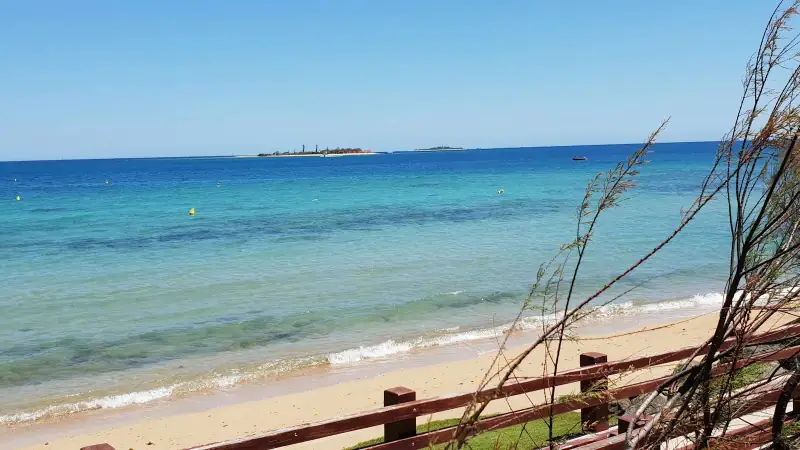
The lagoon is the reason for the trip. Even without diving, a simple mask and snorkel are enough to discover colorful fish, corals and sometimes turtles, right from the shore of some beaches or on a boat excursion. Divers will find sites for all levels. Our article diving and snorkeling in New Caledonia presents the best spots and the precautions to take to preserve the reefs.
Nouméa, between city and lagoon
Plan one to two days for the capital: the market, the seafront, urban beaches, museums and, if you like, the cultural center devoted to Kanak culture. Nouméa also lends itself to short boat trips to nearby islets. It is also a good starting point for a first meal of local specialties.
Kauri and kagu in the Grand Sud
Walking in the forest of Rivière Bleue Park is one of the most memorable experiences on Grande Terre. The rainforest atmosphere, the towering trees and the possibility of meeting the kagu make this a highlight, and it can be done in a day from Nouméa.
Kanak culture
New Caledonia is not just scenery: it is above all the land of the Kanak people, whose custom still organizes social life. Spending a night in a tribal guesthouse, sharing a meal, listening to a story: these moments often count more than any site. A simple rule: nothing is done without asking, whether it is entering a village, taking photos or crossing a piece of land. To go further, see our guide Kanak culture in New Caledonia.
The Caledonian table
The emblematic dish is bougna, traditionally prepared with root vegetables, sometimes chicken or fish, cooked in banana leaves with coconut milk. Alongside it, you will find lagoon fish, shellfish, tropical fruit and a very present French influence. Our article what to eat in New Caledonia helps you plan your meals.
The islands: a stay of their own
An Isle of Pines or a Loyalty Island, even for two or three nights, changes the nature of the trip. Beaches, snorkeling, walks, tribal life: you live at the pace of the lagoon. The domestic flight or boat weighs on the budget, but it is worth the detour if the calendar allows.
Watching humpback whales
From about July to September, humpback whales come to New Caledonian waters. Regulated boat trips let you watch them, as long as you choose an operator that respects the rules. Details in our guide when to go.
When to go to New Caledonia
The climate is tropical oceanic, tempered by the trade winds. Two main periods stand out:
- From about November to April: the hot, humid season. Days are hot and muggy, showers more frequent, the sea very warm, and there is a risk of tropical depressions and cyclones.
- From about May to October: the cool, drier season. The air is less humid, temperatures milder and conditions generally more stable.
For most travelers, May to October is the best compromise, with a good window in September-October: pleasant weather, nature in full form and, until September, the chance to watch whales. Keep in mind that the limits are indicative: one year can be rainier than another, and the transition seasons look alike.
The calendar also affects prices. School holiday periods and the year-end holidays push up fares, and flights fill up months ahead. The month-by-month detail, cyclone precautions and our recommendations by type of trip are in the article when to go to New Caledonia.
Getting to New Caledonia
The flight
There is no alternative to flying. The journey is very long, with one or more stopovers depending on the airline and the date. You land at La Tontouta international airport, a good hour by road from Nouméa. A shuttle or organized transfer takes you to the capital.
Three tips:
- Book early for school holidays and the year-end period.
- Plan a first night in Nouméa to absorb jet lag and travel fatigue, rather than heading straight to the other end of the island.
- Compare several dates: shifting by a few days can change the price significantly.
For detailed figures, see our New Caledonia budget.
Entry requirements
Entry rules depend on your passport. Check the official travel advice of your government before you book: travel.state.gov (US), GOV.UK (UK), travel.gc.ca (Canada), Smartraveller (Australia) (checked November 2026). For health recommendations related to tropical mosquitoes, ask your doctor or a travel clinic, and see the official travel health pages (CDC in the US, TravelHealthPro in the UK).
Getting around once you are there
On Grande Terre: the car is king
Outside the Nouméa urban area, public transport is limited. A rental car is the simplest way to explore the West Coast, the East Coast and the Grand Sud. You drive on the right, and the main roads are in good condition, although some stretches of the East Coast are winding and slower than the map suggests.
A few habits to adopt:
- Do not overload your days: distances are reasonable, but travel time rises quickly with bends and stops.
- Start early: night falls quickly in the tropics, lighting is limited outside villages and towns, and cattle may be near the roads.
- Fill up and withdraw cash in Nouméa or in the towns before moving away from the centers.
- Check road conditions after heavy rain, especially on the East Coast.
Rent with two or four people to share the cost: generally, allow €45 to €80 per day (about $52 to $93) for a small car depending on the season, excluding fuel. Our 10-day itinerary offers a realistic pace for covering Grande Terre without rushing.
In Nouméa: buses, taxis and walking
In the capital, the city bus network is inexpensive and enough to reach downtown, the beaches and the market. Taxis cost considerably more: keep them for night trips and transfers with luggage.
To the islands: plane and boat
To reach the Isle of Pines or the Loyalty Islands, you use the domestic airline’s plane, or the boat for some destinations. These links are a notable expense. Book them as soon as your dates are fixed, and travel light: small planes often impose a luggage weight limit. There, you rent a car, scooter or bike depending on the island.
Which itinerary to choose?
The question always comes up: how many days, and to do what? Here is a simple grid.
- 5 to 7 days: Nouméa and surroundings, the Grand Sud, plus a getaway to the Isle of Pines. It is short, but coherent.
- 10 days: a tour of Grande Terre (Nouméa, Grand Sud, West Coast, East Coast), then an island to finish gently. It is the format that suits most travelers. It is detailed day by day in our 10-day itinerary.
- 14 days and more: add a second island, or slow down with longer tribal stays, hikes and diving.
Remember to keep a margin in the schedule: a canceled domestic flight or a tropical storm can upset plans. It is better to plan the eve of the international flight in Nouméa, rather than a long drive that same morning.
Where to sleep in New Caledonia
The choice is wide, from camping to lagoon hotels.
- In Nouméa: hotels, residences and apartments, concentrated near Anse Vata, Baie des Citrons and downtown. Choose according to whether you prefer beaches, nightlife or proximity to shops. Our article where to stay in Nouméa compares the neighborhoods.
- On the West Coast and East Coast: guesthouses, bungalows, small hotels and tribal stays. It is a chance to sleep as close as possible to the locals.
- On the Isle of Pines and in the Loyalty Islands: seaside bungalows, small hotels and tribal lodging, with booking essential in high season.
- Camping: possible at some sites, as long as you ask permission and respect local rules.
Hotels in Nouméa
Compare Nouméa lodging for your first and last nights, by dates and budget.
Book ahead for school holiday periods: capacity is limited on the islands and in bush guesthouses.
The cost of a trip
New Caledonia is expensive: the flight, the links to the islands and imported goods weigh on the bill. A few orders of magnitude, to check when you book:
- International flight: check fares for your dates and book early; see the budget guide for details.
- Rental car: about €45 to €80 per day (about $52 to $93) for a small car, excluding fuel.
- Lodging: highly variable, from camping and simple guesthouses to lagoon hotels.
- 10-day stay, excluding the flight: about €900 to €1,300 per person (about $1,045 to $1,510) on a backpacker profile, €1,800 to €2,800 (about $2,090 to $3,250) on a comfort profile, and €4,000 (about $4,640) and up on a premium profile.
The currency is the Pacific franc; remember the “divide by 120” rule to convert to euros. Keep cash for markets, tribal guesthouses and some of the islands, as cards are not accepted everywhere. Our article New Caledonia budget details each item and gives ten tips for spending less.
What else to do: activities and outings
Beyond the lagoon, New Caledonia is discovered through hiking, boat excursions, cultural visits and food. Organized outings prove useful for reaching sites that require a boat or a guide, notably the lagoon islets, whale watching or diving. Book them in advance during holidays.
Excursions and activities
Boat trips, guided visits, diving: discover the experiences you can book before you leave.
Practical tips before you go
- Respect custom: ask before entering a tribe, taking photos or swimming at a specific site. A small gift (the traditional custom) is appreciated when visiting a tribe, and your host will guide you.
- Protect the lagoon: use reef-friendly sunscreen, do not touch corals and do not collect shells or corals.
- Pack well: hat, sunglasses, mosquito repellent, closed walking shoes, water shoes and a light rain jacket.
- Plan ahead for health: ask your doctor or a travel clinic before leaving, and take out solid travel insurance, as possible evacuations from the islands are costly.
- Be mindful of Sunday: in many tribes, church takes an important place and life moves slowly.
- Carry cash and fill up before leaving the centers.
Recommended plan for a first trip
If it is your first time, go for ten to fourteen days between May and October, with arrival in Nouméa, a stop at Rivière Bleue Park, a tour of the West Coast and East Coast by car, then an island (the Isle of Pines or a Loyalty Island) to finish. Keep room for meeting Kanak culture: it is what gives the trip its meaning.
To go further, here are all the articles on this site:
Frequently asked questions
How long do you need to visit New Caledonia?
Plan at least ten days to combine Nouméa, a tour of Grande Terre and one island. With two weeks, you can add a second island or slow the pace. Fewer than seven days forces choices: Nouméa and the Isle of Pines, for example, or Grande Terre alone.
What is the best time to go to New Caledonia?
The cool, drier season, from about May to October, is the best compromise between pleasant weather and low cyclone risk. From July to September, humpback whales visit the lagoon. From November to April it is hotter and more humid, with a risk of tropical depressions.
Do you need a visa for New Caledonia?
Entry rules depend on your passport. Check the official travel advice of your government before you book: travel.state.gov (US), GOV.UK (UK), travel.gc.ca (Canada), Smartraveller (Australia) (checked November 2026).
Do you need to rent a car in New Caledonia?
To explore Grande Terre beyond Nouméa, yes: public transport is limited outside the urban area. In the capital, buses and taxis are enough. On the Loyalty Islands and the Isle of Pines, you rent a car, scooter or bike there depending on the island.
What currency is used in New Caledonia?
The Pacific franc (XPF), whose rate against the euro is fixed: €1 is worth about 119.3 XPF. Cards are accepted in Nouméa and in most hotels, but keep cash for markets, tribal guesthouses and some of the islands.
Is New Caledonia an expensive destination?
Yes, it is one of the most expensive destinations in the Pacific, mainly because of the flight and the links to the islands. Nature, beaches and many hikes are however free or inexpensive, which helps keep the bill under control.
Can you travel to New Caledonia with kids?
Yes. The lagoon, the sheltered beaches near Nouméa and snorkeling close to shore suit families well. Above all, plan a relaxed pace: car trips are long and jet lag can be significant after such a long journey.
More New Caledonia guides
Keep reading
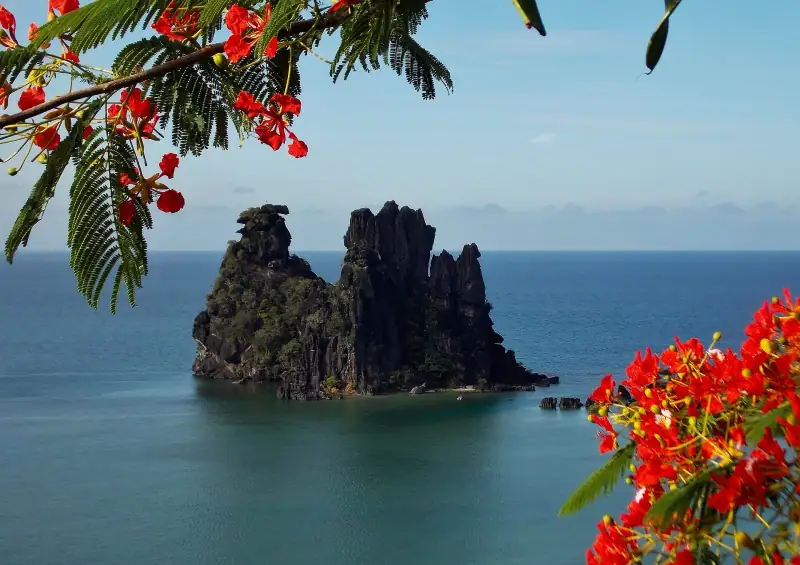
Is Hienghène Worth the Detour? Poule Couveuse, Lindéralique and Tao Falls
Is Hienghène worth the detour? Poule couveuse, Lindéralique, Tao Falls, Ouaïème ferry, getting there from Nouméa, where to sleep and how long to stay.
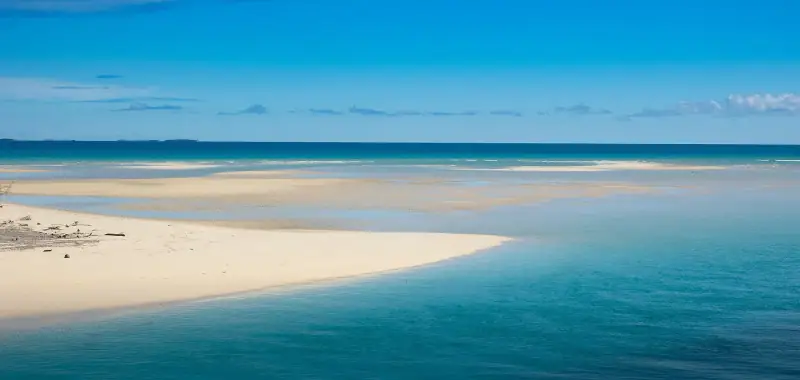
Loyalty Islands: Lifou, Maré or Ouvéa, Which One to Choose?
Lifou, Maré or Ouvéa? Compare the three Loyalty Islands: landscapes, beaches, Kanak culture, access from Nouméa and tips for organizing your stay.
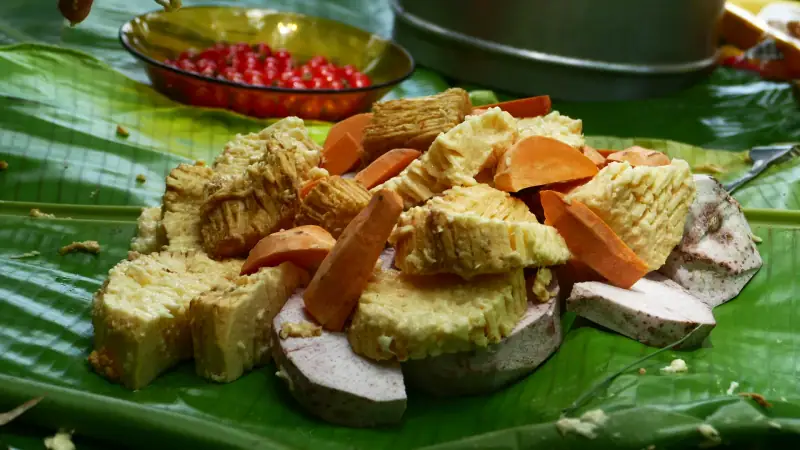
Kanak Culture in New Caledonia: Custom, Huts and Places to Visit
Discover Kanak culture when you travel: custom, the welcome gesture, the hut, yam, the Tjibaou Cultural Center and tips for visiting tribes respectfully.
Ready-made
New Caledonia itineraries
10 days
New Caledonia in 10 Days: An Itinerary Through Nouméa, the Bush and the Islands
A 10-day New Caledonia itinerary: Nouméa, Grand Sud, West Coast, Hienghène, then the Isle of Pines or Lifou, with pacing and budget tips.
7 days
New Caledonia in 7 Days Without a Car: A Realistic Itinerary
NouméaIsle of Pines
3 days
New Caledonia's Grand Sud in 3 Days: Yaté, Rivière Bleue and Port-Boisé
3-day Grand Sud itinerary from Nouméa: Rivière Bleue, Yaté Lake, Madeleine Falls, Port-Boisé, with practical tips.