What to see
Kanak Culture in New Caledonia: Custom, Huts and Places to Visit
We may earn a commission when you book through links on this page, at no extra cost to you. We don't visit or try the places we cover: we summarize published sources. How we work
In short
- Custom is the set of rules and rituals that organizes Kanak social life; the basic rule for a visitor is that nothing is done without asking.
- When staying in a tribe, you are often asked to make the customary gesture: a small gift, traditionally a piece of cloth with a modest sum, handed to the clan or chiefdom's representative.
- The Tjibaou Cultural Center, on the Tina peninsula in Nouméa, is the reference place; allow half a day and check hours and fees on the official site.
- Always ask before photographing a person, a hut or a customary place; tapu sites are sacred or forbidden and must not be photographed or crossed.
The Kanak, the first people of New Caledonia, have lived here for millennia. Their culture is not a backdrop for tourists: it still structures daily life, land ownership, relations between families and the way strangers are welcomed. Understanding a few codes completely changes the way you travel in the archipelago.
This guide presents the basic notions (custom, clan, hut, yam), the places to go deeper into the subject and the gestures of respect to adopt when you are invited into a tribe.
The basics: tribe, clan and custom
In Kanak society, the living unit is the tribe, which groups several families linked to one or more clans. Each clan has a history, a territory and specific roles: there are land clans, sea clans, keepers of the word, chiefs. The chiefdom, led by a chief, plays a central role in organizing the group.
Custom refers to the set of rules and rituals that frame this shared life. It shows at births, weddings, mourning or important visits, through exchanges of words and gifts. For a visitor, remember one simple idea: nothing is done without asking, whether it is entering a village, crossing a property or swimming at a specific site.
New Caledonia has close to thirty Kanak languages, which illustrates the diversity of the archipelago’s cultures. French remains the everyday language of communication, and you will be understood everywhere.
The customary gesture: welcoming and being welcomed
When you stay in a tribe or visit a customary place, you will often be asked to make the customary gesture. It is a small gift, traditionally a piece of cloth (the “manou”) accompanied by a modest sum, handed to the representative of the clan or chiefdom.
This gesture is not a toll: it is a way of introducing yourself, asking permission to pass and receiving in return the words of welcome. It is done seriously, without hurry.
To prepare for it:
- Ask your host for advice: they will tell you the expected form and will often accompany the presentation.
- Take your time: the word is not rushed, and cutting the discussion short is frowned upon.
- Avoid very light clothing and overly familiar gestures with elders.
- Thank sincerely: Kanak hospitality is generous, and the exchanges that follow are often the best memories of the trip.
The hut, symbol of dwelling and society
Cultural visits and excursions
Guided visits, outings with local guides and cultural activities: compare the offers available before you leave.
The traditional Kanak hut (case) is a large round building with a conical thatched roof, often organized around a central post. It is more than a dwelling: it represents the clan, its ancestors and its place in society. The chief’s hut, in particular, is a place of speech and decisions.
At the top of the roof stands the roof spire (flèche faîtière), a carved wooden piece that evokes the figure of the ancestors and protects the house. This element has become a recognizable symbol of Kanak culture: it appears in many settings, including contemporary architecture.
In the tribes you may visit, some huts are rebuilt or maintained for visitors, others are places of real use. When in doubt, ask whether access is allowed before entering or taking photos.
The yam, central to customary life
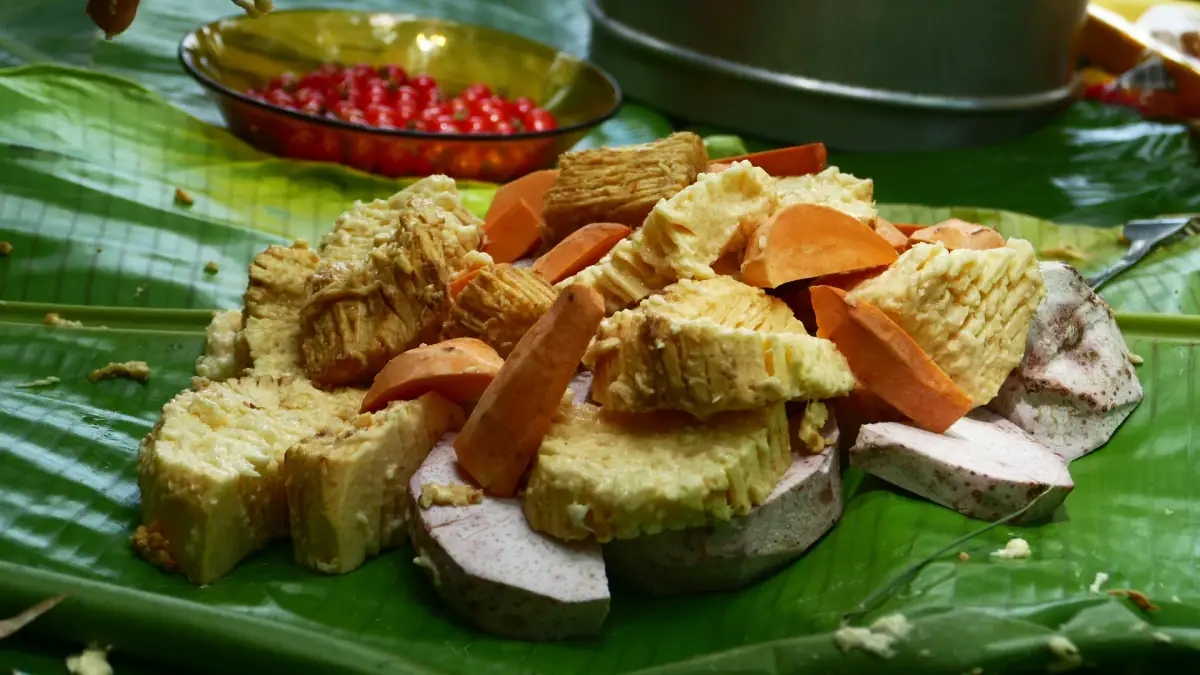
The yam is much more than a vegetable: it holds a central symbolic place in Kanak culture. Its cultivation follows a precise calendar, and the first harvests give rise to ceremonies, generally at the start of the year, in which the ancestors are thanked before it is eaten. In many tribes, the first yams are not eaten before these ceremonies.
For the traveler, the yam also turns up at the table: it often accompanies fish or meat at meals in a tribe. To discover bougna and other traditional dishes, read our guide What to eat in New Caledonia.
The Tjibaou Cultural Center in Nouméa
For a first approach, head to the Tjibaou Cultural Center, on the Tina peninsula in Nouméa. It is named after Jean-Marie Tjibaou, a major figure of the Kanak movement, and was designed by architect Renzo Piano. Opened in the late 1990s, it is linked to the Nouméa Accord and to the desire to recognize Kanak culture.
The architecture is already an attraction: tall structures of curved wood, recalling stylized huts, rise facing the lagoon and vegetation. The site combines:
- exhibitions on Kanak art and culture, and on Pacific cultures;
- a plant trail illustrating the link between plants and customary uses;
- an arts program (dance, music, shows), to check before you come.
Allow half a day. Hours and fees change: check them on the official site before you go. To organize the rest of your stay in the capital, see our guide What to do in Nouméa.
The Museum of New Caledonia
Also in Nouméa, the Museum of New Caledonia presents collections devoted to the archipelago’s history and arts: traditional objects, parts of huts, outrigger canoes and crafts. It is a good introduction for understanding the historical context before going to meet residents.
Combined with the Tjibaou Center, it makes a full cultural day, a good plan if the weather is changeable.
Staying in Nouméa for cultural visits
Staying in Nouméa makes it easy to reach the main museums and cultural centers. Compare lodging for your dates.
Meeting Kanak culture outside Nouméa
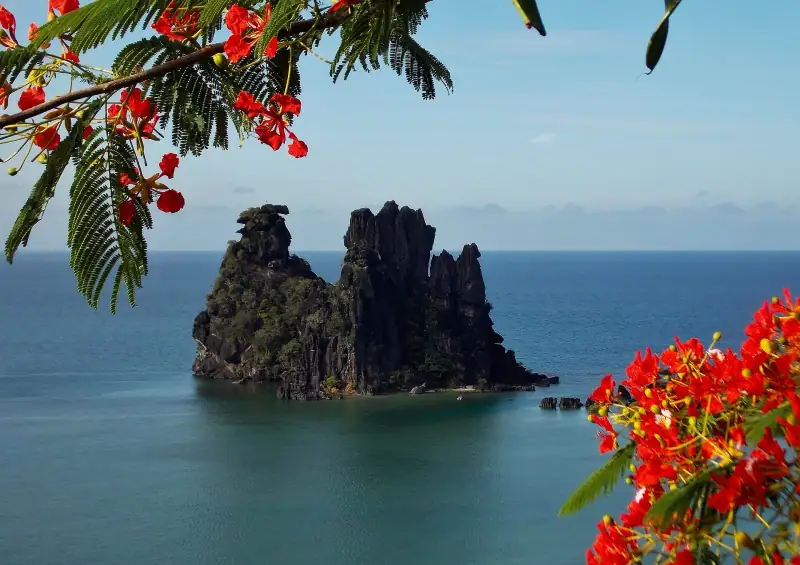
Culture is mostly experienced on the ground. On the East Coast, the Hienghène area is known for its cliff and rock landscapes, including the famous “Poule couveuse” (Brooding Hen), and for its tribes that offer lodging and visits. In the Loyalty Islands (Lifou, Maré, Ouvéa), customary life has a very visible place: tribal guesthouses, shared meals and exchanges with residents. Our guide to the Loyalty Islands helps you choose your island.
A tribal guesthouse is probably the best way to approach the culture: you sleep in lodging run by a family, share meals and get their advice. Book ahead, as capacity is limited, and confirm the welcome arrangements (customary gesture, mealtimes, activities offered).
The rules of respect to know
- Ask before photographing a person, a hut or a customary place.
- Respect tapu places: a site marked as forbidden or sacred is not crossed.
- Do not swim or walk on a site without the customary owner’s consent: land belongs to a clan, even if it looks wild.
- Dress simply in villages, and avoid very short outfits during ceremonies.
- Be mindful of Sunday: church holds an important place in many tribes, and life there moves slowly.
- Do not haggle over crafts sold in a tribe: the price is a fair price.
When to come and how to organize
The culture can be visited all year, but the cool, dry season is the most comfortable for moving between Nouméa, the East Coast and the islands. Our guide When to go to New Caledonia details the seasons. To reach the bush tribes, a rental car is the most flexible option, and distances are manageable in a day.
A few tips for preparing your stay:
- Learn a few polite words and greet each person you meet: a “hello” is always appreciated.
- Bring cash in Pacific francs (XPF), as cards are not accepted everywhere in tribes.
- Book your guesthouses ahead, especially in high season.
- Stay curious and ask questions humbly: people like to share their history with those who listen.
Traveling with respect is also the best way to discover New Caledonia differently: through its people, its words and its landscapes, well beyond the lagoon.
Frequently asked questions
What is Kanak custom?
Custom is the set of rules, rituals and practices that organize Kanak social life: relations between clans, respect for elders, exchanges of gifts at important events. It also governs access to land, hence the importance of asking permission before entering a site.
How should you behave when welcomed into a tribe?
You begin with the customary gesture: a small gift (cloth and a modest sum) handed to the tribe's representative in exchange for permission to visit and the words of welcome. Ask your host or guide for advice on the form to adopt.
Can you visit a tribe as a tourist?
Yes, many tribes welcome visitors, in guesthouses or on guided visits. Go through a host or local guide rather than turning up unannounced, and respect the rules on photos and forbidden places.
Where can you discover Kanak culture in Nouméa?
The Tjibaou Cultural Center, on the Tina peninsula, is the reference place: architecture by Renzo Piano, exhibitions, a plant trail and an arts program. The Museum of New Caledonia, in town, completes the visit with its collections.
Can you photograph residents and huts?
Always ask permission before photographing a person, a hut or a customary place. Some places are tapu, meaning sacred or forbidden, and must not be photographed or crossed.
More New Caledonia guides
Keep reading
Is Hienghène Worth the Detour? Poule Couveuse, Lindéralique and Tao Falls
Is Hienghène worth the detour? Poule couveuse, Lindéralique, Tao Falls, Ouaïème ferry, getting there from Nouméa, where to sleep and how long to stay.

Visiting New Caledonia: The Complete Guide to Planning Your Trip
Complete guide to visiting New Caledonia: regions, highlights, when to go, flights, getting around, lodging and budget, with links to detailed guides.
Loyalty Islands: Lifou, Maré or Ouvéa, Which One to Choose?
Lifou, Maré or Ouvéa? Compare the three Loyalty Islands: landscapes, beaches, Kanak culture, access from Nouméa and tips for organizing your stay.
Ready-made
New Caledonia itineraries
10 days
New Caledonia in 10 Days: An Itinerary Through Nouméa, the Bush and the Islands
A 10-day New Caledonia itinerary: Nouméa, Grand Sud, West Coast, Hienghène, then the Isle of Pines or Lifou, with pacing and budget tips.
7 days
New Caledonia in 7 Days Without a Car: A Realistic Itinerary
NouméaIsle of Pines
3 days
New Caledonia's Grand Sud in 3 Days: Yaté, Rivière Bleue and Port-Boisé
3-day Grand Sud itinerary from Nouméa: Rivière Bleue, Yaté Lake, Madeleine Falls, Port-Boisé, with practical tips.