Things to do
Diving and Snorkeling in New Caledonia: Where to Get in the Water
We may earn a commission when you book through links on this page, at no extra cost to you. We don't visit or try the places we cover: we summarize published sources. How we work
In short
- Canard Islet, facing Anse Vata, is a classic first snorkeling outing from Nouméa; Amédée Islet, with its lighthouse, is known for turtles, though no encounter is guaranteed.
- The Isle of Pines offers Oro's natural pool and the calm Kuto Bay, suited to families and beginners.
- You do not need to dive to enjoy the lagoon: a mask and snorkel are enough in many places; scuba requires certification, but guided introductory dives are offered.
- Do not touch the coral, do not chase turtles, and ask locals or your lodging about currents and access rules.
The New Caledonian lagoon is one of the archipelago’s great assets. Surrounded by a vast barrier reef, it was listed as a UNESCO World Heritage site in 2008 as “Lagoons of New Caledonia: Reef Diversity and Associated Ecosystems.” Colorful fish, corals, turtles, rays: you can enjoy them with a simple mask and snorkel or with a scuba tank.
This guide helps you choose your spots, get equipped and watch marine life without damaging it. It does not detail precise addresses or prices, which vary by season and operator: always compare offers for your dates.
An exceptional lagoon to know before you dive
The Caledonian lagoon surrounds Grande Terre and continues around several islands. It shelters a great diversity of corals and reef fish, as well as emblematic species such as green turtles or dugongs, which are more discreet and rarely seen on standard excursions.
For the visitor, this means three things. First, the quality of the seabed varies a lot from place to place: proximity to inhabited coasts, tides and weather change visibility. Second, the reef is fragile and protected: you look, you do not touch. Finally, New Caledonia is a destination where you can start easily, since many areas are shallow and calm at the right tide.
To choose your period, see our guide When to go to New Caledonia.
Snorkeling around Nouméa: Canard Islet and the southwest lagoon islets
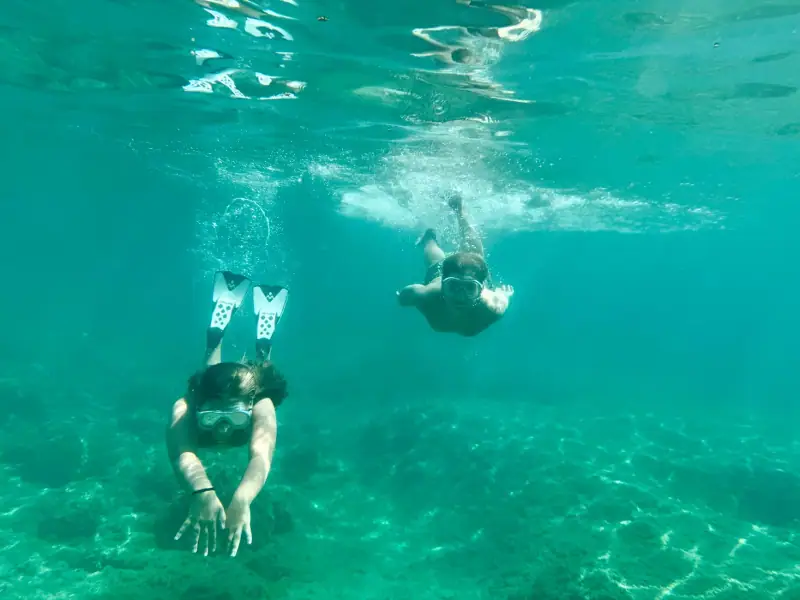
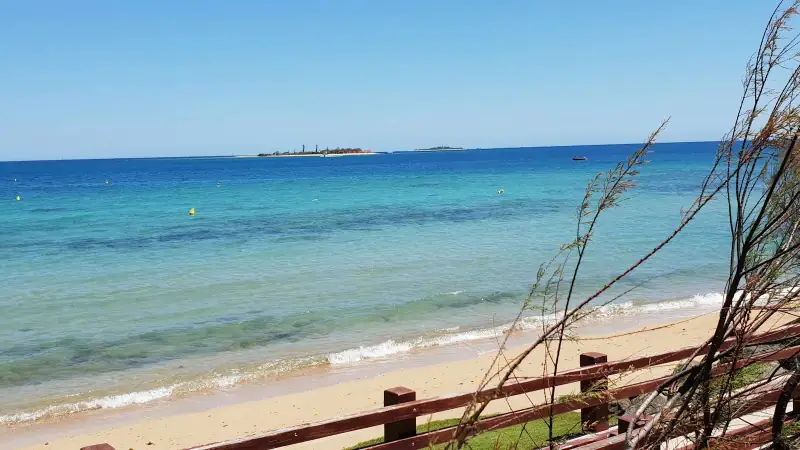
Nouméa is the most practical base for a first outing. Canard Islet, facing Anse Vata, is one of the best-known snorkeling spots of the urban area: you get there in a few minutes by water taxi from the beach, and can watch reef fish and corals near the shore. It is an excellent option for testing your gear and getting used to the mask.
Other islets of the southwest lagoon offer half-day or day trips from Nouméa. Depending on the operator, the package includes the crossing, time for swimming, sometimes gear loan and a lunch. Check what is included, the length of the crossing and the cancellation policy in case of bad weather.
A few tips for a first snorkel:
- Choose a mask that fits your face well, without overly tight straps.
- Enter the water gradually and breathe calmly through the snorkel.
- Always keep UV clothing on: the tropical sun burns fast, even underwater.
- Stay careful in strong wind or current: follow the instructions of the boat or club.
To round out your stay in the capital, see our guide What to do in Nouméa.
Amédée Islet: lighthouse, lagoon and turtles
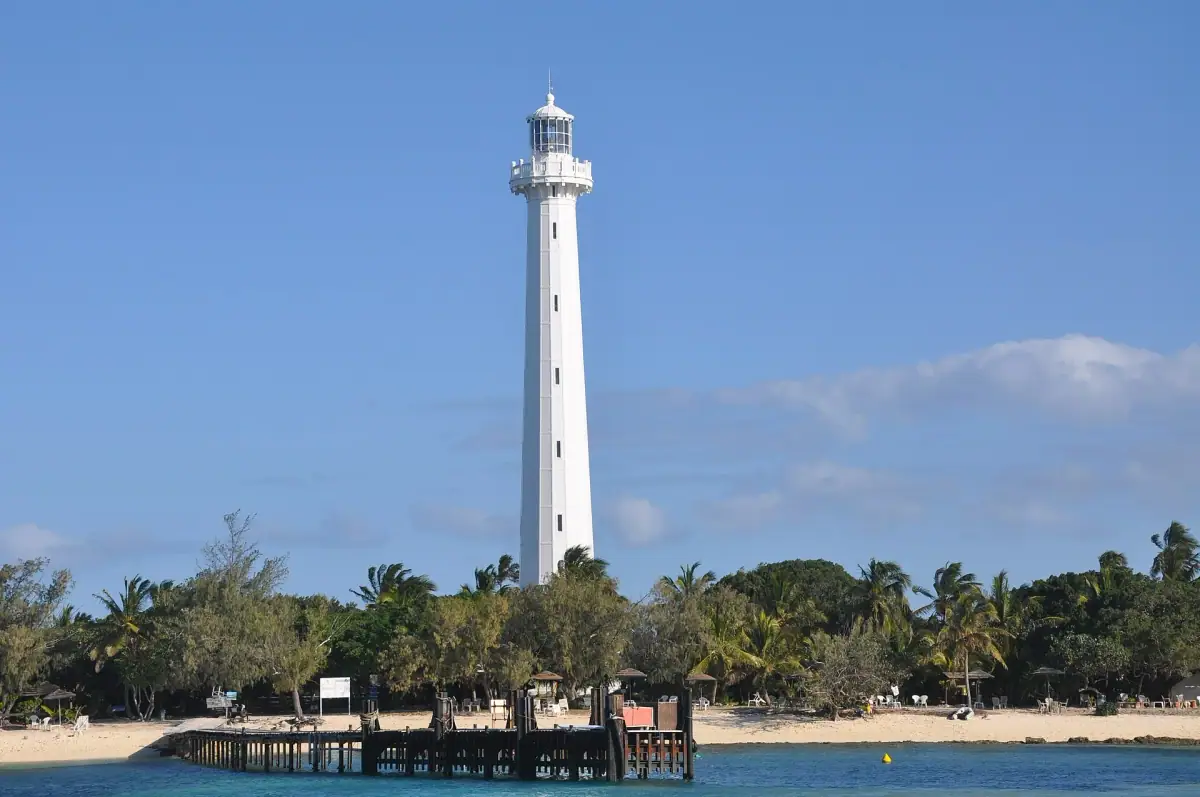
Off Nouméa, Amédée Islet is topped by a historic metal lighthouse that has become a symbol of the Caledonian lagoon. The islet is a very popular day destination: you get there by boat from Nouméa, enjoy the beach and the reef, and often see sea turtles while snorkeling.
The islet and its reef are among the areas where marine life is especially rich, but this traffic calls for respectful behavior. Do not chase the turtles, do not touch them, do not feed them, and keep your distance even if they approach you. Their presence is never guaranteed: that is what gives watching its value.
If you want to organize this excursion, compare day packages and departure times, which vary with season and weather. Booking early is advised during school holidays.
Boat trips and snorkeling in New Caledonia
Lagoon excursions, diving, boat trips: compare the activities you can book before you leave.
Isle of Pines: Oro’s natural pool and Kuto Bay
The Isle of Pines is one of the best snorkeling destinations in the archipelago. Oro’s natural pool, a basin of shallow, very clear water connected to the sea, is one of the most emblematic sites: you see colorful fish in a postcard setting. Access is usually on foot by a trail from Oro Bay, or by outrigger canoe depending on the excursions offered.
Kuto Bay, with its white sand beach and calm water, suits families and beginners: you can paddle and watch small fish near the shore. For more inspiration, see our guide What to do on the Isle of Pines.
Outrigger canoe or boat excursions also let you reach other bays and meet marine life in often very clear water. Custom and land ownership play an important role: some sites charge an entry fee or require the local tribe’s agreement. Ask your lodging.
Loyalty Islands: Lifou, Maré and Ouvéa below the surface
The Loyalty Islands have a reputation for clear lagoons and preserved seabeds. On Lifou, Jinek Bay is appreciated for its calm swimming and snorkeling. Ouvéa, with its immense lagoon, attracts fans of lazing and swimming in very clear water. Maré offers a wilder setting, with cliffs and natural pools.
These islands have fewer operators than Nouméa: for scuba diving, find out in advance about the available clubs and their operating season. For snorkeling, many beaches let you enter the water directly, but stay careful: currents can be strong outside sheltered areas. To plan your stay there, see our guide Loyalty Islands: Lifou, Maré or Ouvéa.
Sleeping near the lagoon
Compare lodging in Nouméa and on the islands, with free cancellation depending on the offer.
Scuba diving: starting out or improving
Scuba diving lets you discover drop-offs, passes and wrecks, as long as safety rules are respected. Certified divers can ask clubs about the sites accessible for their level, the weather and the season. Bring your logbook and your certification.
Beginners can generally do an introductory dive supervised by a qualified instructor: explanations on land, gradual entry, limited depth. A medical certificate may be requested depending on the club: arrange it before you leave if you plan to dive.
A few habits before booking:
- Check that the club is professional and the instructor qualified.
- Ask about the supervision ratio and the safety instructions.
- State your real level, without overstating your experience.
- Avoid flying in the hours after a dive: respect the delays recommended by your club and your airline.
Divers staying longer can alternate several outings with rest and hiking days, for example in Rivière Bleue Park.
Watching marine life without damaging it
The lagoon is a living, fragile heritage. A few simple gestures are enough to limit your impact:
- Do not touch the coral: contact can injure it, and it takes years to recover.
- Do not walk on the reef: use reef shoes only on sandy areas or where walking is allowed.
- Keep your distance from turtles, rays and reef sharks: do not chase or feed them.
- Choose suitable sunscreen: favor UV clothing to reduce the amount of product in the water.
- Do not pick up shells, corals or starfish: local rules may apply, and collecting is often forbidden.
- Take your trash: an abandoned plastic bag can be swallowed by a turtle.
Rules on fishing, collecting and access to certain sites can vary by province and tribe: always ask residents or your lodging for advice before getting in the water.
Preparing your gear and your safety
Good gear makes the experience far more pleasant. Plan at minimum:
- A mask and snorkel suited to your face, to try before you leave.
- Fins if you are comfortable in the water, or reef shoes for walking areas.
- Long-sleeved UV clothing and a hat for the boat.
- A thin wetsuit if you go in the cool season or stay in the water a long time.
- Sun protection suited to marine environments.
- A small first-aid kit for minor coral cuts.
For safety, never swim alone in an unfamiliar area, watch the weather, currents and local instructions, and respect marked swimming areas. In the water, some species can be dangerous (jellyfish, stonefish, cone shells): look without touching, and ask for advice there.
To get between spots on Grande Terre, a car is useful: compare rental offers before you leave.
Flights to New Caledonia
Compare flights to Nouméa and adjust your dates to the season that suits you.
Which spot for your profile?
Beginners and families: Canard Islet near Nouméa and Kuto Bay on the Isle of Pines offer a calm, shallow setting, ideal for getting started.
Fans of marine encounters: Amédée Islet and its turtles, or a lagoon excursion with a local operator, will give you the best chances of watching, with no guarantee.
Landscape lovers: Oro’s natural pool on the Isle of Pines and the lagoons of the Loyalty Islands are postcard settings.
Experienced divers: ask the clubs in Nouméa and on the islands about sites suited to your level and the season.
Whatever you choose, keep time in your schedule: weather can change boat trips. To organize a full stay, see our 10-day itinerary in New Caledonia.
Practical questions before booking
To book an outing, compare several operators, read recent reviews and check what is included: transport, gear, meal, supervision. Favor packages with flexible cancellation in case of bad weather.
In tribes and at some sites, access may be paid or subject to permission: respect custom, greet, ask before photographing people and find out about local practices. Local operators are often the best source of up-to-date information on sea conditions and access rules.
Finally, plan travel insurance that covers water activities and, if you dive, check that your policy includes scuba diving.
In summary
The Caledonian lagoon can be discovered at every level: a simple mask is enough to be amazed, a tank opens other horizons. Start with an easy spot like Canard Islet, treat yourself to a day at Amédée Islet, then let yourself be tempted by the Isle of Pines or the Loyalty Islands. Respect the reef, listen to local advice, and you will come away with unforgettable underwater memories.
Frequently asked questions
Where can you snorkel near Nouméa?
The islets of the southwest lagoon, reachable by boat or water taxi from Nouméa, are among the easiest outings: Canard Islet, facing Anse Vata, is a classic for beginners, and Amédée Islet, topped by its lighthouse, is known for its turtles. Ask operators about the day's conditions.
Do you need to know how to dive to enjoy the lagoon?
No. In many places, coral and fish can be seen a few meters from shore with a simple mask and snorkel. Scuba diving requires certification, but guided introductory dives are offered by local clubs for beginners.
What is the best time to dive in New Caledonia?
The water is usable all year. The austral summer brings a warmer sea, while the austral winter is cooler: a thin wetsuit can then be useful. Visibility depends on weather and site, so ask the club for advice before booking.
Can you see turtles and rays?
Yes, sea turtles visit several lagoon sites and can often be watched while snorkeling. No encounter is guaranteed: keep your distance, never touch the animals and do not feed them.
What gear should you bring?
Mask, snorkel, reef shoes, UV clothing and sunscreen that respects marine environments. A thin wetsuit is a plus in the cool season. Many operators rent gear, but your own, well fitted, remains the most comfortable.
More New Caledonia guides
Keep reading
Wildlife Watching in New Caledonia: Whales, Turtles, Kagu and Dugongs
Humpback whales, green turtles, dugongs, kagu: where and when to watch New Caledonia's wildlife, with the rules to follow so as not to disturb it.
Rivière Bleue Park: Hiking, Kauri Trees and Kagus in the Grand Sud
Rivière Bleue Park: getting there from Nouméa, trails, the giant kauri, kagus, swimming and tips for a nature day in New Caledonia's Grand Sud.
Is Hienghène Worth the Detour? Poule Couveuse, Lindéralique and Tao Falls
Is Hienghène worth the detour? Poule couveuse, Lindéralique, Tao Falls, Ouaïème ferry, getting there from Nouméa, where to sleep and how long to stay.
Ready-made
New Caledonia itineraries
10 days
New Caledonia in 10 Days: An Itinerary Through Nouméa, the Bush and the Islands
A 10-day New Caledonia itinerary: Nouméa, Grand Sud, West Coast, Hienghène, then the Isle of Pines or Lifou, with pacing and budget tips.
7 days
New Caledonia in 7 Days Without a Car: A Realistic Itinerary
NouméaIsle of Pines
3 days
New Caledonia's Grand Sud in 3 Days: Yaté, Rivière Bleue and Port-Boisé
3-day Grand Sud itinerary from Nouméa: Rivière Bleue, Yaté Lake, Madeleine Falls, Port-Boisé, with practical tips.