What to see
Is Hienghène Worth the Detour? Poule Couveuse, Lindéralique and Tao Falls
We may earn a commission when you book through links on this page, at no extra cost to you. We don't visit or try the places we cover: we summarize published sources. How we work
In short
- Hienghène is worth the detour if you have at least 7 to 10 days and a car: striking scenery, a waterfall, kayaking and tribal stays.
- It lies about 380 km (236 mi) from Nouméa; plan two nights there, since a half-day stop is frustrating.
- The Tao Falls walk takes about 30 minutes each way through lush vegetation, with natural pools for swimming; do not set out if the sky looks threatening.
- With five days or fewer, focus on Nouméa, the Grand Sud or the Isle of Pines instead.
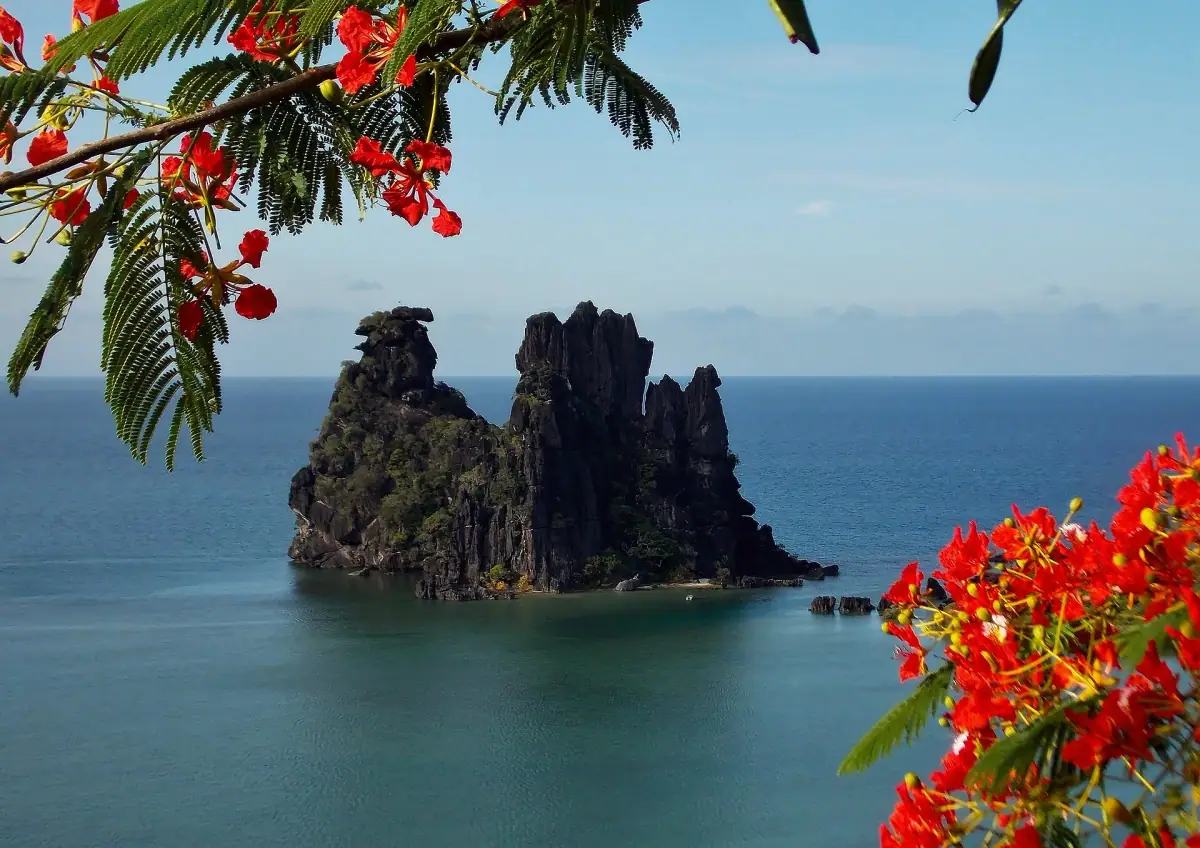
On the East Coast of Grande Terre, opposite Nouméa, Hienghène is known for its rock formations standing at the edge of the lagoon, including the famous Poule couveuse (Brooding Hen). The question many travelers ask is simple: is the trip worth it?
In brief: Hienghène is worth the detour if you have at least 7 to 10 days and a car: spectacular scenery, a waterfall, kayaking and tribal stays. Plan two nights there, as about 380 km (236 mi) separate you from Nouméa. On a short trip, favor the South and the West Coast.
Is Hienghène worth the detour?
The East Coast is greener, wetter and more mountainous than the West. In Hienghène, dark limestone cliffs plunge almost into the lagoon, and life is paced by the tribes around the bay. You do not come for coconut-palm beaches, but for the scenery and the people.
The detour is worth it if:
- you have at least a week, and preferably ten days (it is the stop for days 7 and 8 of our 10-day itinerary);
- you like easy hiking, kayaking and meeting people;
- you accept driving: the road is beautiful but winding.
It is better to skip it if you are staying five days or fewer: in that case, concentrate on Nouméa, the Grand Sud or the Isle of Pines.
Poule couveuse: the emblematic rock
The Poule couveuse is a monolith of black limestone of karstic origin, whose outline suggests a hen settled on her nest. It stands at the entrance to Hienghène Bay, facing another rock nicknamed the Sphinx. The tourist office’s advice: look at it first from afar, then closer up by kayak. The perspective from the water changes everything, and the outing goes at the speed of the paddle. Plan half a day with a local operator or an organized outing.
Activities and excursions on the East Coast
Kayaking, guided hikes and visits: compare the outings you can book in New Caledonia before you leave.
Lindéralique: the rock to climb for the panorama
The Lindéralique rocks form dark cliffs above the lagoon. The site is accessible on foot and offers panoramic views of the bay. Hours and access conditions can vary: ask your host, and contact the tribal council beforehand if you are advised to, as some sites lie on customary land.
Wear good shoes: the ground can be slippery after rain, which is frequent on the East Coast.
Tao Falls: a walk and a swim
Tao Falls take about 30 minutes of walking to reach, through lush vegetation, in good weather. They have natural pools where you can swim. It makes a good half-day outing, for families and friends alike, as long as you do not set out when the sky looks threatening.
Farther north, Colnett Falls, south of Pouébo, are a photo stop if you continue on your way.
The Ouaïème ferry: a memory from the road
On the Ouaïème River, a small ferry, presented as the last one still in service in New Caledonia, lets you cross in about five minutes. It is not an attraction in itself, but a pleasant stop on the road, typical of the East Coast.
The ferry is on the route that follows the coast: you will probably come across it driving to Hienghène or heading back north. Take the time to get out of the car to look at the river and its banks, then move on without hurrying. On this road, it is better not to aim for a tight schedule: photo stops, villages and traffic conditions quickly lengthen the day. If you plan to sleep in a tribe, tell your host your estimated arrival time.
Meeting Kanak culture in a tribe
Several tribes in the area welcome visitors into their homes. Depending on the hosts, you can take part in river shrimp fishing, weaving, preparing bougna, or go on a guided walk through the fields and forest.
A few basic rules: book in advance, arrive before dark, bring a small gift as custom dictates, ask before photographing, and follow the tribe’s customs. Our guide on Kanak culture details these customs, and the one on guesthouses, tribes and campsites explains how to book.
Places to stay in Hienghène
Hotel, guesthouse or other: compare availability for your dates, and remember to book early in and out of season.
How to get from Nouméa to Hienghène
Hienghène is about 380 km (236 mi) from Nouméa. The route described by the tourist office:
- Nouméa → Koné via the West Coast, about 3 h 20 (see our West Coast road trip);
- Koné → Tiwaka by the cross-island road through the Central Range, about 1 h, with several viewpoints;
- Tiwaka → Hienghène via Touho, about 1 h.
The RAÏ bus serves the area but stops often; without a car, it is slow, as our 7 days without a car guide shows. A rental car remains the most practical choice.
Where to sleep and eat
According to the tourist office, the choices include the Koulnoué Village hotel (with restaurant), tribal stays (Oasis de Wayaath, chez Julie), a guesthouse in Houlo-Men and a campsite. For meals: family-style set tables, a hotel restaurant, a lodge and the “La Belle Vue” snack trailer. Buy your basic groceries before heading up: the choice is more limited than in Nouméa.
Practical tips
- Fill up before the cross-island road and do not plan on driving at night.
- Withdraw Pacific francs (XPF) before leaving Nouméa.
- Bring a windbreaker: the East Coast is the wettest.
- Insurance: for a trip with kayaking and hiking, consider travel insurance and read the policy to know exactly what it covers.
- Waterproof bag: a waterproof bag protects your phone and camera on the kayak outing around the Poule couveuse.
Summary table
| Site | Type of visit | Indicative duration | Note |
|---|---|---|---|
| Poule couveuse | View + kayak | Half day | Best view from the water |
| Lindéralique | Walk, panorama | 1 to 2 h | Notify the tribal council if needed |
| Tao Falls | Walk + swim | Half day | About 30 min on foot to reach |
| Ouaïème ferry | Crossing | 5 min | Stop on the road |
| Tribal stay | Encounter | 1 night | Book in advance |
Sources
Frequently asked questions
Is Hienghène really worth the detour?
Yes, if you like landscapes and meeting Kanak culture. The trip is long, but the bay, the black limestone cliffs, Tao Falls and the tribal welcome show a side of Grande Terre very different from Nouméa. If you only have a few days, it is better to stay in the South and on the West Coast.
How much time should you plan in Hienghène?
One night at the very least, two ideally. Between the drive from Nouméa and the outings (Poule couveuse, Lindéralique, Tao Falls, kayaking), a simple half-day stop remains frustrating.
Can you get to Hienghène without a car?
It is possible with the RAÏ intercity bus, but it is slow because of the many stops, and the sites are hard to visit without a vehicle. A rental car or an organized excursion remains the most flexible solution.
How do you get from Nouméa to Hienghène?
Allow about 380 km (236 mi). The tourist office describes a route via Koné (about 3 h 20), then the Koné-Tiwaka cross-island road through the Central Range (about 1 h), and another hour or so via Touho. Plan a long day on the road including stops.
Can you swim at Tao Falls?
Natural pools allow swimming, after a walk of about 30 minutes through vegetation in good weather. Ask locally before getting in the water, especially after heavy rain.
Where should you stay in Hienghène?
There is a hotel (Koulnoué Village), tribal stays, guesthouses and a campsite. Tribal stays are a chance for a real encounter, but must be booked in advance.
More New Caledonia guides
Keep reading
Visiting New Caledonia: The Complete Guide to Planning Your Trip
Complete guide to visiting New Caledonia: regions, highlights, when to go, flights, getting around, lodging and budget, with links to detailed guides.
Loyalty Islands: Lifou, Maré or Ouvéa, Which One to Choose?
Lifou, Maré or Ouvéa? Compare the three Loyalty Islands: landscapes, beaches, Kanak culture, access from Nouméa and tips for organizing your stay.

Kanak Culture in New Caledonia: Custom, Huts and Places to Visit
Discover Kanak culture when you travel: custom, the welcome gesture, the hut, yam, the Tjibaou Cultural Center and tips for visiting tribes respectfully.
Ready-made
New Caledonia itineraries
10 days
New Caledonia in 10 Days: An Itinerary Through Nouméa, the Bush and the Islands
A 10-day New Caledonia itinerary: Nouméa, Grand Sud, West Coast, Hienghène, then the Isle of Pines or Lifou, with pacing and budget tips.
7 days
New Caledonia in 7 Days Without a Car: A Realistic Itinerary
NouméaIsle of Pines
3 days
New Caledonia's Grand Sud in 3 Days: Yaté, Rivière Bleue and Port-Boisé
3-day Grand Sud itinerary from Nouméa: Rivière Bleue, Yaté Lake, Madeleine Falls, Port-Boisé, with practical tips.